
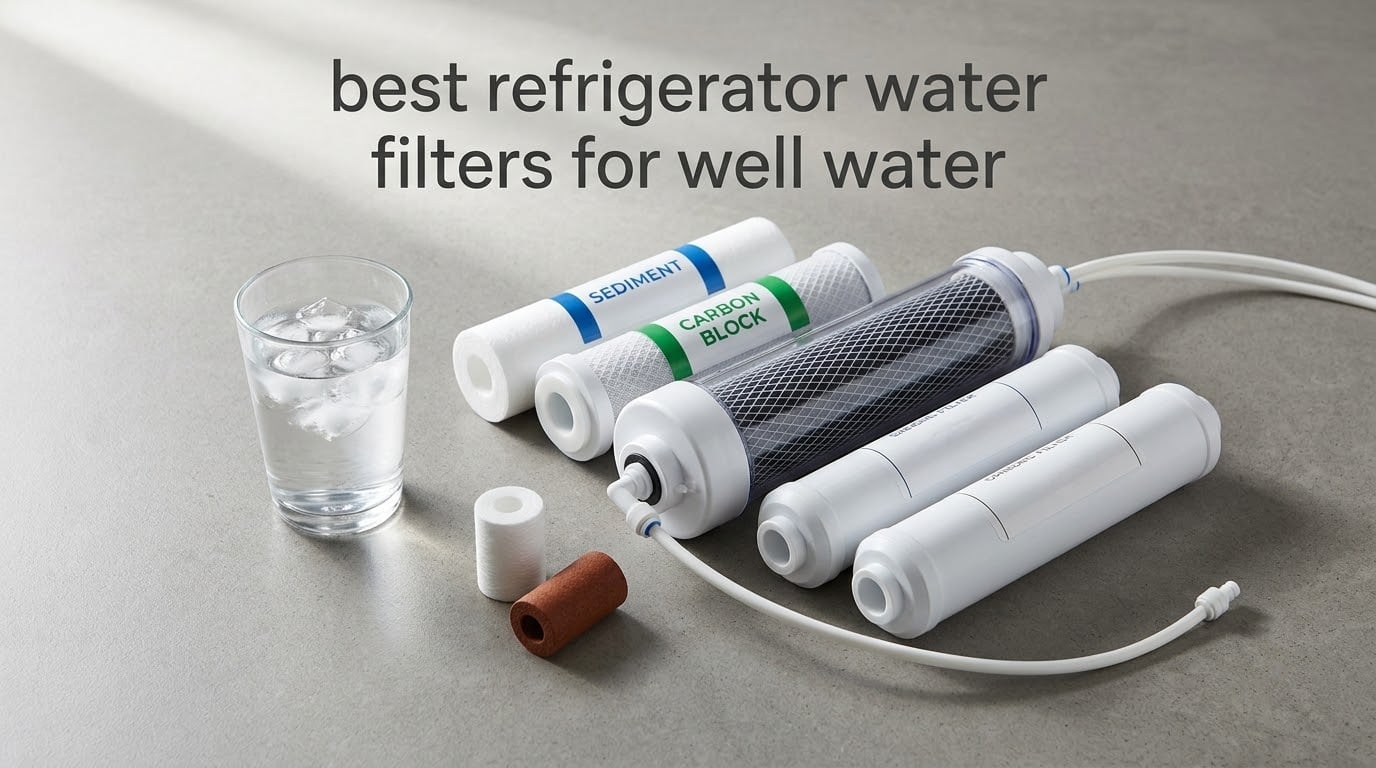
Shopping for the best refrigerator water filters for well water is a different job from shopping for one on municipal supply, because the cartridge your fridge shipped with was never designed for the water arriving at your house. Fridge filters are carbon blocks built to polish chlorine taste and odor out of treated water. Well water arrives untreated, carries no chlorine, and can bring iron, manganese, sulfur, sediment and iron bacteria with it. That mismatch is why so many fridge filters choke within a few months on a private well.
Here is the honest version. A refrigerator water filter for well water improves taste, clarity and odor. It does not make unsafe water safe, and it does not remove dissolved iron, manganese, nitrates or bacteria on its own. If your well panel shows iron or hydrogen sulfide above the aesthetic guideline, that load has to be handled upstream with an oxidation or media stage before any carbon cartridge sees the water. Forum consensus in the well-water communities agrees on that sequence, and it is the reason we ranked the picks below on certification and cartridge media rather than on brand name.
We compared 12 inline and full-system refrigerator filters, checking published certifications, rated gallon capacity, flow rate, connection type and fitting kits, then cross-read thousands of owner reviews for what actually happens on a well supply. All twelve are built to the 1/4 inch line size that standard refrigerator ice maker tubing uses, and every one carries an ANSI or NSF-listed certification. The [EcoPure EPINL30 inline refrigerator filter](https://www.bymewilliamshakespeare.org/best-reverse-osmosis-water-filters/) comparison below covers the units we would actually put on a well.
One safety line before we start: no carbon filter makes bacteria-contaminated or nitrate-contaminated well water safe to drink. If your well has ever returned a coliform result, treat and disinfection come before any filter purchase discussed on this page.
Table of Contents
Top 3 Picks for Best Refrigerator Water Filters for Well Water in 2026

EcoPure EPINL30 Inline Filter
- NSF/ANSI 42 certified
- Includes compression and push-to-connect fittings
- Universal fit for fridges
- ice makers
- RVs

AQUA CREST INL Inline Filter
- 0.5 micron coconut shell carbon block
- Reduces rust and suspended solids
- 5 year or 5000 gallon rating
Membrane Solutions T33
- Standard 10 inch by 2 inch housing
- Two pack coconut shell carbon block
- Push-to-connect fittings only
All 12 Refrigerator Water Filters for Well Water Compared in 2026
| Product | Specifications | Action |
|---|---|---|
| EcoPure EPINL30 Inline Filter |
|
Check Latest Price |
| AQUA CREST INL Inline Filter |
|
Check Latest Price |
| Membrane Solutions T33 Two Pack |
|
Check Latest Price |
 LASCO 37-1821 Ice Maker Filter LASCO 37-1821 Ice Maker Filter |
|
Check Latest Price |
 Waterdrop INL Inline Filter Waterdrop INL Inline Filter |
|
Check Latest Price |
 PureWater Filters PWF10 PureWater Filters PWF10 |
|
Check Latest Price |
 Vegebe Inline Two Pack Vegebe Inline Two Pack |
|
Check Latest Price |
 Frizzlife MS99 Inline System Frizzlife MS99 Inline System |
|
Check Latest Price |
 PURENAT Inline Filter Kit PURENAT Inline Filter Kit |
|
Check Latest Price |
 HYDRO MASTER Inline Post Carbon HYDRO MASTER Inline Post Carbon |
|
Check Latest Price |
 Culligan IC 3 EZ-Change System Culligan IC 3 EZ-Change System |
|
Check Latest Price |
 Watts Premier 560029 Inline Filter Watts Premier 560029 Inline Filter |
|
Check Latest Price |
1. EcoPure EPINL30 Inline Filter – Best Overall for Well Water Fridges
EcoPure EPINL30 5-Year In-Line Refrigerator Water Filter – Universal Fit for Most Fridges, Ice Makers, RVs & Boats – Reduces Chlorine Taste & Odor – Easy DIY Install with 1/4″ Fittings
NSF/ANSI 42 certified
5 year advertised life
Both fitting types included
6 by 13.5 inch body
Pros
- Tool-free install with compression and push-to-connect fittings in the box
- Works across Samsung GE LG Whirlpool and Frigidaire lines
- Largest owner review base of any pick here
- Reviewers on rural wells report a clear taste improvement
Cons
- Body is about 3 inches across so behind-fridge clearance matters
- Push-in fittings rather than threaded
- Fitted grommets may need a wrench
This is the unit we keep coming back to for well households, and the reason is volume of evidence rather than a headline specification. It has been on the market long enough to have accumulated the deepest owner history in this roundup, and the recurring note from rural users is a consistent, noticeable improvement in the taste of both dispenser water and ice over the factory cartridge.
The installation story is the other reason it lands at the top. The box contains both 1/4 inch compression fittings and push-to-connect fittings, which means it adapts to whichever style your supply line already uses. For someone cutting into tubing for the first time, not having to identify a fitting type in advance removes the most common source of a first-attempt leak.
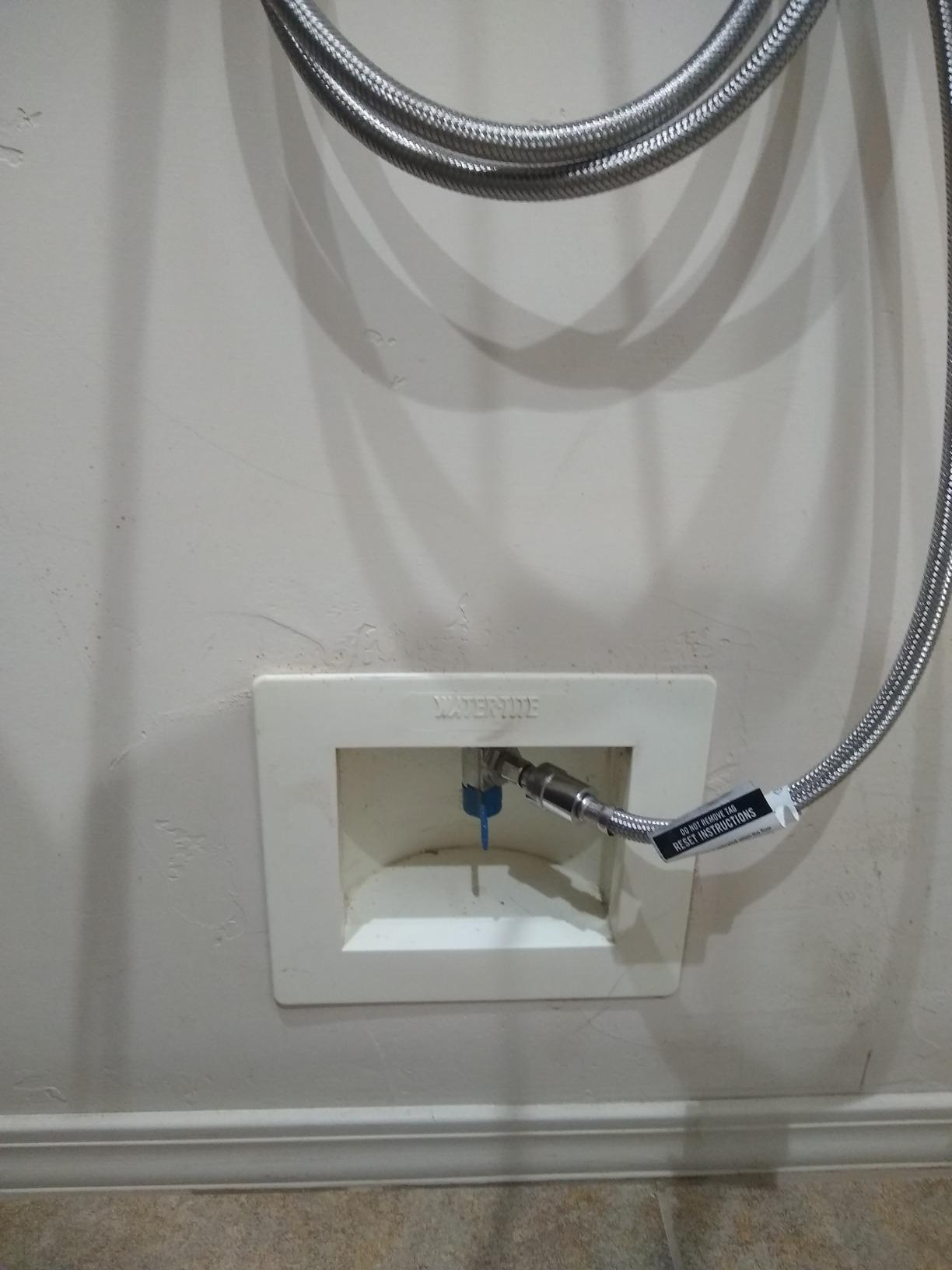
It is certified to NSF/ANSI Standard 42 for chlorine taste, odor and sediment reduction, which is worth being precise about: it is an aesthetic standard, and there is no chlorine in your well water for it to remove. What it does give you is a cleaner taste and a reduction in sediment load reaching the ice maker. The same 42 certification is also what allows a lot of sediment to be claimed, and sediment is one contaminant a carbon block genuinely does intercept.
It is designed, engineered and assembled in the USA, comes with a 90-day warranty, and ships as a single count. The body measures roughly 6 inches deep by 13.5 inches wide by 3 inches high, so measure the space behind the fridge before you order, particularly if the fridge is pushed tight to the wall.
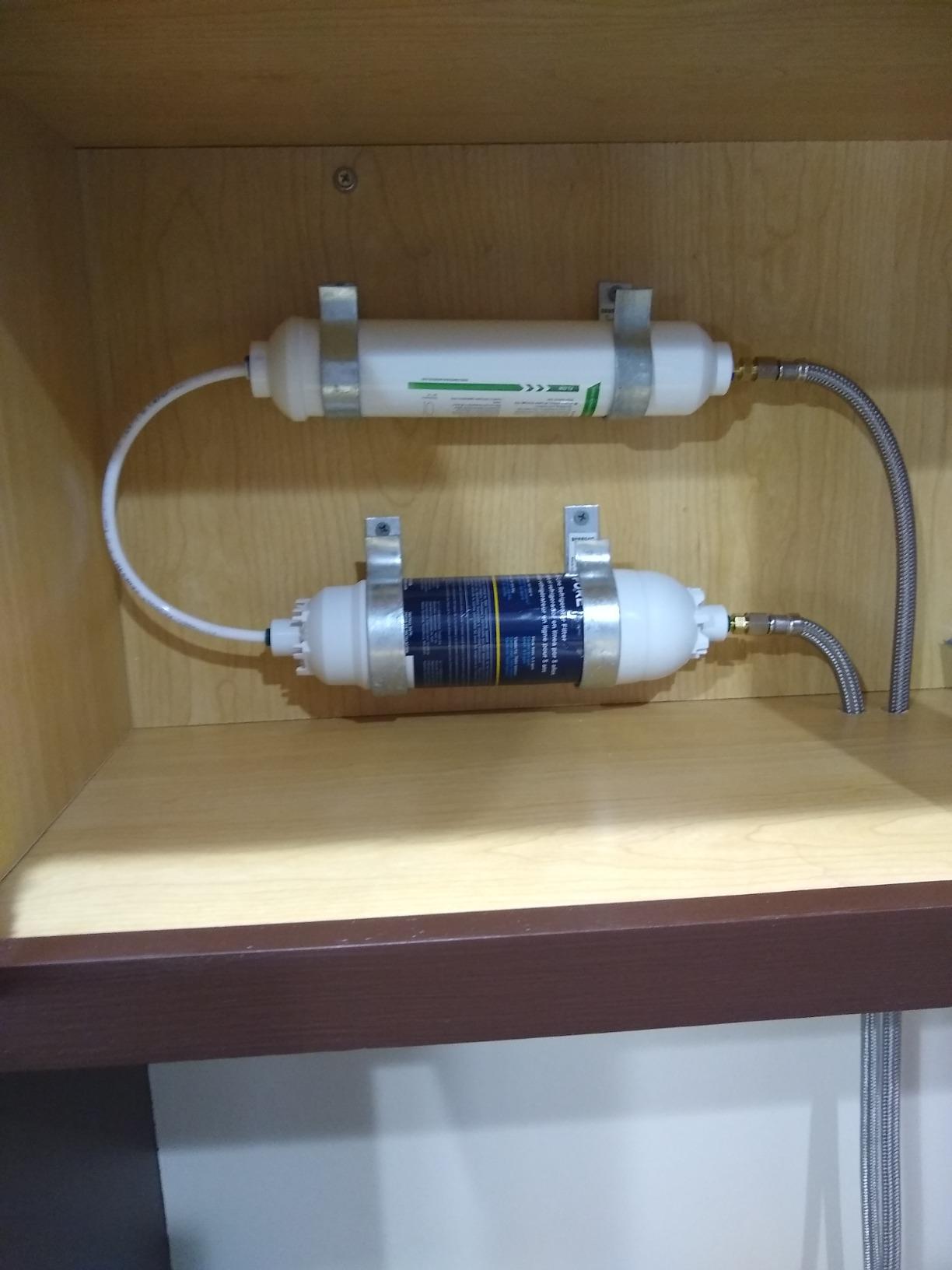
What life claim to expect on a well supply
The advertised five-year rating is the single most repeated point of confusion in reviews. It is a ceiling under favorable water conditions, not a schedule. On a well with moderate iron or heavy sediment, owners consistently report replacement well inside that window, and forum users describe changing inline cartridges every one to three months on iron-heavy supplies.
The practical approach is to stop reading the year figure and start watching flow. When dispenser fill slows noticeably or ice production drops, the cartridge is telling you it is fouled. Track gallons against the rated capacity for the unit you buy, and set the reminder from the gallon number.
Where it falls short on a well
This is an aesthetic carbon filter, so if your water has a metallic taste or a rotten-egg odor, expect improvement in clarity and general taste but not a full correction of the problem. Owners whose wells carry visible iron staining report that the cartridge will need replacing much sooner than advertised because the pore structure fills with iron oxide.
If your test results show iron or sulfur above the aesthetic guideline, treat this as the last stage of a system rather than the whole system. Pairing it behind a sediment and oxidation stage is where it performs as designed.
2. AQUA CREST INL Inline Filter – Best Value Carbon Block
AQUA CREST INL 5 Years Inline Water Filter for Ice Maker and Refrigerator
0.5 micron carbon block
5000 gallons or 5 years
Both fitting types included
14.4 ounces
Pros
- Polyester membrane plus coconut shell carbon block
- Explicit rust and suspended solids claims
- Good flow reported on first install
- Low ongoing cost versus proprietary cartridges
Cons
- Does not reduce Total Dissolved Solids
- Several buyers report depletion far short of 5 years
- Needs a multi-gallon flush before use
This is the pick for a well household that wants the most stated contaminant coverage per dollar on an inline cartridge, and it is the only one in the group that names rust, suspended solids and colloids in its published reduction list alongside taste and odor. That wording matters more on a well than on city water, because rust and sediment are the two things a private supply genuinely delivers.
The media stack is a 0.5 micron coconut shell activated carbon block paired with a polyester membrane, and the materials are BPA-free and lead-free. Rated capacity is 5,000 gallons or five years depending on water conditions, which puts it in the same class as the EcoPure on paper while costing less per cartridge.
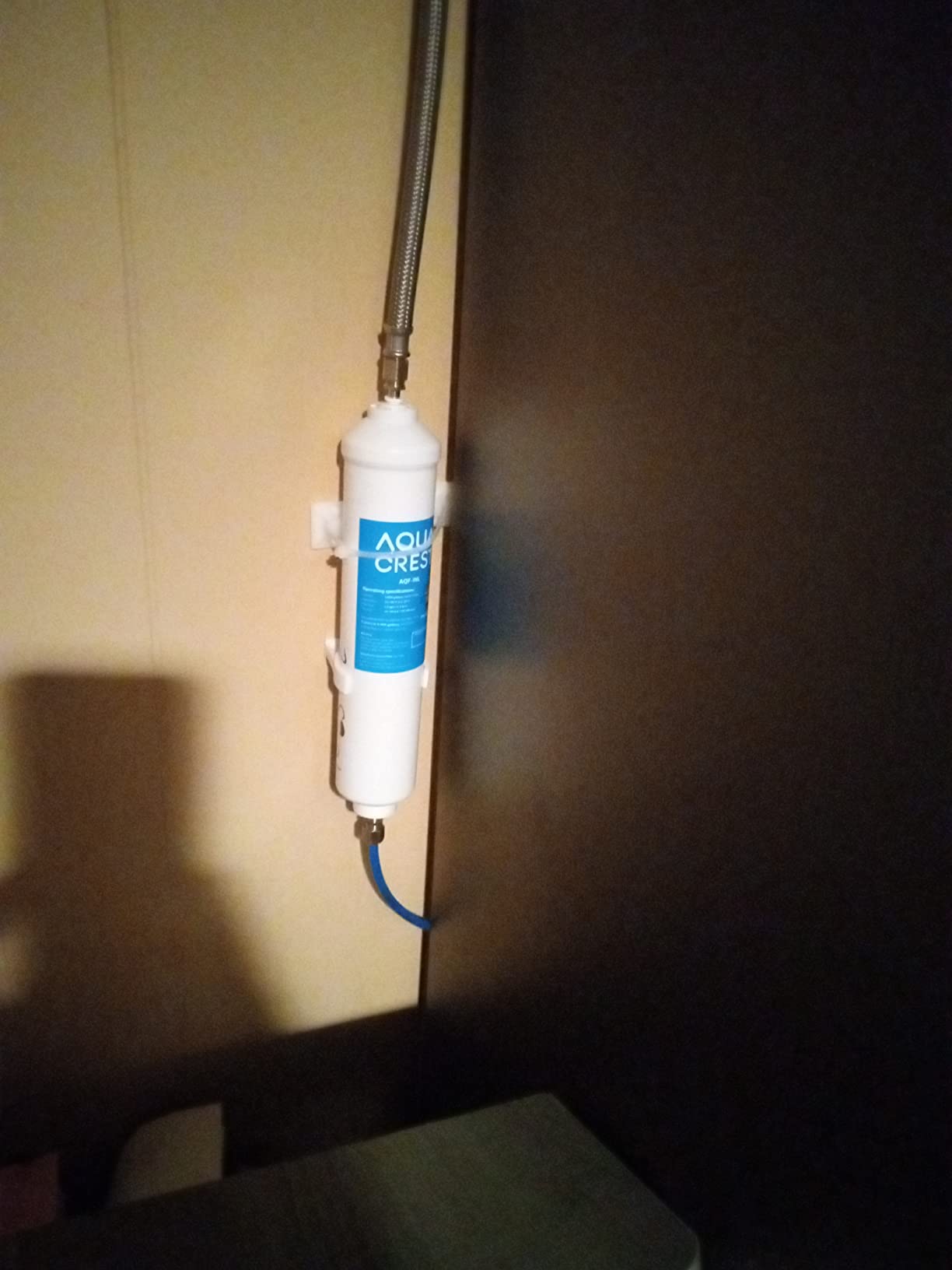
The box is unusually complete for this category: one inline filter, a length of 1/4 inch PE tubing, both 1/4 inch compression and push-to-connect fittings, a compression hex nut set, plus a sleeve and insert. The install instructions include the detail most listings skip, which is to push the PE tube about 20mm into the cartridge to prevent a leak at the seat.
Compatibility is listed against specific refrigerator models including GE, LG and Whirlpool units, but the fitting approach is what actually determines fit. Anything on 1/4 inch line will take it. The manufacturer backs it with a one-year warranty.
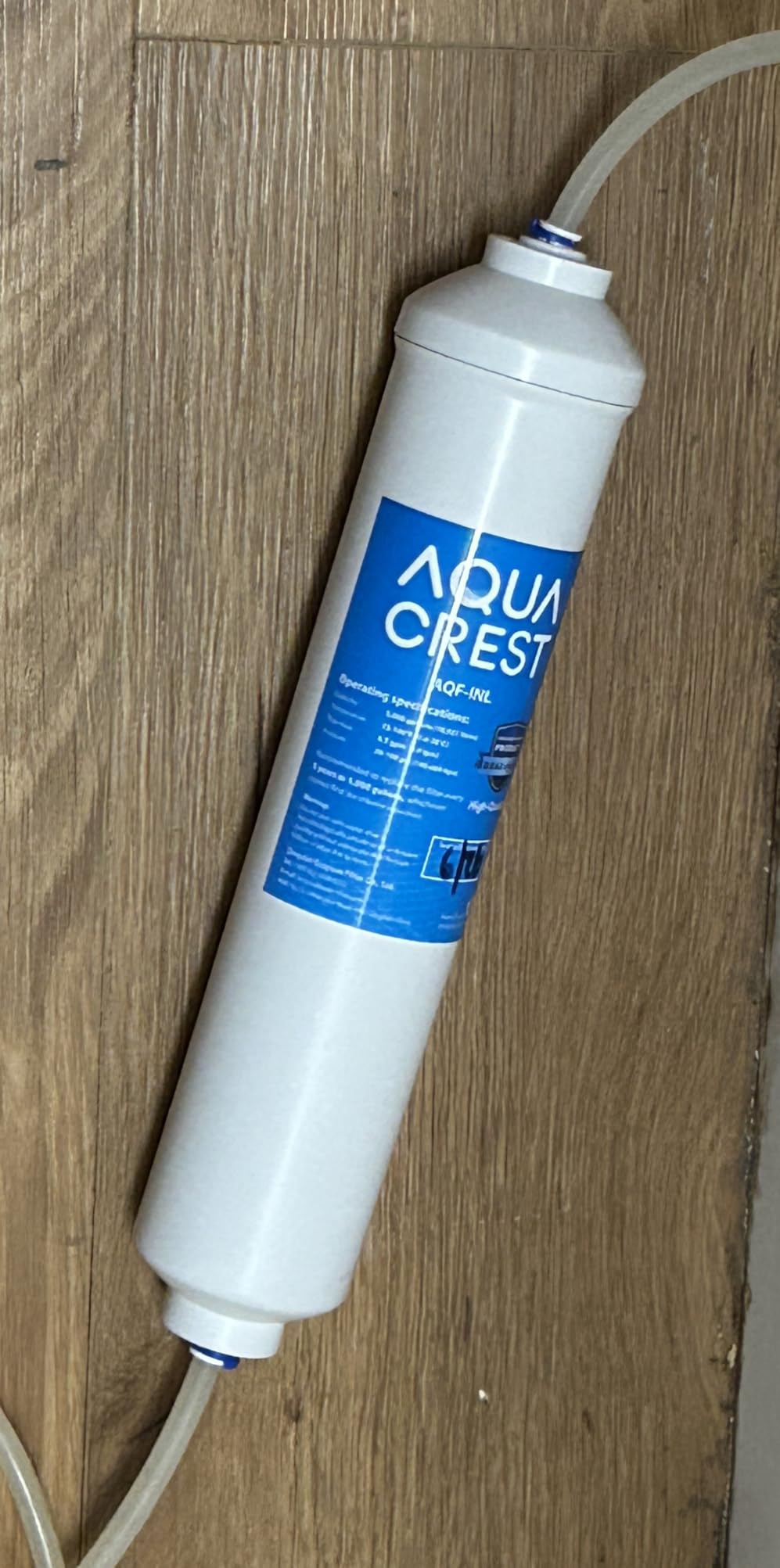
Why the rust claim matters more here
Rust reduction is unusual to see stated on an inline cartridge at this price, and it is the closest this product comes to addressing a real well contaminant. It is still a surface and carbon effect, so it slows staining and improves clarity rather than removing dissolved iron at the source. Pair it behind a sediment stage and the difference is noticeable.
If your complaint is orange staining in the ice bin and on the dispenser, this is the cartridge we would try before a more expensive system, because the media is designed for suspended particulate and does not foul as fast as a plain carbon block on sediment-heavy water.
Where the five-year claim breaks down
The dominant complaint in reviews is lifespan, not taste. High-volume households, and well households in particular, report the cartridge depleting well inside the advertised five years. The lower replacement cost keeps it a net win, but plan on a shorter interval than the box suggests.
Also note it does not reduce Total Dissolved Solids, and that the manufacturer says so directly. If you are chasing TDS, hardness or nitrate numbers, this is not the tool, and no inline cartridge in this roundup is.
3. Membrane Solutions T33 – Best for Post-RO Polishing and Standard Housings
Membrane Solutions T33 Inline Post Carbon Water Filter 1/4″ Quick-Connect
10 inch by 2 inch inline housing
Two pack
NSF/ANSI 42 certified
1800 to 2000 gallons
Pros
- Exact 1:1 sizing match to standard housings
- Tool-free push-connect on both ends
- Two-pack gives good per-cartridge value
- Dependable final polish after reverse osmosis
Cons
- Push-to-connect only
- will not accept threaded fittings
- Needs 3 to 5 gallons flushed before use
- Shorter life than multi-year inline cartridges
The T33 is a different job than the two above it. It is a 10 inch by 2 inch inline cartridge in the standard housing footprint, which means it drops into existing brackets and housings, and it is sold as a two-pack. If you already have a reverse osmosis system feeding the fridge, this is the finishing stage that polishes the water after the membrane.
Media is food-grade BPA-free activated coconut shell carbon, certified to meet NSF/ANSI 42. Standalone service life is listed as up to 12 months as a post-RO filter or roughly 1,800 to 2,000 gallons used on its own, and the instructions call for flushing 3 to 5 gallons before first use.
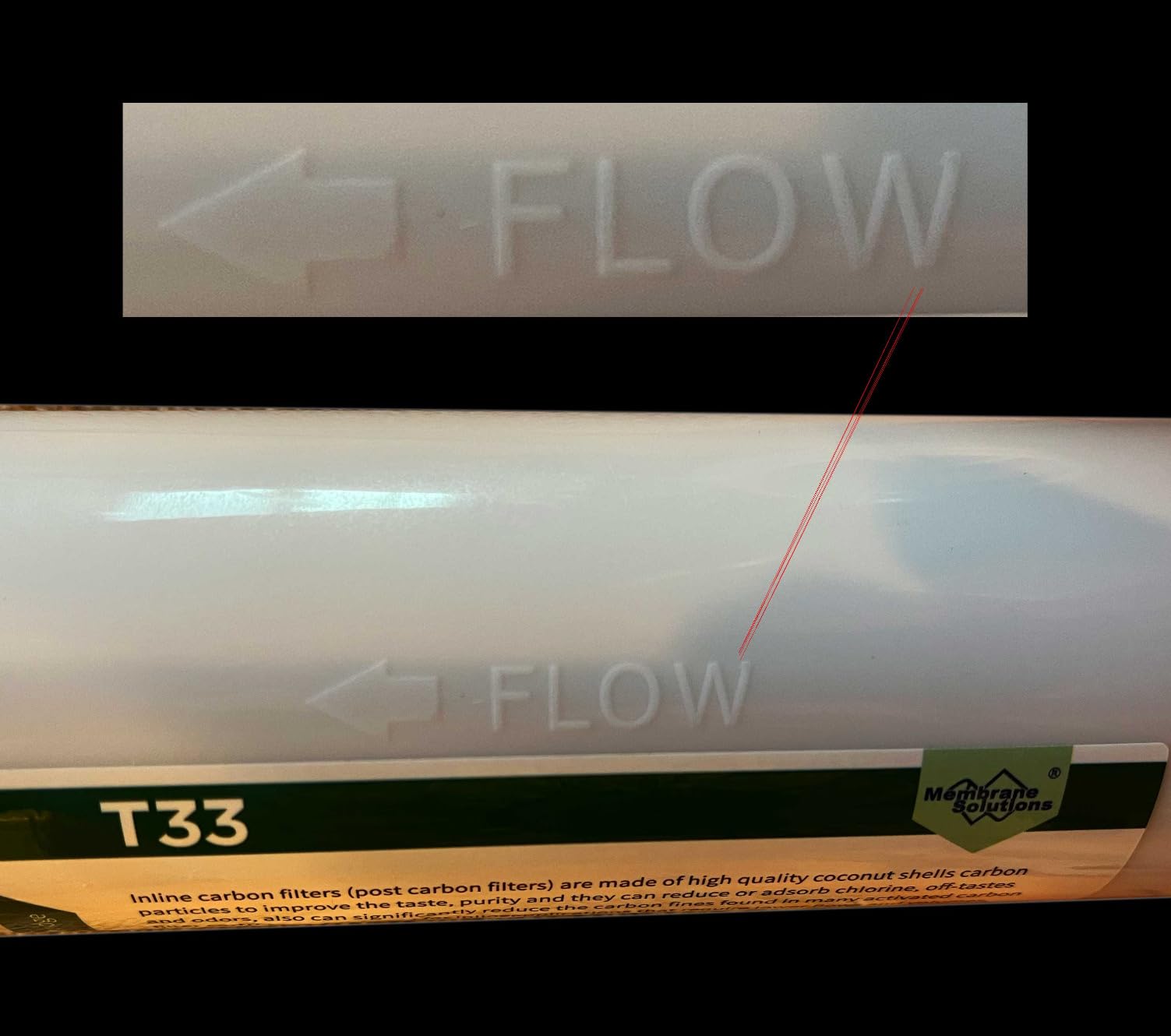
Owners treat it as a dependable polishing cartridge and the review language is consistent: the sizing matches existing housings exactly and the connections do not drip. That last point is what makes it a repeat purchase rather than a one-time upgrade, since a cartridge you can swap in a minute keeps the line in service.
It is compatible with the SimPure T1 and other systems using the same 10 inch by 2 inch footprint. Installation is entirely push-to-connect, so no tubing cutter or wrench is required, provided your line is already JG-style quick connect.
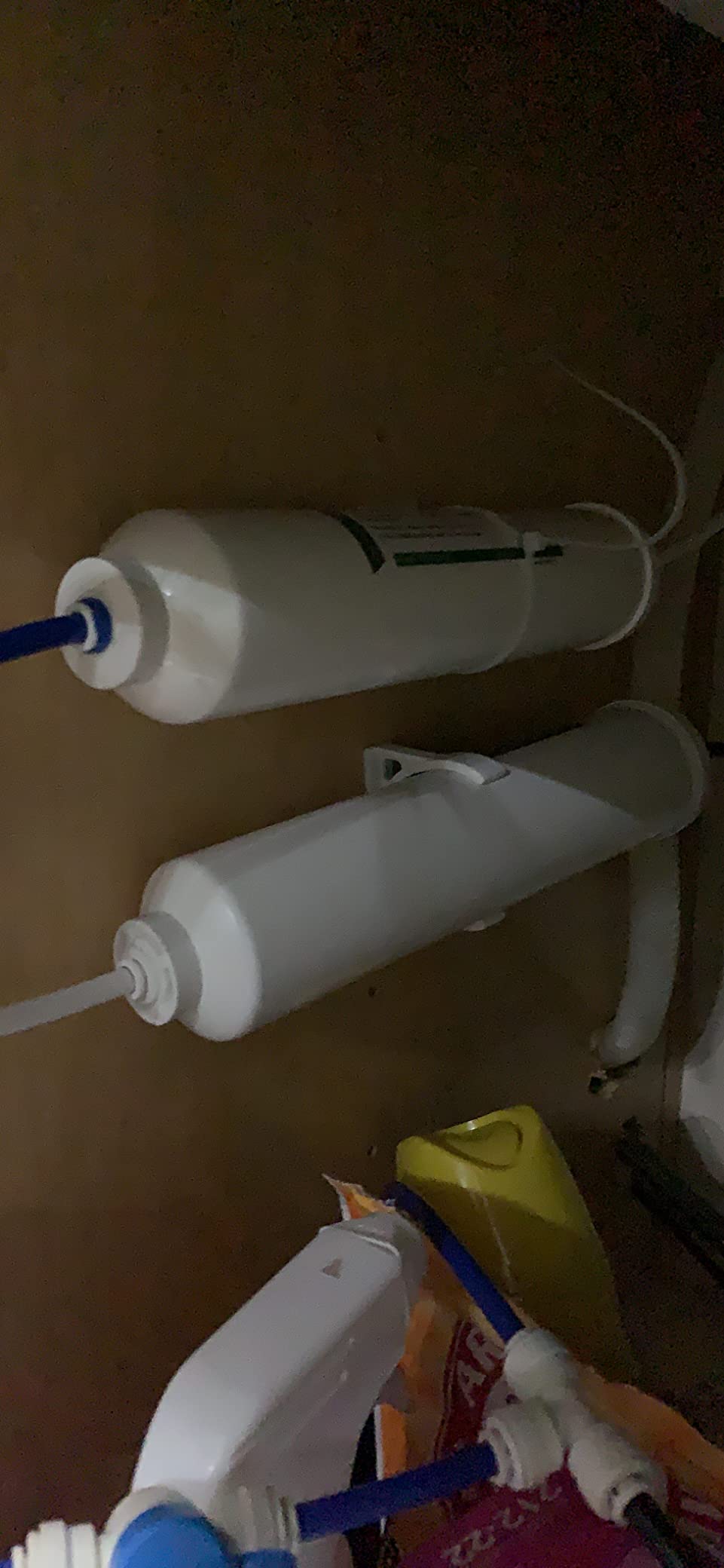
Check your fitting style before buying
This is the single constraint that decides whether it works for you. The cartridge accepts 1/4 inch push-to-connect fittings only and will not work with threaded connections, so it is a poor match for homes plumbed with 1/4 inch NPT or with an older fridge inlet that uses a compression nut.
If your line is already quick-connect, the trade is simple: you give up threaded compatibility and gain a cartridge that installs and swaps without tools. Most modern ice maker lines are quick-connect, which is why this one earns a place here.
Where it is the wrong pick
Standalone life is much shorter than the multi-year inline cartridges in this roundup, so a well household dispensing heavily will replace it more often. It is also a finishing cartridge, not a primary stage, and it will not do the work of a sediment or iron stage ahead of it.
For a single cartridge on a raw well line, one of the first two will serve you better. Choose the T33 when you are polishing after a membrane or replacing a cartridge in an existing 10 inch housing.
4. LASCO 37-1821 Ice Maker Filter – Budget Compression-Only Pick
LASCO 37-1821 Ice Maker Inline Filter with 1/4-Inch Compression Connection, 2-Inch x 10-Inch , White
Brass 1/4 inch compression fittings
1500 gallons or 6 months
2 inch by 10 inch housing
8 ounces
Pros
- Brass fittings attach directly with no modification
- Installs in about 10 to 15 minutes
- Better flow than the OEM filters it replaces
- Improves ice taste and clarity
Cons
- Short 1500 gallon or 6 month interval
- Mounting bracket not included
- Older tubing may not accept the brass inserts
- Needs a multi-gallon flush first
The LASCO is the pick for a fridge with no built-in filter, or for a house that wants a compression connection rather than a quick connect. It is built around a carbon and brass construction with 1/4 inch compression fittings at both ends, and it is designed specifically for ice maker supply lines rather than general drinking water taps.
Owners of fridges without factory filtration commonly recommend it as a cheap, quick way to clean up ice and dispenser water, and the review consensus is that it delivers better flow than the OEM cartridge it replaces. Rated capacity is 1,500 gallons or six months, and it carries an NSF certification.
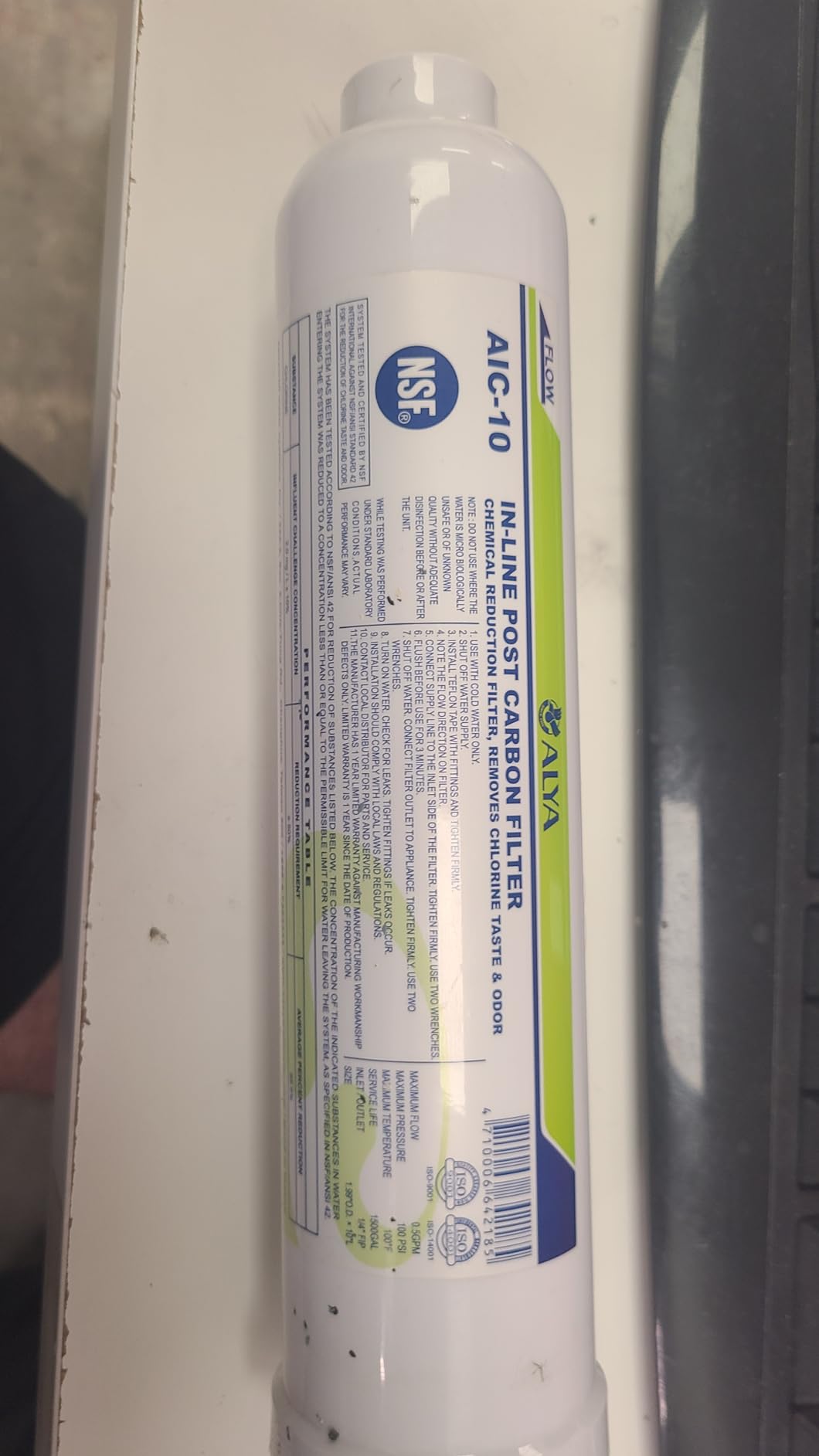
Brass fittings are the practical draw here. They thread onto a standard compression nut directly, so there is nothing to adapt and nothing to buy separately to complete the install. The body is a compact 2 inch by 10 inch unit at 8 ounces, which makes it easy to tuck behind a fridge or inside an ice maker bay.
One thing to plan for is the flush. Reviews repeatedly mention running several gallons to clear carbon dust before the filter goes into service, and this is the same advice that appears on nearly every carbon cartridge in the list.
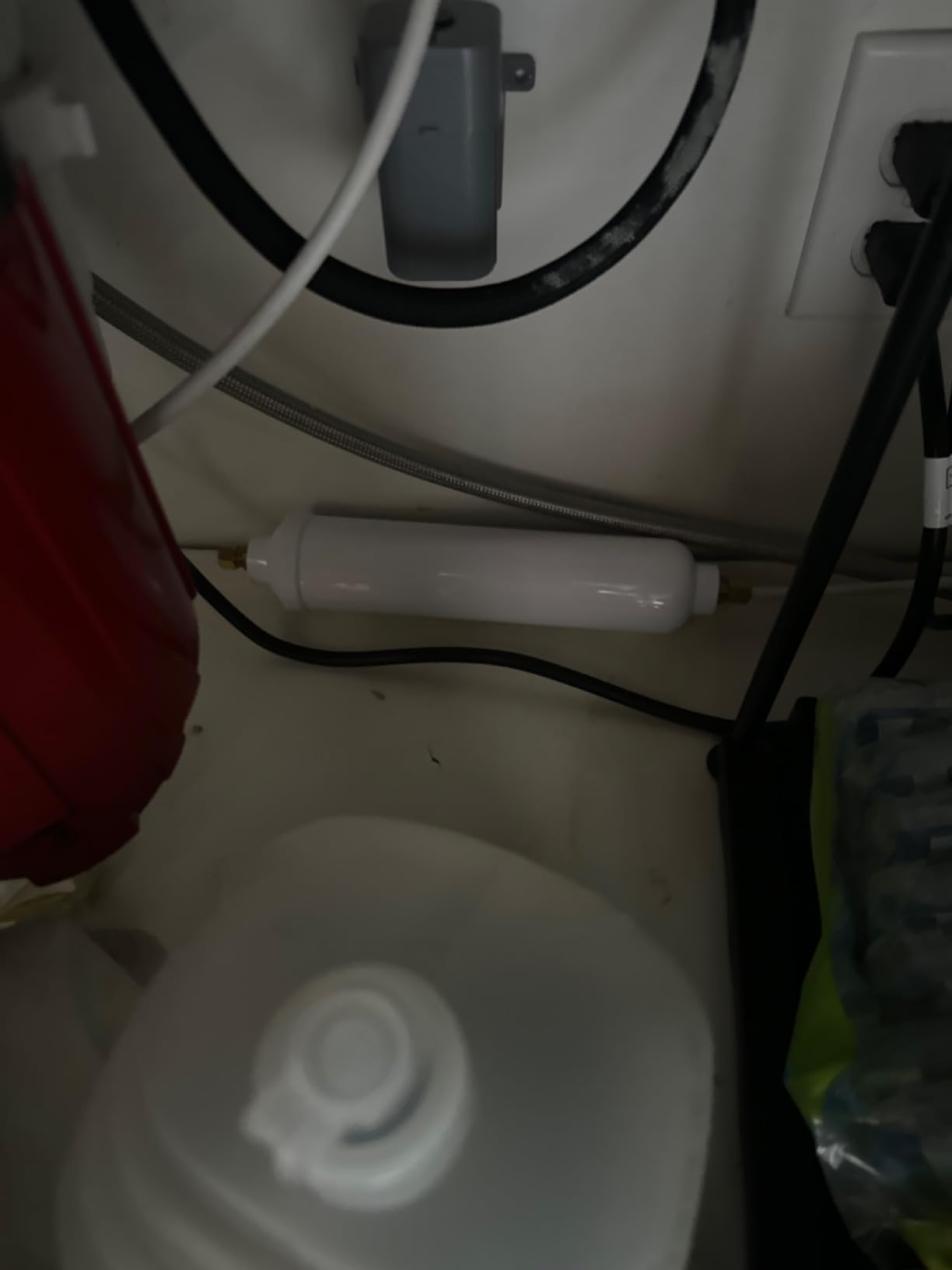
When a short replacement interval is the right trade
A 1,500 gallon or six-month cartridge is a genuine limitation, and on a heavy-use household it will mean more frequent purchases than any multi-year unit in this roundup. What you get in return is the lowest-cost way to fix bad-tasting ice on a fridge that has no filter housing at all.
If your well water is clear and low in sediment, the short interval is manageable and this cartridge does its job well. If sediment is heavy, the fouling will accelerate and you will be changing it even more often than six months suggests.
What to buy alongside it
The mounting bracket is not included, and that is the most common reason people end up with a filter hanging unsupported behind the appliance. Aged tubing is the second issue: several users found existing line too old to accept the brass inserts and had to replace the tubing section, which turns a 15-minute job into a longer one.
Also check the fridge inlet valve before you commit. A tired inlet solenoid on an older appliance is the leading cause of a fridge that stops making ice regardless of filtration, and no inline filter fixes it.
5. Waterdrop INL Inline Filter – Best for Flexible Fitting Setups
Waterdrop INL Inline Water Filter for Refrigerator and Ice Maker
NSF/ANSI 42 at 97.6 percent
NSF/ANSI 372 lead-free
0.5 micron carbon block
Pros
- Kit includes adapters for several line diameters
- Installs in about 15 minutes
- Big taste improvement over built-in filters
- Good flow after installation
Cons
- Only a one-year rated cartridge
- Slightly louder ice maker with the filter inline
- Needs a five-minute flush first
- Only one length of PE tubing included
The Waterdrop INL is the pick when you are not certain what your line looks like or whether the cabinet behind the fridge will cooperate. It ships with 1/4 inch compression and push-to-connect fittings plus a 7/16 inch adapter, which is the widest fitting spread of any inline unit in this roundup, and it works with plastic or copper.
Certification is the strongest on the paper in this group. It is NSF 42 certified for 97.6 percent reduction of chlorine, taste and odor, and NSF 372 certified for lead-free material. That 97.6 percent figure is a chlorine number, so on a well it translates to taste and sediment rather than chlorine, but the lead-free material certification is a genuine and verifiable claim.
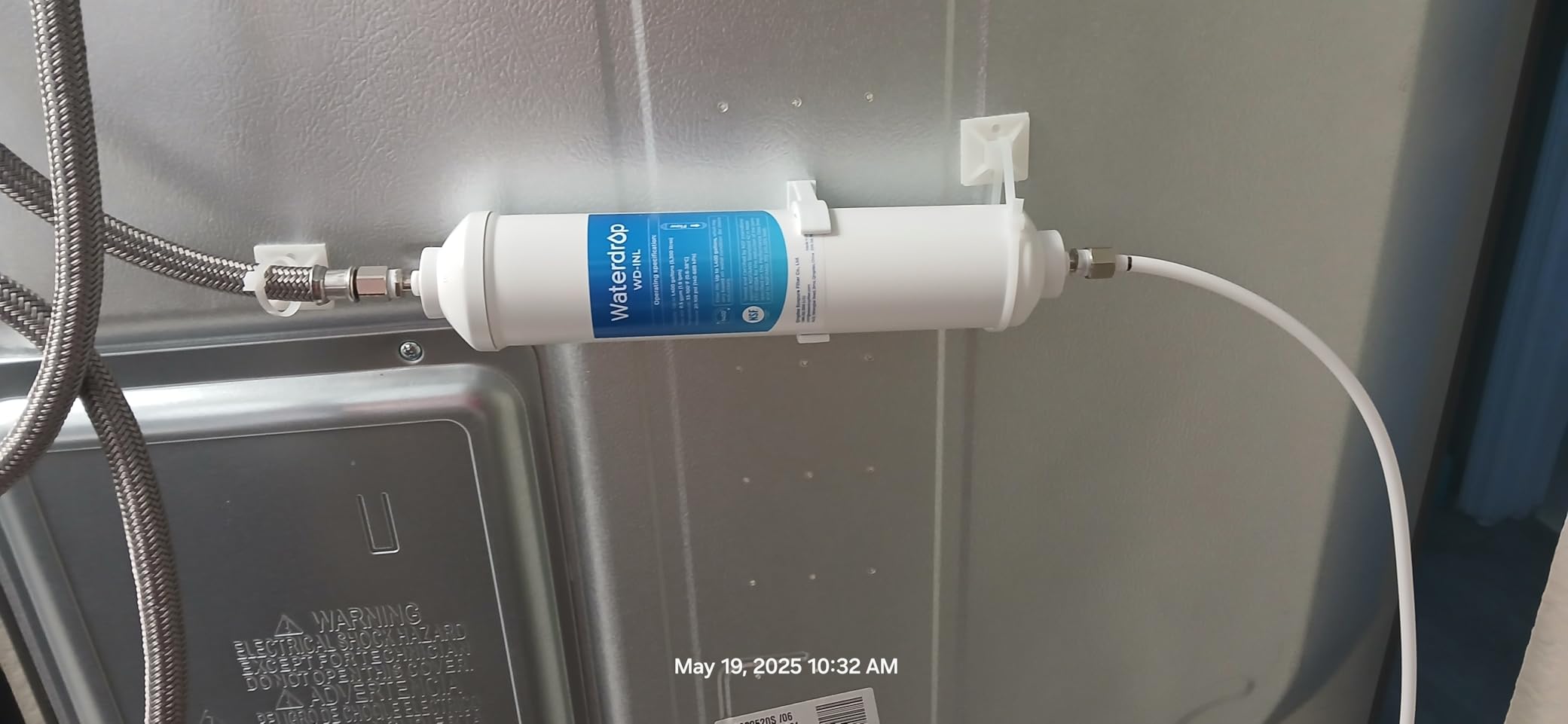
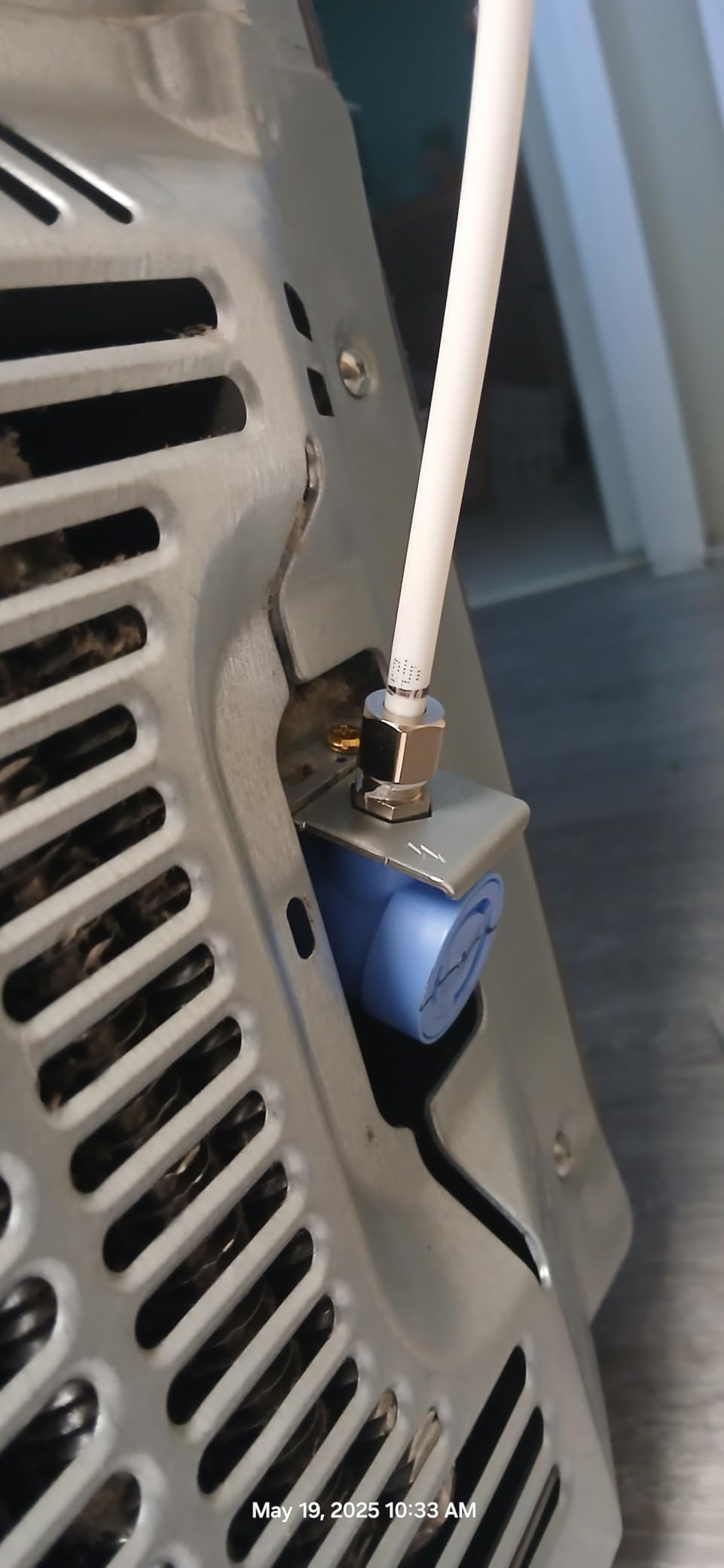
Reviewers single out the box contents as unusually complete, with extra fittings and mounting hardware that save a trip to a hardware store. Installation is reported at around 15 minutes with clear instructions, and the taste result is consistently described as better than the factory fridge filter. Media is a 0.5 micron coconut shell activated carbon block.
It is also listed as a compatible replacement for cartridges from Samsung, LG, Whirlpool, GE and Culligan among others, so it doubles as a substitute part for a factory filter if you prefer a universal housing.
What the dual certification actually buys you
NSF 42 is the aesthetic standard and covers taste, odor, chlorine and sediment. NSF 372 is a material standard confirming the product contains no lead. Neither one certifies this cartridge for cyst, lead or nitrate reduction, so do not read the lead-free material claim as a lead-removal claim. That distinction catches people out more often than any other in the category.
The practical value on a well is straightforward: you know the carbon block is food-safe material, you know the sediment rating, and you know the manufacturer published a test figure rather than a vague claim.
Where the one-year rating bites
This is a one-year rated cartridge, which makes it the shortest-lived of the multi-capacity inline options here. On a well with active iron or sediment load, expect it to foul sooner than that. The lighter 3.38 inch body compared with the EcoPure helps with clearance behind the appliance.
The other recurring note is that ice maker noise increases slightly with a filter in the line. Owners describe it as a low hum rather than a fault, and it is worth hearing in your own kitchen before you decide it bothers you.
6. PureWater Filters PWF10 – Highest Rated Inline Cartridge
PureWater Filters PWF10 Inline Water Filter for Refrigerators & Ice Makers
NSF/ANSI 42 Class I
One year or 1500 gallons
2.5 inch by 8 inch body
Made in USA
Pros
- Highest average rating in this roundup
- Quick connect on both ends
- Reliably clears chlorine taste and odors
- Made in the USA with a lifetime warranty
Cons
- Cartridge only
- no fittings in the box
- One year or 1500 gallon rated life
- Requires quick connect line to be present
The PWF10 carries the highest average rating of the twelve, which is a meaningful signal even with a smaller review base than the leaders. It uses a coconut shell carbon block with a polypropylene stage, is NSF certified against ANSI/NSF Standard 42 for taste, odor and chlorine reduction Class I, and is made in the USA with a lifetime warranty on defective parts plus phone support.
Physically it is the smallest unit here at 2.5 inch diameter by 8 inch tall and 12 ounces, and that footprint is a real advantage in a tight cabinet behind the fridge. Quick-connect fittings on both ends accept 1/4 inch line, so swaps are fast.
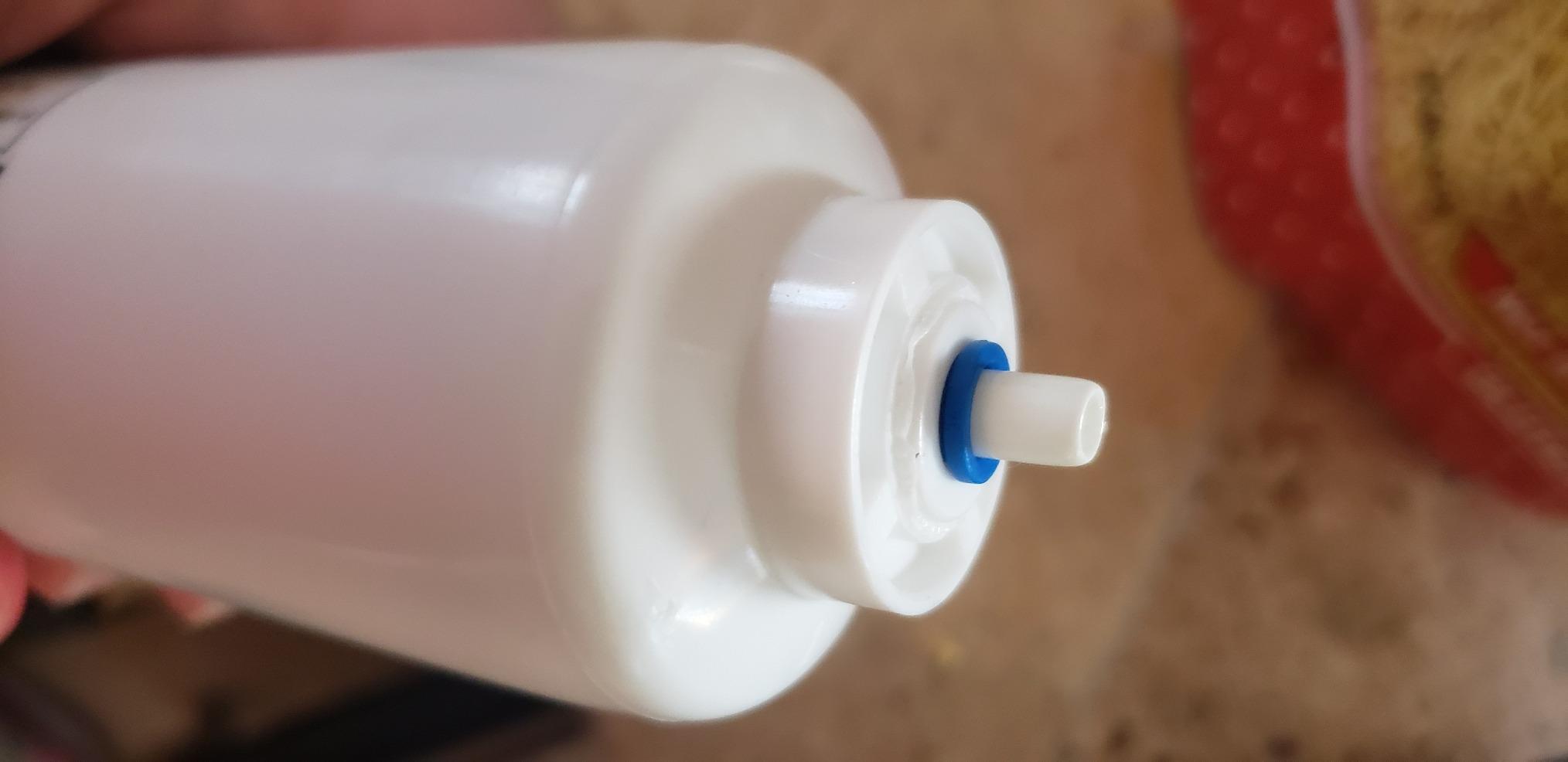
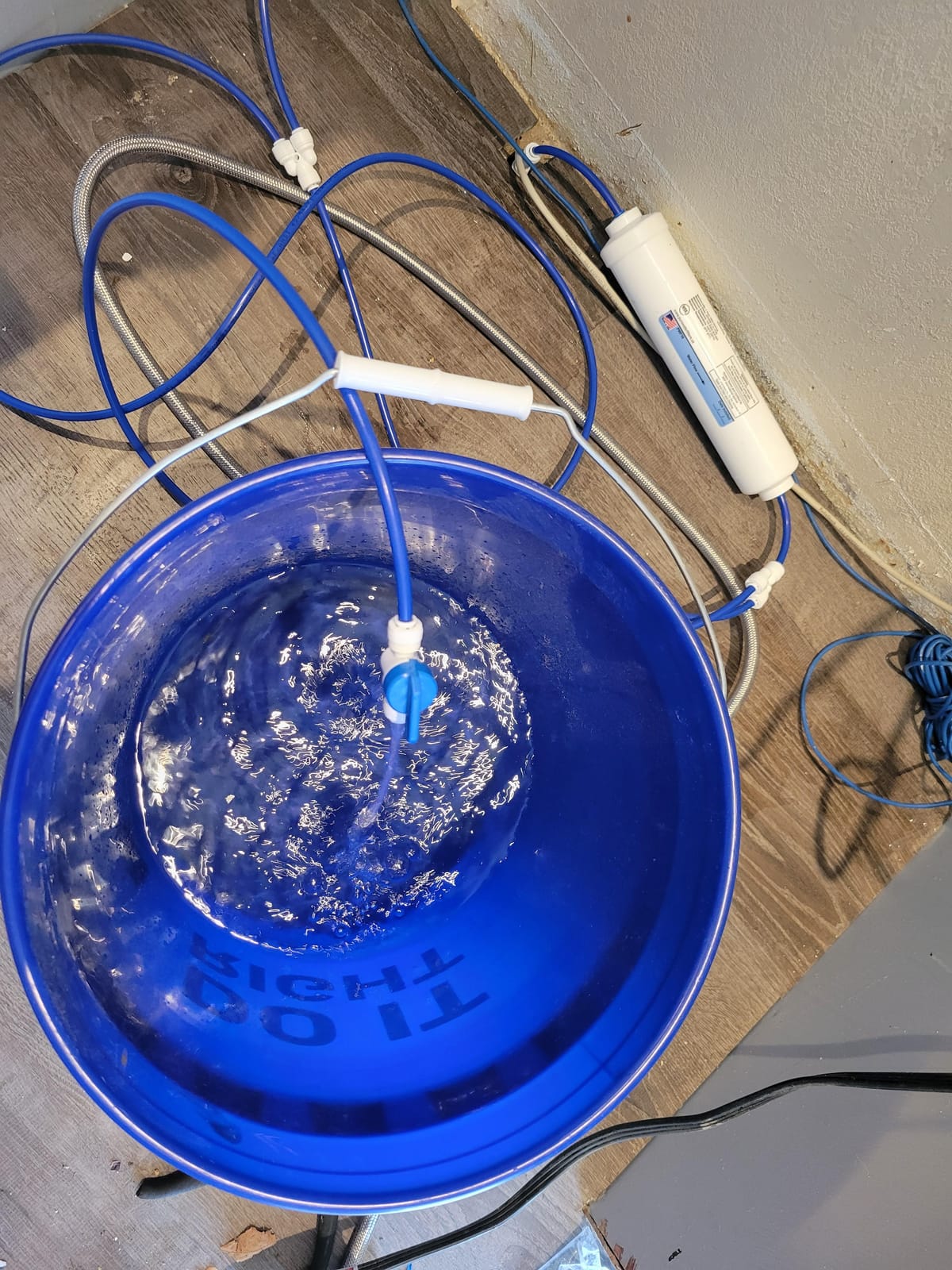
Owners report crisp water, clear ice and near-instant installation, and several reviews describe unconventional uses such as under-sink taps and pump-driven campground filtration. That flexibility is what a compact carbon block with quick connects gives you, and it is the reason this unit shows up in setups far from a refrigerator.
Rated life is one year or 1,500 gallons. Also worth noting before you order: this ships as the replacement cartridge only, not a complete kit, so if you do not already have a housing or a quick-connect line you are buying one part of a system.
Best fit for a cramped space
If the space behind your fridge is the deciding factor, this is the one to measure against. At 2.5 inches across and 8 inches tall it clears cabinet and bracket positions that the 3.4 to 3.5 inch bodies in this roundup will not, and the low weight means it does not sag a bracket over time.
It is also the most flexible in terms of placement. Owners use it on campground pumps and sink taps, so if you want the same carbon block serving a secondary drinking point, the physical footprint is not a limitation.
What you need before buying
Confirm that your supply line uses 1/4 inch quick-connect tubing. If your line is threaded or compression, this cartridge will not seat without adapters, and because the box contains only the cartridge, those adapters are a separate purchase.
Be clear-eyed about the interval too. One year or 1,500 gallons is the shortest rating among the higher-capacity units here, and the review consensus names that annual replacement as the main limitation despite the strong rating.
7. Vegebe Inline Filter Two Pack – Best Value for RO System Owners
VEGEBE Inline Water Filter for Refrigerator, Ice Maker & Reverse Osmosis
NSF/ANSI 42 coconut shell carbon
Two pack
12 months or 1500 to 1800 gallons
2 inch by 10 inch
Pros
- Two cartridges in the pack
- Tool-free quick connect both ends
- Holds pressure well once installed
- Good value against building supply equivalents
Cons
- Fitting adapters not included
- Longer life not guaranteed on harder water
- Requires a 2 to 3 gallon flush and correct flow direction
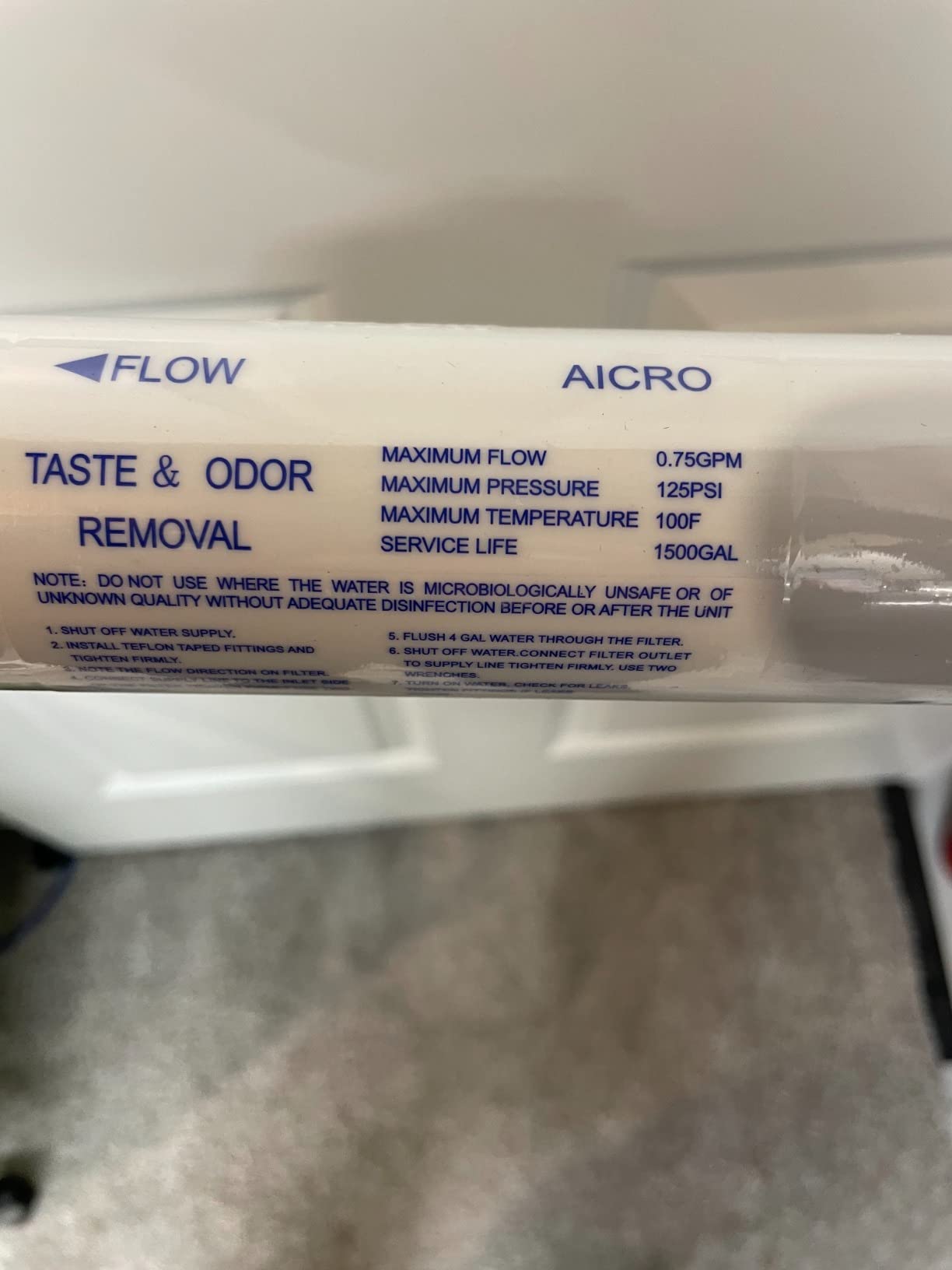
The Vegebe is a 10 inch by 2 inch inline carbon cartridge with built-in 1/4 inch quick connections at both ends, sold as a two-pack. It is built around food-grade coconut shell activated carbon with NSF/ANSI 42 certification, and it is a direct replacement for the APEC FI-ES-TCR-QC cartridge, working with APEC ESSENCE series reverse osmosis systems.
Owners highlight near-instant installation, solid water pressure once seated, and service life of about a year, including reports from well water users feeding an ice machine. Rated capacity is 12 months or 1,500 to 1,800 gallons depending on water quality.
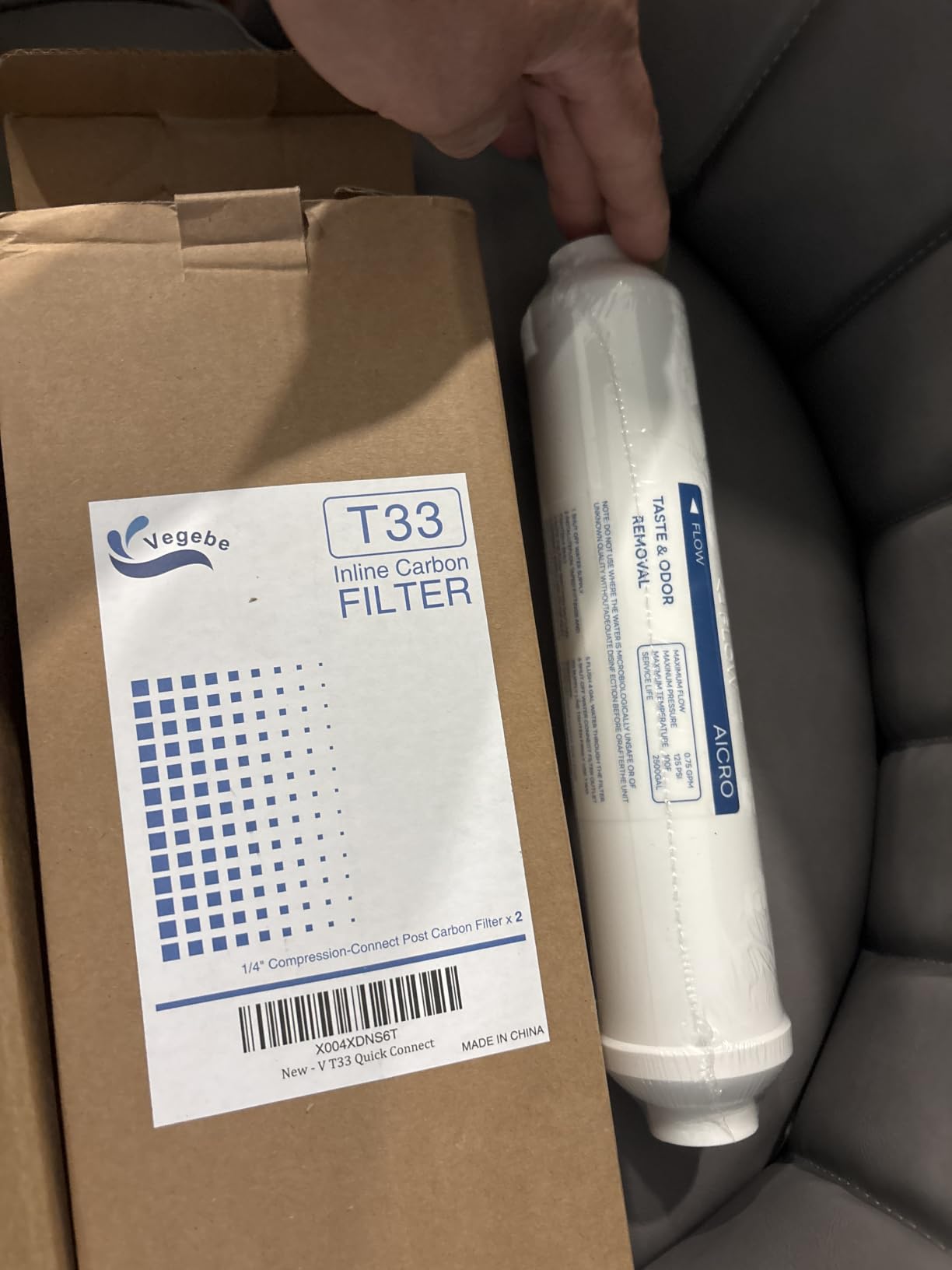
The two-pack format is the difference here. If you already run a reverse osmosis system under the sink and want a polishing stage for the fridge line, having a spare on hand means a change takes seconds and the second cartridge is already paid for. For a single inline point, a two-pack can be more than you need.
It is also listed as compatible with a wide range of APEC water purifier models, which covers a lot of existing reverse osmosis hardware that people want to finish off at the refrigerator.
Best used as a second stage, not a first
This cartridge is at its best after a membrane. Carbon after reverse osmosis removes the chlorine taste that some membranes leave behind and polishes the water without the pressure penalty of another membrane stage. Installing it ahead of a membrane, or as your only treatment on a raw well line, wastes its capacity.
If your goal is drinking water quality rather than ice taste, and you have the cabinet space under a sink, the economics of a dedicated under-sink system usually beat an inline cartridge. We compared the trade in our [reverse osmosis picks](https://www.bymewilliamshakespeare.org/best-reverse-osmosis-water-filters/).
Fitting adapters are the thing to plan for
The T-fitting and compression adapters are not in the box. That is the main warning in reviews, and it is the reason to check your line style first. If you need threaded or tee connections, budget for a separate purchase before the day you install.
Also flush 2 to 3 gallons and confirm the flow direction arrow before connecting, which is the standard step across every carbon cartridge here. Buyers who skip it report cloudy water and carbon fines in the first few glasses.
8. Frizzlife MS99 Inline System – Best NSF/ANSI 53 Certified Inline System
Frizzlife Inline Water Filter System for Fridge, Ice Maker, Under Sink, Certified 0.5 Micron Reduces Chlorine, Lead, Long Lasting, Compression Brass Fittings Fits for Copper Tubing, MS99
IAPMO certified to NSF/ANSI 42 and 53
1600 gallon and 2 year life
1.4 gpm flow
Pros
- Only inline system here certified to NSF/ANSI 53
- Auto shutoff head for tool-free cartridge changes
- Fast 1.4 gpm flow
- Substantial brass fittings and tubing included
Cons
- Most expensive unit in the group
- Only one 90 degree brass elbow supplied
- No-shutoff changes can spray water
- Bulky housing needs planned clearance
The Frizzlife MS99 is the pick when certification status is the deciding factor rather than taste. It is the only complete inline system in this roundup certified by IAPMO R&T against both NSF/ANSI 42 and NSF/ANSI 53, and 53 is the health-effects standard covering lead and cyst reduction. That is a different class of claim from everything else on this page.
The system uses a 0.5 micron compound cartridge rated at 1,600 gallons and up to two years of service life, with a maximum flow rate of 1.4 gpm. Owners report filling a 330ml glass in about three seconds, which is the flow figure that matters for dispenser fill rate and ice production.
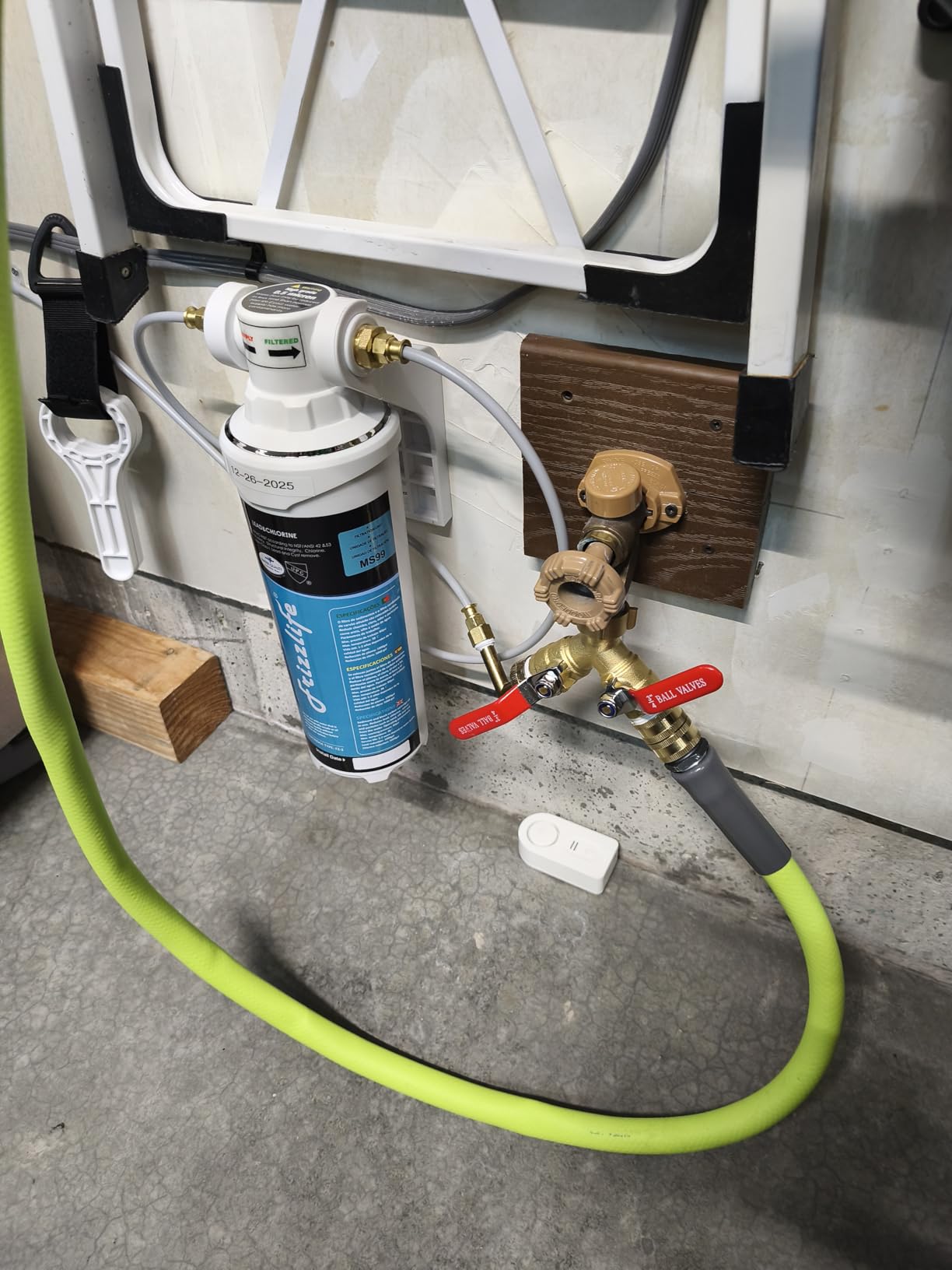
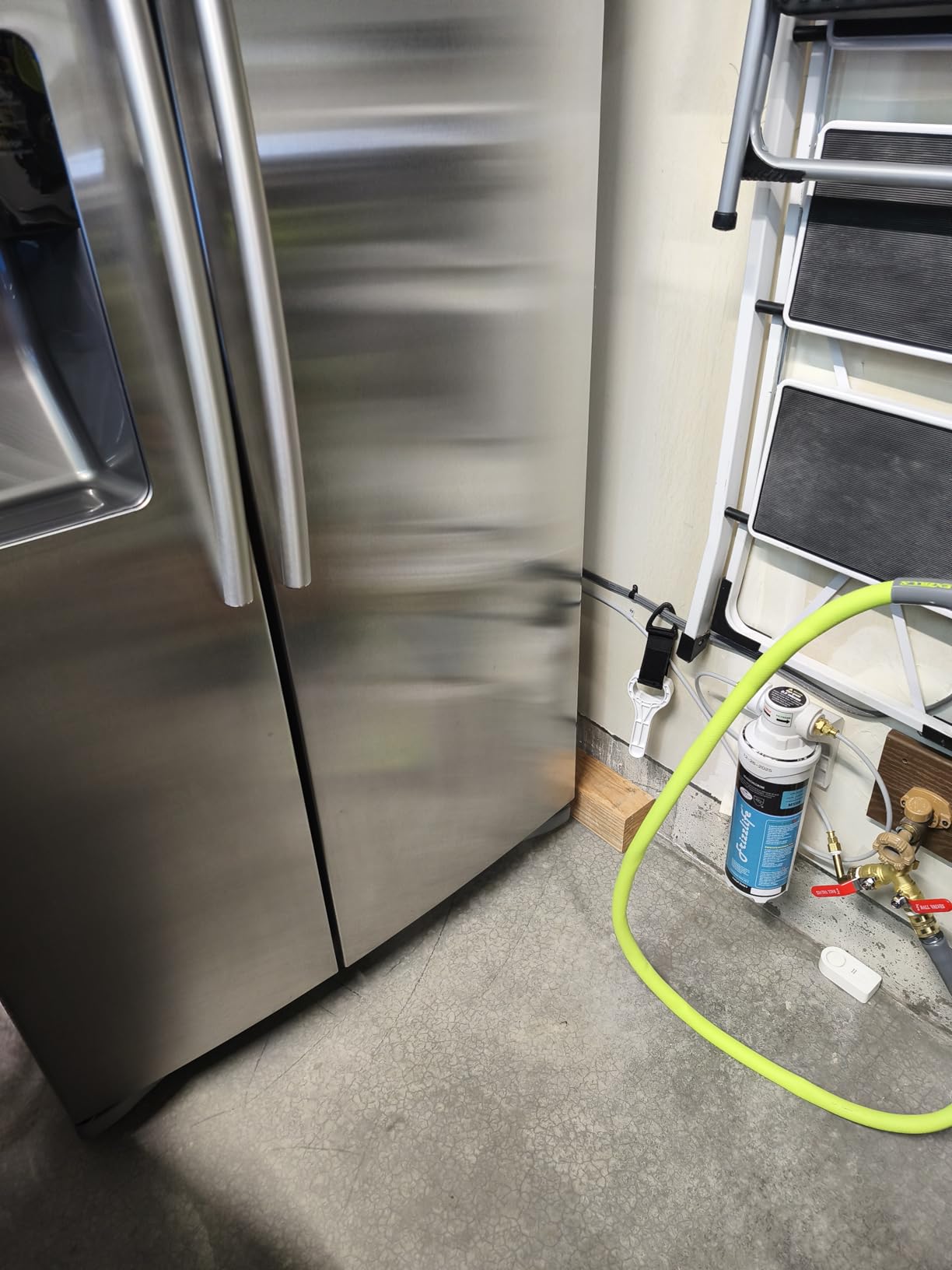
Mechanical design is the other strength. It has an auto shut-off head so you can change the cartridge without shutting off the supply, a twist-in housing with an included wrench, and substantial brass fittings with generous tubing. The design notes call for reserving 6 inches of clearance if you mount it behind a refrigerator, and the body is 5 inch by 5 inch by 13.5 inch.
Several owners describe installing it as a way to bypass a failing OEM fridge filter, restoring dispenser and ice performance that had degraded with a clogged factory cartridge. Only the inner core is replaced, which reduces waste compared with discarding an entire inline assembly.
What NSF/ANSI 53 changes for a well household
Standard 42 is aesthetic: taste, odor, chlorine and sediment. Standard 53 is health effects, and on this system it covers lead and cysts including cryptosporidium and giardia. For a private well, that is a materially stronger guarantee, particularly on older plumbing or any history of lead service lines.
It still does not solve iron, sulfur, nitrates or bacteria, and the manufacturer states the system supports water up to 500 ppm TDS with a temperature range of 39 to 100 degrees Fahrenheit. Certification is a stronger claim, not a universal one.
Mechanical planning before you install
Two practical complaints recur. Only one 90 degree brass elbow is included, so a tight installation may need a second one, and the supplied tubing can be too short for above-fridge mounting. Measure first.
The second is the auto shut-off behavior. It is convenient in principle, but reviews describe water spraying when the cartridge is removed and difficulty re-seating it. Keep a towel and a bucket within reach, and close the supply if you are not comfortable with a live change.
9. PURENAT Inline Filter Kit – Best Complete Hardware Kit
Inline Water Filter – With Fittings for Refrigerator & Ice Maker(1 Pack)
NSF 42 coconut shell carbon
2000 gallon or 12 month
3.53 inch diameter
Complete fitting kit
Pros
- Most complete kit in the group
- Includes tubing valve elbow union and clips
- Quick leak-free install reported
- Also usable beyond fridges
Cons
- Does not reduce Total Dissolved Solids
- Carbon fines need a short flush
- Most reviews do not confirm longevity on a well supply
The PURENAT is the pick if the deciding factor is everything arriving in one box. It includes 10 feet of 1/4 inch PE tubing, a 1/4 inch compression and push-to-connect fitting set in brass, a 1/4 inch quick connect shutoff valve, a 1/4 inch quick connect elbow, a 1/4 inch quick connect union, a 1/4 inch quick connect adapter, a compression fitting set with inserts sleeves and nuts, and clips and wall ties.
Both inlet and outlet are 1/4 inch quick connect, and the media is an NSF 42 certified coconut shell activated carbon block. Rated capacity is up to 2,000 gallons or 12 months depending on water conditions.
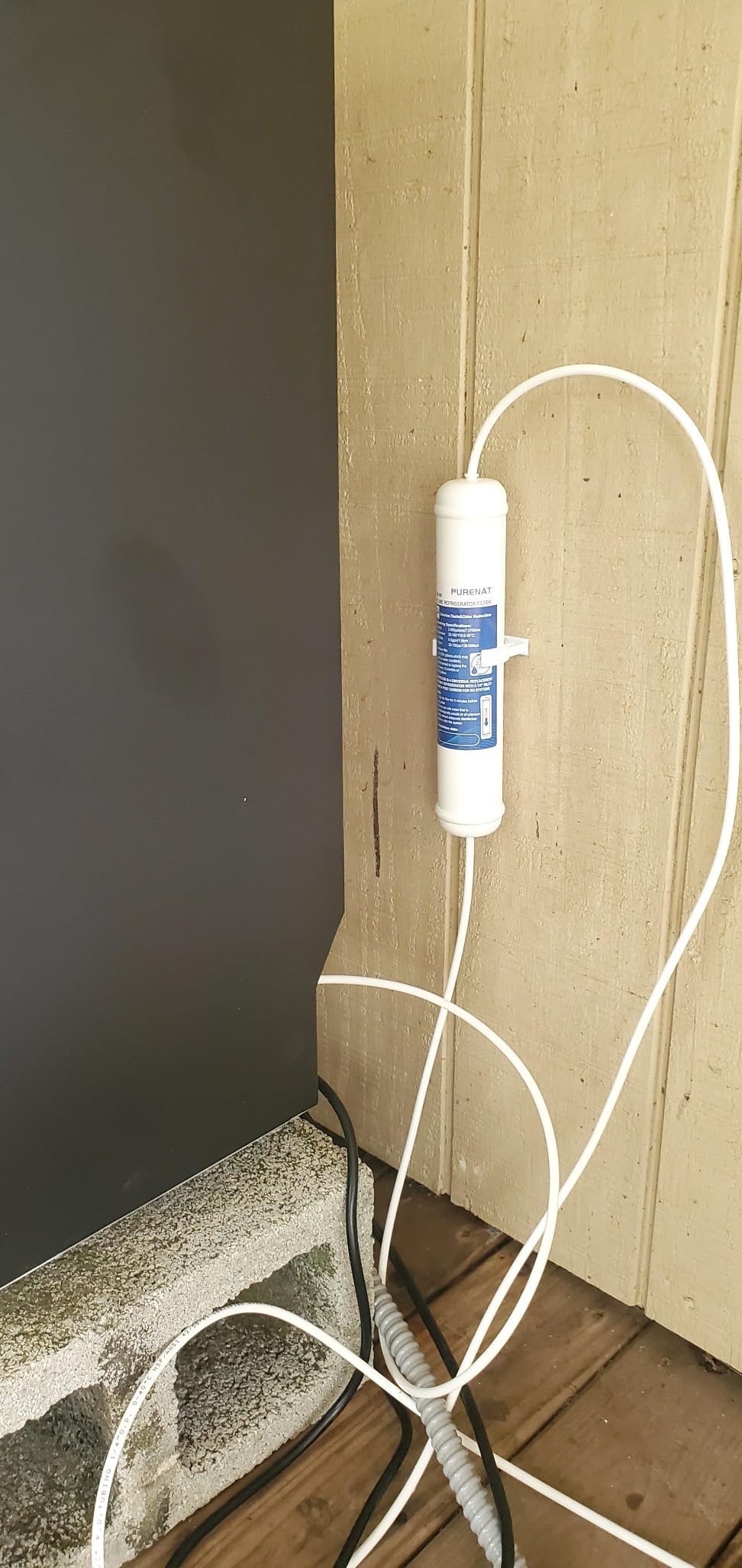
Buyers highlight that nothing else is needed, including a clamp for mounting behind the fridge, and that installation is quick and leak-free. The stated reduction list covers chlorine, taste and odor, fluoride, rust, suspended solids and colloids, while the manufacturer states plainly that it does not reduce Total Dissolved Solids.
It is listed as compatible with GE and Whirlpool refrigerator models, and a few owners use it in unconventional roles such as a bidet filter, which says something about how flexible a quick-connect inline carbon block can be.
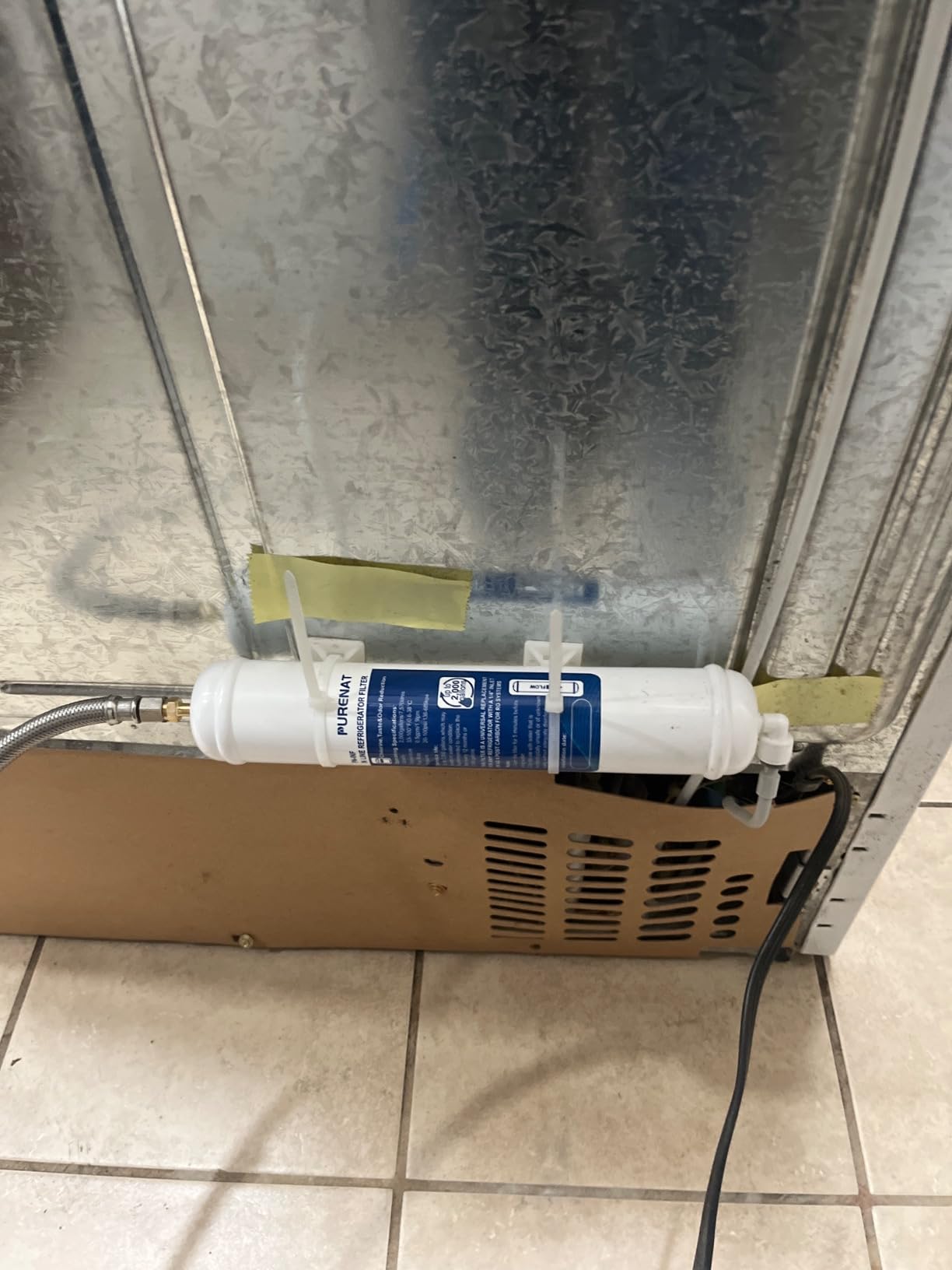
Best for a first-time install
A shutoff valve and union in the box are the two components that most often turn a 15-minute job into a second trip to the hardware store. Having them included means you can isolate the filter when you need to change it, which matters more on a well where you may be swapping cartridges more often than a city household.
The mounting clips and ties solve the other common problem, which is a filter hanging on a push-fit connection with nothing supporting its weight. That is worth more than it sounds when a connection is carrying the full weight of a housing.
Where the evidence runs thin
Review volume is on the lower side, and most owners confirm taste and odor results rather than long-run performance. The rating claims up to 2,000 gallons or 12 months, and on a well supply nobody in the reviews confirms that interval, so treat the gallon figure as the one to plan around.
Expect a short flush after installation to clear carbon fines, which is standard across the category, and note that it does not address TDS.
10. HYDRO MASTER Inline Post Carbon Filter – Best for Threaded Plumbing
HYDRO MASTER IN-LINE POST CARBON FILTER With 1/4-Inch NPT Connection, 10 Inch x 2 Inch.
1/4 inch female NPT both ends
Five piece set
10 inch by 2 inch body
10.5 ounces
Pros
- Threaded connections suit rigid plumbing
- Lowest cost unit in the roundup
- Lead-free brass connectors included
- Tool-free installation
Cons
- Will not pair with push-to-connect fittings
- Budget carbon media with shorter life
- Plastic connector less durable long term
The HYDRO MASTER is the one to buy if your plumbing is rigid. Both ends are 1/4 inch female NPT, so it threads directly into threaded connectors and existing hard-plumbed setups rather than relying on push-fit tubing. Everything in the set is tested and certified against ANSI/NSF standards, and installation needs no tools.
It is a 10 inch by 2 inch carbon and brass inline post carbon filter, and the five-piece set includes the filter, two 1/4 inch lead-free brass connectors and two 1/4 inch plastic connectors. The brass connectors are the ones worth using for a permanent install.
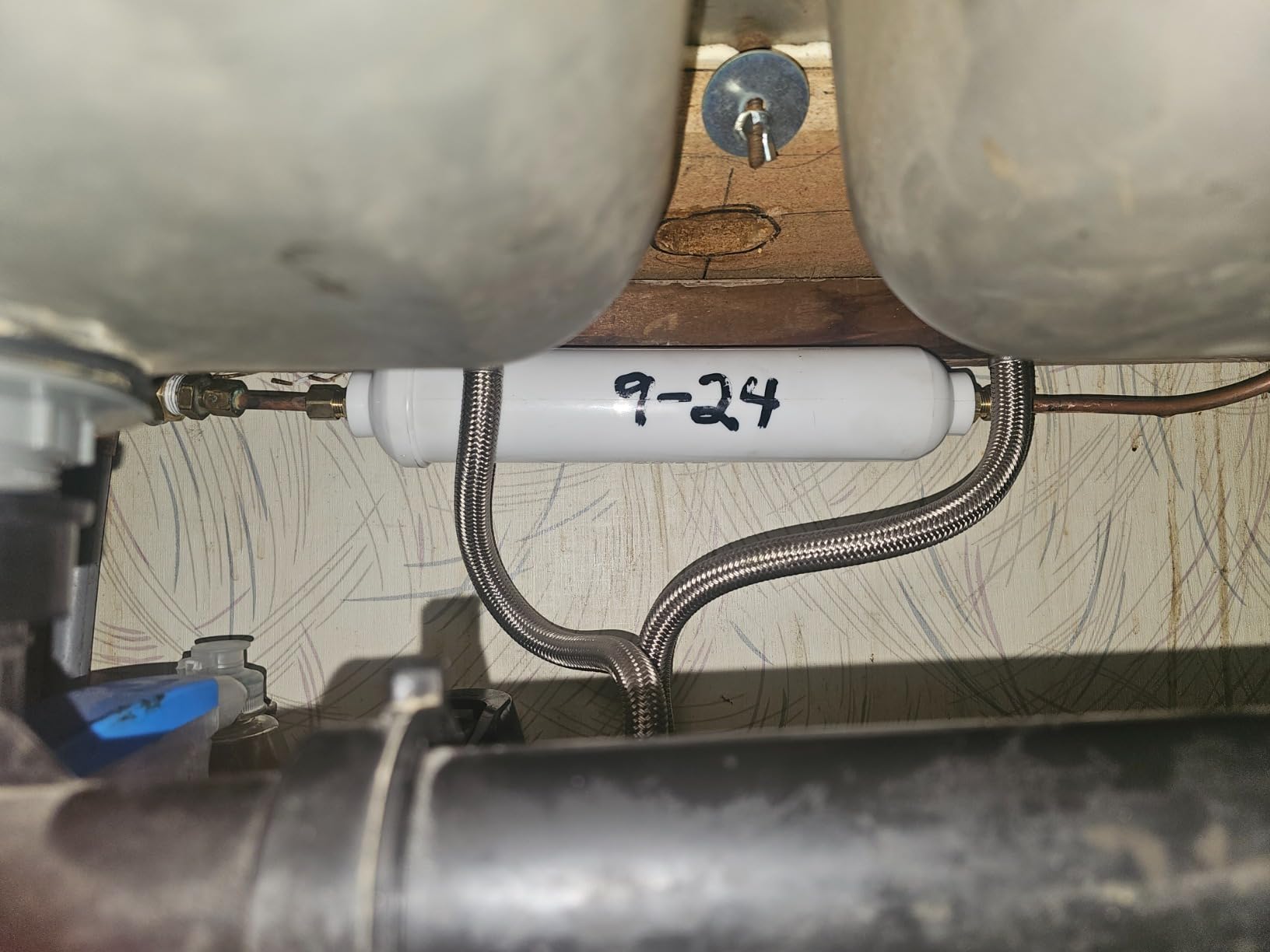
Its real strength is cross-compatibility with existing OEM cartridges. It is listed as a replacement for Samsung DA29-10105J, GE GXRTDR, Omnipure K2533JJ, Whirlpool WHKF-IMTO and Culligan IC-100A among others, which means it can replace a model-specific cartridge without re-plumbing anything.
Buyers who already have 1/4 inch NPT plumbing choose it for the lowest upfront cost and for the straightforward threaded install. For basic ice maker and refrigerator duty, the feedback is that taste and odor reduction is adequate for the money.
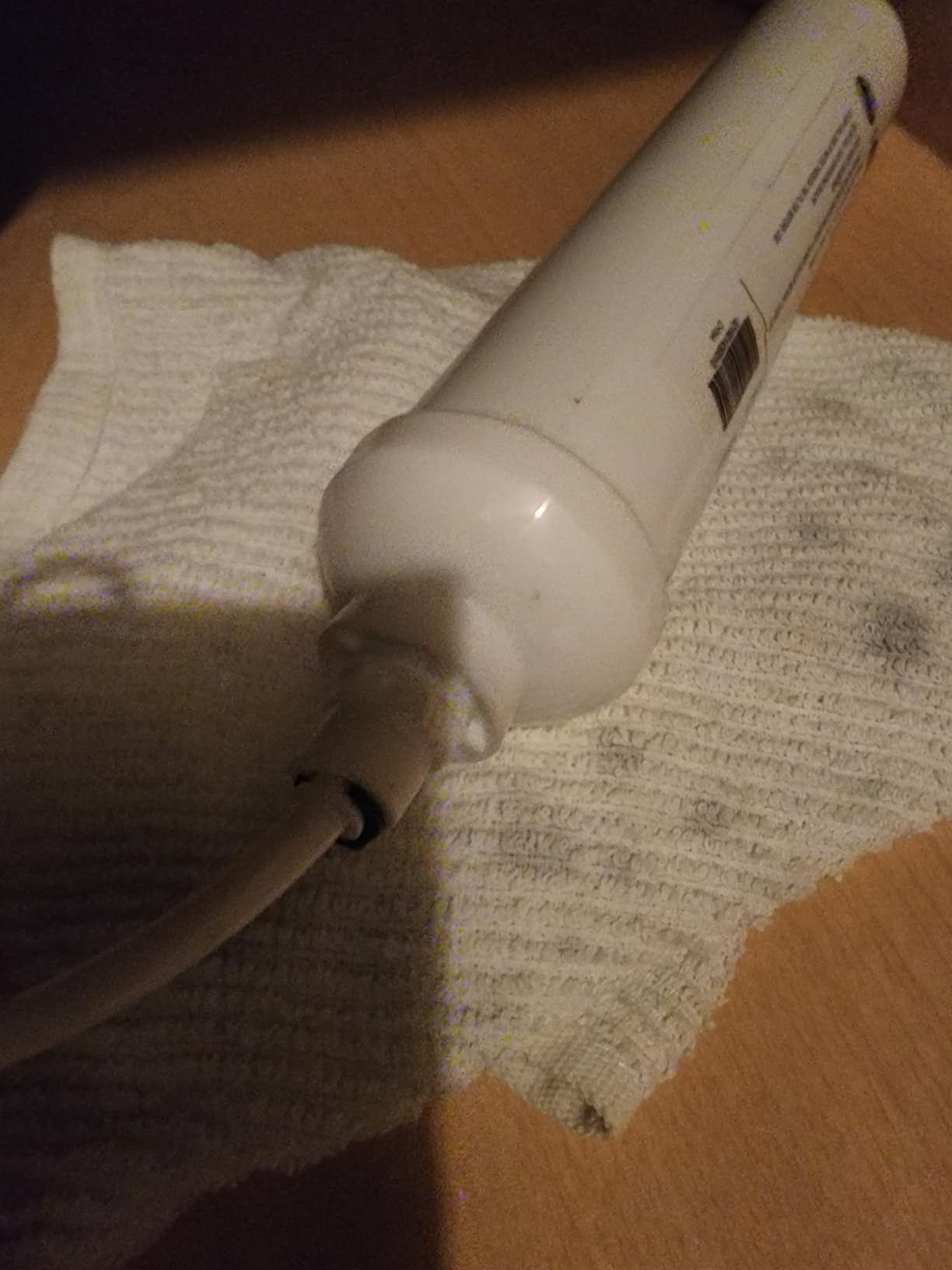
When NPT is the right call
If you are hard-piped with threaded connections, every push-connect option in this roundup requires adapters or a tubing re-run. This one is the shortest path. The same is true if you are replacing a threaded OEM cartridge, since the listed compatibility covers several common factory filter models.
It is also a reasonable choice for a secondary or basement fridge, an RV, or any point where a small threaded inline body is easier to secure than a quick-connect assembly.
What the budget media costs you
The trade for the low price is simpler media and a shorter useful life than the premium carbon blocks above it. Reviewers describe it as adequate rather than exceptional, which is a fair summary for a fridge and ice maker on relatively clean well water.
Use the brass connectors rather than the plastic ones for anything permanent, since the plastic set is the part reviewers call out as less durable. It cannot be combined with push-to-connect tubing without adapters, so measure the line style before ordering.
11. Culligan IC 3 EZ-Change System – Best for Compact Certified Filtration
Culligan IC 3 EZ-Change Inline Icemaker and Refrigerator Filtration System with Filter, 500 Gallon, White
NSF/ANSI 42 and 53 certified
500 gallons or 6 months
0.5 gpm flow
2 year warranty
Pros
- Certified to both 42 and 53 standards
- Twist-on twist-off cartridge with dual shutoff
- Brand name manufacturer with warranty
- Visibly clean water with reduced taste and odor
Cons
- Only 500 gallons or 6 months rated
- Lowest flow rate in the group at 0.5 gpm
- Wall mount needs space and a mounting point
- Requires proprietary RC-EZ-1 cartridges
The Culligan IC 3 is the second unit here certified to NSF/ANSI 53, and it earns that with 42 as well. Standard 53 covers cysts including cryptosporidium and giardia, plus lead, turbidity, lindane and atrazine. For a household that wants certified contaminant coverage in a single wall-mounted unit, it is the most conventional solution on the list.
The changeover design is the practical highlight. Quick connect fittings with a twist-on, twist-off cartridge and double water shutoff mean a swap is fast and the system isolates itself as you turn it. It uses the RC-EZ-1 replacement cartridge, and Culligan backs it with a 2-year limited warranty.
Rated capacity is 500 gallons or six months depending on usage and filtration load, and maximum flow rate is 0.5 gpm. That flow figure is the lowest in the roundup, and it is the one specification that matters most if your ice maker is the priority.
Read the flow rate before you choose it
At 0.5 gpm this is the tightest restriction here. If your household runs the dispenser heavily or relies on the ice maker, slow fill is a real possibility, and it is the most common complaint pattern for inline filters in general. The multi-year units above it pass noticeably more water.
The 500 gallon capacity is also the shortest in the roundup, which on a well means more frequent cartridge purchases than any other unit here. Owners choose this system for certified reduction and the convenient changeover, not for throughput, and that is the right framing.
Long-term ownership considerations
Future replacements are proprietary RC-EZ-1 cartridges, so the ongoing cost is tied to one brand. That is the same lock-in question that makes people hesitant about OEM fridge cartridges, and it is worth weighing before you commit.
On the other hand, the wall-mount format and the 2-year warranty make it a straightforward install in a utility area, and the acrylic housing is easy to see the cartridge condition through rather than guessing.
12. Watts Premier 560029 Inline Filter – Best for Rust and Sediment Ahead of RO
Watts Premier 10″ Inline Water Filter for Refrigerator and Ice Maker
KDF copper-zinc media
0.75 gpm at 1200 gallons
2 inch by 10 inch body
NSF certified
Pros
- KDF media targets rust sediment and chlorine in one cartridge
- Drops into many existing systems
- Quick to swap with quick disconnects
- Low cost per cartridge
Cons
- Better suited to RO finishing than primary filtration
- Ships with plastic connectors
- 1200 gallon capacity is modest
- Batch consistency reported as variable
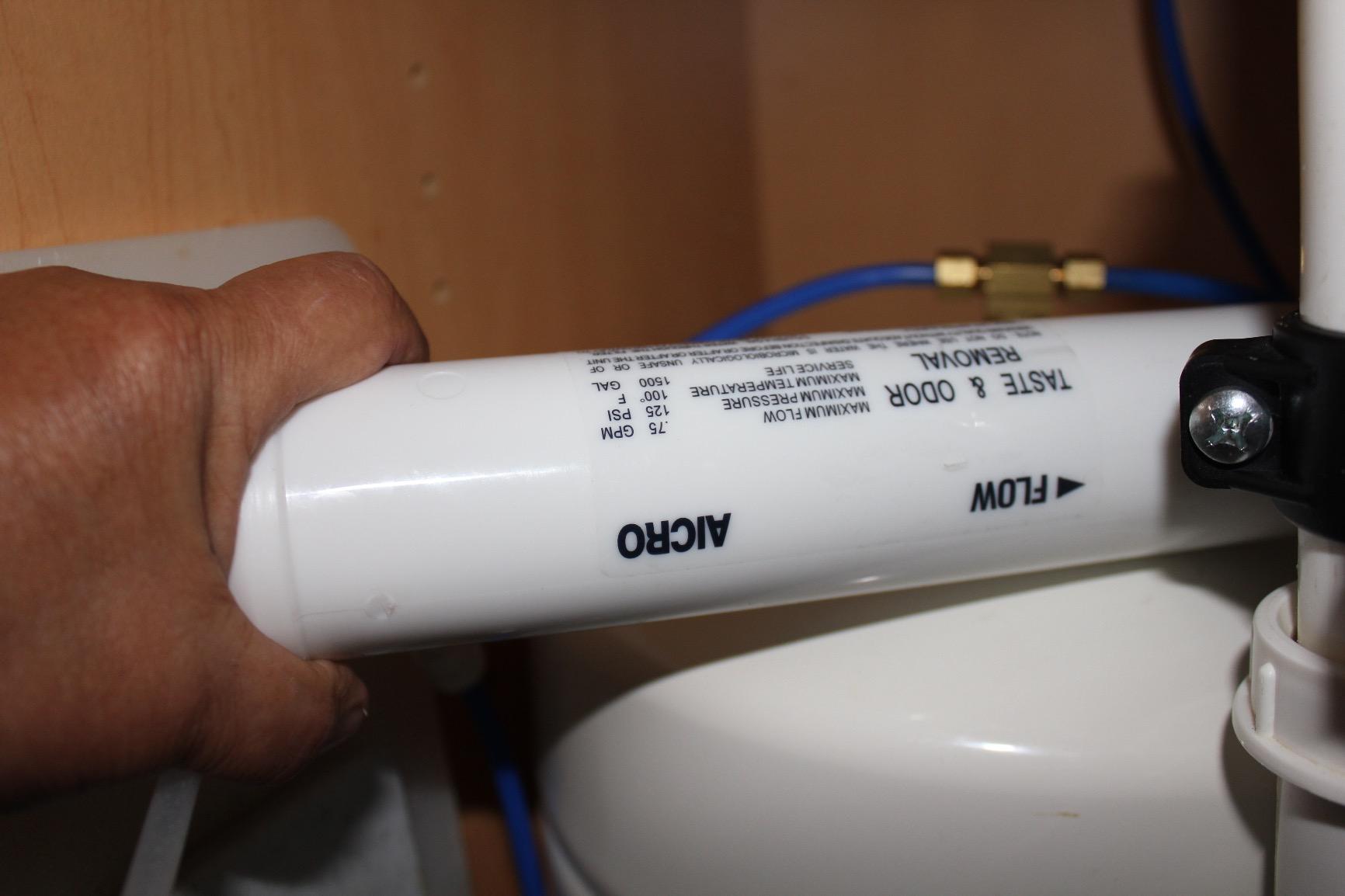
The Watts Premier is the odd one out because its media is not pure carbon. It uses KDF copper-zinc media operating on redox principles, and it is NSF certified for chlorine taste and odor, sediment and rust reduction. On a well where rust staining is the complaint, that is a more relevant media choice than another coconut carbon block.
Service flow rate is 0.75 gpm with a rated capacity of 1,200 gallons, in the same 2 inch by 10 inch inline footprint as several units above it. It is compatible with reverse osmosis systems as a finishing filter, and the manufacturer part number is 560029.
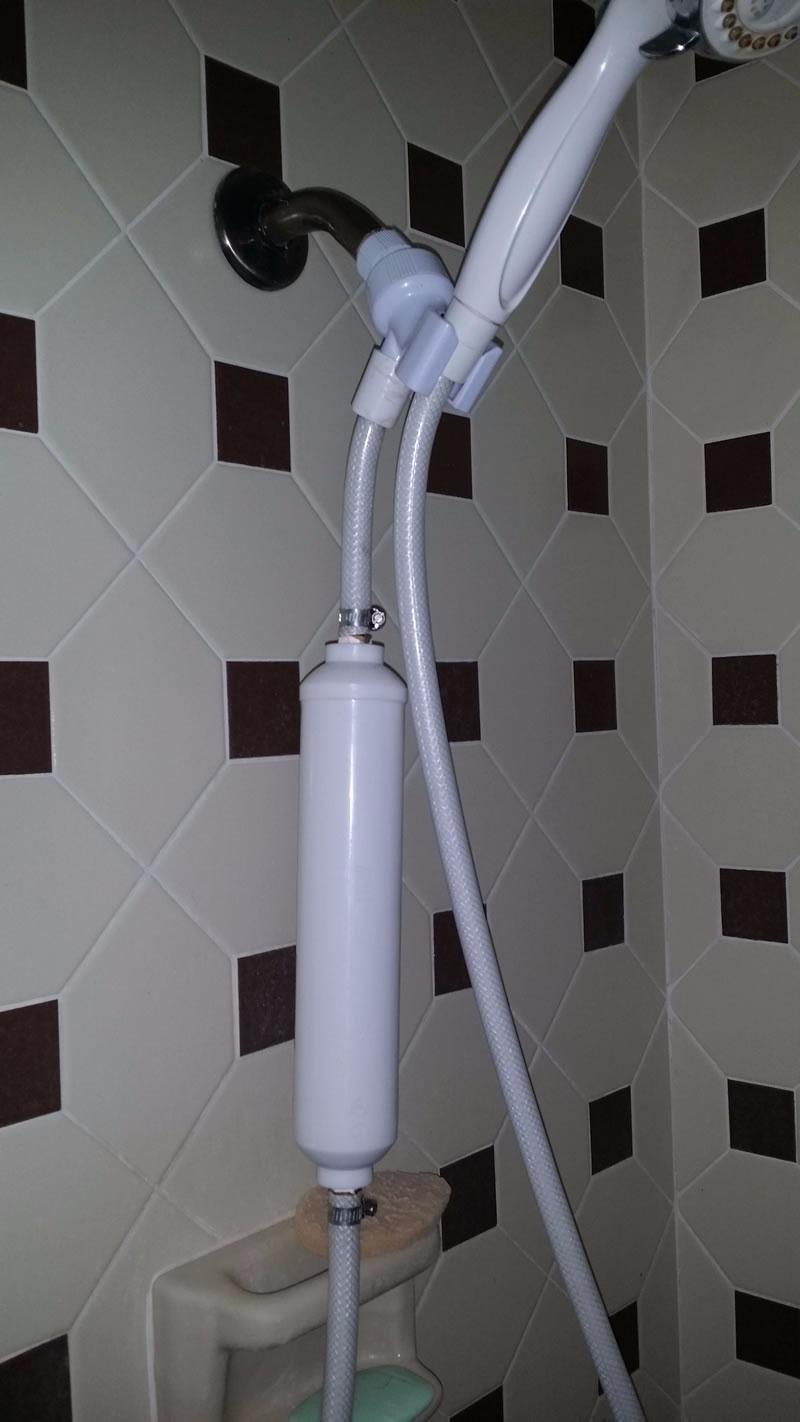
Reviewers mostly deploy it as a cheap replacement or a finishing stage, including on shower lines for rust removal and before water distillers, and the praise centers on price and easy installation. It is often found at a fraction of the cost of the OEM version of the same part number, which is the argument buyers make most often.
It ships with plastic connectors, which several owners would swap for brass on a permanent install, and carbon fines need flushing before connection. One report describes a later production batch losing significant flow pressure, which is worth keeping in mind if the cartridge life seems unusually short.
Why KDF media earns its place on a well
KDF is a copper-zinc media that neutralizes chlorine and iron through a redox reaction rather than adsorption. That is why it shows a rust reduction claim, and it is the reason we include it in a well-focused roundup even though it is not a taste-and-odor carbon block.
It does not remove dissolved iron from the water, so it will not fix metallic taste at the tap. What it does well is intercept rust particulate and sediment ahead of a membrane or carbon stage, which is a real problem on a well with iron staining.
Where it is the wrong first stage
The 1,200 gallon capacity is modest, and reviewers describe it as shining mainly as an RO finishing filter rather than a primary inline filter. If your goal is fridge and ice maker taste on a raw well line, one of the first three will serve you better for the same job.
Use it where the media advantage is real: ahead of reverse osmosis on a well supply, or as the finishing element after a membrane. For pure rust removal in an ice maker line, it is a reasonable low-cost choice, just not the strongest one in this list.
Inline Filter or OEM Refrigerator Cartridge?
On well water, an inline filter almost always beats the cartridge your fridge shipped with, for one reason: the factory cartridge is a fixed carbon block sized for municipal supply, sold on a schedule, and it cannot be swapped for a different media when your water changes. An inline filter gives you media choice, a visible housing, and a much lower cost per cartridge.
There is a third route worth taking seriously, and well owners in forums raise it often. Install the fridge bypass plug, run the refrigerator unfiltered, and put your filtration under the sink or in the utility area where you can fit a sediment stage, an iron or sulfur stage, and a carbon stage in series. You stop buying model-locked cartridges, and you stop pretending a single carbon block is treating a well.
That route costs more up front and more in cabinet space, and it needs somewhere to mount. What it buys is a system architecture that actually matches well water, plus a bigger cartridge capacity than anything designed to fit behind a fridge. If your well panel shows iron or sulfur, this is the honest answer rather than a workaround.
Keep the OEM cartridge if your fridge has no bypass plug available, if you rent, or if a replacement is due this week and you want the water improved today. Otherwise, spending the money on a properly sized inline system serves you better over a few years.
NSF/ANSI 42 vs 53 vs 401 and What Each Means on a Well
NSF/ANSI 42 is the aesthetic standard. It covers chlorine taste and odor, and it is what the large majority of inline refrigerator cartridges here carry. On a well with no chlorine, that claim does very little for you, and understanding this is the single most useful thing a reader can take from the certification labels.
NSF/ANSI 53 is the health-effects standard. It covers lead, cysts such as cryptosporidium and giardia, turbidity, lindane and atrazine. In this roundup only two systems carry it, the Frizzlife MS99 and the Culligan IC 3, and neither addresses iron, sulfur, nitrates or bacteria. Certification is a stronger claim, never a universal one.
NSF/ANSI 401 covers emerging contaminants and is where PFAS claims live. None of the twelve units here is certified to 401, which matters if PFAS is your concern. That is a different product category, and our guide to [portable filtration for water outdoors](https://www.bymewilliamshakespeare.org/best-backpacking-water-filters/) covers the certified 401 and P473 options in a different form factor.
One more distinction worth keeping straight: NSF/ANSI 372 is a material standard, not a filtration standard. The Waterdrop INL carries it, which certifies the product contains no lead. It does not mean the cartridge removes lead from your water. Buyers conflate these constantly.
Look the certification up rather than trusting the box. Search the model number on the NSF listings directory and the WQA or IAPMO directory, and if a product claims a contaminant reduction that does not appear in the listing, treat the claim as marketing.
Installing an Inline Refrigerator Filter Without Leaking
Start by turning off the water supply to the fridge at the valve behind it, and confirm the line is actually depressurized by opening the dispenser before you cut. Most leak anxiety around this install comes from cutting a line that is still live, and forum accounts of overnight flooding all trace back to that step being skipped.
Cut square. A ragged cut that sits at an angle in the compression nut or quick connect is the second most common source of a slow drip. Ream the tubing if you are working in copper, then push or thread the fitting to the tube stop and make sure the tube bottoms out fully. On push-connect fittings, pull the line straight out to release it rather than wiggling, and do not reuse a fitting that has been over-inserted.
Flush before you connect. Every carbon cartridge in this roundup needs a multi-gallon flush to clear fines, and the instructions range from 2 to 3 gallons up to 3 to 5 gallons. Skip it and your first glasses of ice maker water will carry black specks, and you will assume the filter is faulty.
Re-check every connection after 24 to 48 hours. New fittings can weep slightly as they settle, and paper towel wrapped around a joint is the fastest way to find out. Clean up any weep before it becomes a cabinet problem, and tighten or reseat rather than adding tape.
Avoid saddle valves. They pierce the line, are a frequent source of slow leaks years later, and add a restriction that hurts ice production. If your line has no shutoff valve and no accessible tee, adding one properly is worth the plumber visit, and it is what makes future cartridge changes painless.
On low-pressure homes, choose the higher flow units. The Frizzlife at 1.4 gpm and the EcoPure or AQUA CREST bodies pass noticeably more water than the 0.5 gpm Culligan, and dispenser fill rate and ice production are the first things to suffer when a line is restricted.
Matching Your Fridge Brand and Avoiding Counterfeits
Fridge brand is a secondary question on well water. If you plan to use an inline filter, the connection type decides the fit, not the logo on the appliance, and every unit in this roundup fits standard 1/4 inch tubing regardless of whether the fridge is Whirlpool, GE, Samsung, LG or Frigidaire.
If you do want the factory cartridge route, match the part number to the model rather than the brand alone, since brands share platforms. Check the model tag inside the fridge door, look up the filter part number in the appliance manual, and buy from a seller that lists the certification.
Counterfeit OEM cartridges are common in this category and the failure mode is quiet. A counterfeit typically has a thinner carbon block and an underfilled housing, and it delivers worse taste without ever failing outright, so owners often assume the well water is the problem. Treat a sudden taste decline after a filter change as a suspect cartridge before anything else.
Two of the units here are relevant to the counterfeit problem. The Waterdrop INL is listed as a compatible replacement for cartridges from several major brands, and the HYDRO MASTER covers Samsung DA29-10105J, GE GXRTDR, Omnipure K2533JJ, Whirlpool WHKF-IMTO and Culligan IC-100A. A certified compatible cartridge is a reasonable alternative to a factory part at a fraction of the cost.
How We Picked and Verified
Every product in this roundup was checked against its published certification claim, its stated rated capacity, its connection type and its included fittings. Where a manufacturer states a contaminant it does not reduce, such as Total Dissolved Solids, that statement is repeated rather than quietly dropped.
Owner reviews were read for installation behavior, flow impact and longevity on well supply specifically, not for taste claims alone, because taste is the easiest thing for any carbon block to improve and the least informative signal. The recurring theme across forums and reviews is that rated years collapse on well water and that gallon capacity is the number worth planning around.
Certification claims can be verified independently. Look the model number up in the NSF listings directory, or in the WQA and IAPMO directories for the two systems certified to Standard 53.
Frequently Asked Questions
What type of water filter is best for well water?
The best filter depends on what your well panel shows. Well water usually needs a sediment stage first, then an oxidation or media stage for iron, manganese or hydrogen sulfide, and only then a carbon block for taste and odor. If iron or sulfur is present, a carbon-only inline cartridge will foul fast and will not fix the smell. No carbon filter makes bacteria or nitrate contaminated water safe.
What is the best inline water filter for well water?
The EcoPure EPINL30 is our top inline pick for well water because it is NSF/ANSI 42 certified, fits standard 1/4 inch supply line, and includes both compression and push-to-connect fittings so it adapts to whatever tubing you already have. It also has the largest owner review base in this roundup, with rural well users reporting a clear improvement in ice and dispenser taste.
Do inline refrigerator water filters work on well water?
They work, with limits. An inline carbon filter will improve taste, odor and clarity on well water and will catch sediment, which is a real improvement over an unfiltered fridge line. It will not remove dissolved iron, manganese, nitrates, bacteria or dissolved solids. On iron-heavy wells it also fouls faster than rated, so replace on gallons and flow rate rather than on the advertised year figure.
What is the best filter to remove sulfur smells from well water?
No carbon cartridge fixes a rotten-egg smell on its own, because hydrogen sulfide keeps arriving from the aquifer. You need an oxidation or media stage ahead of the fridge line, such as an iron filter or an aeration unit, and then a carbon block as the final polishing stage. The inline picks here make good second-stage polishers, but the sulfur removal has to happen upstream.
What type of filter can remove iron bacteria from well water?
Iron bacteria are a slime-forming organism rather than a contaminant dissolved in the water, so media filters alone will not solve them. The standard approach is shock chlorination to kill the organism, followed by a sediment filter to catch the gelatinous mass it sheds, and then an iron or oxidation stage ahead of any carbon cartridge. A refrigerator filter cannot be the primary control for this.
Best Refrigerator Water Filters for Well Water: Final Verdict
After working through twelve options, the EcoPure EPINL30 is our pick for the best refrigerator water filters for well water because it combines the widest fitting kit, a verifiable NSF/ANSI 42 certification and the deepest owner history we could find, including reports from rural well users about a real change in ice and dispenser taste. If your supply is clear and low in sediment, it will do the job well for the least fuss.
Two adjustments change the answer. If you need certified health-effects coverage rather than taste, the Frizzlife MS99 is the only inline system here certified to NSF/ANSI 42 and 53, with a 1,600 gallon, two-year cartridge and the highest flow rate in the group. If you run reverse osmosis under the sink, the Membrane Solutions T33 and the Vegebe two-pack are the right finishing cartridges for the fridge line.
And if your water is metallic or smells like eggs, none of these twelve is the correct first purchase. Test first, then put an iron or sulfur stage ahead of whichever carbon cartridge you choose. That ordering is what turns a taste filter into a system that actually suits a well.