
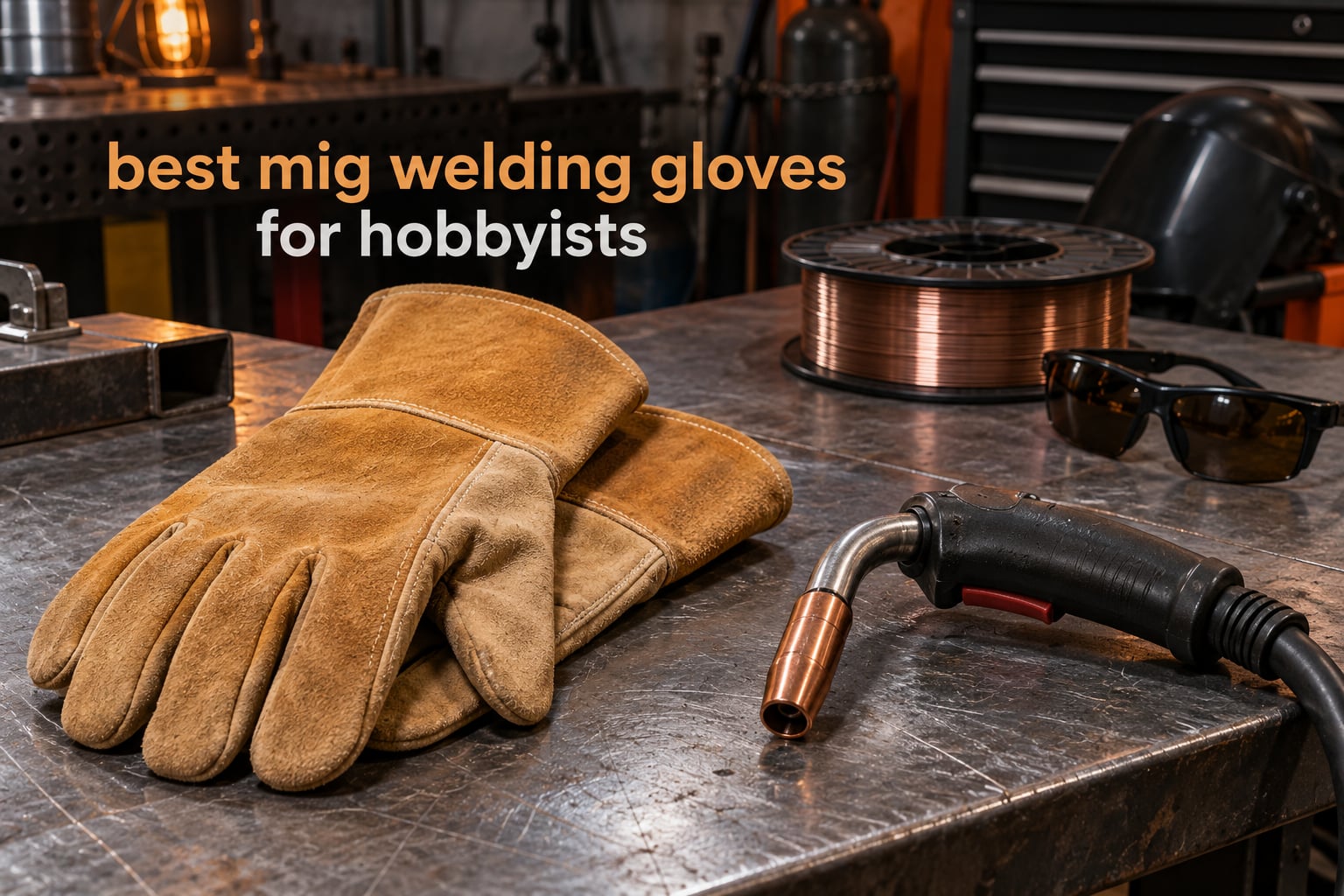
The best MIG welding gloves for hobbyists are the Lincoln Electric K2979-ALL in split cowhide, the Black Stallion top grain cowhide glove for feel, and the RAPICCA 16-inch for the longest cuff in the set. All three carry Kevlar stitching, and all three are the gloves we would hand to someone welding in a garage a few hours a month.
That is the whole argument in one line, and it comes down to a single trade-off every welding glove forces on you: heat resistance versus dexterity. A MIG welder throws spatter off the workpiece and sends radiant heat back at your hand from the arc, the gun and the cooling steel, all at once. Thicker leather blocks more of that. It also makes it much harder to feel the gun trigger, guide the wire and pick a part out of a fixture.
Professionals resolve that with a rotation of heavy gloves. Hobbyists do not have that problem, because a weekend welder spends far more time setting up, grinding and clamping than with a live arc. That shifts the balance toward feel, which is why several of the ten gloves here are built more around touch than around sustained hot-metal handling.
We narrowed the field using what real welders say on forums. Across weldingweb.com and the r/Welding community, the loudest recurring complaints were seams opening after a few weeks, gloves sizing small, and stiff leather that wrecks torch control. Every glove below is judged against those three failure points first, and protection second. If you are still choosing a machine, start with our best MIG welders tested and ranked guide instead.
Table of Contents
Top 3 MIG Welding Gloves for Hobbyists in 2026
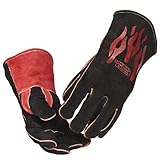
Lincoln Electric K2979-ALL
- 100% split cowhide
- Kevlar stitching
- Soft cotton liner
- 14 inch glove

Black Stallion Top Grain Cowhide
- Top grain cowhide
- Kevlar stitching
- Reinforced palm patches
- DragPatch and RestPatch padding
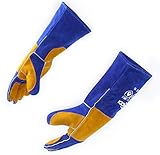
RAPICCA 16 inch Welding Gloves
- 932F rating
- Aluminium foil mid-layer
- 16 inch length
- Kevlar stitching
Our top pick is the Lincoln Electric K2979-ALL, a 14-inch split cowhide gauntlet that hits the exact balance a hobbyist needs. The Black Stallion top grain cowhide glove earns the top rated slot for anyone who wants more finger feel and less bulk than a shop glove. The RAPICCA 16-inch takes the best value spot with the longest cuff in the group and the most owner feedback we could find on any glove tested.
Best MIG Welding Gloves for Hobbyists at a Glance in 2026
| Product | Specifications | Action |
|---|---|---|
| Lincoln Electric K2979-ALL |
|
Check Latest Price |
| Black Stallion Top Grain Cowhide |
|
Check Latest Price |
| RAPICCA 16 inch Welding Gloves |
|
Check Latest Price |
 TOPDC 16 inch Welding Gloves TOPDC 16 inch Welding Gloves |
|
Check Latest Price |
 Tillman 50M Fleece Lined Tillman 50M Fleece Lined |
|
Check Latest Price |
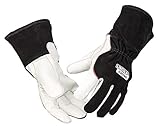 Lincoln Electric DynaMIG HD K3806-L Lincoln Electric DynaMIG HD K3806-L |
|
Check Latest Price |
 TICONN 16 inch Leather Welding Gloves TICONN 16 inch Leather Welding Gloves |
|
Check Latest Price |
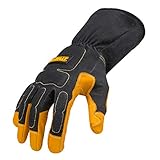 DEWALT Premium MIG TIG Gloves DEWALT Premium MIG TIG Gloves |
|
Check Latest Price |
 Lincoln Electric K4082-L Heavy Duty Lincoln Electric K4082-L Heavy Duty |
|
Check Latest Price |
 ARCCAPTAIN 16 inch Leather Gloves ARCCAPTAIN 16 inch Leather Gloves |
|
Check Latest Price |
1. Lincoln Electric K2979-ALL: The Best MIG Welding Glove for Most Hobbyists
Lincoln Electric Traditional MIG/Stick Welding Gloves | 14″ Lined Leather | Kevlar Stitching | K2979-ALL, Black, Red
100% split cowhide
Kevlar stitching
Soft cotton liner
14 inch length
Pros
- Split cowhide holds up to daily spatter and sparks
- Kevlar thread with reinforced stress points
- Cotton liner stays comfortable in warm weather
- Holds up after angle-grinder contact
Cons
- Runs slightly large for medium hands
- 14 inch cuff is shorter than 16 inch models
- Not enough insulation for bare-hand hot part handling
Split cowhide is the right shell for MIG because the fibrous nap on the underside of the hide shrugs off spatter and radiant heat better than a smooth grain surface, and this is the glove that proves it at the hobbyist level. Owners consistently describe it as a long-term repeat purchase, which tells you more than any spec sheet.
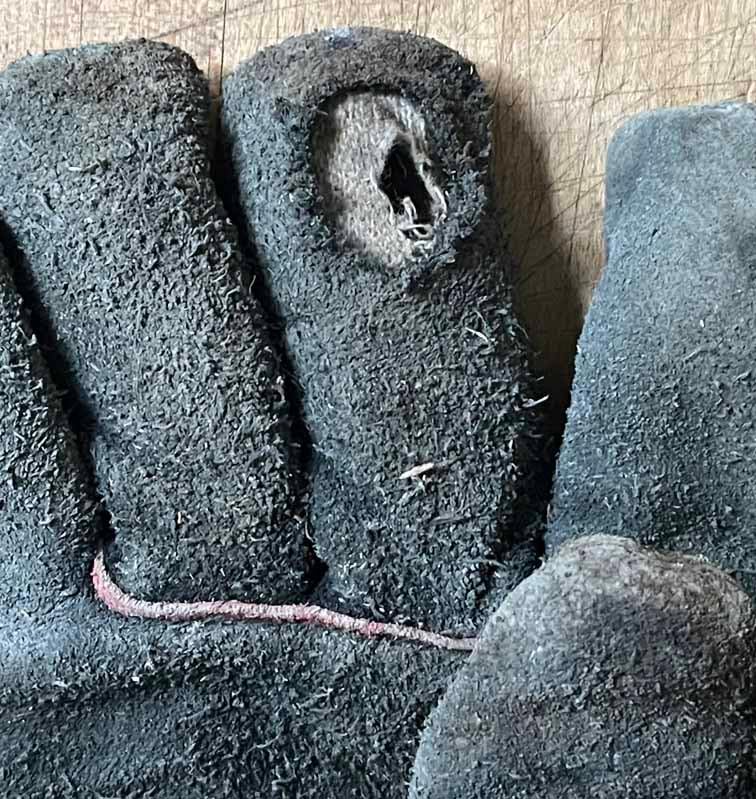
The Kevlar stitching matters more than most buyers realise. Cotton and polyester thread is the number one reason welding gloves fail early: it chars, and once a seam opens under spatter the glove is finished. A reviewer who welded on this for months of regular shop work reports no seam separation.
Where it wins for a hobbyist is the 14-inch cuff. Longer 16-inch gauntlets are better for heavy out-of-position work, but in a warm garage during a summer project the shorter cuff is easier to live with and still covers the wrist and lower forearm.
The soft cotton hand liner is the other quiet strength. It absorbs sweat and stays cooler than a foam or fleece liner over a long afternoon of grinding and fitting. Multiple owners keep a pair by the woodstove as well as in the shop, which tells you the comfort is real.
When this glove fits your hand
Fit skews roomy. If you have medium hands and want a precise grip on the trigger, read the size chart before you order rather than assuming, because several buyers recommend sizing up and a few find them roomy out of the box.
When to choose something else
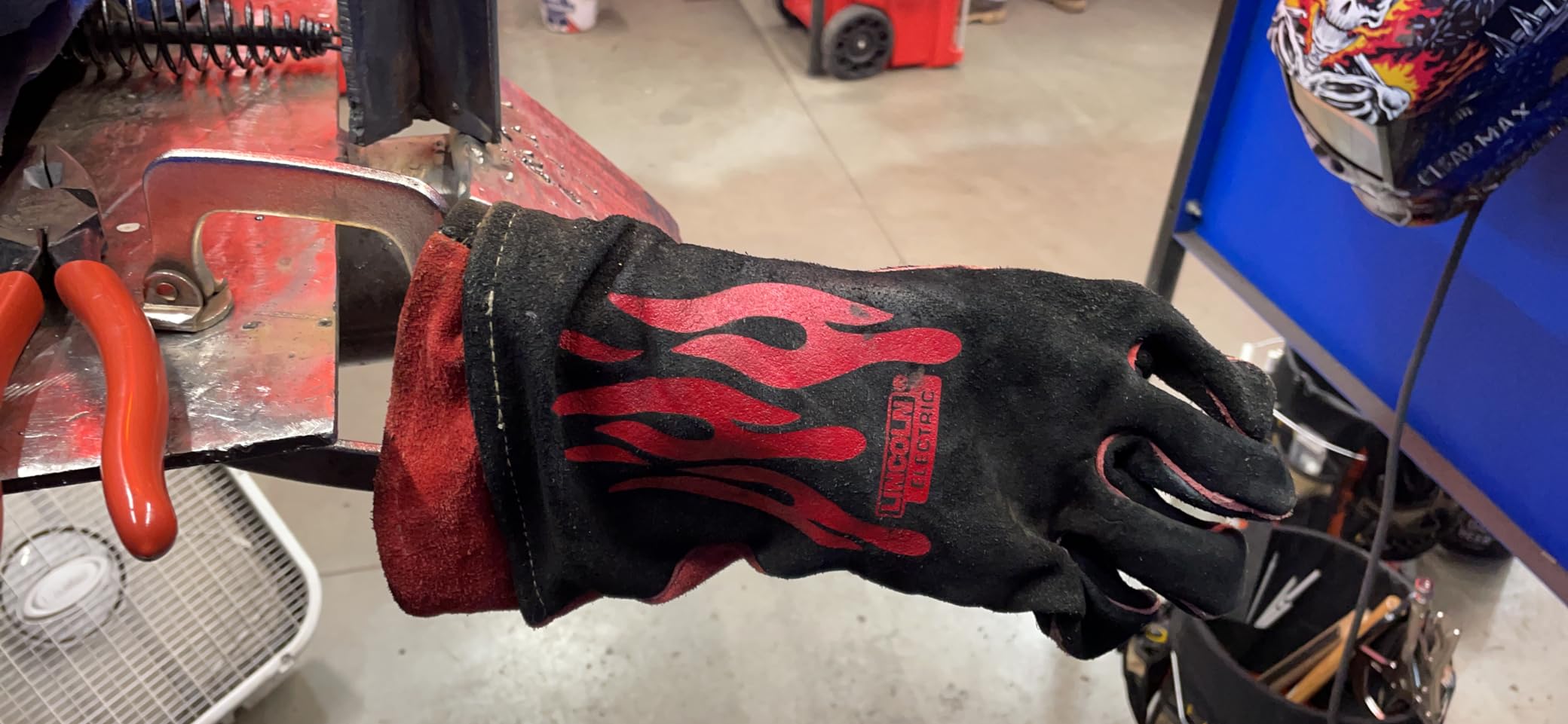
Do not use this glove to pick up a hot, heavy part bare-handed. Owners are clear that heat conducts through if you hold the nozzle or a hot workpiece for extended periods, and they use tongs or vise grips instead. It is a welding glove, not a hot-handling glove.
If your work is mostly heavy plate and out-of-position passes rather than home-shop fabrication, move up to a 16-inch gauntlet for the extra forearm coverage.
2. Black Stallion Top Grain Cowhide: Best Feel With Genuine Protection
Black Stallion (GM1611-WT Top Grain Leather Cowhide MIG Welding Gloves with Reinforced Patched Palm, Thumb, and Index Finger for Extra Protection, Large, Tan
Top grain cowhide
Kevlar stitching
DragPatch side padding
RestPatch wrist padding
Pros
- Grain cowhide handles sparks slag and radiant heat
- Reinforced palm thumb and index patches
- Kevlar seams resist melting and ignition
- DragPatch and RestPatch add insulation and wrist support
Cons
- Only one size and colour on this listing
- Lighter insulation than heavy duty models
- Not built for prolonged hot-metal contact
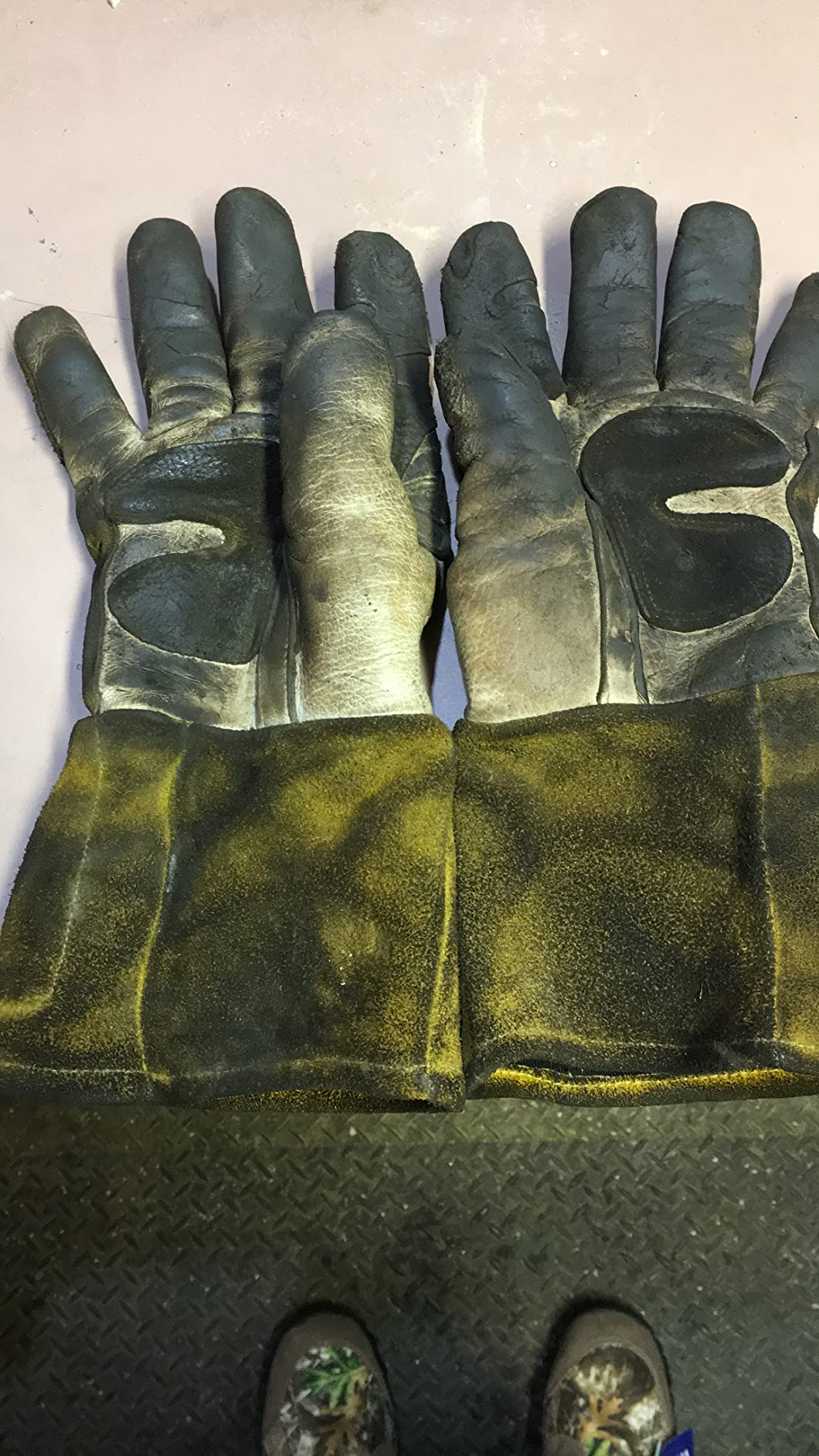
This is the glove we reach for when a project is mostly setup work. Top grain cowhide is the smooth, hair-side surface of the hide, and it is noticeably more flexible than split leather while still handling sparks and slag well. You keep the finger feel of a driver glove and add real thermal protection.
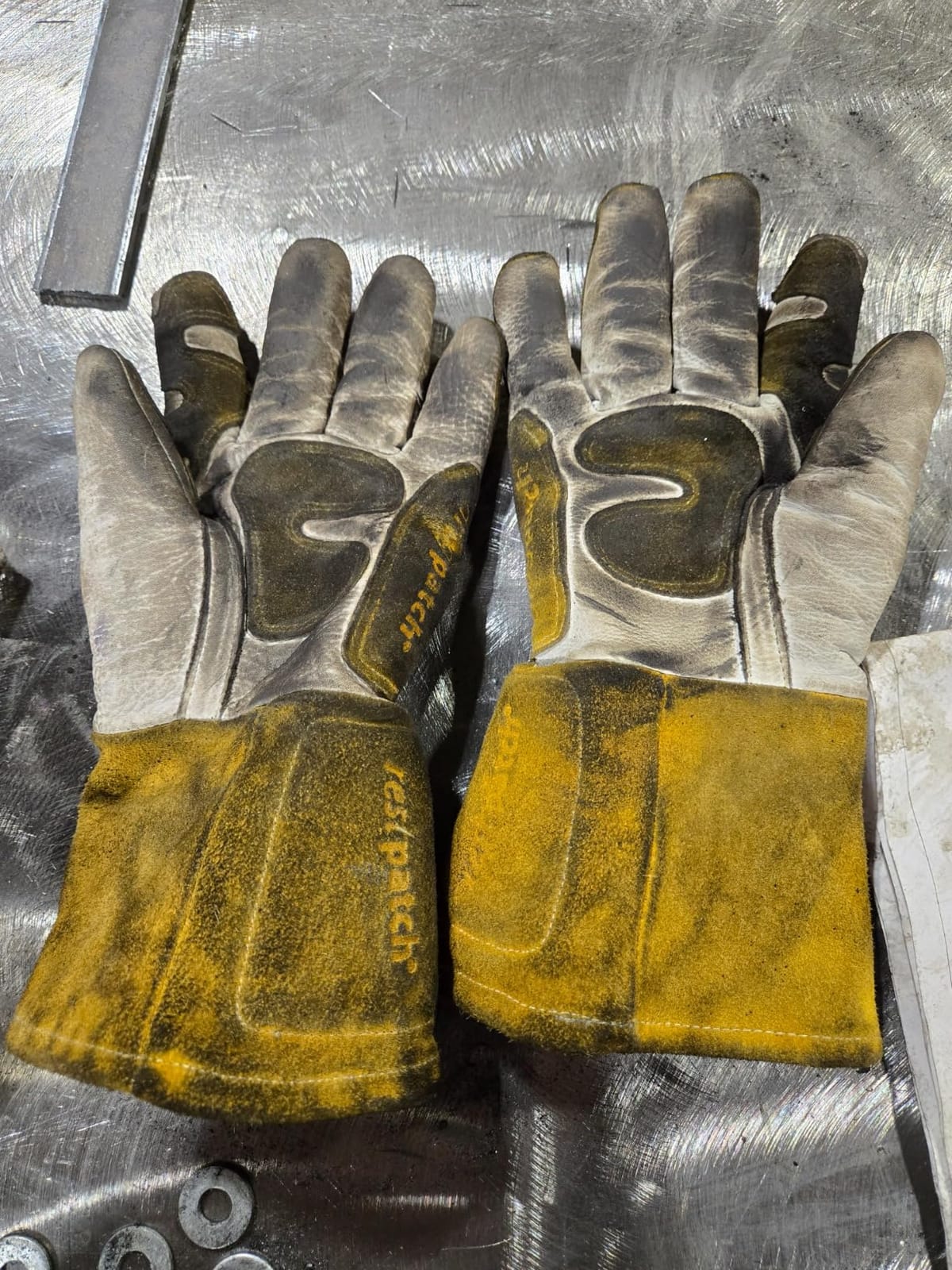
Revco builds this one, and the construction is where the rating comes from. Reinforced patches sit on the palm, thumb and index finger, which are the three places a MIG glove wears through first. DragPatch side padding and RestPatch wrist padding add insulation exactly where the arc heat lands.
Reviewers treat this as a genuine step up from budget department-store gloves rather than a different category entirely. Wearers pair it with bulkier work gloves when dexterity matters, and hobbyist forums repeatedly name Black Stallion as a top pick for that reason.
It is also a nice pairing with our best leather gloves guide if you want the same hide in a general work glove for grinding and material handling between welds.
Why hobbyists rate it highly
The combination of grain flexibility and padded wrist support means you can hold the gun for a full project without the fatigue that comes with a stiff split glove. Several owners specifically mention using it for fitting joints and out-of-position work where control matters.
Where it falls short
Protection is lighter than the heavy models here. It is not the right glove for grabbing hot parts or for long sessions of sustained spatter on heavy plate, and reviewers note the reduced margin for that kind of work.
The other practical snag is sizing. This listing shows a single size and colour variant, so check what is available before you commit, especially if you are between sizes.
3. RAPICCA 16 inch Welding Gloves: The Most Owner-Tested Glove in the Set
RAPICCA Welding Gloves for Men, 932°F Fireproof Leather, 16 in Blue
70 percent fire-resistant leather
932F rating
Foil mid-layer
16 inch length
Pros
- Three layer build with foil insulation barrier
- Rated to 932F with a cotton liner
- 16 inch length with 7.5 inch sleeve
- Reinforced padding keeps fingertip sensitivity
Cons
- Runs large with long fingers for some hands
- Stitching is the weak point after heavy hot-metal use
- Strong leather odour out of the packaging
With well over twenty thousand ratings, this is the most thoroughly reviewed glove in our set, and the volume of feedback is itself useful information. Owners use it far beyond welding: fireplaces, wood stoves, grills and campfires all show up repeatedly alongside shop work.
The construction is a three layer build. Fire-resistant leather on the outside, an insulating aluminium foil layer in the middle and a heat-resistant cotton liner inside. That foil barrier is what separates this from a plain leather glove, and the stated rating is 932F.
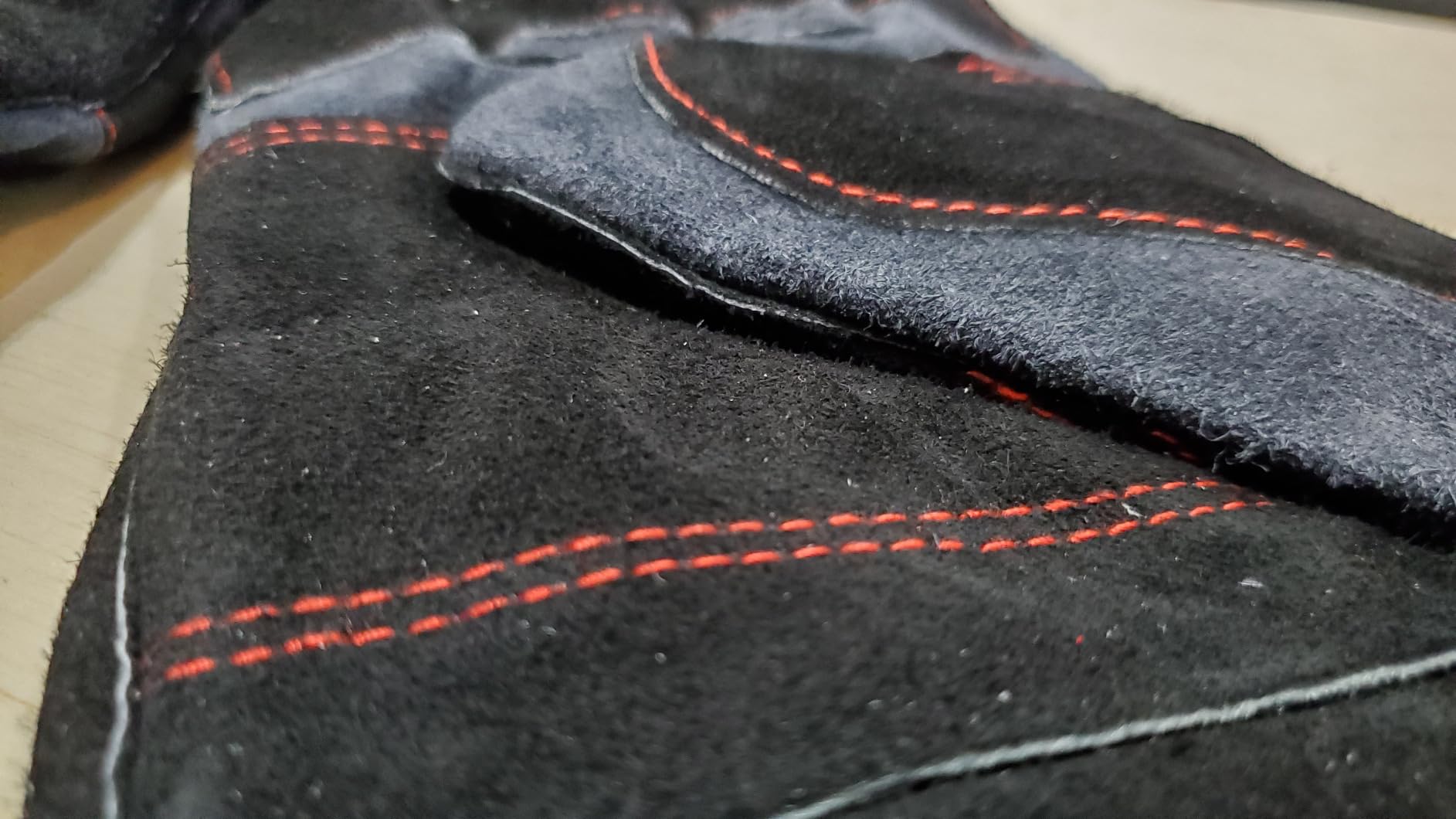
Several buyers report handling glowing logs and hot ash pans, which is well outside what a welding glove is asked to do. Double leather reinforcement at the fingers, palms, elbows and back is why that holds up, and Kevlar stitching keeps the stress points together.
For MIG specifically, the 16-inch length and 7.5-inch sleeve give more forearm coverage than most of the 14-inch shop gloves here. If you weld outdoors or on a trailer frame where the back of your hand is in the arc line, that extra length earns its keep.
What to check before ordering
Sizing is the recurring theme in the reviews. These run large, and buyers with medium hands report that the fingers can feel snug while the finger length runs long, which changes how the gun sits in your grip. If you are between sizes, that is the one thing to get right.
Where the weaknesses show
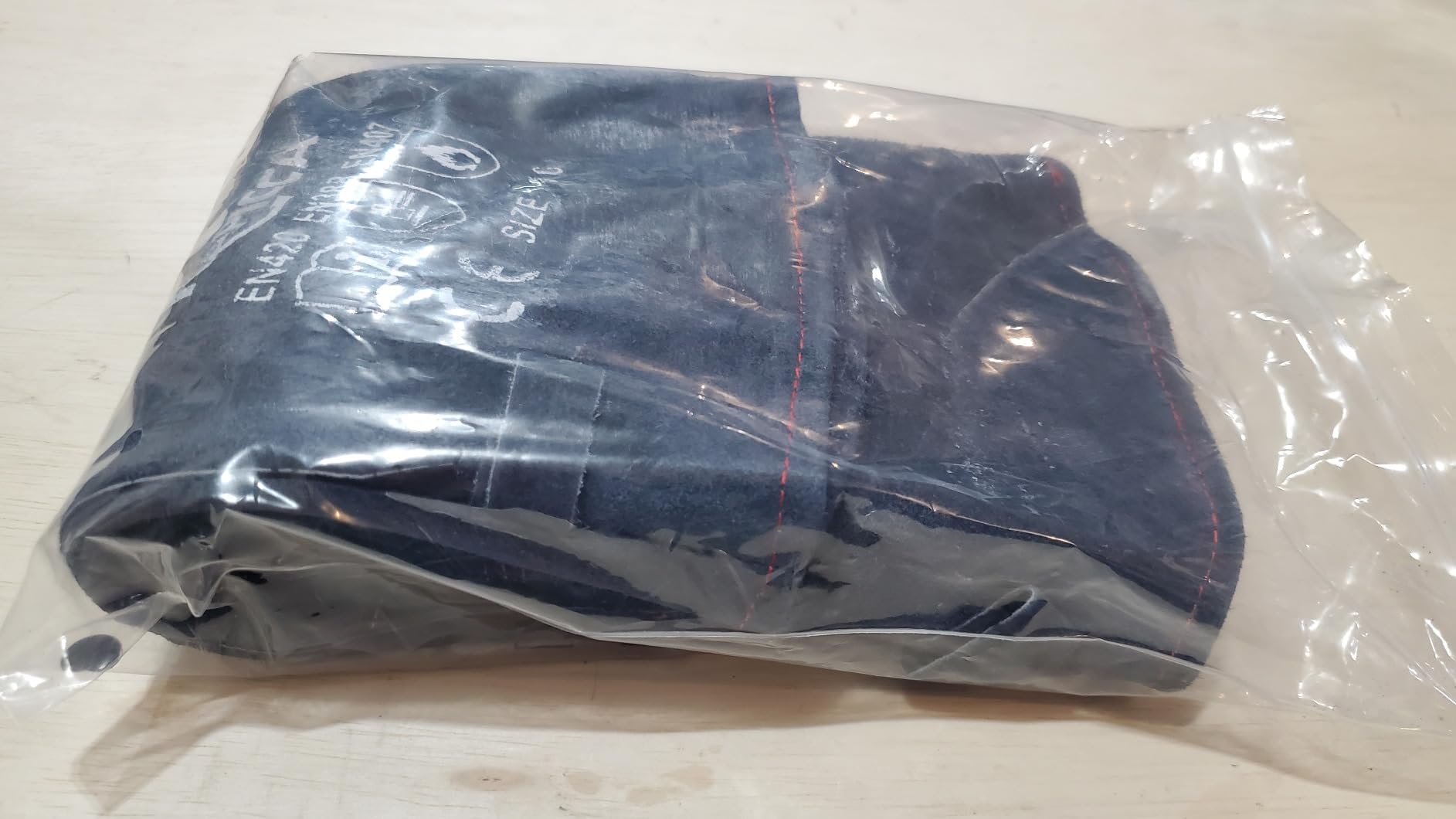
The stitching is the component that wears out first under heavy hot-metal handling, typically after around six months of demanding work. Expect a strong leather smell when the pair arrives and give it a few days to air out.
It is also not a true one-size glove despite the generic sizing, so treat the size label as a real size rather than a catch-all.
4. Lincoln Electric DynaMIG HD K3806-L: The Comfort Pick for Long Sessions
Lincoln Electric DynaMIG HD Professional MIG Welding Gloves | Comfort & Heat Resistance | Large | K3806-L Black
Top grain and split cowhide
Three layer FlameSoft liner
Seamless trigger finger
4 inch cuff
Pros
- Three layer liner on top hand for spatter protection
- Seamless trigger finger keeps gun work precise
- Foam padded knuckles with elastic form fit
- Twill cotton inside cuff wicks moisture
Cons
- Costs more than generic 16 inch leather gloves
- Bottom hand has only a two layer liner
- Large sizing can run snug for very large hands
This is the glove for a hobbyist who has decided to stop economising. The mixed liner construction is the interesting part: three layers of FlameSoft on the top hand where spatter lands, two layers of cotton on the bottom hand where you need to feel the gun and the wire.
A seamless trigger finger is a small detail that makes a big difference on a MIG gun. No seam means no pinch point on the finger you are pressing with all afternoon, and the grain leather palm adds grip for handling hot, rough metal.
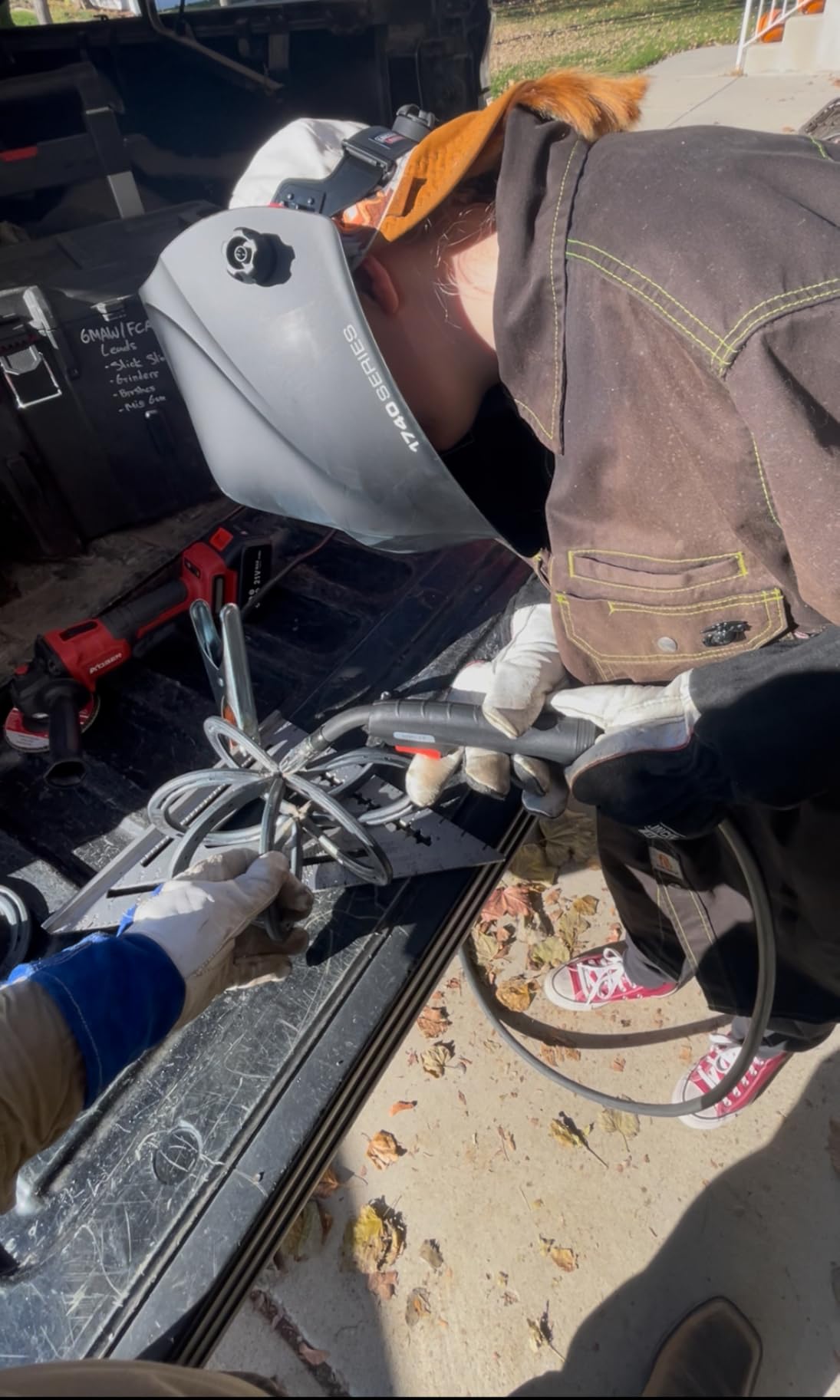
Foam padded knuckle protection and an elastic top hand give it a form fit that reduces the ache most welders complain about. The twill cotton inside the cuff absorbs moisture, which matters more in a summer garage than any lab-rated spec.
Reviewers position it as a step up for hobbyists ready to invest, and the comfort-first framing matches what they report back: long sessions get easier rather than harder.
Why it earns the premium slot here
It is the only glove in the set that deliberately spends less protection on the palm hand to buy back dexterity, and that is exactly the right call for someone whose welding is intermittent. You lose some margin on the underside and gain a glove you are willing to wear for eight hours.
The 4-inch split leather exterior cuff handles heat and abrasion well and still fits under or over a jacket sleeve without bunching.
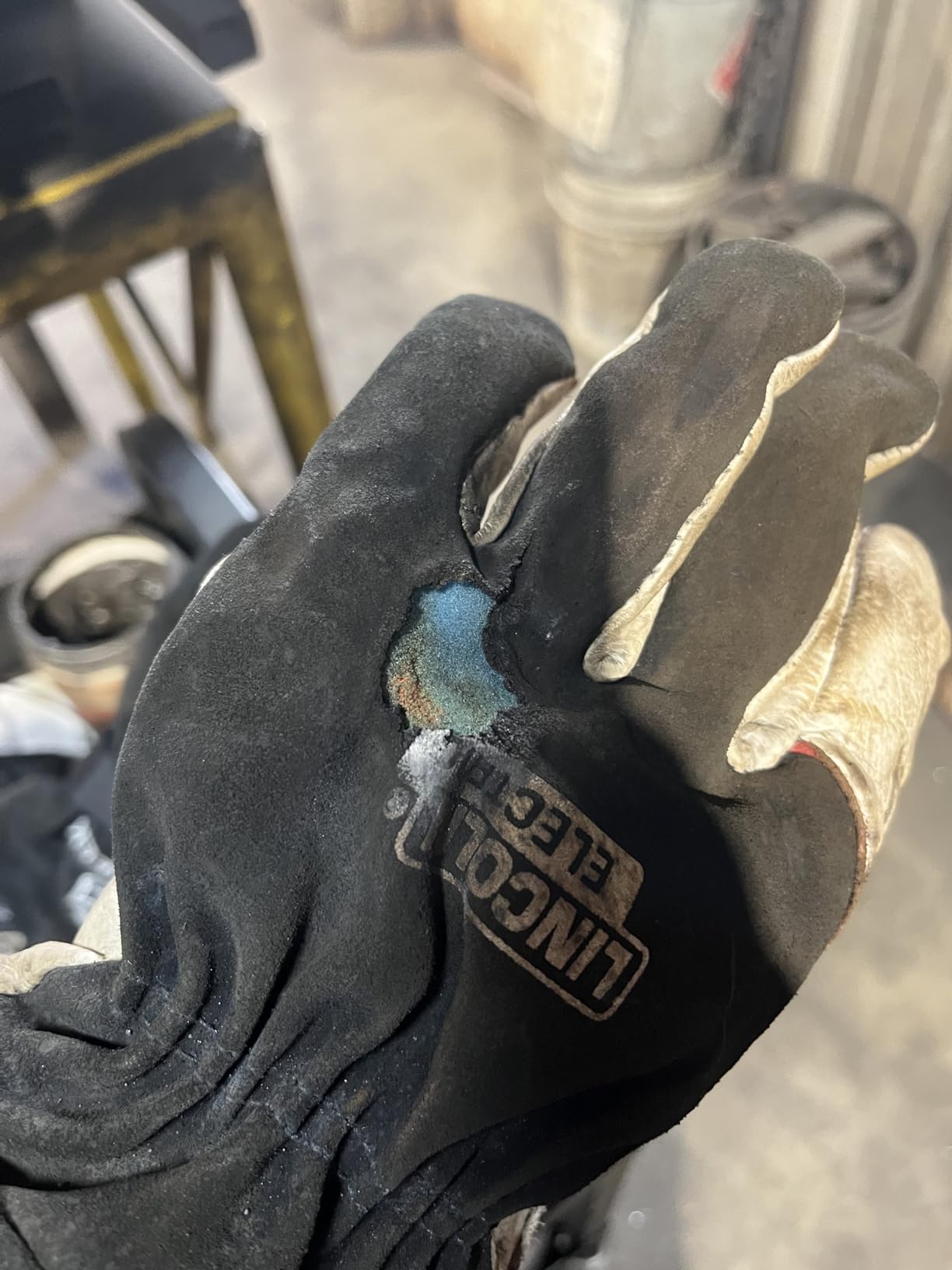
Where it falls short
The bottom hand only gets a two layer liner, so handling hot parts with your palm is less protected than with a heavy glove. It also costs more than the generic 16-inch leather options, which is a real consideration for a few weekends a year.
Sizing is the variable to watch. Wearers with very large hands report that the Large runs snug, so check the size chart rather than guessing.
5. TOPDC 16 inch Gloves: The Most Versatile With Genuine Leather Thickness
TOPDC Welding Gloves 16-Inch 932°F Heat Resistant Leather for MIG, Stick
Split cowhide with cotton lining
932F rating
1.2 mm cowhide
Double stitched
Pros
- Aluminium foil layer adds palm insulation
- 1.2 mm cowhide resists abrasion and puncture
- 16 inch length shields the forearms
- Cotton lining stays breathable
- True to size fit
Cons
- Bulkier than 14 inch models so less nimble
- Foil layer feels stiff at first
- Not waterproof for soaked conditions
Most budget gloves cut the leather thin to hit a price point. This one holds 1.2 mm of natural cowhide with double stitching, and that thickness is why the abrasion rating holds up against spatter and rough metal.
There is an aluminium foil insulation layer in the palm and a stated 932F rating, plus a cotton liner for breathability. Buyers rate it as excellent value for the specification sheet, and the fit runs true to size, which solves the sizing complaint a lot of budget gloves attract.
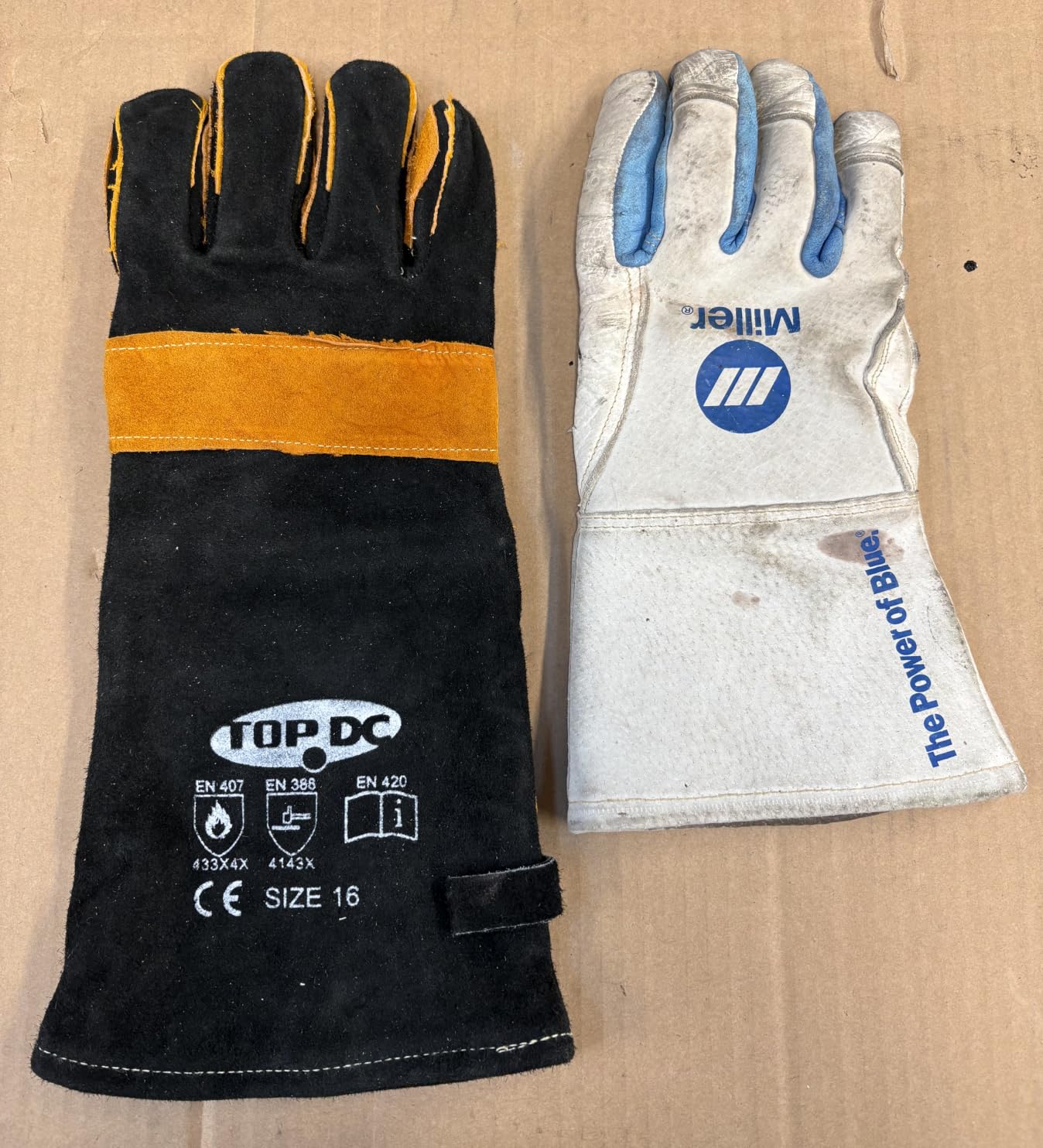
Reinforced Kevlar stitching with double leather at the fingers, palms, elbows and back covers the stress points properly. At 16 inches with a 7.5-inch sleeve, it matches the long gauntlets that cost considerably more.
It earns a place here because it does the one job a hobbyist needs most: standing between a beginner’s hand and a lot of spatter without being the flimsiest thing in the garage.
Where it fits a hobbyist
Light to medium MIG work, weekend fabrication, and any project where you are out of position more often than you are welding flat. The cotton lining and the length make it a sensible four-season pair for a garage.
If you also do a lot of grinding and general shop work, our leather gloves roundup covers that side of the hobby.
Where it falls short
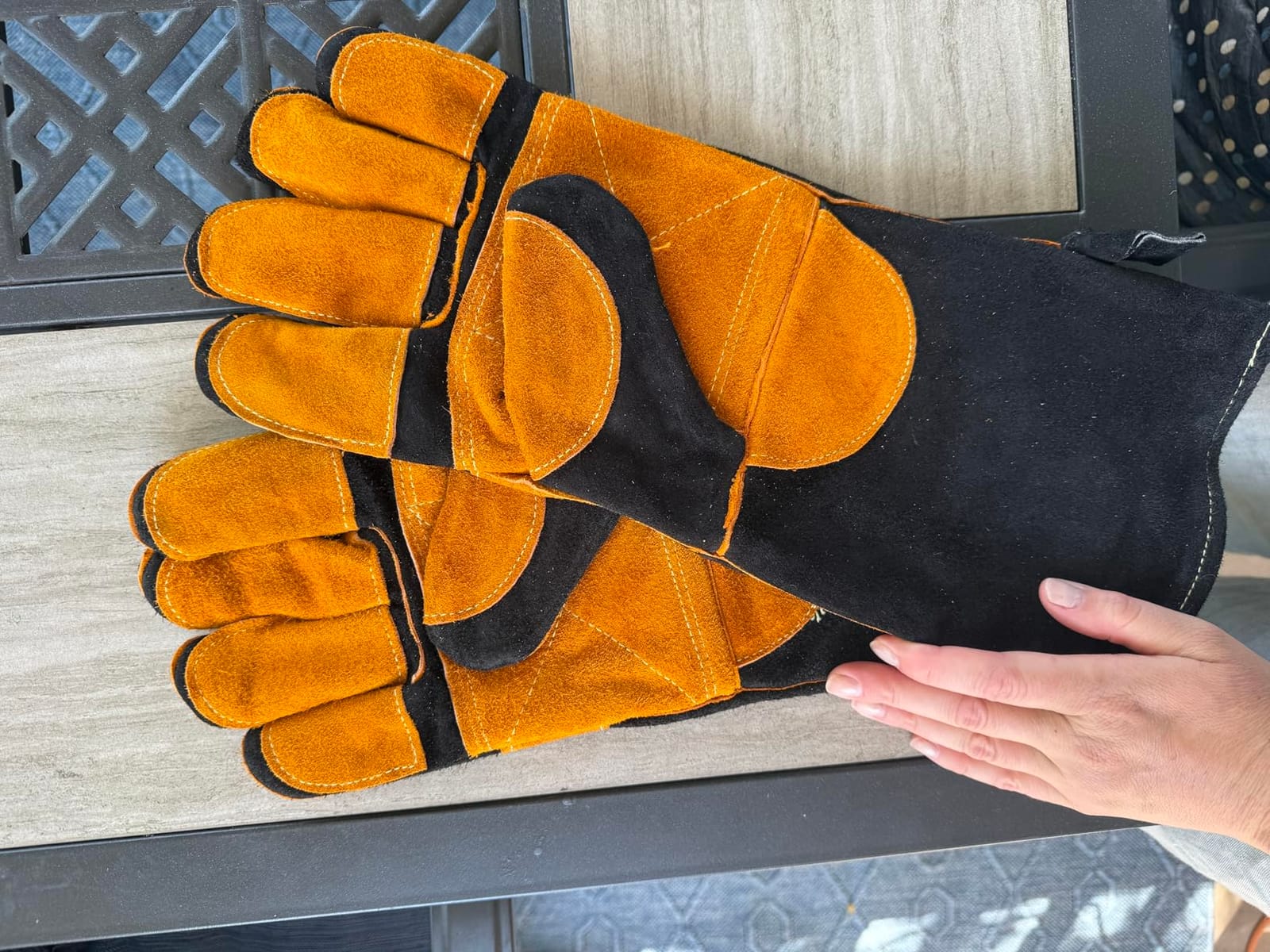
The extra length and insulation add bulk, so it is not the glove for fine detail work or anything TIG-like. The foil layer also feels stiff for the first few wears before it softens.
Water resistance is listed as water resistant rather than waterproof, so keep it out of soaked conditions.
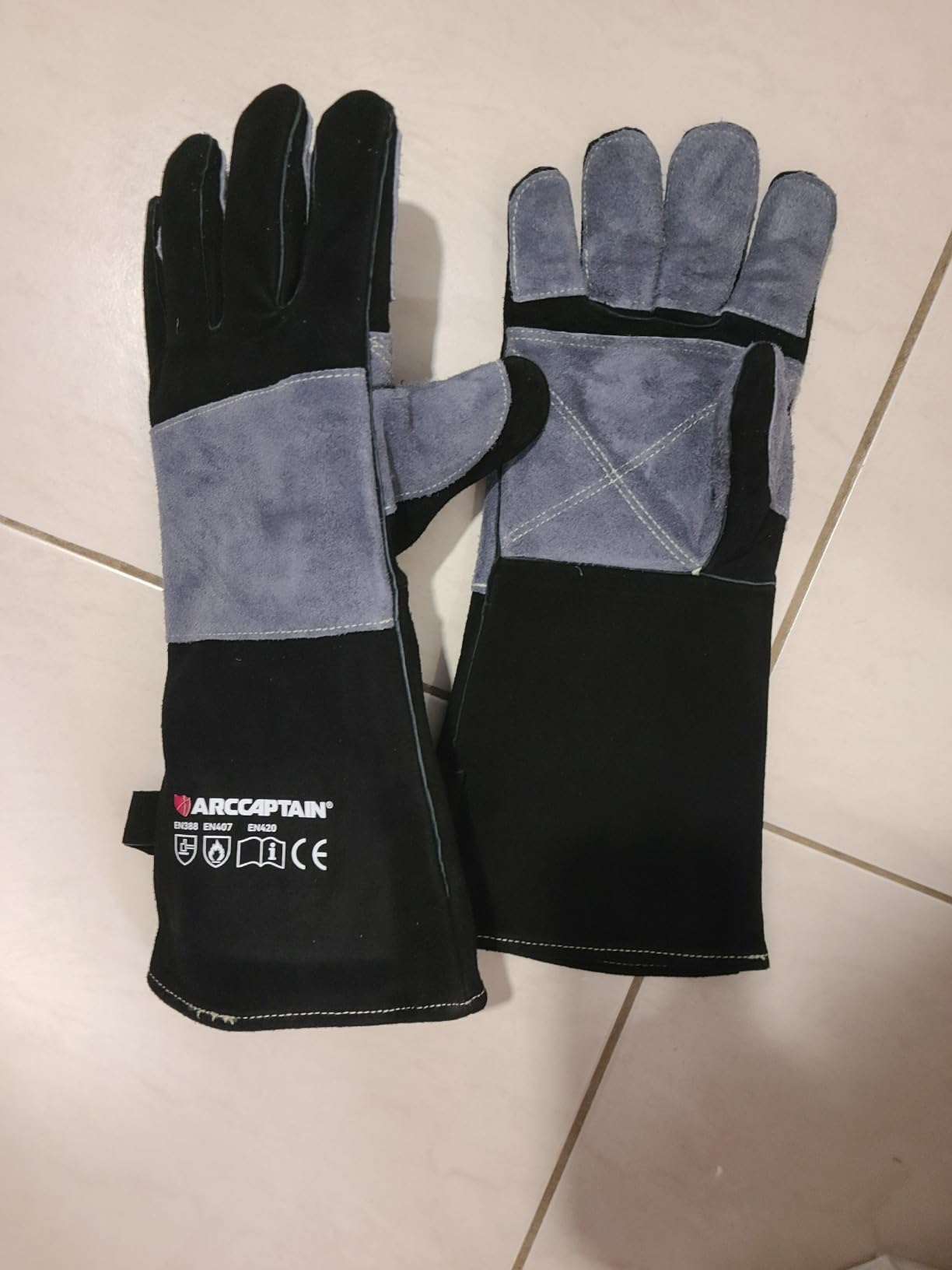
6. ARCCAPTAIN 16 inch Leather Gloves: A Comfortable Double-Layer Padded Palm
ARCCAPTAIN 16-Inch Leather Welding Gloves for Men & Women, BlackRed, L
Split cowhide
Double layer padded palm
16 inch with 7 inch sleeve
Cotton lining
Pros
- Reinforced double layer padded palm resists abrasion
- 16 inch length with 7 inch sleeve
- Cotton lining with denim cuff stays breathable
- Straight thumb design
- Two year warranty
Cons
- Listing shows conflicting heat ratings
- Full leather runs warm and stiff at first
- One size fits most so very large hands may find them loose
The padded palm is the story here. A double layer reinforced palm is the part of a MIG glove that absorbs spatter strikes and grinder contact, and wearers describe these as premium-feeling gloves well above what the category usually delivers.
It is heavy-duty split cowhide with a soft cotton lining and a denim-lined cuff that absorbs moisture. The 16-inch length with a 7-inch sleeve covers the forearm properly, and a straight thumb design gives decent precision on the gun.
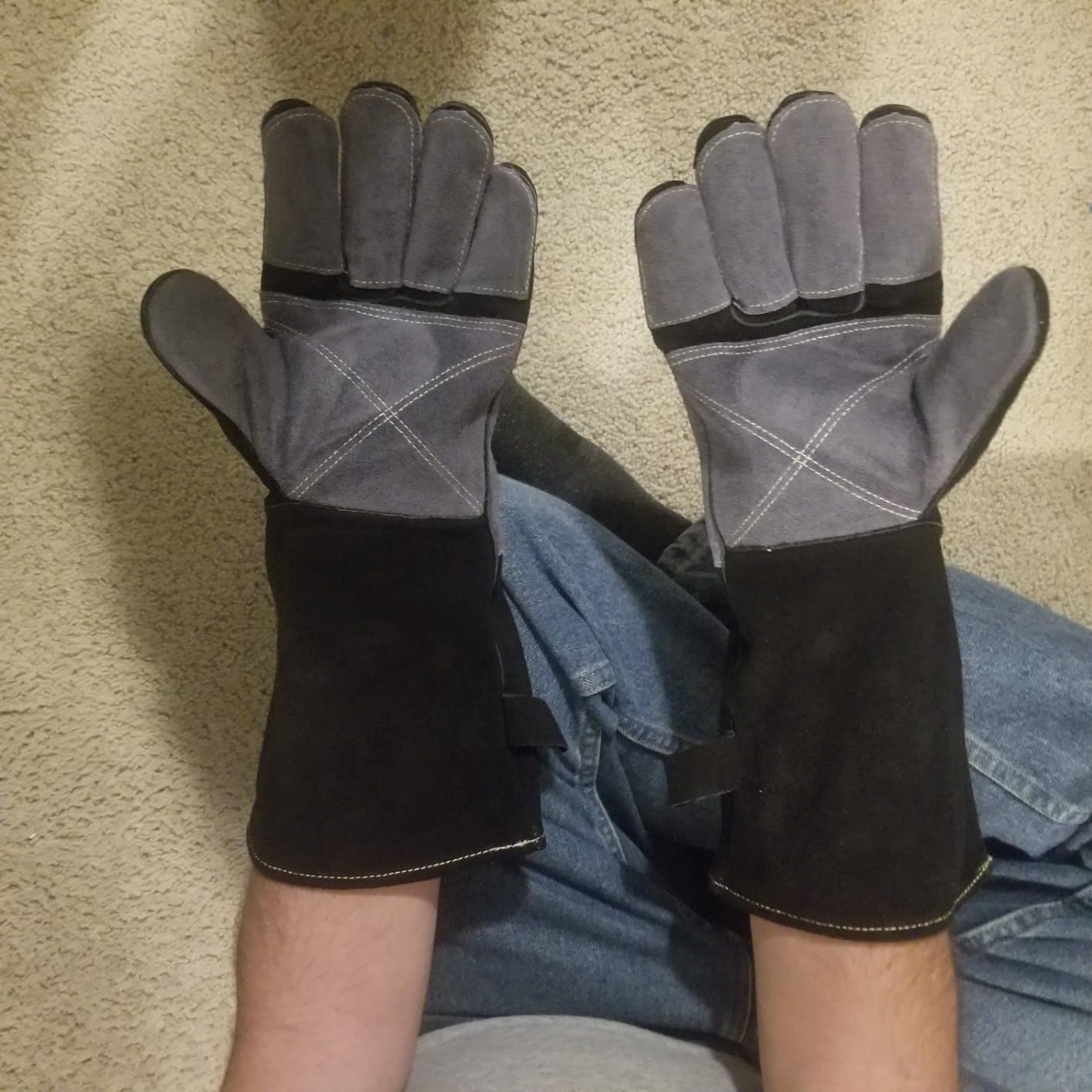
Buyers use them for welding, grilling and fireplace work in roughly equal measure, and repeat purchase is common. The two year warranty is unusual in this category and adds real confidence for a hobbyist who does not weld every week.
One thing careful buyers should do is read the specification panel twice. The technical fields list a 932F heat rating while the description mentions a lower figure, so treat the published rating with caution and buy for the construction rather than the number.
Who this suits
Anyone who spends more time grinding, handling stock and setting up than holding a live arc. The padded palm and lined cuff stay comfortable through all three, and the long sleeve protects during the welding itself.
Where it falls short
Full leather construction is stiff at first and runs warm in hot weather, so it is not a summer garage glove for long afternoons. The one size fits most label also means very large hands may find them loose at the cuff.
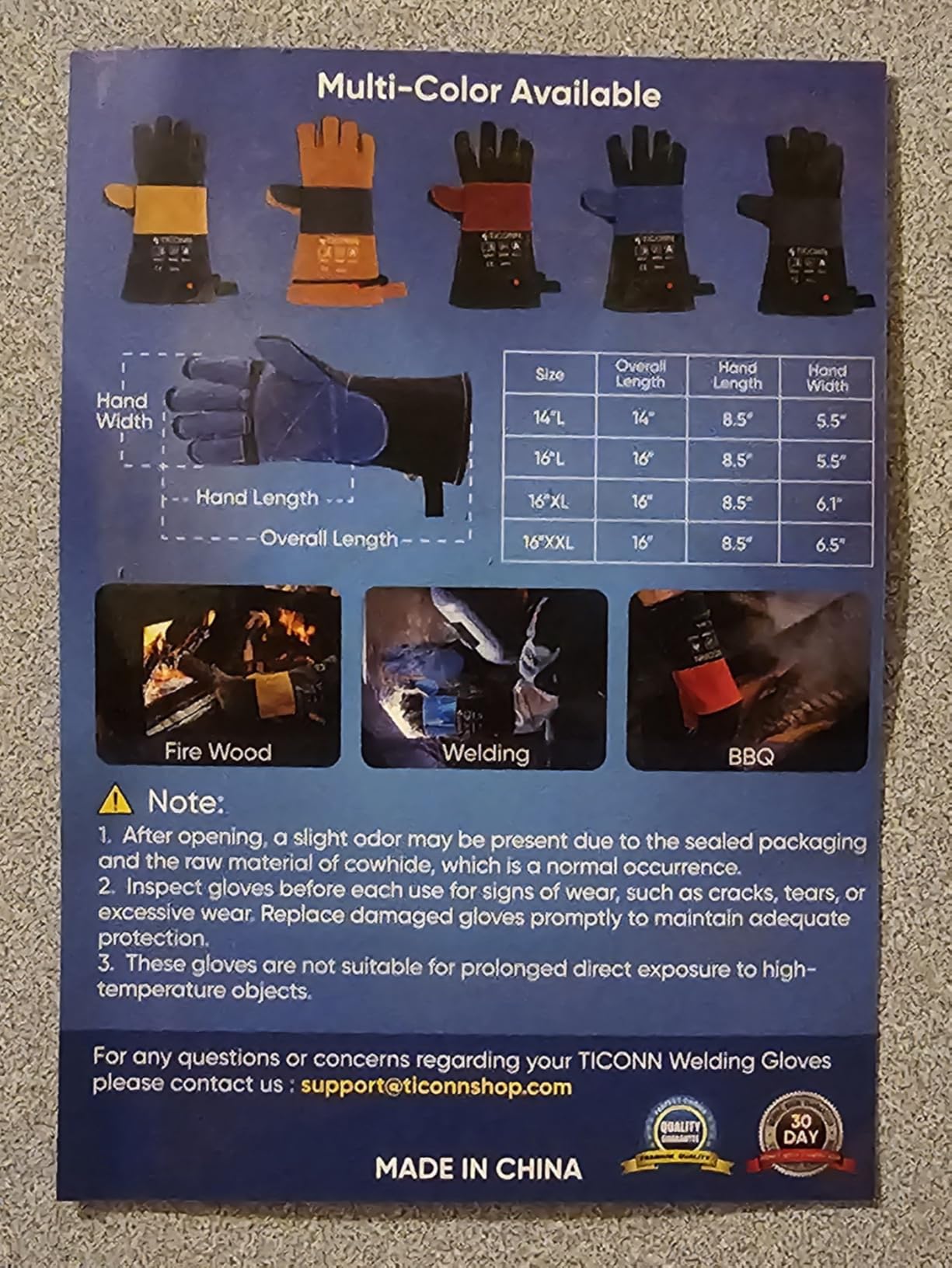
7. TICONN 16 inch Leather Gloves: The Highest Stated Heat Rating in the Set
TICONN 16″ Leather Welding Gloves for Men, 1000°F Heat Resistant, MIG/TIG
Three layer build rated to 1000F
2.4 mm cowhide
Foil mid-layer
Elastic cuff band
Pros
- Three layer build carries the highest stated rating
- True to size chart fits most hands
- Retains dexterity for grinding and small parts
- Elastic cuff band prevents slippage
- Wide size and colour range
Cons
- Very stiff out of the box and needs breaking in
- Strong chemical smell on arrival
- Full leather runs warmer than lined gloves
The 1000F stated rating is the highest in this group, and it comes from a genuine three layer build: 2.4 mm cowhide on the outside, an aluminium foil mid-layer and a flame-retardant cotton inner. That is a lot of material between your skin and an arc.
What surprises reviewers with fabrication experience is the fit. A true-to-size chart means the gloves fit most hands without the oversized bulk that plagues so many long leather gloves, and owners keep surprising dexterity for changing grind wheels and picking up small parts.
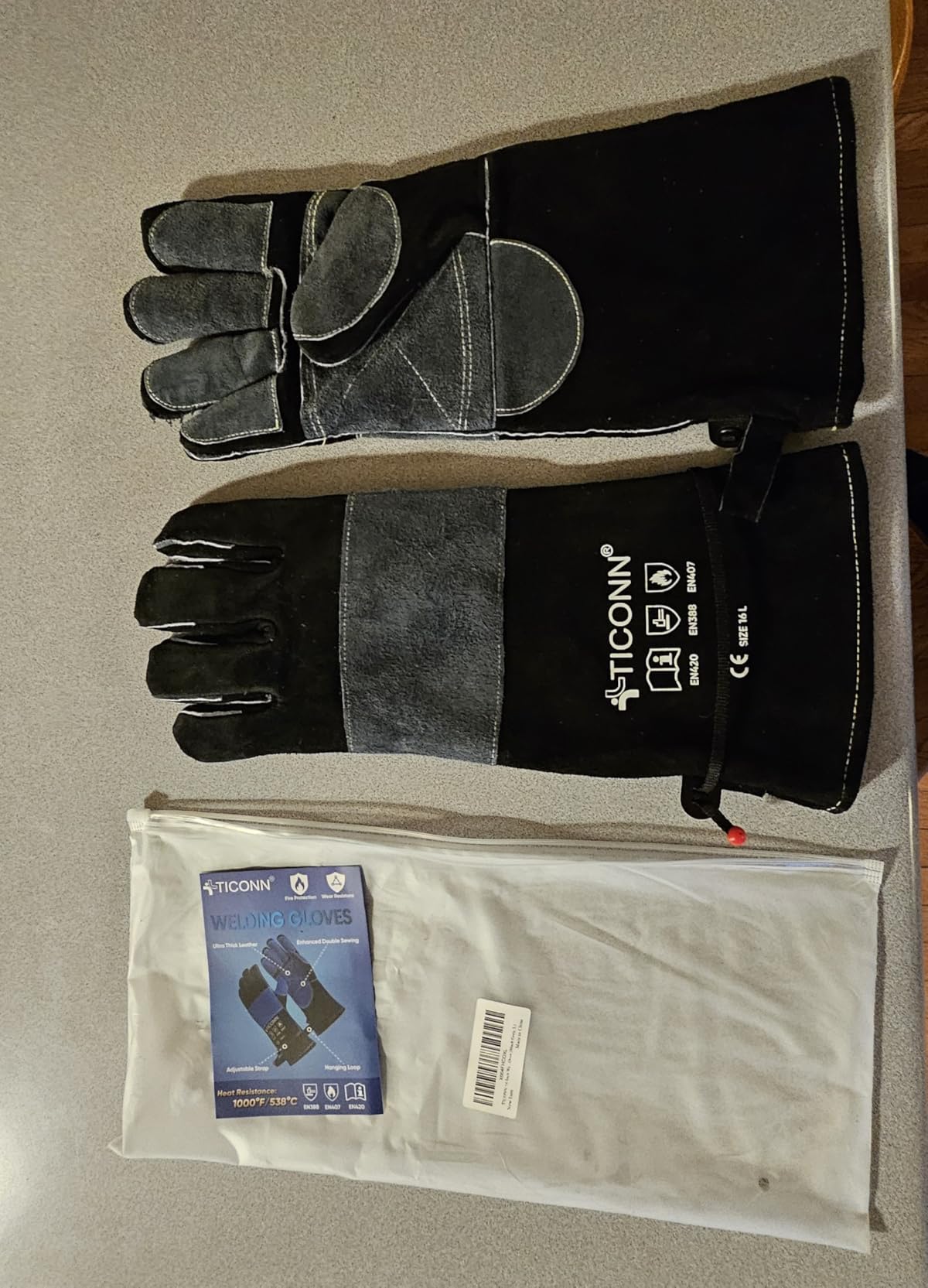
An adjustable elastic band at the cuff opening stops the gloves sliding down while you are reaching for a grinder or a hot part. Double leather stitching across the palm, fingers and back handles the abrasion, and kevlar thread reinforces the stress points.
It also works well past welding: grills, wood stoves and oven work all appear in the reviews, which is common for a glove this heavily built.
Where the heat margin matters
Choose this if your MIG work involves heavy plate, flux-cored wire or a lot of out-of-position passes where the back of your hand sits in the spatter path. The thickness is the point, and you get it at the lower end of this list.
Where it falls short
Stiffness on arrival is the consistent note. Reviewers work the fingers back and forth to break them in, and if you need full feel from the first minute of a project, this is not the glove.
Expect a noticeable new-glove smell that takes a few days to fade, and note that a full leather build runs warmer than a lined alternative in summer.
8. Tillman 50M Fleece Lined: Best for Everyday Fabrication Work
John Tillman Medium 14″” Gold and Pearl Top Grain Split Back Cowhide Fleece Lined MIG Welders Gloves with 4″” Cuff and Kevlar Thread Locking Stitch (Carded)” (50 M)
Top grain cowhide palm
Split cowhide reinforcements
Fleece lining
4 inch cuff
Pros
- Top grain cowhide palm with split cowhide reinforcements
- Fleece lining adds insulation without bulk
- 4 inch cuff covers the wrist
- Kevlar locking stitch
- Lightweight and flexible for detailed work
Cons
- Stated heat rating is well below the 932F claims common here
- Fleece lining traps sweat in warm conditions
- Fleece is minimal for very hot workpieces
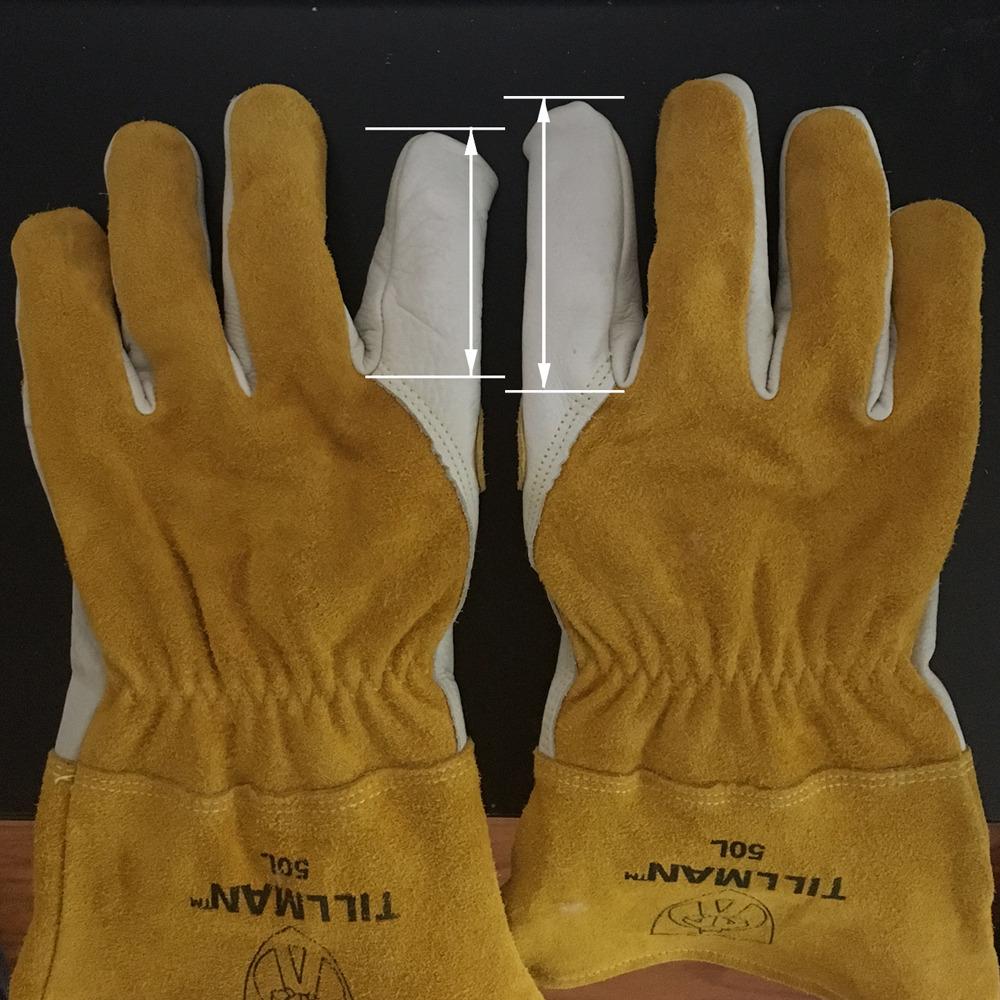
Tillman is the most repeated brand name across welding forums, and this glove shows why the brand has that reputation: the build is deliberate rather than padded. A top grain cowhide palm carries split cowhide reinforcements at the wear points, which is the correct allocation of material.
The fleece lining is the distinguishing feature. It adds insulation without the bulk of a foam liner, and the 4-inch cuff covers the wrist where spatter and radiant heat hit first. DuPont Kevlar thread with a locking stitch holds the seams together under heat.
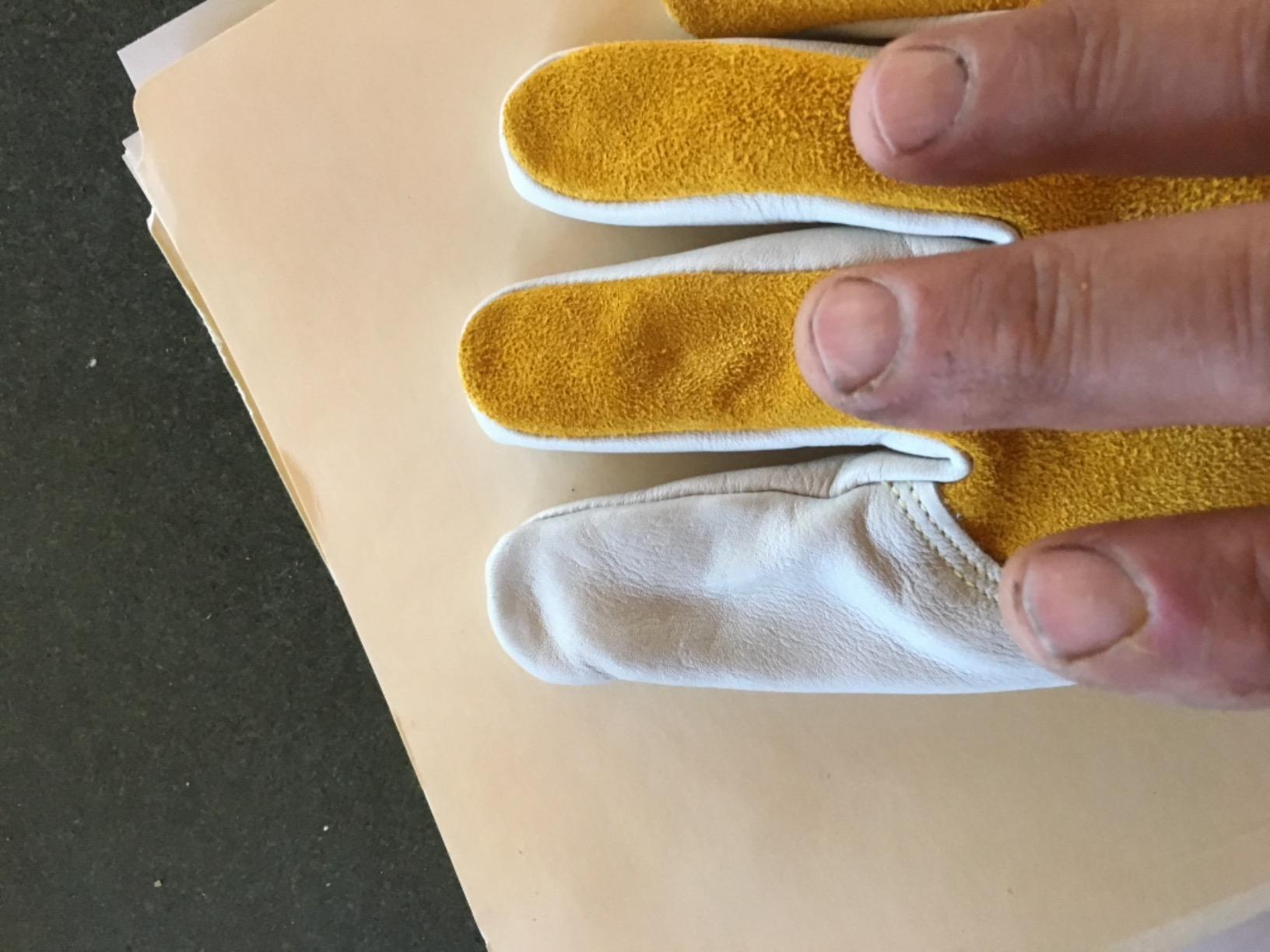
At just over three ounces, it is among the lightest gloves here, and the wing thumb plus lightweight construction keep your hands flexible for detailed welding. That combination makes it a good fit for a hobbyist who alternates between welding and fitting work.
Reviewers also use it away from the arc: the flex and low weight make it reasonable for general shop handling, though it is a welding glove first.
Why the fleece lining matters
For someone welding in an unheated garage or outdoors in cold weather, fleece is a genuine advantage. It holds warmth without the stiffness of foam, and the cuff coverage keeps the heat in.
It also suits light fabrication days where you want one pair of gloves for handling stock, grinding and welding rather than rotating between two.
Where it falls short
The stated heat rating of 200F is dramatically lower than the 932F claims common in this category, so this is not a glove for sustained heavy spatter or hot-metal handling. Take the rating at face value rather than comparing it to inflated marketing numbers elsewhere.
Fleece also traps sweat in warm conditions, which is the trade-off you accept for winter comfort.
9. Lincoln Electric K4082-L Heavy Duty: Best for Sustained High-Heat Work
Lincoln Electric Heavy Duty MIG/Stick Welding Gloves | Heat Resistant & Durabilty | Large | K4082-L
Heavyweight leather
Multi-layer liner
Flame retardant foam
Kevlar stitching
Pros
- Heavy leather and multi-layer liner handle higher temperatures
- Flame retardant foam liner extinguishes flames
- Leather breaks in and improves dexterity
- Reinforced stress points for daily shop use
- Soft air-cushioned fleece and foam feel
Cons
- Sleeveless design gives less forearm coverage
- Bulky and warm during long welds
- Lowest rated Lincoln Electric option in this set
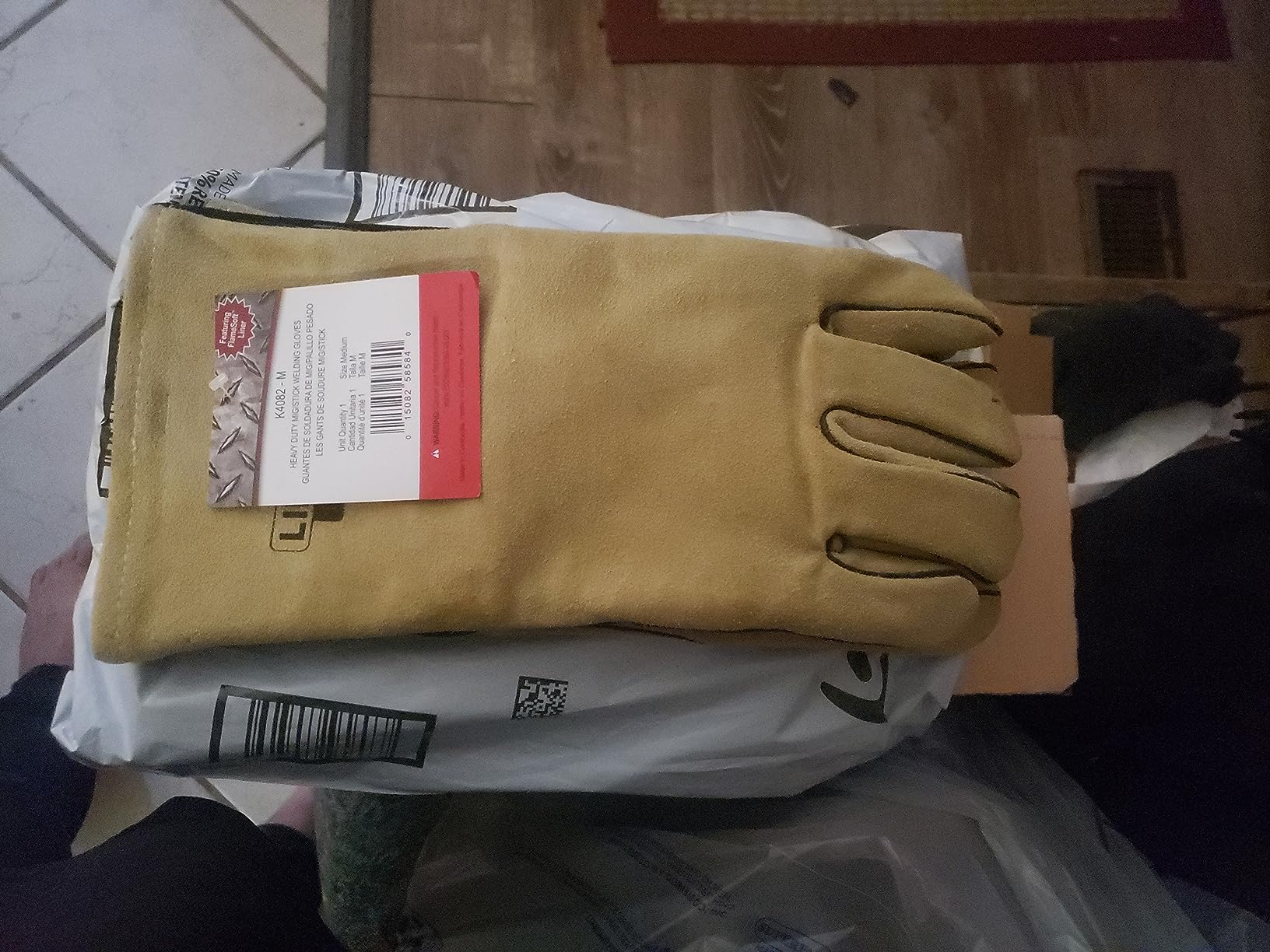
Feedback on this glove centres almost entirely on heat endurance. The heavy leather exterior and multi-layer liner are credited with sustained high-temperature work, and the flame retardant foam liner is what stops a small flame from spreading instead of extinguishing it.
Owners also like that the leather softens into the hand over time, so dexterity improves with use rather than degrading. Kevlar threading and reinforced stress points suit daily shop work, and the fleece and foam hand liner gives an air-cushioned feel.
This is the one to consider if you are moving from occasional home-shop MIG toward regular work. It is built like a production glove and priced and reviewed like one.
The rating is the lowest of the three Lincoln Electric pairs here, and that comes down to warmth and bulk rather than failure. Wearers describe it as a reliable workhorse rather than a lightweight hobby glove.
When it earns its bulk
Heavy plate, long sessions in a hot shop and any work where the back of your hand stays in the arc line. The extra material is what buys the protection, so the trade-off is honest rather than accidental.
If you are still setting up your machine, our MIG welder roundup covers the equipment side of a first shop.
Where it falls short
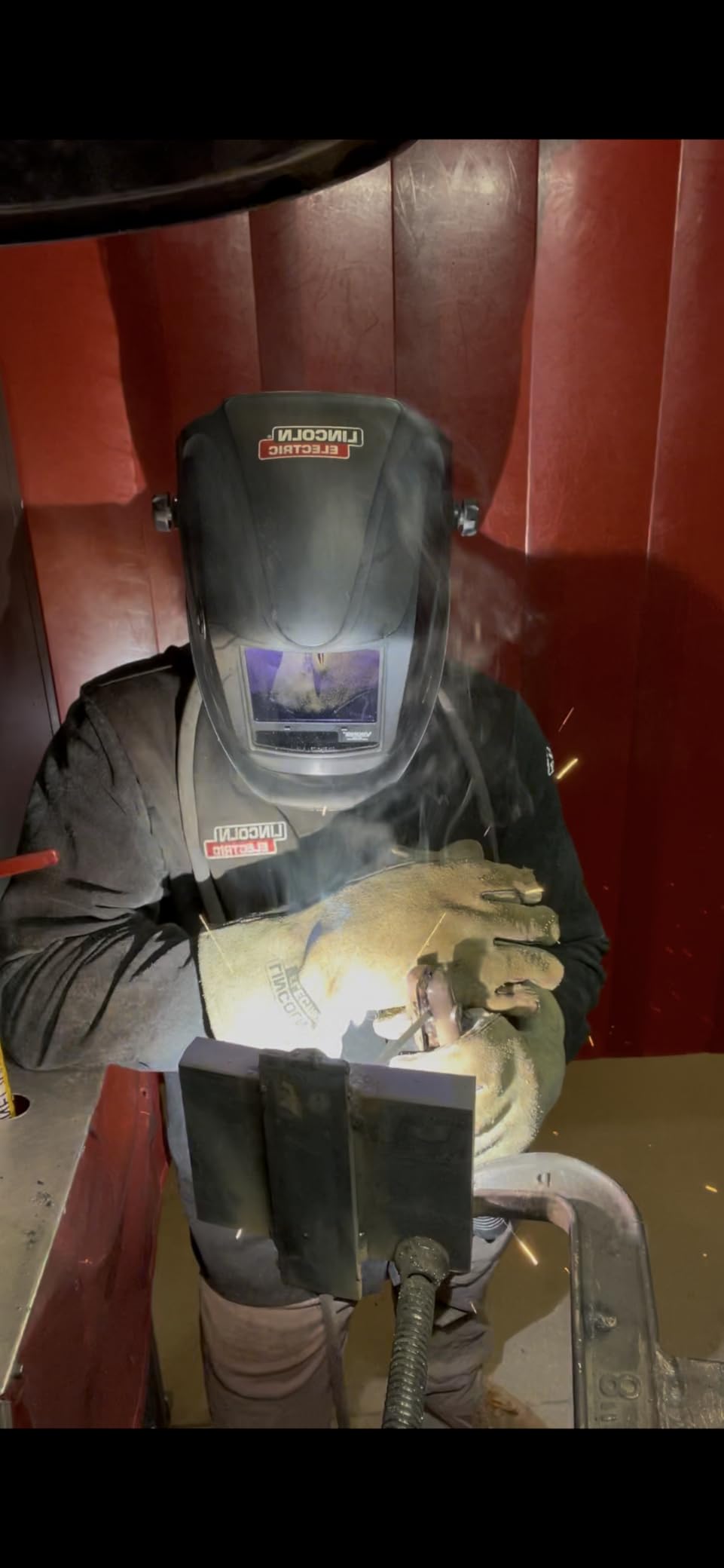
The sleeveless design offers noticeably less forearm coverage than a gauntlet model, which is the main safety compromise on a MIG glove. It is also bulky and warm during long welds compared with lighter options.
With a lower share of five-star reviews and more three-star and one-star feedback than its siblings, treat fit and warmth as the deciding factors.
10. DEWALT Premium MIG and TIG Gloves: Maximum Dexterity, Limited Spatter Protection
DEWALT Premium MIG/TIG Welding Gloves, Gauntlet-Style Cuff, Small
Grade-A buffalo leather palm
Kevlar threading
Open gauntlet cuff
Small to 3X-Large
Pros
- Best dexterity in the set for fitting joints and torch work
- Open gauntlet cuff slides over fire-resistant sleeves
- Full size range from Small to 3X-Large
- Kevlar stitching throughout held up well
- Buffalo leather palm resists abrasion
Cons
- Non-leather back panels burn through under heavy spatter
- Leather palm heats faster than heavier gloves
- Some stitching failed after burn-through
- Not suited to prolonged molten spatter
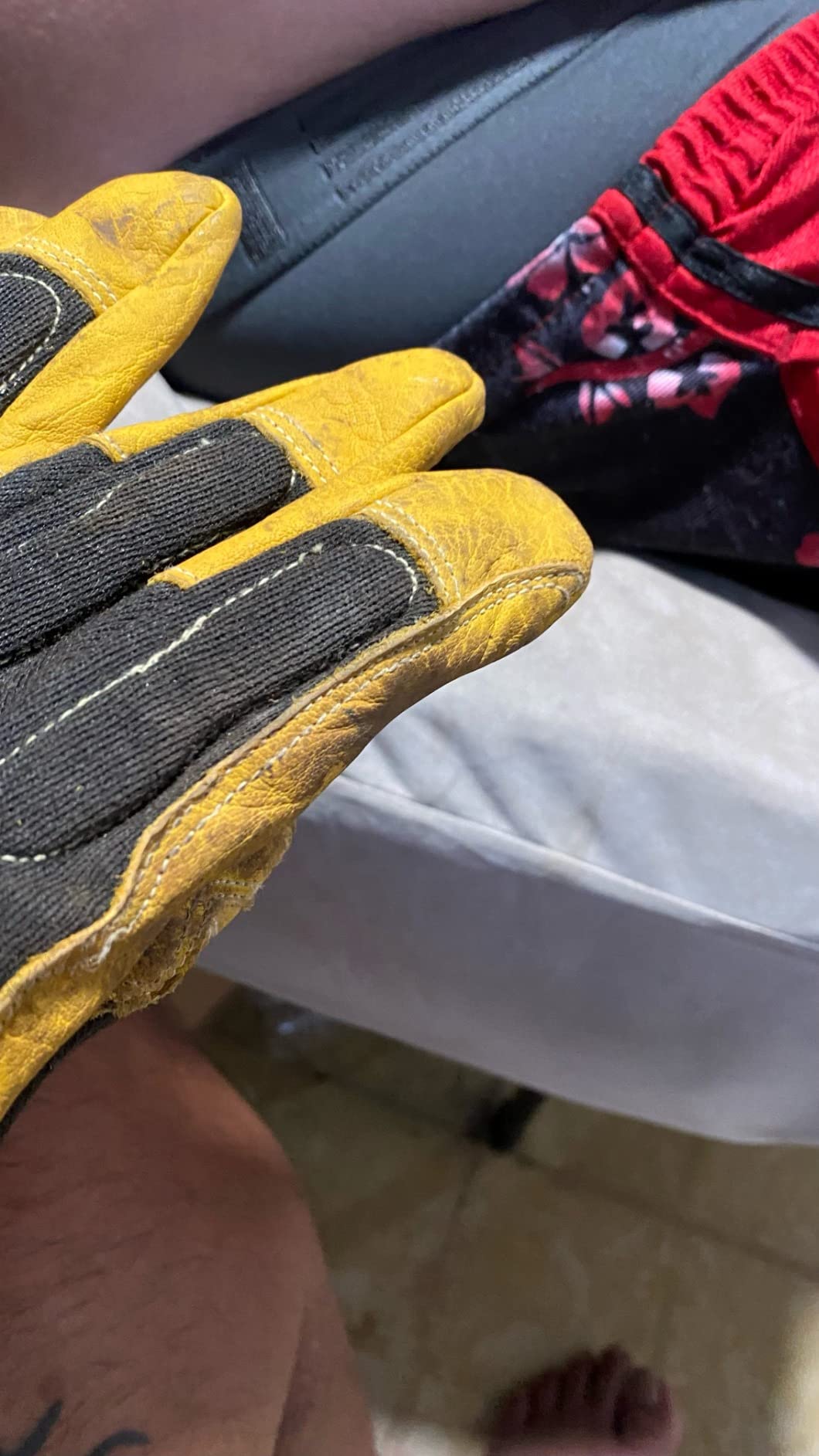
This is the lowest-rated glove in the set and we are including it deliberately, because the reason it earns that rating is exactly the reason some hobbyists love it. For fitting joints and handling a torch, the feel is the best here.
The palm is 100 percent grade-A buffalo leather, which is tough and abrasion resistant, and Kevlar threading runs throughout the glove. The open gauntlet cuff is genuinely useful: it slides straight over a fire-resistant sleeve or jacket without bunching.
The size range runs from Small to 3X-Large, one of the widest in the roundup, which matters if you have struggled to find gloves that fit.
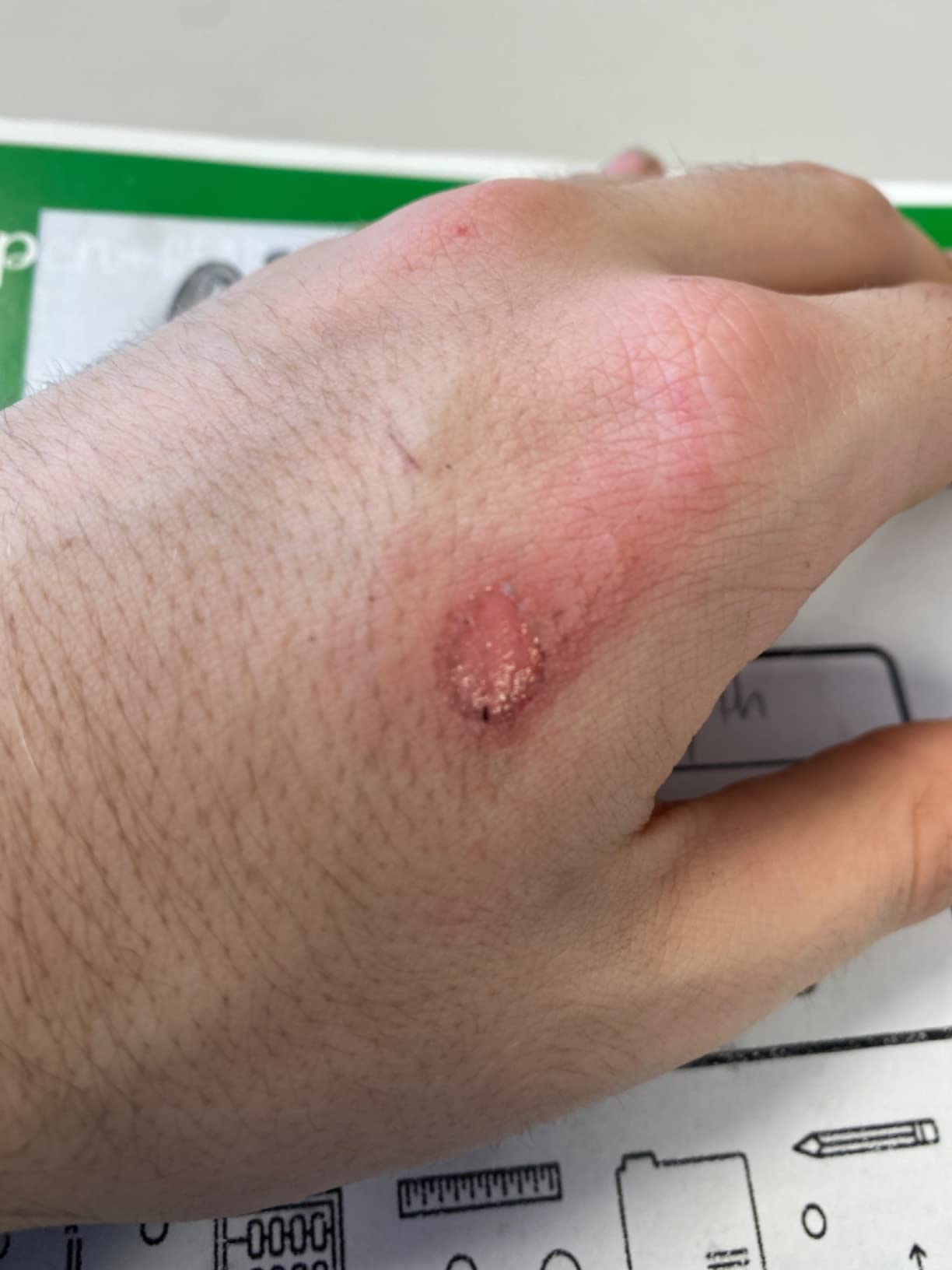
What the low-rating reviews describe is burn-through on the stretch fabric panels across the back and sides of the hands. Those panels do not protect against weld spatter, and some buyers report stitching failure after burn-through on out-of-position welds.
Who should buy it
A hobbyist whose MIG time is mostly short bursts of fit-up and positioning, who wants full fingertip feel and who wears a fire-resistant jacket anyway. The buffalo leather palm handles hot, sharp metal better than most.
It is also a reasonable second glove to keep alongside a heavier pair for the fitting work between welds.
Where it falls short
Because the leather palm heats faster than a heavier welding glove, heat protection is modest. Do not treat this as a heavy spatter or prolonged molten spatter glove, and it is not the right pick for professional fabrication.
The buffalo palm is also the slowest to break in, so expect less flexibility on day one than the grain cowhide options here.
How to Choose MIG Welding Gloves for a Home Shop
A MIG glove protects against three different hazards that are constantly confused. Conductive heat comes from holding a hot workpiece. Radiant heat and flame come from the arc. Sparks and spatter are brief contacts that land on the back of your hand and the cuff. Hide thickness, lining, seam construction and cuff length each block a different one, which is why a superb TIG glove is a poor MIG glove.
What type of leather is best for welding gloves?
For MIG specifically, mid-weight top grain cowhide or pigskin gives the best balance of feel and protection, and split cowhide is the right call for heavier work. Goatskin and deerskin are thinner and belong to TIG work, where heat is far more controlled.
Cowhide is the most popular MIG leather precisely because its thickness trades a little dexterity for dependable heat resistance. Pigskin is lighter and suppler, which suits lighter gauge work. The rule of thumb for a hobbyist: if you are welding thin wall steel and mostly positioning by hand, grain leather; if you are doing plate and out-of-position passes, split.
Is split leather or grain leather better for welding gloves?
Split is not the cheap downgrade that most buyers assume. It comes from underneath the hide and has a fibrous, suede-like nap, which makes it the correct shell for heat, spatter and rough handling. Grain comes from the hair side, and it wins on dexterity, grip and water resistance.
Split is what you want against an arc. Grain is what you want when you need to feel the gun and the wire. Several of the picks above use both, putting grain on the palm where feel matters and split on the back where heat lands.
Lined or unlined for MIG?
Lined for most hobbyists. Cotton and twill liners absorb sweat and add a thermal barrier without much bulk, and fleece suits cold shops. Unlined leather is cooler and gives the most feel, and welders who mostly do thin gauge and positioning work get away with it, but forum users regularly report regretting an unlined glove when they had to pick up hot metal.
If you work in a warm garage, choose the lightest lined glove you can find. If your shop is unheated or you weld outdoors, take the fleece.
Cuff length, sizing and fit
Every MIG glove should have a gauntlet cuff of at least four inches, and 16 inches is better if you weld outside or on heavy stock. Shorter 14-inch cuffs are easier to wear in heat and still cover the wrist.
Sizing runs inconsistent across brands, and this is the loudest complaint from hobbyists. The rule we use: work out whether you want a snug trigger grip or a roomy fit for hot parts, then read the size chart for that specific model rather than carrying a size across brands. Between two sizes, size down for gun work and up for handling.
Matching the glove to your process
MIG (GMAW) wants a gauntleted leather glove with spatter coverage. Stick (SMAW) puts more radiant heat at the hand, so it favours heavier leather and more lining. TIG (GTAW) wants thin, unlined goatskin for feel and fine control, and those gloves have no spatter margin, so using them for MIG is a genuine safety compromise rather than a shortcut.
Do you need a separate TIG glove if you mostly MIG? Only if you TIG at all. If you do, buy one thin pair for the TIG torch and keep your MIG glove on the bench between passes.
Break-in, care and when to retire a pair
New leather gloves need conditioning before they fit properly. Work the fingers back and forth, wear them for short low-heat sessions first, and a light conditioning balm on grain leather keeps it supple. Many welders oil brand-new pairs before first use specifically to soften them faster.
Then dry them the right way: air dry at room temperature, away from heat. Never dry welding gloves on a heater or a welding bench, because that is how seams crack and leather hardens. Store them dry and out of direct sun.
Retire a pair when the palm thins through to the lining, when the leather hardens so it no longer flexes, or when a seam starts to separate. For someone welding a few times a month, that is typically a couple of pairs a year, so budget for replacement rather than expecting one pair to last indefinitely.
What to avoid
Avoid four things. First, cotton or polyester thread seams, which char and let the glove open up under spatter; look for Kevlar or aramid thread. Second, unlined gloves for heavy plate or flux-cored wire. Third, over-stiff leather that wrecks torch control and causes fatigue, which is why several highly insulated picks here score well on protection and poorly on feel.
Fourth, ignore the sizing chart. It costs you nothing to check and it prevents the most common disappointment.
On standards: ANSI and ISEA 105 rates cut and heat performance, so an A4 versus A5 difference matters if you handle sheet metal constantly, but no cut rating tells you anything about spatter. OSHA 29 CFR 1910.138 requires hand protection matched to the thermal-burn and temperature hazards of your actual process, which is why we weight hide thickness and cuff length more heavily than any rating badge.
Frequently Asked Questions
Who makes the best MIG welding gloves?
Tillman is the most repeated brand across welding forums, and its fleece-lined 50M is a strong all-round choice. Revco-built Black Stallion is the top pick for feel, thanks to top grain cowhide with DragPatch and RestPatch padding. Lincoln Electric offers the widest range, from the split cowhide K2979-ALL to the padded DynaMIG HD. Miller and Lincoln Electric carry a premium that hobbyists often question, though comfort-focused buyers tend to justify it. Vulcan from Harbor Freight is the value tier that forum users endorse for occasional work.
Do you need welding gloves for MIG?
Yes. MIG throws spatter continuously and delivers heat to your hand from three directions at once: the arc, the gun and the cooling workpiece. Under-thickness or absent gloves get you burned, and burned-on spatter is how most hobbyists permanently scar their hands. OSHA 29 CFR 1910.138 requires hand protection matched to the thermal-burn and temperature hazards of the process you are running.
What type of leather is best for welding gloves?
For MIG, mid-weight top grain cowhide or pigskin gives the best balance of feel and protection, while split cowhide is the right call for heavier plate work and out-of-position passes. Goatskin and deerskin are thinner and belong to TIG, where heat is controlled. Cowhide is the most popular MIG leather because its thickness trades a small amount of dexterity for dependable heat resistance.
Is split leather or grain leather better for welding gloves?
Split is not the cheap downgrade most buyers assume. It comes from the underside of the hide and has a fibrous nap that makes it the correct shell against heat, spatter and rough handling. Grain comes from the hair side and wins on dexterity, grip and water resistance. Many of the best MIG gloves use both, with grain on the palm where feel matters and split on the back where heat lands.
Can I use TIG gloves for MIG welding?
Not recommended. Thin, unlined goatskin TIG gloves have no gauntlet cuff and no spatter margin, and MIG throws far more heat and spatter at your hand than TIG does. That is a genuine safety compromise rather than a shortcut. If you TIG regularly, keep a thin TIG pair for torch work and a separate gauntleted leather pair for MIG.
How do I stop welding gloves from falling apart?
Buy gloves sewn with aramid or Kevlar thread, because cotton and polyester char and let seams open under spatter. Work the fingers back and forth to break the leather in before heavy work. Condition grain leather lightly with a balm, then air dry gloves at room temperature and never on a heater. Retire a pair when the palm thins to the lining, the leather hardens, or a seam starts to separate.
Final Verdict: The Best MIG Welding Gloves for Hobbyists in 2026
The Lincoln Electric K2979-ALL is the best MIG welding glove for most hobbyists: split cowhide, Kevlar stitching, a short 14-inch cuff that suits a warm garage and a cotton liner that stays comfortable through a full project. If you want more finger feel, take the Black Stallion top grain cowhide glove. If you want the longest cuff and the most owner feedback behind it, take the RAPICCA 16-inch.
Buy one pair, break them in properly, and get an insulated pair for winter if your shop is cold. Our heated gloves comparison covers another way to handle cold-weather shop work.