
If you only read one thing on this page, take these three. The Audio-Technica ATH-M50x is the default answer for most home studios because it is neutral, efficient at 38 ohm, and works from a laptop or an interface. The beyerdynamic DT 990 Pro is the pick when you want a genuinely open soundstage and a room quiet enough to use one. The Audio-Technica ATH-M20x is the honest budget entry for editing, arranging and learning your way around a mix.
That is the short version of the best studio headphones for mixing in 2026. The long version matters more, because the reason most people buy the wrong pair is not a bad shortlist. It is that every recommendation they read online was made in somebody else’s room, with somebody else’s monitoring level, for somebody else’s tracking setup.
So this guide puts the criteria before the products. We compare back type, impedance, driver size, sensitivity, frequency range, weight, cable and pad serviceability for all ten models, then map those numbers to the situations people actually work in. If your room is untreated, your plan is mostly tracking, or you are mixing at midnight in a shared flat, the right answer for you is a different model than for someone with a treated room and a good interface.
One thing we will not pretend: there is no single objectively correct mixing headphone. The recurring thread in r/audioengineering and r/musicproduction threads is that engineers name Sennheiser, Beyerdynamic, Audio-Technica and AKG in roughly equal measure, and each defends the choice with reasons that only make sense inside their own workflow. What separates a good purchase from a bad one is knowing which of those reasons applies to you.
We have also leaned on what real buyers say after the novelty wears off, not just the spec sheet. That means the fixed cables, the warm velour pads after hour four, the plastic swivel hinges that crack, and the 250 ohm models that go quiet on a laptop. Those are the details that show up in reviews years later, and they are the ones that decide whether you still love the headphones in year three.
If you are shopping for anything other than critical work, our picks for headphones for audiobooks and noise cancelling headphones for reading are a different list, because comfort for listening and accuracy for work pull in opposite directions.
Table of Contents
Top 3 Best Studio Headphones For Mixing (October 2026)
All 10 Studio Headphones at a Glance in 2026
Every model below is wired, circumaural and built for monitoring rather than entertainment. The columns that actually change a mixing decision are back type and impedance: back type decides whether the headphone is usable in your room, and impedance decides whether it is usable from your source.
| Product | Specifications | Action |
|---|---|---|
 Audio-Technica ATH-M50x Audio-Technica ATH-M50x |
|
Check Latest Price |
 Sony MDR-7506 Sony MDR-7506 |
|
Check Latest Price |
 Audio-Technica ATH-M20x Audio-Technica ATH-M20x |
|
Check Latest Price |
 beyerdynamic DT 990 Pro beyerdynamic DT 990 Pro |
|
Check Latest Price |
 beyerdynamic DT 770 Pro beyerdynamic DT 770 Pro |
|
Check Latest Price |
 Audio-Technica ATH-M40x Audio-Technica ATH-M40x |
|
Check Latest Price |
 AKG K240 Studio AKG K240 Studio |
|
Check Latest Price |
 Shure SRH840A Shure SRH840A |
|
Check Latest Price |
 Shure SRH440A Shure SRH440A |
|
Check Latest Price |
 Sennheiser HD 490 Pro Sennheiser HD 490 Pro |
|
Check Latest Price |
1. Audio-Technica ATH-M50x: The Best All-Round Mixing Headphone
Audio-Technica ATH-M50X Professional Studio Monitor Headphones, Black, Professional Grade, Critically Acclaimed, with Detachable Cable
38 ohm
99 dB sensitivity
20 Hz-28,000 Hz
45 mm drivers
290 g
Pros
- Neutral revealing tone
- Works from laptop or interface without an amp
- Detachable pro-grade cable
- 90 degree swivels for one-ear checks
- Strong isolation
Cons
- Top end is slightly brighter than neutral references
- Pads and headband material wear with heavy daily use
- Can feel warm on long closed-back sessions
The ATH-M50x is the pair we hand to somebody who has just bought their first audio interface and wants to start mixing the same day. At 38 ohm and 99 dB sensitivity it produces usable volume from a laptop jack, an interface headphone output, or a small desktop DAC without any added hardware. That single fact removes the most common first-week frustration in home studios.
Sonically it sits close to the middle of the road. The 45 mm drivers with rare earth magnets and copper-clad aluminium voice coils give clear mids and highs with a low end that reviewers consistently describe as deep and accurate rather than boosted. The signature is slightly brighter on axis than the flattest references, which in practice means sibilance is easier to hear, not easier to miss.
The build is where this headphone quietly wins. Aluminium and steel parts, 90 degree swivelling earcups so you can cup one ear to the monitor, and a detachable cable with locking screws that will not yank out mid-session. The two-year parts and labour warranty is also the longest of any closed-back model on this list.
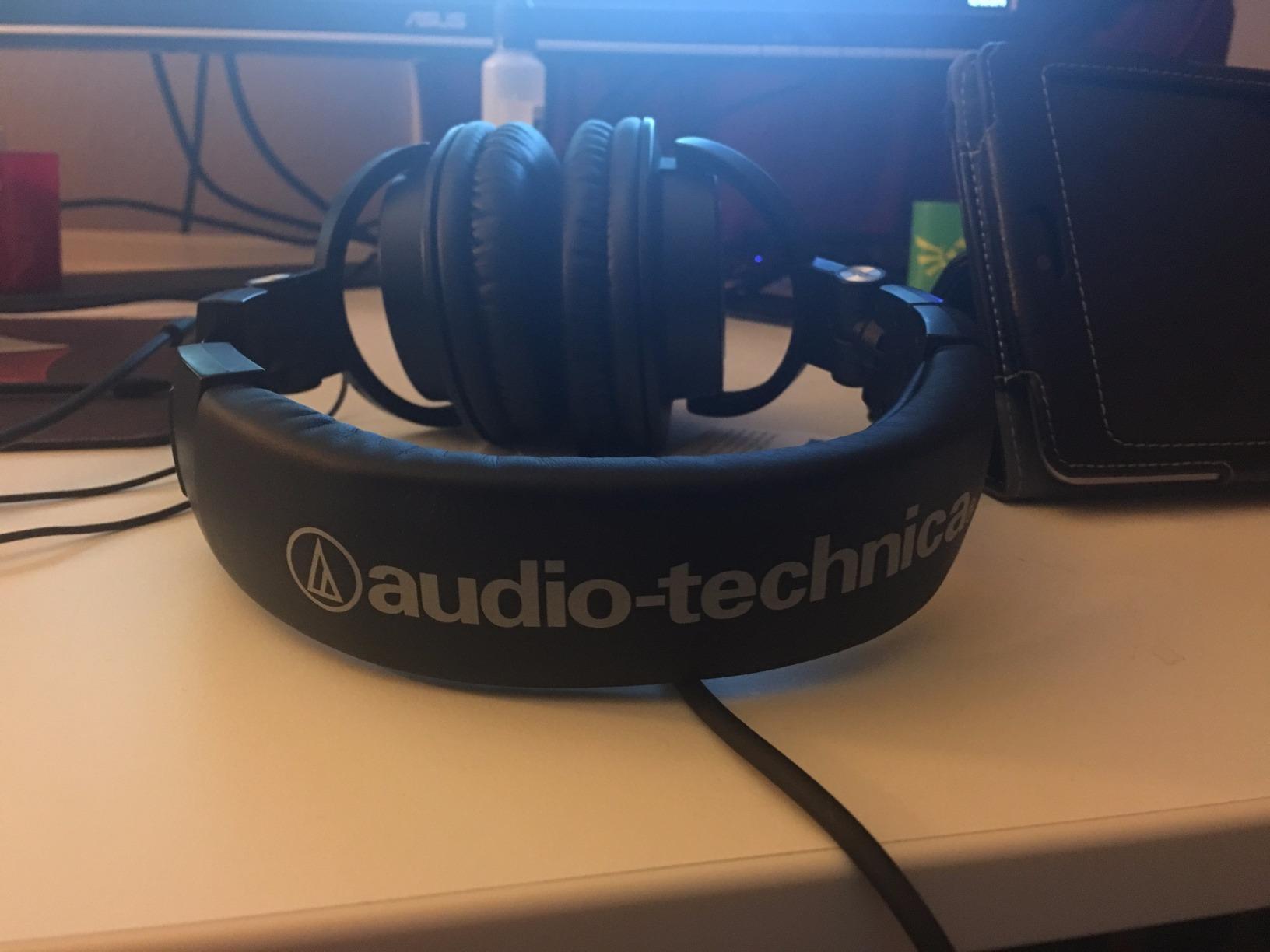
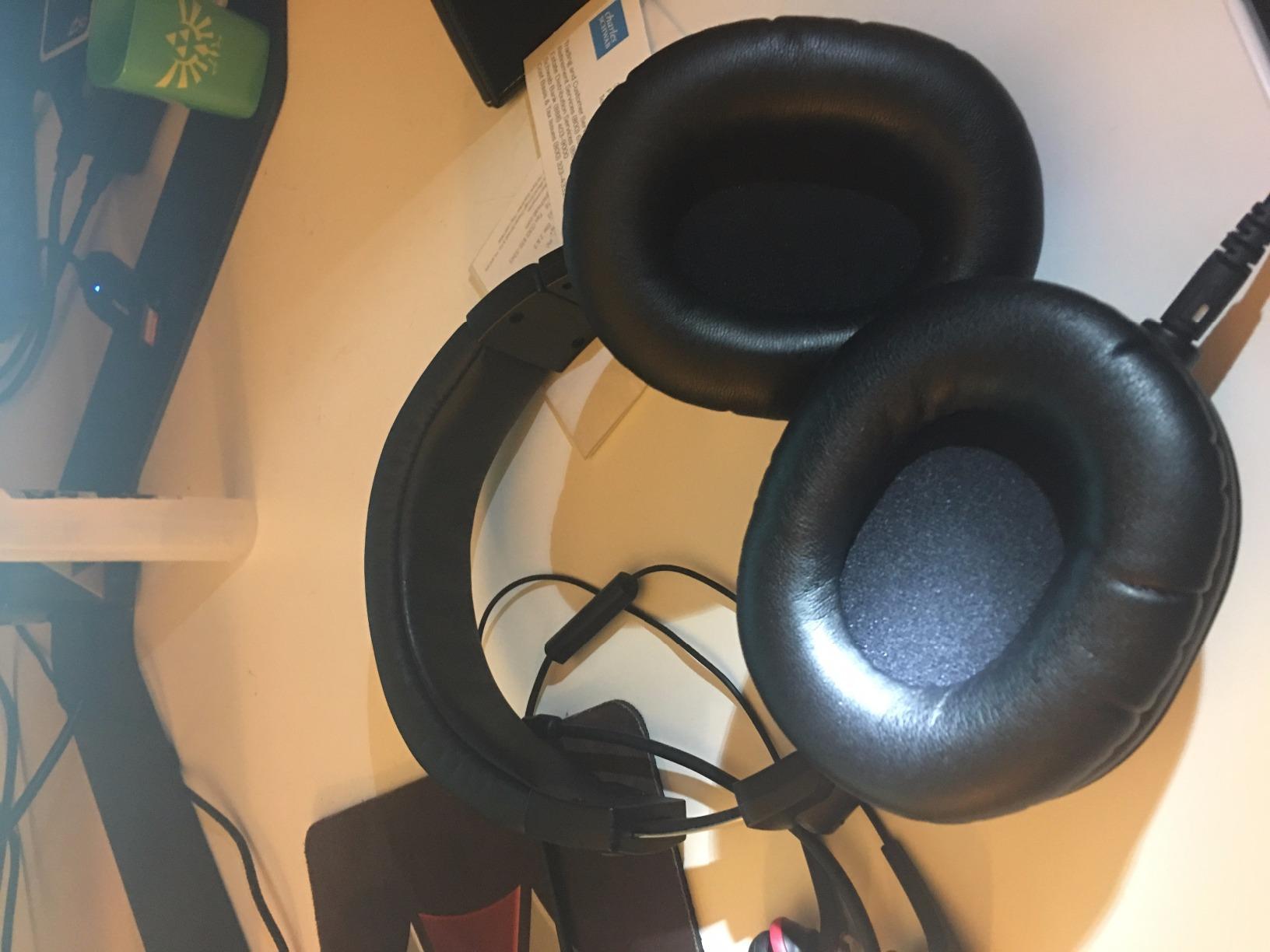
What we like most is the isolation. The circumaural seal does an unusually good job of keeping room noise out and backing-track bleed out of your microphone, which means one pair can cover both mixing and light tracking. It is not an open-back, so there is no leakage to worry about in a live room.
How the M50x handles a bass-heavy mix?
Because the response is honest rather than flattering, low end sits where you put it. On a bass-heavy track you will hear kick and bass guitar relationship problems that consumer headphones would have hidden. Owners often report that after a few weeks on these, their mixes get tighter in the sub region simply because the problems became audible.
The sub-bass extension is good but not the deepest in this list. If you work on drum-heavy electronic music and want to verify the 40 Hz region, cross-check on speakers or on the DT 990 Pro, which reaches down to 5 Hz.
Where the M50x falls short?
Closed-back designs get warm after a few hours, and this is no exception. Reviewers report the ear pads and headband material wearing with heavy daily studio use, which is a maintenance item rather than a defect but does add up over years.
The brightness is the other recurring note. It is not a fault, and many engineers prefer it because it exposes problems, but if you are sensitive to 5 to 8 kHz peaks you may find sessions tiring. That is a preference question, and pads or a gentle EQ solve it more often than swapping headphones does.
2. Sony MDR-7506: The Best Headphone for Tracking Vocals
Sony MDR7506 Professional Large Diaphragm Headphone
63 ohm
10 Hz-20,000 Hz
40 mm drivers
8 oz
9.8 ft coiled cable
Pros
- Decades of broadcast and studio use
- Very light at 8 ounces
- Revealing detail without colouring the mix
- Folds flat with case and quarter-inch adapter
- Strong passive isolation
Cons
- Fixed cable cannot be replaced if it fails
- Bass leans light for low-end checks
- Bright treble compared with flatter references
- Collapsible cups are awkward if unfamiliar
Few products in audio have a longer studio pedigree. The MDR-7506 has been the broadcast and radio industry default for decades, and that longevity is itself a data point: a headphone that survives that many years in professional racks is one you can buy and forget about.
At 63 ohm it sits in the easy middle. It drives well from an interface headphone out, a small mixer, or a laptop, and it does not need a dedicated amplifier to reach a reasonable monitoring level. Sensitivity sits in a workable range for most sources, and the passive isolation from the closed ear design is good enough to track a vocal in a room with a running air conditioner.
The 40 mm neodymium drivers produce exceptional detail. Engraved-on mix flaws show up immediately, which is the entire point. The trade-off, repeated constantly in reviews, is that the bass is on the lean side and the treble is bright. Both are learnable, and both are why engineers trained on this headphone tend to make conservative low-end and presence decisions.
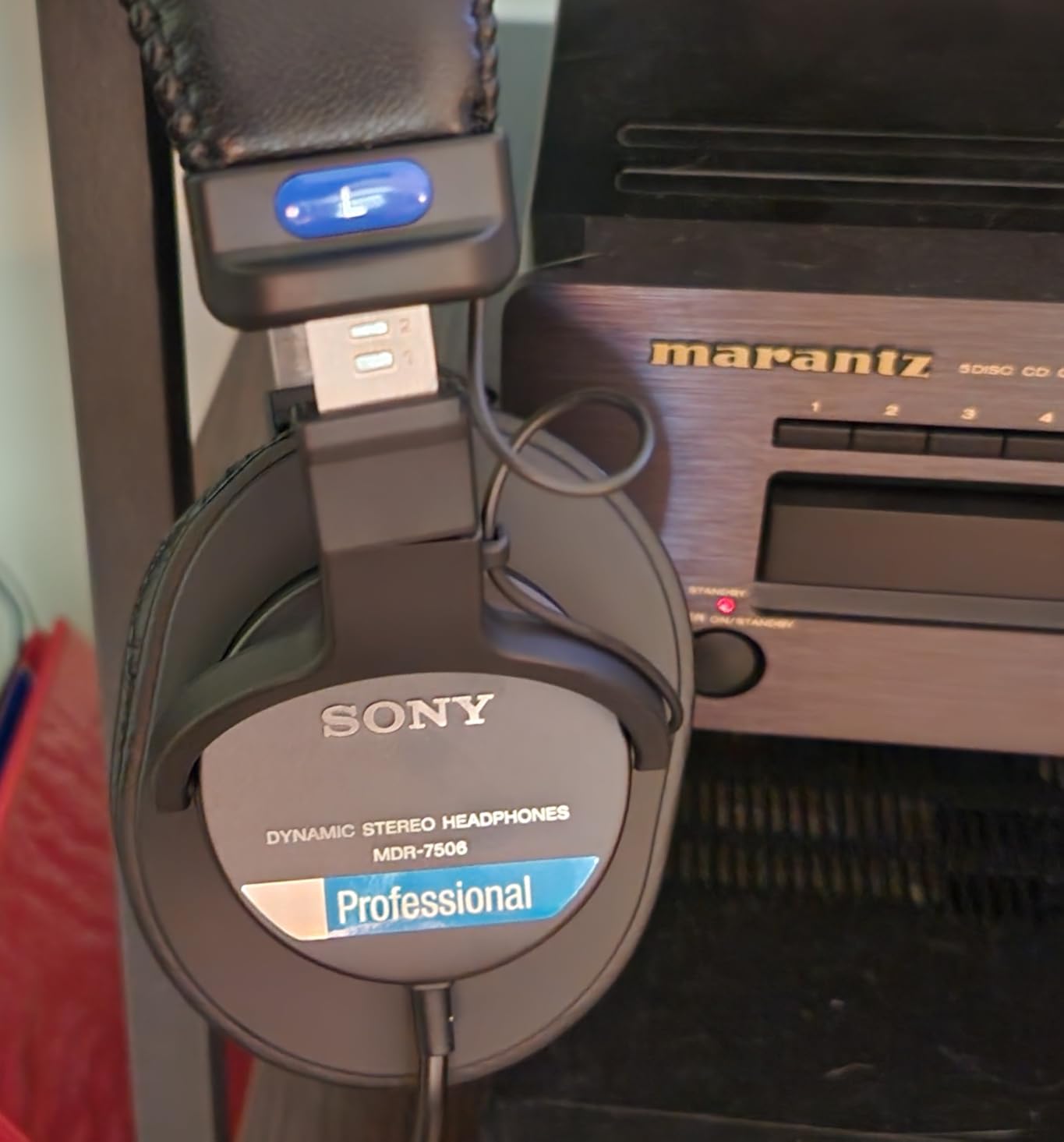
Comfort is the quiet strength here. At 8 ounces it is the lightest headphone on this list, and the soft pads sit without hard clamping. For long editing or vocal sessions that weight difference is felt by the end of the day.
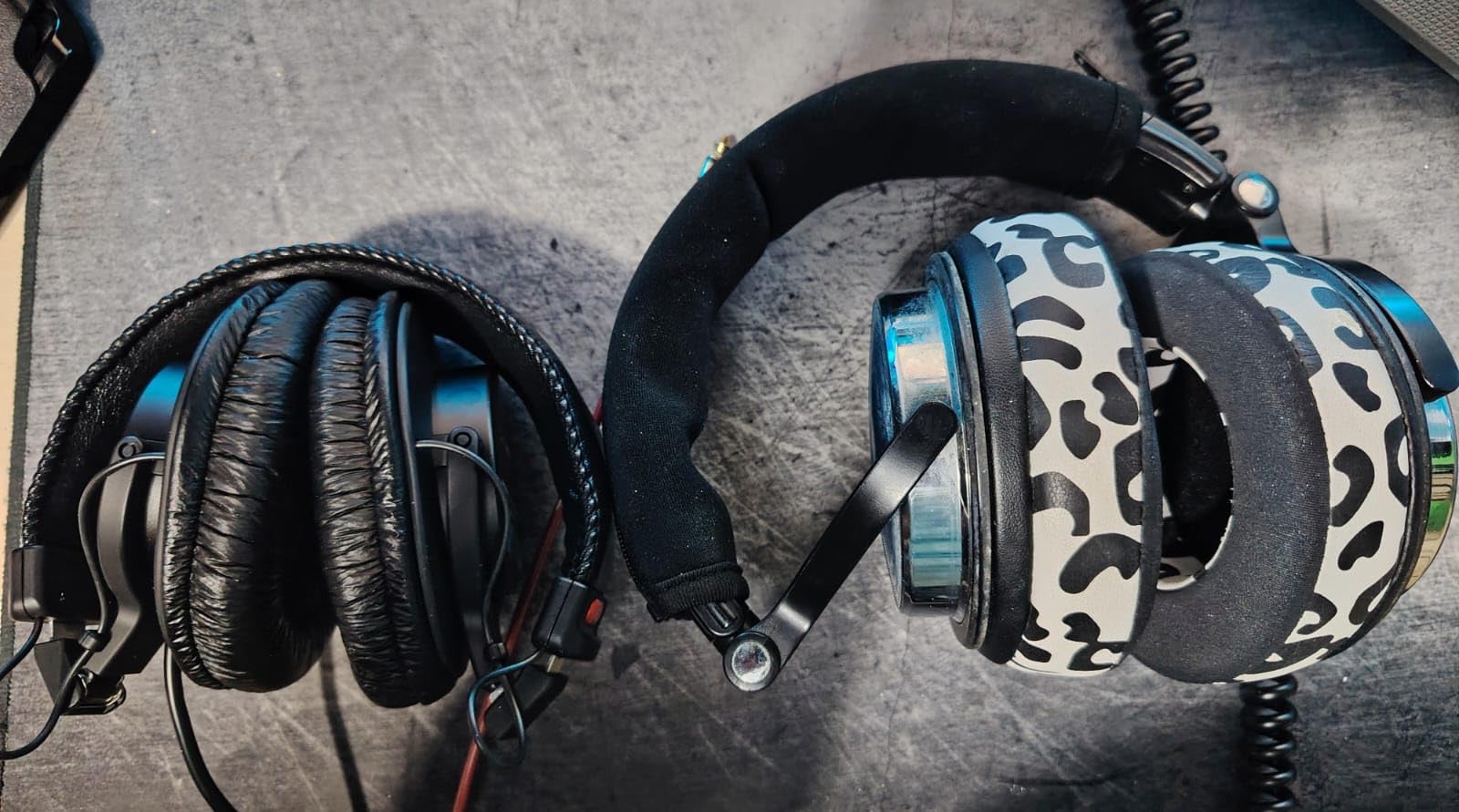
Why engineers defend the fixed cable?
The non-detachable 9.8 foot coiled cable is the most criticised feature and the one most often defended. The argument is that in a fixed studio installation the cable never moves, so the failure point that kills most detachable connections never gets stressed. The counter-argument is that when it does fail, the headphone is finished.
Reviewers are split in a telling way: those who use one pair at one desk describe it as unproblematic, and those who travel describe it as a liability. If you take your headphones to sessions, factor in a repair or replacement.
Where the MDR-7506 will mislead you?
The lean bass is the real risk for a beginner. Without a visual level reference, bass content can play quieter than it feels and end up mixed too loud. The bright treble exaggerates sibilance, so de-essing decisions made here are usually the safer direction.
One more practical note: the folding cups take a moment to get used to if you have never handled them. Several reviewers mention putting them on awkwardly at first. It resolves after a session, and the headphones fold completely flat into the supplied soft case.
3. Audio-Technica ATH-M20x: The Best Budget Studio Headphone
Audio-Technica ATH-M20x Professional Studio Monitor Headphones, Black
47 ohm
96 dB sensitivity
15 Hz-20,000 Hz
40 mm drivers
210 g
Pros
- Genuinely flat and balanced
- Lightest build on the list at 210 g
- Good isolation for editing and tracking
- Very long single-side cable
- Metal adjusters and two-year warranty
Cons
- Fixed non-detachable cable
- Limited bass extension versus the M40x and M50x
- Light plastic build feels less solid
- Clamp can bother glasses wearers
The ATH-M20x exists because Audio-Technica knew most first-time buyers will not spend studio money on their first pair, and because leaving a slot empty there would push beginners toward consumer headphones instead. It is the honest entry to flat monitoring, and with more than 27,000 reviews it is not a risky recommendation.
At 47 ohm and 96 dB sensitivity it is efficient enough to run from a laptop, though reviewers commonly add a small amplifier to reach comfortable levels. The single-side cable exit is a genuine studio design choice: the cable runs down one side only, so it does not drape across both ears or catch a desk edge on the way to the interface.
The 40 mm drivers with rare earth magnets and copper-clad aluminium voice coils are tuned for enhanced low frequency without the exaggerated bass that ruins cheaper consumer sets. That balance is the reason it remains the default recommendation in budget mixing guides, and it holds up for editing, arranging and light mixing work.
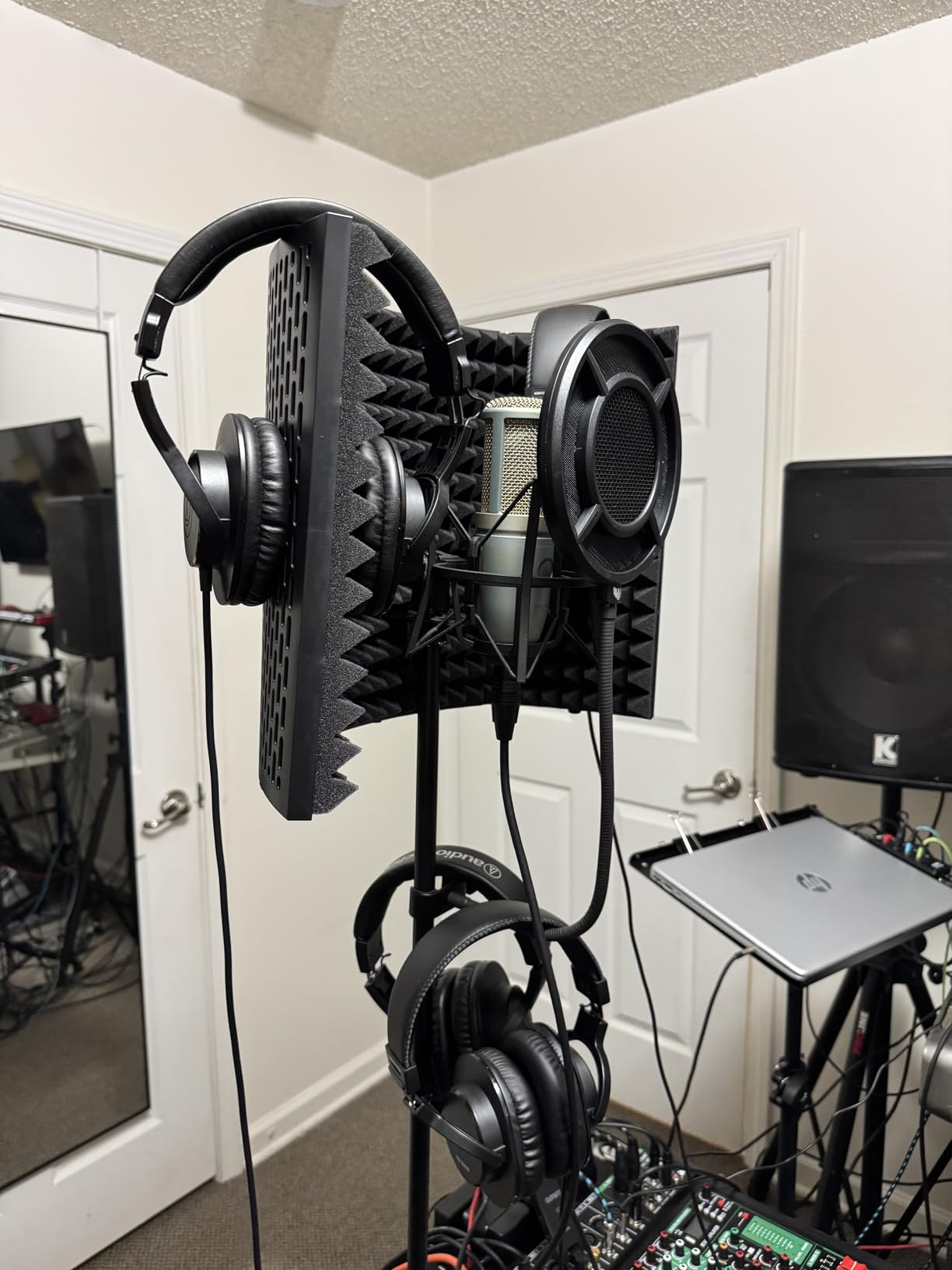
At 210 g it is the lightest model here, which makes it a strong pick for all-day editing sessions and for anyone who finds clamping pressure tiring. The circumaural shape still seals well enough for tracking in a quiet room.
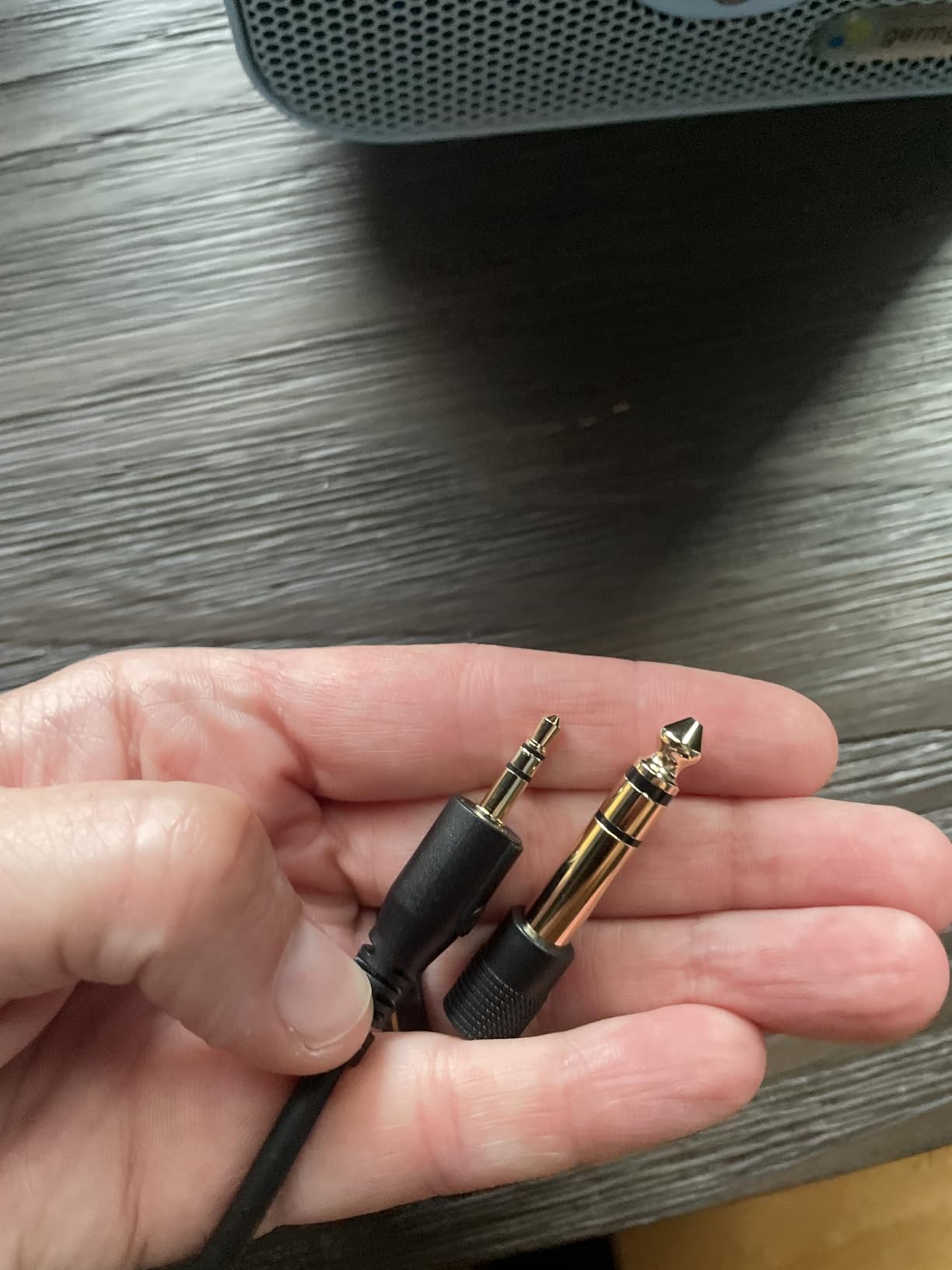
What you give up at this tier?
Resolution is the honest answer. Compared with the M40x and M50x, the M20x retrieves less detail in the upper mids and upper treble, so fine sibilance and air decisions are coarser. It is fine for arrangement and editing, less precise for critical mastering checks.
Bass extension is also more limited, with a stated range beginning at 15 Hz. On electronic material with weighty sub content, you will want a second reference. The fixed cable is the other structural limit, and the light plastic build is something heavy handlers notice even though it does not fail.
When the M20x is the right buy?
It is the right buy when the budget is genuinely small and the alternative is a consumer headphone. It is the right buy for editing, arranging, podcast production and practice. It is the wrong buy if you intend to do a lot of mastering work or if you need to track in a noisy room.
The clamp is worth checking if you wear glasses; several reviewers note pressure behind the ears over long sessions. Swapping to thinner aftermarket pads is the usual fix and costs little.
4. beyerdynamic DT 990 Pro: The Best Open-Back Mixing Reference
beyerdynamic DT 990 Pro (250 Ohm), Open-Back Studio Headphones, Black
250 ohm
96 dB sensitivity
5 Hz-35,000 Hz
8.8 oz
3 m coiled cable
Pros
- Wide natural stereo image reveals placement and depth
- Very broad 5 Hz to 35 kHz range with strong sub-bass
- Exceptionally comfortable velour pads
- German build with replaceable pads and headband parts
- High detail retrieval for mastering review
Cons
- 250 ohm needs an amplifier or powered interface
- Open design leaks sound both ways
- Bright forward treble fatigues at high levels
- Fixed coiled cable cannot be replaced
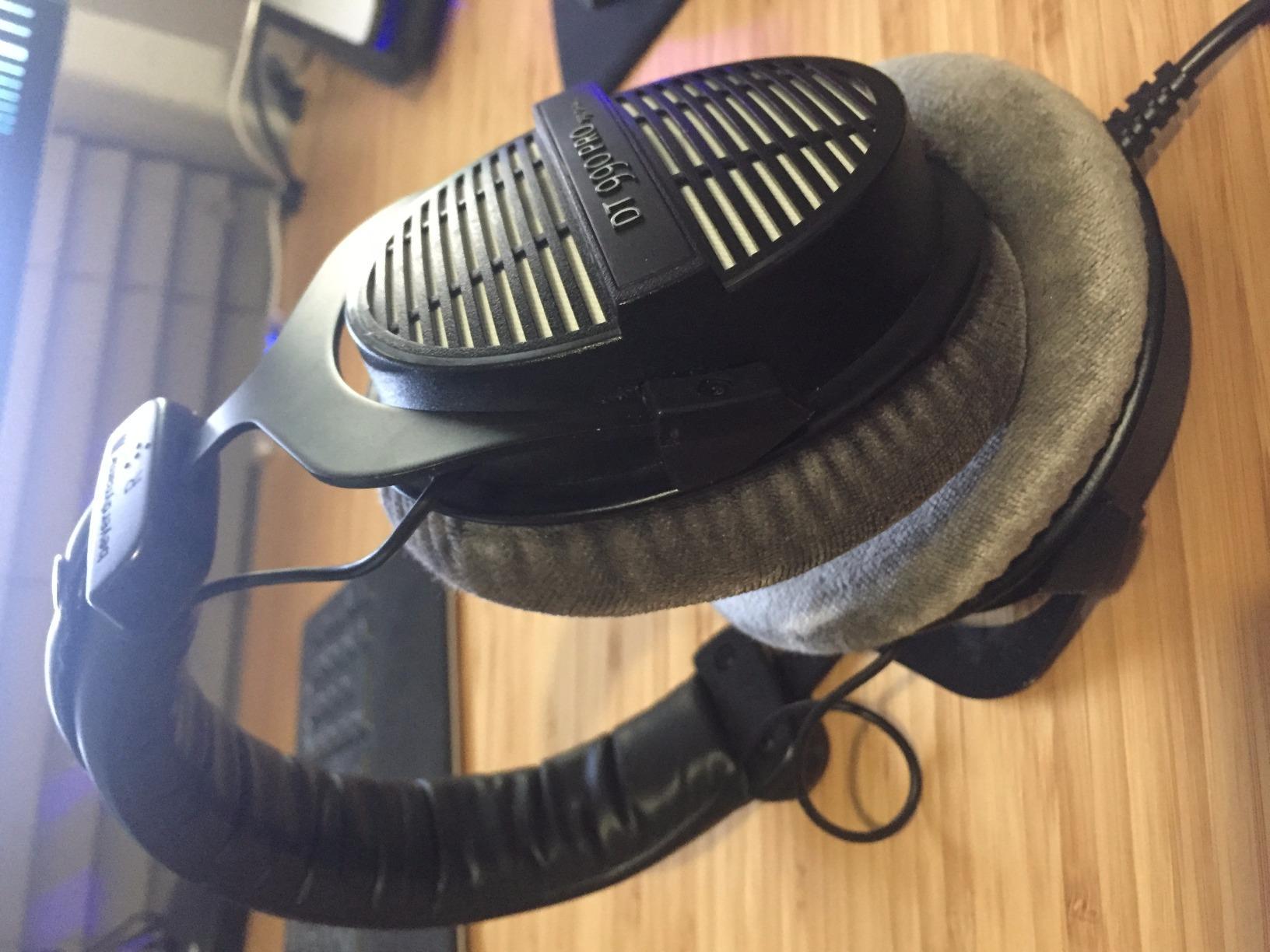
Open-back headphones are the traditional mixing choice, and the DT 990 Pro is the reason that tradition exists. The open grille lets sound pass through the cups in both directions, which removes the small pressure reflections a sealed cup creates around the ear. The result is a wide, natural stereo image where you can hear where instruments sit in the field and how deep each one sits.
That spatial information is what you are actually buying. EQ tells you about frequency balance, but placement, depth and image width are mix decisions that only an open, unpressurised design shows you honestly. The stated 5 Hz to 35,000 Hz range gives more low and high extension than any other headphone on this list, which makes it a strong low-end double-check tool.
Comfort is genuinely excellent. At 8.8 ounces with soft grey velour pads and a spring-steel headband, it stays comfortable through long sessions, and the pads and headband parts are replaceable, which matters for a headphone you might keep for a decade.
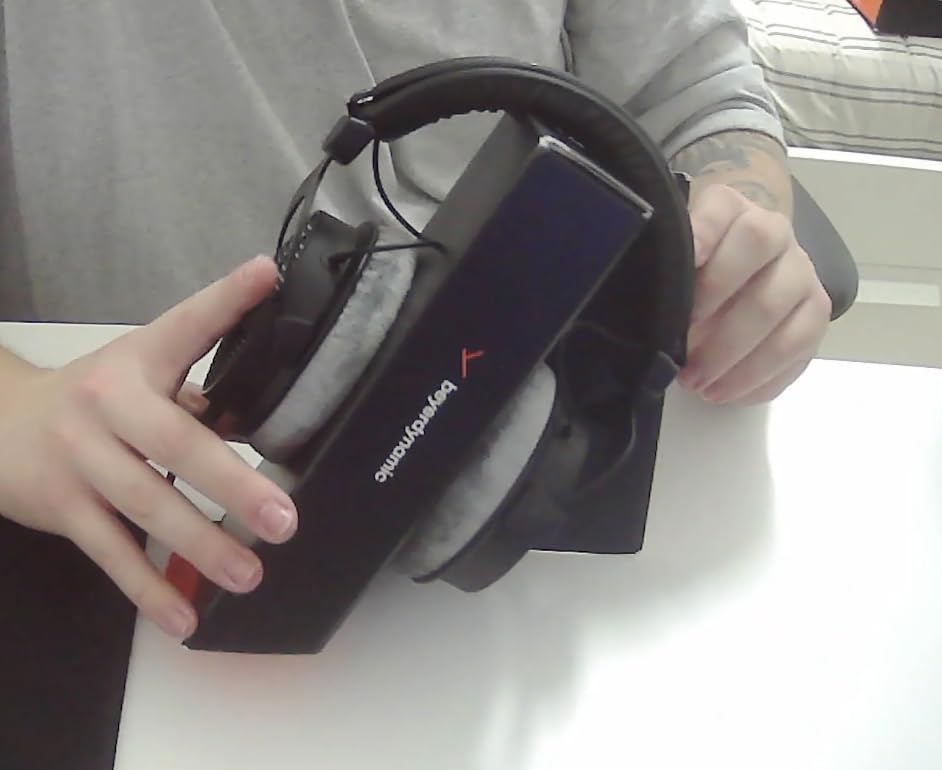
Made in Germany and supplied with a fixed 3 metre coiled cable and a quarter-inch adapter, this is a work tool rather than a lifestyle object. The frame is largely plastic with a plain exterior, and that plainness is exactly what you want on a studio monitor.
Plan for an amplifier with the 250 ohm version
At 250 ohm this is the least efficient headphone in the group, and 96 dB sensitivity is not high enough to overcome a weak source. Plugged straight into a laptop it will be quiet, and the correct response is not to conclude the headphone is faulty. Add a headphone amplifier or use a powered interface output.
Once amplified, the bright forward treble that reviewers mention becomes manageable, and many users pair it with a small amp specifically for that reason. A brighter headphone is easier to live with when you have the headroom to turn it down rather than pushing volume.
Where the open design stops working?
Sound goes in and out. In a noisy room the open grille lets ambient noise into the mix, and in a live room the headphone leak will be picked up by your microphone. If you track live or share a space, this is the wrong tool and you want a closed-back instead.
Bright treble is the other caution. At high monitoring levels the forward top end is fatiguing, which is why the amplifier advice matters. Treat this as a mixing and mastering reference in a quiet room rather than a tracking headphone, and it earns its place every time.
5. beyerdynamic DT 770 Pro: The Best Closed-Back All-Rounder
beyerdynamic DT 770 Pro Studio Headphones (80 Ohm, Black)
80 ohm
96 dB sensitivity
5 Hz-35,000 Hz
9.5 oz
3 m fixed cable
Pros
- Balanced transparent response for mixing mastering and tracking
- Closed-back with minimal leakage
- Plush velour pads for long sessions
- 80 ohm version drives easily
- Fully serviceable with replaceable pads headbands and drivers
Cons
- Ear pads run warm over long sessions
- Cups do not rotate on both axes
- Very high frequencies less pronounced than some rivals
- Fixed 3 m cable is long
The DT 770 Pro is the most frequently recommended closed-back studio headphone in the discussion, and the reason is breadth rather than peak performance. It mixes, it masters at a reasonable level, it tracks vocals with minimal leakage, and it does all of that from almost any source without an amplifier.
This 80 ohm version is the one to buy. Beyerdynamic builds the same model at several impedances, and the manufacturer frames the range as 32 ohm for mobile gear, 80 ohm for universal studio use, and 250 ohm for high-powered setups. The 80 ohm unit gives you the correct behaviour from a mix bus, an interface, or a laptop, which is what a general-purpose pair needs.
The response is balanced and transparent, with a stated 5 Hz to 35,000 Hz range. Owners regularly compare it favourably to the ATH-M50x and to the SRH440A, and the honest summary is that it is less analytically bright than the Sony and slightly more forward in the mids than the Shures.
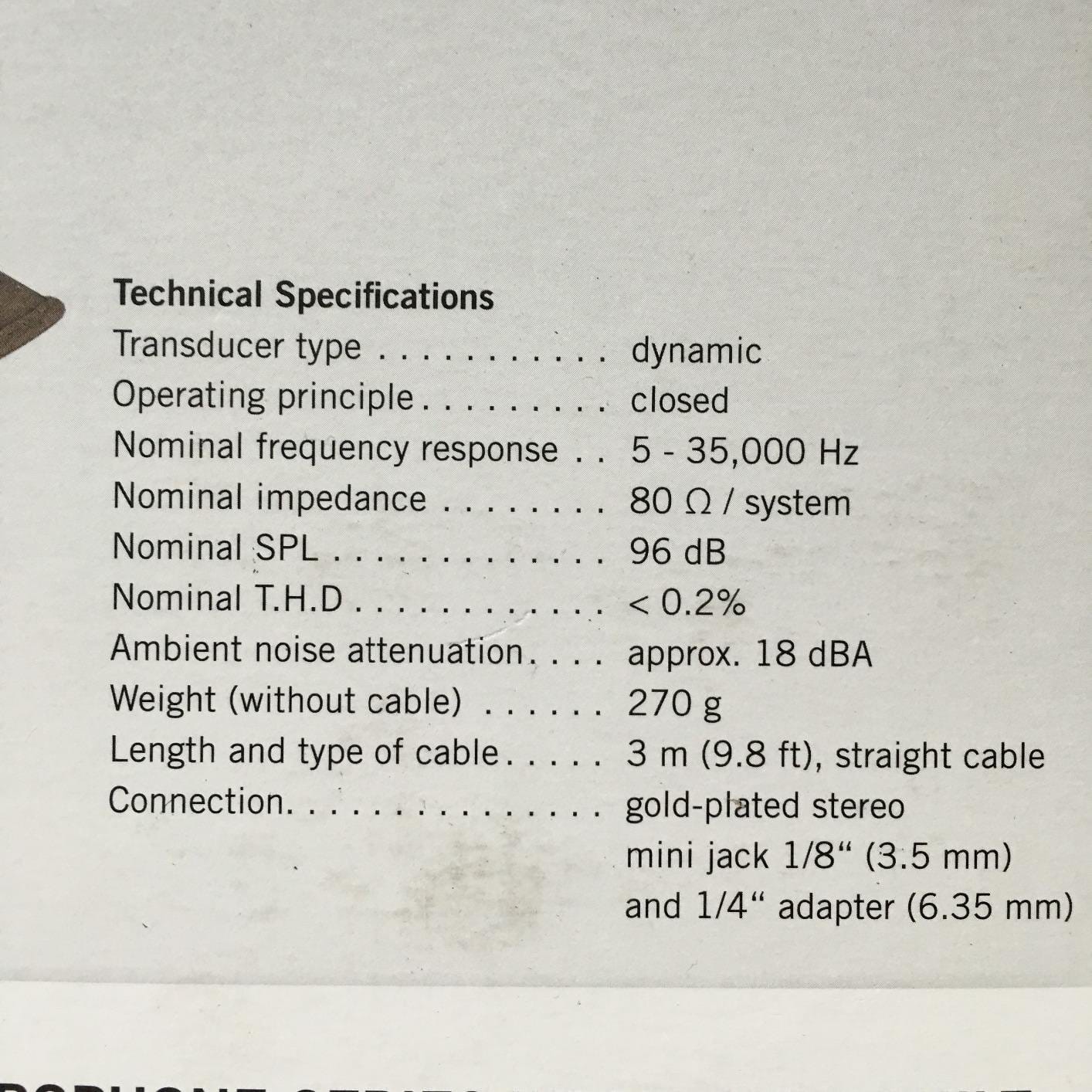
Serviceability deserves a mention because almost nothing else in this list matches it. Pads, headbands and drivers are all replaceable, and the spring-steel headband is built for decades of use. For a pair you may own for a decade, that changes the ownership calculation.

Why 80 ohm is the version to buy?
Impedance is the whole story here. At 80 ohm the DT 770 reaches comfortable level from a modest source, so you are not adding a second purchase just to hear it properly. That is the difference between this being a one-off buy and this being the start of a shopping list.
Owners of the 32 ohm version find it easier still but quieter and less controlled on the bass. The 250 ohm version sounds excellent but needs real power. Unless you have a specific reason, 80 ohm is the answer for a mixed-use pair.
Where the DT 770 disappoints?
Two things recur. The iconic black velour pads run warm after several hours, which is the standard closed-back comfort trade-off, and the ear cups do not swivel on both axes, so the headphone is bulky and awkward to wear around the neck between takes.
The fixed 3 metre straight cable is also longer than most people need for a desk setup, and it cannot be replaced. On the technical side, several reviewers note the very high frequencies are less pronounced than on competing studio monitors, which makes it a mixing headphone rather than a mastering one.
6. Audio-Technica ATH-M40x: The Best Headphone for Mixing Neutrality
Audio-Technica ATH-M40x Professional Studio Monitor Headphone, Black, with Cutting Edge Engineering, 90 Degree Swiveling Earcups, Pro-Grade Earpads/Headband, Detachable Cables Included
35 ohm
98 dB sensitivity
15 Hz-24,000 Hz
40 mm drivers
240 g
Pros
- Closest to a neutral response in the M-series
- Excellent isolation and instrument separation
- Detachable straight and coiled cables
- 90 degree swivel for one-ear monitoring
- Efficient 35 ohm drives from laptops
Cons
- Plastic swivel hinges can crack with rough handling
- Very floppy construction needs two hands
- Firm clamp tight for glasses wearers
- Stock pads are shallow for larger ears
If your priority is a mix decision you trust rather than a mix decision that sounds good, the M40x is the most accurate of the three Audio-Technica models here. Reviewers consistently describe it as the flattest and most neutral of the M-series, and that is exactly the property that makes it a mixing headphone rather than a general listening one.
At 35 ohm and 98 dB it is the most efficient model on this list along with the Shures, so laptop and mobile driving is not a concern. The 40 mm drivers deliver strong sub-bass headroom once equalised, which is the useful part: the raw response is restrained, and the design gives you room to add weight below without the headphone fighting you.
Instrument separation is the other headline. In a busy arrangement, the M40x makes it easy to hear individual elements rather than one blended mass, and the circumaural isolation keeps both outside noise and headphone bleed under control during tracking.
The accessory package is genuinely useful: detachable cables in both straight and coiled forms, a protective case, and a screw-on adapter. The 90 degree swivels let you cup one ear against a speaker for a quick check, which is a habit worth building early.
Neutrality versus excitement
The honest trade is that the M40x will not make a mix sound impressive on first listen the way a slightly forward headphone will. Its job is to tell you the truth about your low end and your upper mids, and if that makes a mix feel flat, the mix is flat.
Owners who switch to it from a consumer headphone often find the presentation unexciting for a week or two. That is the learning curve, and it passes. Once the response is familiar, it becomes the pair they trust for final decisions.
Build weaknesses worth knowing before you buy
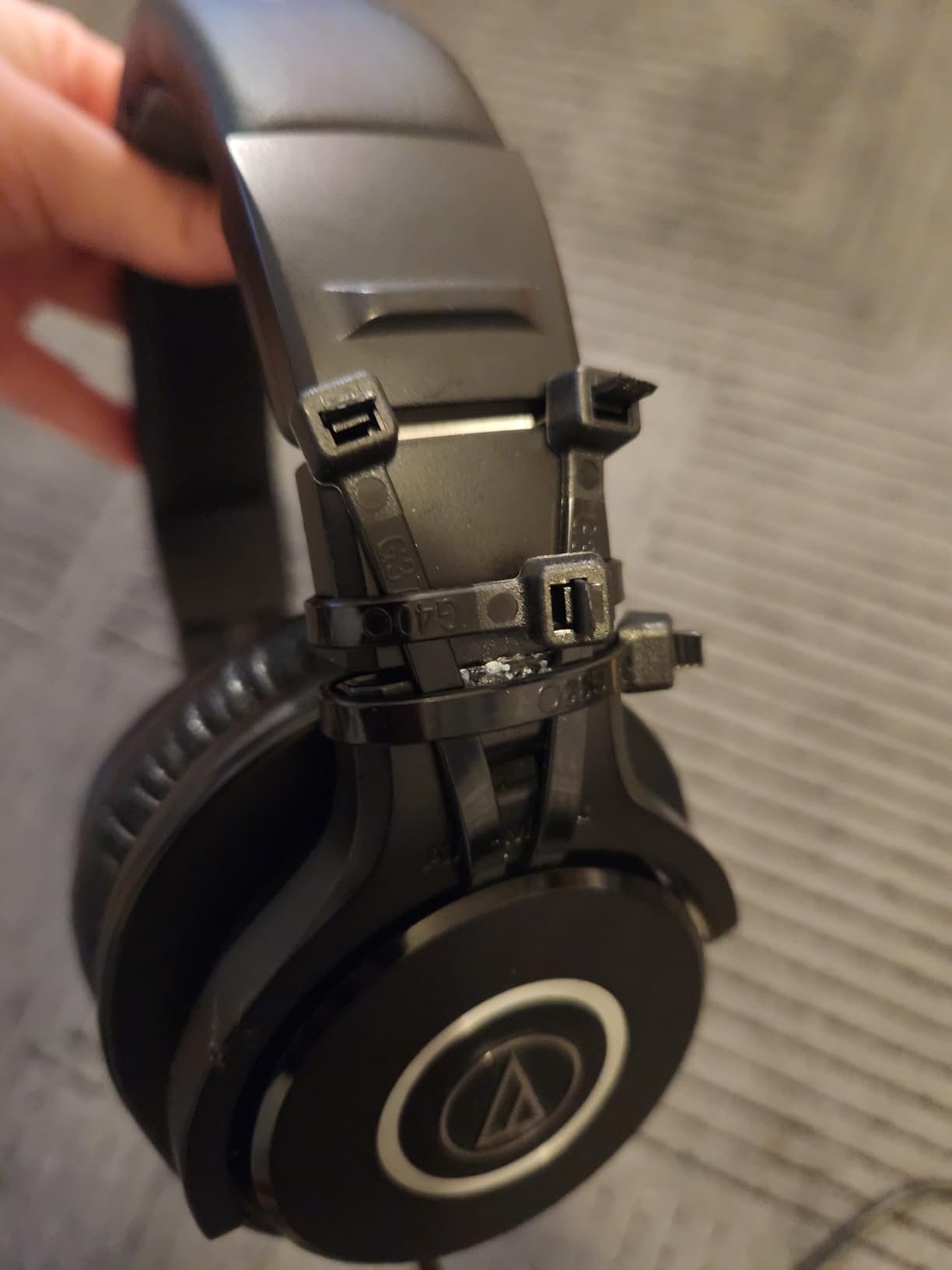
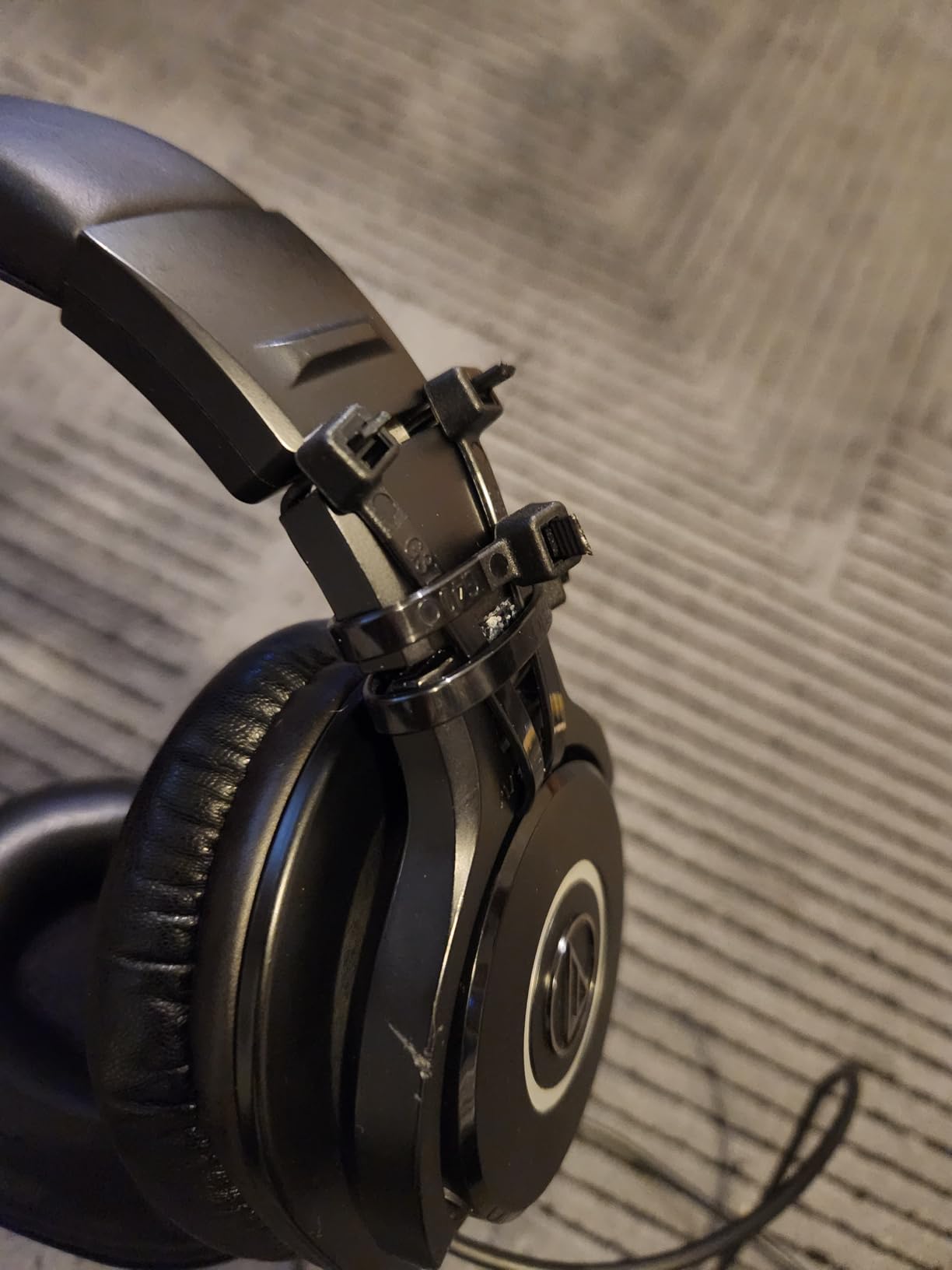
The swivel hinges are the recurring complaint. They are plastic, and several reviewers report cracking after rough handling or transport. It is not a common failure, but it is the part of the headphone most likely to give out.
Fit is the other issue. The construction is very floppy, so putting it on takes two hands, the firm clamp bothers some glasses wearers, and the stock pads are shallow for larger ears. Replacement pads solve the last two problems quickly and cheaply.
7. AKG K240 Studio: The Best Lightweight Headphone for Editing
AKG K240STUDIO Semi-Open Studio Headphones
55 ohm
104 dB sensitivity
15 Hz-25,000 Hz
30 mm drivers
240 g
Pros
- Genuinely neutral uncoloured response
- Very light with self-adjusting headband
- Detachable locking mini-XLR cable
- Semi-open clarity with more room than closed designs
- High sensitivity makes it easy to drive
Cons
- Semi-open design leaks sound both ways
- On-ear pads rest on the ear rather than surrounding it
- Treble can sound sharp before burn-in
- Ear cups and pads feel less substantial
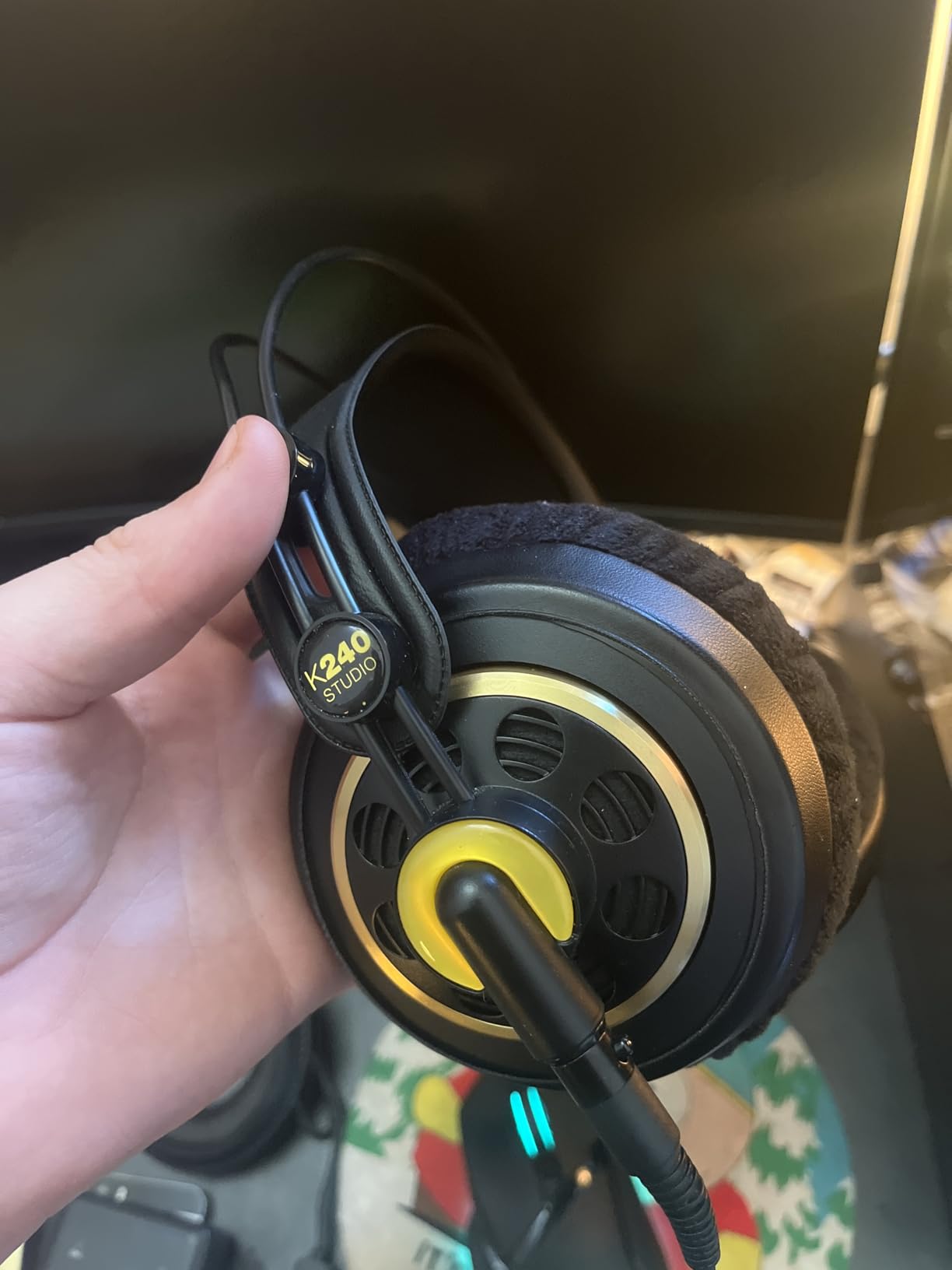
The K240 Studio is the odd one out in this list, and that is exactly why it is here. It is semi-open, it uses 30 mm XXL Varimotion transducers, and its pads sit on the ear rather than around it. Every one of those choices makes it wrong for some people and right for a specific job.
That job is editing, arranging, critical listening and podcast work at a level of accuracy that costs almost nothing. The response is described as genuinely neutral and uncoloured, with a stated 15 Hz to 25,000 Hz range and a wide dynamic range from the Varimotion diaphragms. It is a work tool, not an entertainment headphone, and buyers are clear about that.
At 104 dB sensitivity this is the most efficient model here. It gets loud on almost anything, including a laptop, which means you can keep your monitoring level low and still have enough volume for confident decisions. That is a hearing-safety advantage as much as a convenience.
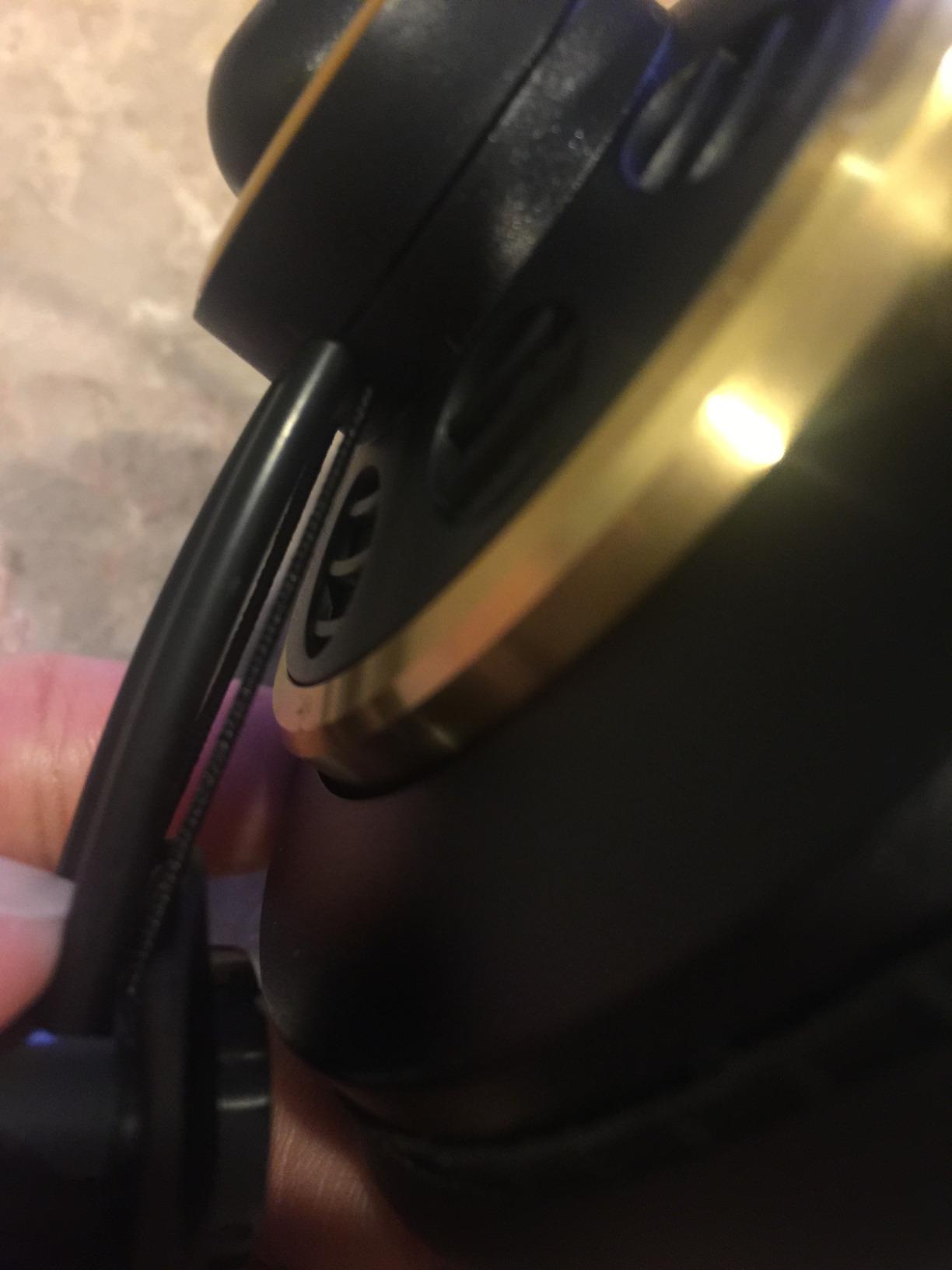
The self-adjusting gimbal-mounted headband distributes weight rather than clamping, and at 240 g it stays comfortable for very long sessions. The detachable 3 metre cable uses a locking mini-XLR connector, which is more robust than a plain 3.5 mm plug and easy to extend or replace.
What the semi-open design gives you?
A semi-open cup sits between open and closed. You get more clarity and a roomier presentation than a sealed model, without the full exposure of an open grille. The result is a headphone that reveals more than a closed-back at a fraction of the leakage risk of an open one.
It is still not a tracking headphone. Reviewers are consistent that the leakage works both ways, so backing tracks bleed into a microphone. If you record live, this is the wrong choice, and the DT 770 Pro or the ATH-M50x will serve you better.
Where the K240 will frustrate you?
The on-ear pad is the biggest limitation. Because the pads rest on the ear rather than surrounding it, isolation is limited and a low pad position matters more than with a circumaural design. Glasses interfere with the seal in a way that will not happen with an over-ear cup.
Reviewers also note the treble can sound sharp or grainy before burn-in, that volume is lower than many closed-back alternatives despite the high sensitivity, and that the cups and pads feel less substantial than metal-bodied competitors. It is a case where the acoustic result justifies the construction compromise.
8. Shure SRH840A: The Most Comfortable Headphone for Long Sessions
Shure SRH840A Over-Ear Wired Studio Monitoring Headphones
40 ohm
5 Hz-25,000 Hz
over-ear
9.12 oz
detachable locking cable
Pros
- Accurate balanced tuning with controlled bass
- Wide padded headband and plush cushions
- Locking detachable cable and carrying case
- Lightweight collapsible design
- Closed-back isolation contains sound
Cons
- Bass is light for those wanting low-end impact
- Passive isolation only
- Cable is long and thin
- Cup size draws comments and can shift
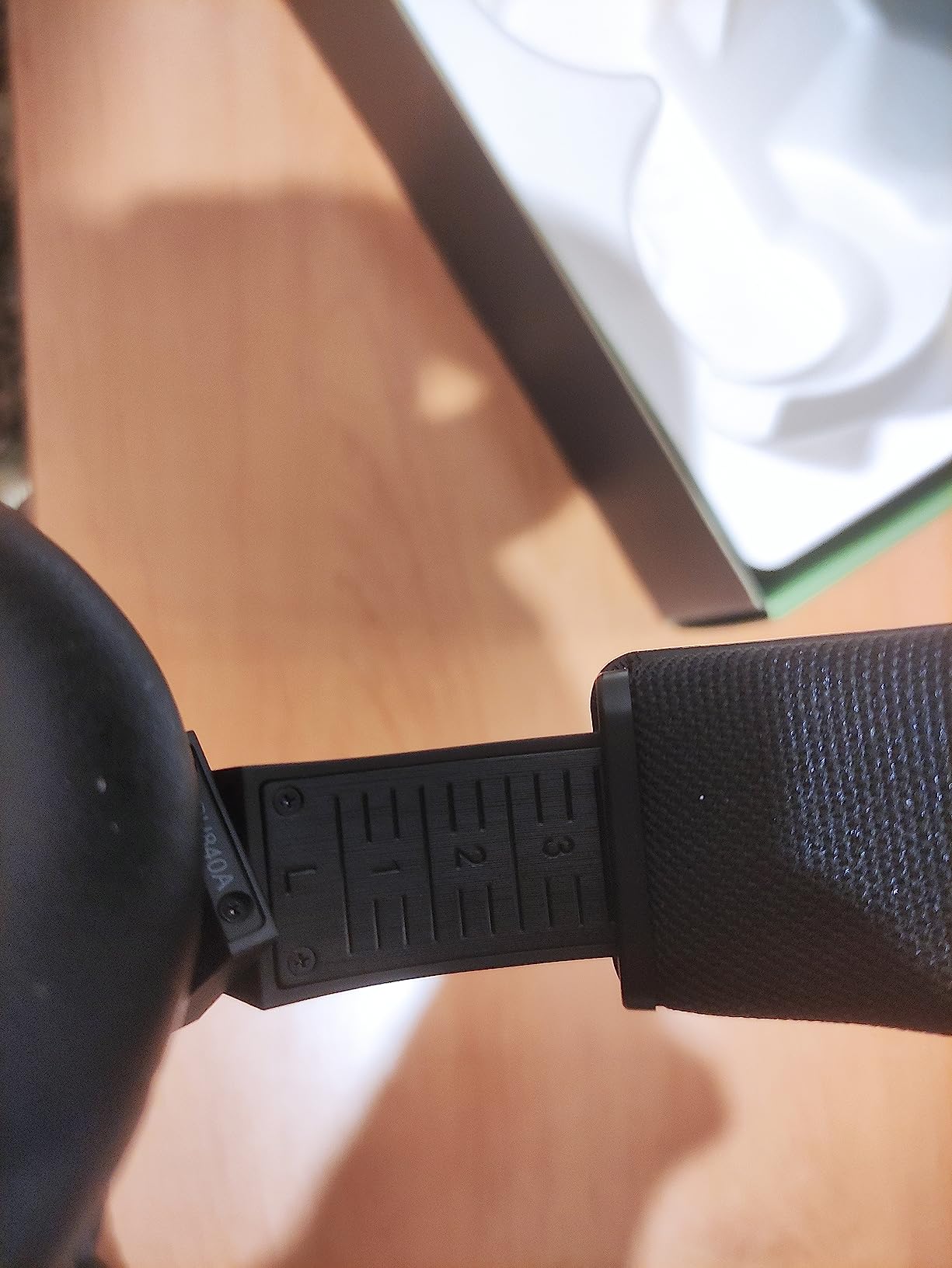
Comfort is not a luxury when you mix eight hours, and the SRH840A is built around it. The wide padded headband spreads load across the top of the head rather than the ears, the cushions are plush, and at 9.12 ounces the whole assembly stays light. Reviewers who wear glasses or have a larger head rate it highly for exactly that reason.
The tuning is accurate and well balanced, with controlled bass, detailed mids and extended highs across a stated 5 Hz to 25,000 Hz range. The closed-back circumaural design contains sound well, so it can sit in a busier room without either leaking or being distracted.
At 40 ohm it drives comfortably from interfaces, mixers and portable DAC dongles, and the locking detachable cable means a cable failure is a ten-second fix rather than a funeral. A two-year limited warranty and a carrying case are included.
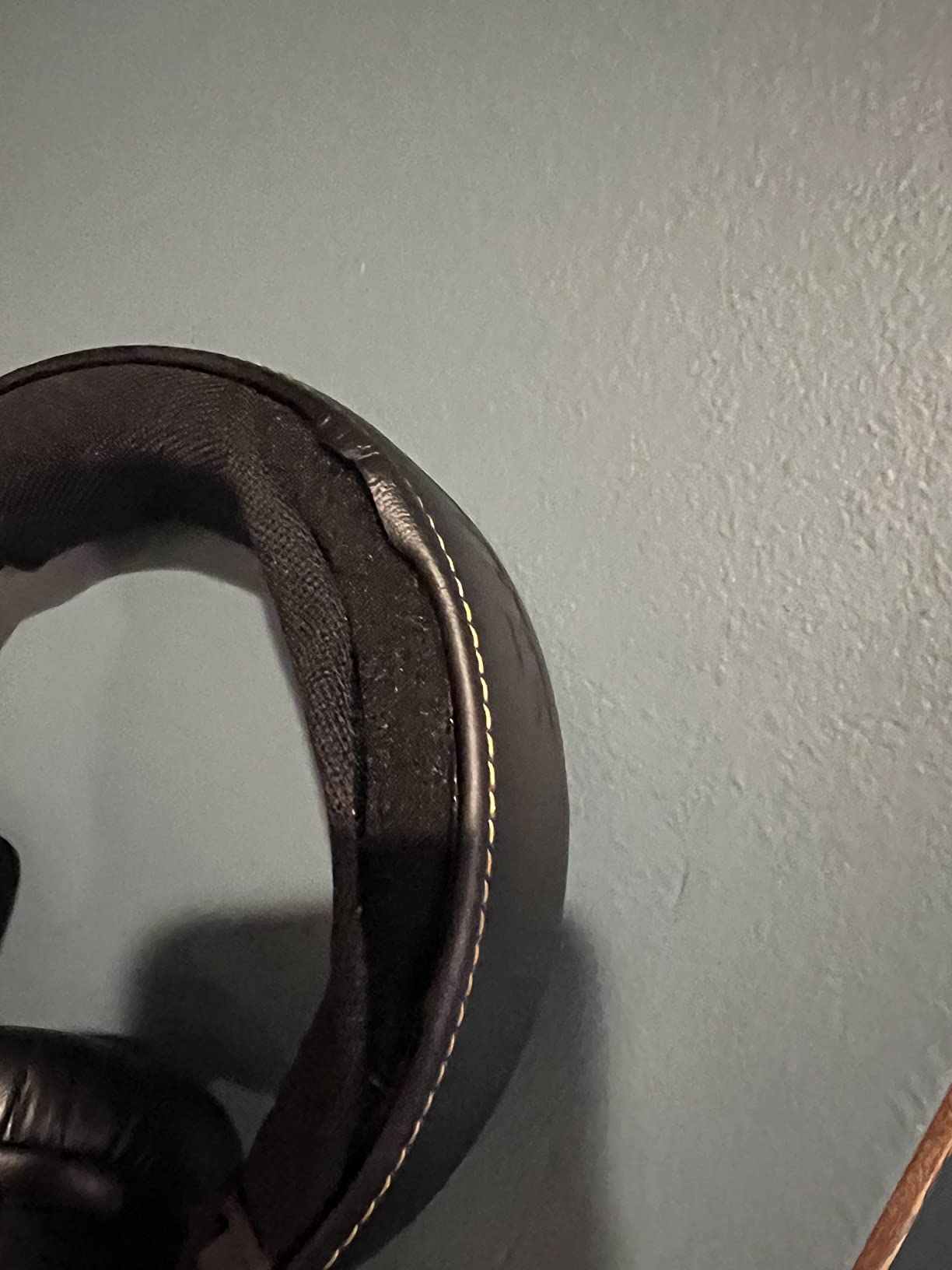
It is a large upgrade step from entry-level studio headphones, and reviewers commonly describe it as holding up against models costing considerably more. That is the strongest argument for this pick: it is not the cheapest option in the group, it is the one people stop noticing they are wearing.
Where the comfort advantage actually shows?
It shows on editing and rough-cut days, where headphones stay on for hours, and on tracking, where you need one ear available. The wide headband and light weight mean there is no pressure hotspot to relieve, which is what forces breaks in cheaper closed-backs.
It also shows at moderate volume. Because the pads seal well without hard clamping, you can work at a lower monitoring level and stay comfortable, which is the practical route to protecting your hearing over a long career.
Where the SRH840A is not the answer?
Bass is light, and that is the first thing reviewers flag. If your work is bass-heavy, you will want to verify low end on a deeper headphone rather than trusting the light read here.
Isolation is passive only, so a genuinely loud room still intrudes. Several owners also question the durability of the long, thin cable, and the cup size draws comments and can shift on larger heads. None of these is disqualifying; they are the reasons to pick the SRH440A or the DT 770 Pro instead if those specifics matter to you.
9. Shure SRH440A: The Best Closed-Back for Instrument Separation
Shure SRH440A Over-Ear Wired Studio Headphones for Recording
40 ohm
102 dB sensitivity
10 Hz-22,000 Hz
8.96 oz
locking detachable cable
Pros
- Flat linear detail with no artificial bass boost
- Excellent instrument separation for mixing
- Detachable locking cable and replaceable parts
- 40 ohm works across interfaces mixers and laptops
- Lightweight and collapsible
Cons
- Passive isolation only so loud rooms intrude
- Large cups feel bulky
- Headband grip is not very adjustable
- Comfort can fade over several hours
The SRH440A is frequently described as the best value closed-back studio headphone at its tier, and the reason is the tuning rather than the feature list. It is flat, linear and detailed, with no artificial bass boost and no harsh treble, which makes it easier to mix on for hours than a more analytical alternative.
Instrument separation is the practical headline. In a dense arrangement, this headphone lets you pick out individual elements and judge their placement and space, which is the specific skill that closed-backs are usually weaker at. At 40 ohm and 102 dB sensitivity it is efficient enough for interfaces, mixers, laptops and portable devices without an amplifier.
The detachable locking cable and replaceable parts matter more than they might seem. When the pads flatten after a year of daily use, you replace the pads rather than the headphone, and that keeps the pair in service far longer.
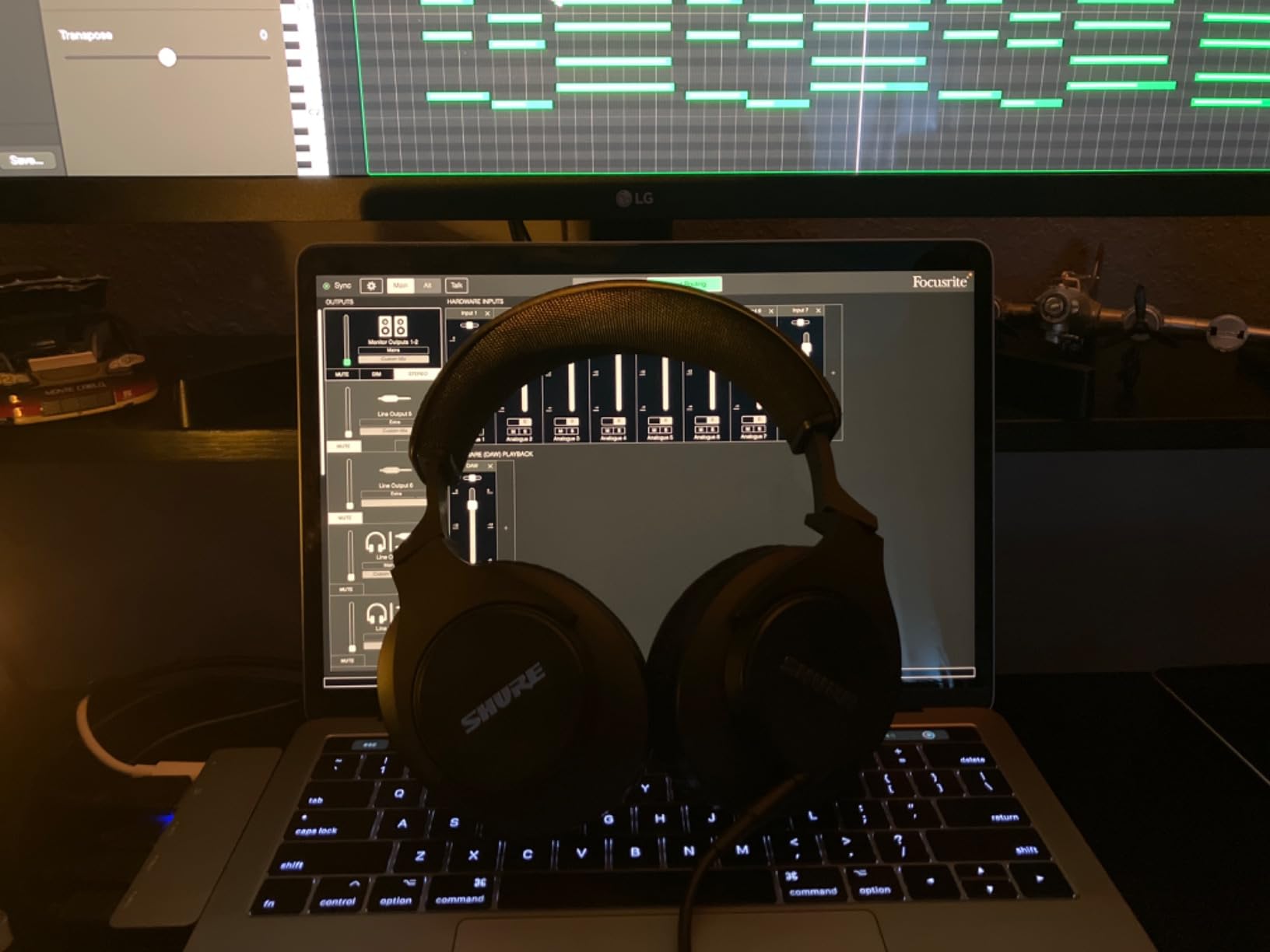
At 8.96 ounces with a collapsible design it stores easily and does not fatigue the neck during long sessions. The closed-back circumaural build keeps sound contained, which is what makes it usable for instrumental tracking as well as mixing.
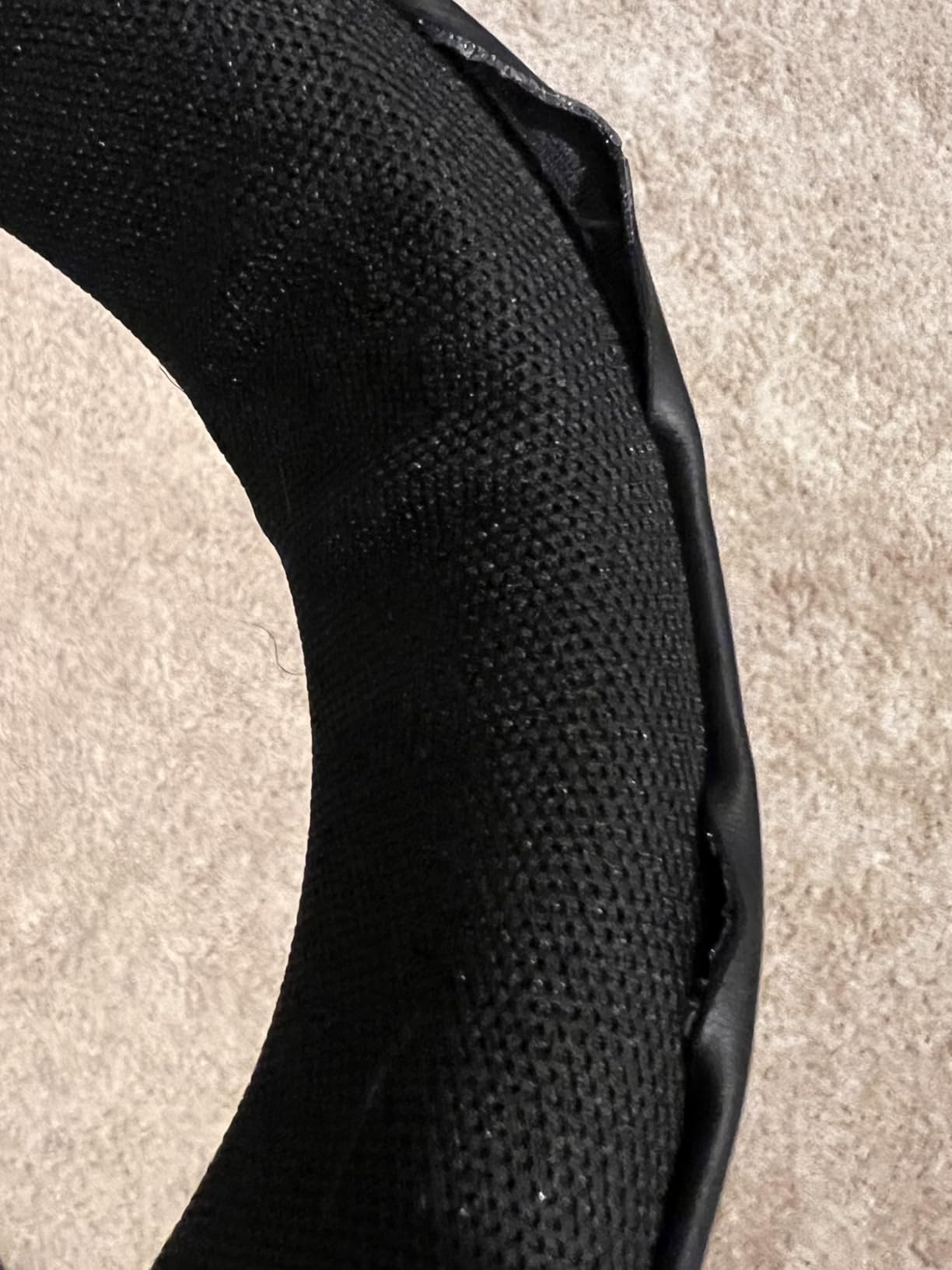
The signature to mix on
The response is closer to a Harman-leaning curve than a strictly flat line, and in practice that means it is more forgiving than the M40x. Engineers who find analytical headphones tiring tend to settle here, and the mix decisions made on this signature tend to translate well without constant correction.
Owners frequently describe it as the pair they reach for when a mix needs to be checked rather than rebuilt. That is a different job from critical mastering work, and it is one this headphone is well suited to.
Where the SRH440A falls short?
There is no active noise cancellation, so isolation in a loud room is limited regardless of how well the pads seal. The large cup design feels bulky, and the headband grip is not very adjustable for some head sizes.
The most repeated comfort note is that it fades after several hours, so it is not the pick for an all-day wear test. It also does not fold flat for travel, and the box does not include a carrying bag or coiled cable, so budget for a case if you travel with it.
10. Sennheiser HD 490 Pro: The Best Open-Back for Precise Localization
HD 490 PRO Open-Back Professional Headphone
130 ohm
105 dB sensitivity
5 Hz-36,000 Hz
200 g
open-back
Pros
- Extremely wide dimensional soundstage with precise localization
- Uncolored 5 Hz to 36 kHz response
- Cylinder system delivers full clearly defined bass
- Open-frame architecture lowers distortion and resonance
- Two pad sets reduce ear fatigue
Cons
- 130 ohm benefits from an amplifier
- Open design leaks both ways with no isolation
- Higher cost than most closed-back alternatives
- Dual connectors add setup complexity
The HD 490 Pro is the newest and most technically ambitious headphone here, and its distinguishing feature is not the specification sheet. It ships with two sets of interchangeable ear pads, one optimised for producing and one for mixing, so you can change the acoustic presentation depending on whether you are writing or judging.
The open-back design produces an extremely wide, dimensional soundstage with ultra-precise localization. That is the specific property that makes it interesting for mixing: you can hear where an instrument sits in the field and how deep it sits, which is information no EQ and no meter gives you.
The stated response is 5 Hz to 36,000 Hz, the widest here, and an innovative low-frequency cylinder system is used to deliver full but clearly defined low end rather than a vague extension. The Sennheiser open-frame architecture is designed to reduce total harmonic distortion and minimise resonance, which is the spec that matters for sustained monitoring.
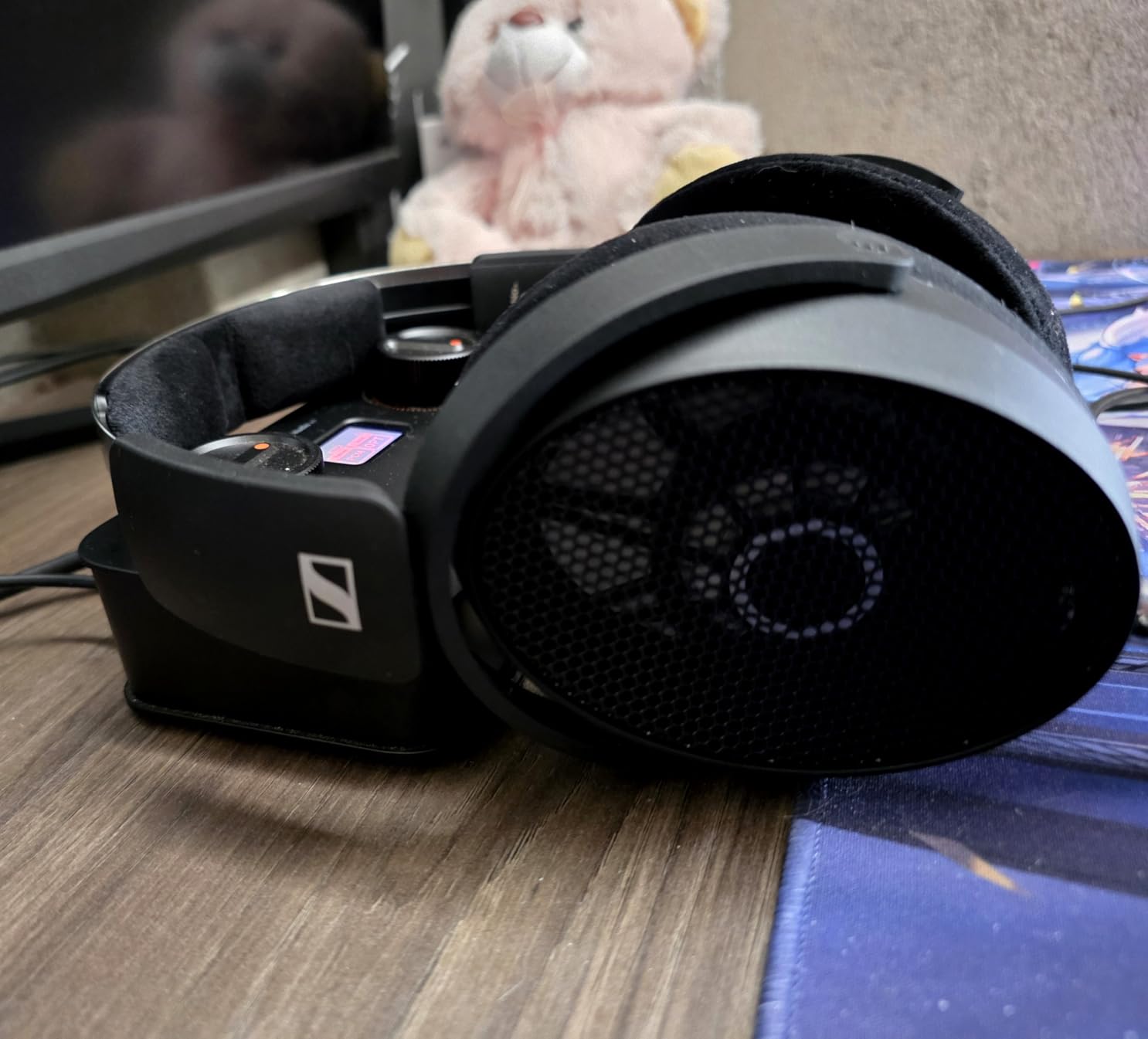
At 200 g with an aluminium frame it is light for an open-back of this class, and the pads are washable and replaceable with FSC-certified packaging. A 1.8 metre detachable cable and a 3.5 mm to 6.5 mm adapter are included, with a two-year manufacturer warranty.
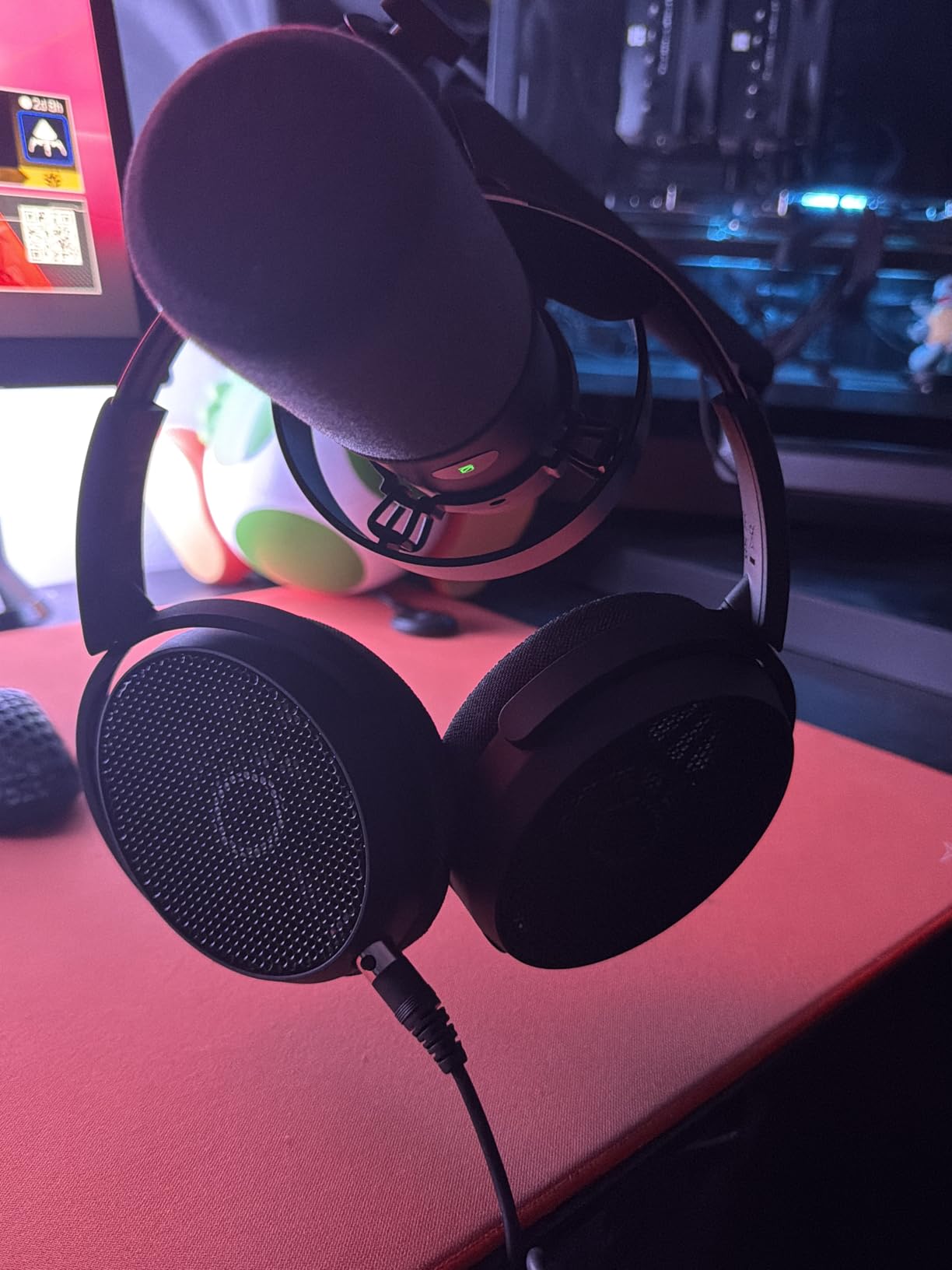
Why two pad sets change the workflow?
Mixing and producing are different tasks with different needs. The producing pad set is tuned for comfort over long sessions, and the mixing pad set is tuned to let you pinpoint frequencies. Swapping between them takes under a minute and it removes the usual compromise of choosing comfort and then using the wrong pad for the job.
It also extends pad life, since a spare set means the primary set is not being destroyed by sweat and grease every day. That is a real long-term ownership benefit on a headphone built to be kept.
Where the HD 490 Pro is not the right tool?
At 130 ohm it benefits from an amplifier or powered interface, though 105 dB sensitivity is high enough that it is more forgiving than the 250 ohm models here. The open design means no isolation and bidirectional leakage, so it is a mixing headphone only.
It also costs more than most closed-back alternatives on this list, and the separate ear-cup connectors on each side add a little setup complexity. If your budget is fixed and you need one pair for everything, the ATH-M50x remains the simpler answer.
Open-Back vs Closed-Back vs Semi-Open for Mixing
Open-back headphones are the default choice for mixing, closed-back headphones are the default choice for tracking, and semi-open designs sit between them. Understanding the difference is worth more than any amount of brand loyalty, because choosing the wrong back type makes a good headphone unusable in your specific room.
An open-back headphone lets sound pass through the ear cups. There is no pressure buildup around your ear, so the stereo image is wider and placement is more natural, and the acoustic load on the ear is lower, which many engineers find less fatiguing. The cost is total acoustic exposure: you hear the room, and the room hears you. The DT 990 Pro and the HD 490 Pro are both open-back, and both demand a quiet room.
A closed-back headphone seals the cups. Outside noise drops, backing tracks stop leaking into your microphone, and the monitoring is unaffected by what is happening in the room. You trade away some of the openness and naturalness for that isolation. Most engineers end up owning one of each, which is the pattern that shows up constantly in forum threads.
A semi-open-back design partially seals the cup. You get more clarity and air than a closed design without the full exposure of an open one. The AKG K240 Studio is the example here, and it is a genuinely good middle ground for editing and arranging rather than a compromise for tracking.
A quick rule for your situation: if your room is quiet and untreated, open-back wins because you need the headphone to tell you what the room is not. If your room is noisy or you record live, closed-back wins because isolation is not optional. If you are not sure, the closed-back models on this list are the safer first purchase because they work in more rooms.
Impedance and Do You Need a Headphone Amp?
Match your headphone impedance to your source: below 100 ohm for laptops and interfaces without a powered output, and 250 ohm or higher needs a headphone amplifier. Everything else about impedance is detail.
Impedance is the electrical resistance of the headphone, measured in ohms. A higher impedance demands more voltage and more current from the source to reach a given volume. The consequence is simple physics: a weak source driving a high-impedance headphone produces low volume, and low volume forces you to turn the system up, which is a good way to damage your hearing and a bad way to judge a mix.
The practical thresholds used in studios are roughly 32 ohm for phones and laptops, 80 ohm for universal studio use, and 250 ohm for high-powered setups. Beyerdynamic builds the same model at each of those impedances for exactly this reason. The rule of thumb for output impedance is that your source’s output impedance should be below one eighth of the headphone’s, which keeps the response free of frequency-dependent colouring.
So: 32 to 50 ohm models like the ATH-M40x, ATH-M20x, SRH440A and SRH840A need nothing extra. The 63 ohm Sony MDR-7506 is comfortable on an interface or mixer. The 80 ohm DT 770 Pro is the all-purpose choice. The 130 ohm HD 490 Pro and the 250 ohm DT 990 Pro should be paired with a headphone amplifier or a powered interface output, and that amplifier is not an optional extra for those two.
Symptoms of an impedance mismatch are consistent: the headphone is quiet, the bass loses impact, and there is a hollow, thin quality that sounds like the headphone is broken when it is actually underpowered. If you hit those symptoms, the fix is upstream, not a different pair of headphones.
The 60-60 Rule and Safe Monitoring Levels
The 60-60 rule states that you can listen to a reference level of 60 decibels for up to 60 minutes a day without risking hearing damage. It is a guideline, not a guarantee, and treating it as a ceiling rather than a target is the point.
None of the four main competitors we studied mentions this, which is a gap worth filling because long mixing sessions are exactly where the risk builds. Engineers routinely work for hours at a level that feels modest because the level is relative to their own hearing, and hearing loss is cumulative and initially invisible.
Two things help. The first is a calibrated playback chain, so the number on your meter means something real rather than whatever the interface’s software happens to report. The second is breaks, because the ear recovers when given the chance. A ten-minute gap every hour does more for your long-term hearing than any headphone choice on this page.
One headphone choice also helps here. Efficient models like the AKG K240 Studio at 104 dB and the Shures at 40 ohm give you usable volume from a modest source, which lets you keep the monitoring level low. An inefficient 250 ohm headphone at full volume is louder for the same perceived loudness than a sensitive one driven cleanly.
Tinnitus and a persistent ringing after sessions are the signals to take seriously. If you have them, lower the level now. No mix is worth losing the part of your hearing that lets you judge the low end honestly.
How to Check a Headphone Mix on Speakers?
A headphone mix that only works on headphones is the most common beginner failure. The routine below takes about five minutes per session and is the single highest-value habit in this guide.
First, set a fixed level and never mix louder than it. Volume changes change your perception of balance, so choose one level at the start of a session and hold it. Second, play the low end first. Push the kick and bass up on a good pair of monitors or on your phone speaker and check that the relationship is right.
Third, check on a system you did not choose. Your phone, a car stereo, and a cheap Bluetooth speaker are all different playback devices, and a mix that survives all three will survive most things. Fourth, compare against a commercial track in the same genre at matched level, because your genre reference carries the expectation your mix has to meet.
Fifth, check for the headphones-specific errors. An over-promoted vocal that only works because you are inches from the drivers, a low end that seems fine but collapses without headphone low-end extension, and excessive sibilance from a bright headphone are all recoverable once you know to look for them.
Headphones and monitors are not competitors. Monitors tell you about the room, headphones tell you about the signal with the room removed, and the mix decisions that matter come from agreeing with both. A mix that only passes one of those tests is not finished.
How Much Should You Spend on Studio Headphones?
Most home studios get a correct answer between 100 and 200, and diminishing returns set in above that unless you are doing mastering work or tracking regularly. Below that, you are choosing between a flat headphone and a consumer headphone, and that choice alone improves your mixes.
Under the first tier, buy the Audio-Technica ATH-M20x. It is flat, light, and honest, and it prevents the common mistake of starting out on a bass-boosted consumer pair. Spend here only if the budget is genuinely constrained, because the fixed cable and limited resolution are real limits rather than minor annoyances.
In the mid tier, the choice is between the Sony MDR-7506 for tracking, the beyerdynamic DT 770 Pro as an all-rounder, and the Audio-Technica ATH-M50x for mixing. The Shure SRH840A sits alongside them and is the comfort pick. This is where most people should stop, because the difference in your mixes will come from learning the headphone, not from a more expensive one.
Above that, you are buying open-back reference capability. The DT 990 Pro at 250 ohm gives you the widest soundstage and deepest extension on this list, and the Sennheiser HD 490 Pro adds dual pad sets and the widest stated response. Both need an amplifier, and both need a quiet room.
Professional engineers often keep two pairs: one open-back for mixing and mastering, one closed-back for tracking. If your budget allows it, that pairing beats spending everything on one open-back, because the tracking hours are where isolation pays for itself.
How to Learn Your Headphones Fast?
New headphones always sound wrong for a few days. That is the learning curve, and mixing badly through it is the single most avoidable mistake in this whole guide. Treat the first weeks as calibration rather than production.
In week one, do not mix. Listen to well-mastered tracks in three genres and note what surprises you: bright, dark, forward, recessed. Write the notes down, because you will not remember them accurately. Play the same material on speakers to check your first impressions against a known reference.
In week two, take a mix you already trust and play it on the new headphones at your normal monitoring level. Do not adjust anything. Listen for what the headphone exaggerates, because that is exactly where your instinct will now be wrong.
In weeks three and four, mix normally and re-check on speakers at the end of every session. Build the habit of a five-minute cross-check rather than a single listen at the end of a project, because the ear adapts and a single check after three hours tells you nothing.
Do not correct everything you hear. That is what causes the scooped, lifeless mixes that headphone-only producers are known for. A small number of corrective moves on the problems you can clearly identify, plus a consistent speaker check, produces mixes that translate better than constant headphone correction.
If your headphone has a coloured response and you want a flatter starting point, headphone EQ software such as Sonarworks SoundID or a parametric EQ in your DAW can help, and users in r/TechnoProduction report pairing a well-known open-back with a correction profile as a legitimate part of a monitoring setup. Use it as a second opinion, not as a replacement for learning the headphone.
Frequently Asked Questions
What are the best headphones for sound mixing?
The Audio-Technica ATH-M50x is the best all-round choice, the beyerdynamic DT 990 Pro is the best open-back mixing reference, and the Audio-Technica ATH-M20x is the best budget pick. All three are wired circumaural studio monitors with flat, neutral frequency responses, and all three can be driven from a common audio interface.
What type of headphones are best for mixing?
Open-back headphones are best for mixing in a quiet room because they deliver a wide, natural soundstage and the flattest possible response. Closed-back headphones are best when you track live or work in a noisy or shared space, because they block outside sound and stop backing tracks leaking into your microphone. Semi-open designs sit between the two.
What is the 60-60 rule for headphones?
The 60-60 rule says you can listen at a reference level of 60 decibels for up to 60 minutes per day without risking hearing damage. Treat 60 decibels as a ceiling rather than a target, take regular breaks, and use a headphone efficient enough that you do not need excessive volume to reach a comfortable monitoring level.
What are the best headphones for live sound mixing?
For live sound work and tracking, choose a closed-back headphone with strong isolation and low leakage. The Audio-Technica ATH-M50x and the beyerdynamic DT 770 Pro are both strong choices here, and the Shure SRH840A is a good option when all-day comfort matters most. Open-back designs are unsuitable for live recording because they leak sound into the microphone.
Is mixing with open-back headphones a good idea?
Yes, as long as your room is quiet. Open-back headphones like the beyerdynamic DT 990 Pro and the Sennheiser HD 490 Pro give the widest soundstage and the most natural stereo imaging, which is exactly what you want when judging placement, depth and mix balance. In a noisy or shared room they are a bad idea, because ambient sound reaches your ears and your headphone leak is audible outside.
What are the best open-back headphones for mixing?
The beyerdynamic DT 990 Pro is the best open-back for most people, with a 5 Hz to 35,000 Hz range, replaceable velour pads and a very wide soundstage, though its 250 ohm impedance needs an amplifier. The Sennheiser HD 490 Pro is the alternative, offering dual pad sets for producing and mixing plus a 5 Hz to 36,000 Hz range at 130 ohm.
Do I need a headphone amplifier for studio headphones?
You need an amplifier for high-impedance headphones. Models at 250 ohm, such as the beyerdynamic DT 990 Pro, and the 130 ohm Sennheiser HD 490 Pro should be paired with a headphone amplifier or a powered interface output. Headphones below 100 ohm, including the Audio-Technica M40x and M20x and both Shure models, run fine from a laptop or a standard interface.
How do I make a mix made on headphones translate to speakers?
Set one fixed monitoring level and never mix louder. Check the low end first on speakers or a phone, then check the mix on a system you did not choose, such as a phone speaker or a cheap Bluetooth speaker. Compare against a commercial track in the same genre at matched level, and build a five-minute speaker cross-check into every session rather than saving it for the end of a project.
Conclusion
The best studio headphones for mixing in 2026 come down to your room and your tracking needs more than your taste. Buy the Audio-Technica ATH-M50x if you want one pair that mixes accurately, tracks with decent isolation, and runs from whatever source you already own. Buy the beyerdynamic DT 990 Pro if your room is quiet and you want a wider soundstage and deeper extension, and budget for an amplifier.
Whichever pair you choose, the mix quality comes from learning it and checking on speakers, not from the badge on the box. Give yourself a month of calibration, keep your monitoring level fixed and moderate, and run a five-minute cross-check on something other than headphones at the end of every session. That habit, applied consistently, will improve your mixes faster than any upgrade.