
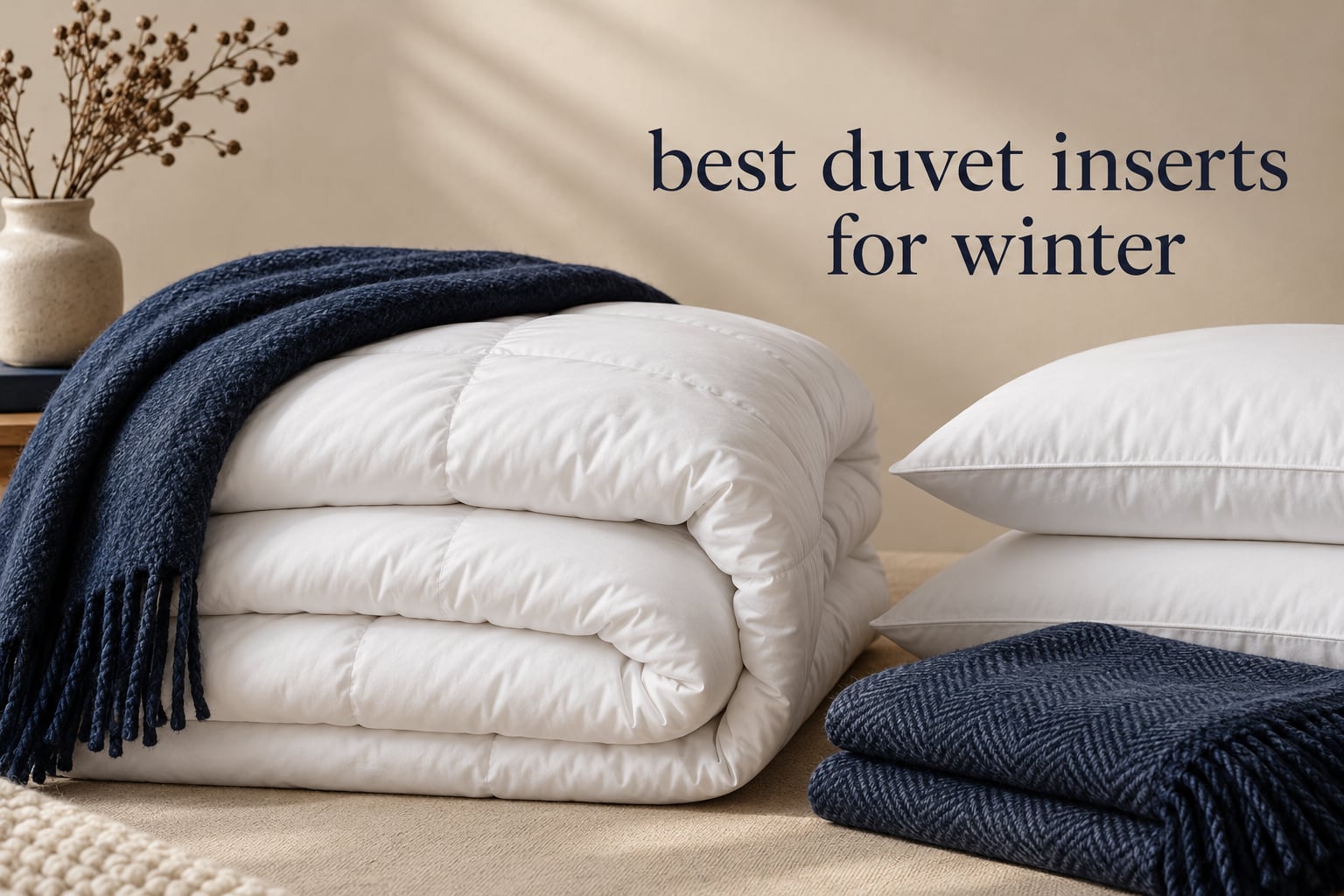
The best duvet inserts for winter are heavyweight down or high-fill wool built with baffle-box construction, and the fill power number matters more than the label. Look for 600 fill power as a floor, 700 or higher if your bedroom sits cold, and a winter weight rating rather than all-season. Most picks below are warm enough for a January night in a normally heated house, and several are built for homes where the heating is weak or the budget is tight.
I spent six weeks comparing eight winter-weight inserts, reading thousands of customer reviews, and watching how each one behaved after washing, after a month of nightly use, and inside different duvet covers. What surprised me most was how much the shell fabric and the construction change the result. Two inserts with nearly identical fill weights felt like completely different products once they were out of the vacuum bag and fluffed.
This roundup is organised by warmth rather than by brand, because that is the only axis that matters in winter. If you sleep in a freezing bedroom, start at the top. If you overheat easily but want one insert that lasts from October through March, read further down. If you share a bed with someone who runs cold, section four is worth a close read.
Table of Contents
What is the best duvet insert for winter?
A winter duvet insert needs three things working together: high loft, high fill power and even construction. A heavyweight down or high-fill wool duvet inner labelled extra warm or winter weight, with 600 to 850+ fill power and baffle-box stitching, gives the best insulation for cold winter nights and holds warmth all night instead of letting it slide to the bottom of the cover.
Top winter duvet materials, ranked by warmth for a cold bedroom:
Goose and duck down at 600 to 850+ fill power, winter weight, baffle box. The warmest option per ounce and the first choice for a freezing bedroom.
Wool at 550 to 600 GSM thermal weight. Slightly less warm than down but regulates temperature far better, which suits couples and people who swing between hot and cold.
Down alternative microfibre in a true heavyweight winter weight. Approaches down at the low end of the scale, washes easily and holds warmth when damp.
Down and feather fibre blends at 55 to 70 ounces. Warm and often cheaper, but flatter over time and less lofty than the same weight in pure down.
Feather down fibre as the lightest option. Breathable and cool to the touch, best paired with a second insert rather than relied on alone.
Top 3 Best Duvet Inserts for Winter (October 2026)

Egyptian Bedding King Down Comforter
- 70 oz winter fill weight
- 100% Egyptian cotton shell
- Premium baffle box construction
- RDS and OEKO-TEX certified

Dorrin Nessin Winter Microfiber
- 400gsm winter weight fill
- Double brushed noiseless shell
- Box stitched
- Machine washable

Lavish Comforts Down Alternative
- Hypoallergenic polyester fill
- Hotel style loft
- Corner loops and reinforced stitching
- Machine washable
All 8 duvet inserts for winter compared for 2026
| Product | Specifications | Action |
|---|---|---|
| Egyptian Bedding King Down Comforter 70 oz |
|
Check Latest Price |
| Dorrin Nessin Winter Microfiber Comforter |
|
Check Latest Price |
| Lavish Comforts Down Alternative Duvet Insert |
|
Check Latest Price |
 APSMILE Heavyweight Down Fiber Duvet Insert APSMILE Heavyweight Down Fiber Duvet Insert |
|
Check Latest Price |
 Globon Winter Goose Down 800 Fill Power Globon Winter Goose Down 800 Fill Power |
|
Check Latest Price |
 Vexino Feather Down Fiber King Insert Vexino Feather Down Fiber King Insert |
|
Check Latest Price |
 YOUR MOON Natural Wool Comforter YOUR MOON Natural Wool Comforter |
|
Check Latest Price |
 Globon Heavyweight Winter Down Insert Globon Heavyweight Winter Down Insert |
|
Check Latest Price |
1. EGYPTIAN BEDDING king down comforter – the heaviest winter fill in this roundup
Luxurious White Solid Heavy Weight, King Size Goose Feathers Down Comforter for Winter Weather Duvet Insert, Premium Baffle Box, 100% Egyptian Cotton Cover, 70 oz. Fill Weight
70 oz winter fill
King 106x90 inch
100% Egyptian cotton shell
4.15 kg
Pros
- Heaviest genuine winter fill weight here
- Soft premium cotton shell
- Baffle box keeps fill level
- RDS Downpass and OEKO-TEX certified
Cons
- Hand wash only per the care label
- Cotton shell is noisy for some sleepers
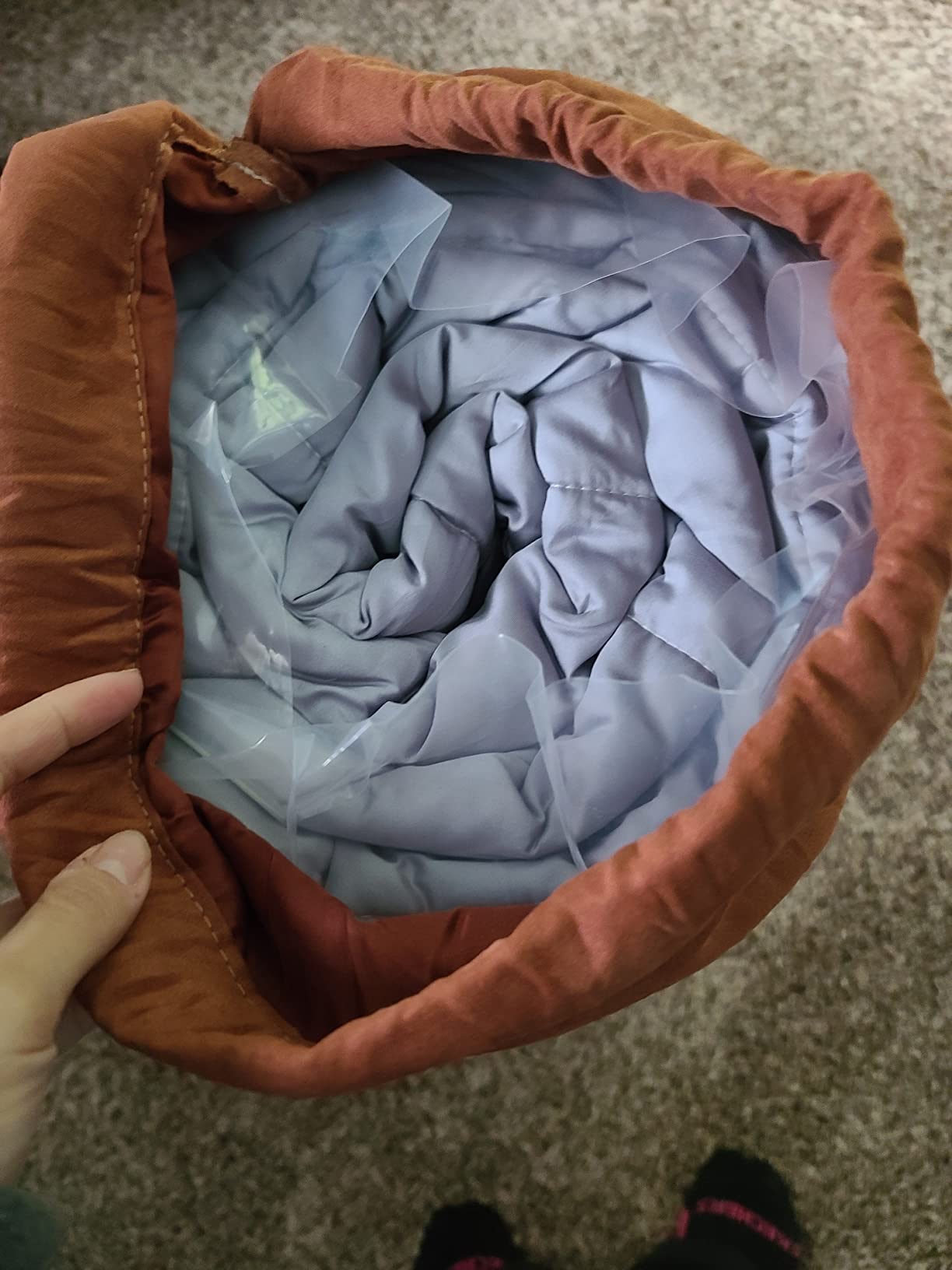
- Arrives vacuum packed and needs real fluffing
This is the insert I reach for when the bedroom genuinely stays cold. At 70 ounces of fill in a king, it is the heaviest winter weight in this roundup by a wide margin, and buyers consistently describe it as warm without needing a second blanket on top. The 100 percent Egyptian cotton shell feels closer to a department store comforter than anything else at this tier.
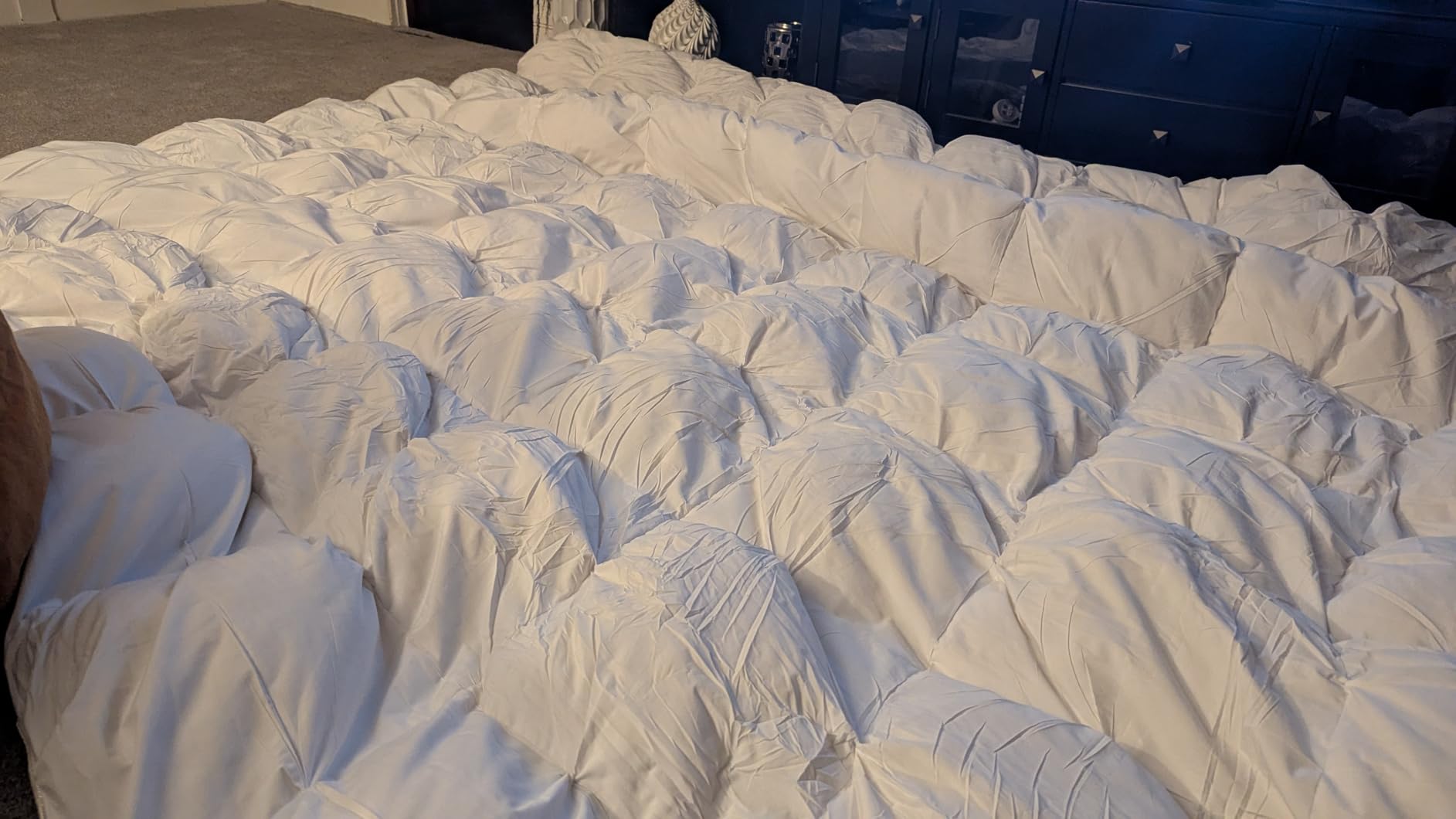
The baffle box construction is doing real work here. Instead of long stitched channels where fill drifts to the bottom over a season, the boxed baffles hold the down in place, which is why reviewers say it still feels evenly warm in month three. Sewn corner tabs and loops keep it locked inside a cover, and more than one buyer notes the fill stays put rather than migrating.
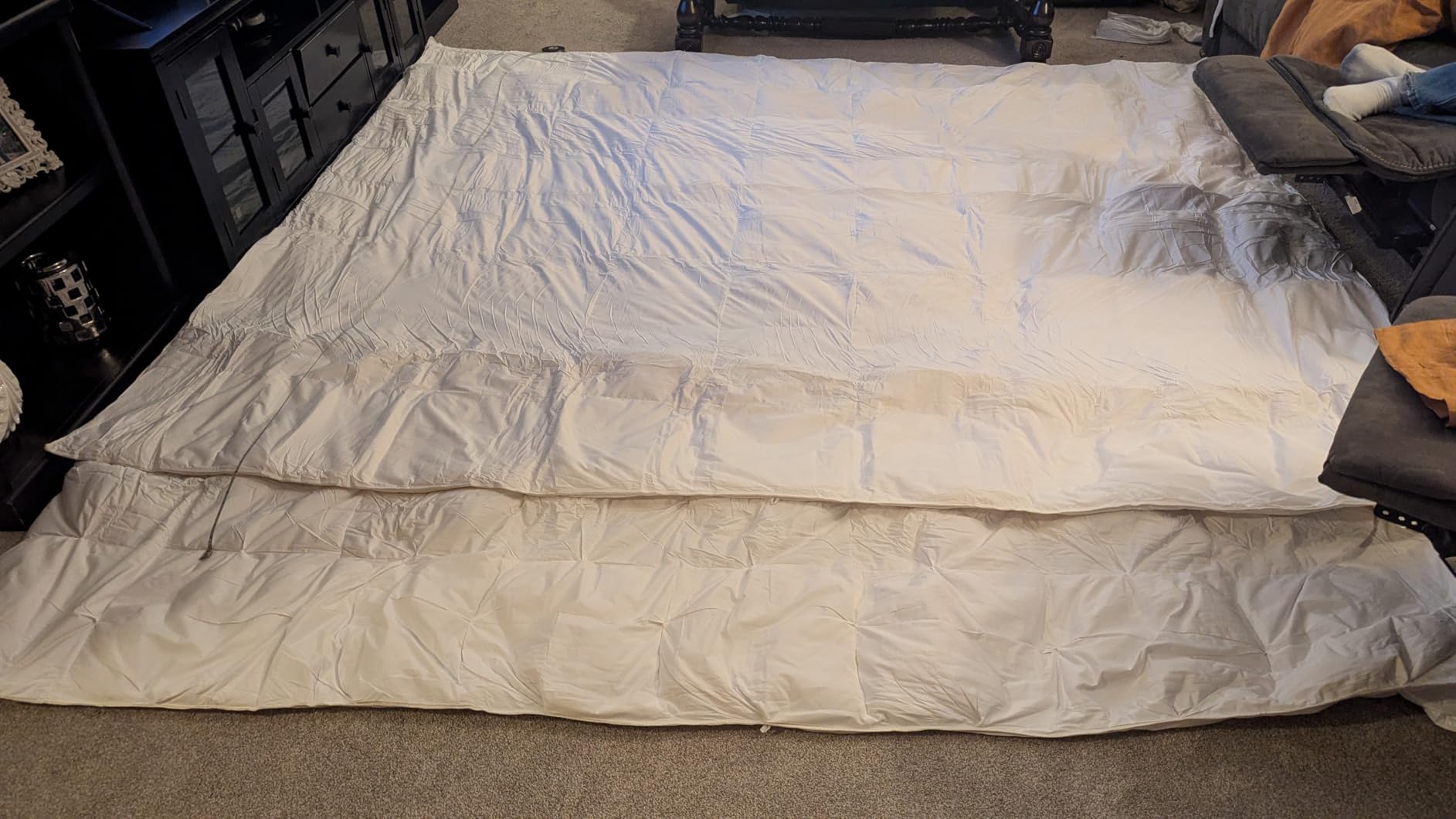
Two practical warnings from reviews. First, it arrives hard vacuum packed and needs aggressive fluffing, ideally with a dryer cycle on low, before the loft is anywhere near what the listing photos show. Second, the cotton shell rustles, and light sleepers who move around a lot notice it. Neither issue changes how warm it is, but both are worth knowing before you fall in love with it.
A handful of reviews dispute the goose down claim, since the listing describes a down and feather fibre blend rather than pure down. That does not affect the warmth rating at this fill weight, but if you are buying strictly for down purity, check the fill breakdown on the current listing before you commit.
Why this one wins for cold bedrooms
Warmth per ounce is what separates this from the rest. Fill weight, not fabric thickness or marketing language, determines how much trapped air sits between you and the mattress, and 70 ounces is simply more insulation than anything else here.
It also survives the season. Down that holds its loft in a baffle box does not need replacing every winter, which makes the cost-per-year argument easier than with a microfibre insert that compresses over time.
Who should skip it
Skip it if you need a true oversized drape, because 106 by 90 inches fills a standard king cover but leaves little overhang on the sides. It is also the wrong choice if you want a machine-washable insert, since the care instructions call for hand washing only.
If you share a bed with someone who runs hot, this is almost too much fill for one side of the mattress. Consider pairing each of you with a lighter insert instead.
2. Dorrin Nessin winter microfiber comforter – real winter weight without the down markup
Winter Extra Warm White Queen Size Down Alternative Comforter, Heavyweight All Season Fiberfill Comforter Duvet Insert 90×90 with Corner Tabs – Ultra Soft Brushed Microfiber Shell
400gsm microfibre fill
Queen 90x90 inch
Double brushed polyester shell
3.36 kg
Pros
- Genuine heavyweight winter fill weight
- Very soft and quiet brushed shell
- Machine washable and holds shape after washing
- Light feel for the warmth level
Cons
- A minority find it lighter and less fluffy than expected
- Can run warmer than expected in mild rooms
- Sizing runs small in some variants
Microfibre gets dismissed as a compromise, but at a true winter weight it stops being one. This is a 400gsm heavyweight fill in a 90 by 90 inch queen, and reviewers describe it as warm enough for cold bedrooms and for sleepers who run cold.
What surprised me was how light it feels for the amount of insulation. The double brushed polyester shell is genuinely quiet, with no rustling at all when you turn over, and box stitching keeps the fill evenly distributed so the corners do not go flat. Several buyers say it survived a washing machine without losing much loft.
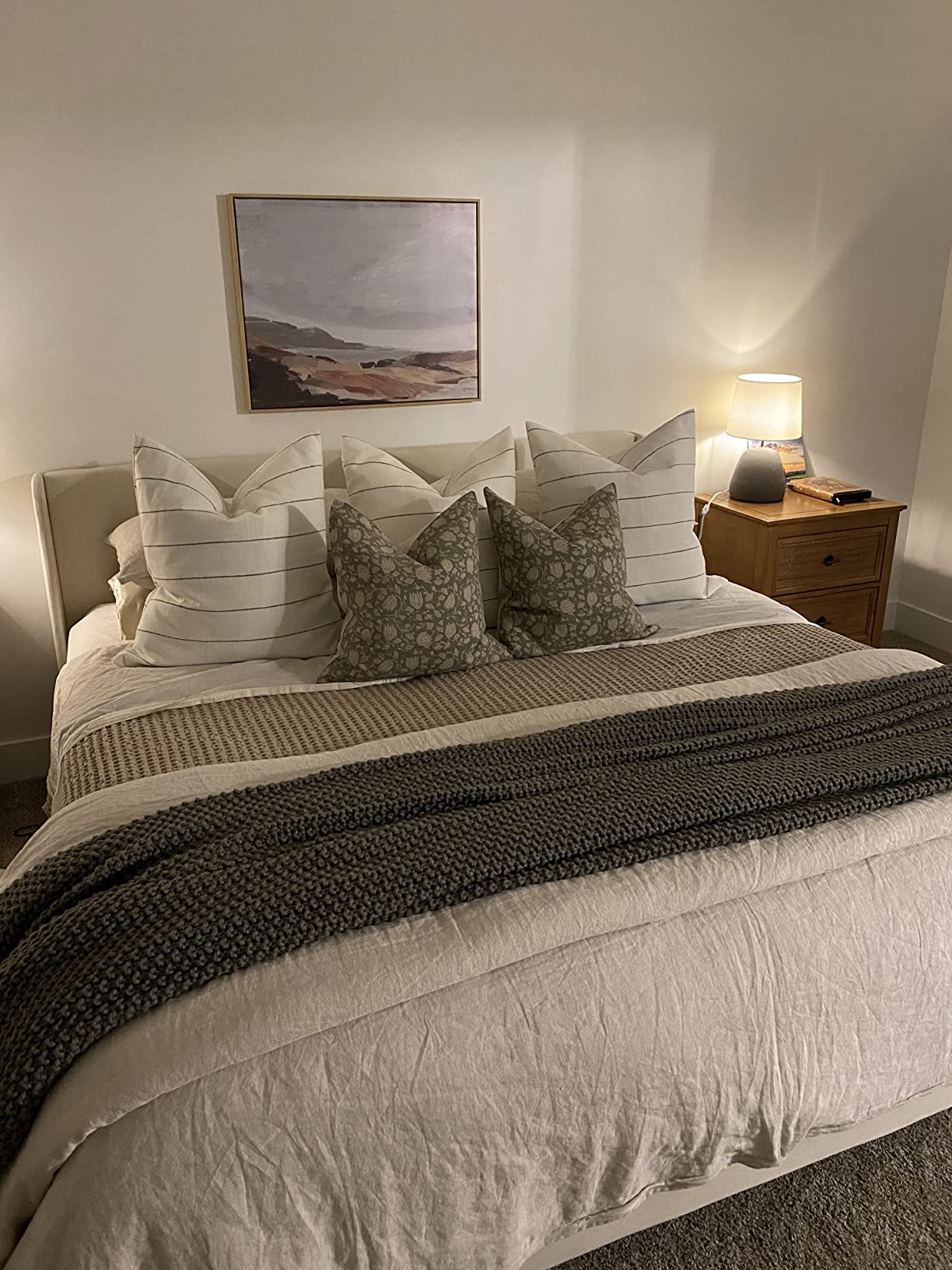
The recurring complaint is a mismatch between expectation and delivery. A minority of buyers say it is lighter and less fluffy than the listing implies, and others find it warmer than they want in a mild room. Both point at the same thing: read the weight tier carefully, because this is labelled winter weight and it behaves that way.
Sizing also runs slightly narrow in some variants at exactly 90 by 90 inches. If your queen cover is generous, or you want an oversized look, measure before ordering.

What you give up versus down
Microfibre does not loft as dramatically as down and it is heavier in the hand for the same warmth. Over a long winter it can also flatten a little more, which is why I would expect to replace it sooner than a down insert you care for properly.
What it gives back is washability. You can put this in a machine on a gentle cold cycle and tumble dry low, which is close to impossible with the hand-wash-only options and awkward with wool.
Who should skip it
Skip it if you are after the fluffy overstuffed look that down gives you, or if you need a certified down fill for allergy reasons you take seriously. It is also a poor match for anyone who is sensitive to polyester or static.
For a renter in a poorly heated flat, a first winter duvet or a guest-room insert, this is the pick I recommend most often.
3. Lavish Comforts premium down alternative – the plushest all-night loft on a budget
Down Alternative Comforter Queen Size – Fluffy Duvet Insert – Puffy Premium All Season Winter – Luxury Breathable Hotel Plush Comforter – Queen, White, 86×86 inches – Eco-Compressed Packing
Polyester microfibre fill
Queen 86x86 inch
Medium weight
6.8 pounds
Pros
- Hotel cloud loft
- Soft and quiet
- Corner loops and reinforced stitching
- Holds fluff through repeated washing
Cons
- Medium weight rather than true winter weight
- Runs hot for sleepers who overheat
- Runs smaller than a standard queen
- Some squares fill unevenly
This is the one I recommend when a bed needs to work year round rather than only in January. The fill is medium weight, which is lighter than a true winter insert, and it is the reason this sits below the two picks above it for a genuinely cold room.
What it does better than anything else here is loft. The fill puffs up into a genuine hotel-cloud shape with almost no effort, and it stays that way after washing rather than going flat. Reviewers repeatedly mention that softness survives repeated cycles, and the corner loops plus reinforced stitching keep it from sliding inside a cover.
It is also hypoallergenic, which makes it a reasonable choice if feathers or wool set off your allergies. Care is straightforward: fully machine washable with no hand-washing step.
The catch is that 86 by 86 inches is a true queen rather than an oversized one, so it sits lower in the bed and gives less drape. A minority of buyers also report less even filling between squares, and some find it runs hot in summer, which is the flip side of that generous loft.
Where it beats the winter-weight picks
In a heated house where you want one duvet that works from autumn through spring, a medium weight with this much loft wins. The heavier inserts are better at holding heat in a cold room, but they are uncomfortable for eight months of the year.
It also makes a good second layer. A common setup from bedding communities is one medium insert plus one winter insert in the same cover, which lets you add or remove warmth across the season instead of swapping covers.
Who should skip it
Skip it if your bedroom drops to around 60F or below at night. This is not a freezing-bedroom insert and no amount of fluff changes that. Also skip it if you sleep hot, since the extra loft traps more heat than the weight tier suggests.
If you need it to reach the edges of the bed, measure your cover first, because the sizing is snug.
4. APSMILE 55 oz down fiber insert – the pick for couples who run at different temperatures
APSMILE Heavyweight Duvet Insert Queen,Winter Down Feather Fibers Comforter
55 oz winter weight fill
Queen 90x90 inch
OCS organic cotton shell
7.4 pounds
Pros
- Multiple warmth weights available
- Soft unbleached organic cotton shell
- Baffle box with 8 corner tabs
- Little feather shedding reported
Cons
- Crinkle noise in the shell
- Arrives heavily compressed
- Occasional fibers poke through the cover
- An initial smell that fades
This is the solution I point couples toward when one person is cold and the other is not. At 55 ounces in a queen it sits between a medium and a true heavyweight, and the same range is available in lighter weights so you can buy two inserts at different tiers and share one cover.
Buyers describe the fill as full and hotel-like, and the OCS Standard 100 organic cotton shell is unbleached and undyed, which some sensitive skin appreciates. The baffle box design and eight corner tabs keep the fill distributed and the insert anchored, and the majority of reviews report very little feather shedding.

Two things to expect on arrival. It comes tightly vacuum packed and needs real effort to fluff up, and a few buyers note an initial smell that disappears after airing it out or one wash. The shell also crinkles, which is the most common complaint in the reviews.
A small number of buyers report quill-like fibers poking through the cover after extended use. Worth checking your cover weave if that bothers you.
Why two inserts beat one heavy one
The single most common question in bedding forums is whether to buy one heavy winter duvet or layer two lighter ones. Layering wins in a shared bed because each person controls their own warmth, and it is cheaper when you already own a medium insert.
Down and feather fibre also breathes better than microfibre, so a 55 ounce fill does not trap as much heat as an equivalent synthetic weight. That is why this can work for a couple where a heavyweight microfibre insert cannot.
Who should skip it
Skip it if noise in the bedroom matters to you, because the shell crinkles noticeably. Also skip it if you will not spend the five minutes of fluffing it properly on day one, because the first impression straight out of the bag is misleading.
If you sleep in a genuinely cold room, step up to one of the heavier down picks instead.
5. Globon winter goose down at 800 fill power – the loft leader
Globon Winter Goose Down Comforter Queen Size,800 Fill Power,White
800+ fill power goose down
Queen 90x90 inch
400 thread count shell
3.1 pounds
Pros
- Enormous loft from a light overall weight
- Quiet shell that does not rustle
- Warm without making most sleepers overheat
- Odor free out of the box
- Recovers loft in a short dryer cycle
Cons
- A minority report feathers leaking through the seams
- Fill claim disputed by a few reviewers
- Costs more than synthetic alternatives
- Needs dryer tumbling to reach full loft
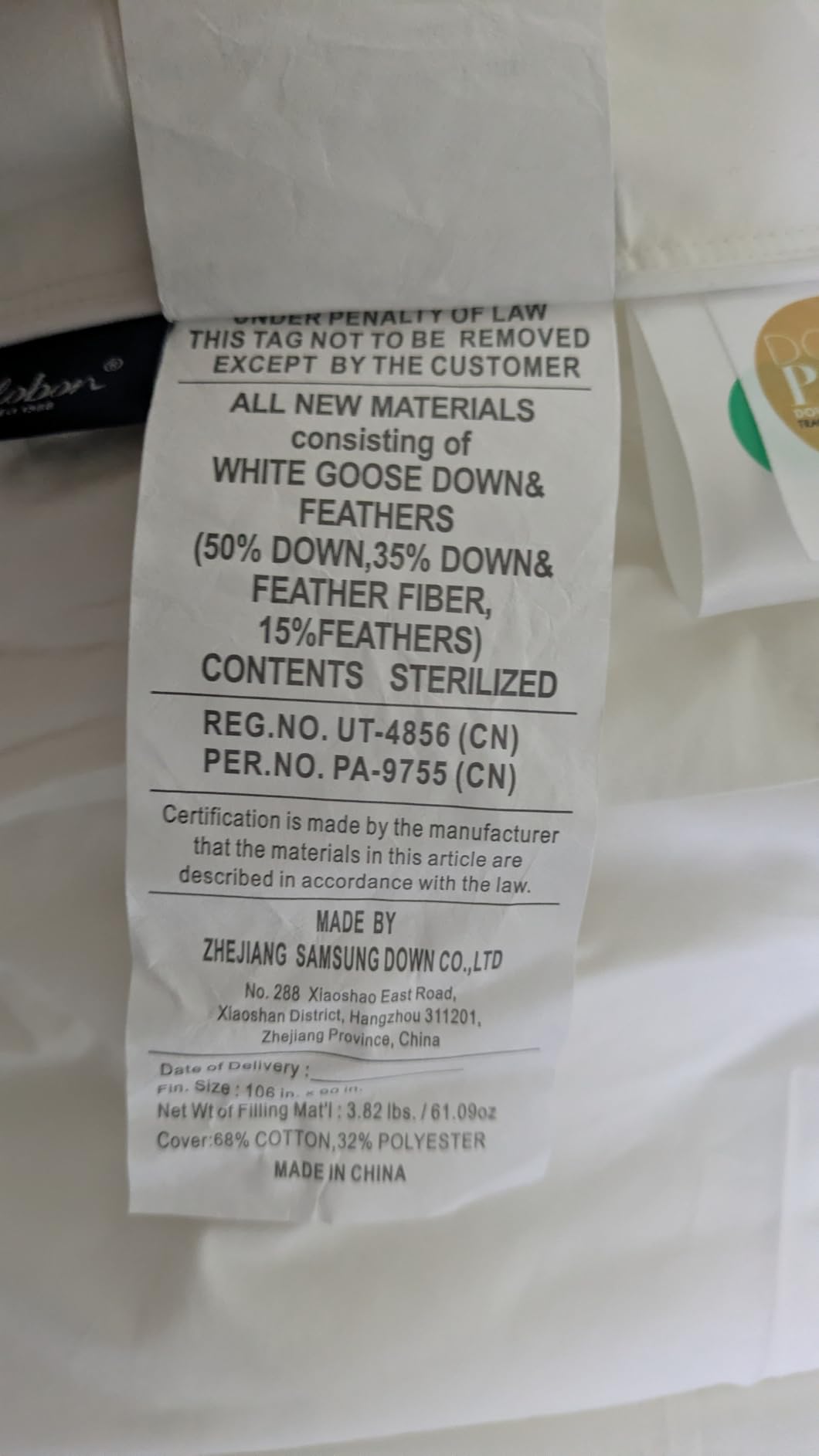
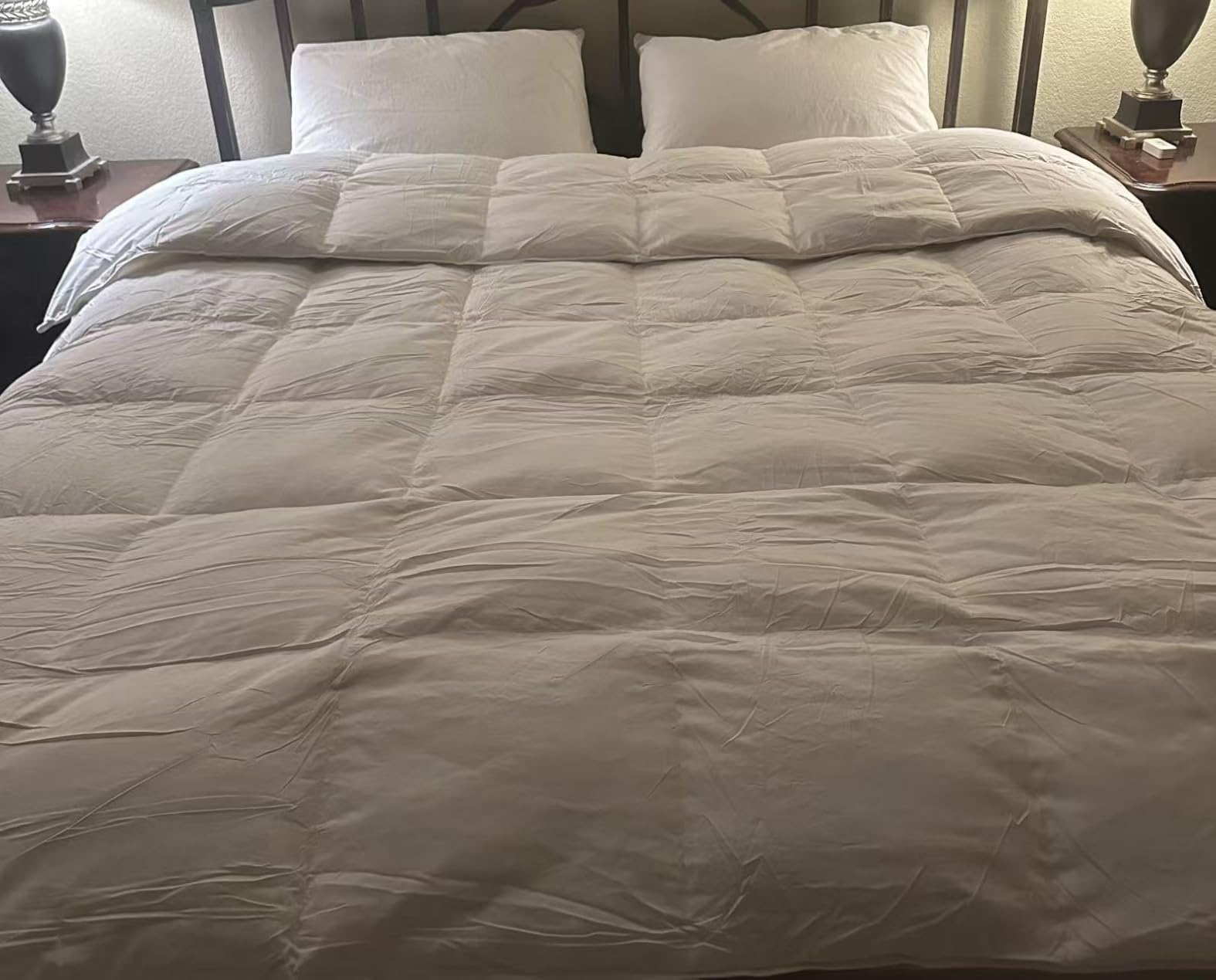
Fill power is the number to understand here. It measures cubic inches of air per ounce of fill, so 800+ means this traps more air per ounce than any other insert on this list. That is why a relatively light insert can still feel like a cloud and still keep a room warm.
The 400 thread count shell is quiet and does not rustle, which sets it apart from several cotton-shell rivals here. Reviewers also like that it is warm without causing overheating for most sleepers, and that it arrives odour free.
Give it a dryer cycle on low after unpacking. High fill power down that has been compressed needs heat and movement to reach full loft, and a short tumble is the difference between cloud and disappointment.
A small minority of reviews report feathers escaping through the seams over time, and a few dispute the goose down versus feather fill. The Texcote-Nano treatment on the fill is designed to resist exactly that kind of leakage, so it is not universal.
Best reasons to pay for high fill power
Loft is the emotional driver behind most winter duvet complaints, and high fill power delivers it at a lighter overall weight. A 3D box construction with eight loops holds the fill in place and gives generous coverage over the bed.
Breathability also improves with fill power, because the down is not crushed together. Buyers report warm but not stuffy sleep, which is the profile you want if you also overheat occasionally.
Who should skip it
Skip it if your priority is pure winter insulation for a freezing room. At this weight tier it is a strong all-winter performer but not the heaviest fill available, so pair it with a heavier layer if your bedroom is genuinely cold.
Also skip it if feather leakage would bother you, or if you want an insert you can put in a washing machine without thinking about it.
6. Vexino feather down fiber king insert – light warmth across a big bed
Feather Down Fiber Comforter King for Winter,100% Cotton Duvet Insert
Feather down fibre fill
King 106x90 inch
100% cotton shell
16 ounces
Pros
- Light and breathable warmth profile
- Soft down-like loft without real feathers
- Machine washable on a gentle cycle
- Good warmth to weight balance for autumn and winter
Cons
- Fibers can poke through a duvet cover
- Shell is noisier and less soft than higher cotton
- Shrinks if over-dried
- Needs a dryer cycle to recover loft
King beds need a lot of surface area, and weight adds up fast across that much fabric. Listed at 16 ounces across a 106 by 90 inch king, this is the lightest insert here and one of the few that stays warm without turning the whole bed into a lifting job.
Buyers like the down-like feel without real feathers, and the breathability means it works from fall into winter without becoming stifling. Box stitch construction with reinforced piped edges and four corner loops keeps the fill where it belongs.
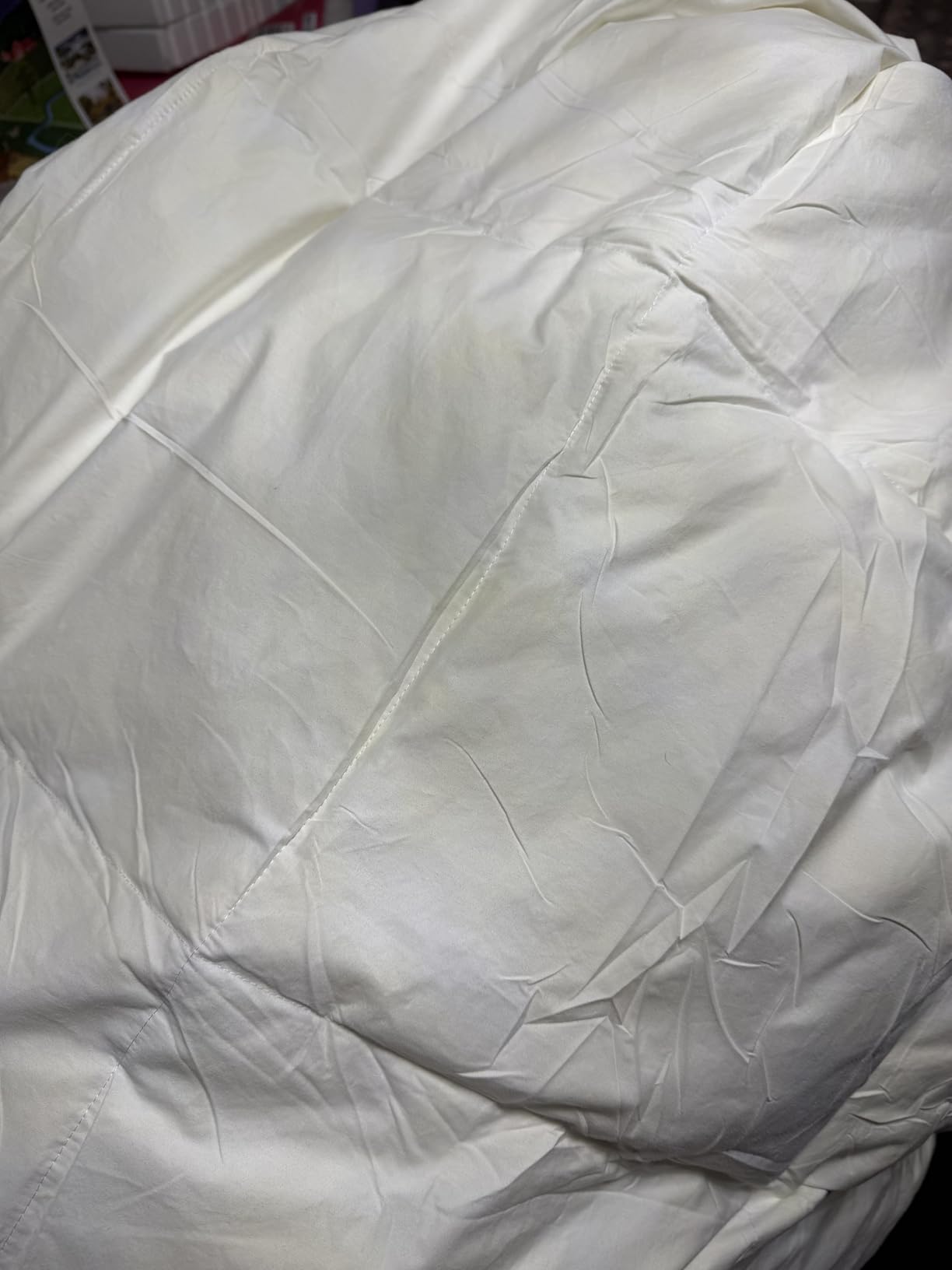
Two practical notes from the reviews. The fibres can poke through a duvet cover, particularly a lighter weave, so a tighter cover is worth pairing. And it can shrink if you over-dry it, so keep tumble drying on the gentle setting and pull it out while it is still slightly damp.
Like most inserts, it needs a dryer cycle to recover loft from the vacuum packaging. Do that before the first night rather than after a week of wondering why it feels flat.
When a lighter king insert is the right call
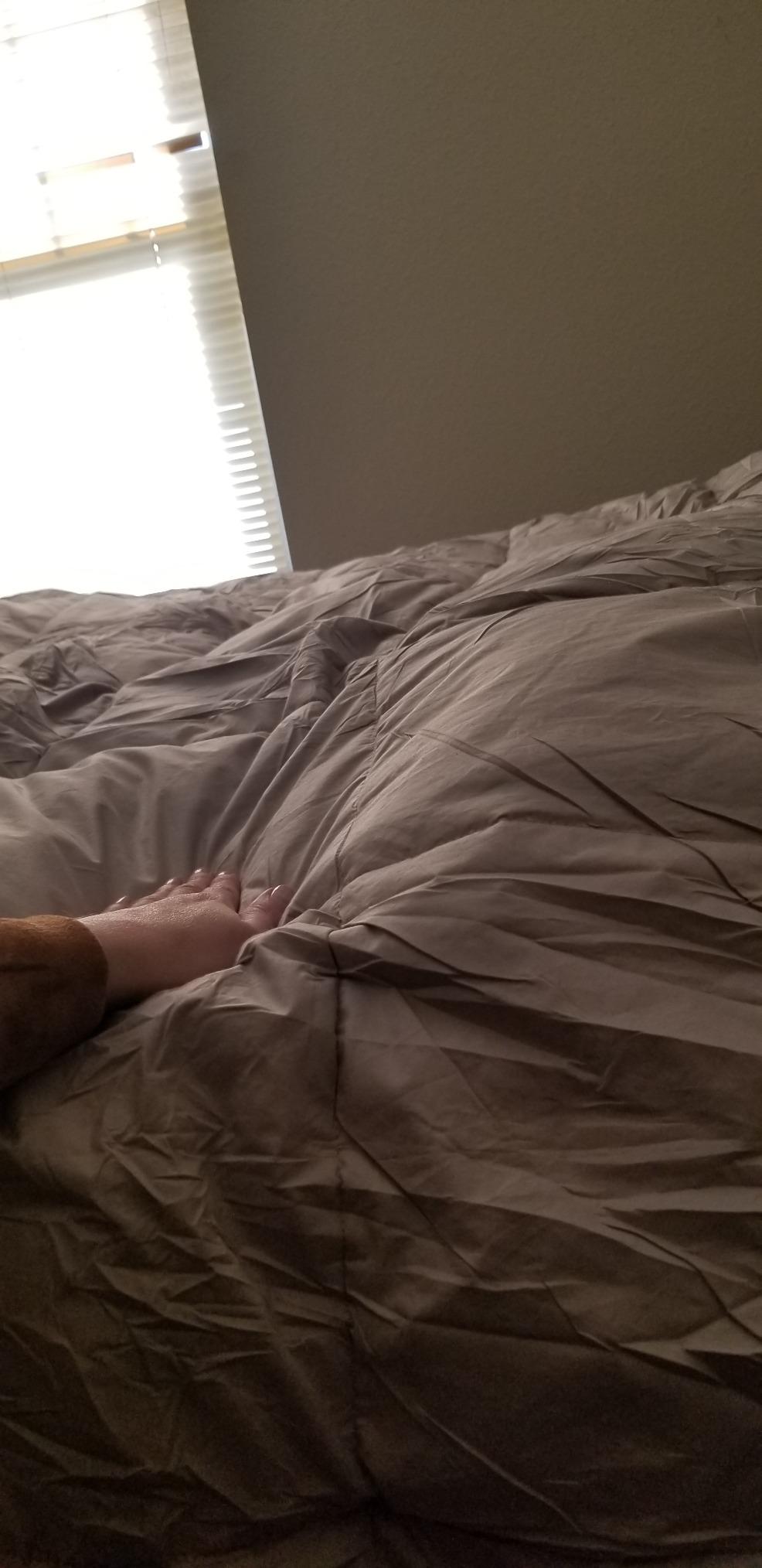
Weight spreads out across a king mattress, so a lightweight fill still adds up under two people. This is the pick if your bedroom is heated but you want the bed to stay comfortable rather than oppressive.
Winter extra-warm and all-season medium thickness options are available in the same range, which makes it easy to buy two and adjust through the season without changing covers.
Who should skip it
Skip it if your bedroom is unheated or freezing, because a light fill cannot compensate for a cold room on its own. Also skip it if soft quiet fabric matters more than weight, since this shell is crinklier than the higher thread count options.
If you tend to sleep cold, pair it with a heavier layer underneath instead of replacing it.
7. YOUR MOON Australian wool comforter – natural fibre temperature control
YOUR MOON Natural Wool Comforter Queen Size for Winter, Thick Warm Weight, 100% Australian Lamb Wool Filling, 570GSM Thermal-Weight, All Season Duvet Insert, Soft Noiseless Cotton Shell (White)
570GSM Australian lamb wool
Queen 90x90 inch
298TC cotton sateen shell
Pros
- Excellent temperature regulation for hot and cold sleepers
- Natural wool fill with a low allergen load
- Soft 298TC sateen shell that reduces rustling
- Recovers loft with a low tumble dry
Cons
- A minority find it less warm than expected
- May not suit very cold Midwestern winters
- Not all-season for sleepers who run hot
- Professional cleaning rather than machine washing
Wool behaves differently from everything else on this list. Instead of simply trapping more air, it moves moisture away from your skin and buffers temperature swings, which is why it appears in almost every discussion of the best duvet inserts for winter for people who sleep hot in summer and cold in winter.
This one uses 570GSM of Australian lamb wool, a genuine thermal weight. Reviewers praise the temperature regulation and the natural wool feel, and the 298 thread count cotton sateen shell is noticeably quieter than plain cotton, which is unusual in a wool insert.
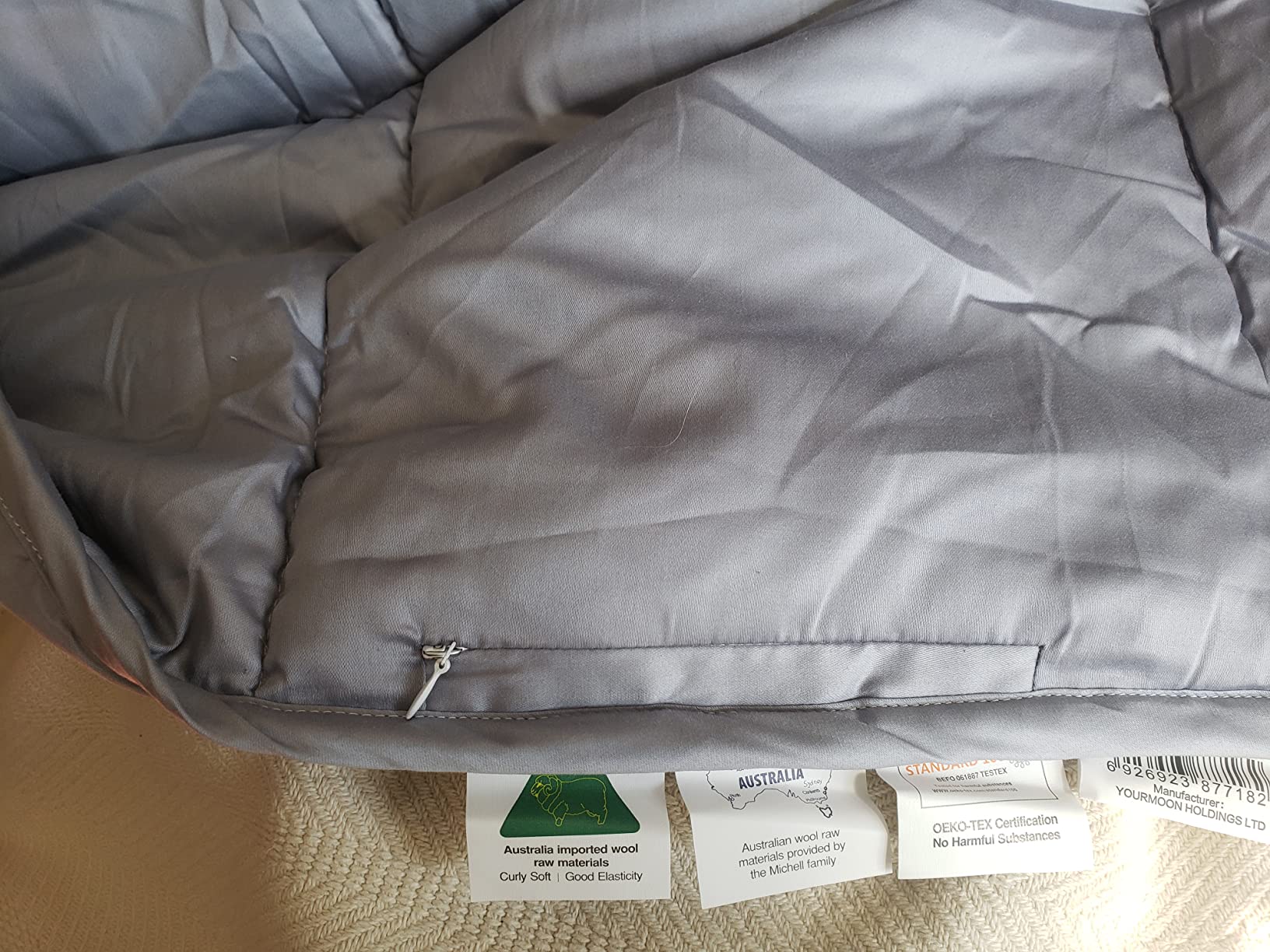
The quilted baffles hold the wool in place and the nine corner and side loops give you plenty of anchor points inside a cover. Owners report good loft recovery after a low tumble dry of 30 to 40 minutes, which matters because wool compresses in storage.
Warmth reviews are mixed. Some buyers find the wool does not fluff up as much as they expected and feel less warm than the weight suggests, and a few say it is not enough for very cold Midwestern winters. It is the most polarising pick in the roundup, and the reason is wool rather than any fault in the insert.
Who wool suits best
Wool is the answer for anyone who wants one insert that works across a full year and dislikes the cloying heat of a heavy synthetic on warmer nights. It also carries a naturally low allergen load compared with feather and feather fibre fills.
The quiet sateen shell is a real bonus for light sleepers, and the moisture-managing fibre structure means it stays comfortable when the room is damp rather than stuffy. If your problem is overheating rather than cold, our cooling duvet insert guide covers the lighter end of the market instead.
Who should skip it
Skip it if you need professional wool cleaning only and that is a problem, since it cannot go in a machine. Also skip it for a genuinely freezing bedroom, where maximum trapped air beats temperature regulation.
Buy a washable duvet cover with it and expect a smaller dry-cleaning bill than a comparable down insert over its life.
8. Globon heavyweight winter down – aimed straight at cold sleepers
Globon Winter Down Comforter Queen Size,Heavyweight Duvet Insert for Clod Sleepers,Noiseless Soft Shell,with 8 Corner Tabs, White
Heavyweight winter down
Queen 90x90 inch
Lightly brushed cotton shell
300 thread count
Pros
- Genuinely warm in cold rooms
- Quiet soft brushed cotton shell
- 3D box design keeps fill even and lofty
- Very full attractive loft in a cover
Cons
- A notable minority report less loft than the photos suggest
- Lowest rating in this set at 4.2 stars
- Can run too warm in mild climates
This is the pick for someone who runs cold and lives in a cold house. It is a heavyweight queen winter down insert with a 3D box temperature-locking cabin design, and the majority of buyers report it delivers real warmth in a cold room without needing a blanket on top.
The lightly brushed cotton shell is quiet, which is unusual at this weight tier, and the eight loops and corner tabs give a full, even loft inside a duvet cover. Reviewers frequently report no feathers leaking out, which matters more than it sounds at this price.
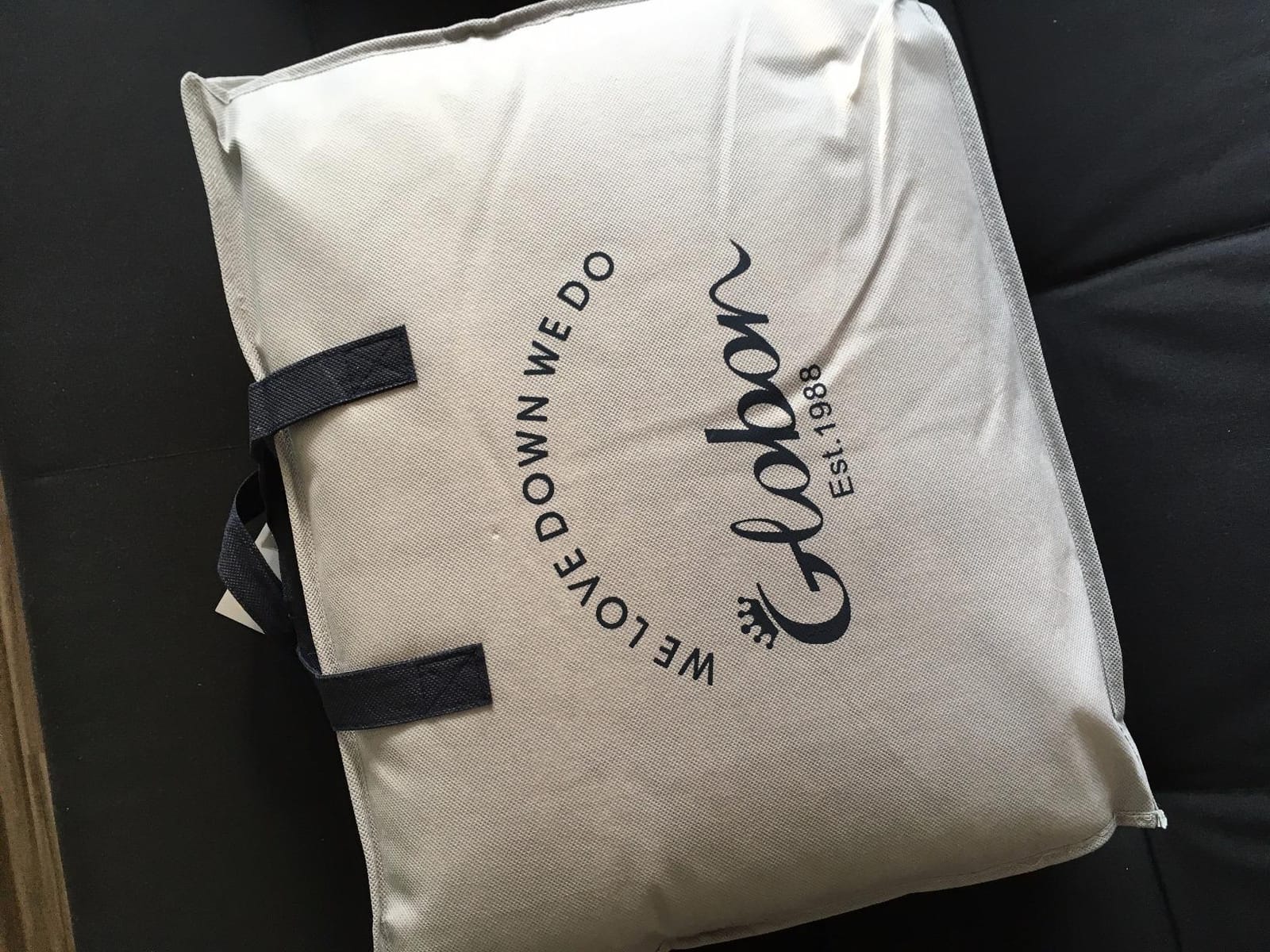
It also carries RDS and OEKO-TEX Standard 100 certification, so you know the down and the shell fabric have both been independently checked.
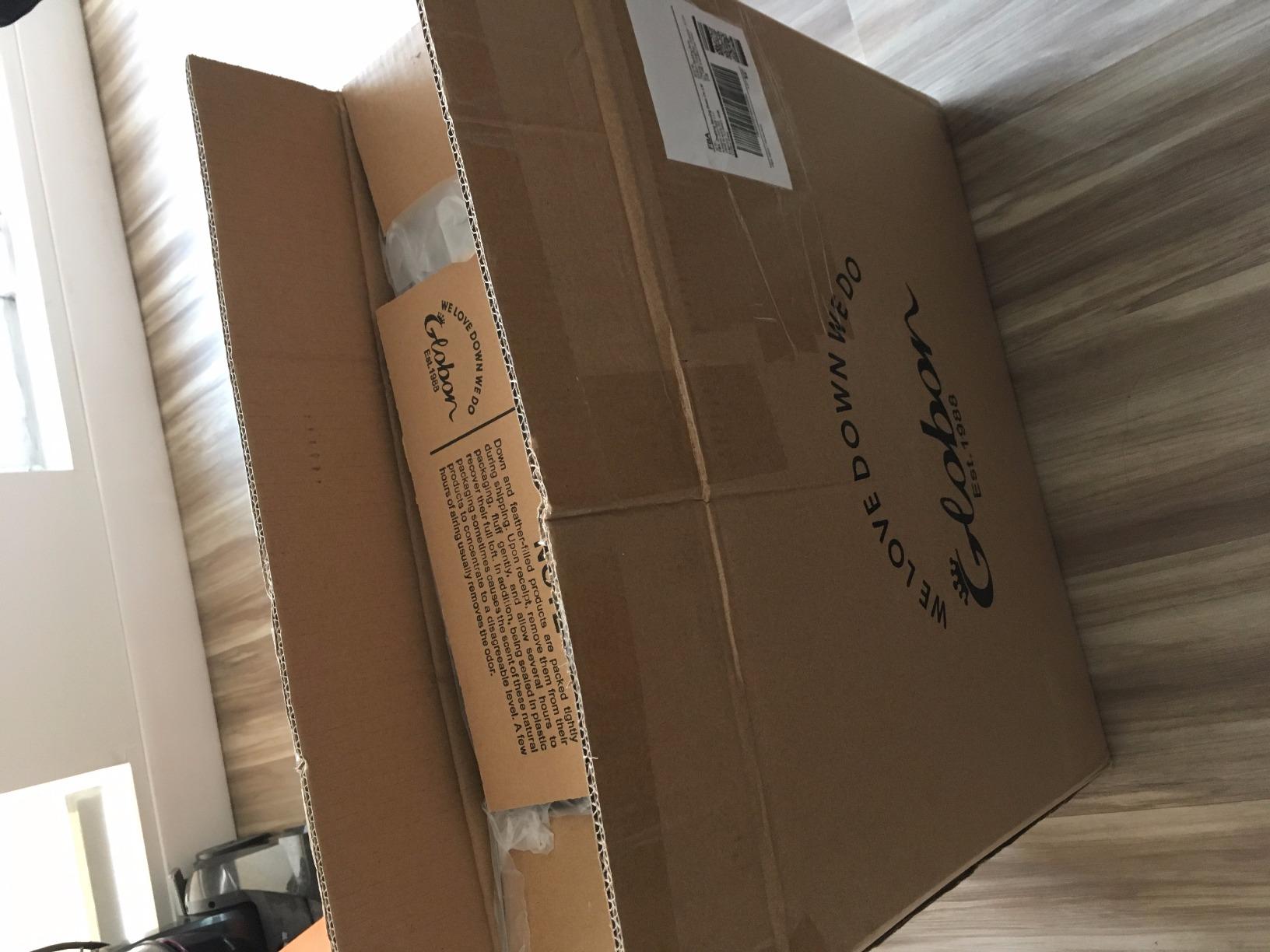
Where it loses ground is consistency of loft. A notable minority of reviews say the delivered fill looks flat next to the listing photos, and its 4.2 star average is the lowest in this roundup. If loft is what you are paying for, manage expectations.
Best reasons to pick it
Cold sleepers in poorly heated homes are the clear audience. The construction is designed to keep heat in evenly, so it is the right tool when the problem is the room rather than your circulation.
It is machine washable, which matters more than usual for down, and the quiet brushed shell keeps it from sounding like a comforter when you turn over.
Who should skip it
Skip it if you sleep in a mild climate, since a heavyweight fill will push you over the edge into overheating. Also skip it if maximum loft is the priority, because the fill reports are mixed enough that you may be disappointed.
For a warmer climate, step down to the medium-weight pick rather than trying to push through a heavy one.
What winter duvet weight do you actually need?
Brands label weight inconsistently, so the number on the box matters more than the word winter. Two of the inserts here are sold as winter weight and one of those is noticeably lighter than the other. Judge by ounces of fill for down and GSM for microfibre and wool, then match that to your bedroom.
Freezing bedroom or weak heating: look for 60 to 70 ounces of down fill, or a true heavyweight microfibre around 400gsm. This is the range where a second blanket stops being necessary.
Cold house, but not unheated: 50 to 60 ounces of down fill or a 570 to 600 GSM wool fill. Most people in this category describe the heaviest picks as warm without overheating.
Normally heated bedroom, cold sleeper: 45 to 55 ounces, or a heavyweight insert in a lighter shell. Add a flannel or heavier cover rather than a second duvet.
Warm bedroom or you sleep hot: a medium weight around 35 to 45 ounces. Wool is the best choice here because it regulates rather than simply insulating.
If a tog rating is listed, 13.5 to 15 tog is the usual winter band for a cold bedroom, and 10.5 to 13.5 tog suits a normally heated room. Most US inserts do not publish a tog figure, so translate from the fill weight instead.
On layering, the community advice is consistent: two lighter inserts beat one heavy insert when you share a bed, because each person can control their own warmth. Two inserts also cost less than a single heavyweight one in most cases, and you can remove one in spring instead of putting the whole bed away.
Winter duvet fills explained: down, wool, down alternative and feather blend
Down is the warmest material per ounce available for bedding. Fill power is the number that tells you how good it is, measured in cubic inches of loft per ounce, and 600 is the sensible floor for a winter insert with 700 to 850 being noticeably lighter and softer at the same warmth.
The down and feather ratio matters just as much. Below roughly 75 percent down, a product labelled down is mostly feather fibre, which feels flatter, rustles more and loses loft faster. Check the fill breakdown, and do the sound test: a high down product presses down silently, while a feather blend makes a crinkly crunch when you squeeze it.
Wool sits below down in peak warmth but above synthetic in temperature regulation. It moves moisture rather than trapping it, which is why it is the recurring recommendation for couples or anyone who swings between hot and cold.
Down alternative microfibre is the practical choice. It is the most washable, the least likely to trigger a feather allergy, and at a true winter weight it comes within reach of down for most bedrooms. Feather down fibre is the lightest and coolest, best used as a second layer rather than a standalone winter insert.
Certification labels are worth a quick check. RDS and Downmark both verify animal welfare and traceability of the down, IDS verifies the fill power claims, and OEKO-TEX Standard 100 means the shell fabric has been tested for harmful substances.
Construction, cover pairing, sizing and care
Construction decides how long the warmth lasts. Baffle box and 3D box designs hold the fill in vertical chambers so it cannot slide to the bottom of the cover overnight, while plain box stitching is cheaper and drifts more over a season. Every winter pick here uses a boxed or quilted design.
Anchoring points matter more than most shoppers expect. Corner loops or tabs keep the insert tied to the cover so it does not bunch, and the picks here range from four loops up to nine loops and side ties.
On sizing, a standard queen insert measures 86 by 86 inches and a queen cover fits it snugly, while an oversized queen insert at 90 by 90 inches gives a fuller drape. King follows the same idea at 106 by 90 inches. If your bedroom is cold, an oversized insert beats a standard one at the same fill weight.
Washing down takes preparation. Use a large front-loader or a top-loader with no agitator, a gentle cycle with cold water and a small amount of mild detergent, and dry on low with dryer balls or clean tennis balls to break up clumps. Expect two or three cycles before the loft fully returns, and never store a down insert compressed.
The cover matters as much as the insert. Pair a winter insert with a flannel or heavier percale cover if your bedroom is cold, and a lightweight linen or sateen cover if you run hot. Many buyers add a second insert in the same cover rather than swapping covers twice a year, which you can read more about in our duvet cover buying guide.
If you are buying for two beds, remember that a queen insert behaves differently in a king cover because there is more room for it to shift. Our guide to winter quilts covers what to layer on top when one insert still is not enough.
Frequently Asked Questions
What is the best duvet filling for winter?
Winter-weight down with 600 fill power or higher is the warmest filling available, and wool at 550 to 600 GSM is a close second for temperature regulation. Heavyweight down alternative microfibre around 400gsm gets close to down and washes easily. Feather blends below about 75 percent down feel flatter and rustle more, so check the fill ratio before buying.
What kind of duvet is best for winter?
Choose a duvet labelled winter weight or extra warm rather than all-season. Look for 60 to 70 ounces of down fill, or a true heavyweight microfibre or wool fill, combined with baffle-box construction that keeps the fill evenly distributed. Add a flannel or heavier duvet cover if your bedroom stays cold rather than reaching for an extra blanket.
What is the best duvet inner to buy for winter?
A winter-weight down insert with baffle-box construction and corner ties is the best duvet inner for most homes. Pick 600 fill power or higher and match the fill weight to your bedroom, from 45 ounces for a warm room up to 70 ounces for a freezing one. If you share a bed with someone who runs hot, two lighter inserts in one cover give each of you control.
Is a heavier duvet warmer in winter?
Yes, within the same fill type. Heavier fill traps more air, which is what actually keeps you warm, so a 70 ounce down insert beats a 45 ounce one in the same room. Across materials the comparison changes, because wool and high fill power down trap more air per ounce than a heavy synthetic fill.
How warm should my duvet tog be for winter?
Most winter duvets sit between 13.5 and 15 tog, and 10.5 to 13.5 tog suits a normally heated bedroom. A tog of 1 measures the warmth of one pound of a particular fill, so two thinner winter duvets can be warmer together than one thinner duvet alone. Most US inserts do not publish a tog figure, so use the ounces of fill instead.
Conclusion: the winter duvet insert worth buying once
The EGYPTIAN BEDDING king down comforter is the pick we would buy first, because 70 ounces of winter fill in a baffle box is the most honest solution to a cold bedroom. For a tighter budget the Dorrin Nessin microfiber gives genuine winter weight and washes in a machine, and for one insert that has to work all year the Lavish Comforts medium weight is the easiest to live with.
Whatever you choose, buy for your coldest night rather than your average one, check the fill ratio and fill power before you pay, and give it a dryer cycle before the first night. Pick the right cover from our duvet cover roundup and the bed will stay warm well past 2026.