
Yes, car seats are allowed on airplanes. Any child restraint that carries an FAA approval label on its shell can be used as an in-cabin restraint in a purchased airplane seat, and it does not count against your carry-on allowance. Children under age 2 can legally lap infants, but a properly installed FAA-approved seat is the safer choice in turbulence.
The catch most roundups skip is that very few of the seats people actually travel with are FAA approved. Booster seats are not. Neither are vest restraints like the RideSafer. The average airplane seat measures roughly 17 inches wide at the base, so a bulky convertible seat may physically refuse to sit flat in the row you were assigned.
We spent weeks sorting through the strongest-reviewed travel car seats for airplanes, checking weight, dimensions, harness range and aircraft status for each one, so you can tell in ten seconds whether a seat is a cabin restraint, a ground-transport booster, or both. The short version: the Diono Radian 3R is the only seat here with explicit FAA approval in its specification, and everything else needs a different plan for the flight itself.
If you fly only once or twice a year, a travel cart that hauls your existing installed seat through the terminal is often the smarter buy, and gate checking is free. If you fly monthly or you land somewhere without a car, the fold-flat and inflatable options further down handle ground transport far better than they handle the cabin.
Table of Contents
Top 3 Picks for Best Travel Car Seats for Airplanes

Graco TurboBooster 2.0
- 40-100 lbs and up to 57 in
- Backless belt-positioning design
- Height-adjustable armrests
- Most reviewed seat in this roundup
Diono Radian 3R
- FAA approved for airline use
- Folds flat for travel
- Four modes from 5-120 lbs
- Steel-reinforced core shell

Graco SlimFit 3-in-1
- Rear-facing to 40 lbs
- 10% slimmer design
- No-rethread harness
- 10 headrest positions
All 12 Travel Car Seats for Airplanes at a Glance (October 2026)
Before the individual reviews, here is every seat in one place with its aircraft status stated up front. Cabin use means the restraint is approved to be belted into a purchased airplane seat; ground use means it travels with you but has to be stowed for takeoff and landing.
| Product | Specifications | Action |
|---|---|---|
| Graco TurboBooster 2.0 Backless Booster |
|
Check Latest Price |
| Diono Radian 3R Convertible |
|
Check Latest Price |
| Graco SlimFit 3-in-1 |
|
Check Latest Price |
 RideSafer Gen 5 Vest RideSafer Gen 5 Vest |
|
Check Latest Price |
 Hiccapop UberBoost Inflatable Hiccapop UberBoost Inflatable |
|
Check Latest Price |
 BubbleBum Inflatable Booster BubbleBum Inflatable Booster |
|
Check Latest Price |
 mifold Comfort Backless Booster mifold Comfort Backless Booster |
|
Check Latest Price |
 mifold Hifold High Back mifold Hifold High Back |
|
Check Latest Price |
 Graco Tranzitions 3-in-1 Graco Tranzitions 3-in-1 |
|
Check Latest Price |
 Safety 1st Ellaris 3-in-1 Safety 1st Ellaris 3-in-1 |
|
Check Latest Price |
 Baby Trend Protect 2-in-1 Baby Trend Protect 2-in-1 |
|
Check Latest Price |
 Safety 1st Grand 2-in-1 Safety 1st Grand 2-in-1 |
|
Check Latest Price |
What FAA Approval Actually Means (And Why Most Seats Here Are Not Approved)
FAA approval is a label, not a rating. The Federal Aviation Administration tests a restraint against its own airworthiness standard, and if the seat passes, a small approval label is stuck to the shell, usually on the side or the back where the padding meets the plastic. If you cannot find that label, the seat is not approved for cabin use no matter what the product page says.
Three rules catch out almost every parent. First, booster seats are not FAA approved, because they rely on the vehicle seat belt rather than a built-in harness, and an aircraft lap belt alone cannot position a booster correctly. Second, lap infants are permitted until age 2, though safety experts and the FAA recommend a proper restraint. Third, a car seat never counts against your carry-on allowance, which is why flying with one is not an either-or decision with your bag.
There is also a size gate. Aircraft seats measure roughly 17 to 18.5 inches wide depending on cabin, and a seat wider than the row will either wobble or be sent to the hold. Always confirm the label before you buy, not after, and check your airline’s policy before you leave home, because international carriers vary widely on child seating.
1. Graco TurboBooster 2.0 – The Most Reviewed Backless Booster in the Roundup
Graco TurboBooster 2.0 Backless Booster Car Seat, Denton
Ages 4-10
40-100 lbs
Up to 57 inches
Adjustable armrests
Pros
- Most reviews in this roundup
- 4.8 average rating
- Belt-only install with no hardware
- Adjustable armrests
- ProtectPlus crash testing
Cons
- Not FAA approved for cabin use
- No head or back support
- Child must be 40 lbs and able to sit properly
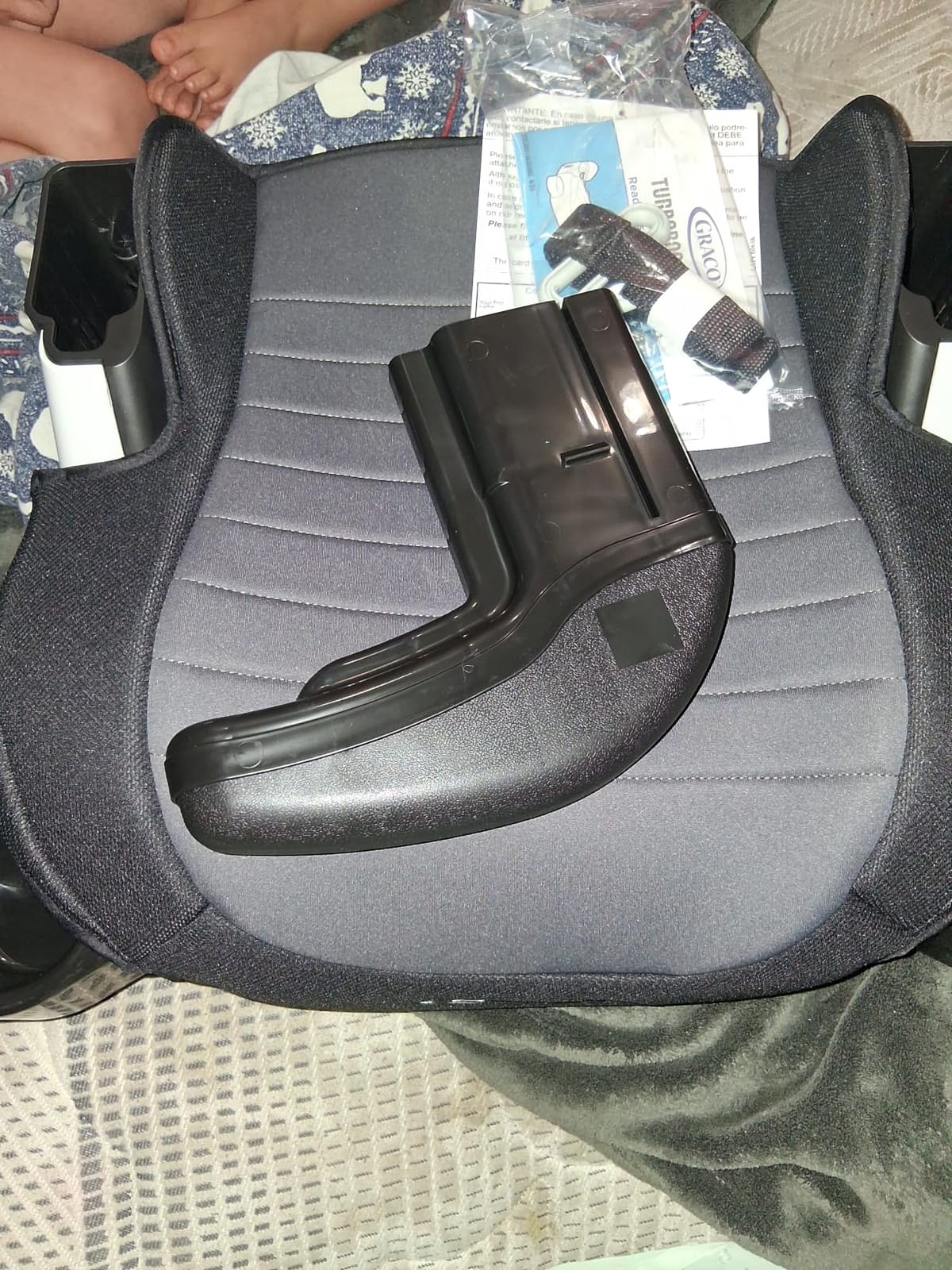
With 12,208 reviews and a 4.8 average, the Graco TurboBooster 2.0 is the most thoroughly tested booster in this group, and that depth of owner feedback is exactly what you want before hauling something through an airport. Owners consistently point to the same thing: it installs with nothing but the adult seat belt, so there is no base to lose at the gate and no hardware to misroute.
The engineering claim Graco makes is ProtectPlus coverage across frontal, rear and rollover crashes plus NCAP-based and extreme interior temperature protocols. Whether or not you care about that, the practical effect is a backless shell that feels stable in the hand and does not twist when the lap belt goes across the child’s thighs.
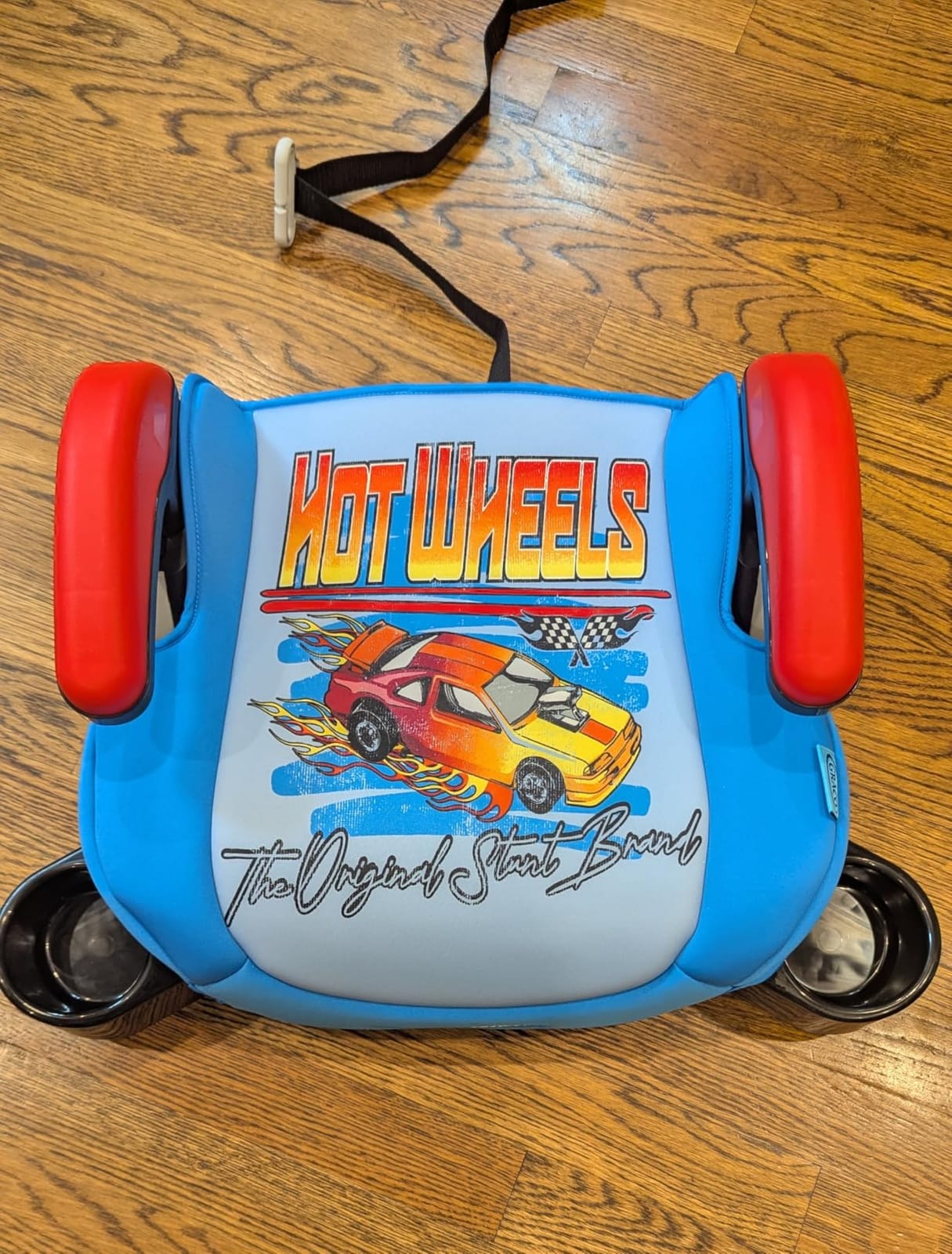
Be clear about what it is not. A backless booster is not FAA approved, so on the aircraft itself this seat goes in the overhead bin or under the seat in front, and the child sits in a normal airline seat with the aircraft lap belt. That is fine for a five-year-old, and it is worth saying plainly because booster seats are routinely marketed as travel seats when they are not.
The height-adjustable armrests are a nicer touch than most backless boosters at this level, and they do give a bigger child somewhere to rest an elbow on a long flight. Parents also like the wide range of color and character variants, which matters more than it sounds when a booster has to live in a visible trunk.
Who this seat works for
A family with a child over 40 lbs who sits upright properly and needs the adult belt repositioned rather than a harness. If you land somewhere without a car, this is a genuinely useful ground companion because it moves between vehicles with no hardware at all.
Who should skip it
Anyone with a toddler under 40 lbs, and anyone planning to use a seat as the in-flight restraint. There is no head or back support, so a younger child in turbulence has nothing structural around them.
2. Diono Radian 3R – The Only Seat Here With Explicit FAA Approval
Diono Radian 3R, 3-in-1 Convertible Car Seat, Rear Facing & Forward Facing, 10 Years 1 Car Seat, Slim Fit 3 Across, Jet Black
5-120 lbs
Rear-facing to 50 lbs
Folds flat
FAA approved
Pros
- Only FAA-approved seat in this roundup
- Covers birth to booster in one seat
- Steel core shell
- Fits three across
Cons
- Heavy and awkward through an airport
- Complex mode switching
- Very deep rear-facing recline
The Diono Radian 3R is the only product in this roundup whose specification explicitly states FAA approval for airline use, and that single fact changes how it should be used. You can belted into a purchased airplane seat, in any of its four modes, and that is not a small advantage when your child is under 2.
Four modes in one shell is unusual. The stated range runs 5 to 120 lbs, rear-facing capability extends to 50 lbs, and the reinforced automotive-grade steel core shell is the reason owners describe it as solidly built. Reviewers talk about a crash with children barely moving in the seat, and about the harness straps adjusting smoothly instead of fighting the user.
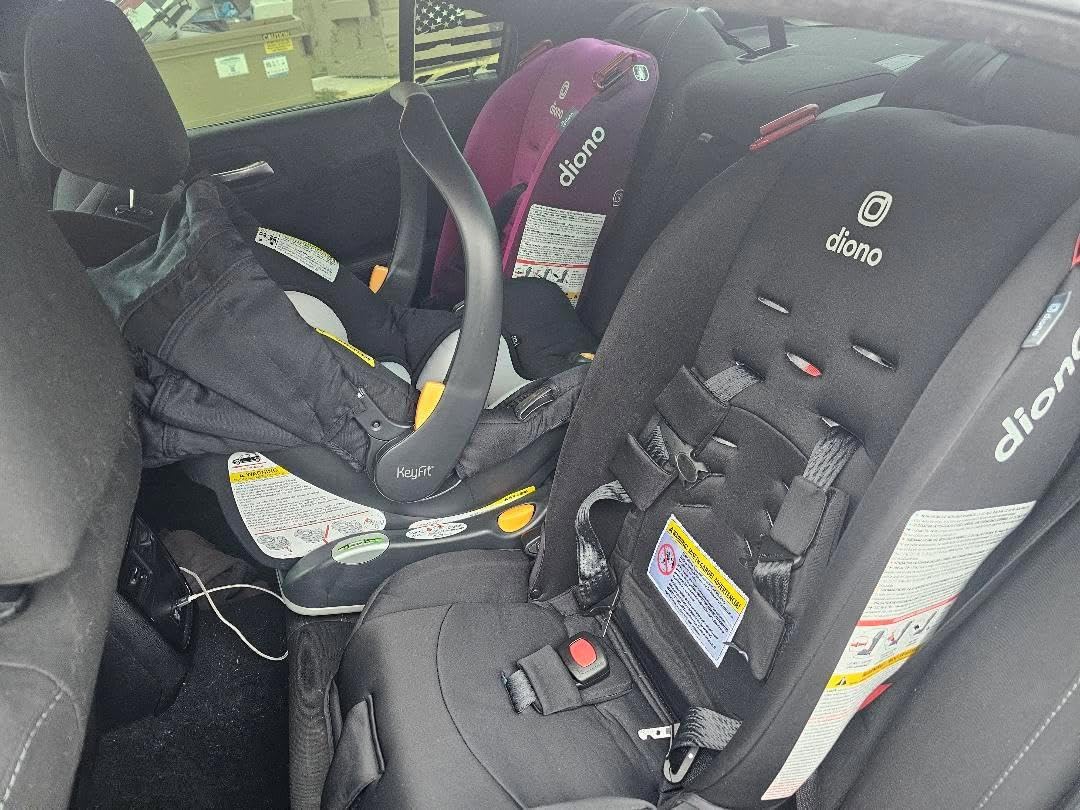
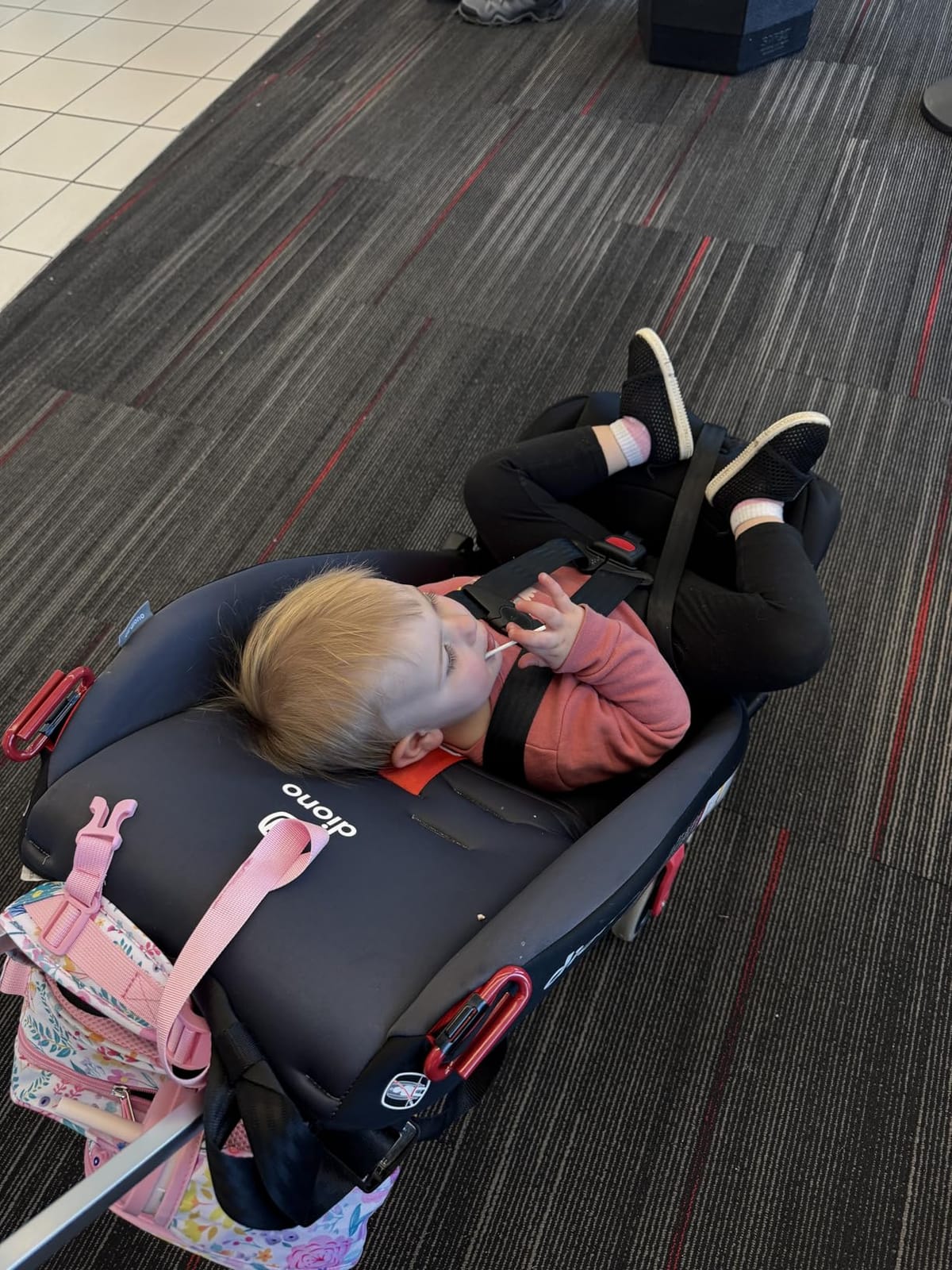
It also folds flat for travel or compact storage, which matters if you are a family that does not want a second seat permanently living in a hallway. Our guide to the best convertible car seats covers the steel-frame trade-off in more depth if you are still weighing the weight.
The honest drawback is weight. This is a heavy steel-framed seat and it is not a grab-and-go option, which is precisely the complaint that shows up repeatedly in reviews. The second issue is complexity: four modes with multiple rules is where misuse happens, and former CPSTs reviewing it recommend a certified technician check on any installation.
Who this seat works for
Parents who need a real in-cabin restraint for a baby or toddler, and who drive enough to justify a steel frame. It also fits three across, which is rare among convertibles and useful if you are booking a rental minivan at the other end.
Who should skip it
Fly-rare families and anyone without a car at the destination. You are carrying a very heavy object for a restraint you can more cheaply rent or gate check, and the steep rear-facing recline pushes the front seat forward awkwardly.
3. Graco SlimFit 3-in-1 – A Lightweight Convertible That Handles Rental Cars Well
Graco Slimfit 3-in-1 Convertible Car Seat, Jarret
5-40 lbs rear-facing
26.5-65 lbs forward
40-100 lbs booster
10% slimmer
Pros
- Light enough to carry through an airport
- Tight anchor install
- No-rethread harness
- Machine-washable covers
Cons
- Recline is hard to set for newborns
- Side openings let cold air through
- Thick padding runs warm
- Not the plushest seat
The SlimFit carries a 4.8 average across more than 2,100 reviews, and travel-focused owners specifically call out the combination of low weight and a secure anchor install. Owners report the anchors hold the seat tight with virtually no sliding in rear-facing mode, which is the failure mode that usually makes an aircraft install wobble.
The engineering story is the 10 percent slimmer profile, achieved with dual integrated cup holders that rotate away, plus a No-Rethread Simply Safe harness where headrest and harness move together in one motion across 10 headrest positions. For a family juggling a taxi, a rental car and a flight in the same week, that is a lot of adjustment you do not have to think about.
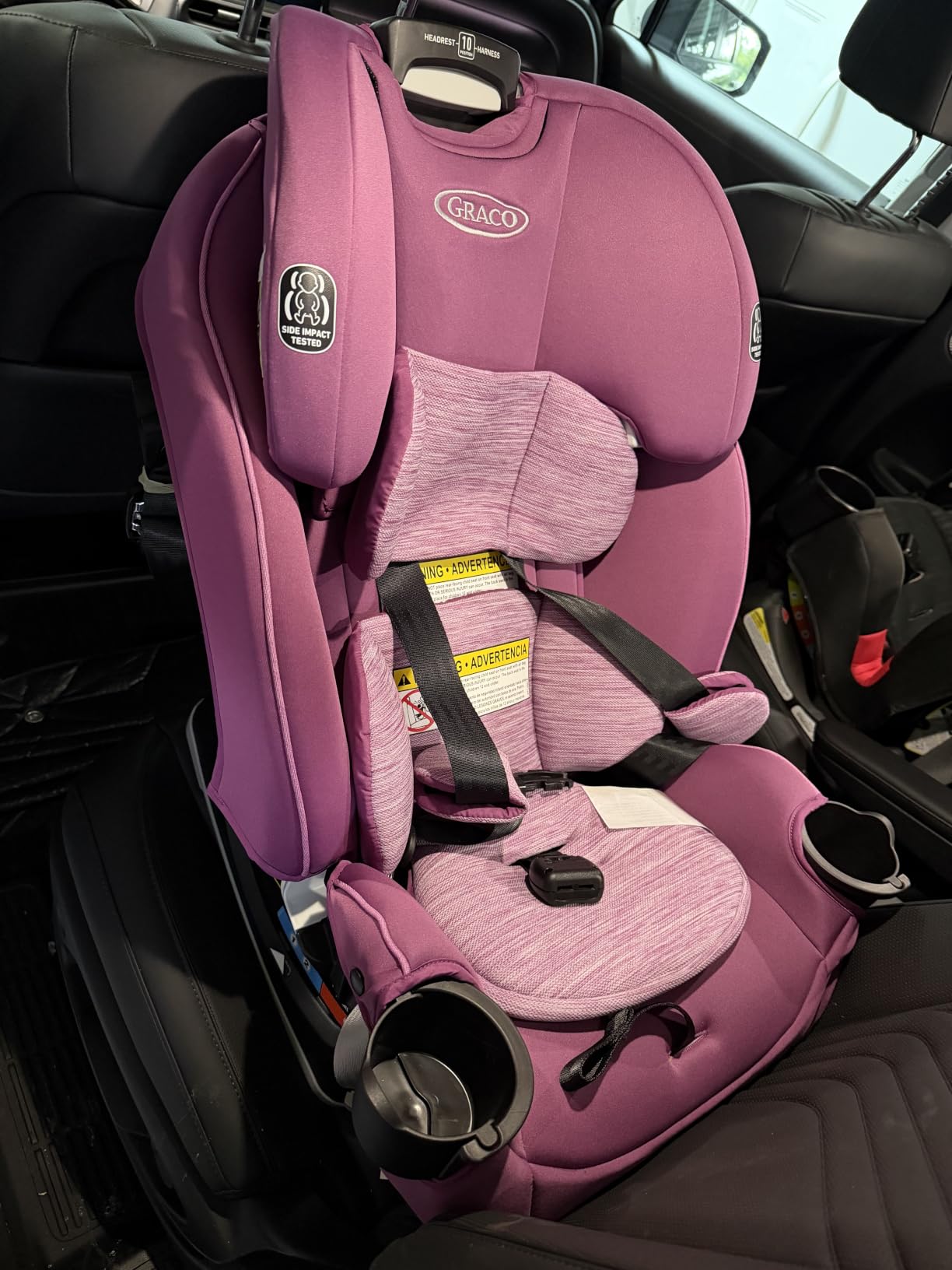
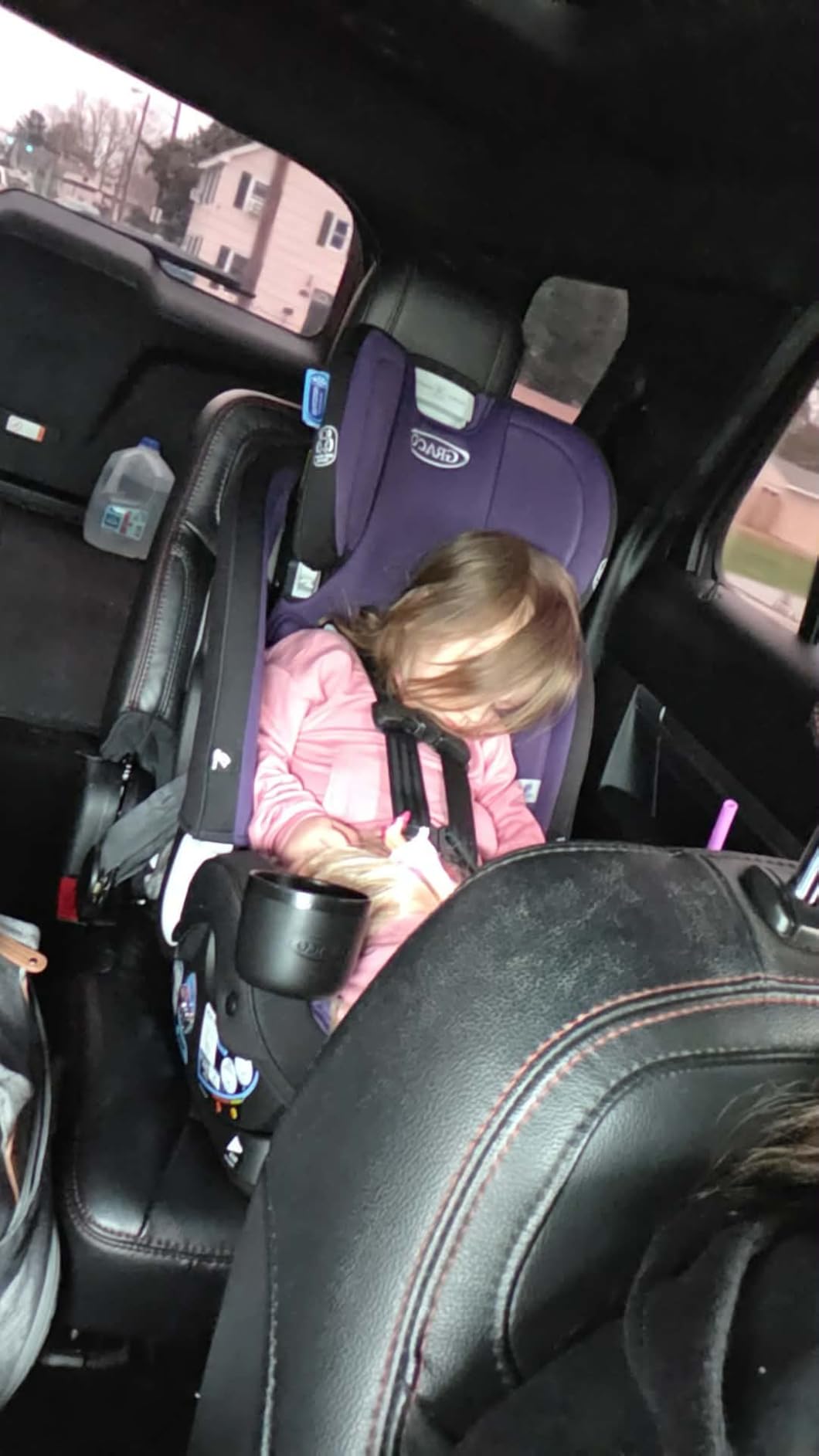
Its width also solves the three-across problem that keeps families from taking taxis. Reviewers mention fitting it in a narrow truck, an SUV, or even a compact sports car rear bench, which is a different order of difficulty from fitting it into a 17-inch aircraft row.
Now the limits. Several users find the recline hard to achieve for newborns without help, and the side openings let air conditioning blow directly onto the child’s legs, with thick padding that can run warm. It is a practical seat more than a plush one, and that trade is the right call for a product you move every week.
Who this seat works for
Families moving between several vehicles, car-free households relying on taxis and ride-share, and anyone who wants one slim seat that does not eat a row. Our convertible seat guide goes deeper on slim profiles if you are comparing widths.
Who should skip it
Anyone needing the lightest possible seat for a long airport walk, and parents of newborns who will need a CPST to set the recline correctly. The 5 to 40 lb rear-facing range is also narrower than the Diono above.
4. RideSafer Gen 5 – The 2.9 Pound Vest for Cab-Free Families
RideSafer Gen 5 – Extra Large Black, Lightweight, Compact, Portable Car Seat – Perfect for Travel and Everyday Child Safety
2.9 lbs
17 x 11 x 4 inches
80-110 lbs XL
FMVSS 213
Pros
- Weighs 2.9 lbs and folds small
- Secures in under a minute
- Legal in all US states
- Works in taxis and ride-share
Cons
- Not FAA approved for the aircraft seat
- Fiddly under-child crotch strap
- Inconsistent sizing between runs
- Not for children under about 2
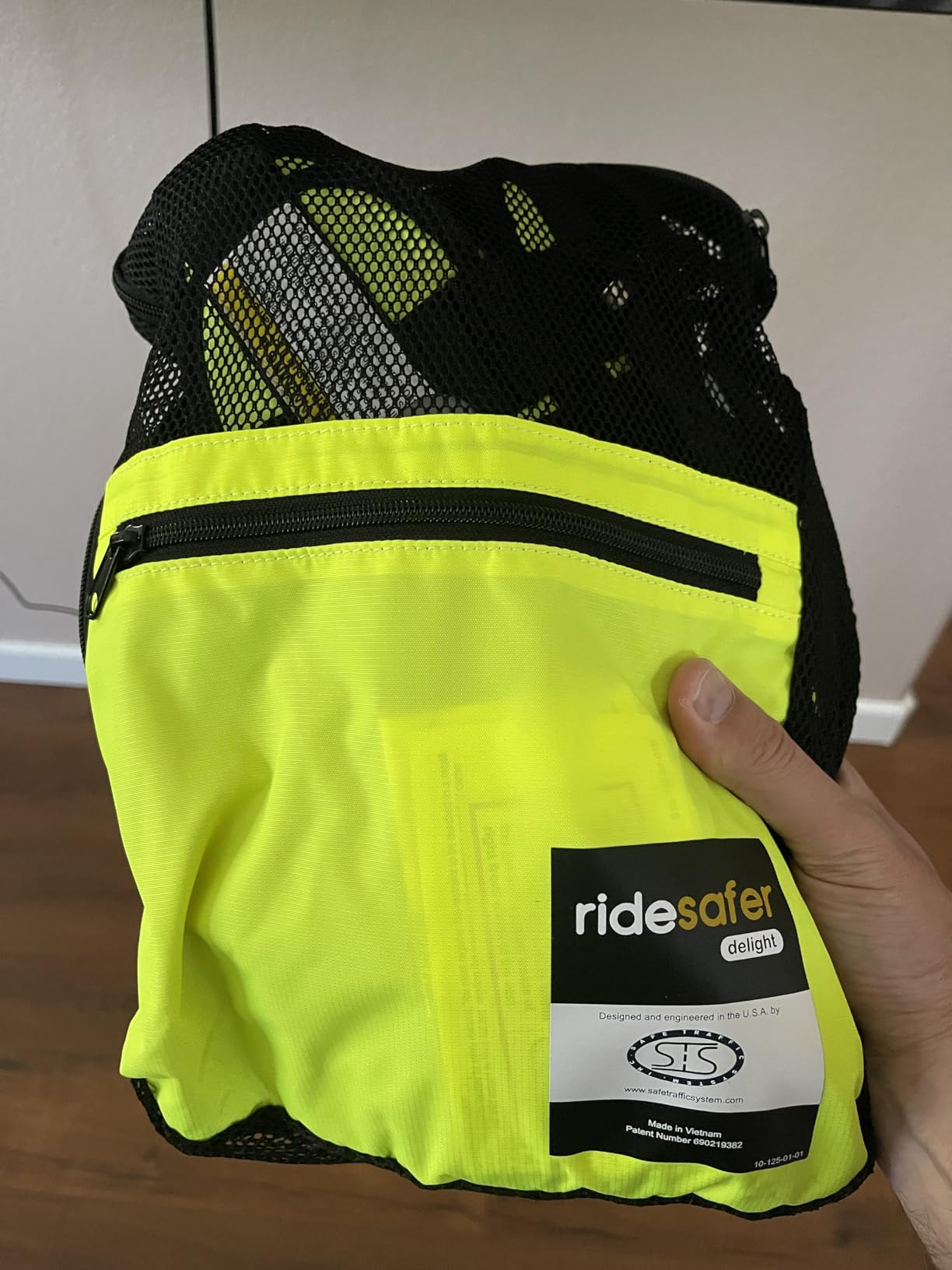
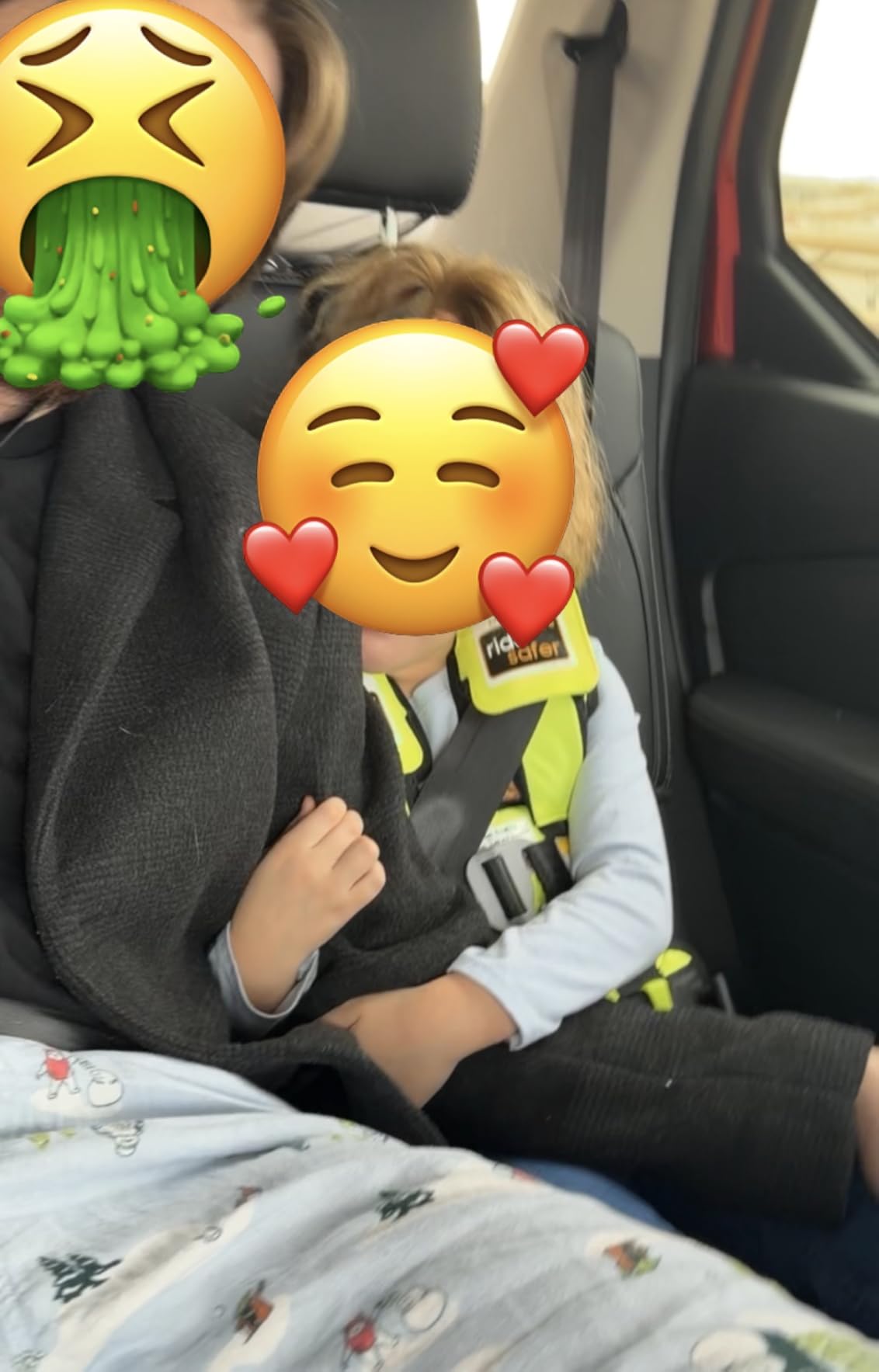
At 2.9 pounds and 17 by 11 by 4 inches, the RideSafer Gen 5 is the smallest thing in this roundup by a wide margin, and it fits in a backpack. It is a vest-type restraint that optimizes adult seat belt fit for a child’s body rather than containing the child in a shell, and it is used on the ground with a vehicle lap belt plus top tether or with a lap and shoulder belt only.
Travel is the dominant use case in the reviews, and the reason is obvious once you have carried a 25-pound shell through a terminal. Owners say it eliminates checking a car seat, renting an unknown rental seat, and reinstalling at every stop, and that it doubles as a legitimate backup seat in another vehicle. It is certified for use in motor vehicles and meets or exceeds applicable FMVSS 213 requirements.
There is a use case that gets missed in the buying guides: special-needs children who can escape conventional harnesses. The vest is often the thing that finally works, because the child cannot wriggle out of it, and the extra-large sizing is recommended from age 3 upward and 80 to 110 lbs.
The one hard limitation is aircraft. The vest is not FAA approved for use in an airline seat, so it cannot be the in-flight restraint, and the under-child crotch strap is fiddly to secure and remove, especially when the vest is left tethered in a car. The lap belt positioner also does not always sit flat across a small child’s lap.
Who this works for
Families without a car who use taxis, ride-share and shuttles daily, and caregivers who need one restraint that fits in a bag. For ground logistics it is the most complete solution here.
Who should skip it
Anyone flying with an infant or toddler who wants the child strapped in for the flight itself. Also skip it if you cannot tolerate a fiddly crotch strap in a parking lot at 6 a.m.
5. Hiccapop UberBoost – An Inflatable Booster That Lives in Your Carry-On
UberBoost Inflatable Booster Seat for Car, Travel Booster Seat, Black/Gray
Inflates in under 20 seconds
Packs to its own bag
FMVSS 213
Three across
Pros
- Inflates in seconds and packs flat
- Meets FMVSS 213
- Belt clips keep lap belt low
- Non-skid base protects upholstery
Cons
- No rigid shell for side impact
- Must inflate and deflate each use
- No head or back support
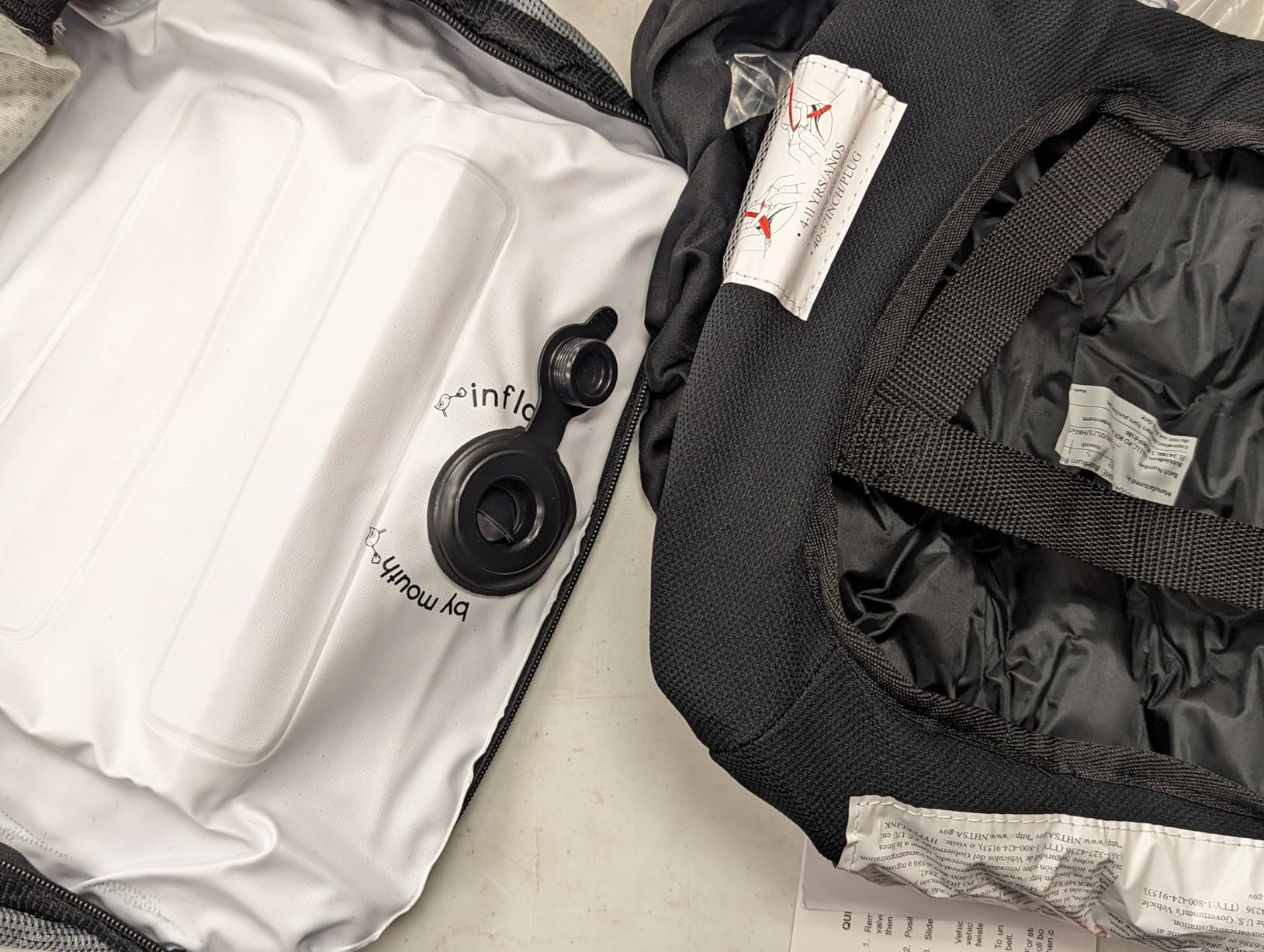
The UberBoost solves a specific problem better than anything else here: getting a booster onto a plane at all. It inflates in under 20 seconds with a few breaths, then deflates and rolls into its own travel bag that fits a suitcase, carry-on, purse or backpack. That means it travels in the cabin instead of going to the hold.
It is also a certified restraint rather than a cushion, meeting or exceeding FMVSS 213, and reviewers consistently frame it as the practical answer for taxis, ride-share, rental cars, school trips and carpools. The non-skid base stays steady on leather, vinyl or cloth and is gentle on upholstery, and the belt positioning clips keep the lap belt off the child’s stomach.
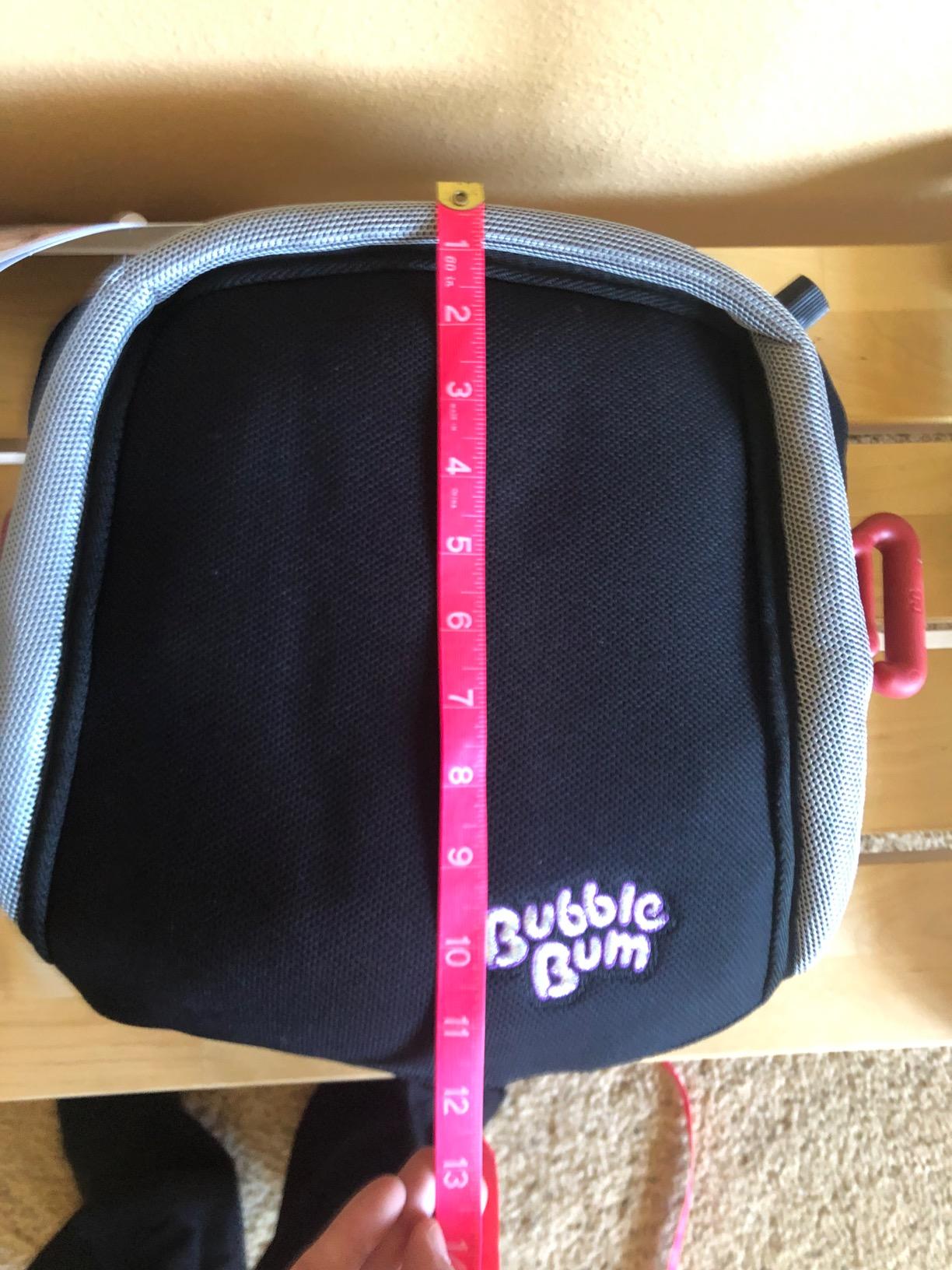
The narrow profile is a real bonus: three UberBoost seats fit across a back seat, or one fits between two traditional car seats. For a family of five with a third row, that is a meaningful packaging win, and with 7,614 reviews the owner feedback base is large enough to trust the pattern.
What you give up is structure. The inflatable cushion has no rigid shell, so it offers less side-impact protection than a hard-shell booster, and the backless design gives no head or back support. Every use means inflating it, and every storage means deflating it, which is a step you will be doing in an airport more often than you would like.

Who this works for
Families who want a booster in the cabin rather than in the hold, and anyone carpooling or taking taxis with a 40 to 100 lb child. It also travels well in hand luggage on international trips.
Who should skip it
Anyone who wants side-impact structure or head support, or who wants a seat ready to use the moment they open the trunk. Our booster roundup compares rigid alternatives if that matters.
6. BubbleBum Inflatable Booster – The Smallest Packaged Option at 12 by 6 by 4 Inches
BubbleBum Inflatable Travel Booster Car Seat – Narrow Backless
40-110 lbs
Ages 4-11
12 x 6 x 4 in deflated
Inflates in about 20 seconds
Pros
- Packs into a purse or backpack
- Independently crash tested past FMVSS 213
- Three across in compact cars
- Wipe-clean surface
Cons
- Lowest average rating in this set
- No rigid shell or head support
- Inflate and deflate every use
- State booster laws vary
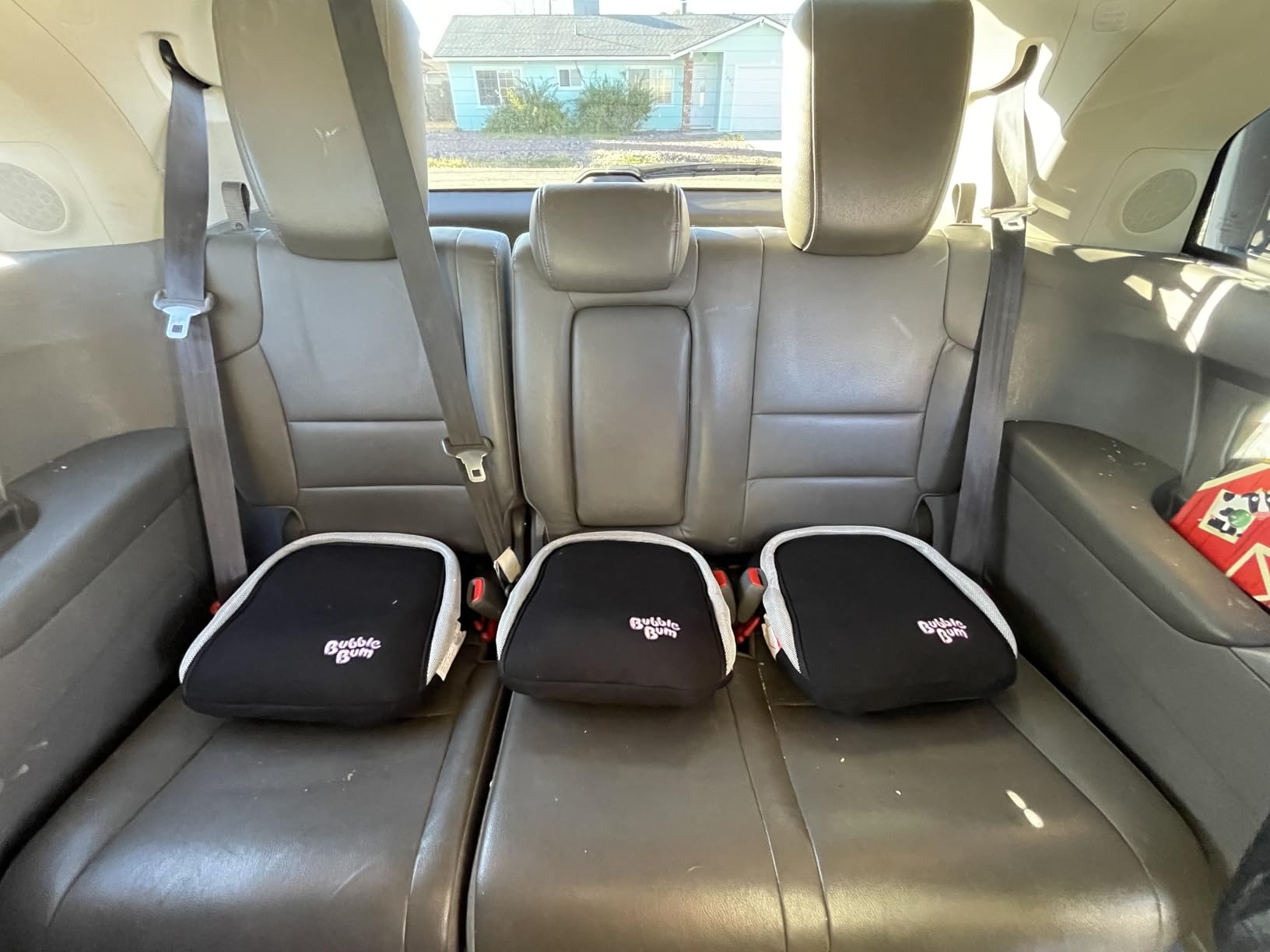
The BubbleBum is the one to look at if your definition of portable means a handbag. Deflated it measures 12 by 6 by 4 inches, it secures with the vehicle 3-point belt with no LATCH or special hardware, and it inflates in about 20 seconds with no pump. It fits children 40 to 110 lbs, ages 4 to 11.
It is independently crash tested to exceed FMVSS 213, which puts it in the same regulatory category as the rigid boosters in this list. The soft cushion and wipe-clean surface make it sensible for long road trips after a flight, and the slim profile fits three across in compact cars, SUVs and minivans. There is also a lifetime support commitment behind it.
We are ranking this lower on evidence, not on design. It has 6,866 reviews but the lowest average in the set at 4.3, with 67 percent five-star, and the lower score reflects satisfaction with inflatable backless design and mixed experiences with belt positioning. Parents on family travel forums repeatedly recommend checking booster seat laws for the states you drive through.
Reviewers still praise the packability and the fact that it keeps a booster on hand for every taxi and ride-share, which removes the rental counter entirely. If your child is over 100 lbs or you want side-impact structure, this is not the seat.
Who this works for
Travelers who carry almost nothing, families without a car, and anyone who wants a certified booster that fits in a purse. The wipe-clean surface suits messy road-trip itineraries.
Who should skip it
Buyers who want the strongest safety data, a rigid shell, or head support. At 40 lbs minimum it is not a toddler seat, and its review profile is the thinnest of the twelve here.
7. mifold Comfort – A Backless Booster That Fits a Glove Box
New Mifold Comfort Grab-and-go Car Backless Booster Seat-Compact and Portable for Every Day, Carpooling, Travel, Charcoal Grey
Ages 4+
40-100 lbs
43.5-59 inches
Backless
Pros
- Fits a glove box or regular backpack
- Belt guide adjusts belt down
- Anti-slip pads
- No installation needed
Cons
- Lowest average rating here at 4.2
- Backless with no head support
- Not for children who cannot sit properly
- Less side-impact protection
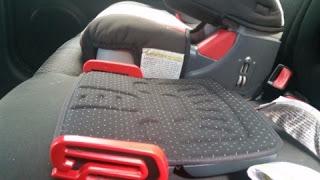
The mifold Comfort takes the portability claim further than anyone else: it fits in a glove box. That makes it the seat you leave in the car permanently, so a sudden taxi ride, a friend’s car or a ride-share at short notice is covered without you planning ahead.
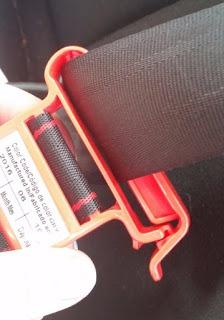
It works with any standard 3-point seat belt and requires no installation. The secure fit system adjusts the adult belt down to fit the child properly instead of lifting the child up on a cushion, and the updated shell has anti-slip pads that keep it from moving on the vehicle seat. An extra padded Compact Comfort cushion is included for longer carpools and rides.
The rated range is 4 years and up, 40 to 100 lbs, and 43.5 to 59 inches tall. Our booster seat picks cover the sizing logic if you are between ranges, since height matters as much as weight for belt fit.
We are not ranking this higher because the feedback is the weakest here: 4.2 average across 3,942 reviews, with 8 percent one-star. Dissatisfaction clusters around comfort and belt fit for smaller children and the limited protection of a purely backless shell, and the easy-to-use shoulder belt guide is the part owners single out as working properly.
Who this works for
Car-free city families, and anyone who wants a permanent in-car booster rather than one that lives in a trunk. Small children of the 4 to 8 age group who sit properly are the sweet spot.
Who should skip it
Anyone needing a harness, head support, or meaningful side-impact structure. It is also a poor match for a child who cannot yet sit properly for belt positioning.
8. mifold Hifold – The Premium Folding High-Back Booster
Mifold Hifold Adjustable Kids High Back Booster Car Seat with Strap – Slate Grey
40-100 lbs
43.5-59 inches
Folds to 10.7 x 13.5 in
10 lbs
Pros
- 243 individual fit settings
- Folds flat with a carry strap
- Only 10 lbs
- Adjusts belt in four zones
Cons
- Belt-positioning only
- no built-in harness
- Not approved in Australia and Taiwan
- EPE foam less protective than steel
The Hifold is the most adjustable portable booster we looked at, with 243 individual Multi-Fit settings across four zones: seat, body, head width and height. In practice that means it can stay with a child across the full 40 to 100 lb and 43.5 to 59 inch range instead of being outgrown early, which is where most backless boosters fall short.
It folds through a Multi-Fold system down to 10.7 by 13.5 inches, weighs 10 pounds, and includes a built-in carry strap. It is approved for use in most regions worldwide except Australia and Taiwan, and it meets or exceeds NHTSA FMVSS 213b, which matters if you plan to install it in a rental car abroad.
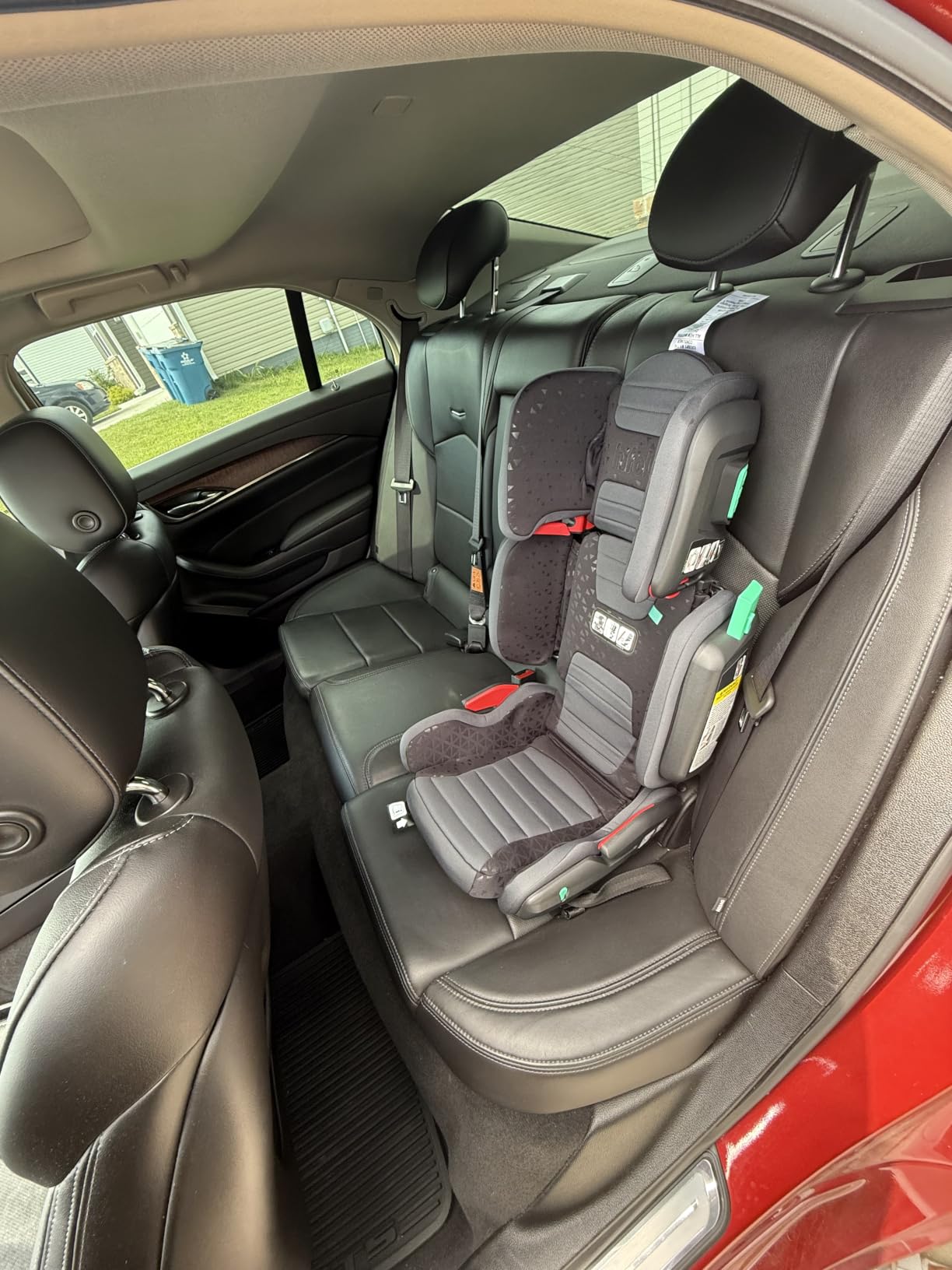
Lightweight EPE foam provides the impact resistance, and the height-adjustable design routes the vehicle belt correctly rather than boosting the child upward on a cushion. Reviewers with 2,011 ratings and a 4.3 average focus almost entirely on those two strengths: fit range and foldability.
Criticism is consistent. This is a belt-positioning booster with no built-in harness, so the child must be ready for a vehicle seat belt, the foam-only structure is less protective than a steel-reinforced shell, and it sits at the top of the price range for a portable booster. If you fly often and want head support, the trade can be worth it.
Who this works for
A 6 to 10 year old who needs head support but no harness, frequent flyers, and international travelers who want one booster approved in most countries. Parents shuttling between vehicles will like the 10-pound weight.
Who should skip it
Anyone still in a five-point harness, anyone outside the 40 to 100 lb window, and travelers heading to Australia or Taiwan. Value-focused buyers should compare the fold-flat options further down.
9. Graco Tranzitions – The Cleanest Harness-to-Booster Switch
Graco Tranzitions 3-in-1 Harness Booster Car Seat, Proof
26.5-65 lbs harness
40-100 lbs booster
9-position headrest
Forward-facing
Pros
- Headrest and harness adjust in one motion
- One-hand 9-position headrest
- Lightweight and portable
- 4.7 rating with 86% five-star
Cons
- Booster minimum raised from 30 to 40 lbs
- No rear-facing mode
- Forward-facing only
The Tranzitions is a forward-facing harness booster that converts through high-back to backless, covering 26.5 to 65 lbs in harness mode and 40 to 100 lbs as a booster. The No-Rethread Simply Safe system moves the headrest and harness together in one motion, and the nine-position headrest adjusts one-handed, which is the feature owners mention most.
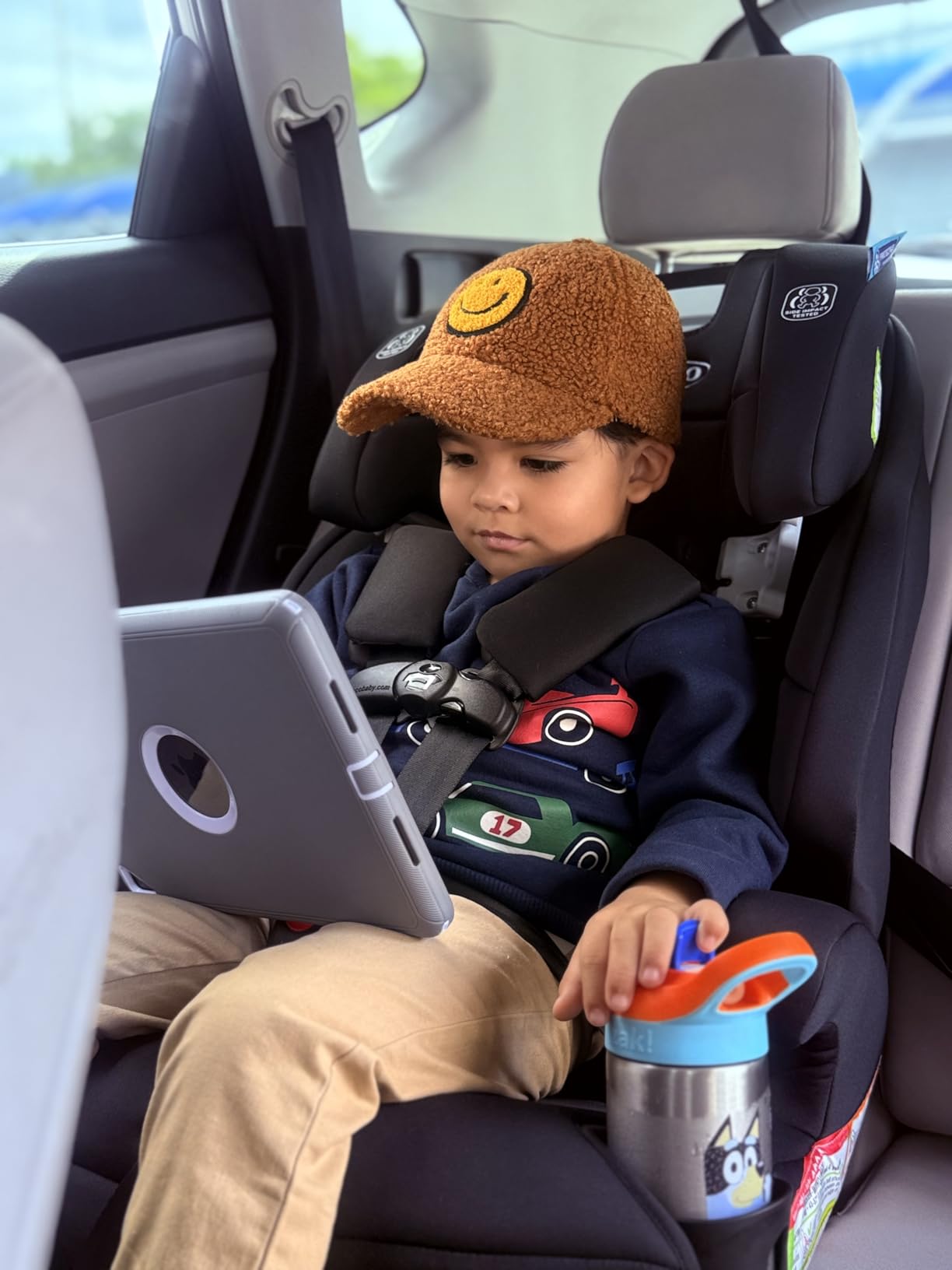
At 4.7 across 1,162 reviews with 86 percent five-star, the owner pattern is consistent: people like the light portable build for moving between vehicles and the clean transition between modes. If you carpool, share a car with a grandparent, or fly and then drive a rental, one seat that reconfigures beats juggling two.
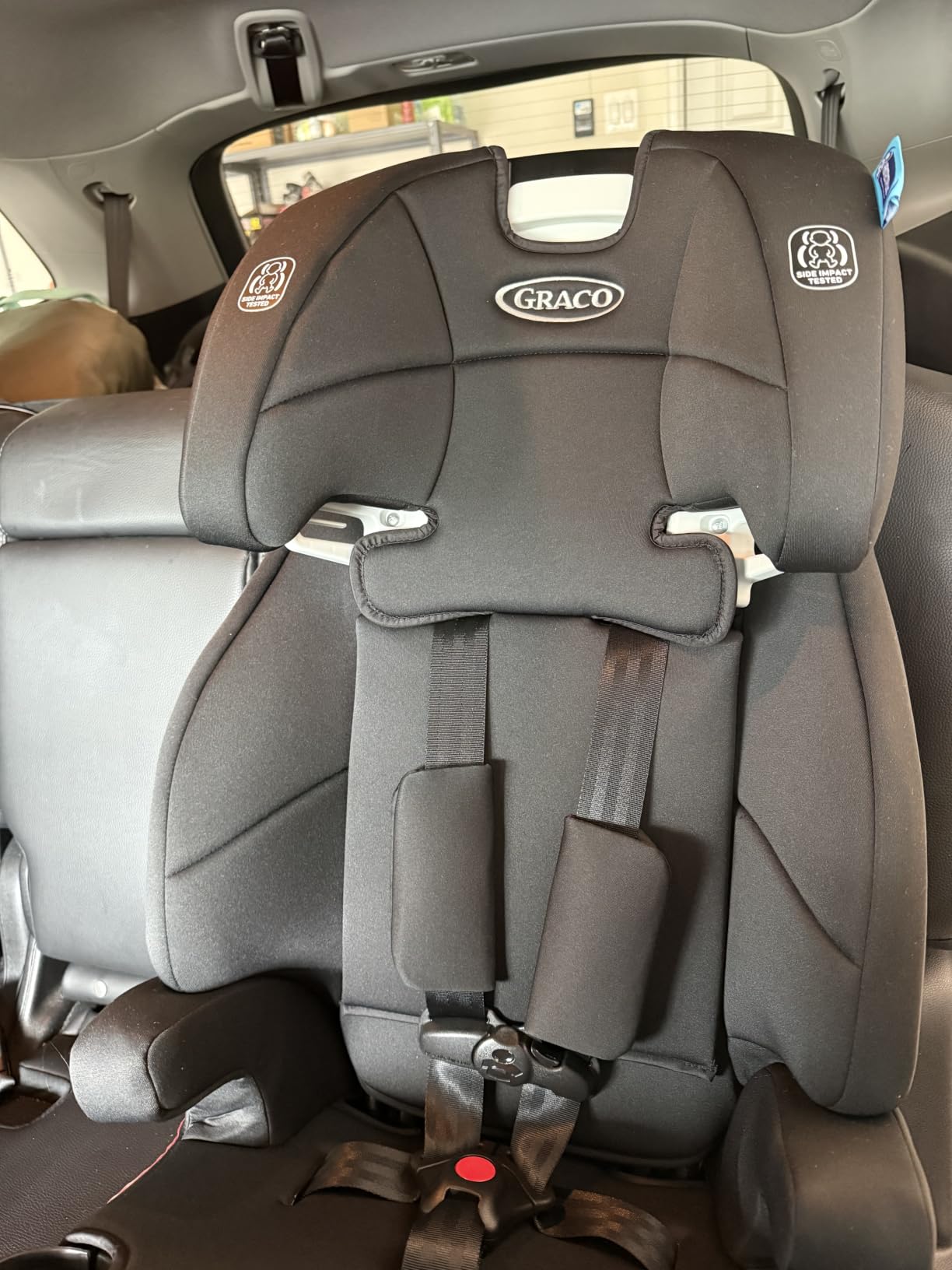
Two constraints are worth knowing before you buy. The industry booster minimum was raised from 30 to 40 lbs, so some children leave the harness stage sooner than older versions of this seat allowed, and it is not a convertible, so there is no rear-facing mode at all.
That makes it a forward-facing-only choice for a child past the rear-facing stage. If you are still rear-facing, skip this and go to the SlimFit or the Diono instead. Our infant seat guide covers the earlier stage.
Who this works for
A preschooler or early school-age child around 30 to 45 lbs who still needs a harness in the car but will grow into booster mode, in multi-vehicle families.
Who should skip it
Babies and toddlers still rear-facing, and anyone with a child under 40 lbs who will need booster positioning soon. A single 1,162-review history is thinner than most seats here, so treat it as a well-liked option rather than a proven one.
10. Safety 1st Ellaris 3-in-1 – Rear-Facing Capability for a Baby
Safety 1st Ellaris 3-in-1 Convertible Car Seat, Slim Fit Design, Rear & Forward-Facing, 5-Position Headrest, Travel-Friendly with Machine-Washable Seat Pad, Smokey Haze
5-30 lbs infant
30-40 lbs toddler
30-65 lbs forward
Hook-style LATCH
Pros
- Rear-facing from 5 lbs
- Headrest adjusts without rethreading
- Machine-washable and dryer-safe pad
- Compact airplane-ready design
Cons
- Wider and deeper than slim seats
- Headrest is noticeably wigglier
- Less plush padding
- Strap tension button hard to reach
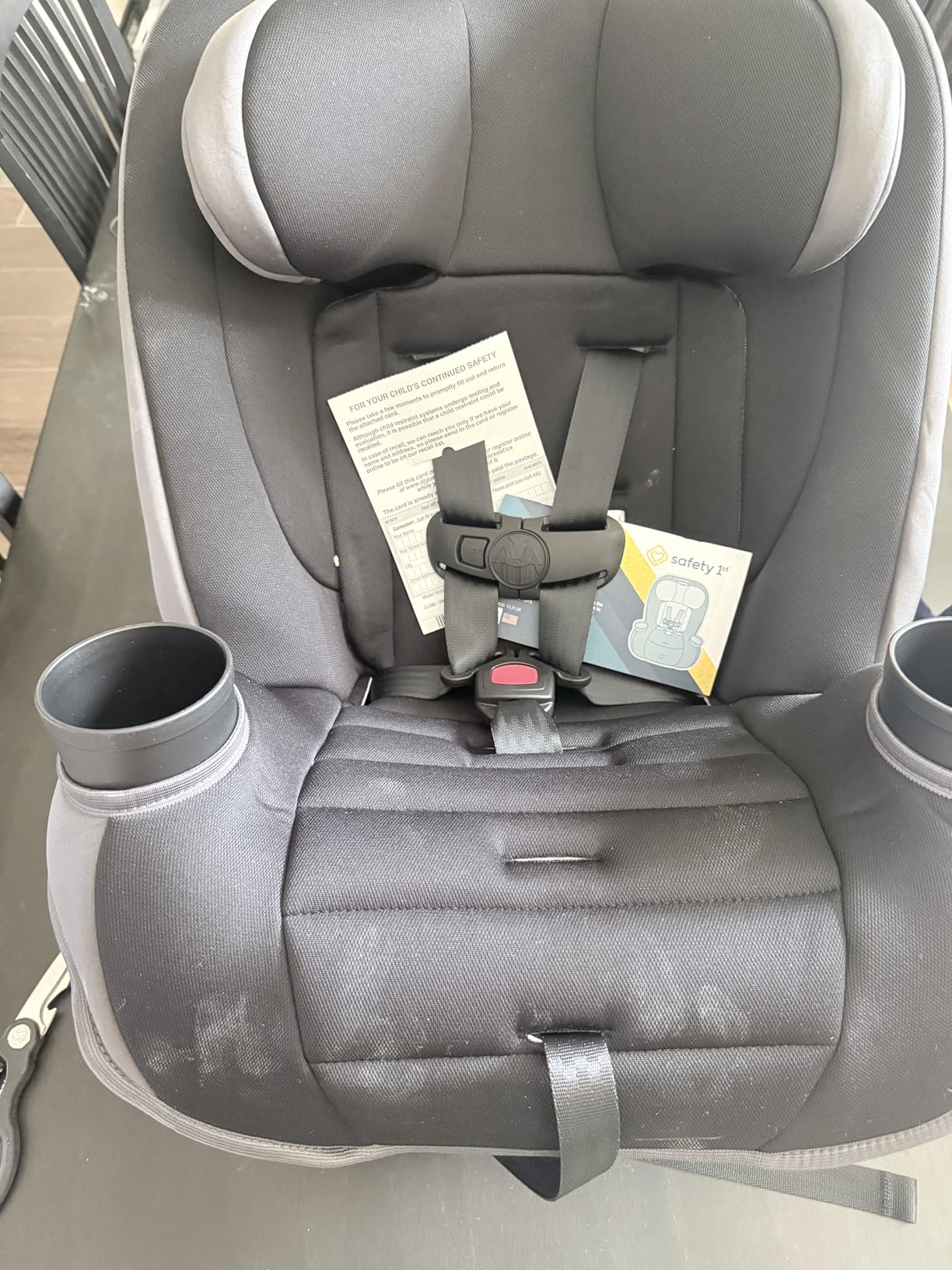
Among the seats here, the Ellaris is one of only two that can carry a newborn rear-facing, with a 5 to 30 lb infant mode, a 30 to 40 lb toddler mode, and forward-facing to 65 lbs. The five-position headrest adjusts without rethreading straps, so fitting the child is quick, and hook-style LATCH makes installation in a rental car straightforward.
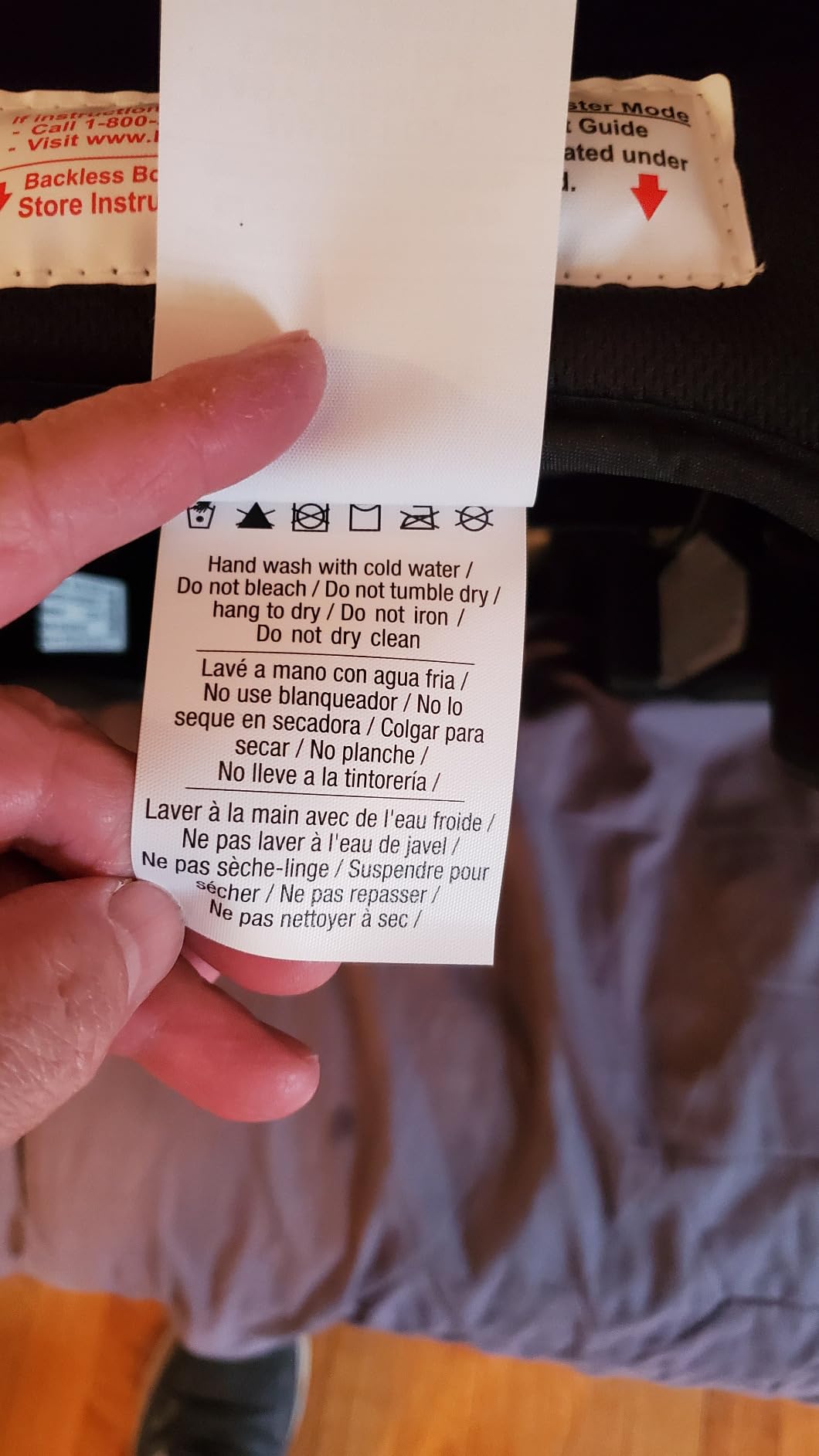
The listing describes it as a compact, airplane-ready design intended for travel from the airport to the flight, and it is engineered and tested to meet or exceed federal safety standards including the federal side impact standard. The machine-washable, dryer-safe pad and two removable dishwasher-safe cup holders are the details parents with a baby actually use.
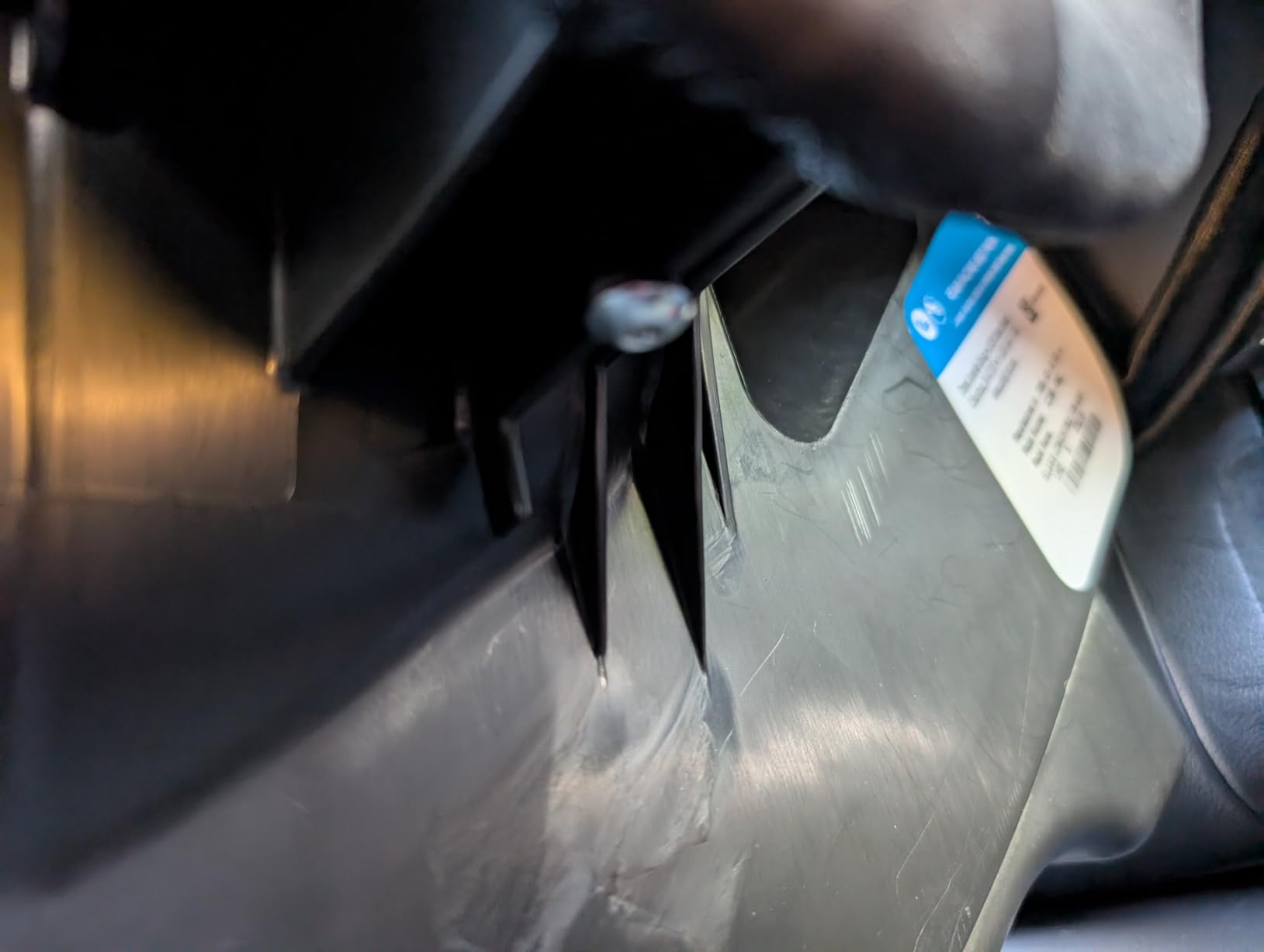
Verify the FAA label yourself before planning to use it as an in-flight restraint. The spec sheet here does not carry the approval statement, and that distinction is exactly where expensive mistakes happen, so check the side of the shell where the padding meets the plastic.
The honest weakness is size. It is wider and deeper than slim seats, so it may not fit three across in some vehicles, and the headrest is noticeably wigglier than comparable Graco adjustable headrests. Reviewers with 1,564 ratings at 4.3 also note the cushioning is not as plush as premium seats and the strap tension button is hard to reach at first.
Who this works for
A baby under about 20 lbs who must travel rear-facing, and parents who want one seat that covers rear-facing infant, rear-facing toddler and forward-facing without buying three shells.
Who should skip it
Families needing three seats across a narrow back row, and parents expecting a plush nap seat for a long-haul flight. Its 19-inch installed footprint is worth measuring against your aircraft row before buying.
11. Baby Trend Protect 2-in-1 – The Booster That Folds Like a Sandwich
Baby Trend Protect 2-in-1 Folding Belt-Positioning Booster Seat, Midnight Black
High back to backless
Folds flat
Lap belt install
Built-in cup holder
Pros
- Folds flat for travel and storage
- Extremely lightweight
- Converts high back to backless
- Built-in cup holder and armrests
Cons
- No LATCH anchors included
- Folded size still bulky for some bags
- Short armrest
- No head support in backless mode
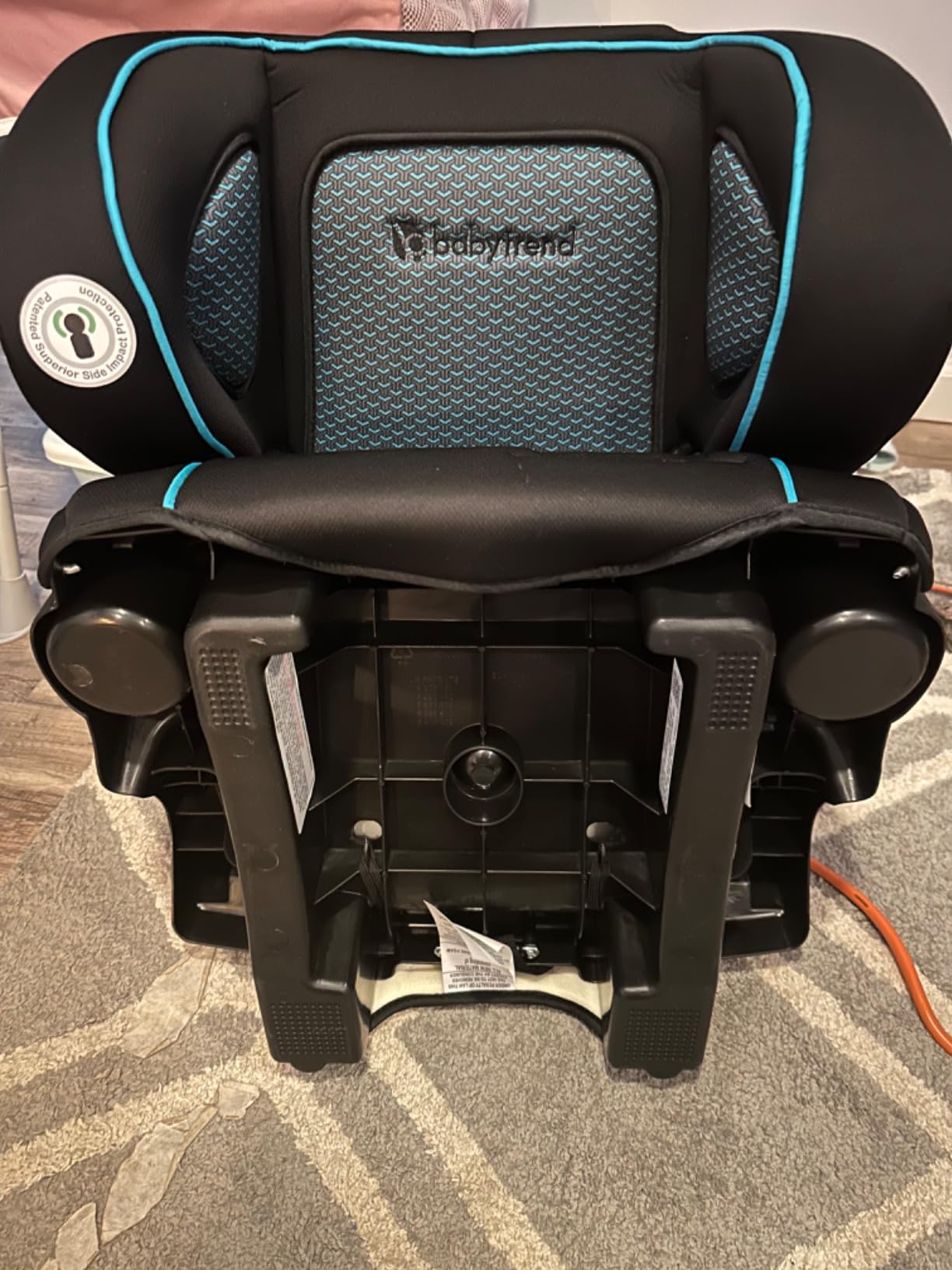
The Baby Trend Protect is a simple answer to a simple question: how do you get a booster into a carry-on. It folds flat for storage and transport, converts from a high back to a backless belt-positioning booster, and is light enough that owners describe carrying it like a small grocery bag.
Installation uses the vehicle lap belt with no LATCH anchors included, and the built-in cup holder plus adjustable armrests are the features kids actually notice on a long drive. The 4.5 average comes from 572 reviews with 77 percent five-star, a smaller review base than most seats in this roundup, so treat the pattern as encouraging rather than conclusive.
It is built for children who have outgrown a harnessed car seat and are ready for a vehicle seat belt, with a cushioned seat for longer trips and 100 percent polyester construction that wipes down easily. Parents without a car value the grab-and-go design for grandparent pickups and school runs.
The folded package is still a bit bulky for some carry-on bags, the armrest is short enough that a child can barely rest an elbow on it, and backless mode means no head support. It also carries no anchors, so installation depends entirely on the vehicle lap belt routing correctly.
Who this works for
Families who move between vehicles constantly and want a booster that lives in a bag, plus caregivers handling school pickups without a car. Big kids who are done with a harness are the match.
Who should skip it
Anyone who wants anchors, head support, or a review history deep enough to rely on. It is also a poor choice for a long-haul flight, since backless mode leaves nothing around the child’s head.
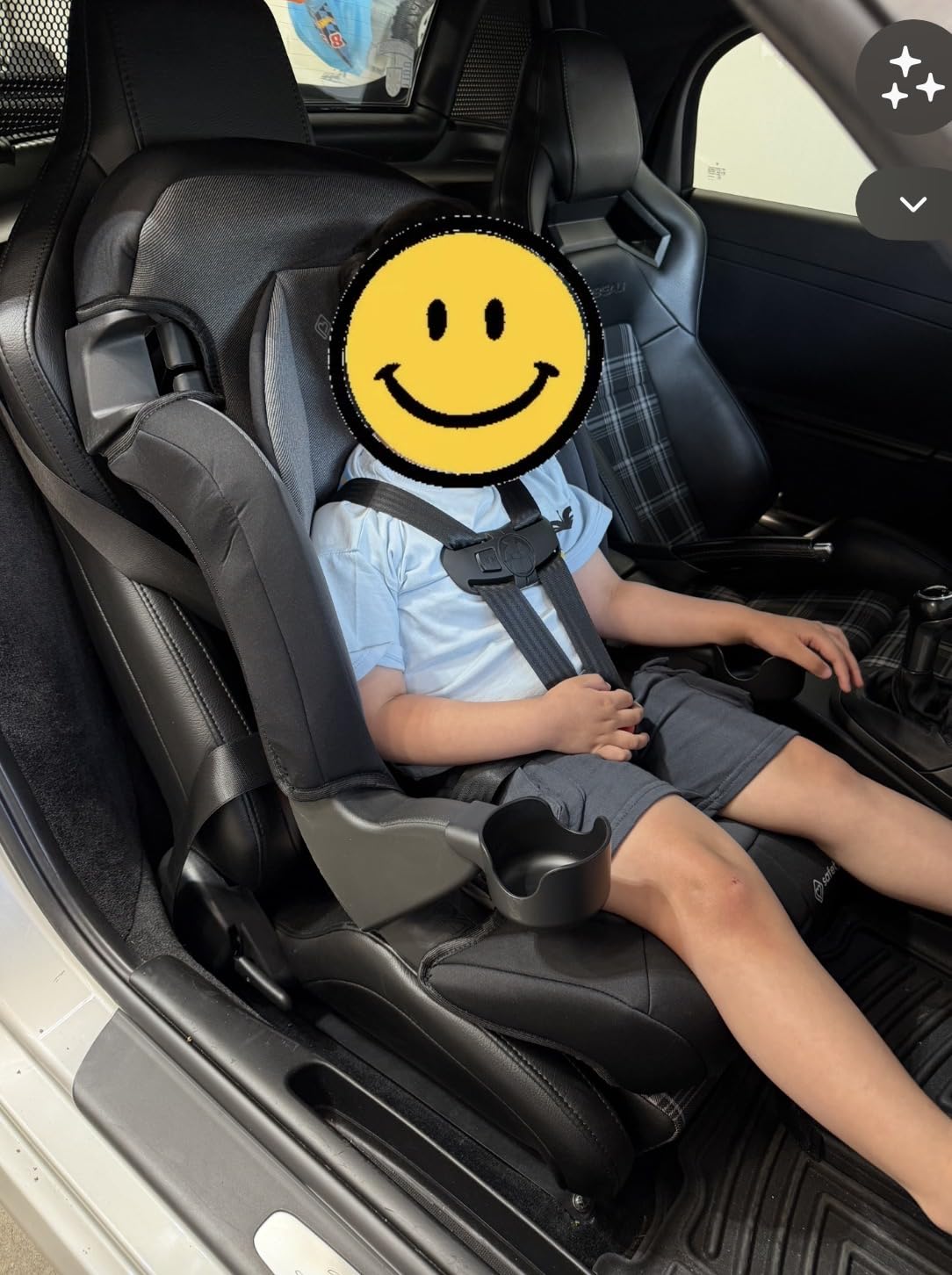
12. Safety 1st Grand 2-in-1 – A Slim Harness Booster That Fits Three Across
Safety 1st Grand 2-in-1 Booster Car Seat, Converts from High Back to Belt-Positioning Booster, High Back Seat for Kids 40-65, and Belt-Positioning 40-100 Pounds, Old Soul
40-65 lbs harness
40-100 lbs booster
43.4-52 inches
Slim profile
Pros
- Harness converts to high-back booster
- Fits three across in most vehicles
- Lightweight and portable
- 82% five-star from 1466 reviews
Cons
- Harness mode tops out at 65 lbs
- 40 lb minimum excludes small toddlers
- Slimmer shell gives less side-impact room
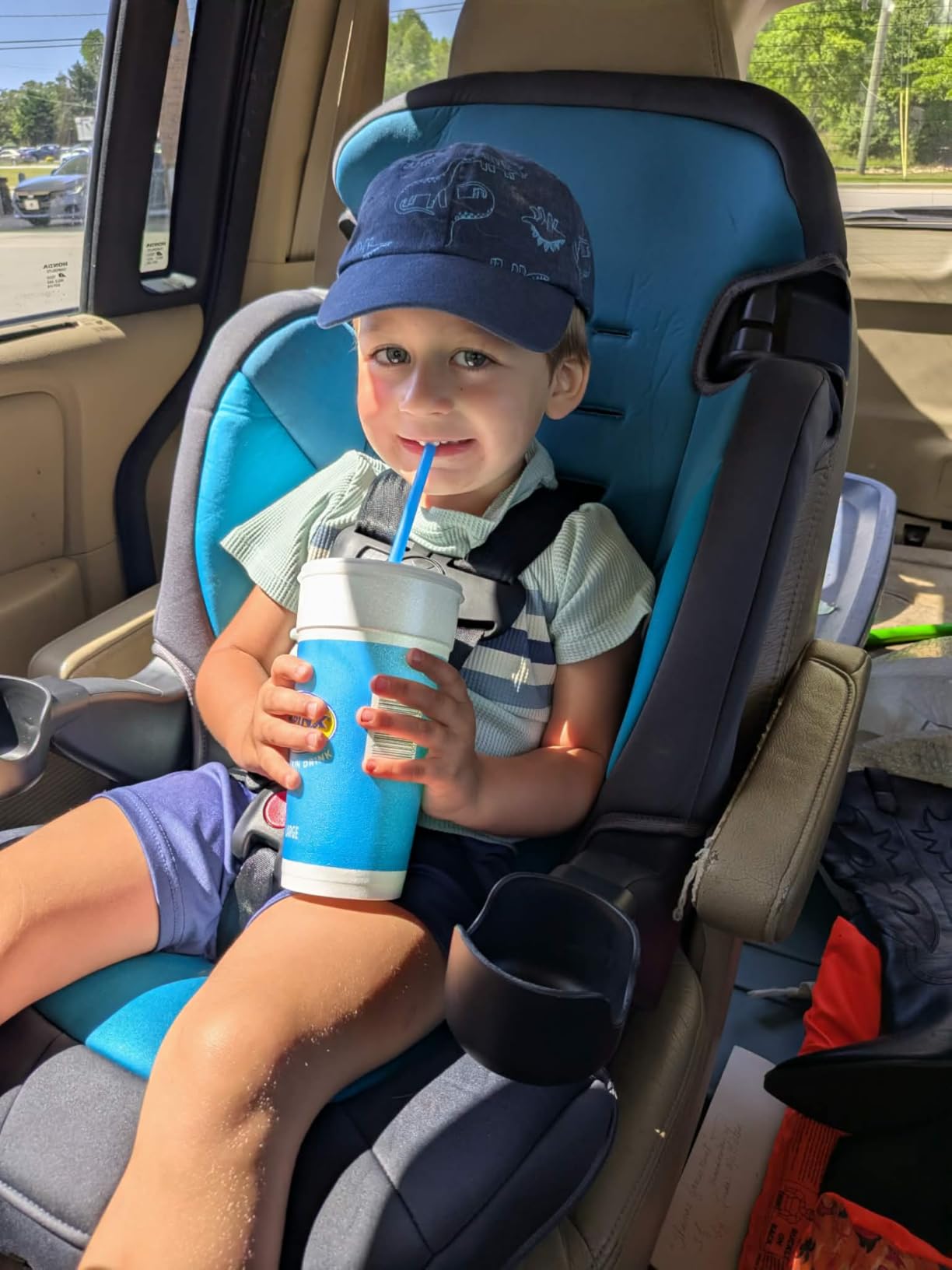
The Grand 2-in-1 is a 5-point harness booster for 40 to 65 lbs and 43.4 to 49 inches that converts to a belt-positioning high back for 40 to 100 lbs and 43.4 to 52 inches. The reason it made this list is its slim design, which fits three across in the back seat of most vehicles, a rarity among anything that still has a harness.
Reviewers with 1,466 ratings and a 4.6 average, 82 percent of them five-star, point to the same strengths: the one-seat conversion, the three-across packaging for large families and carpools, and being light enough to move between cars for travel. The adjustable headrest supports the child as they grow, and the machine-washable pad with dishwasher-safe cup holders simplifies cleanup.
Two limits shape who it suits. Harness mode stops at 65 lbs, shorter than several competitors here, so the harness stage ends sooner. And the 40 lb minimum means it is not usable for toddlers under that weight, so it is a fit for a preschooler rather than a baby.
Treat it as the middle of the roundup. It is not an in-cabin restraint, it will not handle a newborn, and it does not fold down to nothing, but for a family with three children crossing the back row of a minivan or a rental car, the packaging is genuinely hard to beat.
Who this works for
Large families and carpools who need three seats across, and a child around 40 to 60 lbs who still benefits from a harness in the car. Light enough to move between vehicles on a trip.
Who should skip it
Children under 40 lbs, anyone over 65 lbs who needs a harness, and buyers who want head support that grows taller than 52 inches. It also offers no way to use it as the flight restraint.
How to Choose: Matching the Seat to Your Child and Your Itinerary
Start with the stage, not the brand. A baby under 20 lbs needs rear-facing, which in this roundup means the Diono Radian 3R or the Safety 1st Ellaris. A toddler from about 26 to 65 lbs needs a five-point harness, which points to the Graco SlimFit, the Graco Tranzitions or the Safety 1st Grand. A child over 40 lbs who sits properly can move to any of the belt-positioning boosters.
Then be honest about the flight itself. Only one seat here, the Diono Radian 3R, has explicit FAA approval in its specification, so it is the only one you can plan to belt into a purchased airplane seat. Everything else on this list, including the vests and the inflatable boosters, travels with you but must be stowed for takeoff and landing.
Measure for width before you commit. Aircraft seats run from about 17 inches in a narrow economy row to roughly 18.5 inches in a wider cabin, and a seat wider than that will wobble or be moved to the hold at boarding. Slim designs such as the Graco SlimFit and the Safety 1st Grand are the safer bets, and the Diono is worth checking against your specific aircraft type.
Think about the whole trip, not the flight. If you land without a car, the ground leg changes the answer completely, and the RideSafer vest at 2.9 pounds or the inflatable boosters that pack into a handbag solve the taxi problem better than any full shell. If you will rent a car abroad, look for seats with a real belt path and either LATCH or ISOFIX, and carry a locking clip where the belt does not have a shoulder portion.
Finally, check the expiration date before you commit. Car seats have a printed manufacture date, and a seat that has already spent a year in a hot car can be past the point where the shell and foam are worth trusting. The same applies to seats bought second-hand, which is a false economy for an in-flight restraint.
Gate Check or On Board: What Actually Happens at the Gate
Gate checking is free at US carriers and does not consume your checked baggage allowance when the seat is empty, so the honest answer for most families is that a dedicated travel seat is not strictly necessary. The recurring advice across family travel forums is to reuse the seat you already own with a travel cart, and only buy a second seat if you fly several times a year.
If you do fly with a seat in the cabin, each child needs their own purchased airline seat, and boarding order usually puts traveling families on last. Install the restraint with the aircraft lap belt before the child boards, and route the belt through the European belt path with the shoulder portion behind the seat where possible, since that produces a flatter, tighter installation than the American path alone.
If the seat is too wide for the row, the gate agent will not make it fit. Ask early whether a spare seat is available, and if not, gate check the seat rather than forcing it between the armrests, because a poorly fitted restraint is worse than a properly installed one in the hold and reassembled at your destination.
Frequently Asked Questions
Are there any FAA-approved travel car seats for toddlers?
Yes, but far fewer than product pages suggest. Look for the small FAA approval label on the shell, usually where the padding meets the plastic. In this roundup, the Diono Radian 3R is the only seat with explicit FAA approval for airline use. Booster seats, backless boosters, inflatable cushions and vest restraints such as the RideSafer are not FAA approved, so they must be stowed in the cabin during the flight.
Should I put my toddler in a car seat on a plane?
If your toddler’s seat carries an FAA approval label, yes, installing it in a purchased airplane seat is the safest option in turbulence, well ahead of lap sitting. Children under 2 can legally lap infants, but the FAA and child safety technicians recommend a proper restraint. A car seat also does not count against your carry-on allowance, so there is no baggage reason to leave it behind.
Does my 2 year old need a harness to fly?
A harness is not a legal requirement for flying. What matters is that the restraint is FAA approved and your child is within its weight and height limits. A forward-facing five-point harness in a seat like the Graco SlimFit, the Graco Tranzitions or the Safety 1st Grand gives a 2 year old the most structure. If the seat is not approved, the child needs their own airline seat with the standard lap belt.
Should I bring a car seat on a plane for a 1 year old?
Yes, and this is the age where a dedicated restraint matters most, because 1 year olds are still within the legally permitted lap-infant window but are far safer belted in. The catch is that most seats sold for travel are boosters and are not FAA approved. Look for the approval label first, then match the seat to the child: rear-facing for a small baby, forward-facing harness once they have outgrown rear-facing.
What is the best lightweight baby car seat for travel?
The RideSafer Gen 5 vest weighs 2.9 pounds and folds to 17 by 11 by 4 inches, which makes it the lightest thing that travels, though it is not FAA approved for the aircraft seat. Among full shells, the Graco SlimFit 3-in-1 is described as light enough to carry through an airport, and the BubbleBum and UberBoost inflatable boosters pack flat into a handbag for ground transport.
Final Verdict
For an actual in-flight restraint in 2026, the Diono Radian 3R is the pick. It is the only seat here with explicit FAA approval, it covers birth to booster, and the steel frame and three-across fit justify the weight if you are flying with a baby under 2.
For everything else, set expectations correctly. The Graco TurboBooster 2.0 is the best-tested booster on this list and our editor’s choice for a reason, but it is a ground restraint. So are the RideSafer vest, the inflatable boosters and the fold-flat options, and choosing among them is really a question of where your child sits and how far you walk.
Check the FAA label before you buy rather than after, measure the seat against a 17-inch aircraft row, and remember that gate checking is free. If you fly once a year, a travel cart with the seat you already own is the better purchase. If you fly monthly or land somewhere without a car, any of these will handle the ground leg far better than the flight.