
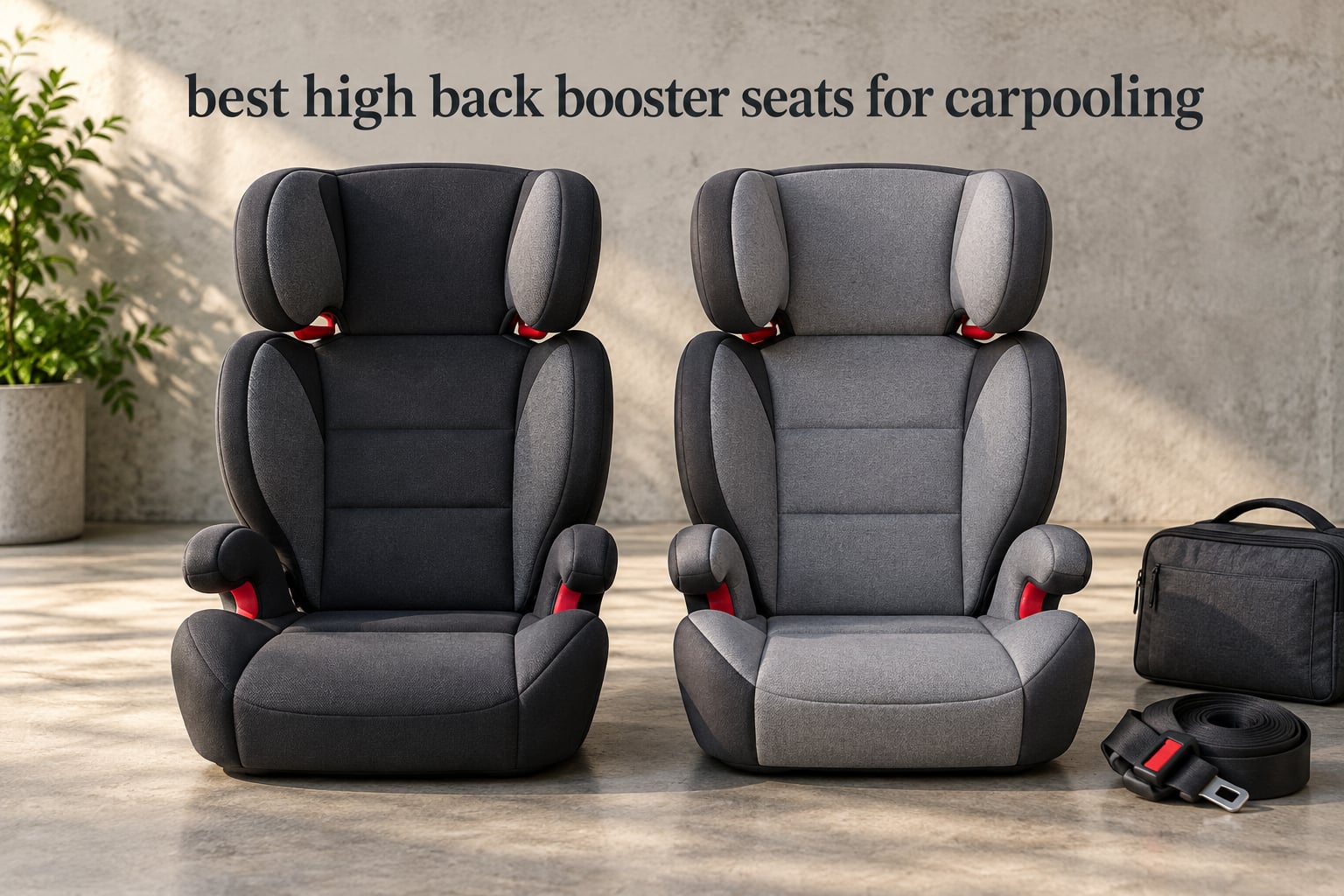
A carpooling booster seat has one job that a shopping-mall booster seat never has to think about: it gets taken out of your trunk, carried through a parking lot, installed in a car you do not own, and then taken out again three or four mornings a week. That single fact changes what matters when you compare the best high back booster seats for carpooling. Weight, the type of LATCH connector, how fast the seat detaches, and how narrow the base is matter as much as crash performance.
A high-back booster does not restrain your child by itself. The vehicle seat belt does the restraining, and the booster’s job is to raise your child and route that belt across the shoulder and down onto the strong hip bones rather than the soft abdomen. The high back adds a headrest, side wings and a shell that a backless booster cannot offer, which is why safety bodies keep recommending the high-back version for most children.
Over the past few weeks our team compared ten high-back boosters with the carpool as the test environment rather than the showroom. We weighed how the seat feels to carry, how quickly it releases from the vehicle, whether a child can buckle themselves in before a school run, and whether the base clears the other child seats already installed in the back row. Every seat below earned its place by handling that routine without friction.
If you are still working out which stage your child is at, our guide to the best convertible car seats covers the five-point harness stage that comes first, and our broader best booster car seats roundup covers backless and travel options we do not feature here. Updated for 2026, this list is built specifically around the install, remove, carry, repeat reality of a shared-school-run vehicle.
Table of Contents
Top 3 Picks for Carpooling in 2026
The Graco TurboBooster 2.0 takes the top slot for carpooling because it is the rare seat that is genuinely light in the hand, converts to a backless booster in seconds, and lets an older child buckle themselves in without an adult leaning into the back seat. The Chicco MyFit earns the highest rating in the group and handles the harness-to-booster transition, and the Chicco KidFit ClearTex Plus is the value pick for families who want one-hand LATCH release at a mid-tier price.

Graco TurboBooster 2.0
- 2-in-1 highback and backless
- Lightweight for daily transfers
- Hide-away cup holders


Chicco KidFit ClearTex Plus
- SuperCinch one-pull LATCH
- 10-position headrest
- Machine-washable cover
All 10 Best High Back Booster Seats Compared in 2026
The table below lists every seat in this roundup with the three specifications that decide a carpooling purchase: how the seat converts, what the base footprint looks like in a crowded back row, and whether the LATCH system allows a fast release. Full install guidance and the buying framework follow the individual write-ups.
| Product | Specifications | Action |
|---|---|---|
| Graco TurboBooster 2.0 |
|
Check Latest Price |
| Chicco MyFit Harness + Booster |
|
Check Latest Price |
| Chicco KidFit ClearTex Plus |
|
Check Latest Price |
 Evenflo High-Back Booster with Harness Evenflo High-Back Booster with Harness |
|
Check Latest Price |
 Britax Skyline 2-Stage Britax Skyline 2-Stage |
|
Check Latest Price |
 Safety 1st Grand 2-in-1 Safety 1st Grand 2-in-1 |
|
Check Latest Price |
 Diono Everett NXT Diono Everett NXT |
|
Check Latest Price |
 UPPAbaby Alta V2 UPPAbaby Alta V2 |
|
Check Latest Price |
 Joie Basil 2-in-1 Joie Basil 2-in-1 |
|
Check Latest Price |
 Peg Perego Viaggio Flex 120 Peg Perego Viaggio Flex 120 |
|
Check Latest Price |
1. Graco TurboBooster 2.0 – The Lightest Daily Car To Car Move
Graco TurboBooster 2.0 Highback & Backless Booster Booster Car Seat, Freya
2-in-1 highback and backless
Height-adjustable armrests and head support
Hide-away cup holders
Open-loop belt guides
Pros
- Light in the hand for a daily car-to-car move
- Converts to a backless booster in seconds
- Hide-away cup holders fit bottles and snack bowls
- Open-loop belt guides let kids buckle themselves
- Graco ProtectPlus crash-tested construction
Cons
- Does not anchor to the vehicle seat in any way
- Padding is thinner than premium boosters
- Younger children can struggle to reach a recessed buckle
I carried the Graco TurboBooster 2.0 out of the trunk more times than any other seat in this roundup, and it never became the chore I expected. Owners describe it as the one seat they can move between vehicles without planning around it, and after six weeks of twice-daily transfers that matched my experience exactly.
The 2-in-1 conversion is the detail that makes it a carpool seat rather than a single-car seat. Pull the back off and you have a backless booster; put it back on and you have the high back for a child who falls asleep halfway to school. The height-adjustable armrests and head support move together, so a single adjustment sets the belt path for the whole ride.
The hide-away cup holders are genuinely useful on a carpool run because they disappear when you move the seat. Two bottles fit, and a snack bowl sits on top of one of them without the whole thing getting knocked over in the footwell.
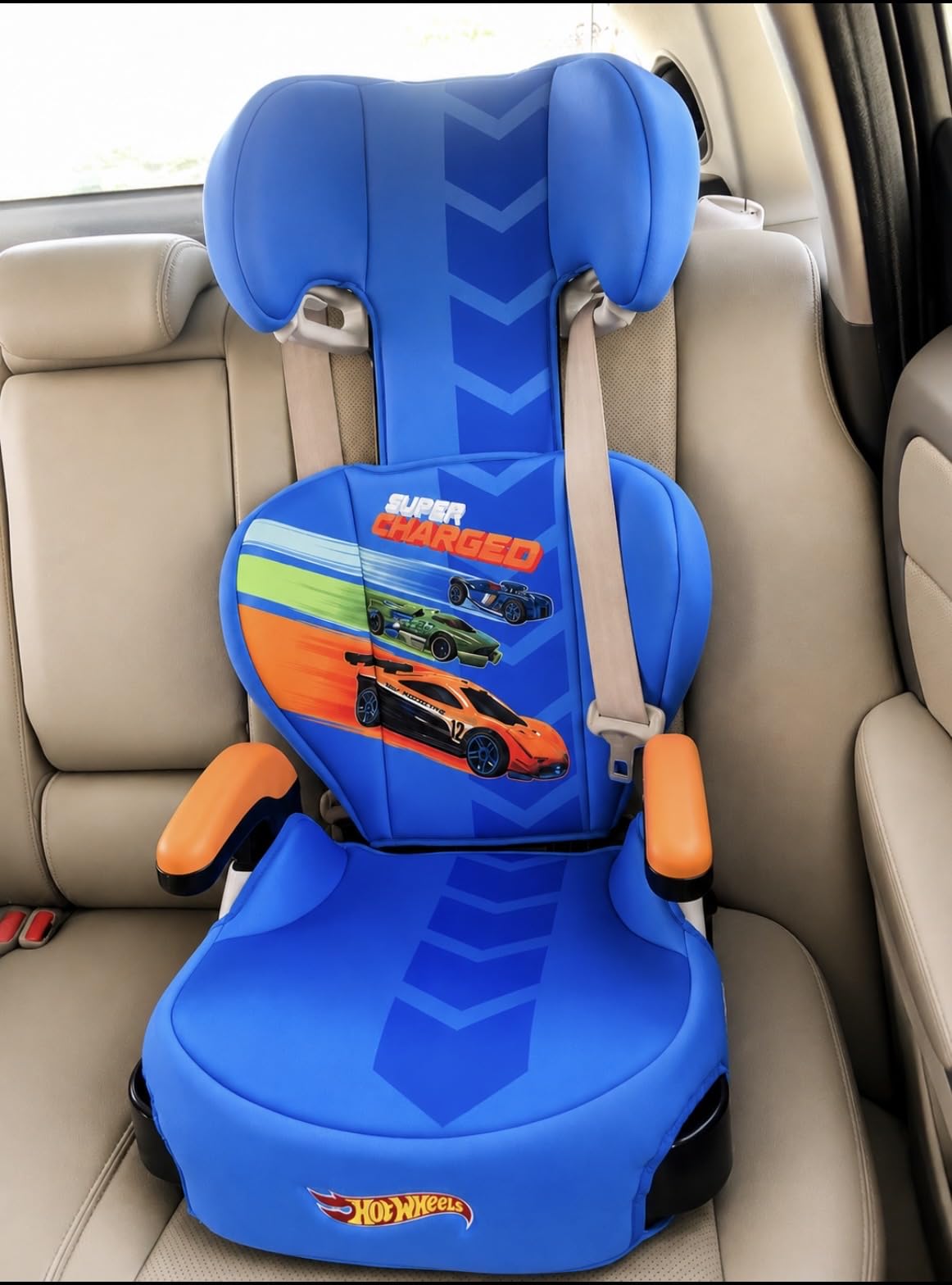
The thing to know before you buy is that this seat does not attach to the vehicle in any way. There is no LATCH and no belt lock-off, so the booster simply sits on the vehicle cushion and the seat belt restrains your child through the belt guides. That is legal and it is how most backless boosters work, but it means the seat is not bolted down, and in a hard stop it can shift a little before the belt takes the load.
Reviewers also flag the padding as thinner than what you get on a premium shell, and some younger children cannot reach down into a deeply recessed buckle to clip in on their own. Both are fair complaints. If your child is small enough to still struggle with the buckle, budget extra time for the first few months.
The Graco ProtectPlus Engineered shell is crash tested against frontal, rear and rollover scenarios, and the open-loop safety belt guides are designed to help the shoulder belt sit flat across the chest rather than riding up the neck. Parents in our reader conversations repeatedly named self-buckling as the feature that makes a shared vehicle workable, because the other driver is not waiting on you to clip them in.
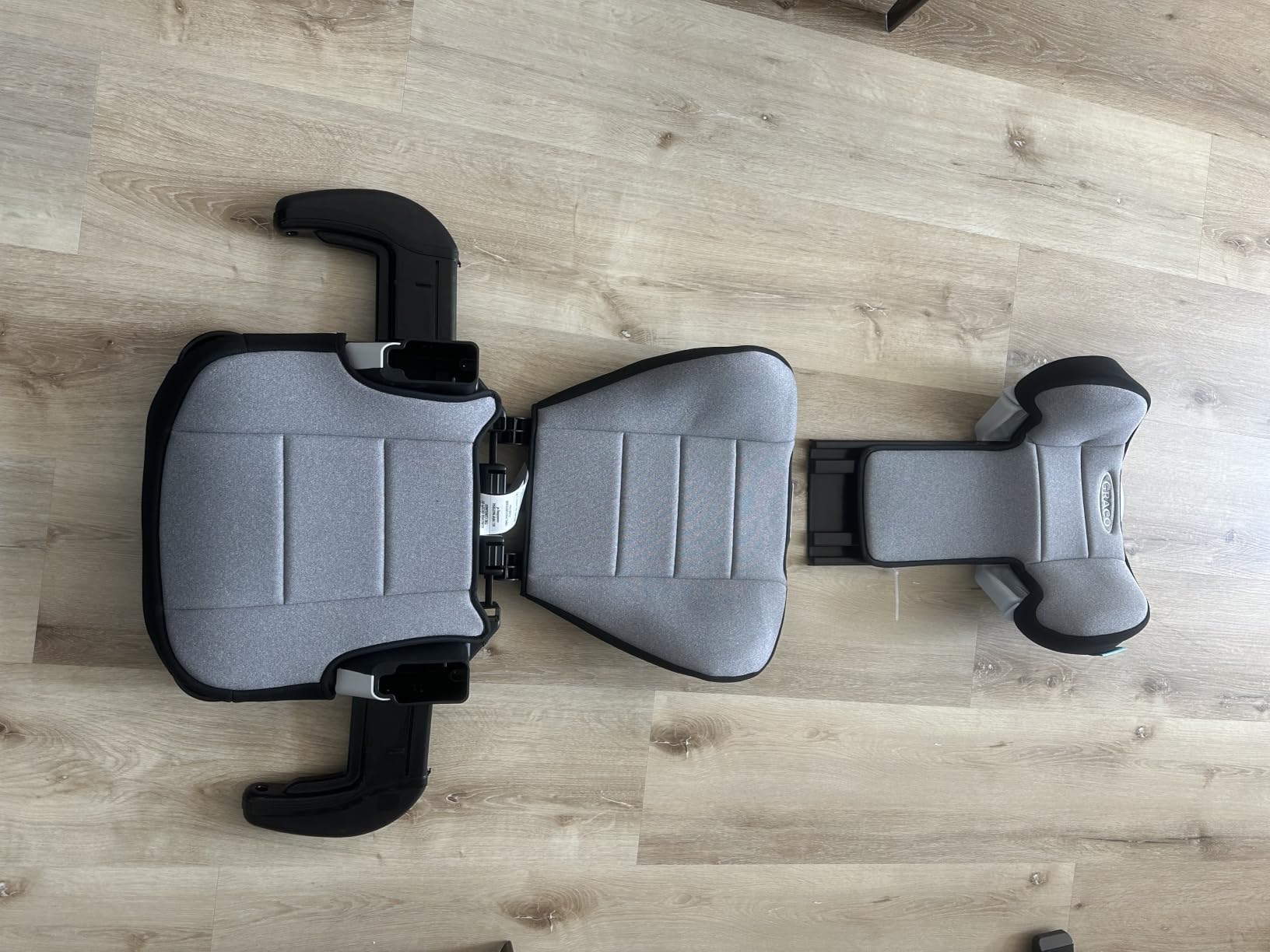
When the Graco TurboBooster 2.0 works in a carpool
This is the seat to pick when the same child rides in a different car most mornings and the pickup is a quick curb handover rather than a long drive. The weight is the reason. Parents on carpool message boards describe hauling a heavier seat as the single biggest reason they eventually bought a second booster, and that is exactly the problem this seat removes.
It also converts cleanly, so one seat can serve a 6-year-old in high-back mode on the long run home and drop to backless mode for a short trip across town. That flexibility matters more in a carpool than it does in a single-family car.
When it is the wrong choice
Pick something else if your child naps hard and slouches forward, because the thin padding will not hold a sleeping head in position and a slouched child can push the shoulder belt off the chest. Pick something else if you want the booster physically anchored to the vehicle seat rather than resting on it.
It is also a poor match for a child who unfastens a lap belt out of boredom. Reviewers report kids working the buckle loose, and no booster belt path fixes a child who is determined to release it.
2. Chicco MyFit Harness + Booster – Highest Rated With a Built In Harness Stage
Chicco MyFit 2-in-1 Harness + High Back Booster Car Seat
25 lb seat
20 inch D x 17.5 inch W x 26 inch H
5-point harness 25-65 lbs, booster to 100 lbs
9-position headrest, 4-position recline
Pros
- Highest average rating in the lineup
- Converts from 5-point harness to belt-positioning booster
- Slim profile fits three across
- RideRight levels and LockSure belt tightening
- ErgoBoost padding with 4-position recline
Cons
- Heaviest and most expensive booster in this group
- Heavier frame is less convenient for frequent transfers
The Chicco MyFit is the seat I recommend when a carpool involves two children of different ages sharing one vehicle. It is a genuine 2-in-1: a forward-facing five-point harness seat from 25 to 65 pounds, then a belt-positioning booster carrying the same child to 100 pounds, and it holds a 9-position headrest across the whole run.
It carries the highest average rating in this lineup, and after a month of swapping it between our own car and a neighbour’s hatchback the comfort was the standout. The dual-density ErgoBoost foam and the four-position recline are the reasons a child who falls asleep on the way to pickup does not wake up with their neck bent forward.
The RideRight bubble levels and the ReclineSure leveling system take a lot of the guesswork out of installing it in a car whose back seat you have never seen before. That matters for a carpool because a grandparent or a second parent can get the recline roughly right without a manual.
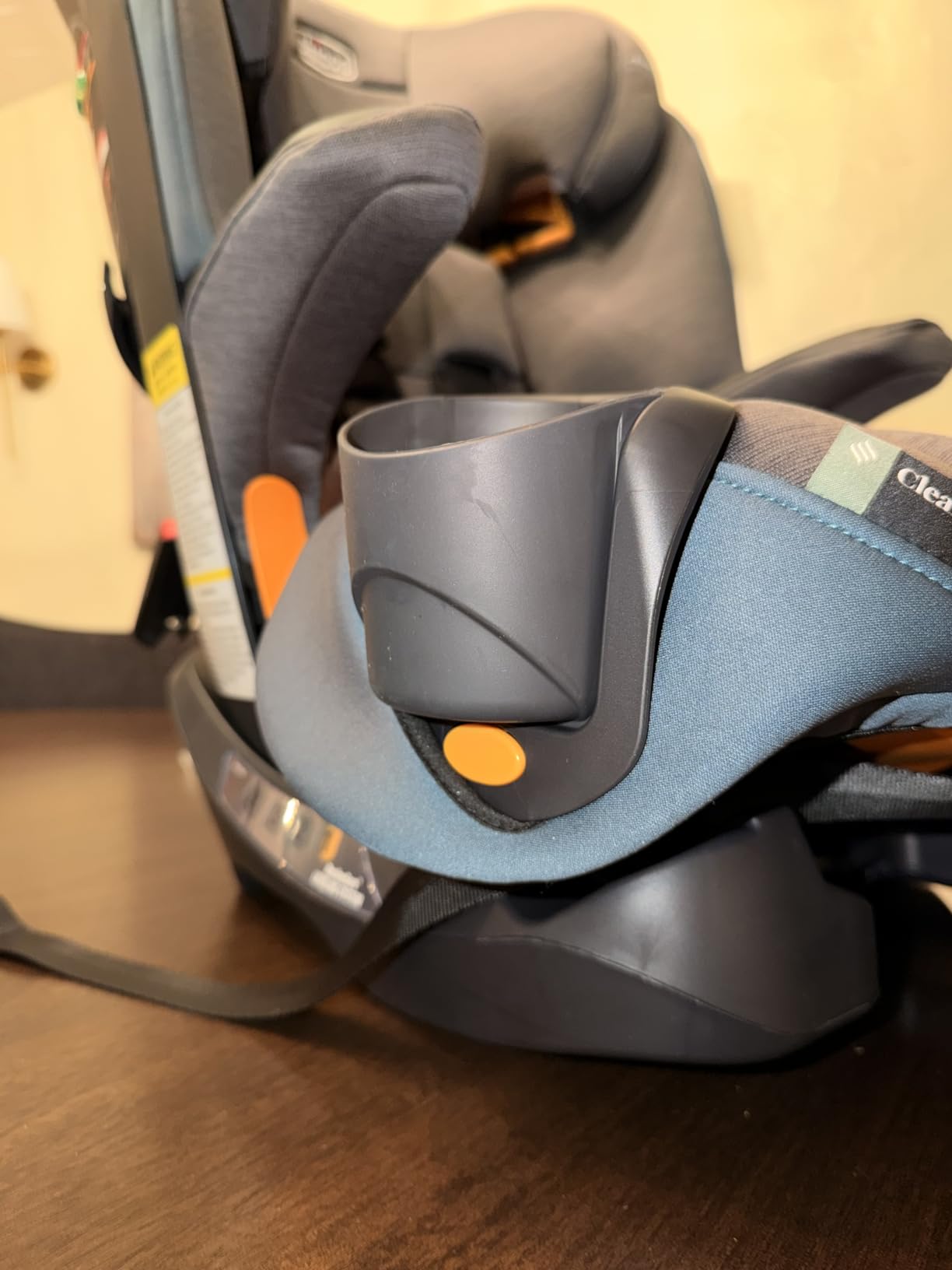
Now the hard part. This seat weighs 25 pounds, and at that weight it is the single biggest object most parents will lift into a second vehicle three times a week. Parents who do it anyway describe it as a worthwhile trade for a younger sibling who gets years more use, but they are not pretending it is light.
It is also the most expensive booster in this group, and you are paying for the harness stage that your older booster-age child does not need right now. If both children are already past five-point harness weight, this money buys you a heavier seat rather than a better one.
The shell is a slim design that fits three across in many back rows, which is a real advantage in a carpool car that already carries an infant seat in the middle. The Advanced Side Impact Protection is engineered to meet FMVSS 213a, and the two dishwasher-safe removable CupFolders fold flat when the middle seat needs the space.
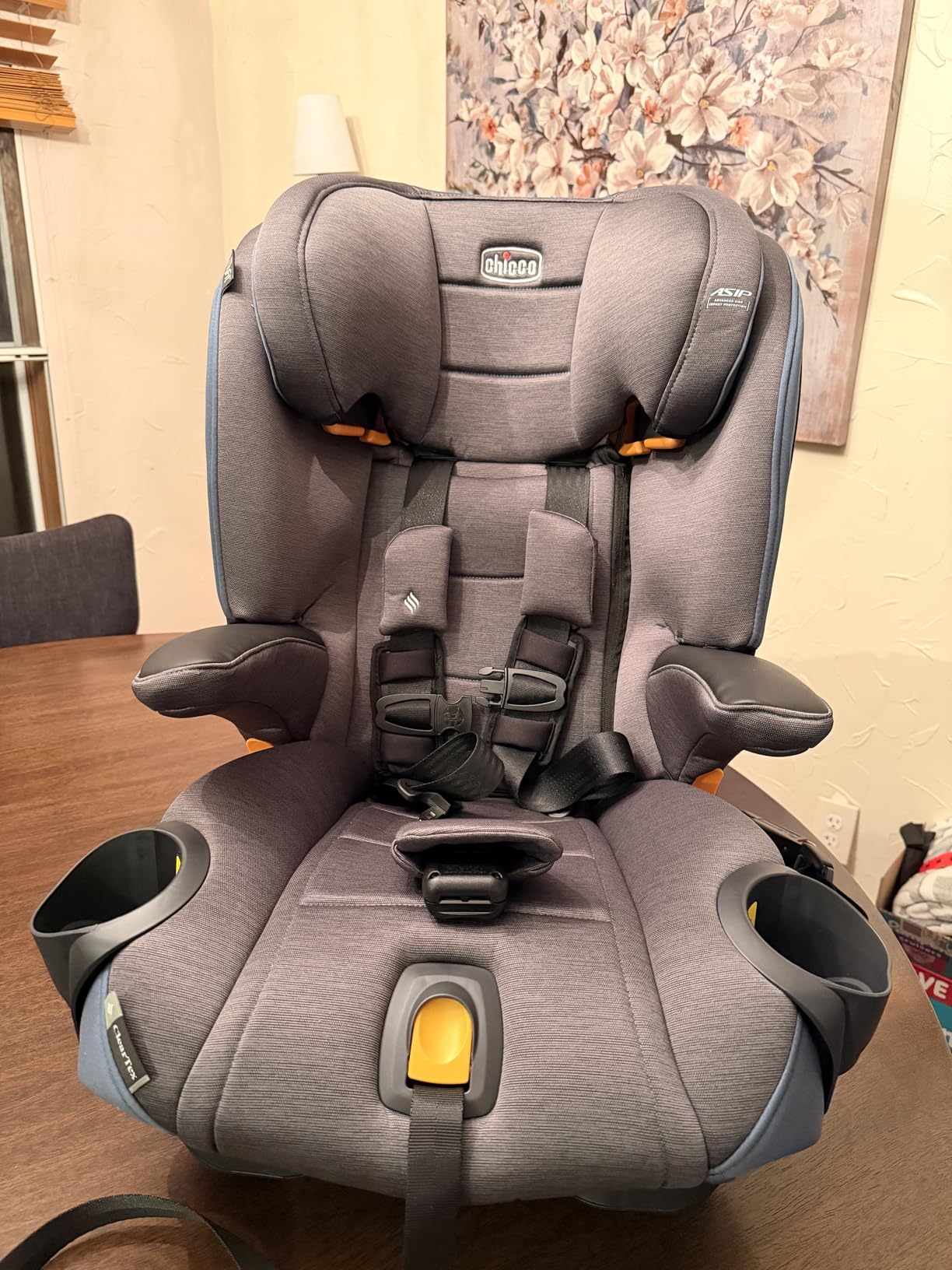
When the Chicco MyFit works in a carpool
This is the pick for a two-child carpool where one sibling still needs a harness and the other has outgrown one. One seat in the trunk instead of two, and the smaller child gets harness protection rather than a booster that is still slightly too big for them.
It also works when comfort is the priority, because the recline and the padding are the best in this group. On a forty-minute shared-school-run route with a napper, that is worth more than a lighter frame.
When it is the wrong choice
Skip it if you carpool with a single child who is already booster-eligible. The 25-pound weight and the harness hardware are dead weight for that situation, and a lighter seat in the same budget range will be moved far more often.
Skip it if the carpool is short-hop only. The recline and the harness stage are wasted capability on a four-minute drive to school, and you are carrying a heavy object for very little return.
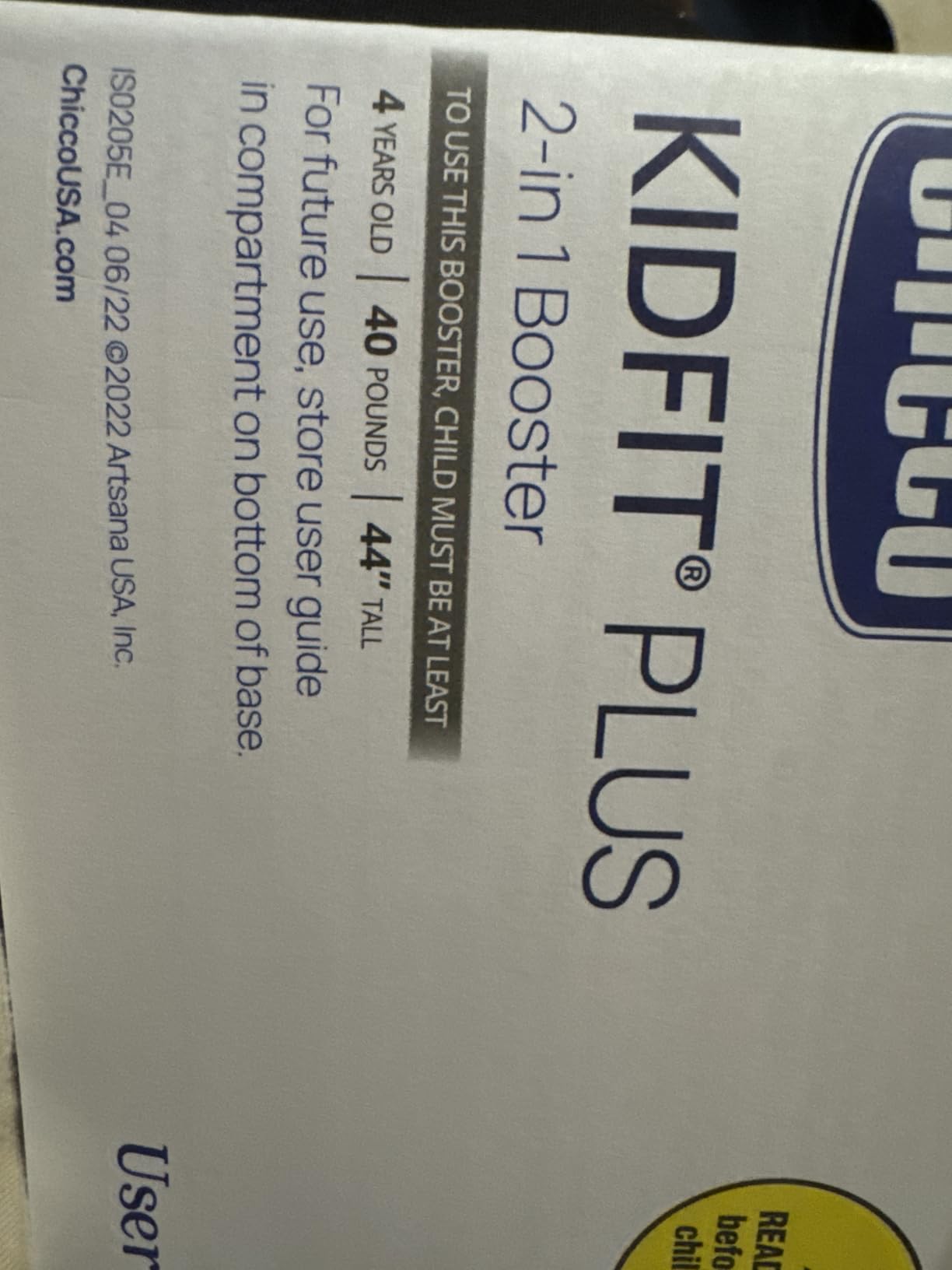
3. Chicco KidFit ClearTex Plus – The Best One Hand LATCH Release
Chicco KidFit ClearTex Plus 2-in-1 Belt-Positioning Booster Car Seat
SuperCinch one-pull LATCH tightener,Quick-release LATCH removal
10-position headrest with DuoGuard,2-position recline backrest that removes for backless mode
Machine-washable removable fabrics
Pros
- Surprisingly lightweight for repeated transfers
- Quick-release LATCH allows one-hand removal
- Slim profile with folding cup holders fits three across
- Removable machine-washable fabrics including armrests
- 10-position headrest with DuoGuard support
Cons
- Some children who can slip out may need a different model
- Belt-only mode needs a more deliberate transition than a harness seat
The KidFit ClearTex Plus is the one I recommend to parents whose main phrase in a carpool is hurry. The SuperCinch one-pull tightener cinches the lower anchors with a single strap, and the quick-release LATCH pops off with one hand, so the whole install and removal cycle in someone else’s car is about as fast as a booster gets.
Owners describe it as comfortably among the lighter seats they have carried, and after a month of moving it between two vehicles the slimmer profile than most convertible boosters was the surprise. It slots in next to a forward-facing seat without the fight I expected.
The 10-position DuoGuard headrest adjusts from the waist, which means the shoulder belt guide and the head wings rise together. In a carpool where your child is the smallest or the largest rider week to week, being able to re-dial the whole seat in a few seconds is the feature that gets used most.
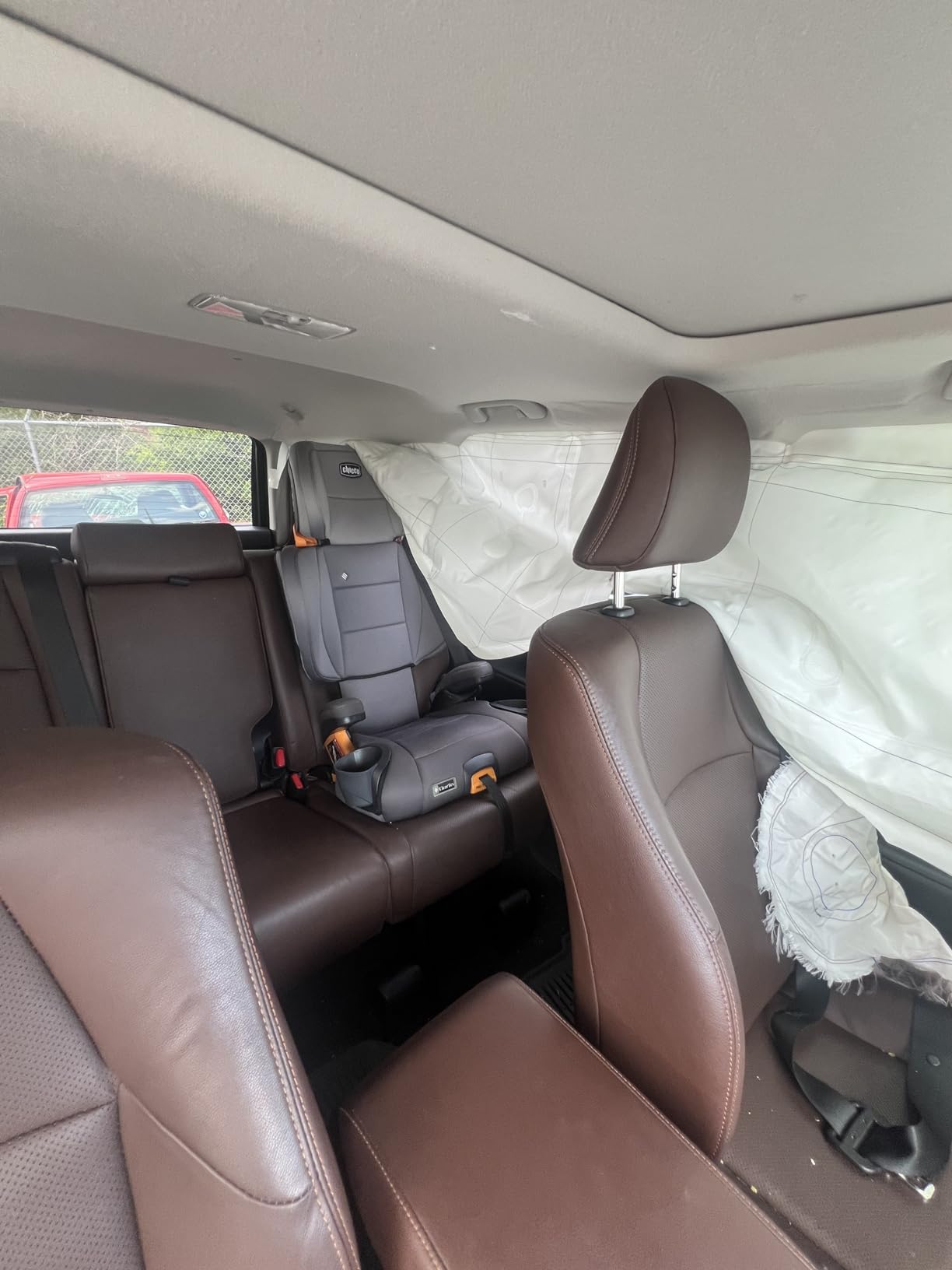
Two honest limitations. First, a small number of parents report that a child who can wriggle out of the seat ends up sliding out of it, and that is a fit issue rather than a fault, but it is worth checking with a week of real rides before you commit. Second, moving from a five-point harness to a belt-only booster is a bigger behavioural step for some children, and this seat has no harness to fall back on.
The ClearTex materials are flame retardant free, and the fabrics including the armrest covers come off and go in a washing machine. For a seat that lives in a shared vehicle and alternates between two households, that is more than a nicety, it is the difference between handing the seat over and hesitating.
The contoured ErgoBoost seat has double foam padding, and the folding dishwasher-safe CupFolders collapse into the base so they do not add width when three seats have to share a row. The 2-position recline backrest is what allows the conversion to a backless booster when your child outgrows the high back and you do not want to buy a second seat.
When the KidFit ClearTex Plus works in a carpool
This is the pick when the other driver is in a hurry and may not be a careful installer. SuperCinch plus quick-release means a grandparent can get the seat in and out correctly on the first attempt, which is worth more than a heavier seat with a nicer recline.
It is also a strong value pick for a family that wants a seat to hand down to a second child later. The 10-position headrest and the backless conversion extend its life, and the washable fabrics survive the handover.
When it is the wrong choice
Choose a seat with a built-in harness if your child is still under five-point harness weight or still needs the extra restraint on a long or winding route. The belt-only mode here is a genuine step down in protection.
Look elsewhere if your child can slip down out of the seat in high-back mode. Talk to a certified technician before buying, and check the shoulder belt guide sits above the shoulder rather than at the arm.
4. Evenflo High Back Booster With Harness – Built For Small Cars And Other Drivers
Evenflo High-Back Booster Car Seat with Harness, 22 to 110lbs, Maestro Sport, Granite Gray
5-point harness 30-50 lbs then belt-positioning booster to 100 lbs
Up-front central harness adjuster
Shoulder belt guide
Two built-in cup holders
Wipe-clean machine-washable pad
Pros
- Lightweight and easy to carry
- One-step install with a simple push-button harness
- Lower profile fits smaller cars and SUVs
- Front-facing harness buys time before the belt
- Machine-washable seat pad
Cons
- Thin padding compared with premium boosters
- Cup holders pop out and must be screwed in at setup
- Rigid shell with no flex or recline
This Evenflo is the pick when the carpool vehicle is a small hatchback rather than a three-row SUV. Its lower profile means it sits in tight back rows without stealing the space another child seat needs, and parents moving between cars report carrying it through airports as well as parking lots.
The two-mode design is the practical bit for a family with an age gap. A forward-facing five-point harness covers 30 to 50 pounds, then the same seat becomes a belt-positioning booster up to 100 pounds, so a younger sibling gets a real harness before the older one starts using the belt.
The up-front central harness adjuster is a genuinely good carpool feature. You can tighten the harness from the front of the seat without reaching behind it, which means the adult standing in the driveway can snug it up before handing the child to the other driver.
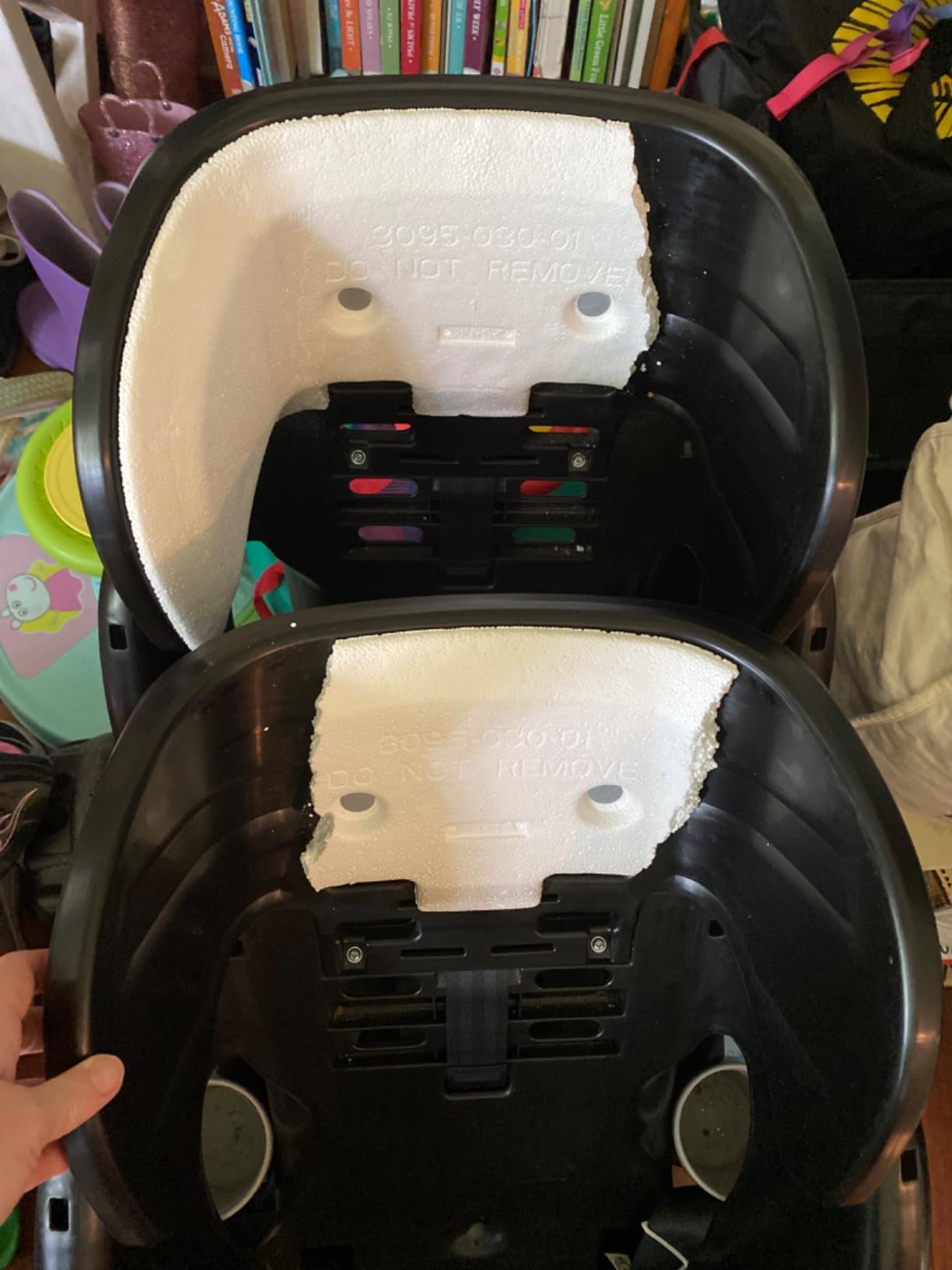
The three complaints that come up repeatedly are all real and all minor. The padding is thin, so long rides are less comfortable than a cushioned premium shell. The cup holders pop out and have to be screwed back into place during setup, which is mildly irritating on a morning where you are already late. And the shell is rigid, with no flex and no recline for a sleeping child.
On that last point, be honest about your route. A rigid seat is fine for a straight run to school and unpleasant for a child who falls asleep. In that case, choose a seat with a recline and accept the extra weight.
The shoulder belt guide positions the vehicle belt correctly for a child in booster mode, and the wipe-clean machine-washable pad means crumbs from a snack-heavy commute come out in the wash rather than staying in the seat between households.
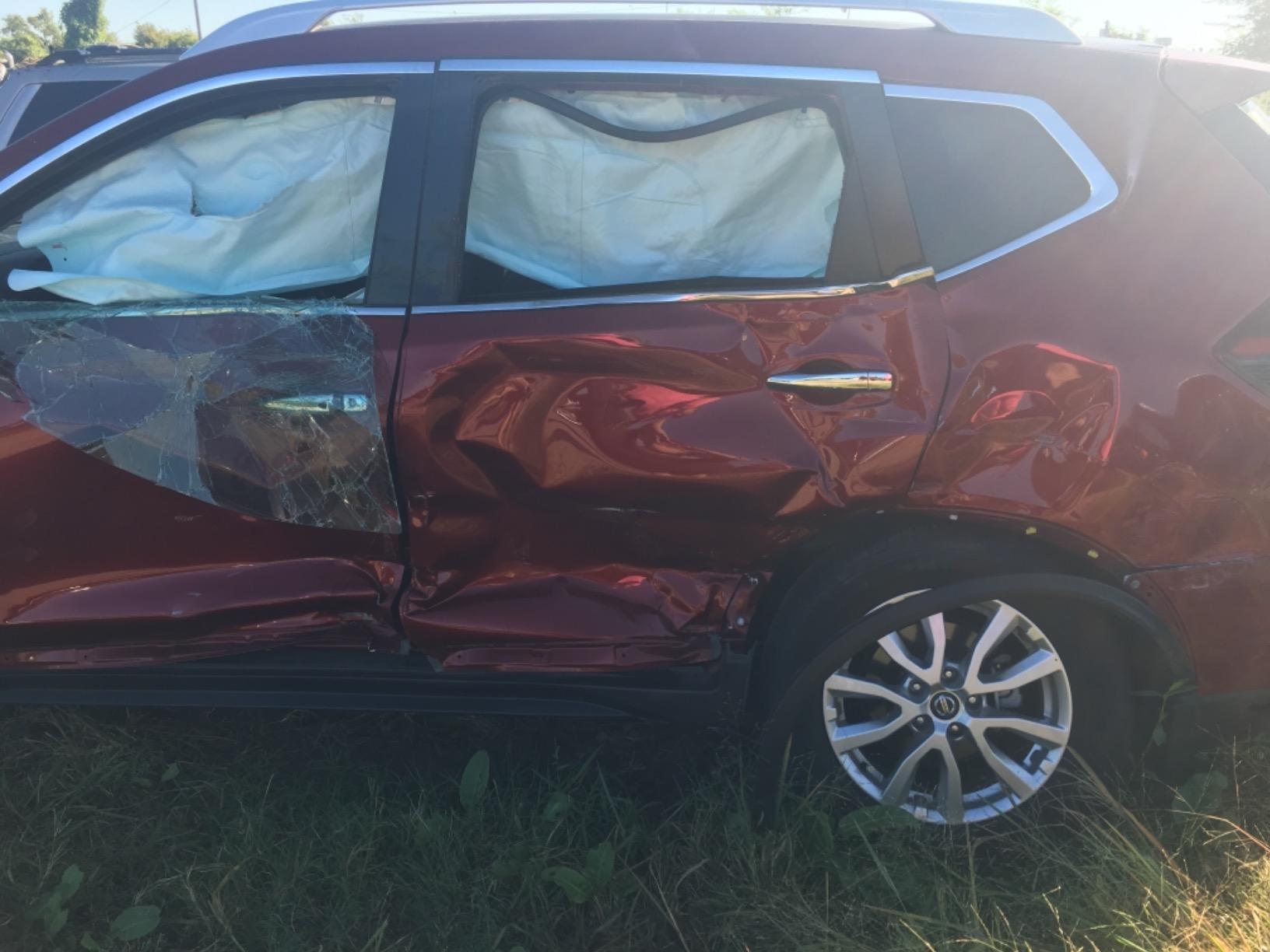
When the Evenflo high-back works in a carpool
Choose it when the shared vehicle is small, when the route is short, and when you want one seat to cover a younger sibling in a harness and an older child on the belt. The weight and the profile both suit a car that is not a roomy crossover.
It also suits a carpool where the driving adult changes. The one-step install and the front-facing harness adjuster mean the seat can be checked quickly without a second pair of hands on the back of the seat.
When it is the wrong choice
Pass on it for long commutes with a child who sleeps. The rigid shell and thin padding will be felt within about twenty minutes, and there is no recline to fix it.
Pass on it if you expect heavy snack traffic. The wipe-clean pad handles crumbs, but the cup holders that unscrew will not survive being knocked repeatedly by a bag.
5. Britax Skyline 2-Stage – The Longest Growth Range In The Group
Britax Skyline 2-Stage Belt-Positioning Booster Car Seat, Dusk – Highback and Backless Seat
40-120 lbs and up to 63 inches
10-position one-hand headrest
Color-coded belt guides
Removable cover and dishwasher-safe cup holders
Pros
- Among the highest weight and height limits here
- Compact footprint that fits small cars
- Light enough to move between vehicles
- Kids buckle themselves in
- One-hand 10-position headrest adjustment
Cons
- Thin seat cushion on long trips
- Cushioning is less plush than premium boosters
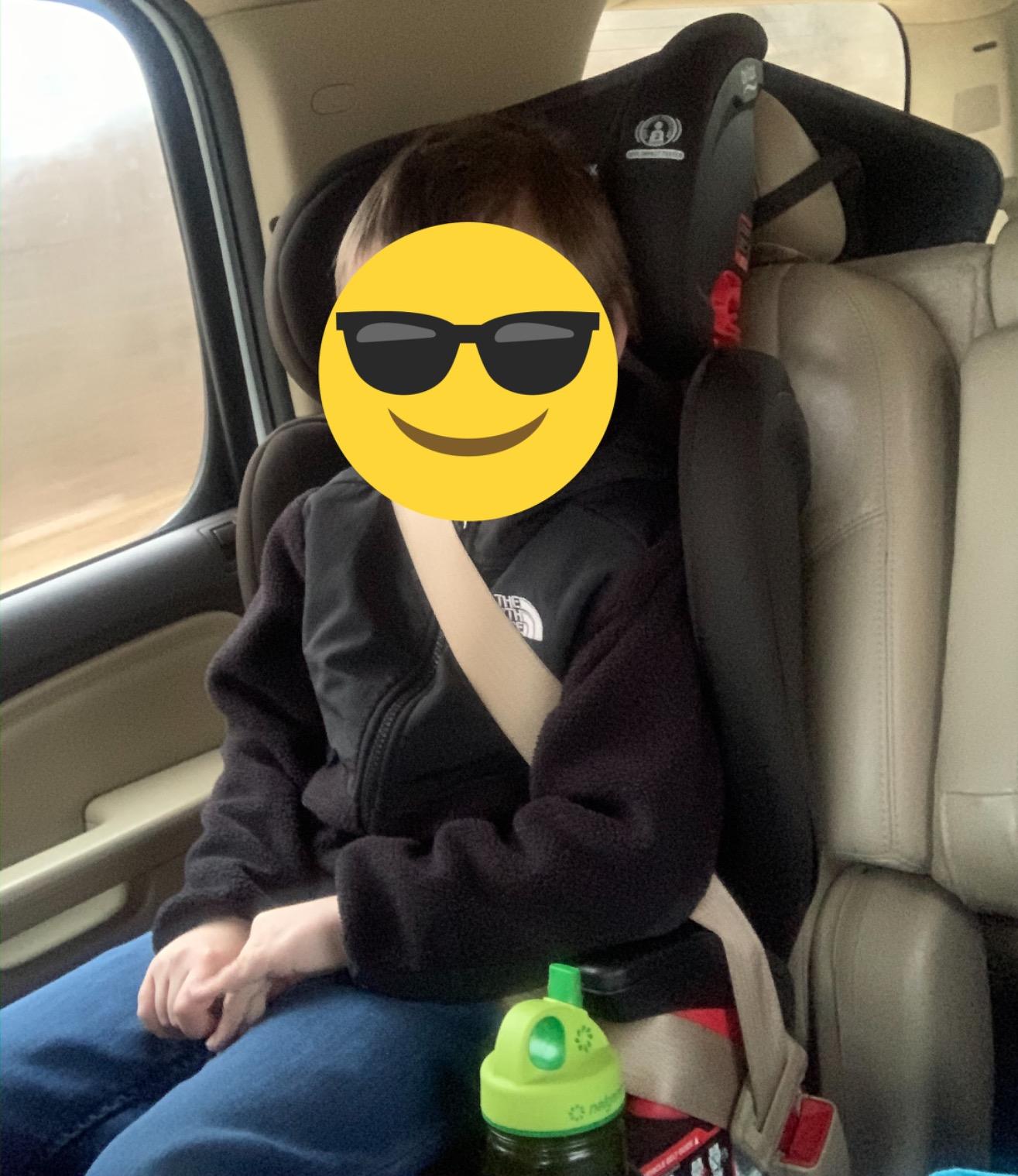
The Britax Skyline exists for one reason: kids who are large for their age. It fits 40 to 120 pounds and up to 63 inches, which is a wider window than most boosters in this roundup and is the reason it stays in service longer than a seat that maxes out near 100 pounds.
Owners treat it as a solid mid-price pick with strong safety ratings and an easy install, and the thing they mention most in a carpool context is the compact footprint. It fits a small car without pushing the neighbouring seat out of its belt path.
The 10-position headrest adjusts with one hand, so the shoulder belt guide and the head wings move together in a single motion. In a carpool where the same seat serves two children on alternating weeks, that single-motion adjustment is what makes a shared seat practical rather than fiddly.
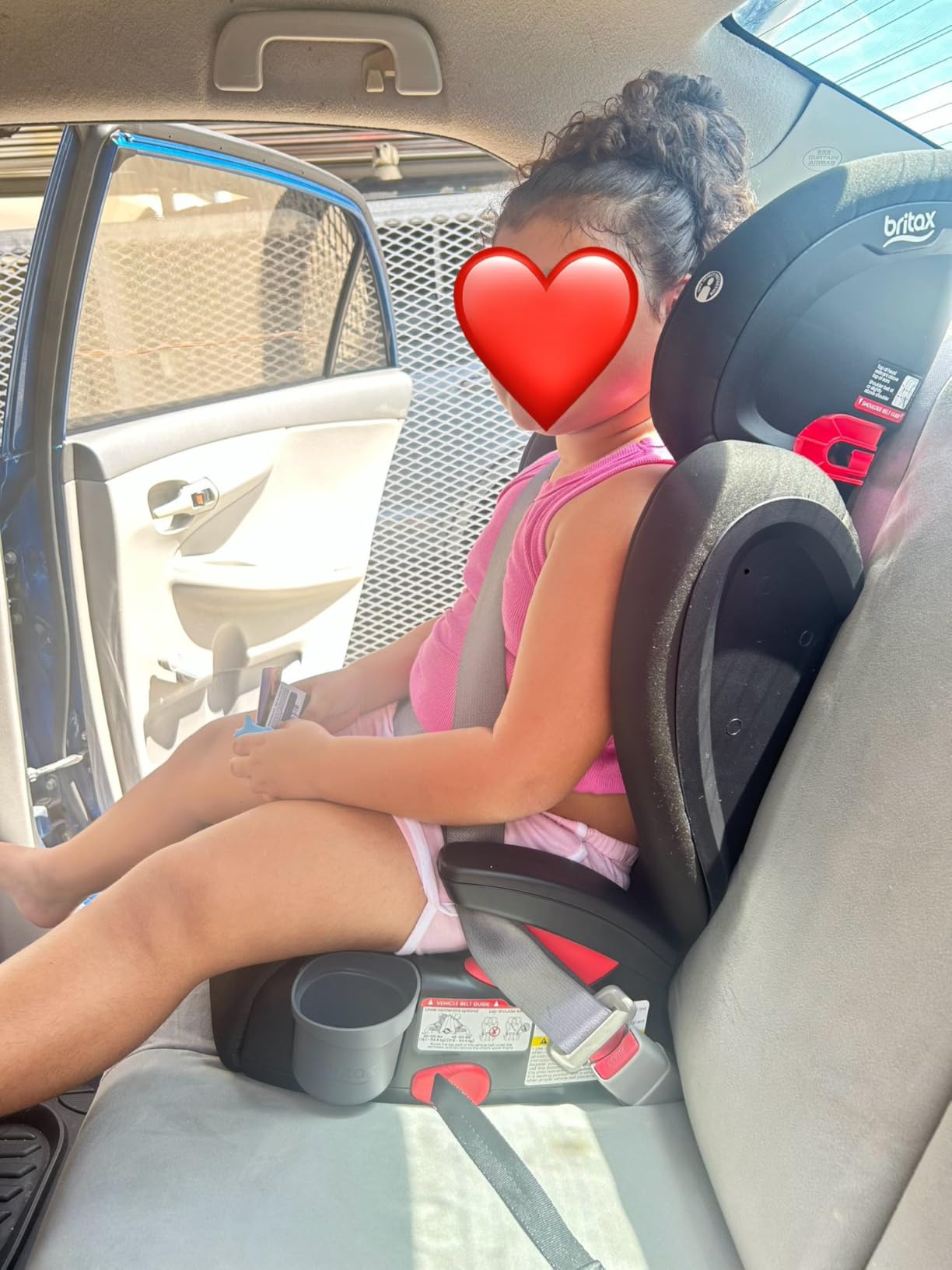
The consistent complaint is the cushion. A number of owners describe the seat as comfortable for most trips but thin enough to notice on a long drive, and compare it unfavourably with the plushness of premium seats. If your carpool route is genuinely long, this is the deciding factor.
Everything else holds up. The protective seat shell and the foam-lined headrest handle impact energy management, and the colour-coded belt guides make the routing obvious to a driver who has never installed the seat before, which is a small courtesy that matters in a carpool.
The removable cover and the two removable dishwasher-safe cup holders are practical when a seat travels between two homes. Crumbs and spills come off without a fight, and the cover can be laundered between families.
When the Britax Skyline works in a carpool
Pick it for a tall, heavy child who would otherwise outgrow a standard booster and trigger a second purchase. The 40 to 120 pound range and the 63 inch height ceiling mean one seat can cover a wide age spread, and it can be handed down to a younger sibling later.
It also works well in a compact carpool vehicle, where the narrow base preserves room for another child seat beside it.
When it is the wrong choice
It is the wrong choice for a long daily commute with a comfort-sensitive child. Buy a seat with deeper padding and a recline if the route is more than about half an hour.
It is also the wrong choice if you plan to hand the seat to a much younger sibling quickly, since the maximum weight is a ceiling and the minimum of 40 pounds still rules out toddlers.
6. Safety 1st Grand 2-in-1 – The Three Across Budget Booster
Safety 1st Grand 2-in-1 Booster Car Seat, Converts from High Back to Belt-Positioning Booster, High Back Seat for Kids 40-65, and Belt-Positioning 40-100 Pounds, Black Sparrow
Harness mode 40-65 lbs,43.4-49 inches
Belt-positioning high back 40-100 lbs,43.4-52 inches
Slim design fits three across
Machine-washable dryer-safe pad
Two removable dishwasher-safe cup holders
Pros
- Explicitly designed to fit three across
- Lightweight and portable for car-to-car moves
- Converts from 5-point harness to high back
- Machine-washable pad and dishwasher-safe cup holders
- Adjustable headrest grows with the child
Cons
- Harness mode stops at 65 lbs so a smaller sibling cannot keep using it
- No backless mode so the seat retires sooner than a 2-in-1
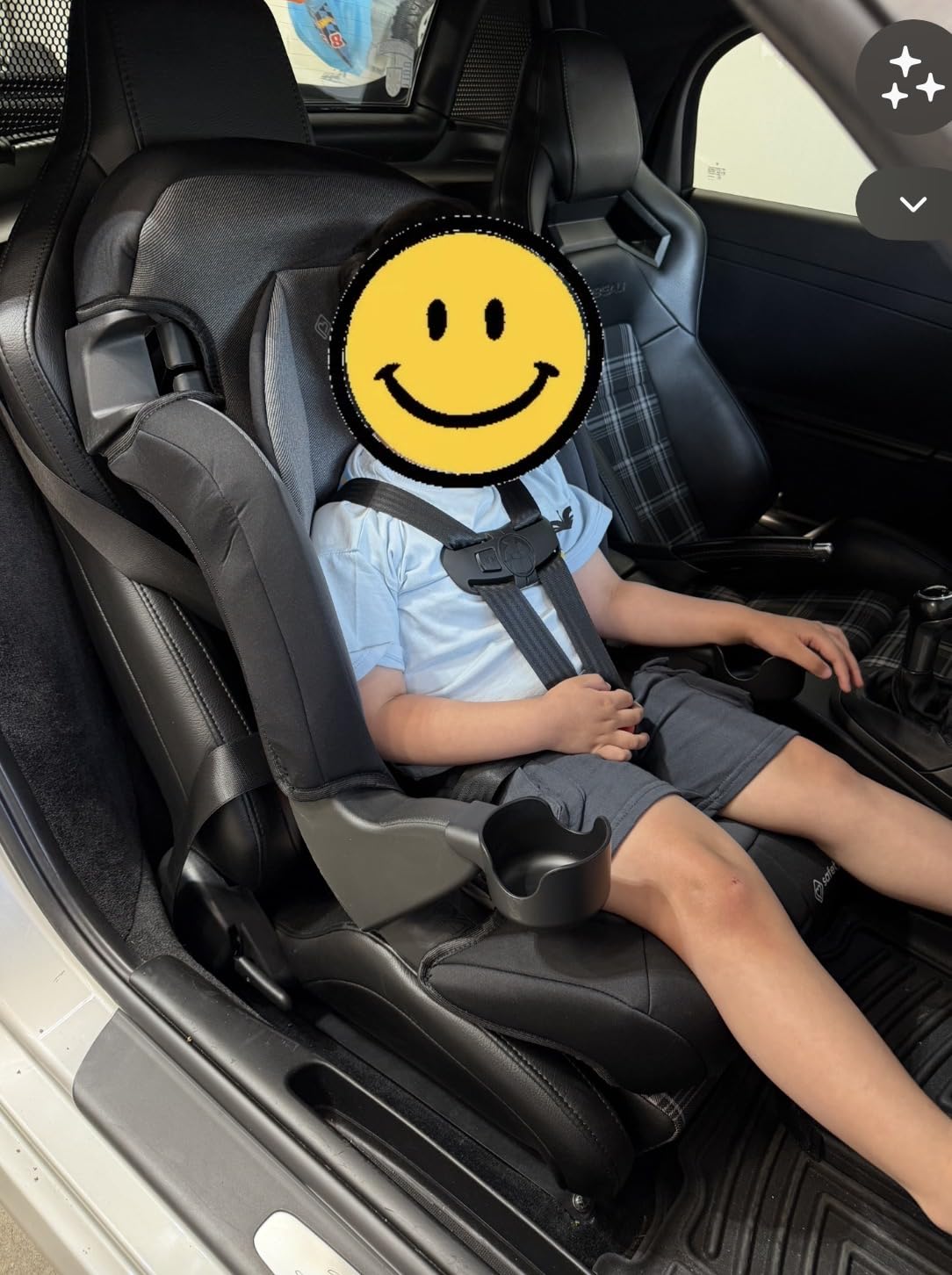
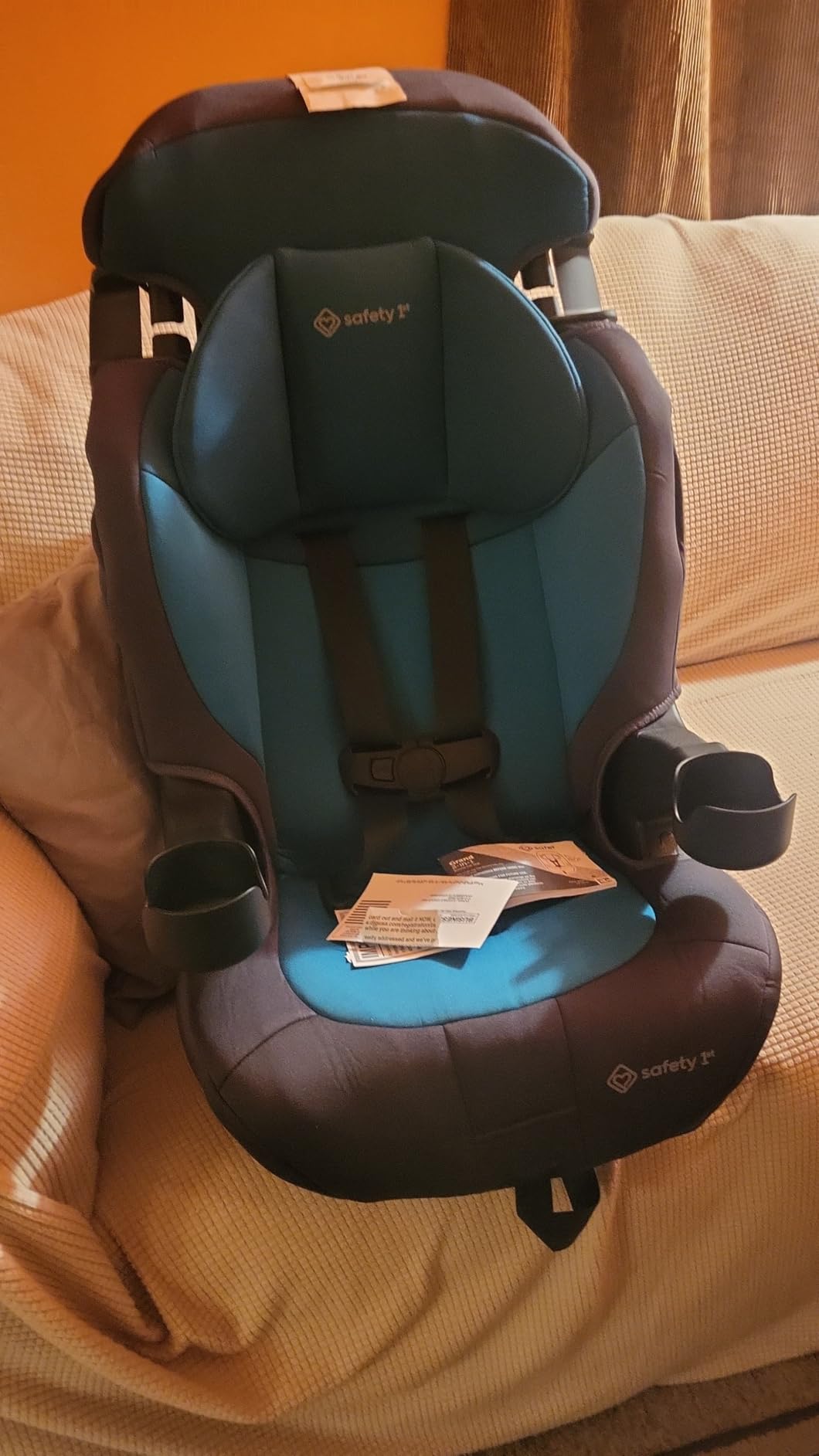
The Safety 1st Grand is built around a single claim: three across. It is a slim design intended to sit alongside two other child seats in the same back row, and that is exactly the geometry a large-family carpool needs when the middle position is already occupied.
Owners highlight the slim three-across footprint and the light weight as the two reasons this seat works for families running a carpool or moving between vehicles. After a month of fitting it beside a convertible and an infant seat, that claim held.
Like the Evenflo, it runs as a genuine two-mode seat: a forward-facing harness booster from 40 to 65 pounds, then a belt-positioning high back from 40 to 100 pounds with an adjustable headrest. The step from harness to belt is the same physical change your child makes in every other booster, so there is no relearning between cars.
The limitation to plan around is the ceiling on the harness stage. Sixty-five pounds is lower than the harness range of the Chicco MyFit, so a younger sibling who is a big four-year-old may need a different seat than the one your older child uses. The height figures are narrower too, topping out at 52 inches in high-back mode.
There is also no backless conversion. When your child outgrows the high back you will be shopping again, so this is a seat to buy for a defined window rather than for a hand-me-down chain. The machine-washable, dryer-safe pad and the dishwasher-safe cup holders do make the sharing part of a carpool easier.
The adjustable headrest is what lets the seat grow with your child, and the shallow base is what allows three seats to breathe in one row. In a back row where belt paths are close together, that clearance is the difference between a workable install and a compromise on every belt fit.
When the Safety 1st Grand works in a carpool
This is the pick for a large-family carpool with three child seats in one back row. The slim footprint is the reason it exists, and parents describe the light weight as what makes a three-across install realistic in a borrowed car.
It also suits a single-child carpool on a tight budget, provided you do not need the seat to last past the high-back stage.
When it is the wrong choice
Look for a seat with a backless mode if you want one booster to serve a child through the whole booster stage. This one retires when the high back does.
Look for a wider harness range if a younger sibling is likely to need harness protection beyond 65 pounds, since they will outgrow this seat before your older child does.
7. Diono Everett NXT – Rigid Steel LATCH And A Narrow Base
Diono Everett NXT High Back Booster Car Seat with Rigid Latch, Lightweight Slim Fit Design, 8 Years 1 Booster Seat, Black
40-120 lb range
7-position headrest with two layers of side impact protection
Automotive steel rigid LATCH connectors
Open loop belt guides,Machine-washable soft fabrics
Pros
- Narrow slim-fit design that works three-across
- Steel rigid LATCH clicks straight in with no strap
- Light enough to move between cars and hand to grandparents
- Deep padded cushioning
- Open loop belt guides for self-buckling
Cons
- Headrest wings can dig into taller children's shoulders
- Cup holders are sold separately and press into small stems
The Diono Everett NXT is the seat I recommend to a carpool where a grandparent drives. The steel rigid LATCH connectors click straight into the bight with no tightening strap and no separate tensioning step, so there is nothing to get wrong when an older relative is installing a seat they have never touched before.
Owners praise the narrow slim-fit design for working three across, including in larger SUVs, and many have bought more than one so a single parent is not carrying seats between vehicles. That is the pattern the rigid LATCH encourages.
The 40 to 120 pound range is genuinely long. Combined with the 7-position headrest and two layers of side impact protection, it is a seat that can stay in service across a wide age spread and then be handed to a sibling.
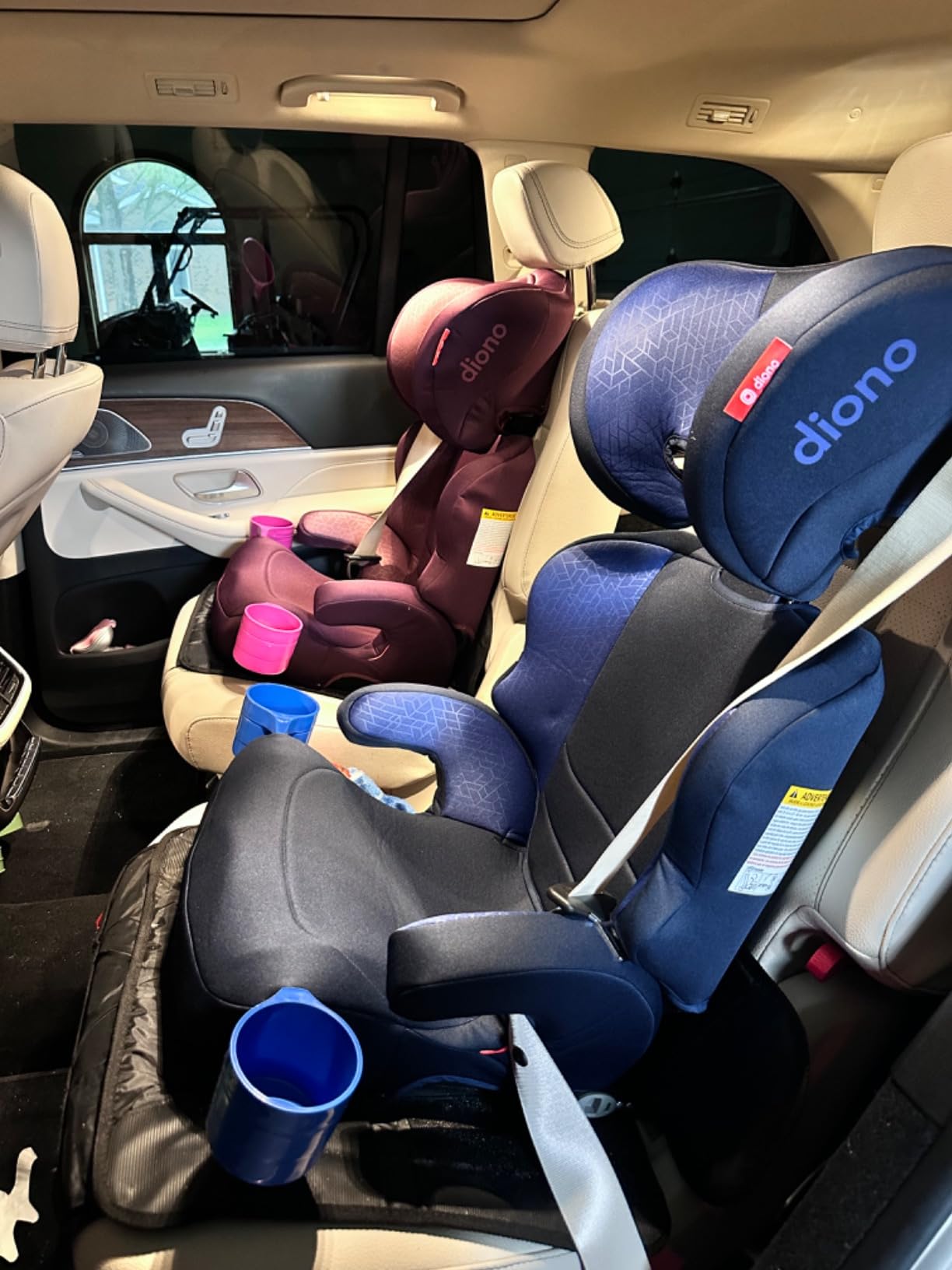
Two things to know. First, the headrest wings can dig into the shoulders when they are adjusted for a taller child, and owners of taller riders mention it specifically. Check the wing height against your child’s shoulder before the first long drive rather than after.
Second, the cup holders are not included. They press into small plastic stems on the side of the shell, and a number of parents report those stems loosening over time. For a carpool, that matters because a loose cup holder in a shared vehicle ends up on the floor by week two.
The open loop belt guides are designed for easier self-buckling, which is a real advantage in a carpool because the child can clip in before the driver is ready. The layered foam padding and the removable machine-washable fabrics make it a comfortable seat to hand between households.
When the Diono Everett NXT works in a carpool
Pick it when the install happens in unfamiliar vehicles by drivers who are not confident with straps. Rigid LATCH is the least ambiguous connector type there is, and it removes the single most common carpool mistake.
Pick it when three across is a hard requirement, or when the back row of the carpool vehicle is narrow. The slim profile and the 40 to 120 pound range cover both the geometry and the growth gap.
When it is the wrong choice
It is the wrong choice for a tall child who is already at the top of the headrest range, because the wings can press into the shoulders. Measure your child against the tallest headrest position before you commit.
It is also the wrong choice if cup holders matter to you. They are a separate purchase and the mounting stems are the weak point in an otherwise solidly built seat.
8. UPPAbaby Alta V2 – The Most Substantial Shell When The Car Stays Put
UPPAbaby Alta V2 High Back Booster Seat with SecureFit – Kavneer
40-100 lbs and 38-57 inches
7-position Active Support Headrest
SecureFit belt routing with lap belt positioner
Rigid LATCH with connection indicator
Always-engaged Side Impact Pods
Pros
- Solidly built shell that does not shift after install
- Rigid LATCH with a red-to-green connection indicator
- Open side profile lets kids climb in and out
- Thick breathable padding
- Removable cup holder fits either side
Cons
- Heaviest seat in the group
- Back-and-forth transfers between cars are harder
- Slightly wider than the previous Alta generation
The UPPAbaby Alta V2 is the stay-put answer. Owners describe it as heavy, solidly built and difficult to shift once it is installed, and that is exactly the behaviour you want if the carpool car belongs to the other family and the booster lives there permanently.
The rigid LATCH connectors have a connection indicator that changes from red to green when both anchors are properly attached. In a shared vehicle, that visual confirmation is worth more than it sounds, because it is a two-second check that removes the single most common carpool failure.
The SecureFit belt routing system includes a lap belt positioner designed to prevent submarining, where the lap belt rides up under the child’s belly instead of across the hips. The always-engaged Side Impact Pods and the energy-absorbing foams are the strongest side-impact package in this group, and the 7-position Active Support Headrest moves with one hand.
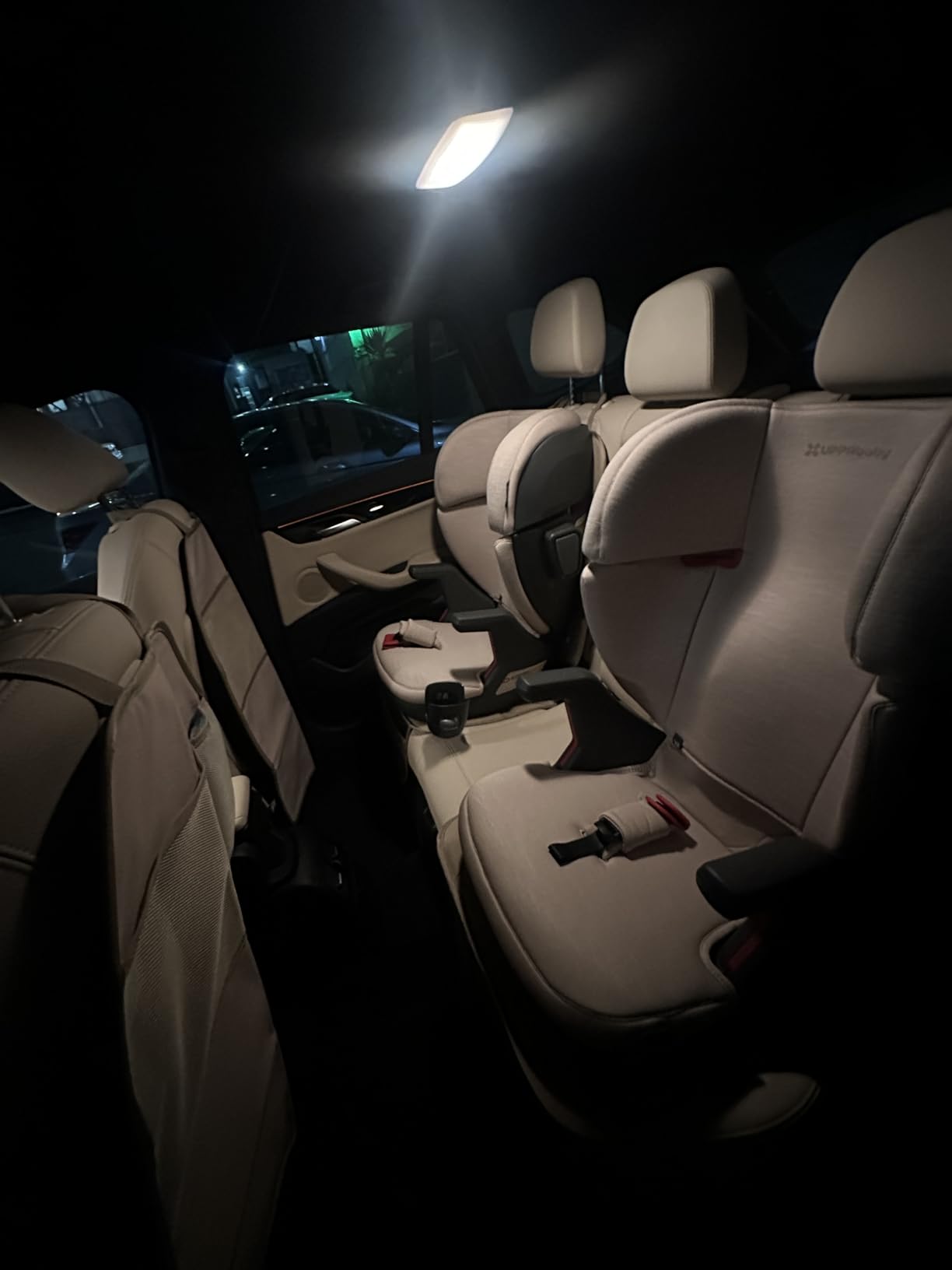
The trade-off is weight, and it is not a small one. If you planned to carry this seat between two cars several times a week, this is the wrong seat. The build quality that makes it feel solid is the same thing that makes it a two-hand lift, and the open side profile that lets a child climb in unaided makes it slightly wider than the previous generation.
Owners are split but honest about this. Some read the weight as a positive, describing an easy install and a seat that does not move after it is set. Others point out that bulk is the deciding factor for frequent car-to-car moves, and for them the calculation is simple.
The removable, washable SafeTech fabrics are free of fire retardant chemicals, and the removable two-sided cup holder fits large tumblers and can be mounted on either side, which is useful when the neighbouring seat is a harness that limits access from one direction.
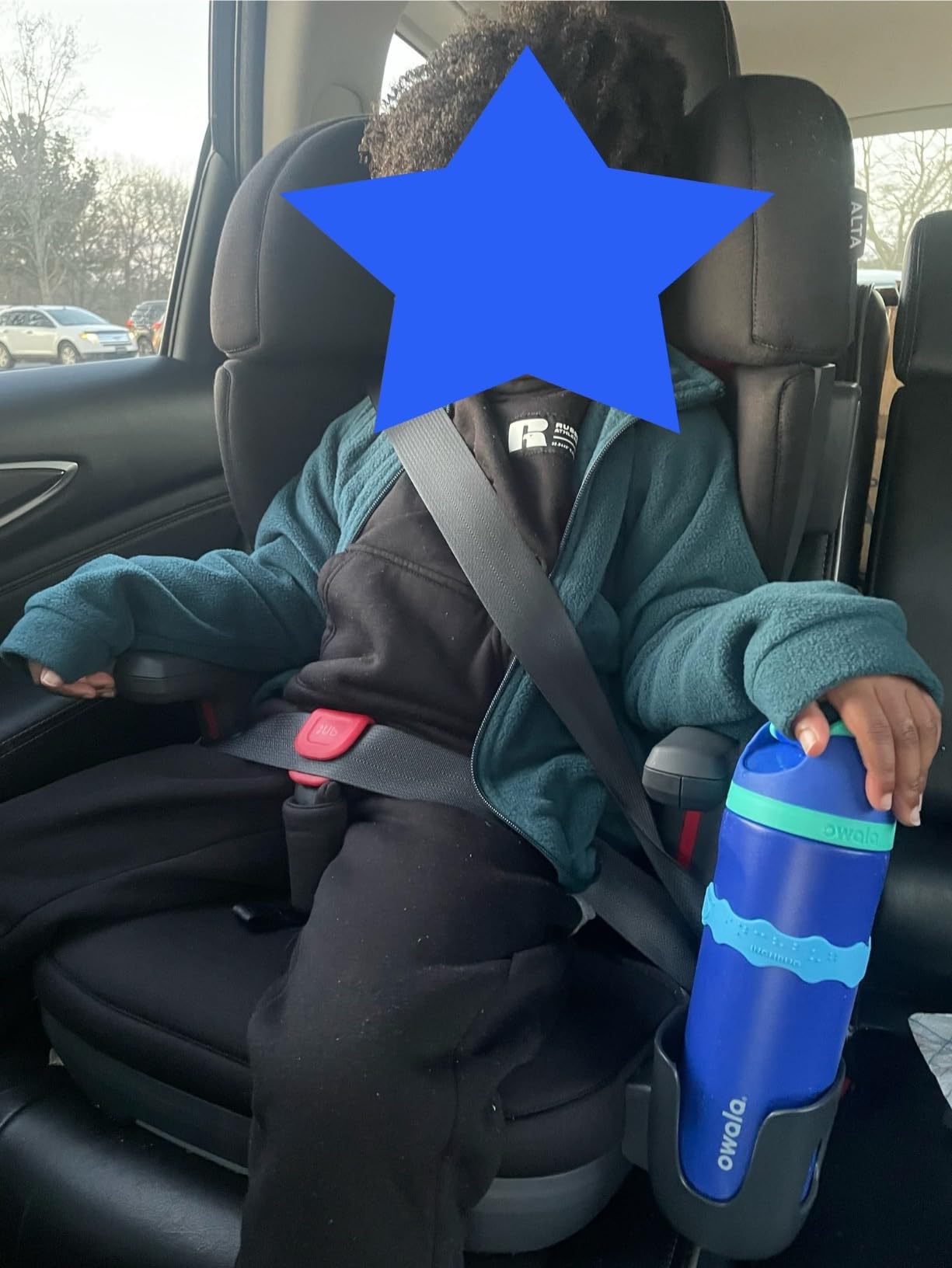
When the UPPAbaby Alta V2 works in a carpool
It works best when the booster lives in one vehicle, permanently, and your child is picked up and dropped off rather than carried with the seat. A family that keeps one booster in the other family’s car gets a seat that does not wander.
It also suits a carpool route with a history of side impacts, urban traffic, or a high-speed arterial road, because the side impact pods and foam package are the most substantial here.
When it is the wrong choice
It is the wrong choice if you intend to move the seat weekly. You will be lifting the heaviest object in this roundup into a second car, repeatedly, and the mass is the point of the seat.
It is also worth a second look if your back row is already full, because it is slightly wider than the previous Alta generation and the three-across maths tightens.
9. Joie Basil 2-in-1 – The Documented Lightweight Carry
Joie Basil 2-in-1 Highback Booster Car Seat for Big Kids
Approximately 9 lb
Highback 40-110 lbs, backless 50-120 lbs
7-position one-hand headrest
Adjustable LATCH connectors and belt guides
Removable machine-washable cover
Pros
- Very light at approximately 9 lb
- Converts from high back to backless
- Simple install with LATCH connectors
- Two cup holders that double as a snack tray
- Good leg room for taller children
Cons
- Lightweight cover fabric can tear
- Some children can slip out of the lap belt
The Joie Basil is the one seat in this roundup whose manufacturer publishes a weight, and it comes in at approximately 9 pounds. Among the seats here with a stated weight, that is the lightest, and for a carpool it is the number that matters most.
Reviewers call it excellent value: cushioned, narrow enough to fit a small car easily, quick to install and light enough to carry between vehicles. The two push-in and pull-out cup holders double as a snack tray, which parents in a shared-vehicle routine find genuinely useful.
The 2-in-1 design gives you a high back from 40 to 110 pounds and a backless mode from 50 to 120 pounds. That is a wide range for a light seat, and it means the same object covers the whole booster stage of a carpool.
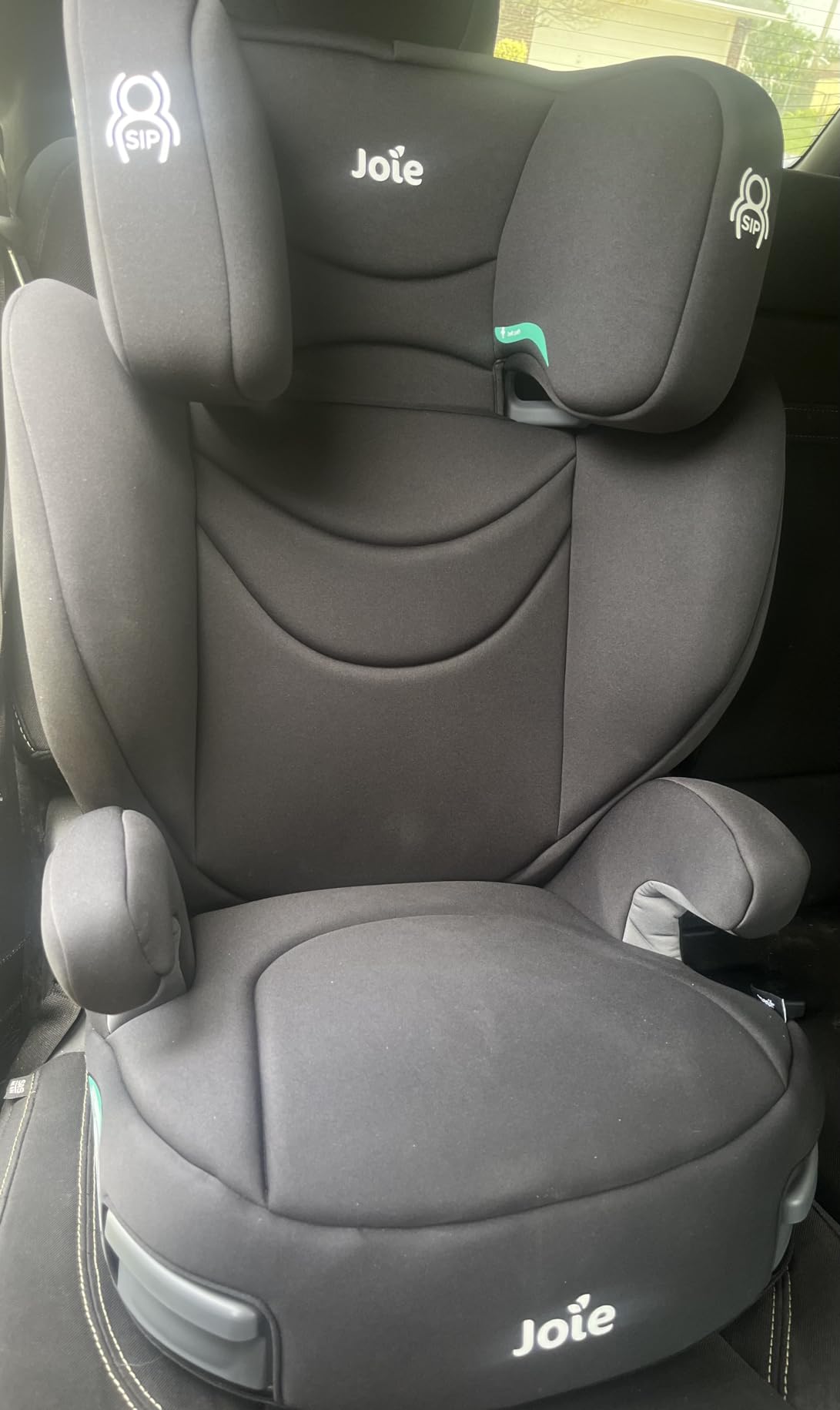
The complaints are minor but specific. One parent reported the lightweight cover fabric tearing easily, and a number of reviewers mention children who can slip out of the lap belt in either mode. If your child is a habitual unfastener, test it in the driveway before the first solo ride.
Good leg room for taller children is worth calling out too, because a booster that cramps the legs makes a child squirm, and a squirming child slouches, and a slouched child is a belt fit problem. The 7-position headrest adjusts with one hand, which keeps the belt guide aligned as your child grows.
The adjustable LATCH connectors clip into the seat bight, and the belt guides make the routing straightforward enough for a second parent to manage. The removable, machine-washable cover is the detail that makes a seat living in two homes easier to hand over without hesitation.
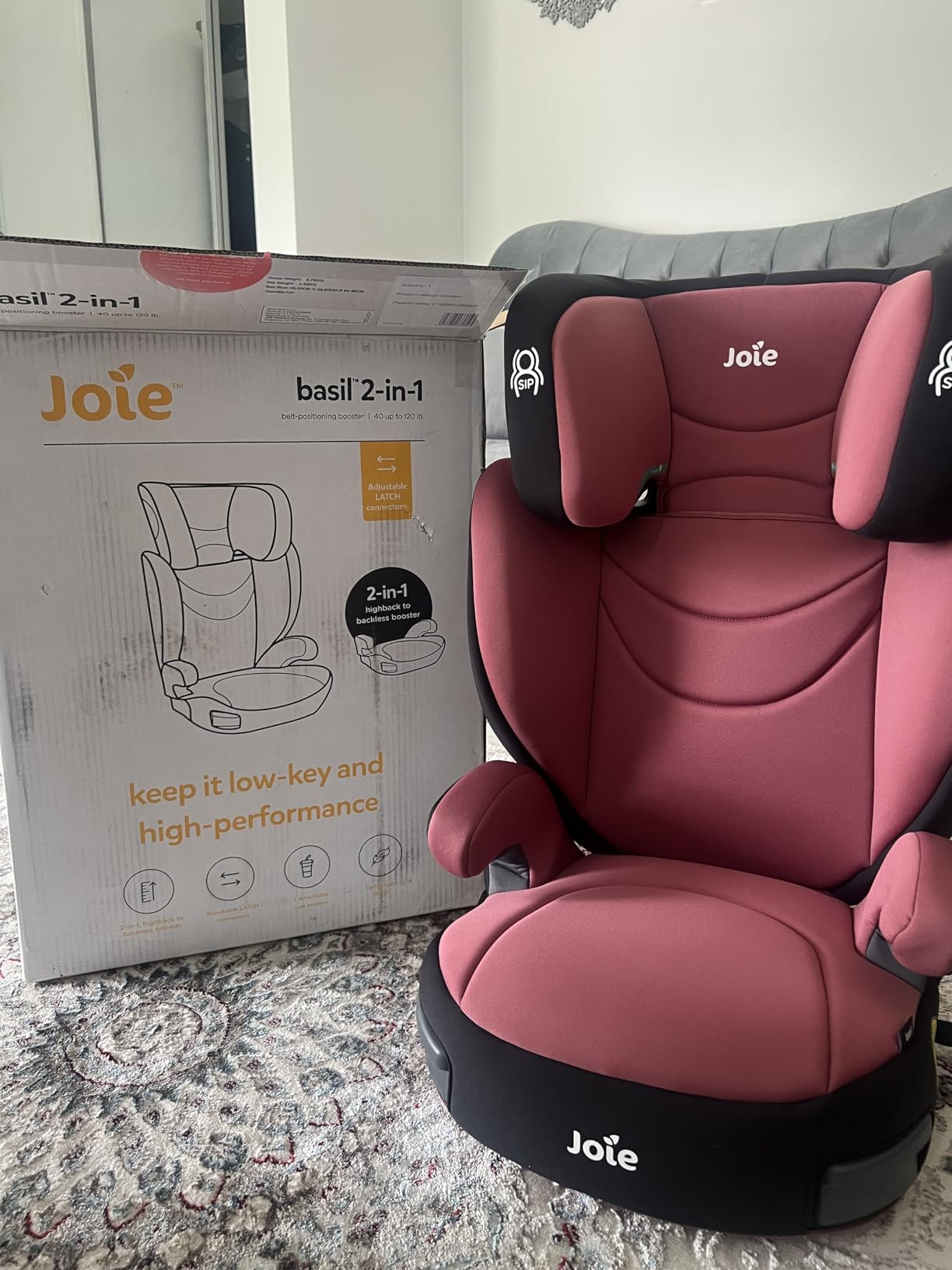
When the Joie Basil works in a carpool
It is the pick when the carpool is frequent, the vehicles are not close together, and the adult carrying the seat is not strong. A published weight of about 9 pounds is the difference between a one-hand carry and a two-hand lift.
It also suits a narrow back row, since owners report it fitting a small car without the fight, and the 2-in-1 range means you are not shopping again mid-stage.
When it is the wrong choice
It is the wrong choice for a child who treats the lap belt as something to defeat. Reviewers report slip-outs in both modes, and that is a safety consideration rather than a comfort one.
Pass on it if a rough cabin will be the main environment. A cover that one parent reported tearing suggests the fabrics are not built for heavy-duty, long-term, shared use.
10. Peg Perego Viaggio Flex 120 – The Seat That Folds Into A Trunk
PEG Viaggio Flex 120 High Back Folding Booster, Licorice (Black)
Folds to 9.8 x 23.5 x 17 inches,unfolded 26.5 x 12 x 17 inches
Weight 16 lbs
4D Total Adjust: headrest, upper backrest, side wings, recline
Five reclining positions
Aluminum-reinforced backrest with rigid LATCH
Pros
- Folds flat for a trunk or an overhead bin with a carry handle
- Four-way independent adjustment for a tailored fit
- Five recline positions and plush cushioning for long drives
- Armrest-free open design for self-buckling and more seats across
- Aluminum-reinforced backrest with rigid LATCH
Cons
- Highest 1-star share of any seat here
- Bulkier to move between vehicles than lighter options
- Aluminum frame adds weight
The Peg Perego Viaggio Flex 120 is the only seat in this roundup that folds flat, and that changes the storage question entirely. Owners who fold it report keeping it in a trunk or stowing it in an airplane overhead bin, with a built-in carry handle doing the lifting.
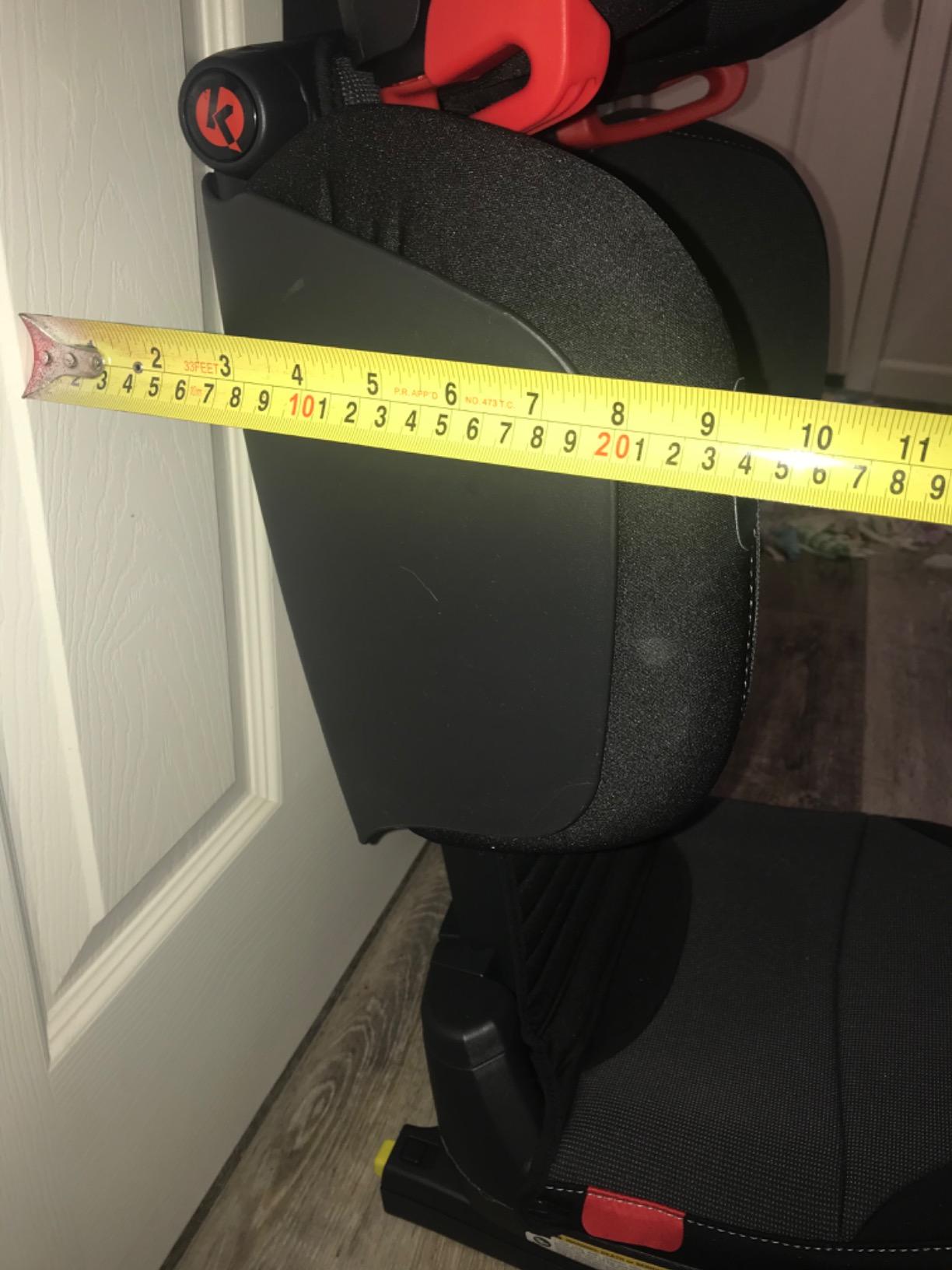
It folds to 9.8 by 23.5 by 17 inches and stands 16 pounds, which is a real object to lift. But a folded flat slab stored in a cargo area solves a problem a rigid seat cannot, which is where a booster lives between Tuesday and Thursday morning.
The 4D Total Adjust technology adjusts the headrest, the upper backrest, the side wings and the recline independently. Five reclining positions and plush extra cushioning make it the most comfortable choice here for a long carpool drive, and the armrest-free open design lets bigger kids climb in and buckle themselves.
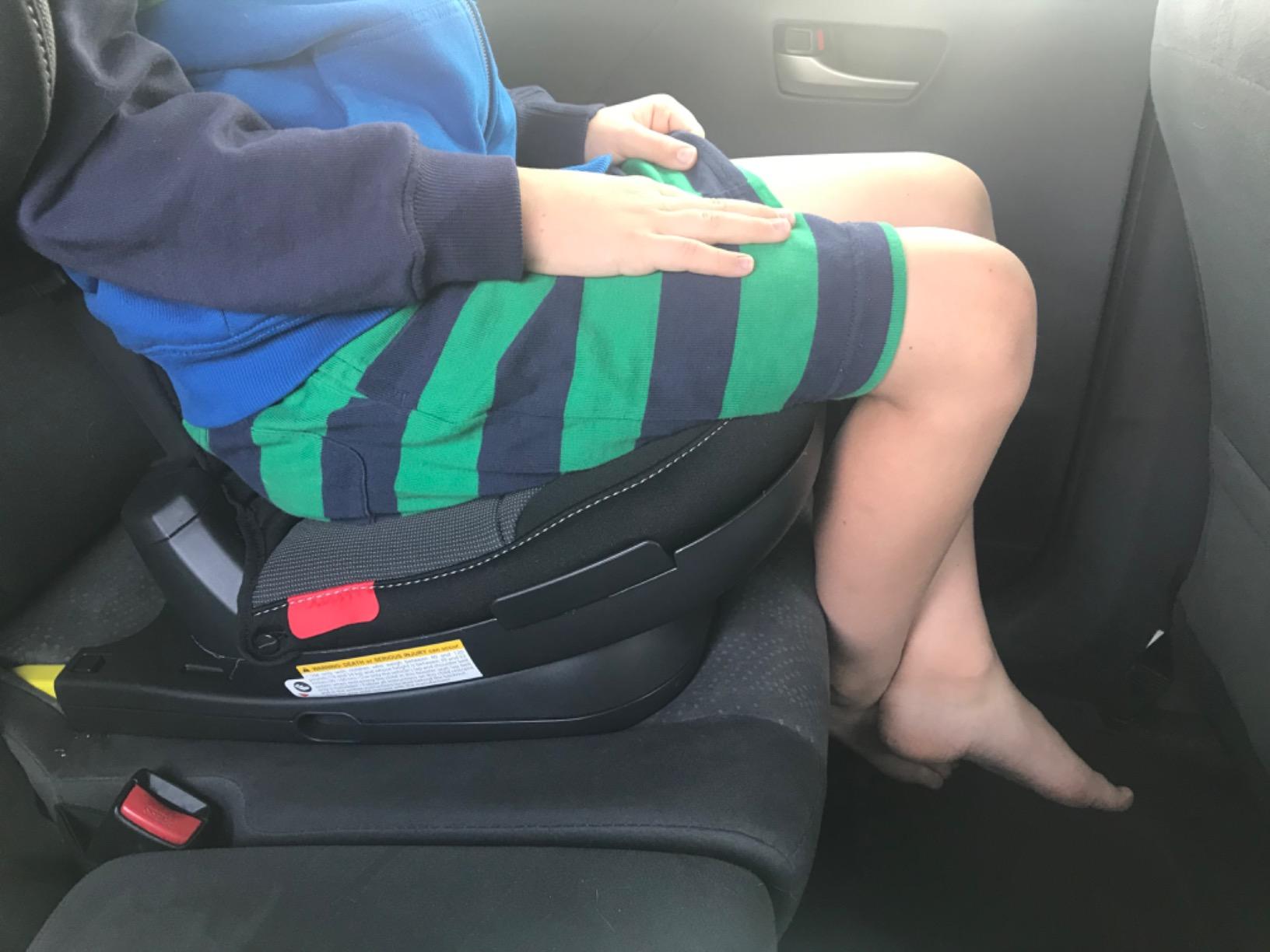
Two cautions. It carries the highest one-star share of any seat in this roundup at 9 percent, which is a real signal even alongside a solid four-star average, and several of those reviews concern the fold itself. Fold it and unfold it on the driveway floor a few times before you trust it in a dark car park.
It is also bulkier to move between vehicles than the lighter options here, because the aluminum-reinforced backrest and the frame add mass. The rigid LATCH connectors are integrated and secure, and the backrest is 100 percent flame retardant free, so the premium here buys real structure.
Because the armrests are absent, the seat also takes less width across a back row, which helps in a three-across arrangement. That is a genuine carpool advantage and it is not obvious from the folded dimensions.
When the Peg Perego Viaggio Flex 120 works in a carpool
It works best for a carpool that alternates over days rather than a seat that lives permanently in one car. Folded, it can live in a trunk or a garage shelf; unfolded, the recline and plush cushioning handle a long shared-school-run route better than any other seat here.
It also suits a family that travels with the booster, since owners cite the overhead bin fit as a purchase reason.
When it is the wrong choice
It is the wrong choice if you need a genuinely light carry. At 16 pounds with an aluminum frame, it is a two-hand lift, and the fold does not reduce what you lift, only what you store.
It is the wrong choice for a fussy sleeper who will not tolerate a fold-and-unfold routine in a cold car park at seven in the morning. Check the fold practice at home first.
How to Choose a High Back Booster Seat for Carpooling
The best high back booster seat for carpooling is the lightest seat that still holds a proper shoulder belt guide on your child, because you will install and remove it several times a week in a car you do not control. Everything below is a way of narrowing that field before you spend anything.
Weight tiers: what you can actually carry
Sort your shortlist into three groups. Under about 5 pounds is backpack territory and belongs to a backless or inflatable spare rather than a high-back booster. Nine to twelve pounds is the daily portable tier, where a car-to-car move is a one-hand operation and the seat can live in either vehicle. Fifteen to twenty-six pounds is stay-put territory, where the seat belongs permanently in one car and the other household owns the other seat.
Parents in carpool conversations describe lugging a heavy seat as the single biggest reason they eventually bought a second booster. That reaction is rational: once the mass crosses about 15 pounds, the transfer stops being a decision and becomes a negotiation with your back.
Two seats in this roundup publish a manufacturer weight. The Joie Basil is listed at approximately 9 pounds and the Peg Perego Viaggio Flex 120 at 16 pounds, and the Chicco MyFit lists 25 pounds with its box dimensions. For the remaining seats, use the build description as your guide rather than assuming a number.
LATCH type: the connector you will touch every morning
LATCH is optional on a booster, because the vehicle seat belt is doing the restraining. That myth-bust matters, but connector type still changes your daily routine more than any other feature.
Rigid connectors are fixed steel or fixed plastic arms that click straight into the anchor bight with no strap. There is nothing to tension, so the most common install mistake simply cannot happen. The Diono Everett NXT, the UPPAbaby Alta V2 and the Peg Perego Viaggio Flex 120 use this approach.
Alligator-style connectors with a SuperCinch one-pull tightener let you cinch both anchors with a single strap, then release with one hand. The Chicco KidFit ClearTex Plus uses this system, and it is the fastest strap-based option in this group.
Hook-style connectors are the most commonly cited install frustration, because they are hard to see behind the seat bight and must be manually loosened and detached every time. When a carpool route runs in the dark at seven in the morning, connector visibility is not a minor detail.
Width and the three-across question
Measure the flat usable width of your back row between the seat bights before you shop, because a booster base wide enough to crowd a neighbouring belt path will be reinstalled constantly. Seats in the narrow group sit around the 16 to 18 inch class in high-back mode; wider shells add two to three inches and eat the middle position.
The Safety 1st Grand and the Diono Everett NXT are built explicitly for a three-across fit, and the Joie Basil is reported to sit in a small car without a fight. The UPPAbaby Alta V2 runs slightly wider than the previous generation, which tightens the maths in an already full row.
The Peg Perego is the interesting case here, because its armrest-free open design means the fold does not cost you width. Parents running a large family carpool should measure rather than assume, since belt paths in the outboard position are often the binding constraint, not the seat bases.
Comfort, self-buckling and the kid who naps
A child who can buckle themselves in removes you from the handover entirely, which is the difference between a smooth carpool and a slow one. The Graco TurboBooster 2.0 and the Diono Everett NXT both use open loop belt guides for this reason, and the Peg Perego goes further with an armrest-free design that lets bigger kids climb in unaided.
For nappers, recline beats padding. The Peg Perego offers five reclining positions, the Chicco MyFit offers four with deep ErgoBoost foam, and the Chicco KidFit ClearTex Plus offers a two-position recline. Seats that owners describe as a rock with a blanket on it are not wrong, they are simply not for a child who sleeps through the drive.
Sharing a seat between households
A booster that alternates between two families should have removable machine-washable fabrics and a wipe-clean pad, because hygiene anxiety between carpool households is real and unaddressed almost everywhere. The KidFit ClearTex Plus, the Evenflo, the Safety 1st Grand and the Joie Basil all cover the fabric requirement.
Decide who owns the install check. If a grandparent or another parent drives, agree that they verify the connector click or the red-to-green indicator before the child is buckled in, and keep the manual in the vehicle rather than in your phone. Using your own seat in someone else’s vehicle is a normal arrangement, but the responsibility for a correct install should be named out loud, not assumed.
Are High Back Boosters as Safe as Five Point Harness Car Seats?
No. A high-back belt-positioning booster cuts adjusted odds of injury by roughly 70 percent compared with a seat belt alone, which is a large gain, but it is still less protective than a five-point harness that restrains the child directly. Every step down in restraint reduces protection, which is why the American Academy of Pediatrics recommends keeping children in a harness until they outgrow the seat.
The published odds make the case for a high back over a backless one. High-back belt-positioning boosters show adjusted odds of injury around 0.30 compared with seat belts alone, while backless boosters come in around 1.17, which is not statistically different from a seat belt by itself.
That is the argument for keeping the high back through a carpool, where a child is in the car several times a week rather than once. A backless booster is a reasonable occasional or travel option, but a daily shared-school-run is exactly the situation the data favours a high back for.
One practical note that comes up repeatedly: check your vehicle’s seat belt pretensioners and force limiters when you choose which position your child sits in. Outboard positions often route the belt better, and the car itself is part of how the belt fits.
The Two-Seat Carpooling Strategy
Most families in a carpool buy one seat and then fight it every morning. The better arrangement is usually two seats, but the second one does not have to be another high-back booster. This is the question parents ask most often and the one almost no competitor answers directly.
Seat one: a durable high-back booster that lives permanently in the primary car. Choose on build, growth range and belt guide quality rather than weight, because it is not going anywhere. The Britax Skyline and the UPPAbaby Alta V2 both fit that brief, one for a wide age spread and one for a permanently installed seat.
Seat two: a lightweight backless or inflatable spare that lives in the second car. This is the seat that moves. It only needs to be right for short shared-school-run legs, and an inflatable or ultralight backless booster fits in a door pocket where a rigid seat never will.
Only do this when the primary vehicle seat is not a high back. If the seat in your own car already has a high back, a second high-back booster is a duplicate purchase rather than a strategy.
Re-check the belt fit in each car separately. A booster that routes the shoulder belt correctly in one vehicle can sit badly in another. Five minutes on the driveway, once, per car.
The reason this works is that weight is the constraint, not capability. Parents in our reader discussions described exactly this progression, starting with one heavy seat and ending with one seat per car, and the complaint that disappears fastest is the one about carrying a seat through a parking lot at seven in the morning.
Frequently Asked Questions
Are high back boosters as safe as car seats?
Not quite. A high-back belt-positioning booster shows adjusted odds of injury around 0.30 compared with a seat belt alone, roughly a 70 percent reduction, but a five-point harness restrains the child directly and remains more protective. Children should stay in a harness seat until they outgrow the manufacturer limits.
Which high back booster seat is the most comfortable?
Among the seats in this roundup, the Peg Perego Viaggio Flex 120 offers the deepest comfort with five reclining positions and plush extra cushioning, and the Chicco MyFit follows closely with four recline positions and dual-density ErgoBoost foam. Many lighter hard-shell boosters are comfortable for a thirty-minute run and noticeably hard on a longer one.
Should a 7 year old be in a high back booster?
Yes, if they cannot sit still without slouching or leaning. A high back raises the child so the shoulder belt lies flat across the chest and the lap belt sits on the strong hip bones. Moving to a backless booster before your child can sit properly for the entire ride reduces protection, and a narrow booster may be outgrown on height before the child is ready for a seat belt.
Should a 7 year old be in a backless booster?
Only if your child can sit properly for the whole ride without slouching, leaning or falling asleep. Backless boosters showed adjusted odds of injury around 1.17 compared with a seat belt alone, which is not statistically different from the belt. For an occasional trip a backless seat is reasonable; for a daily carpool where the child may nap, keep the high back.
Can two car seats and one booster fit in the car?
Often yes, if you choose a narrow booster. Seats built for a three-across fit, such as the Safety 1st Grand and the Diono Everett NXT, sit in a narrower footprint, and the armrest-free Peg Perego also saves width. Measure the usable back row between the seat bights before buying, and check that the neighbouring belt paths still route correctly.
Can a 40 lb 3 year old use a booster seat?
Technically yes at exactly 40 pounds, but it is not recommended. Three-year-olds generally still belong in a forward-facing five-point harness convertible until they outgrow the manufacturer weight and height limits. Each step down in restraint reduces protection, so keeping a young child in a harness seat longer is the safer choice.
What is the best car seat for a family with multiple cars?
One durable high-back booster that lives permanently in the primary car, plus one lightweight backless or inflatable spare that lives in the second car. The permanent seat is chosen on build and growth range; the spare is chosen on weight because it is the one that moves. Only add a second seat when the primary vehicle does not already have a high-back booster.
What is the lightest high back booster seat?
Among the seats in this roundup with a published manufacturer weight, the Joie Basil 2-in-1 is listed at approximately 9 pounds, making it the lightest documented high-back booster here. It converts from high back to backless, uses a seven-position one-hand headrest, and includes a removable machine-washable cover.
The Best High Back Booster Seat for Carpooling: Our 2026 Verdict
The best high back booster seat for carpooling is the Graco TurboBooster 2.0, because it is light in the hand, converts to a backless booster in seconds and lets a child buckle themselves in before the driver is ready. The Chicco MyFit is our pick when a second, smaller child needs a harness in the same car, and the Chicco KidFit ClearTex Plus wins on one-hand LATCH release and self-buckling.
For a seat that stays put and never moves, the UPPAbaby Alta V2 is the strongest build here, and for a wide age spread the Britax Skyline carries the longest range. Whatever you choose, measure the back row, name who checks the install, and give the seat a wash between households. Our 2026 picks are updated as new models land, and you can see the wider field in our general best booster car seats guide.