

I have spent more years than I care to admit reading, teaching, and arguing about Shakespeare. Along the way, I have collected well over a dozen editions of the complete works and individual plays. The single biggest lesson I learned is this: the edition you choose completely changes your experience of the text. The best annotated editions of Shakespeare plays transform confusing archaic references into vivid, immediate drama.
Annotations matter because Shakespeare wrote for actors and audiences, not for solitary readers with a dictionary. A good glossary explains that “wherefore” means “why,” not “where.” An excellent footnote tells you why a joke was hilarious to a groundling in 1599. The right scholarly apparatus helps you see the play the way Shakespeare’s company performed it, and that is what separates a frustrating reading experience from an unforgettable one.
Our team compared eight of the most widely recommended annotated Shakespeare editions available in 2026. We looked at complete works volumes from Norton, Oxford, Bevington, and the RSC, plus individual play editions from Arden, Cambridge, Folger, and Pelican. Whether you are a student buying your first annotated Shakespeare, a teacher building a syllabus, or a seasoned scholar who wants a fresh perspective, this guide will help you find the right fit.
Table of Contents
Top 3 Picks for Best Annotated Shakespeare Editions
Out of the eight editions we reviewed, three stood out for different reasons. The Norton Shakespeare is our editor’s choice for its unmatched combination of scholarly depth and readable annotations. The Oxford Shakespeare offers the best value in a single-volume complete works. The Folger Romeo and Juliet is the most accessible and affordable entry point for new readers.

The Norton Shakespeare 3rd Edition
- Chronological ordering
- Marginal glosses
- Detailed footnotes
- All works included

Oxford Shakespeare Complete Works 2nd Edition
- Single volume
- Scholarly introductions
- Includes Edward III
- Glossary and index

Romeo and Juliet Folger Shakespeare Library
- Opposite page notes
- Scene summaries
- Beginner friendly
- Affordable format
Best Annotated Editions of Shakespeare Plays in 2026
Here is a quick side-by-side overview of all eight editions we cover in this guide. Each one serves a different purpose, from deep scholarly research to casual classroom reading. Use this table to compare at a glance, then scroll down for the full review of each edition.
| Product | Specifications | Action |
|---|---|---|
| Norton Shakespeare 3rd Edition |
|
Check Latest Price |
| Oxford Shakespeare Complete Works 2nd |
|
Check Latest Price |
 Bevington Complete Works 7th Edition Bevington Complete Works 7th Edition |
|
Check Latest Price |
 RSC Complete Works 2nd Edition RSC Complete Works 2nd Edition |
|
Check Latest Price |
 Arden Twelfth Night 3rd Series Arden Twelfth Night 3rd Series |
|
Check Latest Price |
 Cambridge Romeo and Juliet School Cambridge Romeo and Juliet School |
|
Check Latest Price |
| Folger Romeo and Juliet |
|
Check Latest Price |
 Pelican Macbeth Pelican Macbeth |
|
Check Latest Price |
1. The Norton Shakespeare (3rd Edition) – Most Comprehensive Complete Works
The Norton Shakespeare
3rd Edition
Edited by Greenblatt et al
Chronological order
Marginal glosses and footnotes
All works included
Pros
- Excellent marginal glosses alongside verses
- Comprehensive footnotes for deeper study
- Chronological order shows artistic development
- Quality slipcase and binding
- Helpful introduction to each play
Cons
- Pages are thin causing highlighter bleed
- Very heavy and thick volume
- Chronological ordering can feel unfamiliar
When I first opened the Norton Shakespeare, I was struck by how immediately accessible it made the plays. The marginal glosses sit right next to the verse, so you never have to break your reading rhythm to look up an unfamiliar word. Stephen Greenblatt and his editorial team built this edition around the idea that Shakespeare should be read in the order he wrote, which gives you a fascinating window into how his craft evolved over two decades.
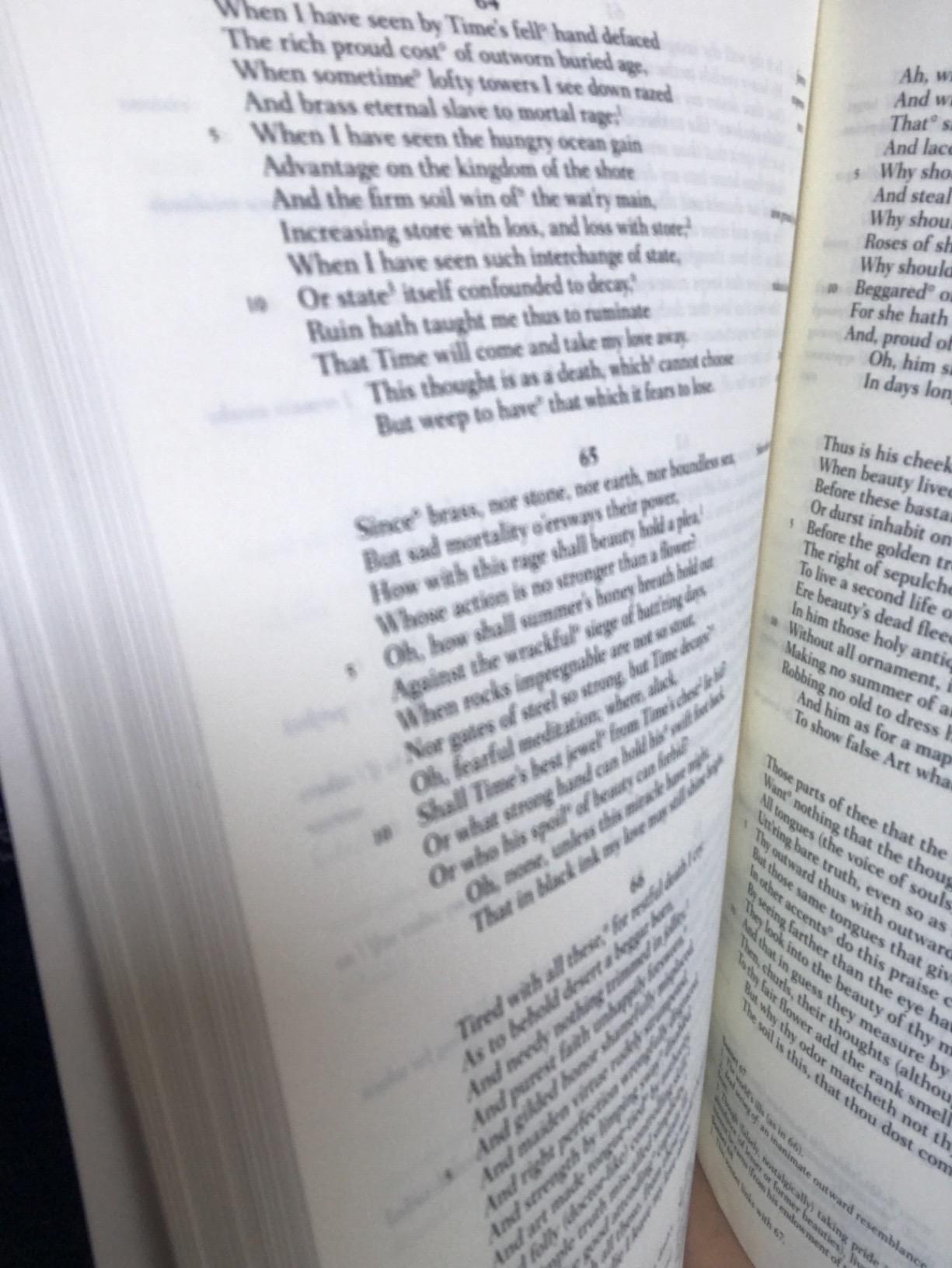
The annotation system is what makes Norton special. Unlike editions that bury notes at the bottom of the page in tiny type, Norton places short glosses in the margin next to the relevant lines. Longer notes still appear as footnotes, but the marginal system handles roughly eighty percent of what most readers need without a single glance downward. One reviewer put it perfectly: this is the only version of Shakespeare they can read and actually understand with enjoyment.
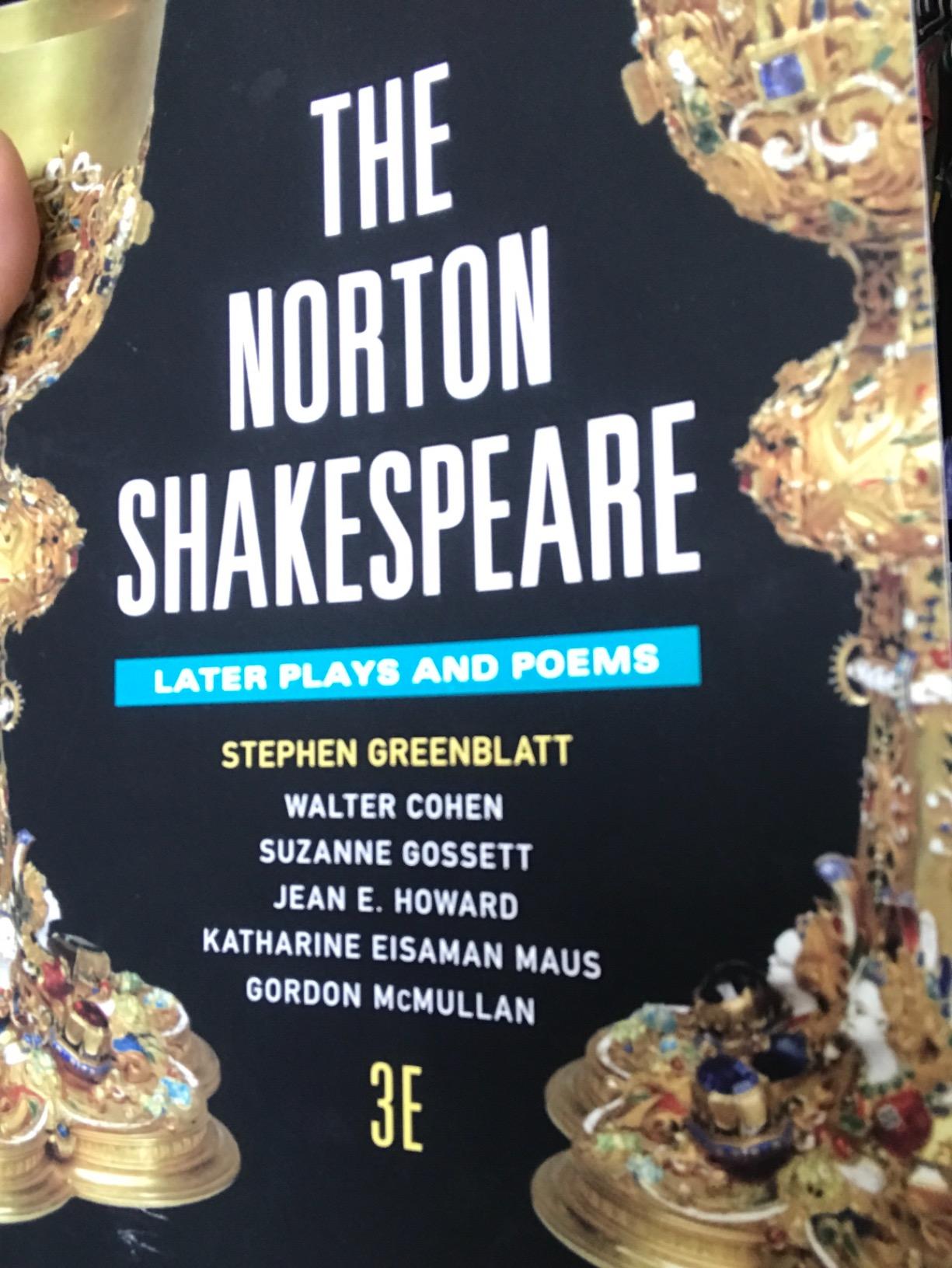
The general introduction runs over a hundred pages and covers Shakespeare’s life, the theatrical world of early modern London, and the editorial challenges of assembling a complete works from quartos and folios. Each play also gets its own focused introduction that discusses sources, dating, themes, and performance history. I found these introductions genuinely helpful rather than dry academic padding.
The physical book is a beast. At seven pounds and over three thousand pages, this is not something you read in bed. The slipcase is attractive and the binding holds up well under heavy use. The pages are on the thin side, which keeps the bulk manageable but means highlighters can bleed through. If you annotate heavily, consider using colored pencils instead.
Who benefits most from the Norton Shakespeare
This edition shines brightest for college students, dedicated readers, and educators who want a single volume they can reference for years. The chronological arrangement is especially valuable if you are studying Shakespeare’s development as a writer or tracing how his style matured from early comedies to late romances.
If you want one complete works that balances scholarly rigor with genuine readability, the Norton is hard to beat. The marginal gloss system alone makes it worth the investment for anyone who has struggled through unannotated Shakespeare in the past.
Drawbacks to consider before buying
The chronological ordering can throw off readers who prefer the traditional genre grouping of comedies, histories, and tragedies. If you are used to finding Henry V among the histories, you will need to adjust to finding it by date instead. Some readers also find the sheer size unwieldy for casual reading sessions.
2. The Oxford Shakespeare: Complete Works (2nd Edition) – Best Value Single Volume
The Oxford Shakespeare: The Complete Works, 2nd Edition
2nd Edition
Edited by Wells and Taylor
Single volume
Includes Edward III and Sir Thomas More
Glossary and index
Pros
- Beautiful all in one volume
- Excellent scholarly introductions per play
- Includes Edward III and Sir Thomas More
- Good paper quality and legible font
- Comprehensive index and bibliography
Cons
- Paperback can be flimsy
- Typeface is quite small
- Hardbound version can deform when read in bed
The Oxford Shakespeare has been my go-to recommendation for readers who want authoritative scholarship without the intimidating bulk of the Norton. Edited by Stanley Wells and Gary Taylor, two of the most respected Shakespeare scholars alive, this single volume delivers the complete works with clean, readable annotations. At 1344 pages, it is substantial but actually manageable on a desk or lap.
What sets Oxford apart is its editorial boldness. The editors include Edward III and Sir Thomas More as authentic Shakespeare works, which most other complete works editions omit. They also make sometimes controversial editorial choices about which variant readings to use, and they explain every significant decision in the textual notes. I appreciate that transparency because it lets readers see where the editor intervened rather than presenting the text as if it descended from heaven.

Each play receives a focused introduction covering sources, dating, and major interpretive questions. The notes are thorough without being overwhelming. I found them slightly less dense than Arden’s notes but more substantive than what Folger provides. This makes Oxford a great middle ground for readers who want more than a school edition but less than a full critical apparatus.
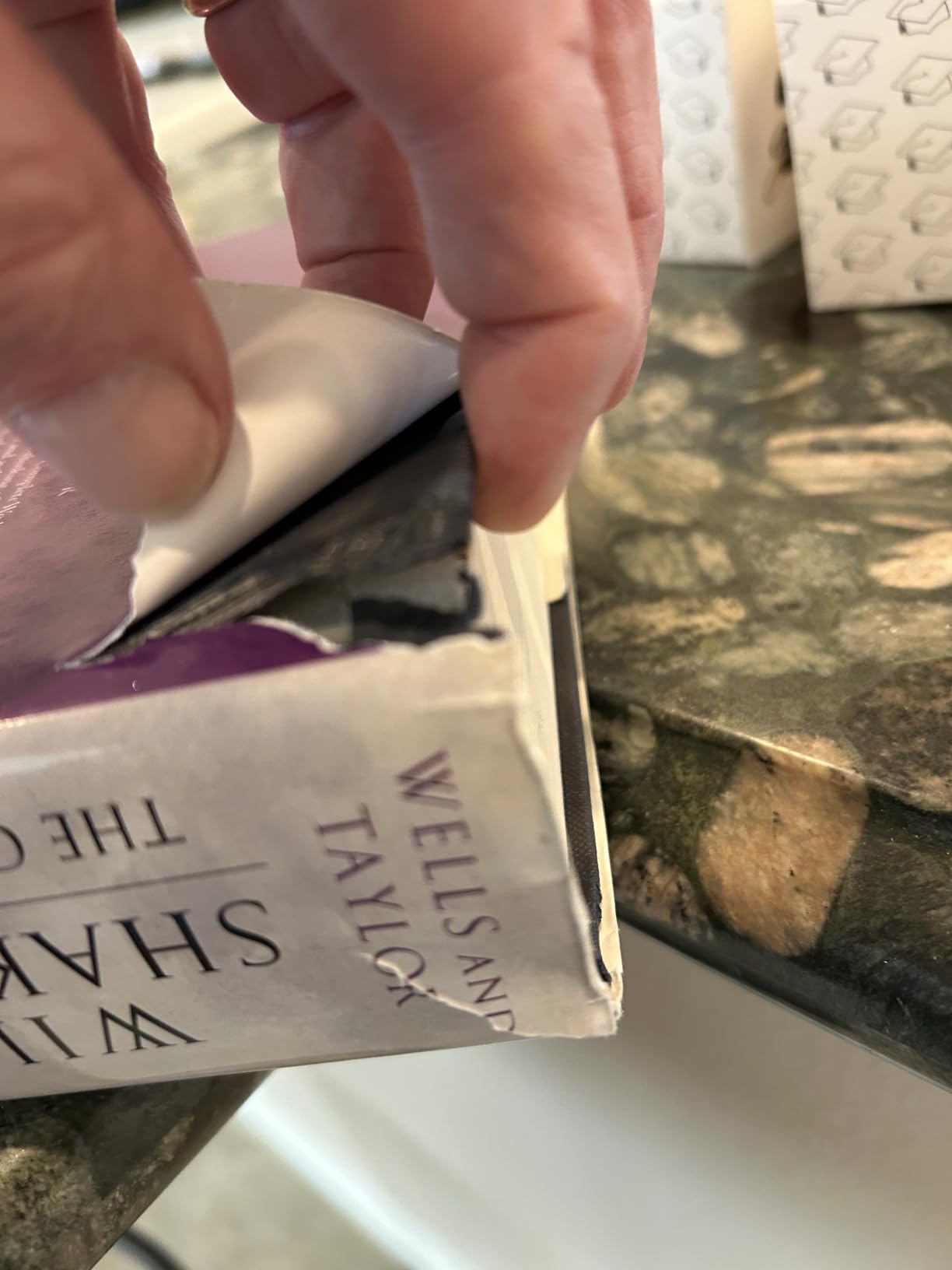
The physical quality depends on which format you choose. The hardback is solid and lies reasonably flat, though it can warp if you read it in bed with the spine bent. The paperback is more affordable but the binding can feel flimsy under heavy use. The typeface is on the small side, which keeps the page count down but may strain tired eyes during long reading sessions.
How Oxford compares to Norton and Arden
Oxford sits between Norton and Arden in annotation depth. Norton offers more marginal glosses and a longer general introduction, while Arden provides deeper notes on individual plays. Oxford gives you solid introductions and clear notes in a portable format that does not require a dedicated shelf. For most general readers, that is the sweet spot.
The inclusion of Edward III and Sir Thomas More is a meaningful editorial statement. If you want the most complete collection of works attributed to Shakespeare, Oxford is the edition that takes those attributions most seriously.
Potential limitations to weigh
The small typeface is the most common complaint from reviewers. If your eyes are not what they used to be, you may want to look at the Norton or Bevington for slightly larger text. The paperback binding also raises durability concerns for readers who plan to use this volume daily over several years.
3. Bevington Complete Works of Shakespeare (7th Edition) – Best Footnotes of Any Edition
Complete Works of Shakespeare, The
7th Edition
Edited by David Bevington
Double column layout
Genre organized
Includes Two Noble Kinsmen
Pros
- Best footnotes of any complete works edition
- Clear double column layout
- Excellent introductory essays
- Comprehensive coverage including Two Noble Kinsmen
- Reader friendly for students and general readers
Cons
- Very thin pages prone to damage
- Binding quality can be inconsistent
- Some print bleed through visible
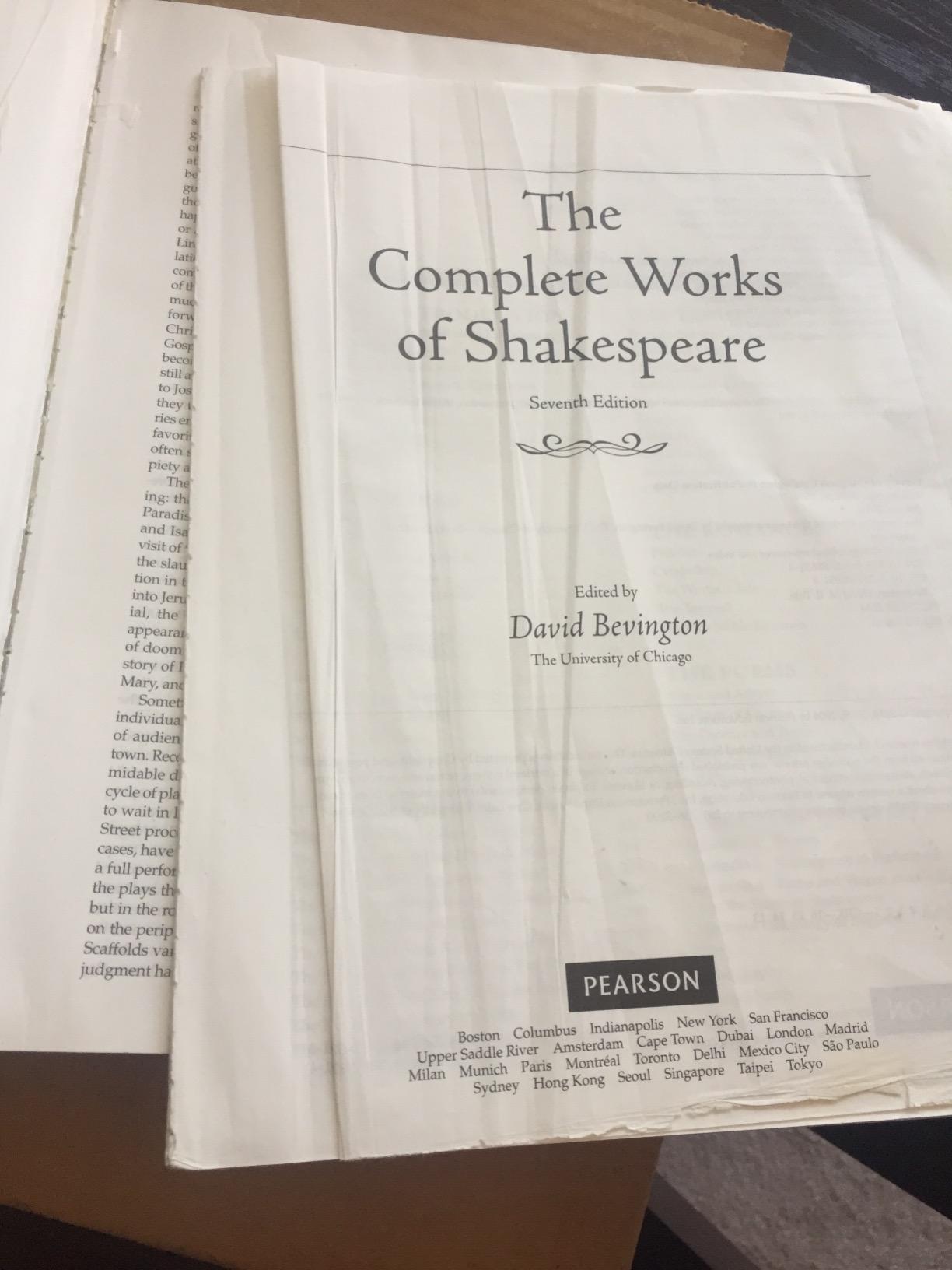
David Bevington was one of those rare scholars who could write about Shakespeare with clarity and warmth rather than academic jargon. His complete works edition reflects that gift. The double-column layout keeps lines short enough for comfortable reading, and the footnotes are positioned close to the text they explain so you rarely lose your place.
I have heard professors call Bevington’s footnotes the best of any single-volume complete works, and after comparing them side by side with Norton and Oxford, I agree. The notes explain not just what words mean but why they matter, how they would have sounded to an Elizabethan audience, and what performance choices they suggest. This is annotation that makes you a better reader rather than just a better trivia contestant.
Each play begins with an introductory essay that covers historical context, sources, major themes, and critical reception. These essays run several pages each and are written in Bevington’s characteristic accessible style. I have assigned this edition in undergraduate courses and watched students who dreaded Shakespeare become genuinely engaged with the material.
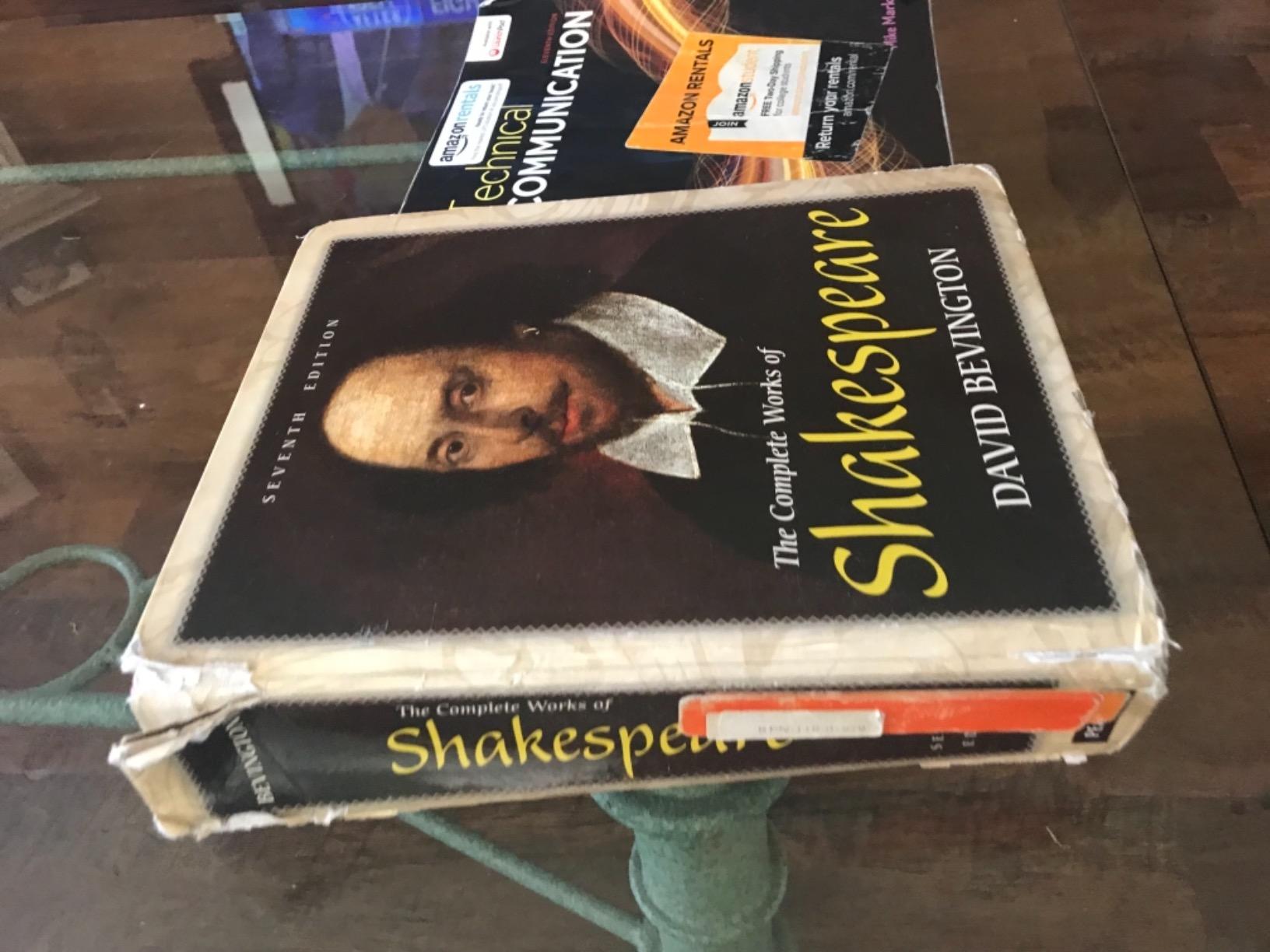
The physical production is the main weakness. The pages are extremely thin, which keeps this 2016-page book from being even heavier than its 4.6 pounds, but it means ink shows through from the reverse side and highlighters bleed badly. The binding has also drawn complaints for separating under heavy use, which is disappointing given the premium price point.
Why scholars and teachers choose Bevington
The introductory essays alone are worth the price for teachers building a course. Bevington writes about each play with infectious enthusiasm and deep knowledge, giving you enough context to lead a discussion without needing to assign supplementary readings. The genre organization, grouping comedies, histories, tragedies, and romances together, also makes it easy to structure a syllabus around genre study.
Including The Two Noble Kinsmen gives Bevington a slight edge in completeness over editions that stop at the traditional 38 plays. Scholars who study collaboration and authorship will appreciate having this late romance included with full annotation.
What to watch out for with the physical book
Treat this volume gently. The thin pages tear easily, and the binding can crack if you flatten the book open for note-taking. Consider investing in a book stand if you plan to use it heavily, and use archival-quality bookmarks rather than folding pages. The content is exceptional but the physical object requires more care than most.
4. RSC William Shakespeare Complete Works (2nd Edition) – Best for Actors and Performers
William Shakespeare Complete Works Second Edition
2nd Edition
RSC association
Single column layout
Color production plates
Actor focused annotations
Pros
- RSC association provides authoritative annotations
- Beautiful color production plates
- Modern single column layout
- Excellent for actors and performers
- Comprehensive coverage of all works
Cons
- Book is extremely heavy over 7 pounds
- Print is very small especially in footnotes
- Paper quality is thin
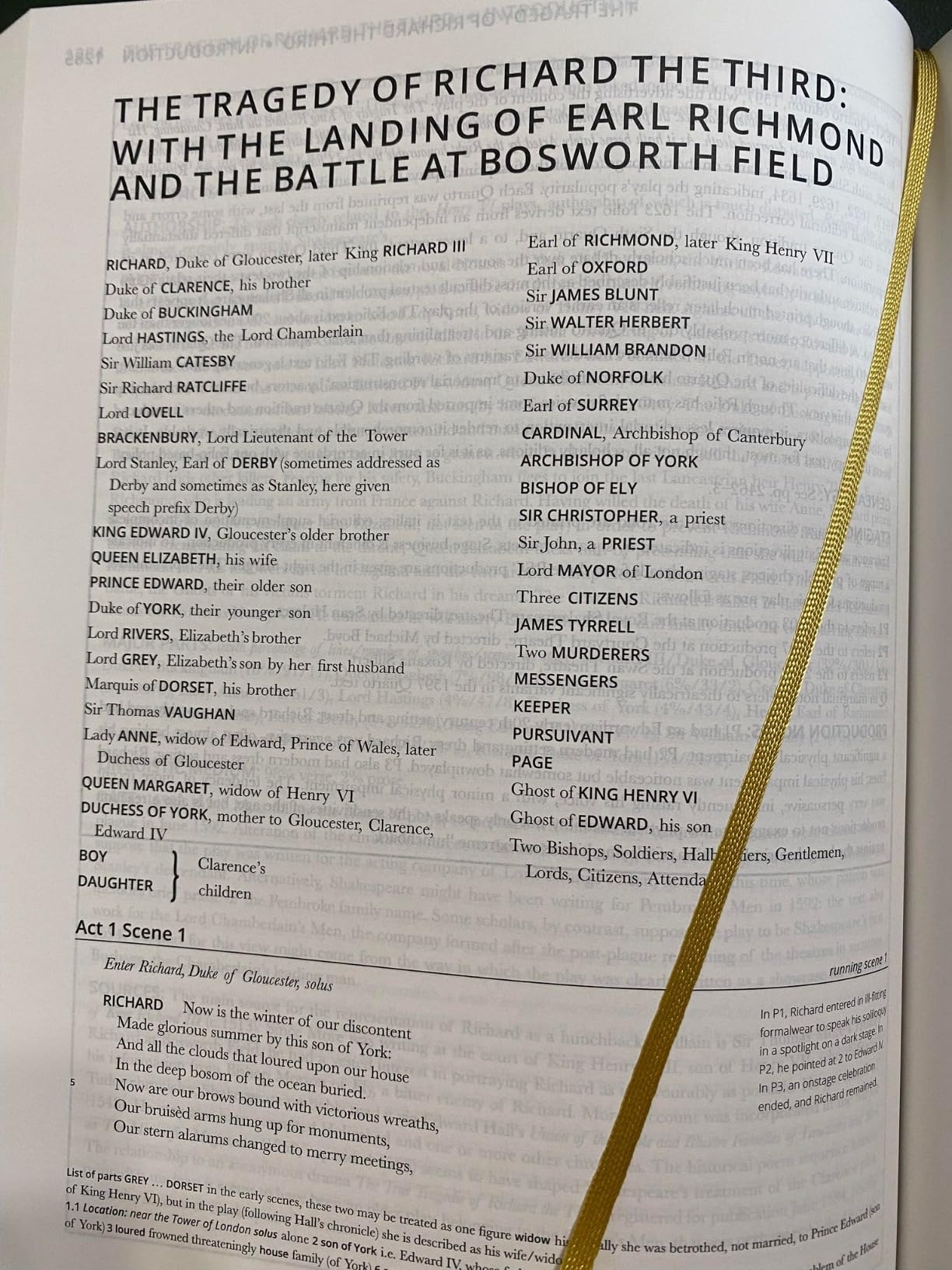
The Royal Shakespeare Company produced this edition with working actors in mind, and that theatrical orientation changes everything about how the annotations work. Instead of focusing on textual history and scholarly debates, the notes emphasize staging, blocking, delivery, and the practical demands of speaking Shakespeare’s verse aloud. As someone who has directed student productions, I found this approach refreshing and genuinely useful.
The single-column layout is a departure from most complete works editions, which use double columns to save space. Reading Shakespeare in a single column feels more like reading a script, which suits the theatrical focus. The modern font design is clean and readable, though the footnote text is admittedly small.
The color plates from RSC productions are a highlight. Seeing photographs of actual stage productions alongside the text helps you visualize how a scene plays in performance. I found myself paying closer attention to stage directions and entrance cues because the plates reminded me these are plays, not novels.
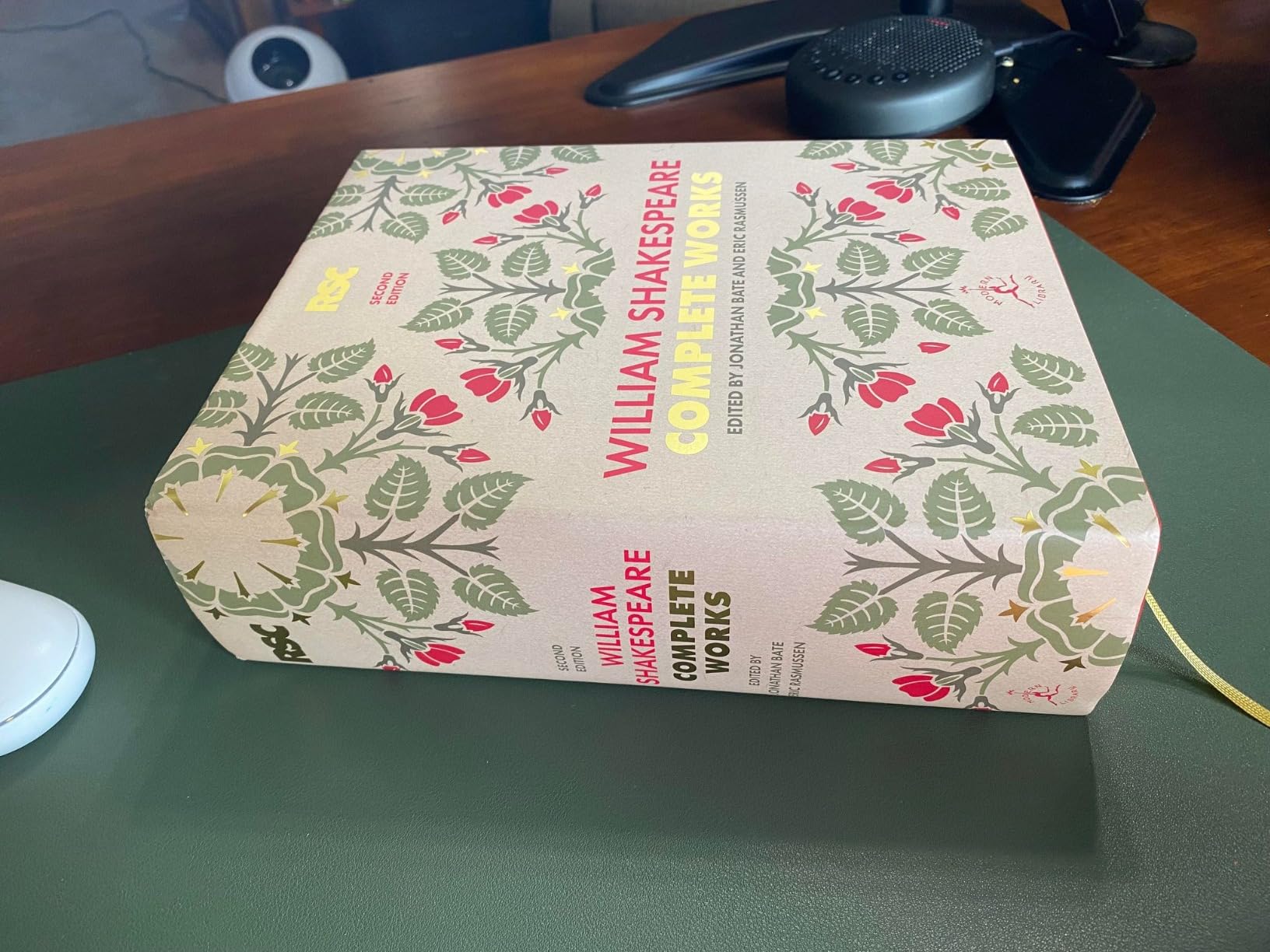
At over seven pounds and 2532 pages, this is physically the heaviest edition in our roundup. The RSC edition is not something you carry to class. It is a reference work you keep on a desk or table and consult when you need authoritative guidance on staging and performance. The thin paper keeps the weight from being even worse, but it also means you need to handle the pages carefully.
What makes this edition different from Norton and Oxford
The RSC edition prioritizes the practical question of how to perform the plays over the scholarly question of which textual variants to use. Where Norton spends pages on editorial methodology and Oxford debates authorship questions, the RSC focuses on what an actor needs to know to deliver the lines effectively. If you work in theater, this is the edition that speaks your language.
The highest rating in our roundup at 4.7 out of 5 reflects how well this edition serves its target audience. Actors, directors, and drama students consistently describe it as the edition they wish they had found years earlier.
Practical drawbacks for casual readers
The weight alone makes this edition impractical for casual reading. The small footnote text can also frustrate readers who are not used to scholarly apparatus. If you are looking for a complete works to read for pleasure, Norton or Oxford will serve you better. The RSC edition earns its place when your goal is performance preparation.
5. Arden Shakespeare Twelfth Night (3rd Series) – Gold Standard Scholarly Edition
Twelfth Night: Third Series (The Arden Shakespeare Third Series, 20)
3rd Series
Edited by Keir Elam
150 page introduction
Extensive footnotes
Textual history analysis
Pros
- Best scholarly source for Shakespeare texts
- Indispensable extensive footnotes
- Excellent introduction by Keir Elam
- Comprehensive textual history
- Ideal for serious actors and scholars
Cons
- Footnotes dominate the page squeezing text
- Not recommended for casual high school readers
- Some information is un actable for performers
The Arden Shakespeare has set the standard for scholarly editions for over 125 years, and their Twelfth Night edited by Keir Elam shows exactly why. The 150-page introduction alone is a small book, covering the play’s composition, sources, textual history, performance history, and critical reception with a depth that no complete works edition can match.
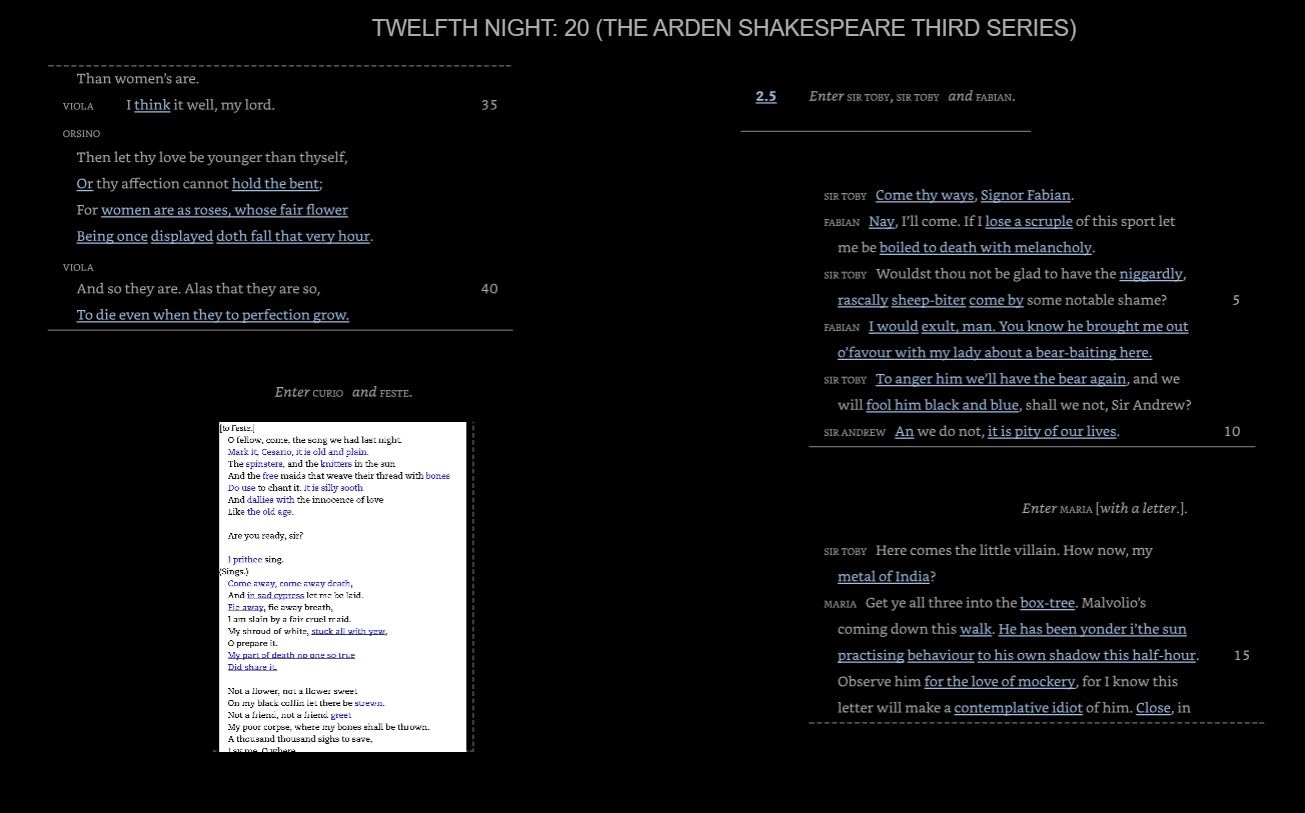
When I first read this edition, I was amazed at how much I had been missing in a play I thought I knew well. Elam’s footnotes explain every linguistic puzzle, every cultural reference, and every staging question with precision and authority. The notes can occupy more than half the page, which tells you how dense and detailed the annotation is.
This is not an edition for browsing. It is an edition for deep study. If you are writing a paper on Twelfth Night, preparing a production, or simply want to understand the play at the highest level, Arden is the edition that scholars cite when they cite an edition at all. The textual apparatus includes variant readings from quarto and folio sources, giving you a window into the editorial decisions behind the text you read.
Arden publishes individual editions of each play rather than a complete works, which means you can build a collection tailored to your interests. The Third Series represents the current state of Arden scholarship, with updated introductions and notes reflecting decades of new research. A Fourth Series is in progress, but the Third Series editions remain authoritative and widely available.
When to choose Arden over other editions
Arden is the edition graduate students cite in dissertations, professors assign in seminars, and serious actors study before auditions. If you need to understand the textual history of a specific passage or trace how a particular line has been edited over centuries, no other edition gives you that level of detail. The footnotes are essentially a critical commentary running alongside the text.
For Twelfth Night specifically, Elam’s introduction covers themes of identity, gender, and language with insight that shaped my own reading of the play permanently. The illustrations of material culture references also help you picture the world the play inhabits.
Who should avoid this edition
Casual readers and high school students will find the annotation density overwhelming. The footnotes can squeeze the play text into a narrow column, making it hard to read the verse for its own sake. If you just want to enjoy Twelfth Night without a scholarly apparatus, choose the Folger or Pelican edition instead.
6. Romeo and Juliet (Cambridge School Shakespeare) – Best Classroom Edition
Romeo and Juliet (Cambridge School Shakespeare)
4th Edition
Cambridge School Shakespeare
Opposite page format
Production photos
Classroom ready
Pros
- Opposite page format with explanations on the left
- Includes background material and production photos
- Methodological suggestions for teachers
- Accessible to high school students
- Affordable individual play format
Cons
- Annotations are lighter than scholarly editions
- Limited textual apparatus
- No scholarly footnotes or variant readings
- Designed for classroom use not research
The Cambridge School Shakespeare series uses a brilliant opposite-page format that I wish more editions adopted. The play text sits on the right-hand page while explanations, discussion questions, and background material appear on the left. This layout means you never have to look down at footnotes or flip to a glossary. Everything you need to understand the current scene is right there in your field of vision.
When I taught Romeo and Juliet to ninth graders, this was the edition that made the difference. Students who had been completely lost with a bare-text paperback suddenly had the context they needed. The left-page notes explain difficult language, provide historical context, and suggest activities that bring the play to life in a classroom setting.
The production photographs scattered throughout the edition are a thoughtful touch. Seeing how different theatrical companies have staged key scenes helps students understand that these plays are living, evolving works rather than museum pieces. I found these images sparked some of the best classroom discussions because students could see multiple valid interpretations of the same moment.
This is not a scholarly edition. There are no variant readings, no textual apparatus, no extensive footnotes on linguistic history. What you get instead is a teaching tool designed specifically to help students engage with the play for the first time. The fourth edition includes updated pedagogical features that reflect current best practices in Shakespeare education.
Why teachers love the Cambridge format
The opposite-page design eliminates the most common barrier to student engagement with Shakespeare: the constant interruption of looking up notes. When explanations sit next to the text they explain, reading becomes fluid and natural. The methodological suggestions for teachers also save hours of preparation time, with ready-made discussion prompts and activities for each scene.
For students reading Romeo and Juliet for the first time, this is the edition that builds confidence. The accessible notes and supportive layout turn a potentially intimidating text into an engaging story about love, conflict, and consequence.
What this edition does not provide
If you need textual criticism, variant readings, or deep scholarly analysis, look elsewhere. The Cambridge School Shakespeare is a teaching edition, not a research edition. College students writing papers should pair it with an Arden or Oxford edition for scholarly depth, while using Cambridge as their primary reading copy for comprehension.
7. Romeo and Juliet (Folger Shakespeare Library) – Most Accessible Annotated Edition
Romeo and Juliet (Folger Shakespeare Library)
Folger Shakespeare Library
Opposite page layout
Scene by scene summaries
Reading age 12 to 17
Annotated edition
Pros
- Opposite page layout with notes facing text
- Scene by scene summaries included
- Affordable and widely available
- Beginner friendly annotations
- Compact and portable format
Cons
- Annotations are basic not scholarly
- No textual apparatus or variant readings
- Small format can feel cramped
- Limited introductory material
The Folger Shakespeare Library editions are the paperbacks you see in every high school English classroom in America, and for good reason. They use the same opposite-page format as Cambridge but with a more compact, affordable design. Each page of play text faces a page of notes, definitions, and explanations designed to help you understand exactly what is happening in that scene.
I recommend Folger editions to anyone reading Shakespeare for pleasure for the first time. The annotations are clear without being condescending, and the scene-by-scene summaries at the start of each section help you orient yourself if you get lost in the language. At this price point, nothing comes close to the value Folger provides.
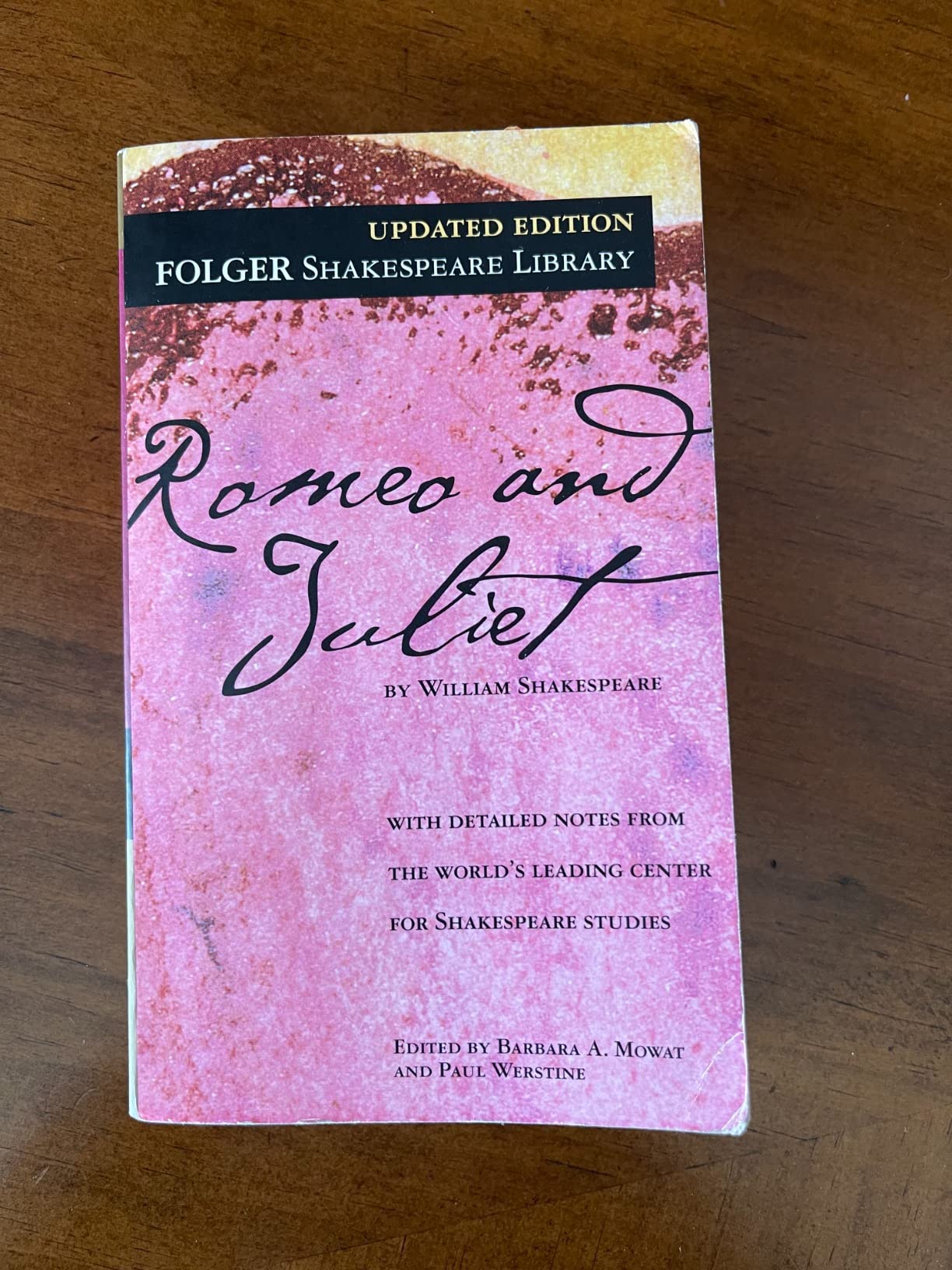
The Folger Library is one of the world’s great Shakespeare research institutions, and that institutional authority backs every edition they publish. The texts are based on the most reliable sources, and the notes reflect the work of scholars who have spent their careers studying these plays. You are getting genuine expertise in a format anyone can afford.
The compact size makes these editions genuinely portable. You can slip one in a bag or pocket and read on a commute, which is simply not possible with a complete works volume. For readers who want to carry Shakespeare with them, Folger is the practical choice.

What makes Folger the best starting point
The opposite-page note format is the single most reader-friendly layout for annotated Shakespeare. You never break your reading flow to look down at footnotes or flip to a glossary. The scene summaries give you a roadmap before you start each section, which helps you follow the plot even when the language gets dense.
The Folger editions are also the most affordable annotated Shakespeare plays on the market. You can build a collection of individual plays for a fraction of what a single complete works volume costs, and each edition includes the same quality of annotation.
Limitations of the Folger format
The annotations are designed for general readers, not scholars. You will not find variant readings, textual apparatus, or deep critical analysis. The small physical format can also feel cramped if you prefer generous margins for your own notes. For serious study, pair Folger with Arden or Bevington.
8. Macbeth (The Pelican Shakespeare) – Best Portable Single-Play Edition
Macbeth (The Pelican Shakespeare)
Pelican Shakespeare
Penguin Classics
Compact format
Introductory essays
Line illustrations
Pros
- Compact and portable format
- Introductory essays included
- Line illustrations throughout
- Useful annotations without overloading
- Iconic trade dress design
Cons
- Annotations are lighter than Arden or Folger
- Limited supplementary material
- Small format not ideal for annotation
- No opposite page note layout
The Pelican Shakespeare series from Penguin Classics occupies a distinctive niche between the classroom accessibility of Folger and the scholarly depth of Arden. These editions are compact, affordable, and annotated enough to help general readers without overwhelming them. The iconic cover design also makes them some of the most attractive Shakespeare paperbacks on the market.
When I picked up the Pelican Macbeth, I appreciated the balance it strikes. The introductory essay gives you enough context to understand the play’s historical background and major themes without bogging you down in academic debate. The footnotes are present but selective, explaining genuinely difficult passages rather than annotating every line.
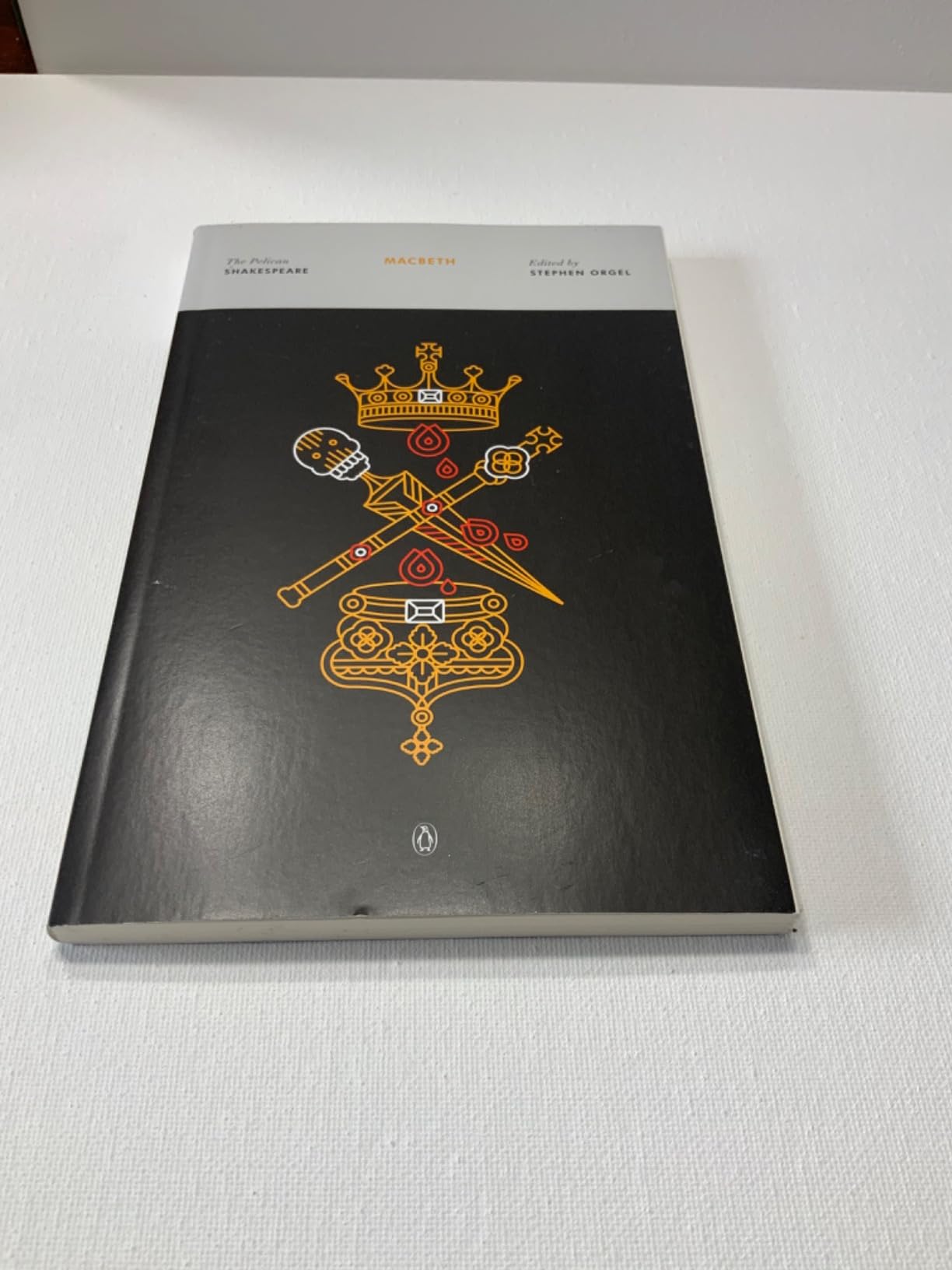
The line illustrations scattered throughout the text add visual interest without being decorative filler. They depict objects, costumes, and settings that help you picture the world of the play. I found them especially helpful for Macbeth’s atmospheric scenes, where understanding the visual environment of medieval Scotland adds to the mood.
At 144 pages and under five ounces, this is the most portable edition in our roundup. It slips easily into a jacket pocket or small bag, making it ideal for reading on the go. If you want to carry a Shakespeare play with you for casual reading, Pelican is the series that makes that practical.
Where Pelican fits in the annotated landscape
Pelican offers more scholarly apparatus than Folger but less than Arden. The introductory essays are written by respected scholars and cover the essential background without exhaustive detail. Footnotes explain difficult language and cultural references but do not dive into textual criticism. This makes Pelican a strong choice for readers who want more than basic definitions but are not ready for full scholarly editions.
The Macbeth edition specifically benefits from the series’ concise approach. The play’s short length means the annotations cover a higher percentage of difficult passages, and the introductory essay efficiently covers the historical context of Scottish kingship and the Gunpowder Plot that influenced the play’s composition.
Who should choose a different edition
If you need the opposite-page format for easy reading, choose Folger or Cambridge. If you need variant readings and textual apparatus, choose Arden. Pelican fills the middle ground for readers who want quality annotation in a portable, affordable package without the visual overhead of footnotes on every line.
How to Choose the Right Annotated Shakespeare Edition
Finding the best annotated editions of Shakespeare plays starts with understanding what you need from the annotations. A graduate student writing a dissertation on textual variants needs a completely different edition than a high school student reading Romeo and Juliet for the first time. Let me break down the key decisions.
Complete Works vs Individual Play Editions
Complete works volumes like Norton, Oxford, Bevington, and the RSC edition give you everything in one place. They are cost-effective if you plan to read multiple plays and provide consistency in editorial approach across the canon. The trade-off is size and weight. These are reference volumes, not books you carry around.
Individual play editions from Arden, Cambridge, Folger, and Pelican are portable and affordable. They also allow deeper annotation than any complete works can offer, because the editor focuses on a single play. If you are studying one play intensively, the individual edition always provides richer annotation than the complete works version.
Annotation Depth: Matching Notes to Your Needs
Annotation depth ranges from basic to exhaustive. Folger offers the lightest annotations, providing definitions and brief explanations on opposite pages. Pelican adds scholarly introductions with moderately detailed footnotes. Cambridge School Shakespeare focuses on pedagogical support for students. Norton and Oxford provide scholarly footnotes with literary and historical context. Arden delivers exhaustive annotation that can fill half the page.
Choose the depth that matches your reading purpose. Too little annotation leaves you confused, while too much can overwhelm you and interrupt the reading experience. The sweet spot for most general readers is Norton or Oxford for complete works, or Pelican for individual plays.
Choosing by Reader Type
Beginners should start with Folger individual play editions. The opposite-page format, scene summaries, and affordable price make Shakespeare accessible without dumbing it down. Move to Cambridge School Shakespeare if you want a more structured reading experience with teaching support.
Students at the college level should consider the Norton or Bevington complete works for breadth, paired with Arden individual editions for plays they study intensively. The marginal glosses in Norton and the superior footnotes in Bevington bridge the gap between high school accessibility and graduate-level scholarship.
Scholars need Arden for its unmatched textual apparatus and critical depth. The variant readings, extensive introductions, and detailed footnotes make Arden the edition that other scholars cite. Supplement with the RSC edition for performance-oriented annotation and the Oxford for its bold editorial choices.
Actors and theater practitioners should look first at the RSC complete works, which was designed specifically with performance in mind. For individual plays, Arden provides the performance history and staging notes that actors need, though the annotation density can be overwhelming during initial read-throughs.
Physical Quality and Reading Experience
The physical book matters more than you might expect. Thin pages that show bleed-through can make reading difficult, and heavy volumes can cause physical fatigue. Consider how you plan to use the edition before deciding. If you read at a desk, the Norton or Bevington complete works work well. If you read in bed or on a commute, individual play editions are far more practical.
Binding quality varies significantly across editions. The Norton slipcase edition and Oxford hardback are built for long-term use. Paperback editions from Folger and Pelican are affordable but may not survive years of heavy annotation. If you plan to keep an edition for decades, invest in the hardcover format.
FAQs
What is the best heavily annotated edition of Shakespeare complete works?
The Norton Shakespeare 3rd Edition is the most heavily annotated complete works volume for general readers, with marginal glosses alongside every verse plus detailed footnotes. For the absolute deepest annotation on individual plays, the Arden Shakespeare Third Series is the gold standard among scholarly editions.
Which annotated Shakespeare edition is best for beginners?
The Folger Shakespeare Library editions are the best starting point for beginners. They use an opposite-page format where notes and definitions face the play text, include scene-by-scene summaries, and are affordable enough to build a collection of individual plays.
What is the difference between Arden and Norton Shakespeare editions?
Arden publishes individual play editions with exhaustive scholarly annotation including variant readings and textual apparatus, while Norton publishes a complete works volume with marginal glosses and footnotes designed for broader readability. Arden is deeper on individual plays, Norton covers everything in one volume.
Do I need a complete works or individual play editions of Shakespeare?
If you plan to read several plays or want a reference for the entire canon, a complete works edition like Norton or Oxford offers better value. If you are studying one play intensively, individual editions from Arden, Folger, or Pelican provide deeper annotation and greater portability at a lower cost per play.
Which Shakespeare edition do scholars use most?
Scholars most frequently cite the Arden Shakespeare for research and publication because of its exhaustive textual apparatus and critical introductions. The Norton and Oxford complete works are also widely used for teaching and general scholarly reference.
Final Thoughts on the Best Annotated Shakespeare Editions
The best annotated editions of Shakespeare plays serve different readers in different ways. For a complete works that balances scholarship with readability, the Norton Shakespeare remains our top recommendation. The Oxford Shakespeare offers the best value in a single volume. The Arden series provides the deepest annotation available for individual plays. And for beginners, the Folger editions make Shakespeare accessible to anyone.
My advice is to start with your reading purpose. If you want one book that covers everything, choose Norton or Oxford. If you are studying a single play, invest in the Arden or Folger edition for that play. If you teach, the Cambridge School Shakespeare will transform your classroom. The right edition does not just help you understand Shakespeare. It helps you love Shakespeare.
Whichever edition you choose in 2026, the annotations will open doors that bare text never can. Shakespeare wrote these plays to be performed and enjoyed, and the right notes bring that energy back to life on every page.