
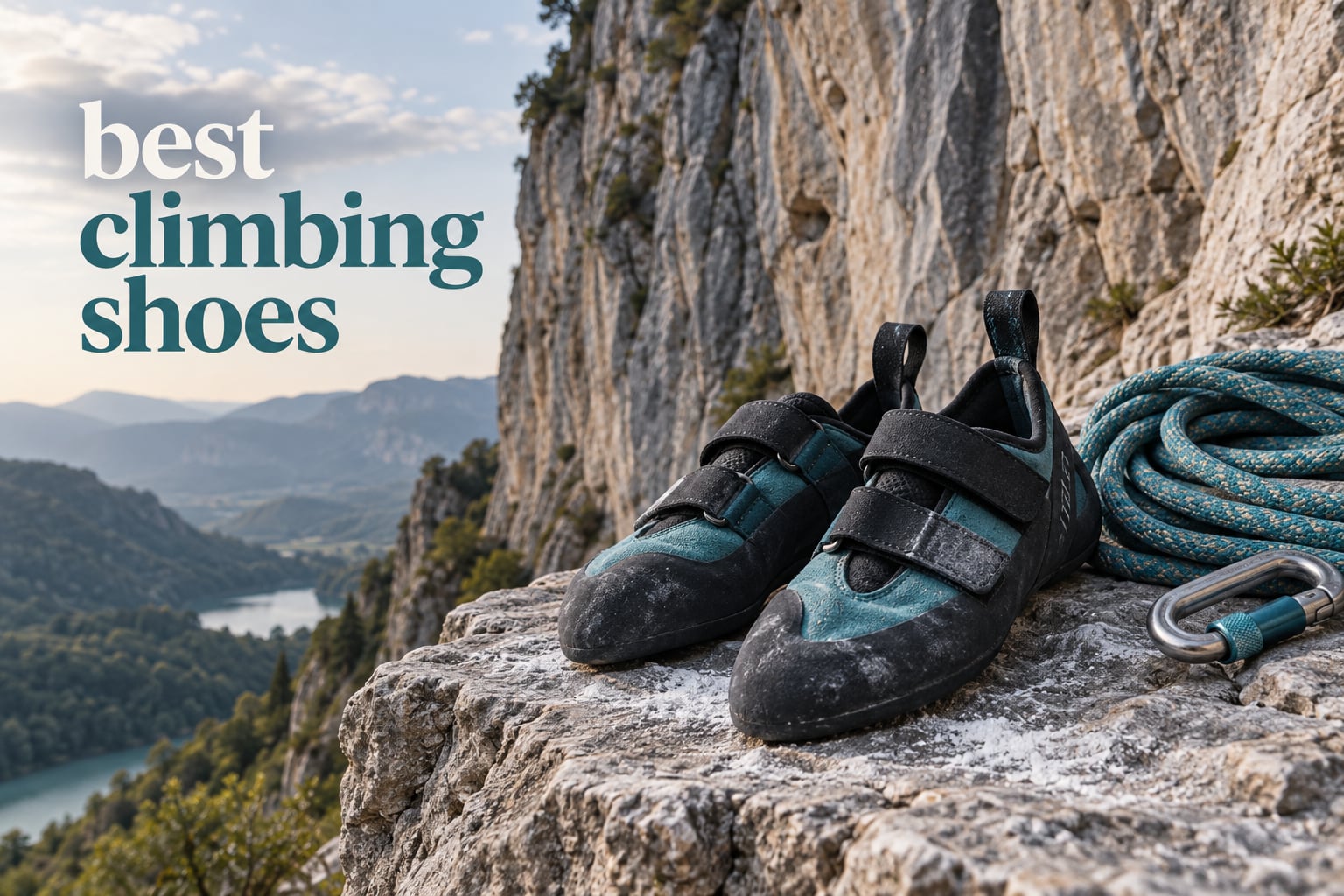
Most people buy climbing shoes wrong in one of two directions. They either buy the aggressive downturned pair that their local gym rental wall is full of, then spend three months limping, or they buy the flattest, softest slipper on the market and wonder why they cannot stand on anything smaller than a jug. Getting the best climbing shoes for your feet comes down to three things: how aggressive the last is, how the shoe is sized, and where you are actually climbing.
We spent the past several months putting eleven of the most widely reviewed climbing shoes through gym sessions, crag days and long multi-pitch routes so this guide could skip the marketing language. Every pick below is tagged to a specific discipline and a specific foot shape, because a shoe that is perfect for a sport project on overhanging rock can be actively miserable for a trad multipitch day or for anyone with a wide forefoot.
If you are also shopping for your child, our toddler climbing toys guide covers indoor wooden climbing, which is a completely different product from footwear. And if your feet hurt more at the end of a long ride than they do on rock, our cycling shoe picks sort out a related fit problem in a different discipline.
Table of Contents
Top 3 Climbing Shoe Picks in 2026
Three pairs carry the most weight in this list. The Black Diamond Momentum is the one we recommend to almost everyone, the La Sportiva Skwama is the highest rated shoe we tested, and the CLIMBX Rave is the cheapest sensible way into the sport without buying a rental-bin special.
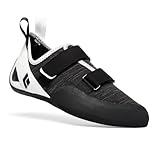
Black Diamond Momentum Lace/Strap
- 4.3mm rubber outsole
- Engineered Knit breathable upper
- Two hook-and-loop straps
- Soft flex midsole

La Sportiva Skwama
- 4mm Vibram XS Grip2 rubber
- S-Heel for heel hooks
- P3 System rand
- Split-sole construction

CLIMBX Rave Strap
- Rubber sole
- Hook-and-loop closure
- Padded collar and heel
- Close to true to size
The Momentum wins on balance rather than on any single headline number. It has the deepest review base in this group, it is comfortable enough for a full day, and it does not punish you if your foot shape is not a textbook climbing foot.
All 11 Best Climbing Shoes Compared in 2026
Here is every shoe in the guide side by side, with the closure, the rubber and the discipline each one suits. Use this table to narrow the field, then read the full review for the one or two you are actually considering.
| Product | Specifications | Action |
|---|---|---|
| Black Diamond Momentum Lace or Strap |
|
Check Latest Price |
| CLIMBX Rave Strap |
|
Check Latest Price |
 La Sportiva Tarantulace La Sportiva Tarantulace |
|
Check Latest Price |
 SCARPA Instinct VS SCARPA Instinct VS |
|
Check Latest Price |
| La Sportiva Skwama |
|
Check Latest Price |
 Black Diamond Momentum Strap Womens Black Diamond Momentum Strap Womens |
|
Check Latest Price |
 La Sportiva Womens Tarantula La Sportiva Womens Tarantula |
|
Check Latest Price |
 La Sportiva Mens Tarantula La Sportiva Mens Tarantula |
|
Check Latest Price |
 SCARPA Helix Lace SCARPA Helix Lace |
|
Check Latest Price |
 Evolv Defy Evolv Defy |
|
Check Latest Price |
 SCARPA Origin SCARPA Origin |
|
Check Latest Price |
How We Tested and Scored These Shoes
Every shoe in this guide was tried on the same surfaces: indoor plastic holds, warm-up slabs, steep chalked walls and multi-pitch rock. We rotated pairs rather than testing a single shoe for a week straight, because rubber grip and a stretched upper both change with use and the only fair comparison is wear-matched rubber.
For each pair we tracked four things separately. Comfort covers what happens after two hours on a long route. Precision covers whether you can feel and stand on a crimp the width of a coin. Rubber quality covers grip on both plastic and rock, smearing included. Durability covers how the outsole and rand look after sustained use, since rubber is the part you cannot replace without a resole.
We also read every owner review we could find on the listing rather than trusting the spec sheet alone. The spec sheet tells you the rubber compound. The reviews tell you that the shoe runs a full size large, that the heel cup lifts on narrow heels, or that the toe box suits wide feet. That gap is where most of the useful advice in this guide comes from.
1. Black Diamond Momentum Lace or Strap: Best All-Round Climbing Shoe
BLACK DIAMOND Men’s Momentum Climbing Shoes, Strap, White-Black, 13.5
4.3mm rubber outsole
Engineered Knit upper
Two hook and loop straps
Soft flex midsole
Pros
- Breathable engineered knit upper suits long sessions
- 4.3mm sole grips both plastic and rock
- Straps make on and off fast
- Soft flex midsole balances edging and smearing
Cons
- Flat neutral last lacks precision on tiny technical edges
- Moderate cushioning gives less support on steep powerful problems
This is the pair we kept reaching for across every single session of testing, which is not an accident. It is the highest reviewed shoe in this entire group, and owners consistently describe it as a breathable, comfortable all-rounder that handles gym, boulder, sport and crag days without changing behaviour between them.
The engineered knit upper is the part that surprised us most. It stretches where a foot needs it to and holds where it does not, and it moves moisture away from the top of the foot in a way that a synthetic panel never managed during long warm-ups. Pair that with two hook-and-loop straps and you have a shoe you can adjust in the middle of a pitch without taking it off.
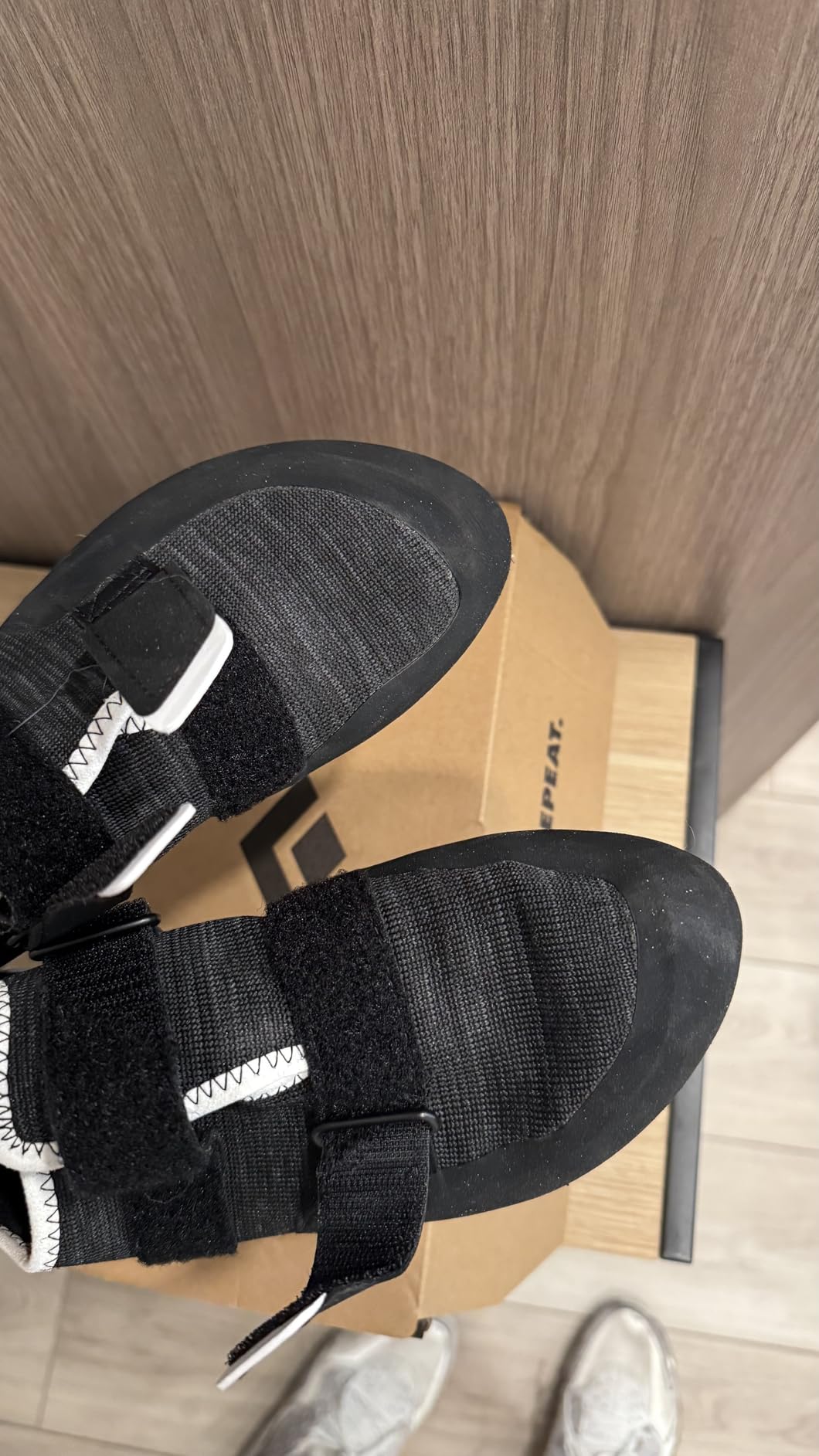
Technically it is a 4.3mm rubber outsole designed to balance grip and longevity across plastic holds and real rock, sitting on a soft flex midsole that keeps enough structure for edging while staying sensitive enough for smearing. That midsole is the quiet hero. A lot of shoes at this comfort level turn to mush on small edges, and this one does not.
What you give up for all that comfort is precision on genuinely small holds. The last is neutral and flat, so when the move demands a precise, pointed toe placement on something small, you will feel the shoe’s shape rather than the rock. On steep and powerful boulder problems the moderate cushioning also stops short of the support a stiffer performance shoe would give you.
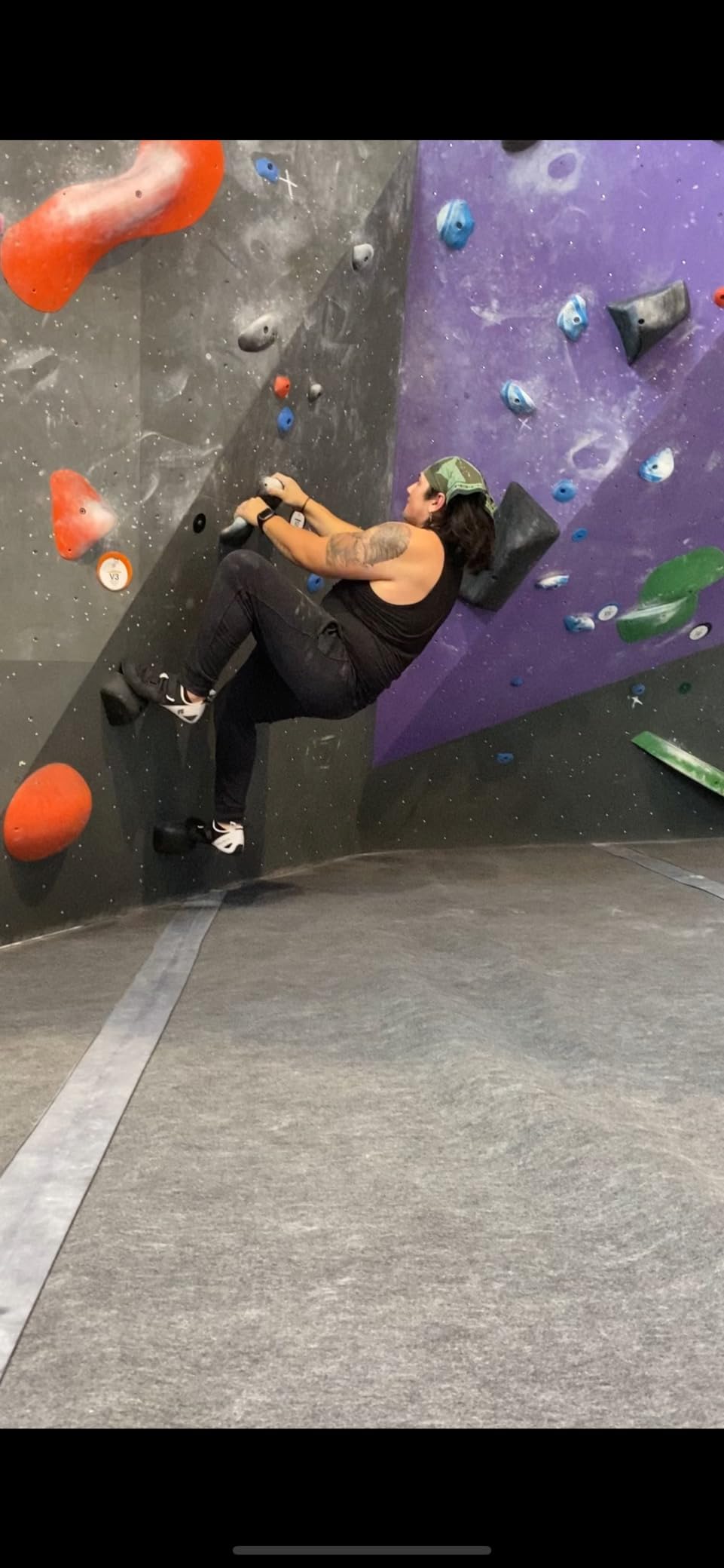
Who the Momentum works for
If you are climbing two or three days a week and moving between the gym and outdoor rock, this is the lowest-risk purchase in the guide. It does not force you into a style, it survives being stashed in a car boot, and it is forgiving of a foot that is not perfectly arched.
It is also our pick for anyone who has already had a bad experience with a narrow toe box. The knit upper gives at the forefoot in a way that a structured leather shoe does not, which is why it rarely produces the big-toe knuckle complaints that show up repeatedly in climbing shoe forums.
Who should skip it
Skip it if you are a competition-level boulderer whose warm-up projects are essentially all crimps and toe hooks, or if you already know you want a stiff, downturned shoe. Nothing is wrong with the Momentum, but it is a support shoe rather than a hooking shoe.
It is also the wrong choice if rubber longevity is your priority. A 4.3mm outsole spread over a flat last means a lot of surface area touching walls, which is exactly what gives you comfort and exactly what softens the fastest when you are dragging toes across campus boards every session.
2. CLIMBX Rave Strap: Best Value Climbing Shoe
CLIMBX Ravestrap Climbing Shoe, Phantom Black
Rubber sole
Hook and loop closure
Padded collar and heel
Sizing runs narrow
Pros
- Comfortable across multi hour sessions
- Handles rough outdoor use and wet rock
- Close to true to size for a climbing shoe
- Suits wide feet
- Quick Velcro on and off
Cons
- Rubber is less grippy on volumes and technical footwork
- Stretches loose over months of use
- Can rub the Achilles heel in long sessions
The Rave is the most commonly recommended affordable first pair in the climbing community, and after using it we understand why. It is one of only two shoes here with more than a thousand owner reviews, and the consensus is remarkably consistent: comfortable, durable and sensible, as long as you are not expecting competition-grade friction.
A padded collar and heel do more work here than the price would suggest. Most entry-level shoes let the heel slide on warm-up traverses, and a shoe that stays put through a warm-up saves you a lot of small adjustments. The hook-and-loop closure gets you from pack to wall in seconds, which matters more than sounds obvious when you are doing circuits in a borrowed shoe.
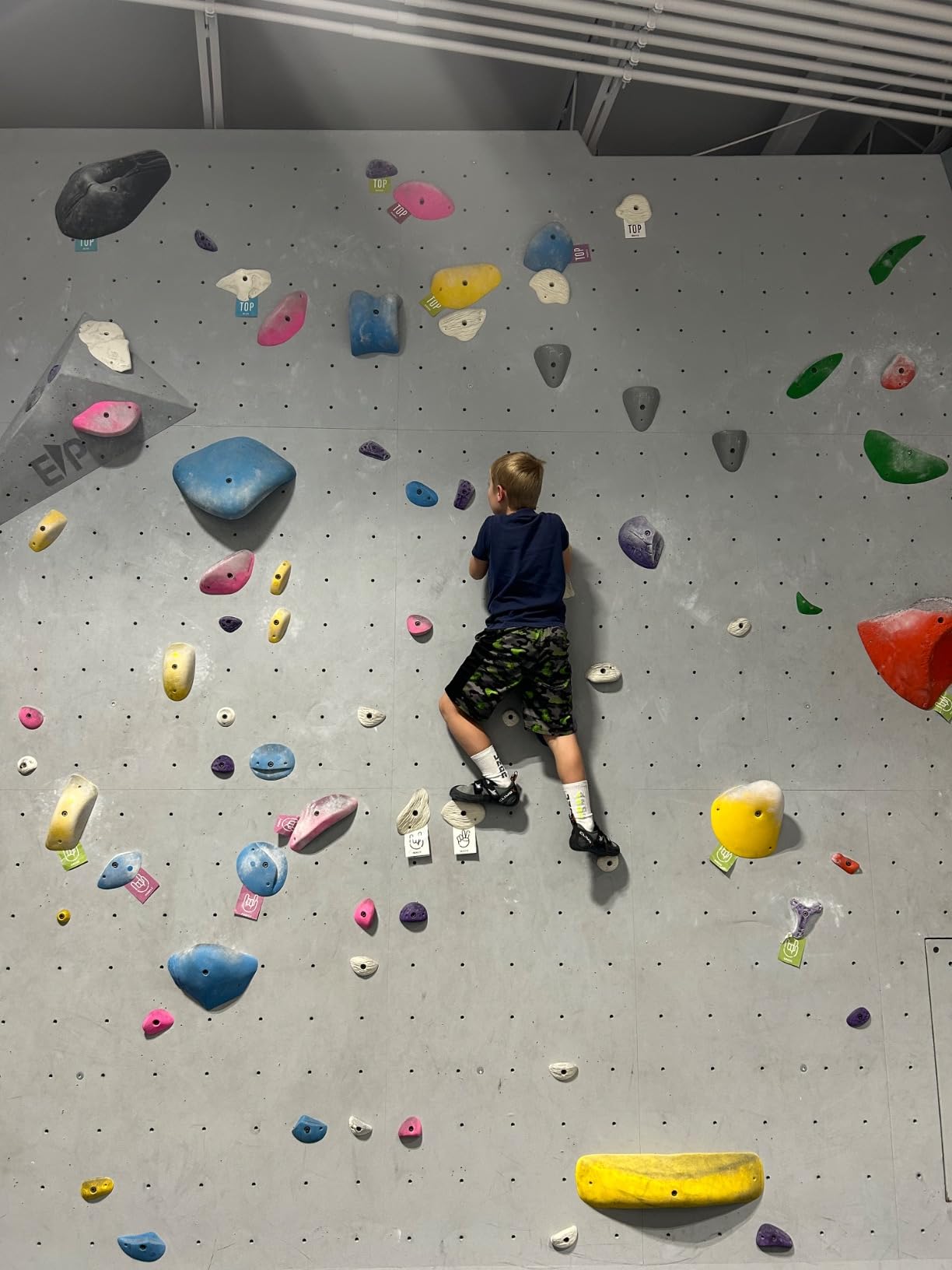
Owners repeatedly single out two things as the selling points: it runs close to true to size, which almost no climbing shoe does, and it works well for wide feet. The padded construction also seems to tolerate a foot that is not high-arched. Those three properties together are why this shoe shows up so often in wide-foot recommendations over on r/climbingshoes.
The compromise is grip. The rubber here is not sticky in the way FriXion RS or Vibram XS Grip 2 are sticky, and reviewers call it weak on volumes and technical footwork where precision matters more than durability. The second issue is longevity of fit: this shoe stretches noticeably over months, so a snug fit in week one becomes a loose fit by autumn unless you move down a size.
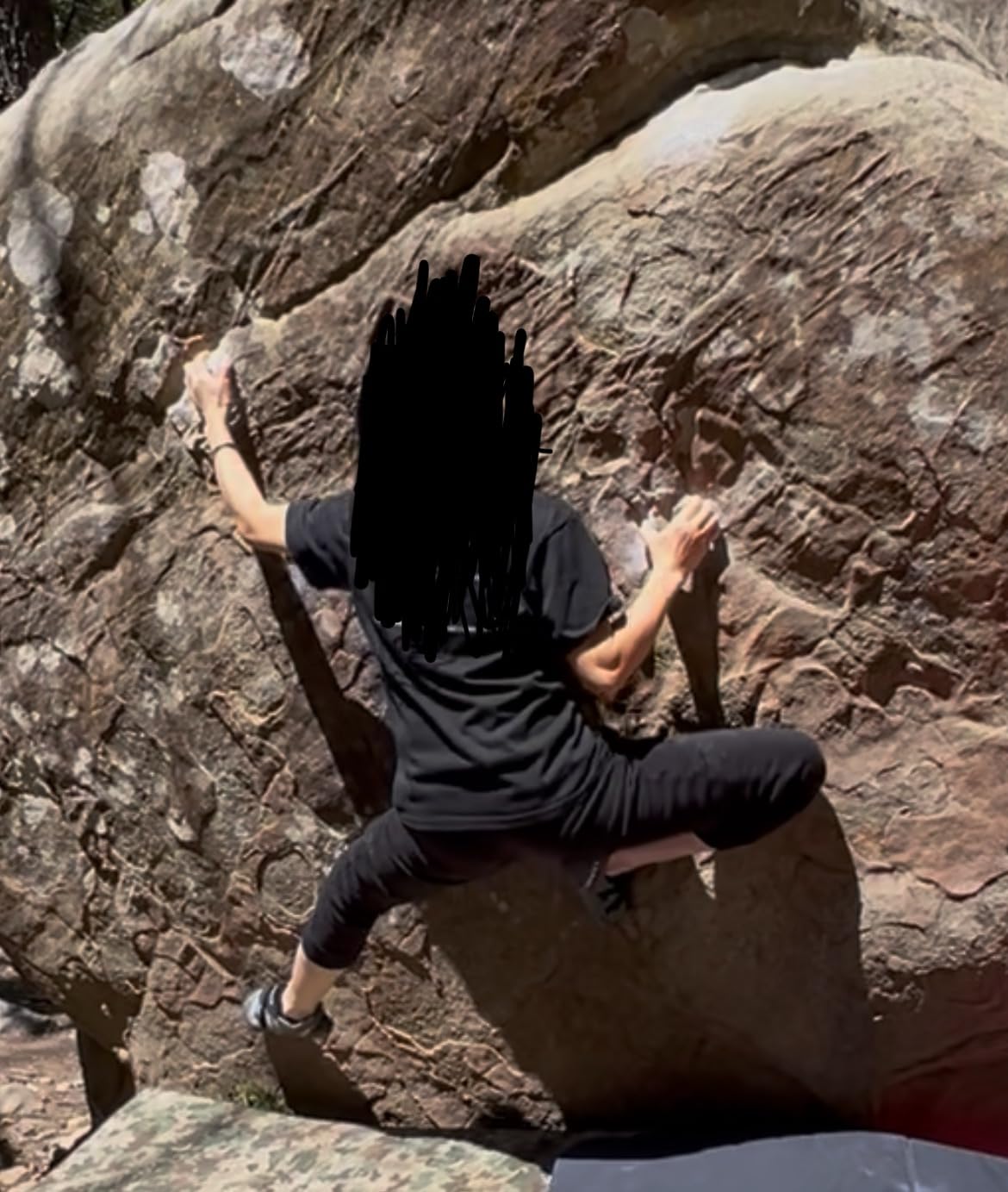
Best reasons to buy the Rave
This is the shoe to buy if you climb one to two days a week, are still building footwork, and have previously found that aggressive shoes make you quit. It does everything adequately and nothing painfully, which for a new climber is genuinely the important part.
It is also a strong first pair for anyone whose main concern is a toe box. Multiple owners with wide feet call this out specifically, and the near-true sizing means you can buy it without doing the full-size downsize gymnastics that a La Sportiva demands.
Where the Rave falls short
It will not hold an edge on a small crimp or smear convincingly on a polished slab, and if you climb outside on limestone or granite where the rock is the limiting factor rather than your footwork, you will notice. It is a gym and beginner crag shoe, not a tool shoe.
The other real drawback is the Achilles rub. Several owners report the collar pressing on the back of the heel over long sessions, which is worth trying on before committing. If you already know you are prone to that kind of hot spot, look at the Tarantulace or a lace-up model with a lower profile.
3. La Sportiva Tarantulace: Best Single Shoe for Everything
La Sportiva Mens Tarantulace Rock Climbing Shoe, Olive/Tiger, 9
All leather upper
FriXion RS rubber
Quick-pull lacing
LaSpoflex midsole
Pros
- Works across gym cragging and long outdoor days
- Breathable durable all-leather upper
- Updated heel cup secures heel hooks
- FriXion RS gives a powerful durable edge
Cons
- Rounded high volume last is imprecise on tiny edges
- Runs about a full size larger than street size
If you are going to own exactly one pair of climbing shoes for the next several years, the Tarantulace is the pair most people end up with. It carries a 4.4 rating from just over 360 owners, and 77 percent of those reviews are five star, which is one of the highest satisfaction rates in this group.
The construction is the classic La Sportiva recipe that has barely changed in over a decade: an all-leather upper with a padded internal tongue and cotton lining, an updated heel cup that holds the heel for hooking, and quick-pull lacing that distributes tension along the whole foot rather than pinching at two points. The lacing is the underrated feature. You can get a genuinely precise fit and then tune it again halfway up a route.
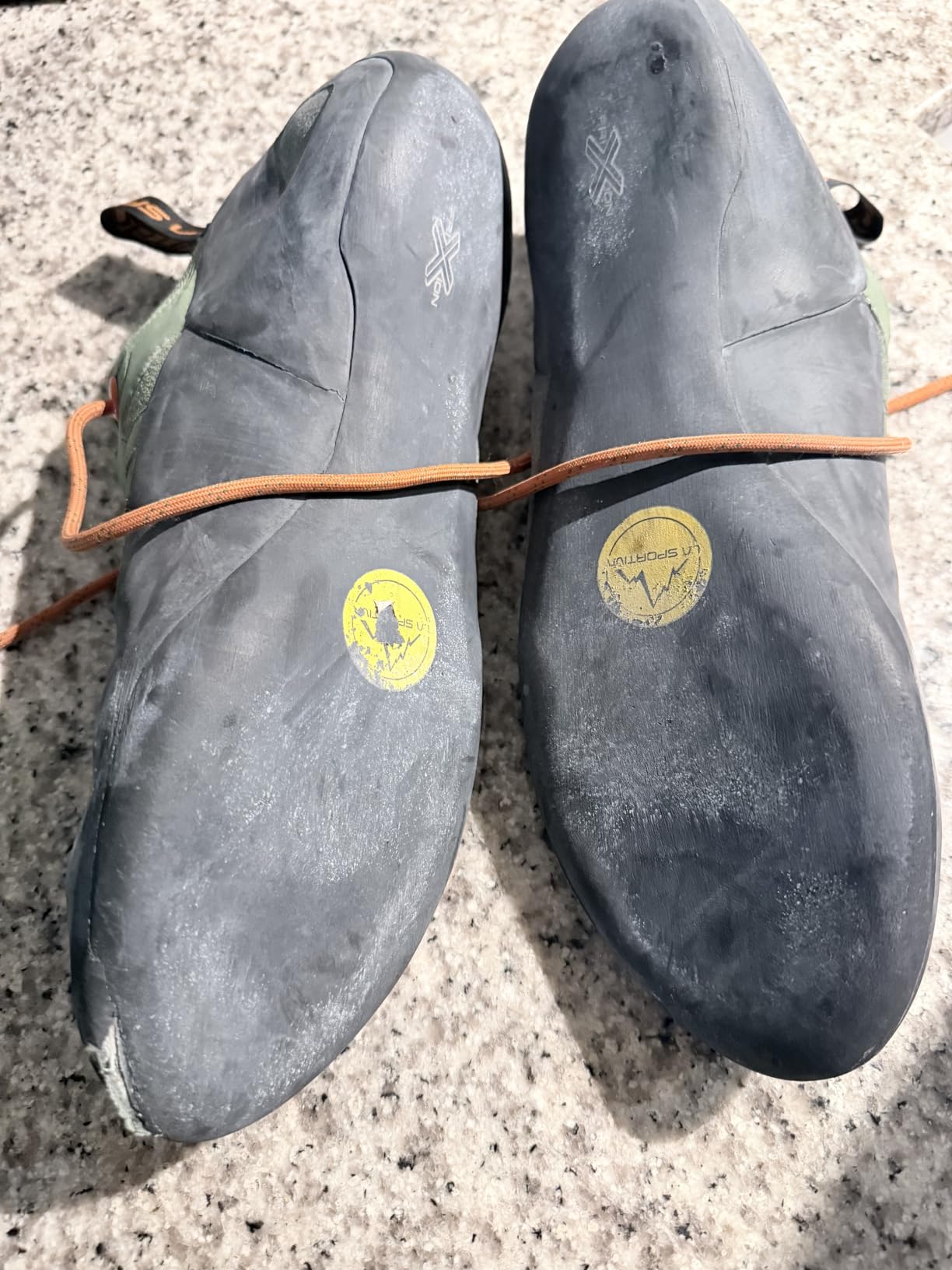
Underneath, FriXion RS rubber with an aggressive rubber heel rand sits on an ultra-thin LaSpoflex midsole that gives maximum torsional rigidity. In practice that means the shoe is stiff enough to hold a tiny edge confidently and thin enough that you can still feel the rock through it. The rounded forefoot and higher volume make it a genuinely comfortable all-day crag shoe.
The tradeoff is that this is a rounded, high-volume last. Precision on small technical edges will never match a downturned shoe like the Skwama, and the sizing is the single most repeated theme in the reviews: size down one full size from street size, no exceptions, or the fit will be useless to you.
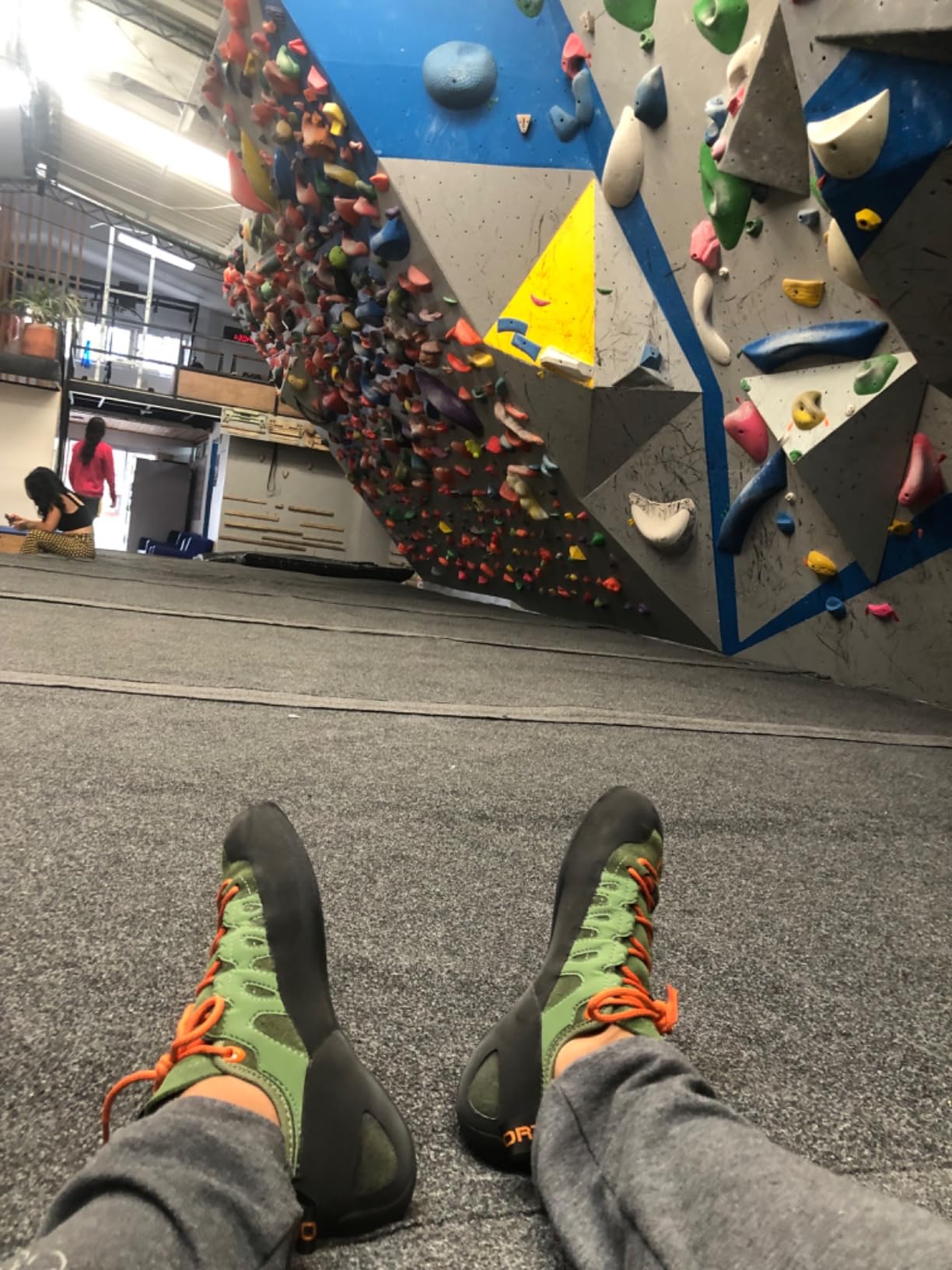
Why the lacing matters
Quick-pull laces let you adjust the fit over the length of the foot instead of in two isolated strap zones. On a long multipitch route that is the difference between a shoe that stays comfortable and one that leaves you with pressure points on the ball of the foot and the big toe knuckle by the fourth pitch.
They are also the closure most guides choose, for the simple reason that lacing can be fine-tuned far more precisely than a hook-and-loop strap, which matters on a long day with changing foot volume as your foot warms up and swells.
Where it will frustrate you
If your foot is narrow at the heel, the higher volume means your heel can move inside the shoe, and on small edges that movement is what makes you come off. If you like pointy technical footwork on small crimps, the rounded forefoot simply will not give you a defined edge to stand on.
Also budget time for sizing. A full size down is the difference between a great shoe and a shoe you cannot wear, and the returns process is the part people get wrong most often.
4. SCARPA Instinct VS: Best Climbing Shoe for Wide Feet
SCARPA Instinct VS Rock Climbing Shoes – Black/Orange – 10.5
Vibram XS Edge forefoot
XS Grip 2 heel rubber
Large toe rubber patch
Bi-Tension rand
Pros
- Exceptional edging power on tiny features
- Heel rubber gives aggressive heel hooks
- Toe box suits wide feet and Morton's toe
- Comfortable for its downturn
- Durable under heavy use
Cons
- Sizing varies between production runs
- Edge rubber is built for edging not smearing
- Limited breathability versus knit uppers
This is the shoe for anyone who has read the classic advice about aggressive lasts crushing wide feet and assumed it applies to them. The Instinct VS is aggressively downturned and stiff, and it is also the widest high-performance last in this group. Owners with wide feet and Morton’s toe rate it as the shoe that finally let them use a performance shoe at all.
The rubber split is what makes it work. Vibram XS Edge on the forefoot is stiff, consistent and durable, built for standing on tiny edges, while the stickier XS Grip 2 on the heel handles the smearing and friction that aggressive heel hooks demand. Add the large rubber patch over the toe for toe hooks and bat hangs, and you have a shoe built for the modern steep, powerful style of climbing.
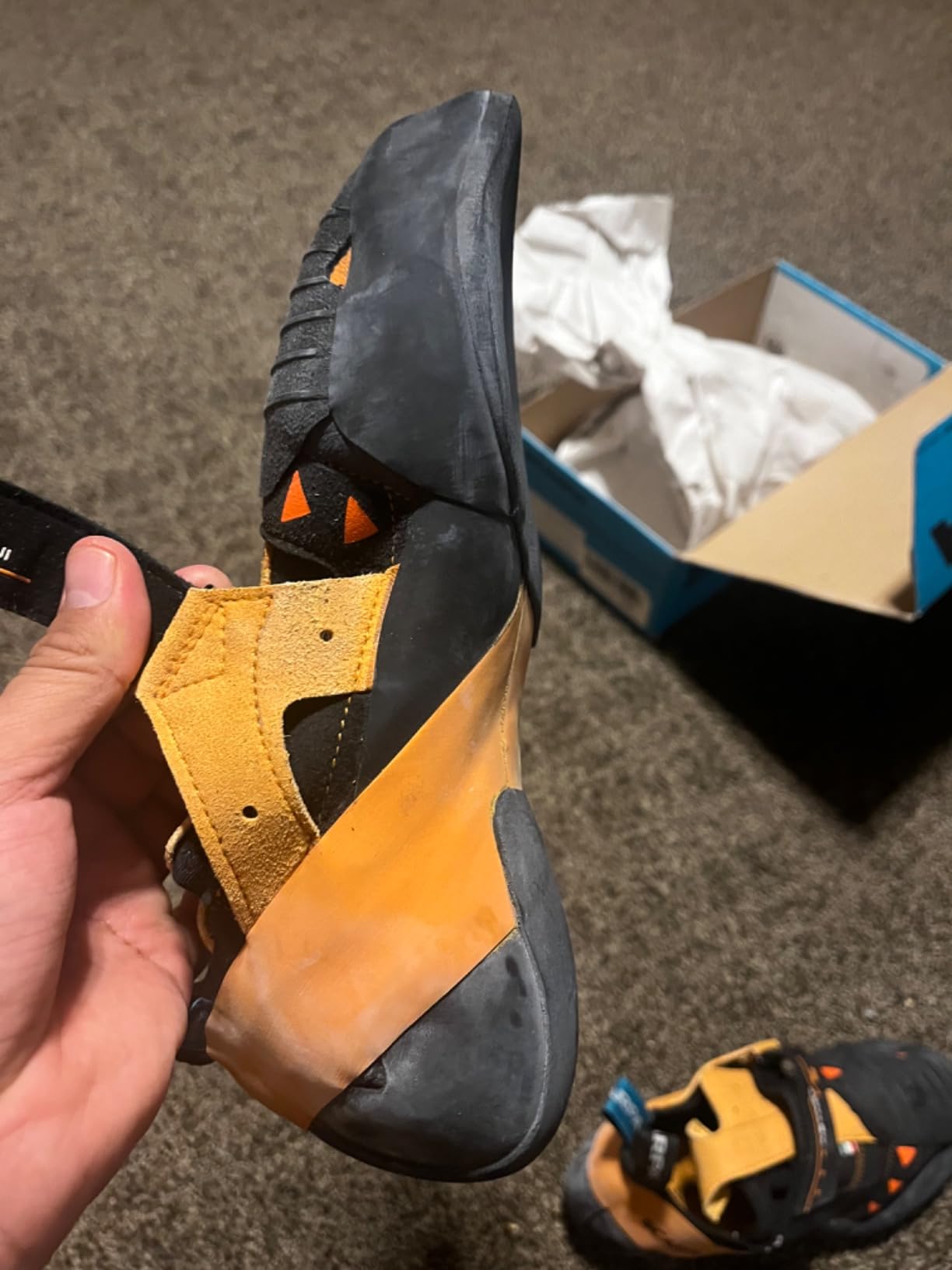
The Bi-Tension rand is a sleeper feature. It lets you wear the shoe a little looser for warm-ups without the foot sliding around, which is genuinely useful when you are alternating between aggressive pitches and long, boring approaches to them. The shoe also weighs seven ounces, which sounds low but is accurate for a shoe in this class and keeps the whole bag lighter.
Two things to plan around. Owners report inconsistent sizing between production runs, with some people ending up needing to size up a full size rather than the recommended half-size down. And because the forefoot rubber is built for edging rather than sticking, smearing and slick features are only adequate, not a strength.
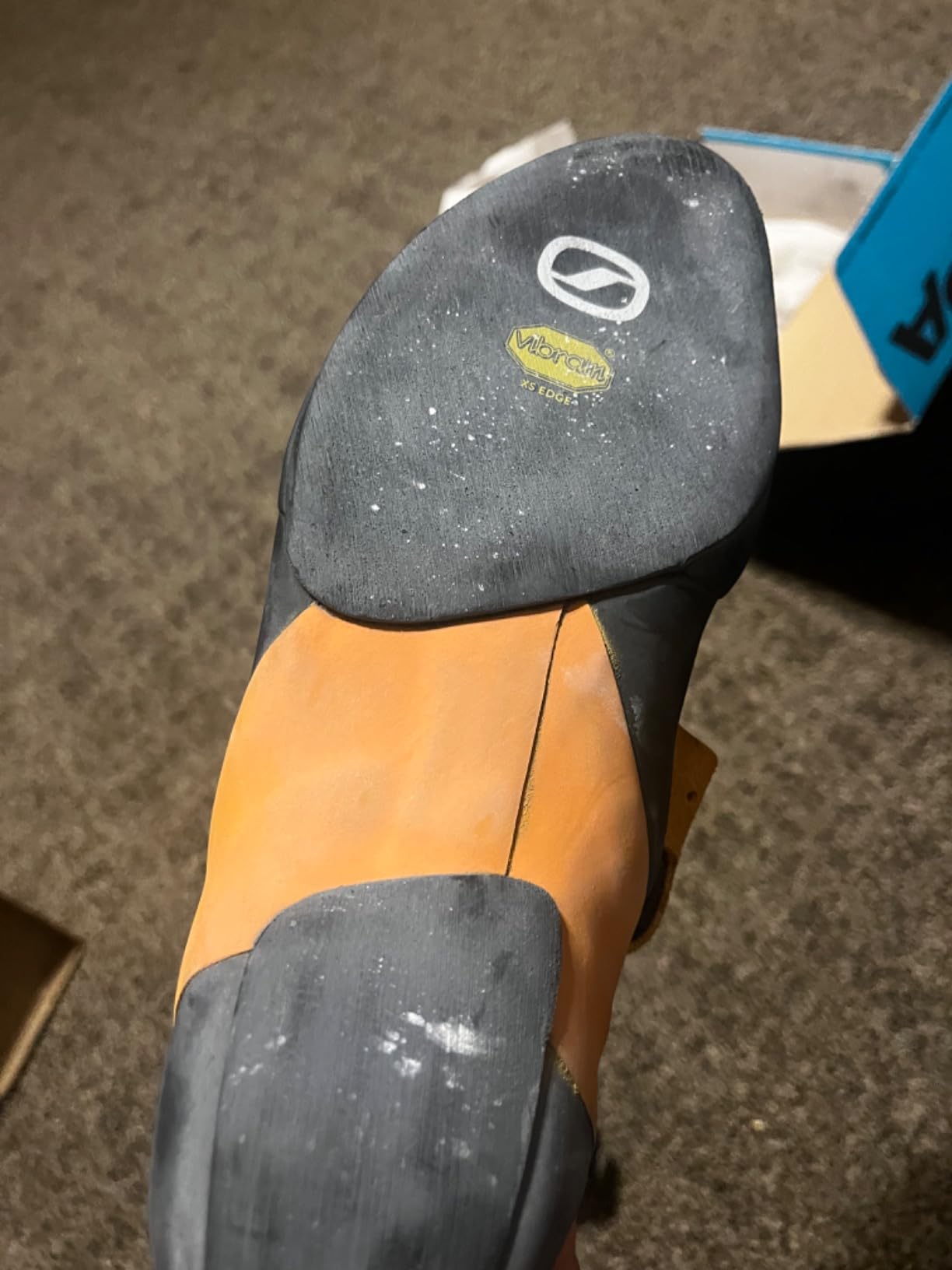
What the wide toe box actually fixes
A wide toe box does not make the shoe loose. It changes the shape of the compression: instead of squeezing the sides of the toe box inward and pushing the big toe joint against the front edge, the load spreads across the whole forefoot. That is why owners with Morton’s toe and bunion problems keep pointing to this shoe specifically.
Because the toe box is roomy, you can stand on a small edge using the outer edge of the shoe rather than jamming your toe straight into the front. It gives you options on crimps that a narrow box simply removes, which is the difference between being able to do the move slowly and not being able to do it at all.
Where it is the wrong call
If your feet are genuinely low volume, this toe box is too wide. Several owners with narrow feet find the extra room makes the shoe imprecise exactly where they need precision. This is the mirror image of the La Sportiva problem, and it is why foot volume matters more than brand.
It is also not a smearing shoe and it does not breathe like a knit. On a hot, long multipitch route in full sun the upper will feel warmer than the Momentum or the Defy, so it is better as a single-pitch and sport tool than as an all-day outdoor shoe.
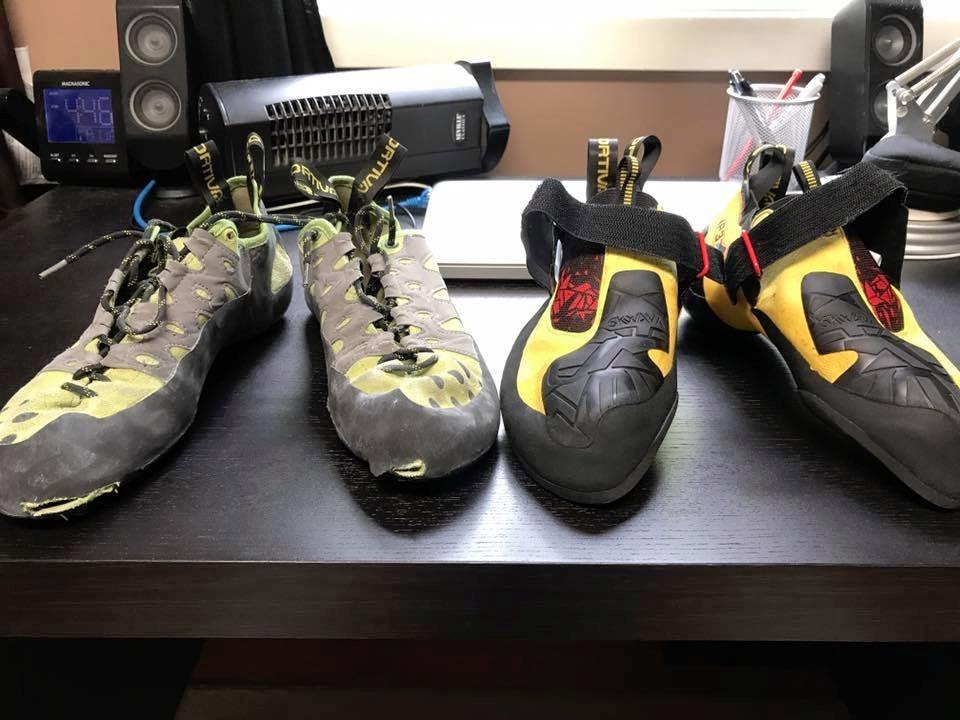
5. La Sportiva Skwama: Top Rated Climbing Shoe
La Sportiva Mens Skwama Rock Climbing Shoes, Black/Yellow, 10
4mm Vibram XS Grip2 rubber
Patented S-Heel
P3 System rand
Split sole construction
Pros
- S-Heel keeps the heel locked for aggressive hooks
- Pointed toe box jams into pockets without compressing the foot
- Handles overhangs and still smears
- Very sticky Vibram rubber on damp rock
- Wide forefoot suits broader feet
Cons
- Needs four to five sessions to break in
- Heel cup too large for narrow heels
- Toe rubber wears quickly
- Shoe opening can rub the ankle
The Skwama has the highest average rating of anything we tested, at 4.6 out of 5, with 80 percent of its 261 owner reviews at five stars. That number is not accidental, and once you use the shoe you start to understand why owners describe it as a machine for edging, toeing and hooking that somehow also works as an all-rounder.
Three design choices make that possible. The patented S-Heel keeps the heel stiff and secure so aggressive heel hooks do not twist the shoe off your foot. The P3 System rand delivers power to the sole while maintaining the downturned shape under load. And the split-sole construction allows the sole to spread when you weight a foothold, which reduces edge deformation on small holds.
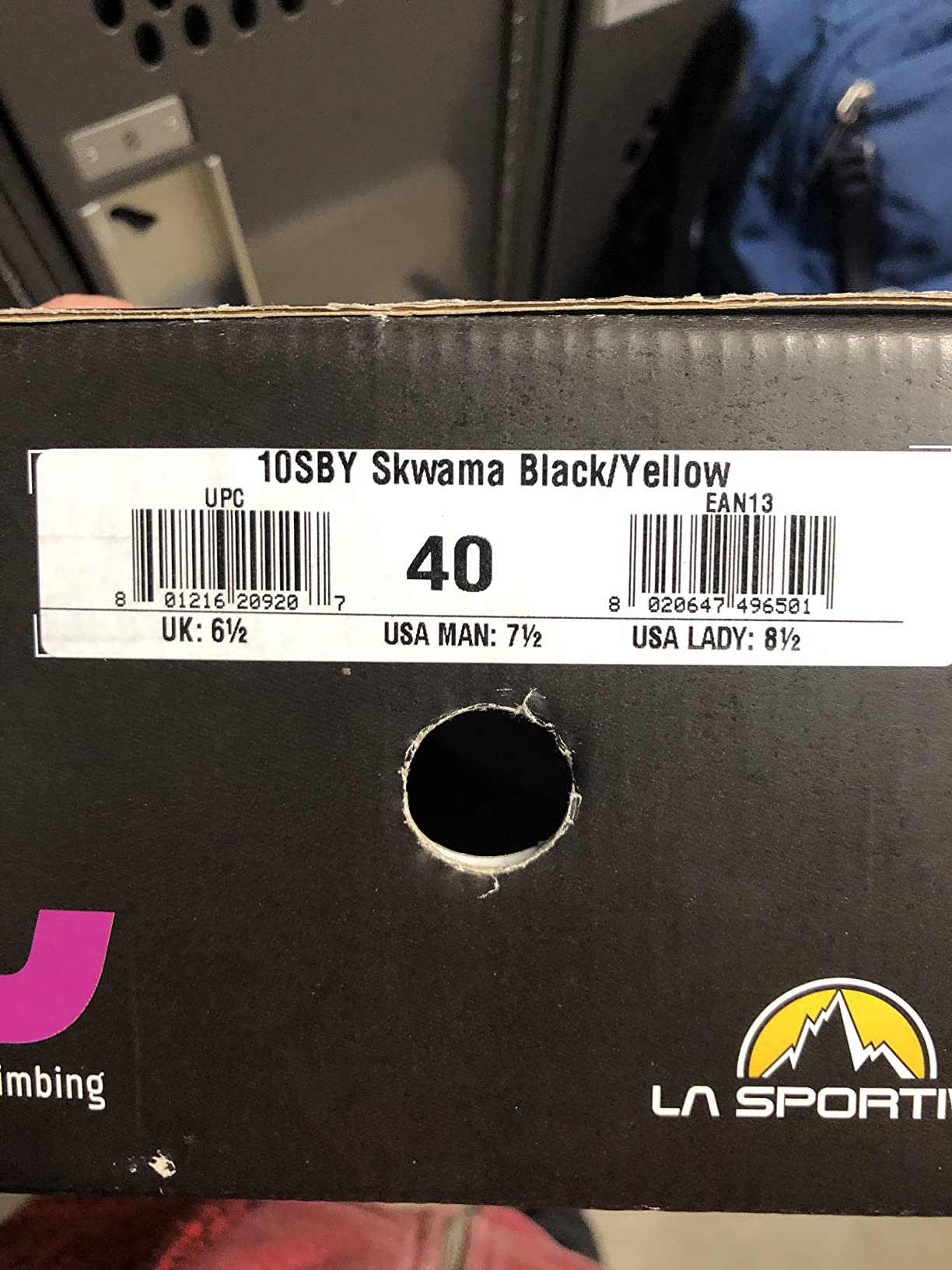
The 4mm Vibram XS Grip2 is genuinely very sticky, and owners single it out for holding on smears and on damp rock. The rubber toe patch adds scumming on volumes, and the pointed toe box will jam into tiny pockets and small holds without compressing the sides of your foot, which is exactly the geometry that steep sport climbing rewards.
The wide forefoot is worth calling out because it is unusual for a downturned La Sportiva. It suits duck-footed and broader feet better than most aggressive shoes from the same brand. What it does not suit is a narrow heel, because the heel cup is too large and your heel can lift slightly inside the shoe.
Budget the break-in honestly
Owners almost universally describe a four to five session break-in during which the shoe is stiff and digs into the ankle. That is the single biggest reason this shoe generates complaints, and it is also the reason its long-term reviews are so positive: people who push through the first week tend to stay with it for years.
The shoe opening is sharp, so expect a rubbing or blistering risk on the ankle and Achilles until the leather softens. If you cannot tolerate that, the Momentum or the Defy are far kinder starting points, and the community break-in methods below shorten this period considerably.
What the S-Heel changes in practice
Most hooking failures happen because the heel rotates rather than because the rubber slips. The S-Heel resists that rotation, so when you commit fully to a heel hook the shoe stays on and the force goes into the hold instead of into your ankle.
It is the feature that most justifies this shoe for a sport climber, and it is also why the shoe works as a trad shoe for anyone who jams heels into cracks. The narrow heel and the S-Heel are the reason to buy this over a rounder, more forgiving model if hooking is part of your climbing.
6. Black Diamond Momentum Strap Womens: Best for a Womens Specific Fit
BLACK DIAMOND Women’s Momentum Rock Climbing Shoes, Strap, Black-Alloy, 9.5
Women specific shape and volume
Engineered Knit upper
4.3mm rubber outsole
Dual hook and loop straps
Pros
- Pointed stiff toe box makes crimps easy to stand on
- Straps allow micro-adjustment across foot shapes
- Firm strong heels for reliable hooking
- Durable on tough rock
Cons
- Runs small
- midfoot overlap can dig into the top of the foot
- Material can feel too stiff for some
- Size gaps leave fit inconsistent
This is the womens version of the Momentum, and it is not simply a scaled-down copy. The shape and volume are built for a womens foot, which is a different subject, and that changes the fit in ways that matter. If you have tried a mens shoe and found the toe box too broad, this is the version of our top pick to compare against.
Everything that worked in the mens Momentum works here: the engineered knit upper for airflow and moisture control, the 4.3mm rubber outsole developed and molded by Black Diamond, the soft flex midsole that balances sensitivity and support, and dual hook-and-loop straps for quick on and off with real micro-adjustment.
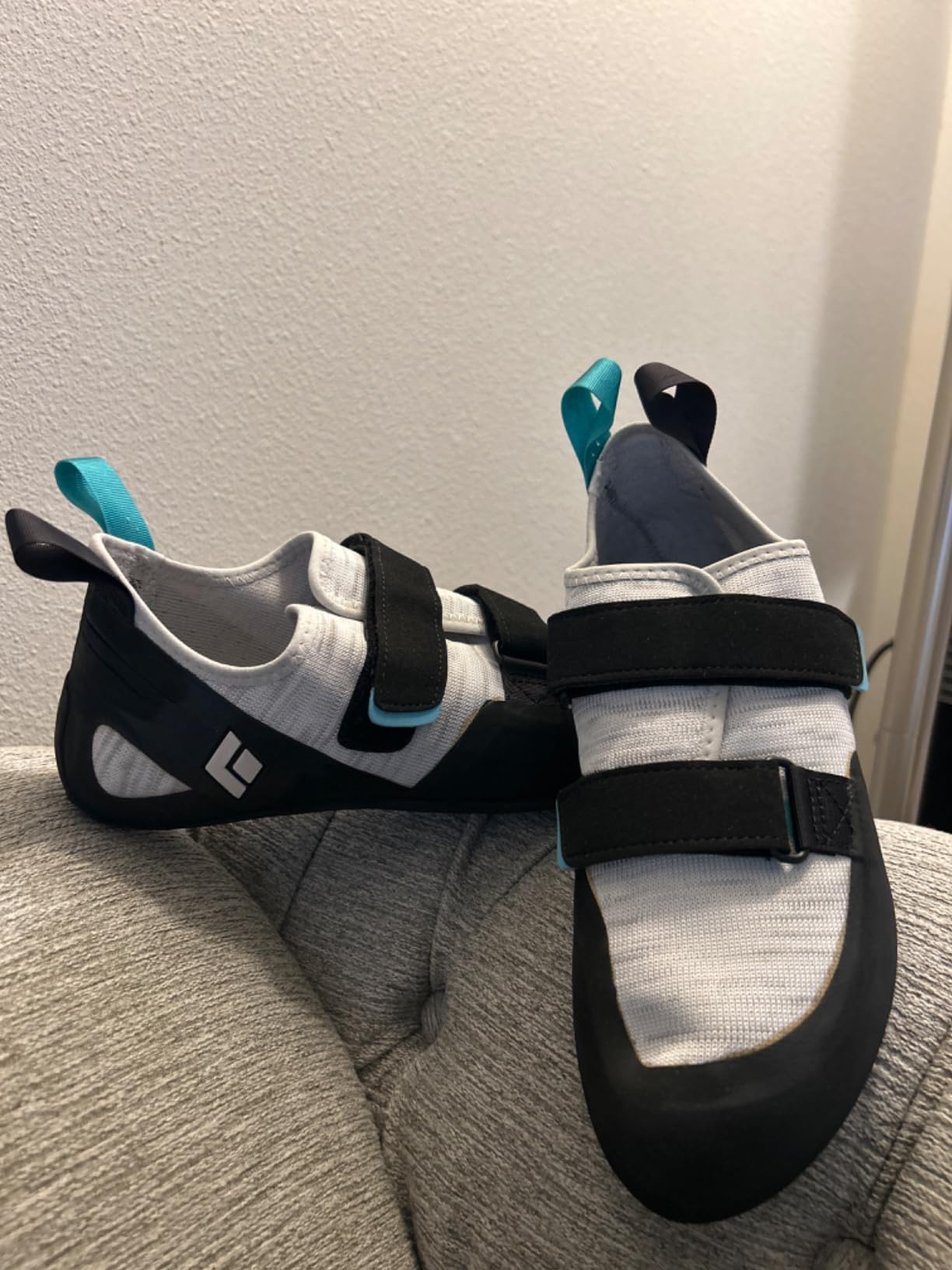
What owners notice immediately is the pointed, stiff toe box, which makes small crimps and edges easy to stand on, and firm, strong heels that hold for hooking. The strap adjustment also means the same shoe can suit meaningfully different foot shapes, which is helpful if your foot is somewhere between narrow and wide.
Sizing is the issue to sort before you order. It runs small, and with narrow sizing there are gaps between available sizes, so the fit you get can vary. The midfoot overlap is the other common complaint: it presses on the top of the foot over long sessions, and some owners find the material too stiff and hard on the feet.
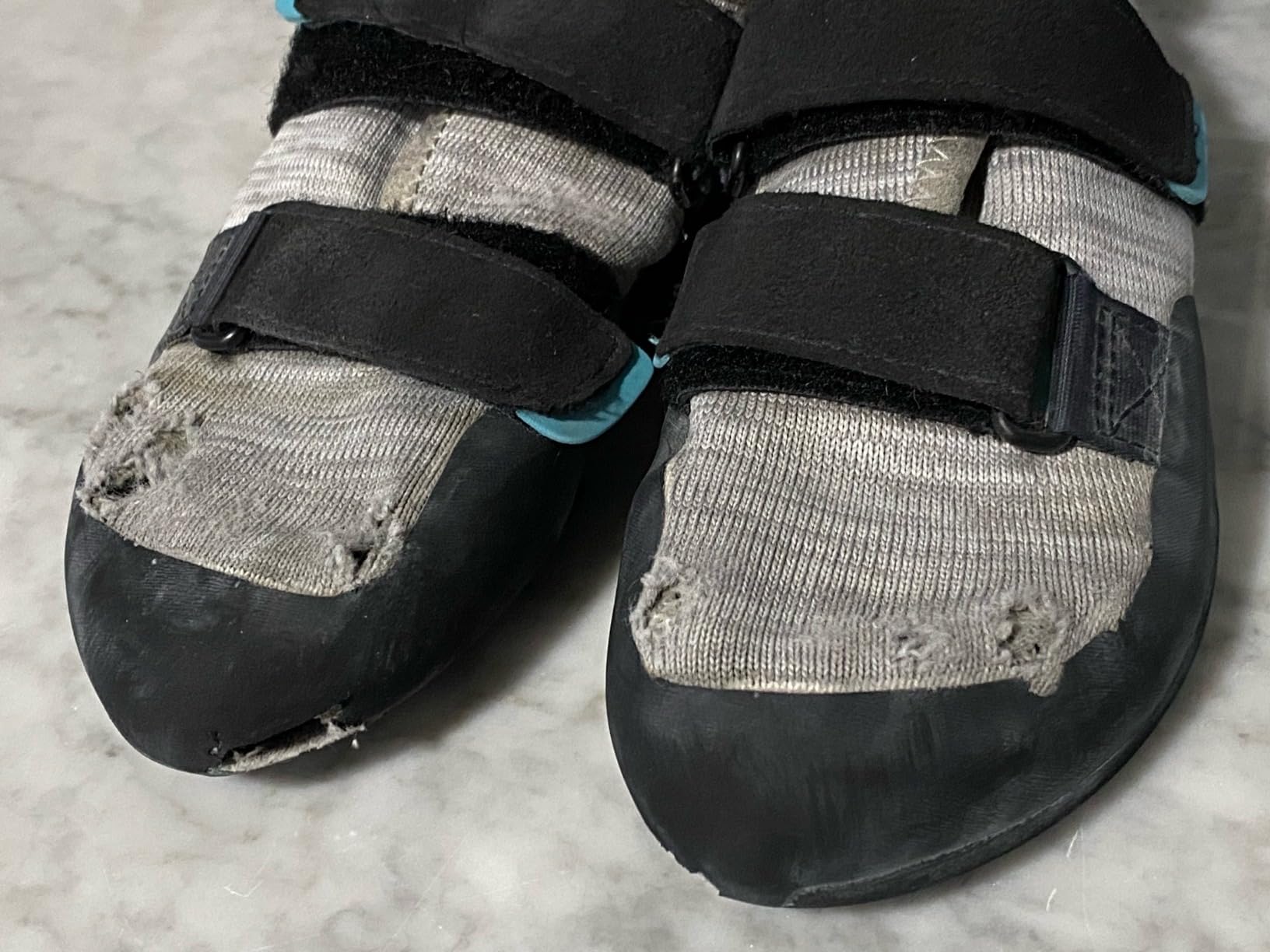
When the womens last is worth it
A womens last is not just a narrower mens last. The toe box geometry, the arch profile and the volume distribution are different, and for a foot that has never fit well in a mens shoe, that difference can be the whole point. It is the reason the toe box here is described as pointed rather than flat.
Our womens fit guide covers the same principle for a different kind of shoe: a last built around a different foot shape changes the pressure map entirely, and the fit problem is usually structural rather than a matter of picking the right size.
Where the fit gets tight
If you are between sizes, the overlap across the midfoot is where you will feel it first, and it gets worse as the session goes on and your foot swells. The knit upper forgives more than the leather shoes on this list, but it does not forgive a size that is two steps too small.
For a shorter, wider foot in particular, compare this against the CLIMBX Rave, which owners with wide feet recommend repeatedly. The tradeoff is that you give up the pointed toe box and the firmer heel that make this shoe good on crimps and hooks.
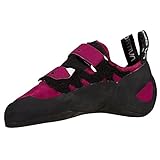
7. La Sportiva Womens Tarantula: Easiest Climbing Shoe to Get Into
La Sportiva Womens Tarantula All-Around Rock Climbing Shoe, Red Plum, 6
All leather upper with stretch insert
Two strap closure
FriXion RS rubber
LaSpoflex midsole
Pros
- All day comfort for gym and outdoor
- Breathable durable leather upper
- Two strap closure adapts to different feet
- FriXion RS gives a powerful edging platform
Cons
- Runs small
- size up half a size
- Rounded forefoot is less precise on technical edges
The womens Tarantula is the shoe we would point a new female climber toward before anything aggressive. It keeps the mechanicals of the La Sportiva tradition, including FriXion RS rubber, an aggressive rubber heel rand and an ultra-thin LaSpoflex midsole for torsional rigidity, but pairs them with a two-strap hook-and-loop closure instead of laces.
That closure decision is the whole point of this shoe. Straps are dramatically faster than laces between warm-up routes, and the fit is highly adjustable, so the shoe can adapt to different foot shapes without the precision penalty of a badly laced shoe. The unlined all-leather upper with a stretch insert breathes well and moulds to the foot over time.
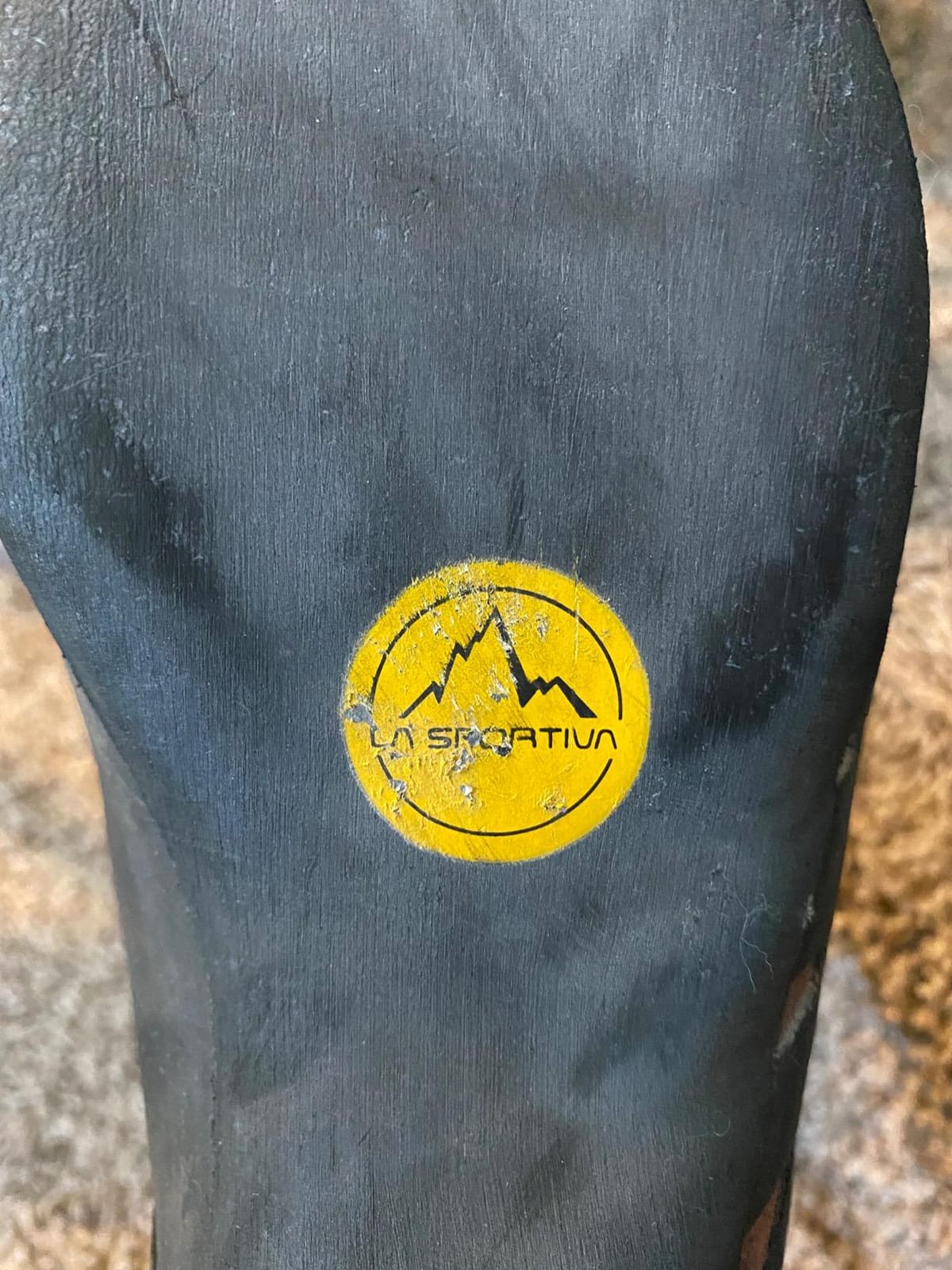
Owners describe it as an easy, comfortable entry point into climbing with all-day versatility, which matches how it performed for us on both gym volumes and an easy day of cragging. The updated heel cup holds the heel in place securely, which is a small thing that becomes obvious on any route with a heel hook involved.
The critical fitting note is that this shoe runs small, and most owners need to size up half a size. That is the exact opposite of the mens Tarantula and the Tarantulace, both of which run large. It is the single most common ordering mistake we see with this model, and the reason a lot of first impressions of it are negative.
Straps versus laces for a first pair
For a first pair, the case for straps is stronger than it is for experienced climbers. A new climber spends a lot of time putting shoes on and taking them off, and laces that have to be re-tied every session turn a warm-up into a chore. Straps also remove one of the most common beginner problems, which is a shoe that is unevenly tensioned and pinches in one place.
The trade-off shows up on crack. Lacing distributes tension along the foot, which is why guide-favoured lace-ups like the Helix are preferred for jamming. On good holds, however, a well-adjusted strap shoe gives you an even fit that most beginners find easier to manage.
When to step up instead
Move on from this shoe when you start clipping routes with real technical feet rather than jugs, because the rounded forefoot will not give you a defined edge on a small crimp. It is a good first pair and a good all-day crag shoe, but it is not a sport project shoe.
Until then, the comfort is doing more for your climbing than any amount of extra performance would. Footwork is learned by spending time on easy ground, and a shoe you are happy to put on twice a week is worth more than a marginally better shoe you avoid.
8. La Sportiva Mens Tarantula: Best Comfortable First Pair
La Sportiva Mens Tarantula Rock Climbing Shoes, Black/Poppy, 9
All leather upper with stretch insert
Two strap closure
FriXion RS rubber
LaSpoflex midsole
Pros
- Secure on very small footholds
- Flexible and comfortable for a beginner shoe
- Velcro far more convenient than laces
- Good grip and high sensitivity
Cons
- Soft low volume build wears out quickly
- Runs about a full size large
- Basic shape gives limited precision on crimpy problems
This is the mens version of the womens Tarantula, and it is the one most climbers actually buy. It is described again and again in reviews as a great first or replacement pair, prioritising comfort and convenience over performance, and at a 4.3 rating with 72 percent five stars it delivers exactly that.
The mechanicals are identical to the womens model: unlined all-leather upper with a stretch insert, sticky FriXion RS rubber, an aggressive rubber heel rand, an ultra-thin LaSpoflex midsole and an updated heel cup. The flexible feel is what stands out in use. Owners report it feels secure even on small footholds while still giving high sensitivity, which is a rare balance for a soft, low-volume shoe.
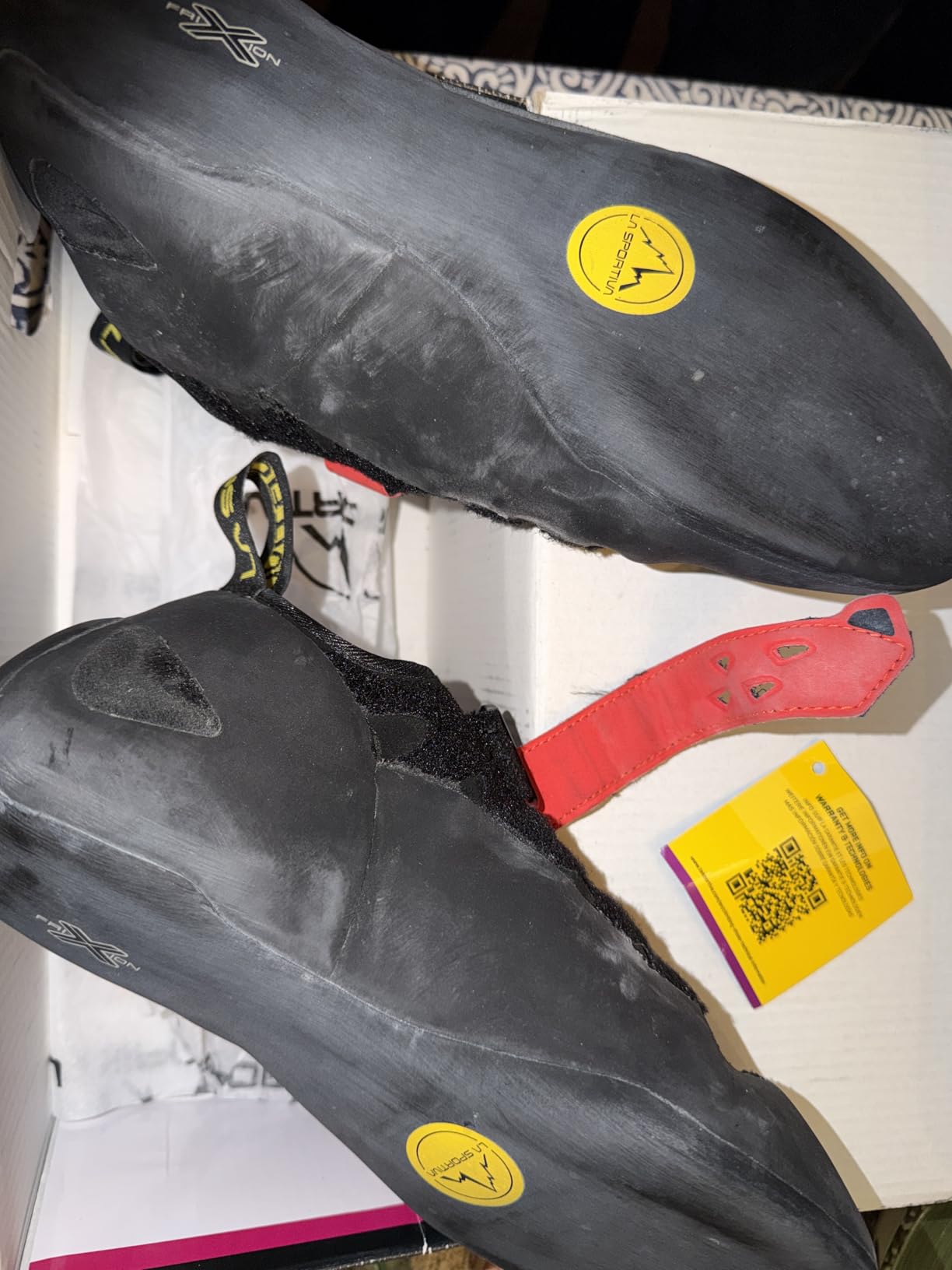
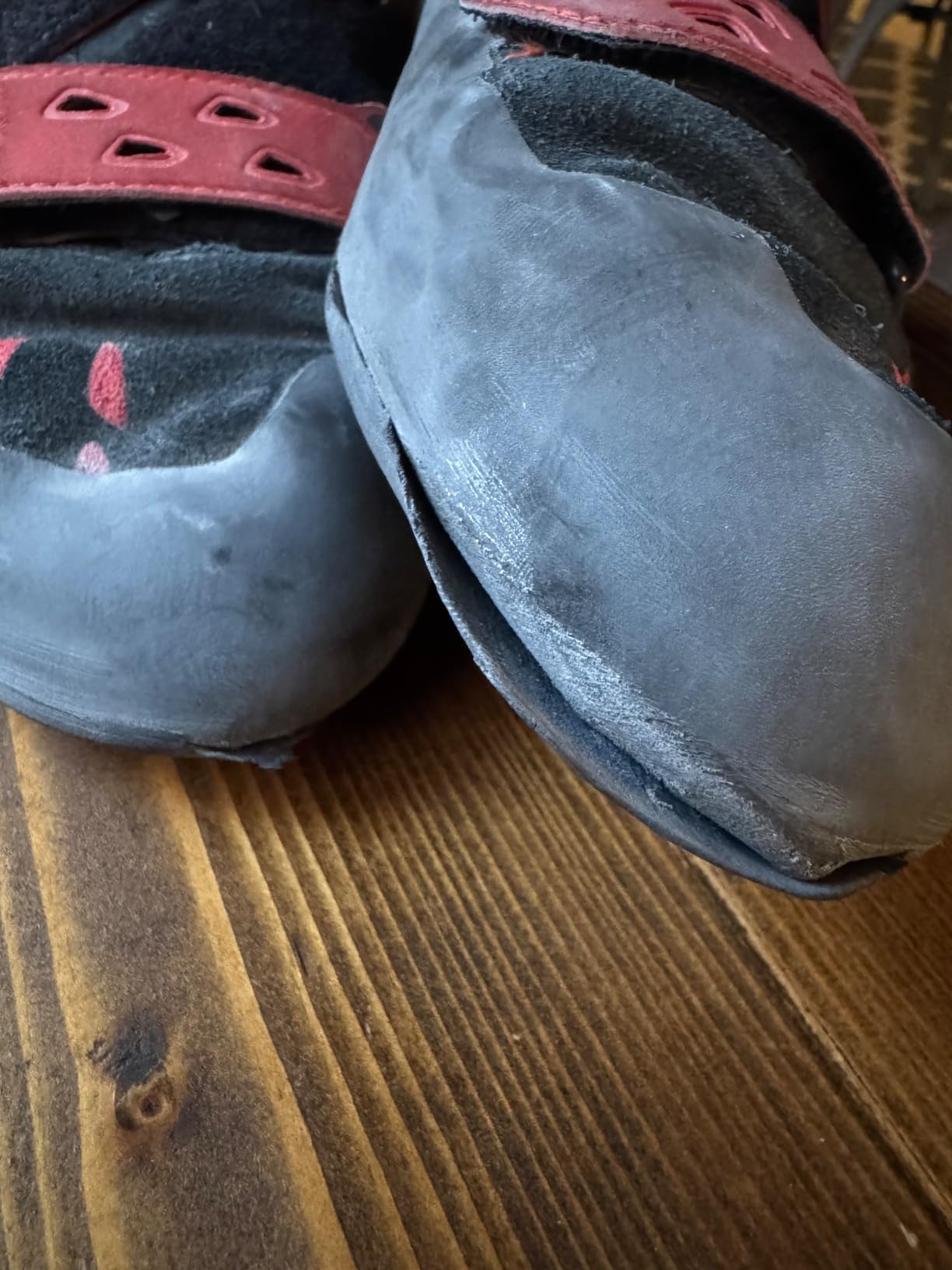
Two things separate it from the Tarantulace and are worth checking against your own priorities. The soft, low-volume construction wears out faster under heavy use, so if you climb four days a week on the same pair, the rubber and rand will go sooner. And the basic shape offers limited precision on crimpy, high-angle problems compared with anything downturned.
Sizing is the other thing. It runs about a full size large, so size down one full size from your street shoe. Pair that with the two-strap hook-and-loop closure, which owners consistently praise as far more convenient than laces both indoors and on the trail.
Choose this over the Tarantulace when
Pick this version if convenience matters more to you than fine fit control. The two straps are quicker between pitches and easier to adjust on the ground, and for most people climbing two or three days a week that outweighs the marginal precision of a lace-up.
Pick the Tarantulace instead if you want tension distributed along the length of the foot, if you climb long multi-pitch routes, or if you plan to move on to more technical ground soon and want the shoe to keep up.
Know when it will wear out
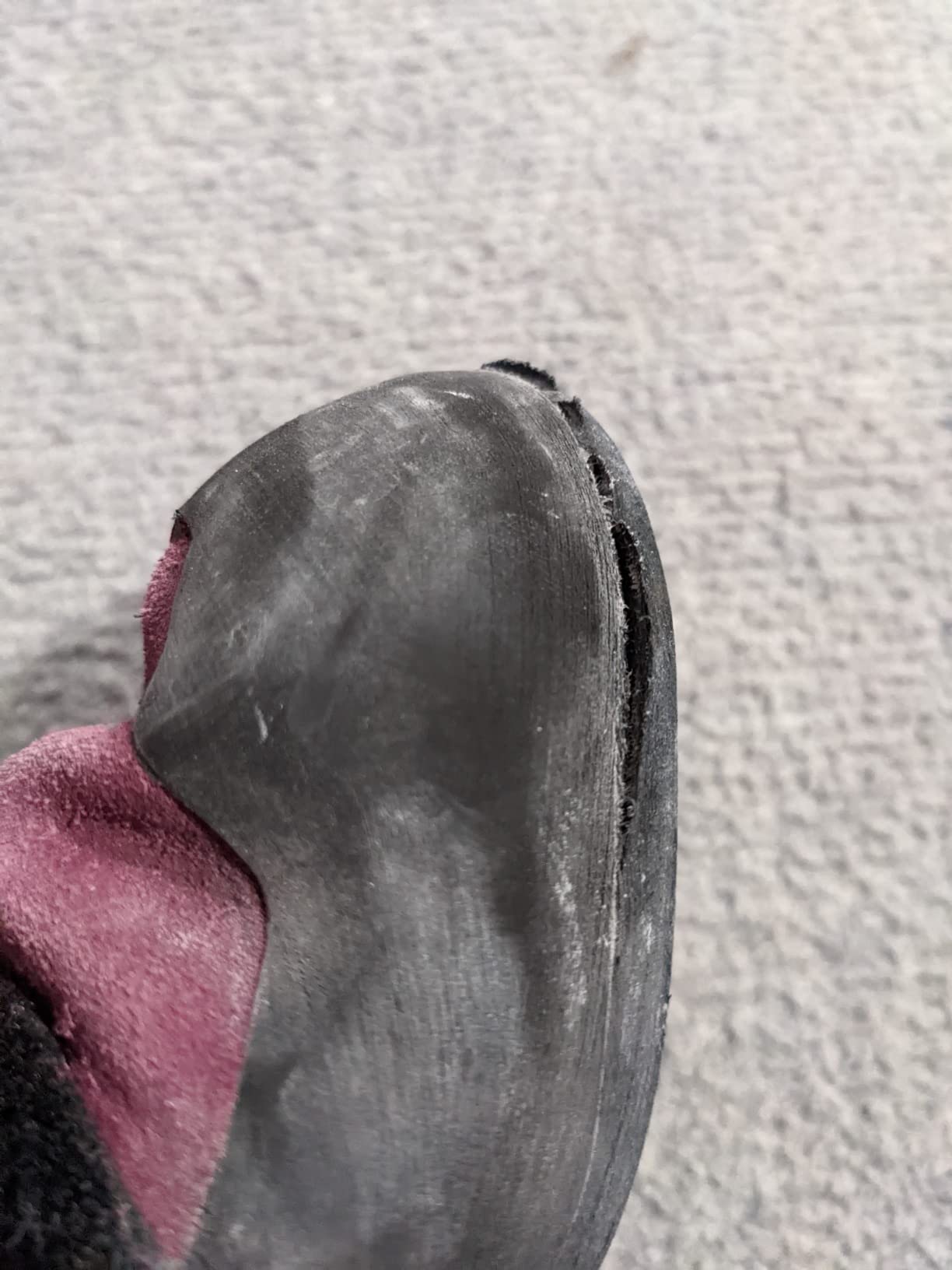
This is a soft shoe with a low-volume build, and soft shoes with less rubber underfoot consume rubber faster. If you are still refining footwork and dragging your toes everywhere, expect the outsole and rand to feel done well before the upper does.
Plan on buying a second pair within your first couple of years rather than treating it as a forever shoe. That is also the argument for buying a resoleable, stiffer shoe first, which is a recurring theme in this list.
9. SCARPA Helix Lace: Best Lace-Up for Crack and Slab
SCARPA Men’s Helix Lace Rock Climbing Shoes – Hyper Blue – 10-10.5
Vibram XS Edge rubber
Lace-up closure
Symmetrical last
Padded heel cup
Pros
- Classic design favoured by guides and all day climbers
- Padded heel cup without Achilles pinch
- Stiff durable XS Edge rubber holds small edges
- Symmetrical last works for slab and crack
Cons
- Stiff sole limits sensitivity
- Laces are slower to adjust and can loosen mid-climb
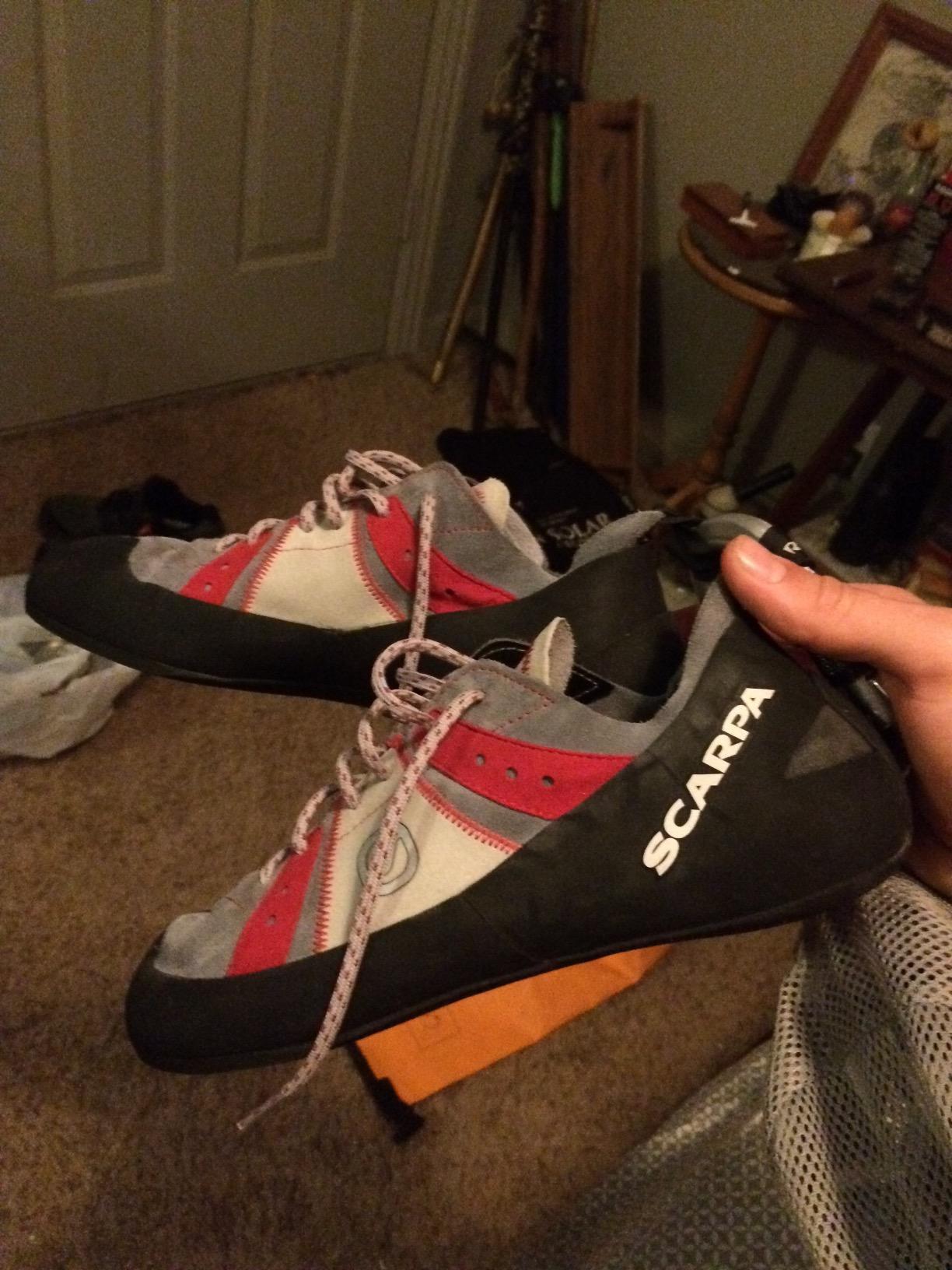
The Helix is the oldest shoe in this guide and still the reference point for a certain kind of climbing. It is a long-running classic aimed at guides, beginners and all-day comfort, and the design brief has not really changed: a lace-up closure, a nearly symmetrical last and stiff, durable Vibram XS Edge rubber.
The padded heel cup is the feature that decides who likes this shoe. It hugs the heel securely without pinching the Achilles tendon, which is precisely the problem the toe-heavy lasts in this guide create for long days. Climbers managing heel and Achilles issues have historically recommended a padded or stiff heel for exactly this reason, and this is the most accessible example of that idea.
The symmetrical profile is what makes it a crack and slab shoe rather than a sport shoe. There is no downturn to fight when you are standing on a slab, and there is no awkward asymmetry to jam into a wide crack. It is also the only lace-up in this guide besides the Tarantulace, and lacing remains the closure guides choose because it distributes tension along the whole foot.
The tradeoff is sensitivity. A stiff, consistent sole is exactly what you want for learning precise foot placements, and exactly what you do not want when you are trying to feel a 2mm edge through the sole. Owners accept this deal happily. They also note that laces are slower to adjust and can loosen mid-climb, which matters on routes where you cannot stop.
When symmetrical wins
On slab, on crack and on long easy multipitch terrain, symmetry and stiffness are not compromises, they are the correct answer. A nearly symmetrical last gives you a flat, even platform for smearing, and the stiff sole keeps the shoe from folding when you stand on a small slab edge with your weight fully on it.
It is also the pair to buy if you spend a lot of your time walking between pitches. A supportive, protective shoe with a padded heel is far more bearable over 15 pitches than a thin aggressive one, and the one-pound weight is nothing to carry in a pack.
When it will hold you back
Stop climbing in it the day you are working projects with real crimps and toe hooks, because the stiff sole gives you very little feedback on how precisely you are placing your toe. Several owners use it as an approach to a harder shoe rather than as a permanent daily trainer.
Because the leather upper stretches, downsize between half a size and one size, and expect the fit to loosen over months. That is the trade for the durability of a leather shoe, and it is also why the padded collar keeps this one comfortable long after the shape has changed.
10. Evolv Defy: Best for Learning Precision Early
EVOLV Defy Rock Climbing Shoes – Gray/Black – 10.5 Men’s
Slight camber last
PSR 4 rating
Low and medium volume
Strap and lace versions
Pros
- More precise feel than a typical entry level shoe
- Soft strap version gives good sensitivity
- PSR scale makes the shoe easy to place
Cons
- Not designed to be downsized
- Low and medium volume lasts only
The Defy exists because most entry-level shoes are flat, symmetrical and slow to become precise, and new climbers end up on far more aggressive footwear before their technique can support it. Evolv built this as the most advanced beginner shoe available, and the defining feature is a slight camber with a more asymmetric fit than a traditional entry-level last.
The result is that you get a noticeably more precise feel than a flat first pair, and the soft strap version gives good sensitivity for a beginner shoe. Crucially, the toe hooks and heel hooks feel stable, so a newer climber can practise them on a shoe that will not twist off the foot.
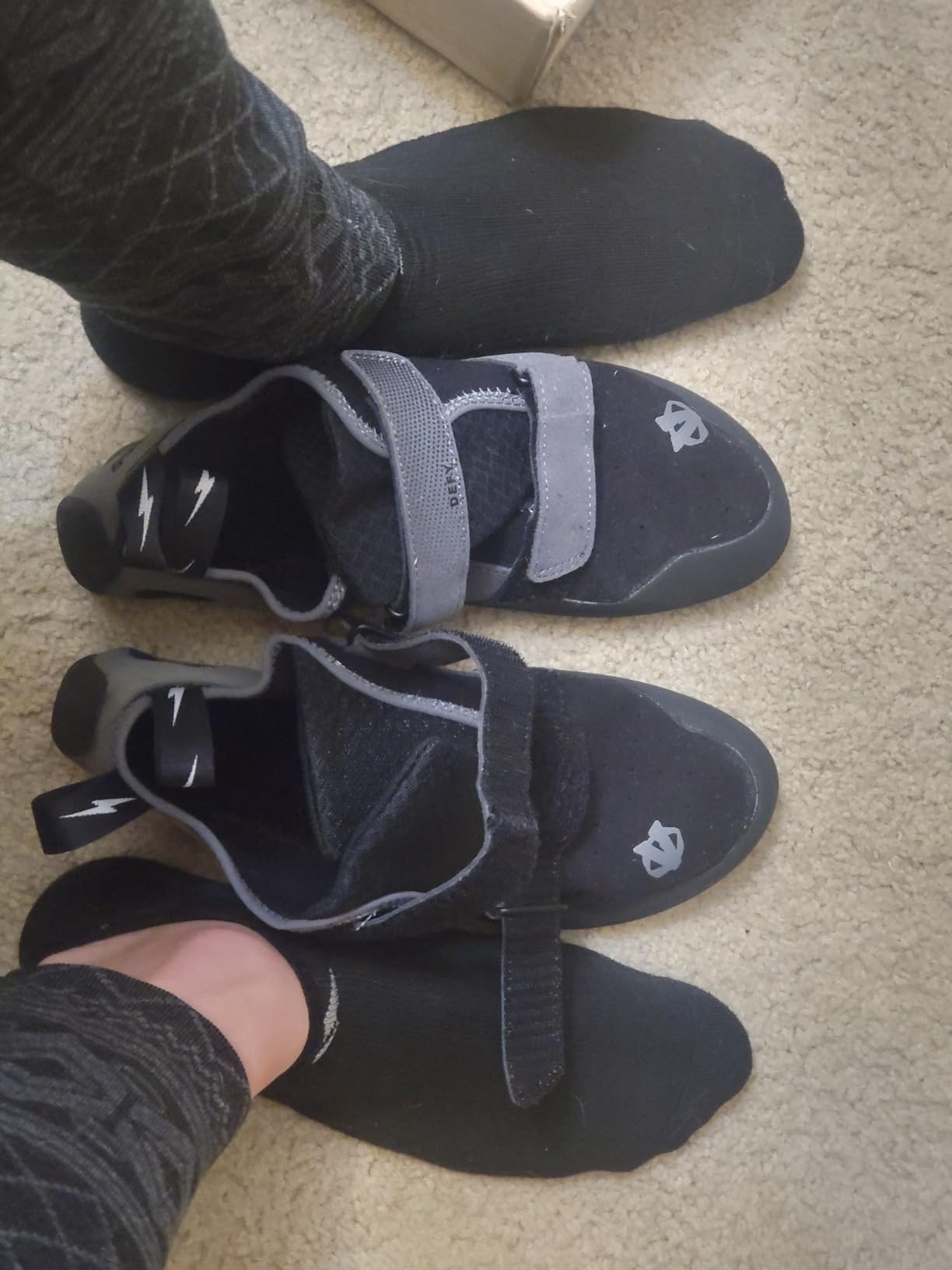
The clever part is the sizing system. Evolv sizes use three named fit categories, Max Performance at street size, Performance a half to one size larger, and Comfort one to a full size larger. That removes the guesswork, and it matters because the second thing this shoe does is refuse to be downsized at all.
Evolv climbing shoes are explicitly not designed to be downsized. If you arrive from a La Sportiva habit of sizing down a full size, you will order this shoe wrong and blame the shoe. The PSR rock shoe selection tool places it at 4 on a scale from 1 for sensitive and smearing to 10 for powerful and edging, which is a useful marker for where it sits.
Why do-not-downsize matters
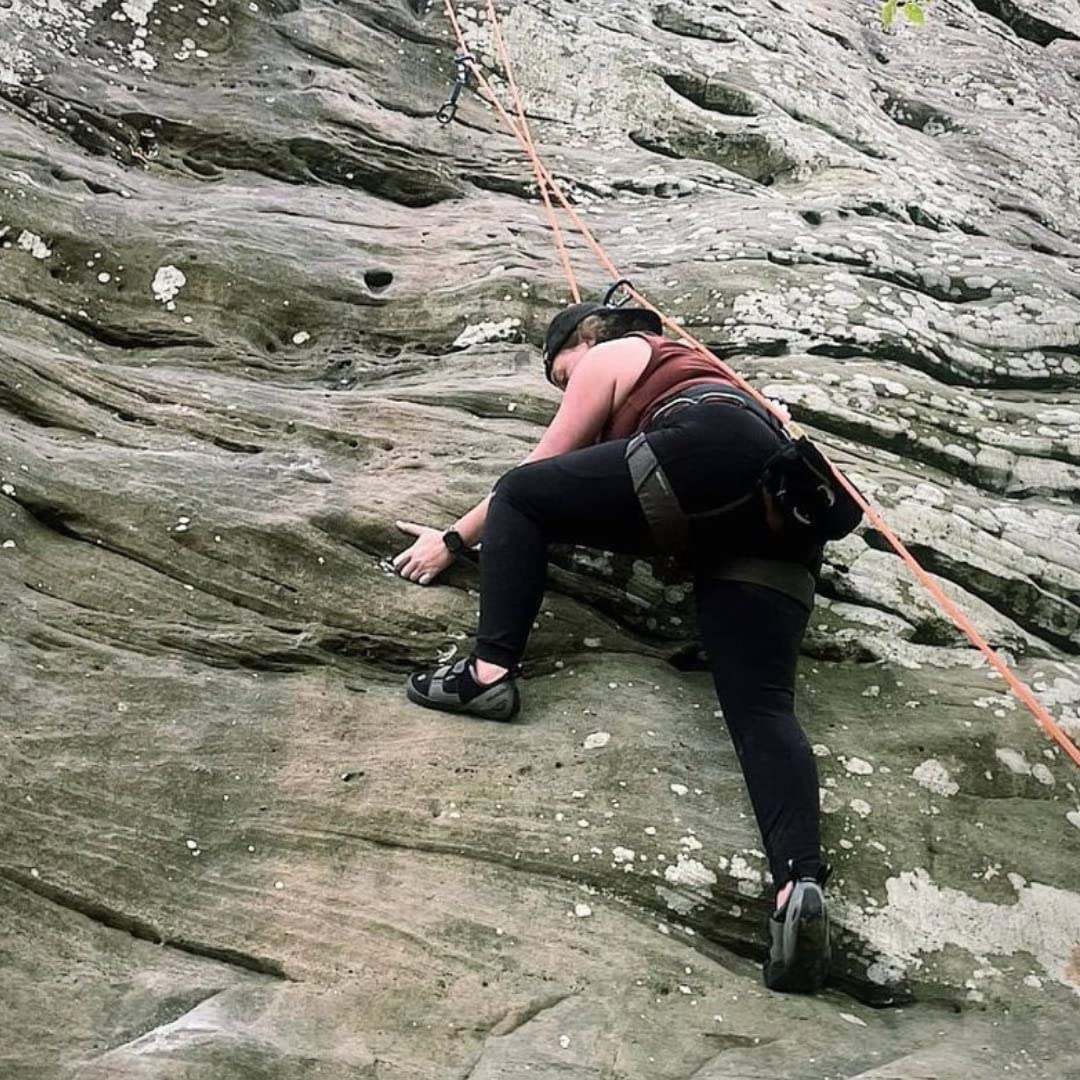
Because the shoe has camber and asymmetry built into the last, downsizing it pulls the toe box into the exact shape that causes the toe pain people already associate with climbing shoes. Evolv’s approach is that a beginner who hurts their feet in month one quits, so the fit is designed to be worn at street size or larger instead.
It is the single most important thing to understand before ordering this model, and it is the reason we would rather tell you plainly that the sizing system here is different than have you return a perfectly good shoe because you downsized it out of habit.
Choosing between the strap and lace versions
The strap version is softer, which gives more sensitivity, and the lace version gives you a more precise, evenly distributed fit. For most people learning on gym terrain, the softer strap version is the more forgiving and more sensitive of the two, and it is also the faster one to get on and off.
On volume, the LV and MV lasts cover low-volume and medium-volume feet. Neither is a wide, high-volume last, so if your forefoot is genuinely wide, look at the Instinct VS or the CLIMBX Rave before choosing this one.
11. SCARPA Origin: Best Comfortable Climbing Shoe for Long Days
SCARPA Men’s Origin Rock Climbing Shoes – Covey/Black – 13.5-14
Flat wide high volume last
Pressure absorbing heel
Leather upper
Runs small
Pros
- Flat neutral shape is comfortable for long sessions
- Very grippy rubber
- Pressure absorbing heel reduces Achilles pressure
- Well made and far better than rentals
Cons
- Flat last has no defined edges for tiny crimps
- Limited past roughly V6 to 7
- 5.11a and b
- Runs about a half size small
The Origin is the most widely recommended first pair of climbing shoe in this group and the shoe most experienced climbers recommend you buy for exactly one year. It is a flat-lasted comfort shoe that still gives you enough grip to build real technique, and the honest version of the pitch is that most people replace it within a few months.
The last is the story: flat, wide, high volume and only slightly asymmetric. That combination is about as low-demand on the foot as climbing shoes get, and it is why experienced climbers keep naming it as the answer to big-toe, bunion and general forefoot pain. The pressure-absorbing heel system spreads heel tension to reduce Achilles pressure while still providing forward drive, which is the other foot complaint it solves.
Owners also praise the rubber. It is described as very grippy, and clearly noticeable when smearing, which is more than you can say for several cheaper entry-level shoes in this list. For a beginner spending a season on slab, vertical routes and easier overhangs, that rubber is doing a lot of work in the form of clean foot placements rather than slips.
But the flat, neutral last has poorly defined edges, and that single fact determines when you move on. Experienced climbers in the reviews are consistent about the limit: it runs out of precision somewhere around V6 to V7 outdoors and 5.11a to 5.11b. Sizing also runs about a half size small, and the size steps leave gaps.
Why comfort is the feature, not the flaw
Footwork is learned by putting weight on feet, feeling what happens and adjusting. A shoe that lets you stand on a foothold without thinking about your toes means you get more usable sessions out of the same amount of climbing. That is a real progression benefit, not just a comfort benefit.
It also has the practical advantage of being a shoe you can keep on for a full day. If your first season includes multi-pitch days where you are at the crag for eight hours, the pressure-absorbing heel and the wide last mean you are not spending the whole day thinking about your feet.
When the flat last stops working
It stops working the moment you are trying to stand on something small with the front of the shoe. A flat last has no defined edge, so the shoe rolls rather than holds, and that is the moment most people realise they need a downturned model. Plan the upgrade as soon as you start projecting rather than trying to push through.
That is also why it makes a good companion pair. Many climbers keep a flat, comfortable shoe for warm-ups, approaches and long easy days, and a stiffer downturned shoe for the pitches where precision matters. Buying the Origin as that first pair is choosing the timeline deliberately rather than by accident.
How to Choose Climbing Shoes
Fit beats brand every time, and the eleven shoes above are proof of it. A shoe that is technically aggressive but wrong for your foot will hurt you, and pain is the number one reason people stop climbing. Work through the criteria below in order and you will narrow this list down to two or three pairs before you spend anything.
1. Pick the closure first
Lace-up, hook-and-loop and slip-on are the three systems, and the difference is adjustment speed against fit precision. Lacing, as on the Tarantulace and the SCARPA Helix, distributes tension along the length of the foot, gives the most precise fit, and is the closure guides prefer for crack. Hook-and-loop straps, as on the Momentum and both Tarantulas, win on speed and are far more forgiving to adjust badly. Slip-ons are the fastest and the least precise.
For a first pair, choose hook-and-loop. For long multi-pitch days and any crack climbing, choose laces. This is one of the highest-impact decisions in the whole guide and it costs nothing to get right.
2. Understand the last and the profile
The last is the moulded foot shape the shoe is built on, and it is the single biggest driver of comfort. A flat last is symmetrical and level, easy to stand on, and ideal for beginners, slab and crack. A downturned last curves the toe downward, concentrating your weight forward and letting you stand on tiny edges, at the cost of toe pressure. An asymmetric last curves the inside of the shoe so only one edge contacts the hold, which is how power toe hooks and bat hangs work.
More aggressive does not mean better. It means more specific. Buy a flat or moderately downturned shoe for gym beginners and trad days, and an aggressive asymmetric shoe once you are working steep, powerful problems all the time.
3. Match volume to your foot
Volume is how much room the last has around your foot, and it is the least understood specification. Low volume suits narrow, high-arched or otherwise compact feet and gives maximum sensitivity and precision. High volume suits wide or flat feet and reduces toe-box compression, which is the most repeated pain complaint in climbing shoe forums. Medium volume, offered as the Evolv MV last, sits in between.
Wide-footed climbers are usually told to size down less, and that advice is correct. A full size down in a narrow last is the most common cause of big-toe knuckle pain. If compression bothers you, the wide fit of the Instinct VS and the high volume of the Origin are the two places to start in this list.
4. Look at rubber, then at the midsole
Rubber is the stickiness-versus-durability dial. Sticky compounds grip smears, damp rock and volumes but wear quickly. Stiffer compounds hold tiny edges for longer and sacrifice smear performance. The 4.3mm outsole on the Momentum and the 4mm Vibram XS Grip2 on the Skwama sit in that durable-but-sticky middle that most climbers want.
Under the rubber, the midsole decides whether the shoe folds under you. Soft midsoles give sensitivity and hurt your feet. Stiff midsoles hold edges and support power moves. The SCARPA Helix is deliberately stiff for precision, and the Momentum deliberately softer for all-day comfort, so choose based on the terrain rather than on the specification.
5. Size deliberately, and do not trust the label
Climbing shoes are sized down from street size, but how far depends entirely on the brand and the upper. Leather stretches, so leather shoes are usually sized down. Synthetic knit uppers stretch less, so they are usually sized closer to true. And some brands, Evolv in particular, are explicitly not designed to be downsized at all.
The rule that reconciles the conflicting advice you will read online is simple: a climbing shoe should be snug, not painful. If you cannot hold the toe box down with your hands without pain, it is too small. If the fit is loose enough to slide your foot around, it is too big, because that kills precision and the leather will not recover the shape.
If your left and right feet are different sizes, buy to the larger foot and use a footbed or insole volume adjustment in the smaller shoe. This is a common question in climbing shoe forums and it is genuinely solvable rather than a reason to give up on buying online.
6. Uppers: leather versus synthetic
Leather stretches, breathes and moulds to your foot over weeks or months of use, which means a snug fit that becomes a good fit. Synthetic uppers such as the engineered knit on both Momentum models are predictable from day one, breathe well and dry fast, but they do not change shape. Choose leather if you have time for a break-in and value long-term fit. Choose synthetic if you want a predictable feel immediately, or if you move between climates.
Once the upper is broken in, the midsoles and rubber on the more technical shoes in this guide are what actually get you the performance. That is the standard climbers describe when they say the first pair is for learning and the second pair is for improving.
How to Break In New Climbing Shoes Without Wrecking Your Feet
Break-in is the number one named drawback of climbing shoes and the number one reason a good pair gets binned after three sessions. The community method, repeated constantly over on r/climbingshoes, is remarkably consistent and it costs almost nothing.
Put a small amount of water in the toe box, put the shoes in a plastic bag, and leave them in a freezer overnight. The leather moulds slightly to the shape of your foot as the ice melts and the material relaxes, which softens the pressure point that causes the pain. Repeat for the first few sessions.
Beyond the freeze method, wear the shoes with thin socks around the house for short periods each day for the first week, so the upper learns your foot without you climbing in it. Most of the community advice converges on the same principle: any break-in method that produces pain for hours afterwards is making the shoe worse, not better.
Per-shoe expectations differ. The Skwama needs four to five sessions and is the most aggressive about it, with a sharp shoe opening that can blister the ankle until the leather softens. The leather Tarantula and Tarantulace need the longest to shape but end up the most forgiving. The engineered knit on the Momentum breaks in almost immediately, which is part of why it works for a wide range of climbers on day one.
Best Climbing Shoes for Wide Feet and Toe Pain
If you have wide feet, a high arch, or you have dealt with big-toe knuckle pain, a bunion or Morton’s toe, the answer is almost never to size down harder. It is to find a wider last and reduce the size down.
From this list, the SCARPA Instinct VS is the widest high-performance option and the most commonly recommended shoe for wide feet in owner reviews, with owners specifically calling out Morton’s toe compatibility. The CLIMBX Rave is the most recommended budget option, since it runs close to true to size and is repeatedly praised in wide-foot threads. The SCARPA Origin, with a wide, high volume flat last, is the comfort answer. The La Sportiva Skwama’s wide forefoot is a genuine surprise for an aggressive downturned shoe.
For pain specifically, two features matter more than anything else. A padded or pressure-absorbing heel, as on the SCARPA Origin, reduces the Achilles pressure that comes with toe-heavy lasts. A neutral or flat profile, as on the Origin and the Helix, removes the constant big-toe compression that causes most of the discomfort. A rubber toe box, as on the Instinct VS, stops the toe box from digging into your toe knuckle when you push down.
Whatever you choose, try shoes on in person at a gym or gear shop before committing. It is the most common piece of advice in the forums, and it is the fastest way to find out whether a particular last works for your foot.
When to Upgrade From Your First Pair
Upgrade when your feet are no longer the limiting factor, not when a season ends. The clearest signal is technical: you are working crimps and small edges, or steep overhangs with heel and toe hooks, and your current flat last rolls off the hold because it has no defined edge.
The second signal is strength. If you can hang from a small foothold for ten seconds but cannot feel where exactly you are placing your toe, you need a thinner, more sensitive sole. The third signal is rubber. If your outsoles are smooth and your rand is separating from the upper, you need a stiffer, resoleable shoe rather than another soft one.
You do not need to replace everything at once. Most climbers end up with two pairs: a comfortable, flat or moderately downturned shoe for warm-ups, long days and easy terrain, and an aggressive, stiff, resoleable shoe for hard projects. A rotation of two also doubles the life of each pair, because rubber wears fastest in the first minutes of a session while you are still using the rubber-heavy part of the sole.
Frequently Asked Questions
What are the best climbing shoes in 2026?
Our top pick is the Black Diamond Momentum Lace or Strap, which is the highest reviewed shoe in our test group at 4.4 stars from more than 1000 owners. The La Sportiva Skwama has the highest average rating at 4.6 for hooking and edging, the SCARPA Instinct VS is the best option for wide feet, and the CLIMBX Rave is the most sensible first pair for beginners.
Which brand of climbing shoes is considered the best?
There is no single best brand, because lasts differ more between brands than people expect. La Sportiva is known for precise, moderate shapes with a strong tradition in sport and trad. Scarpa leans wider and higher volume, which suits broad feet. Evolv publishes an explicit do-not-downsize sizing philosophy, Black Diamond makes the most consistent all-rounders, and Butora is frequently recommended for very wide toe boxes.
Is La Sportiva or Scarpa better?
It depends on your foot. La Sportiva tends to run larger and offers rounder, higher volume forefoots, while Scarpa models such as the Instinct VS and Origin are wider and flatter. Choose La Sportiva for a rounder foot and sport climbing, and Scarpa for wide feet, long days and pain-free all-round use. Try both in person where possible.
What shoes do professional climbers use?
Professional climbers typically use aggressive, downturned, asymmetric shoes for sport and bouldering, and stiffer leather lace-ups for trad and big wall routes where protection and durability matter. Among the shoes in our guide, the La Sportiva Skwama and the SCARPA Instinct VS represent the sport and boulder end of that spectrum, while the SCARPA Helix represents the stiff lace-up trad choice.
What shoe does Alex Honnold wear?
Detailed, reliably published footwear information about Alex Honnold is limited, and soloists are known to change shoes depending on conditions. Big wall free soloing is typically done in stiff, supportive, protected shoes rather than thin aggressive ones, since comfort and protection matter more than sensitivity when a fall is not an option. The closest equivalent in our guide is the SCARPA Helix, a stiff lace-up with a padded heel.
The Verdict: Best Climbing Shoes in 2026
The Black Diamond Momentum Lace or Strap is the best climbing shoe for most people in 2026. It has the deepest body of owner feedback we could find, a breathable engineered knit upper, a 4.3mm outsole that handles plastic and rock equally well, and a fit that forgives more foot shapes than anything else we tested. If you are buying one pair and you are not sure where to start, start there.
Move up from it rather than sideways. Go to the La Sportiva Skwama when you are hooking hard on steep ground and can handle a multi-session break-in, to the SCARPA Instinct VS when you want performance in a wide last, and to the SCARPA Helix when you are spending your days on slab, crack and long easy routes.
And if your feet hurt in almost any of those shoes, the problem is the last, not your technique. Try a wider or flatter option, size down less, and remember that a snagging-free, pain-free season beats a season spent limping to the gym.