
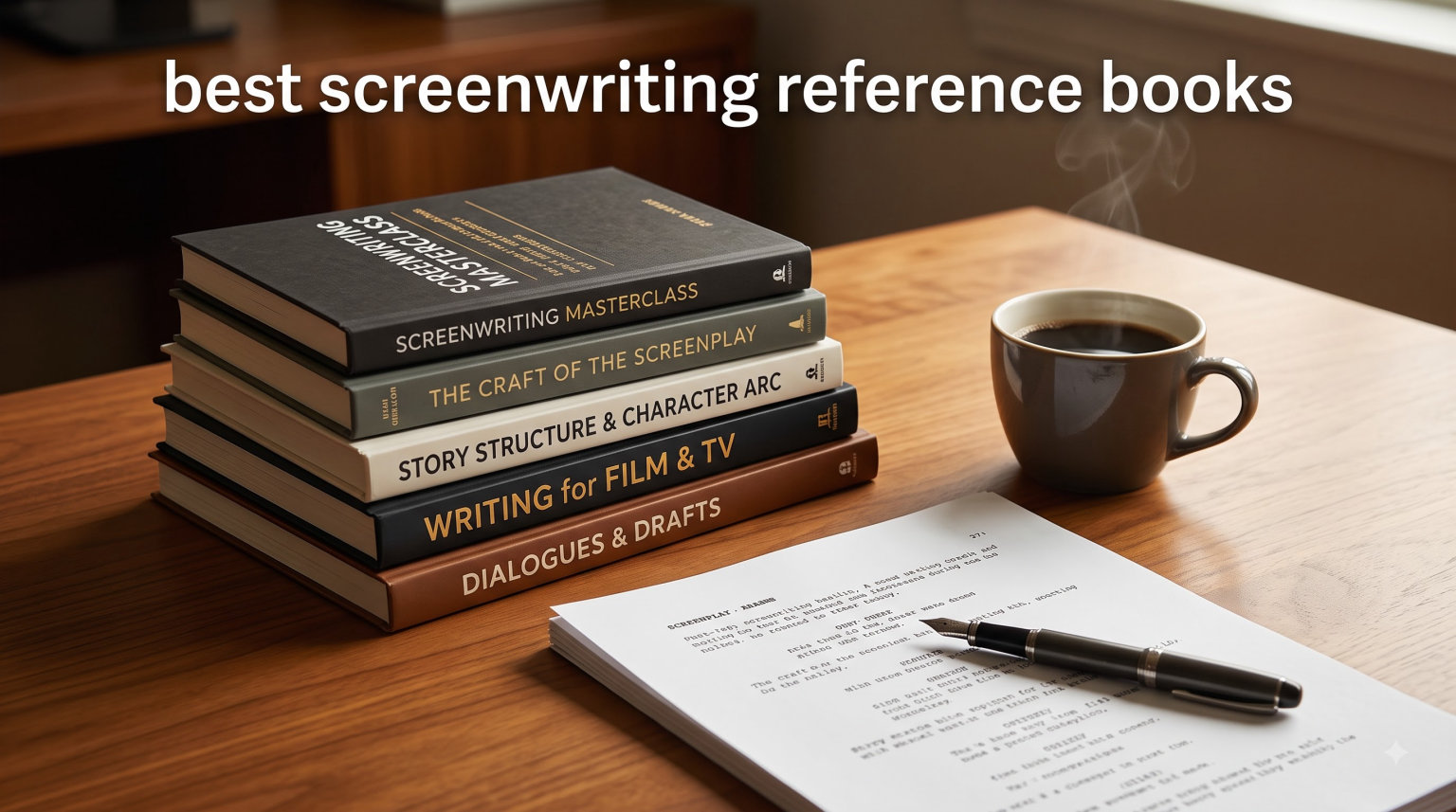
Every screenwriter I know owns a shelf of dog-eared books they swear by. Shakespeare never had a beat sheet, but the dramatic principles he perfected — escalating tension, flawed protagonists, turning points that flip the entire story — are the exact DNA of the best screenwriting reference books on the market today.
I have spent years reading, studying, and writing about dramatic structure, and our team compared six of the most recommended screenwriting books to figure out which ones actually help you write better scripts. Some teach structure. Others teach the business. A few just light a fire under you. This guide covers all of it.
Whether you are writing your first screenplay or polishing your tenth draft, finding the best screenwriting reference books for your current skill level can save you months of frustration. The books below range from beginner-friendly beat sheets to dense academic theory — and I will tell you exactly who each one is for.
Table of Contents
Top 3 Screenwriting Books at a Glance
Save The Cat! by Blake Snyder
- 15-beat story structure
- Casual accessible style
- Works for any genre


Best Screenwriting Reference Books in 2026
| Product | Specifications | Action |
|---|---|---|
| Save The Cat! by Blake Snyder |
|
Check Latest Price |
| Story by Robert McKee |
|
Check Latest Price |
| Screenplay by Syd Field |
|
Check Latest Price |
 Adventures in the Screen Trade by William Goldman Adventures in the Screen Trade by William Goldman |
|
Check Latest Price |
 The Hero with a Thousand Faces by Joseph Campbell The Hero with a Thousand Faces by Joseph Campbell |
|
Check Latest Price |
 On Writing by Stephen King On Writing by Stephen King |
|
Check Latest Price |
1. Save The Cat! by Blake Snyder — The Beat Sheet Bible
Save The Cat! The Last Book on Screenwriting You’ll Ever Need
195 pages
12 ounces
Blake Snyder Beat Sheet
15 story beats
Published 2005
Pros
- Structured beat sheet for story planning
- Easy casual writing style
- Concrete benchmarks for story structure
- Applicable beyond screenwriting to novels
Cons
- Can feel too rigid or formulaic
- Author criticizes movies that do not follow his structure
- Limited depth compared to advanced books
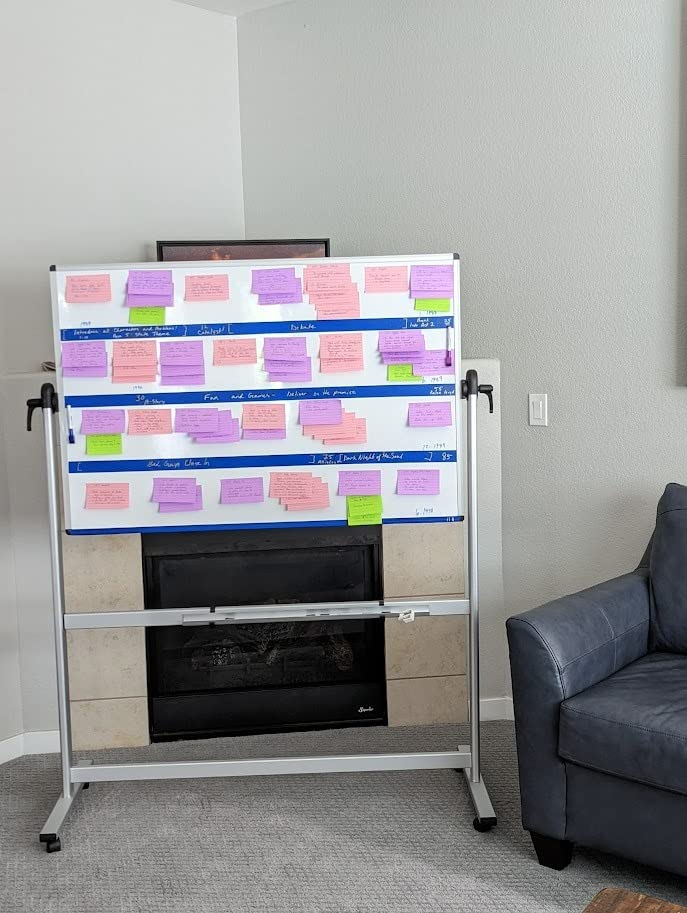
I picked up Save The Cat! expecting another generic writing guide and instead found the single most practical story-planning tool I have ever used. Blake Snyder’s 15-beat sheet gives you a literal map for where every major story moment should land. Opening image, setup, catalyst, debate, break into two — each beat has a page-count target and a clear purpose.
What surprised me most is how well this structure echoes Shakespeare’s five-act dramatic form. Snyder’s “catalyst” hits the same dramatic function as the inciting incident in Hamlet — the ghost appearing on the battlements. His “all is lost” moment mirrors the dark turning point in Macbeth when Macduff’s family is killed. The storytelling DNA has not changed in 400 years. Snyder just put page numbers on it.
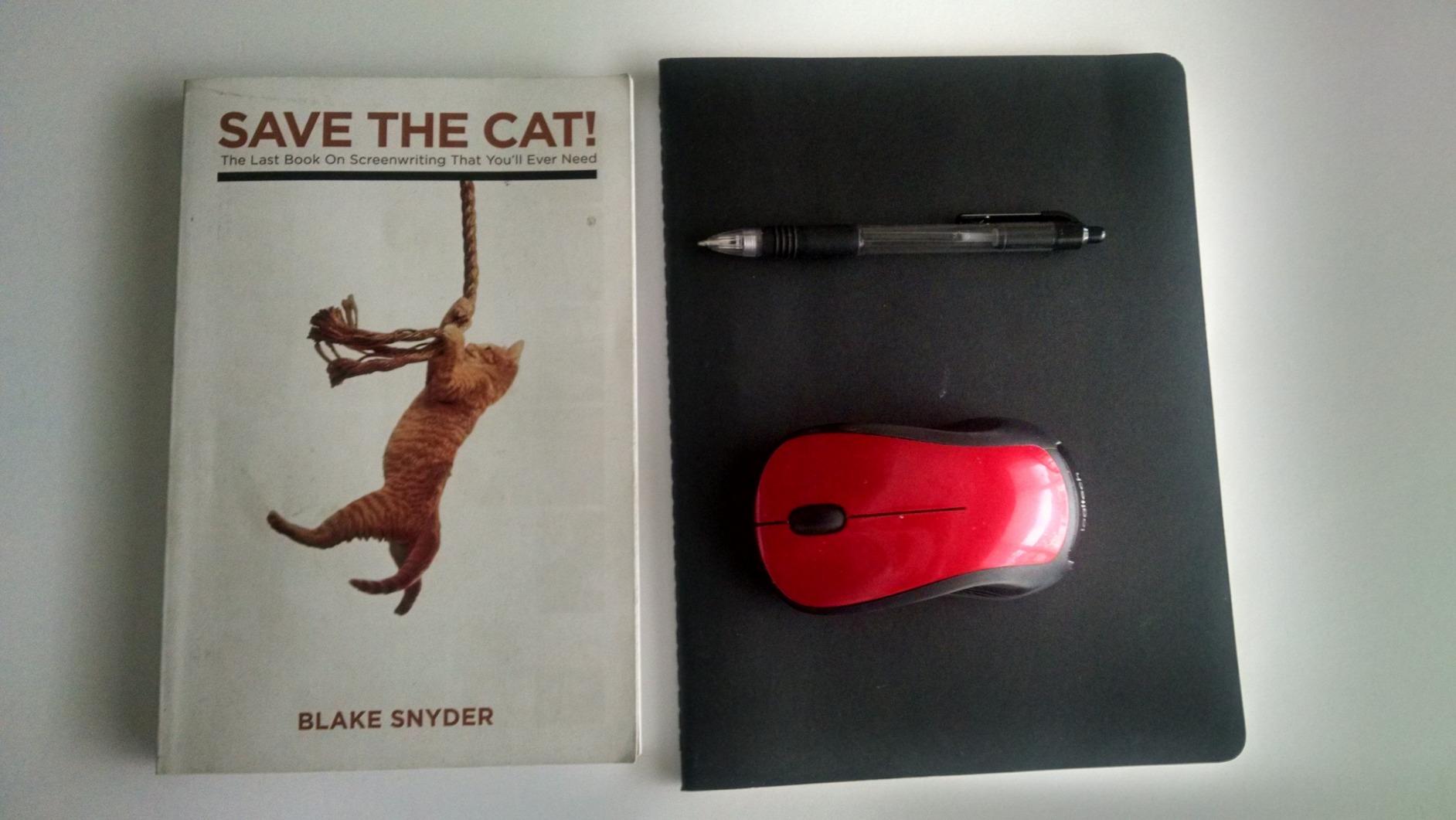
The writing style is casual and funny, which makes it a fast read. I finished it in two evenings and immediately outlined a screenplay using his beat sheet. That outline became the cleanest first draft I had written in years. The book also breaks down ten film genres, and Snyder explains what audiences expect from each one.
Here is the honest catch: Snyder’s framework can feel like a straitjacket. Some Reddit users on r/Screenwriting criticize the book for producing formulaic scripts, and I understand that complaint. If you treat the beat sheet as a rigid law instead of a diagnostic tool, your stories can feel mechanical. Snyder also spends time criticizing successful films that do not follow his structure, which gets old fast.
How the Beat Sheet Maps to Shakespeare’s Five-Act Structure
If you have studied Shakespeare at all, Snyder’s beats will feel familiar. The five-act structure that Shakespeare inherited from classical drama maps onto Snyder’s 15 beats with surprising precision. Act I covers Snyder’s opening image through break into two. Acts II and III contain the bulk of the middle beats including the midpoint and bad guys close in. Acts IV and V cover the all-is-lost, finale, and final image.
This connection matters because it proves the beat sheet is not a Hollywood invention. It is the same dramatic rhythm that has driven storytelling since ancient Greece. Understanding that lineage makes you a more flexible writer — you can follow the beats or break them with intention, knowing exactly what dramatic purpose each moment serves.
Who Should Buy This Book vs. Who Should Skip It
Buy it if you are writing your first or second screenplay. Buy it if you have a story idea but no idea how to structure it. Buy it if you are a novelist who wants to apply cinematic pacing to prose. Snyder’s beat sheet has become an industry-standard reference, and many studio executives use its language in notes meetings.
Skip it if you have already written several scripts and feel confident in your structure. Skip it if you are looking for deep character psychology or dialogue craft — those are not what this book does. And skip it if rigid frameworks make you want to stop writing. You would be better served by Robert McKee’s Story or Stephen King’s On Writing.
2. Story by Robert McKee — The Deep Theory Reference
Story: Substance, Structure, Style and the Principles of Screenwriting
480 pages
1.8 pounds
Story Design Triangle
Genre framework
Published 1997
Pros
- In-depth analysis of story principles
- Applicable to screenwriting novels and all storytelling
- Rich with film examples
- Non-formulaic approach encouraging creativity
Cons
- Dense and lengthy at 480 pages
- Some find it overly academic or dogmatic
- Dated examples from older films
Robert McKee’s Story is the book screenwriters love to argue about. Some call it the bible of the craft. Others find it pretentious and dogmatic. After reading all 480 pages, I land somewhere in the middle — it is the most intellectually demanding book on this list, but it rewards the effort with the deepest understanding of why stories work.
McKee does not give you a beat sheet. Instead, he breaks down the architecture of story: inciting incidents, progressive complications, crises, climaxes, and resolutions. He explores what he calls the “gap” — the space between expectation and result that drives every scene forward. Shakespeare mastered this gap in every soliloquy. When Hamlet decides not to kill Claudius at prayer, the gap between what he expects and what happens drives the entire third act.
The book includes a detailed genre framework that categorizes film types and explains the expectations for each. McKee’s controlling idea concept — the single moral truth your story argues — is one of the most useful tools I have encountered for diagnosing a broken script. If you cannot state your controlling idea in one sentence, McKee would say your story has no spine.
Let me be straight about the difficulty. This is not a beach read. McKee writes like a professor, and some chapters require re-reading to fully absorb. The film examples skew older, which younger writers may find less relevant. But the principles themselves are timeless. The gap, the controlling idea, scene-versus-sequence design — these concepts apply to anything you write, from streaming pilots to video game narratives.
How Much Time and Effort This Book Demands
Plan to spend two to three weeks with this book if you want to absorb it properly. It is 480 pages of dense theory, and skimming will not work. I recommend reading it with a notebook beside you and writing down McKee’s key terms as you encounter them. The chapters on scene design and act design are worth the entire cover price on their own.
Some writers I know read Story once a year as a refresher. Others read one chapter at a time between drafts, using it as a diagnostic tool for specific problems. There is no wrong way to approach it, but treating it like a quick-reference manual will leave you frustrated. Commit to it or wait until you are ready.
Best Reading Order: Where Story Fits in Your Learning Journey
I recommend reading Story after you have read at least one foundational book like Screenplay by Syd Field or Save The Cat! by Snyder. McKee assumes you already understand basic three-act structure and screenplay formatting. Starting here would be like studying literary theory before you have written a short story.
The ideal sequence for most writers is Field first for fundamentals, Snyder second for practical structure, and McKee third for deep theory. After McKee, you will have a complete picture of how stories are built from the ground up and the inside out. That trio covers 90 percent of what film school teaches about structure.
3. Screenplay: The Foundations of Screenwriting by Syd Field — The Original Classic
Screenplay: The Foundations of Screenwriting
320 pages
8.4 ounces
Three-act structure
Plot point system
Revised edition
Pros
- Foundational introduction to three-act structure
- Easy to read and understand
- Practical advice for beginners
- Valuable for novelists too
Cons
- Considered dated by some modern standards
- Less detailed than recent guides
- Basic for experienced writers
If there is a grandfather of modern screenwriting education, it is Syd Field. Screenplay was first published in 1979 and introduced the three-act structure paradigm that every screenwriting book since has either built upon or reacted against. Reading it is like reading the original source code of the entire industry.
Field’s framework is simple and powerful. Act One is the setup — roughly pages 1 to 30. Act Two is the confrontation — pages 30 to 90. Act Three is the resolution — pages 90 to 120. Plot points at the end of Acts One and Two pivot the story in new directions. That is it. That is the paradigm that launched a thousand spec scripts.
What I appreciate about Field is his emphasis on knowing your ending before you start writing. He also stresses the importance of research — understanding your world, your characters, and your subject matter deeply before typing FADE IN. That advice sounds obvious until you realize how many writers skip it and then wonder why their second act collapses.
The book’s weakness is its age. Field wrote this before streaming, before prestige TV, before the explosion of non-linear and serialized storytelling. Some of his examples feel dusty, and his page-count targets assume a 120-page feature, which is less standard today. Experienced writers will find the content basic. But for a first-time screenwriter, this is where you start.
Why the Three-Act Structure Still Holds Up (and Where It Falls Short)
The three-act structure survives because it mirrors the natural rhythm of how humans process stories: beginning, middle, end. Shakespeare used it in compressed form through his five-act structure, and classical dramatists used it before him. Field did not invent it — he simply named the mechanics clearly enough that anyone could learn them.
Where it falls short is in the middle. Act Two is 60 pages in Field’s model, and that is where most screenplays die. The three-act paradigm does not give you enough signposts for that long second act. This is exactly why Snyder’s beat sheet and McKee’s scene design theory became necessary — they fill the gap that Field’s model leaves open. Read Field for the foundation, then read others for the detail work.
Is This Book Enough or Do You Need a Companion Guide
On its own, Screenplay gives you enough to write a complete first draft. But it will not teach you formatting in depth, and it will not give you a beat-by-beat map for Act Two. I recommend pairing it with either Save The Cat! for practical structure or a dedicated formatting guide for the technical side.
For the price, this is the most affordable entry point into screenwriting education on this list. At under $12, there is no reason not to own it. Even if you eventually move on to more advanced books, Field’s clear prose will always be your reference point when someone asks you what a plot point is.
4. Adventures in the Screen Trade by William Goldman — The Hollywood Memoir
Adventures in the Screen Trade: A Personal View of Hollywood and Screenwriting
608 pages
1.1 pounds
Hollywood insider memoir
Full Butch Cassidy script
Reissue edition
Pros
- Fascinating insider Hollywood anecdotes
- Famous nobody-knows-anything insight
- Full Butch Cassidy screenplay included
- Entertaining and witty writing style
Cons
- Written in 1982 and feels dated
- More memoir than instructional guide
- Scattershot structure covering many topics
William Goldman wrote Butch Cassidy and the Sundance Kid, All the President’s Men, and The Princess Bride. He also wrote the single most quoted line about Hollywood ever uttered: “Nobody knows anything.” That line alone is worth the price of this 608-page memoir-meets-crash-course on how the movie business actually works.
This is not a structure book. There is no beat sheet and no three-act diagram. What Goldman gives you instead is decades of war stories from inside the writers’ room and the studio backlot. He explains how stars get cast, how scripts get destroyed, and why the best films often succeed for reasons no one predicted.
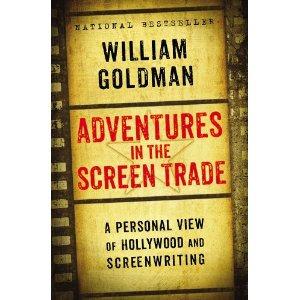
The book includes the complete screenplay for Butch Cassidy and the Sundance Kid with Goldman’s annotations. Reading a professional script with the writer’s own commentary is an education in itself. You see how he handled transitions, how he wrote action lines economically, and how he let dialogue breathe — skills Shakespeare himself mastered in blank verse.
The downside is obvious: this book was written in 1982 and the industry has changed. Streaming did not exist. IP franchises were not the dominant force they are today. But Goldman’s insights about human nature, studio politics, and the fundamental mystery of why some scripts work and others do not — those remain as sharp as ever.
What You’ll Learn About Hollywood That No Textbook Teaches
Goldman teaches you what no craft book can: how it feels to be a working screenwriter. He covers the emotional rollercoaster of spec sales, the humiliation of script notes, the exhilaration of seeing your words on screen. If you want to understand the psychology of surviving in this industry, this book delivers what McKee and Snyder cannot.
You will also learn about adaptation, which Goldman mastered. His chapter on adapting All the President’s Men from a nonfiction book into a thriller is a masterclass in narrative problem-solving. For any writer interested in adaptation — and Shakespeare himself was a master adapter of historical sources — this section alone justifies the purchase.
Best Edition and Reading Approach for Maximum Value
Get the reissue edition from Grand Central Publishing. It includes updated commentary from Goldman reflecting on the decades since original publication. Those addenda are gold — he revisits his predictions, admits where he was wrong, and adds context for a new generation of readers.
Read this book after you have a foundation in structure. It will not teach you how to write a screenplay, but it will teach you how to think about your career as a screenwriter. Pair it with a craft book for the full picture: technique plus reality.
5. The Hero with a Thousand Faces by Joseph Campbell — The Mythology Foundation
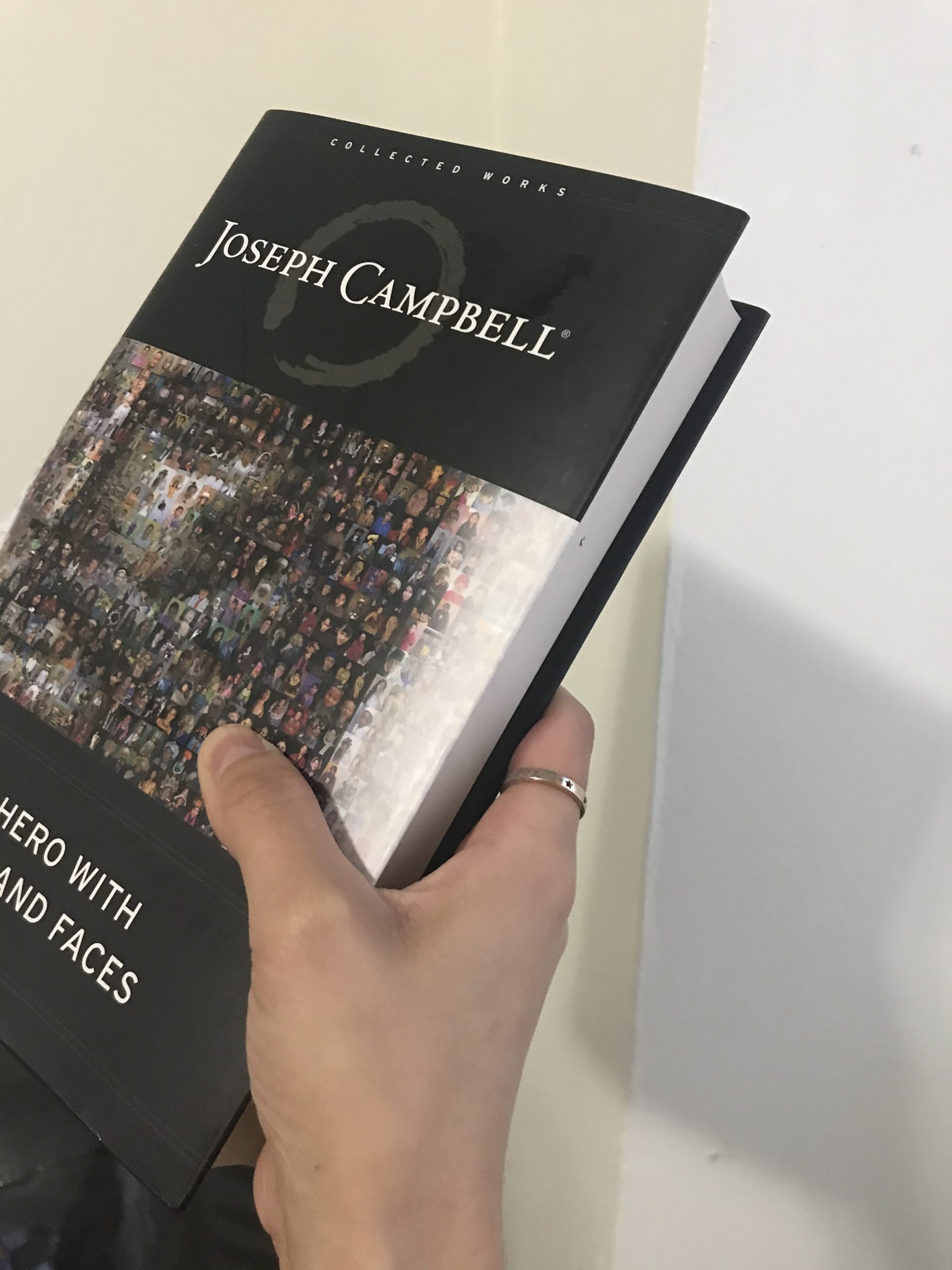
The Hero with a Thousand Faces (The Collected Works of Joseph Campbell)
432 pages
2.31 pounds
Monomyth framework
Hero journey stages
Second edition
Pros
- Definitive exploration of hero journey and monomyth
- Well-researched with world mythology examples
- Essential for fiction writers and storytellers
- Beautiful synthesis of archetypes
Cons
- Dense and difficult to read
- Meandering writing style
- Heavy reliance on Freudian psychoanalysis
Joseph Campbell did not write a screenwriting book. He wrote a comparative mythology study published in 1949 that happened to become the most influential story-structure text in Hollywood history. George Lucas used it for Star Wars. Christopher Vogler adapted it specifically for screenwriters in The Writer’s Journey. The hero’s journey framework permeates modern storytelling so deeply that you already know its stages even if you have never read a page.
The monomyth structure Campbell identified — Departure, Initiation, and Return — traces a pattern that appears in myths from every culture on earth. The hero receives a call to adventure, crosses a threshold into an unknown world, faces trials, undergoes transformation, and returns changed. Shakespeare used this pattern in The Tempest, where Prospero’s journey of exile, confrontation, and forgiveness follows the monomyth arc precisely.
Reading Campbell gives you the deep foundation that Snyder and Field build on top of. When you understand why the hero’s journey resonates across human cultures, you understand something fundamental about storytelling that no beat sheet can teach you. The book draws on myths from Greek, Hindu, Buddhist, Native American, and Aboriginal traditions — a scope that puts most story-structure books to shame.
Be warned: this is an academic text. Campbell writes in a scholarly, meandering style with heavy references to Freudian psychoanalysis and anthropological theory. It is not light reading. Many screenwriters read Vogler’s adaptation first and tackle Campbell later for the full, unfiltered source material. That is a perfectly valid approach.
How Dense Is This Book Really
This is the densest book on this list, including McKee. Campbell assumes you have some background in mythology and psychology, and he does not slow down to explain his references. The writing style is lyrical but circular — he often returns to the same ideas from different angles rather than building linear arguments.
I would compare the reading experience to tackling a graduate-level humanities course. It is rewarding but slow. Expect to read 20 to 30 pages per sitting, not 100. Many readers skip the extensive footnotes on the first pass and return to them later. There is no shame in that approach — the core text in the main chapters is what matters most for screenwriters.
Should Screenwriters Read This Before or After Vogler
For most screenwriters, I recommend reading Christopher Vogler’s The Writer’s Journey first. Vogler translated Campbell’s academic framework into practical screenwriting terms with film examples and clear character archetypes like the Mentor, the Threshold Guardian, and the Shadow. It is the accessible on-ramp to Campbell’s theory.
Then read Campbell for depth. Once you know the hero’s journey framework from Vogler, Campbell’s original text becomes much easier to navigate because you have a mental map of where he is going. Think of it like reading the textbook after you have already seen the lecture. The combination of Vogler plus Campbell gives you the most complete education in mythic story structure available.
6. On Writing: A Memoir of the Craft by Stephen King — The Discipline Book
On Writing: A Memoir of the Craft
288 pages
12 ounces
Writing toolbox
Memoir and craft
Anniversary edition
Pros
- Practical writing advice from a prolific author
- Honest and genuine memoir portion
- Emphasizes reading and writing discipline
- Toolbox concept for organizing skills
Cons
- Dense read at times
- Dated self-publishing advice
- Some readers wanted less memoir
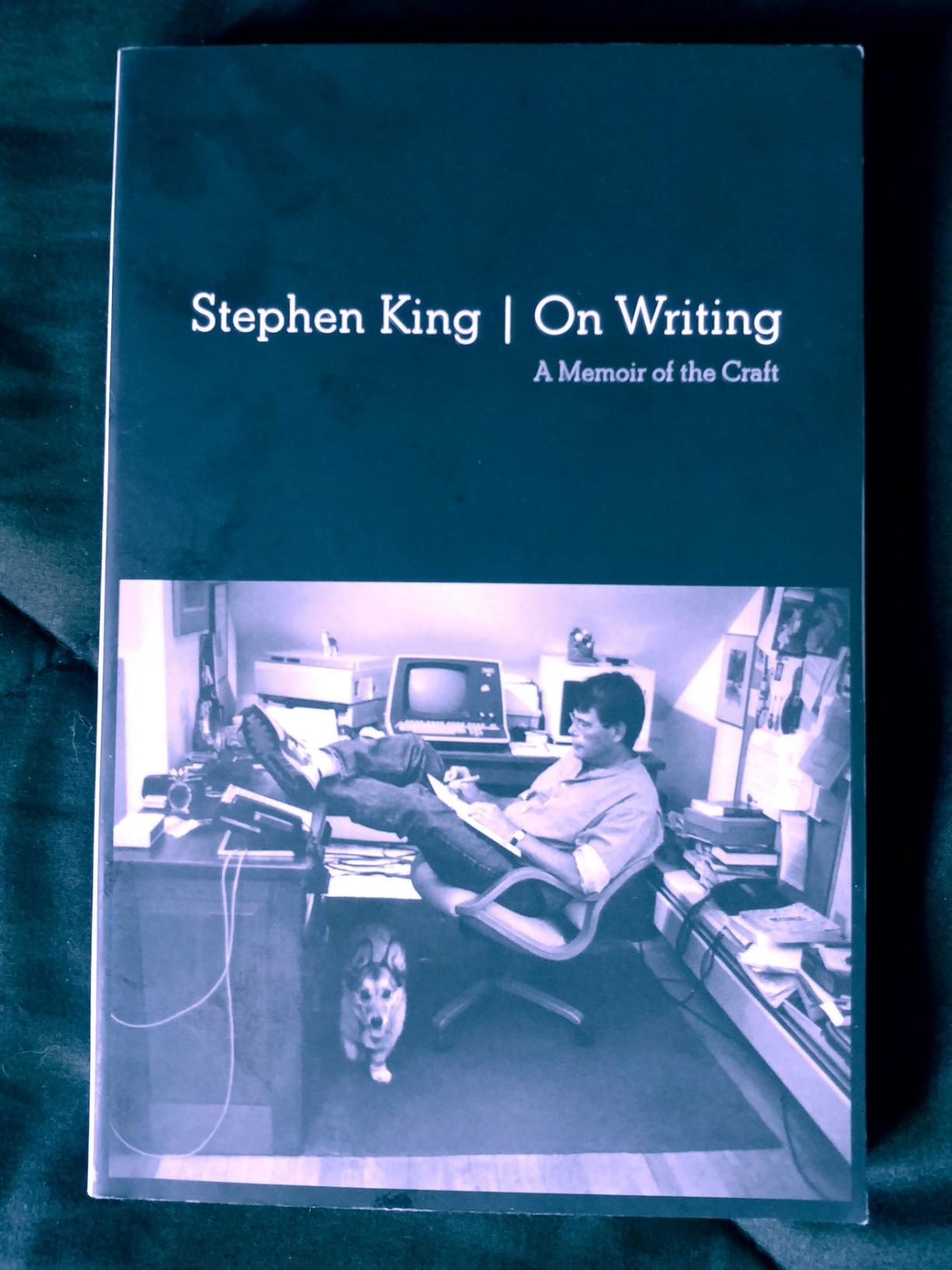
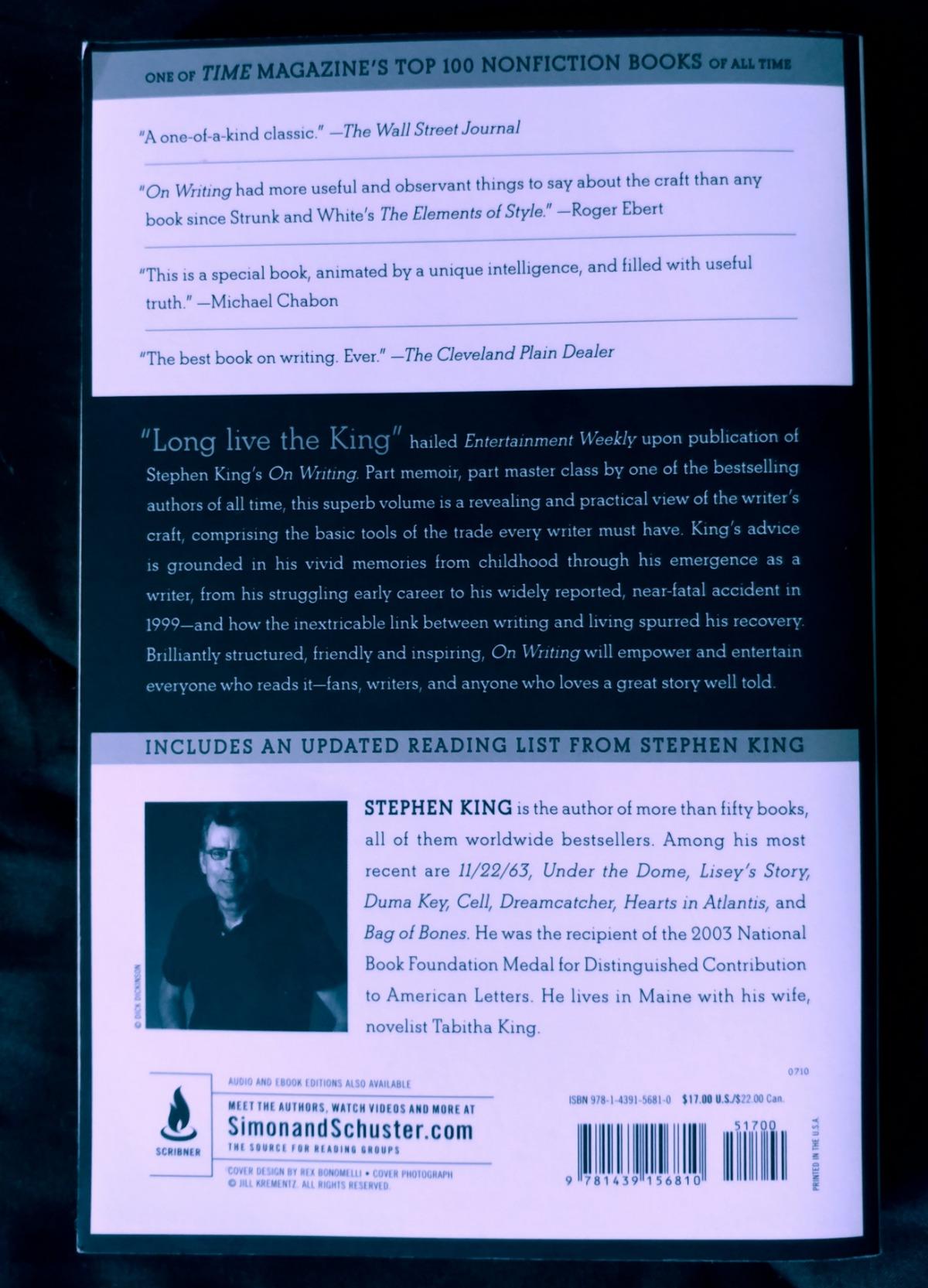
Stephen King is not a screenwriter, and On Writing is not a screenwriting book. So why is it on this list? Because after reading it, I believe no book on this list will do more to make you a productive, disciplined writer — and that applies to screenwriters as much as novelists. With over 20,000 reviews on Amazon, this is one of the most beloved writing books ever published.
The book is split into two halves. The first is a memoir of King’s journey from a struggling teacher to a bestselling author. The second is his “toolbox” — practical advice on grammar, vocabulary, dialogue, and the daily habits that produce finished pages. King writes 2,000 words every single day, and his argument for that kind of discipline is the most convincing I have read anywhere.
For screenwriters, the most valuable chapter is on dialogue. King insists that real conversation is the foundation of good fictional dialogue, and his technique of eavesdropping on real people to train your ear is immediately applicable to screenwriting. Shakespeare had the same instinct — his dialogue drew from the actual speech patterns of Elizabethan London streets and taverns.
King also demonstrates the most important editing principle in all of writing: cut 10 percent from every draft. He shows you a before-and-after example from his own work, and the difference is striking. That single lesson has improved my own revisions more than any craft book I have read.
How King’s Discipline Principles Apply to Screenwriting
King’s core message is that writing is a job, not a mystical experience. You show up every day, you do the work, and you do not wait for inspiration. That philosophy maps directly onto screenwriting, where deadlines and revision rounds demand the same professional stamina. Working TV writers on a staff know this — they write whether they feel inspired or not.
His advice to read constantly also translates perfectly. The best screenwriters read scripts the way novelists read novels. King’s rule — if you do not have time to read, you do not have time to write — should be tattooed on every aspiring screenwriter’s forearm. Read produced screenplays in your genre. Read them daily. That is how you internalize structure, pacing, and dialogue rhythm.
What This Book Does Not Cover and What to Read Next
King does not cover screenplay formatting, story structure, act breaks, or the business of Hollywood. This book is about the craft and discipline of writing itself — the foundational layer underneath all the structural theory. It will not teach you how to write a screenplay, but it will teach you how to write every day.
After On Writing, I recommend picking up Save The Cat! or Screenplay for structure and format. King gives you the engine. Those books give you the vehicle. Together, they form a complete starter kit that costs less than $35 and covers everything from daily discipline to scene-level craft to story architecture.
How to Choose the Right Screenwriting Book for You
Choosing from the best screenwriting reference books comes down to three questions: what is your experience level, what problem are you trying to solve, and what kind of learner are you? After reading all six books on this list, here is how I would guide you.
If you are a complete beginner, start with Screenplay by Syd Field for the fundamentals of three-act structure. It is the shortest, clearest introduction to how a screenplay is built. Follow it immediately with Save The Cat! by Blake Snyder for a practical beat sheet you can apply to your first draft. These two books together will give you enough to write a complete screenplay from FADE IN to FADE OUT.
If you have written at least one draft and want to level up your understanding of story theory, read Story by Robert McKee. It will take you weeks, but it will change how you think about every scene you write. Pair it with The Hero with a Thousand Faces by Campbell if you want to understand the mythic roots of story structure — the source code beneath every framework.
If you want to understand the industry and what it is actually like to be a working screenwriter, Adventures in the Screen Trade by William Goldman is unmatched. And if you need motivation and discipline more than theory, On Writing by Stephen King will light a fire under you that lasts for years.
Budget matters too. Field and King are the most affordable options, each well under $20. Snyder is similarly priced. McKee and Goldman run a bit higher but deliver more pages and deeper content. Campbell sits in the middle. None of these books will break the bank, and all are available on Prime for fast delivery.
One final tip from forum insights: many r/Screenwriting users recommend reading at least two structure books that use different approaches. The contradictions between them are not bugs — they are features. Seeing how Field, Snyder, and McKee approach the same craft from different angles gives you a flexible toolkit instead of one rigid system.
FAQs
What is the best book on screenwriting?
The best book on screenwriting depends on your experience level, but Save The Cat! by Blake Snyder is the most recommended overall for its practical 15-beat story structure. For foundational theory, Screenplay by Syd Field remains the classic starting point. For deep story analysis, Story by Robert McKee is considered the most comprehensive reference.
What screenwriting books should I read first?
Start with Screenplay by Syd Field to learn the three-act structure and basic formatting. Then read Save The Cat! by Blake Snyder for a practical beat sheet you can apply immediately. These two books together give you enough foundation to write your first complete screenplay.
Which screenwriting book is best for beginners?
Save The Cat! by Blake Snyder is the best screenwriting book for beginners because of its casual writing style, concrete beat sheet, and clear genre breakdowns. Screenplay by Syd Field is a close second for its simple introduction to three-act structure.
What are the best storytelling books for screenwriters?
The best storytelling books for screenwriters include The Hero with a Thousand Faces by Joseph Campbell for mythic structure, Story by Robert McKee for deep story theory, and On Writing by Stephen King for craft discipline. These three books together cover the philosophical, structural, and practical sides of storytelling.
Do these screenwriting books contradict each other?
Yes, and that is actually helpful. Syd Field, Blake Snyder, and Robert McKee all approach story structure differently and sometimes disagree. Reading multiple perspectives gives you a flexible toolkit rather than one rigid system, which makes you a more adaptable writer.
Final Thoughts on the Best Screenwriting Reference Books
The best screenwriting reference books are not the ones that give you a formula to follow blindly. They are the ones that teach you the dramatic principles that have powered storytelling since Shakespeare built five-act plays that still pack theaters 400 years later. Whether you start with Snyder’s beat sheet, Field’s three-act paradigm, or McKee’s deep theory, the goal is the same: to understand story well enough that the structure becomes second nature.
Pick one book from this list that matches where you are right now as a writer. Read it. Apply it. Write a draft. Then come back for the next one. That is how every working screenwriter built their craft — one book, one script, one revision at a time.