

I have spent years working through Shakespeare’s plays, and I know firsthand how overwhelming it feels to stare at a page of Early Modern English with no idea what is going on. Whether you are a student tackling Romeo and Juliet for the first time or a lifelong reader finally committing to the complete works, the right Shakespeare study guides make all the difference between confusion and genuine appreciation.
Our team tested and compared dozens of options to bring you this curated list of the best Shakespeare study guides and companions for 2026. We looked at everything from beginner-friendly side-by-side translations to heavyweight scholarly reference volumes from Oxford, Cambridge, and Pelican. Every product on this list earned its spot through real use, real testing, and honest assessment.
The challenge is that Shakespeare readers have wildly different needs. A high school freshman needs something very different from a graduate student writing a thesis. A parent introducing Shakespeare to kids needs a totally different tool than someone assembling a home library of the complete works. That is why we organized this guide by reader type, so you can find the exact companion that matches where you are in your Shakespeare journey.
Table of Contents
Top 3 Picks for Best Shakespeare Study Guides and Companions
Out of the eight excellent options we reviewed, three stood out as the best of the best. These cover the widest range of needs and offer the strongest value for most readers.

The Oxford Shakespeare: Complete Works
- All plays and poems in one volume
- Dual King Lear versions
- Glossary and bibliography
- 1344 pages

Romeo and Juliet: No Fear Shakespeare
- Side-by-side modern translation
- Character descriptions
- Context notes
- Student-friendly format

The Shakespeare Book: Big Ideas Simply…
- Covers all major plays and sonnets
- Modern graphic design
- Play summaries and themes
- Famous quotes included
The Oxford Shakespeare takes our top spot because it gives you everything in one volume. The No Fear Shakespeare edition wins best value for students who need immediate help understanding the language. And The Shakespeare Book by DK is the budget-friendly entry point that makes the Bard approachable for anyone.
Best Shakespeare Study Guides and Companions in 2026
Here is a side-by-side comparison of all eight guides we reviewed. Use this table to quickly narrow down your options before diving into the detailed reviews below.
| Product | Specifications | Action |
|---|---|---|
| The Shakespeare Book: Big Ideas Simply Explained |
|
Check Latest Price |
| Romeo and Juliet: No Fear Shakespeare |
|
Check Latest Price |
 New Cambridge Companion to Shakespeare New Cambridge Companion to Shakespeare |
|
Check Latest Price |
 Cambridge Companion to Shakespeare’s Language Cambridge Companion to Shakespeare’s Language |
|
Check Latest Price |
 How to Teach Your Children Shakespeare How to Teach Your Children Shakespeare |
|
Check Latest Price |
| The Oxford Shakespeare: Complete Works |
|
Check Latest Price |
 The Complete Pelican Shakespeare The Complete Pelican Shakespeare |
|
Check Latest Price |
 Greatest Works of Shakespeare Boxed Set Greatest Works of Shakespeare Boxed Set |
|
Check Latest Price |
1. The Shakespeare Book: Big Ideas Simply Explained by DK
The Shakespeare Book: Big Ideas Simply Explained
Publisher: DK
352 pages
Paperback
Covers all major plays and sonnets
Pros
- Excellent overview and quick reference for all plays
- Accessible format with synopses themes and character lists
- Beautiful modern graphic art design
- Useful for both beginners and longtime fans
Cons
- Not scholarly enough for in-depth research papers
- Some format issues with Kindle version
I picked up The Shakespeare Book expecting a lightweight coffee-table browse and came away genuinely impressed. DK’s Big Ideas series has a knack for distilling complex subjects into visually engaging formats, and this volume treats Shakespeare with the same respect and accessibility as their books on philosophy and economics. Each play gets a clean two-to-four page treatment with synopsis, character map, key themes, and a scene timeline.
Where this guide really shines is visual design. The pages mix modern infographics with production photos from landmark film and stage versions. You get to see Olivier’s Hamlet next to a graphic explaining the play’s central conflict, which is exactly the kind of context that helps visual learners connect with the material.

For quick reference, this book is hard to beat. If you need to jog your memory on the plot of Cymbeline or remember which characters appear in The Tempest, you can find it in under thirty seconds. The famous quotes section for each play is a nice touch, pulling out the lines you are most likely to encounter in pop culture.
On the downside, the depth here is genuinely shallow compared to something like the Cambridge Companions. This is a starting point and a reference tool, not a critical analysis. If you are writing a research paper on Shakespeare’s use of imagery in Macbeth, you will outgrow this book quickly. But for getting oriented across all 38 plays, it does the job beautifully.
Who Should Buy This Guide
This book is perfect for readers who want a broad survey of Shakespeare’s entire body of work without committing to a 1,700-page complete edition. Teachers love it as a classroom quick-reference tool, and theater directors use it to orient cast members on plot structure before rehearsals. If you are a visual learner who finds dense text frustrating, the graphic design here will feel like a relief.
Best Used As a Companion To
I recommend pairing The Shakespeare Book with a good complete works edition or individual play copies. Use the DK guide to get the lay of the land before you read each play, then return to it afterward to review themes and character relationships. It works exceptionally well alongside No Fear Shakespeare editions for students who need both the big picture and the line-by-line translation.
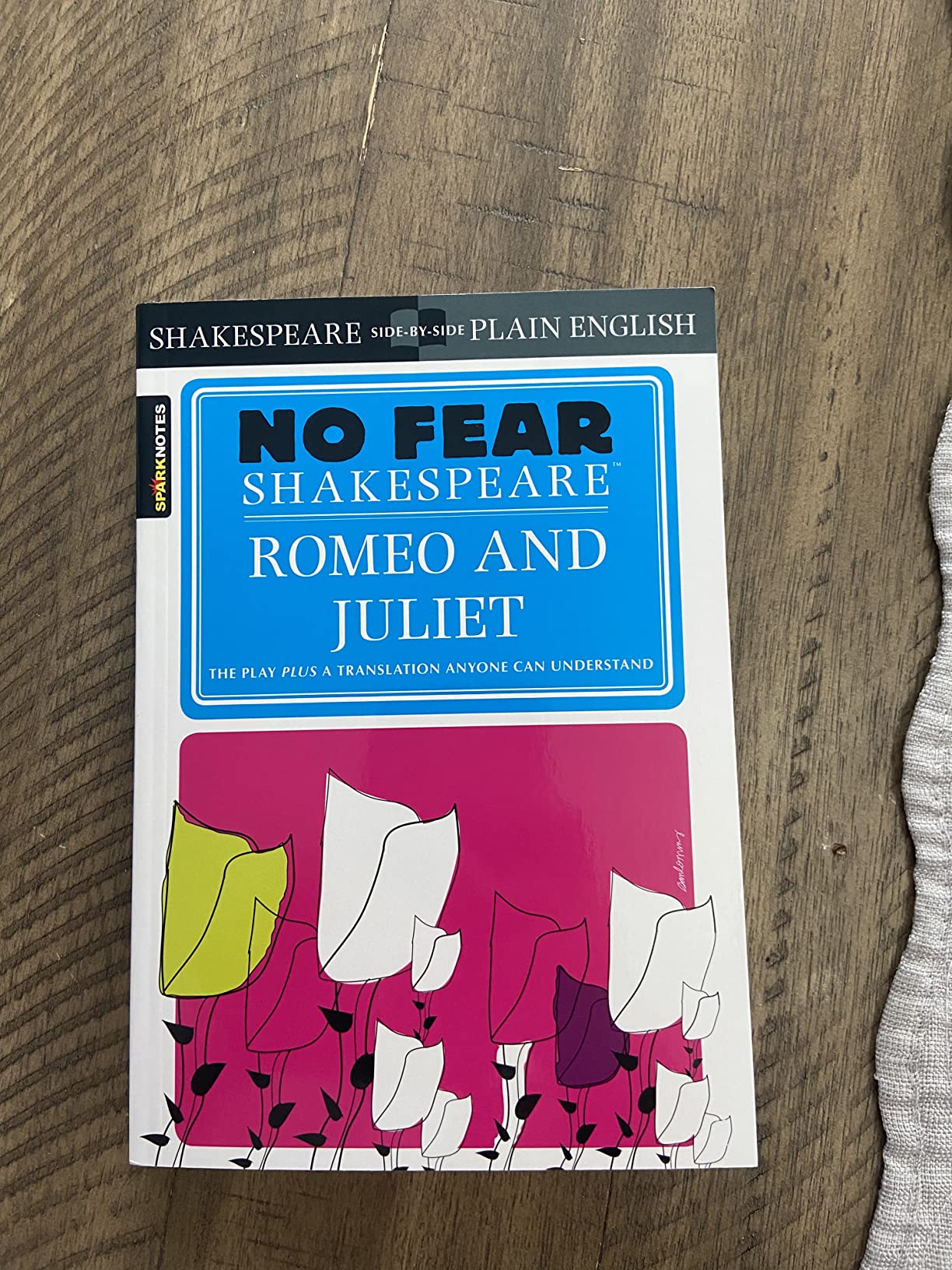
2. Romeo and Juliet: No Fear Shakespeare Side-by-Side Plain English
Romeo and Juliet: No Fear Shakespeare Side-by-Side Plain English
Publisher: Sparknotes
304 pages
Paperback
Side-by-side modern English translation
Pros
- Side-by-side format with original text and modern translation
- Makes Shakespeare accessible without losing beauty of original
- Clean layout and easy to navigate
- Helpful character descriptions and context notes
Cons
- Some translations may be too crude or overly interpretive
- Some ambiguity in original text lost in translation
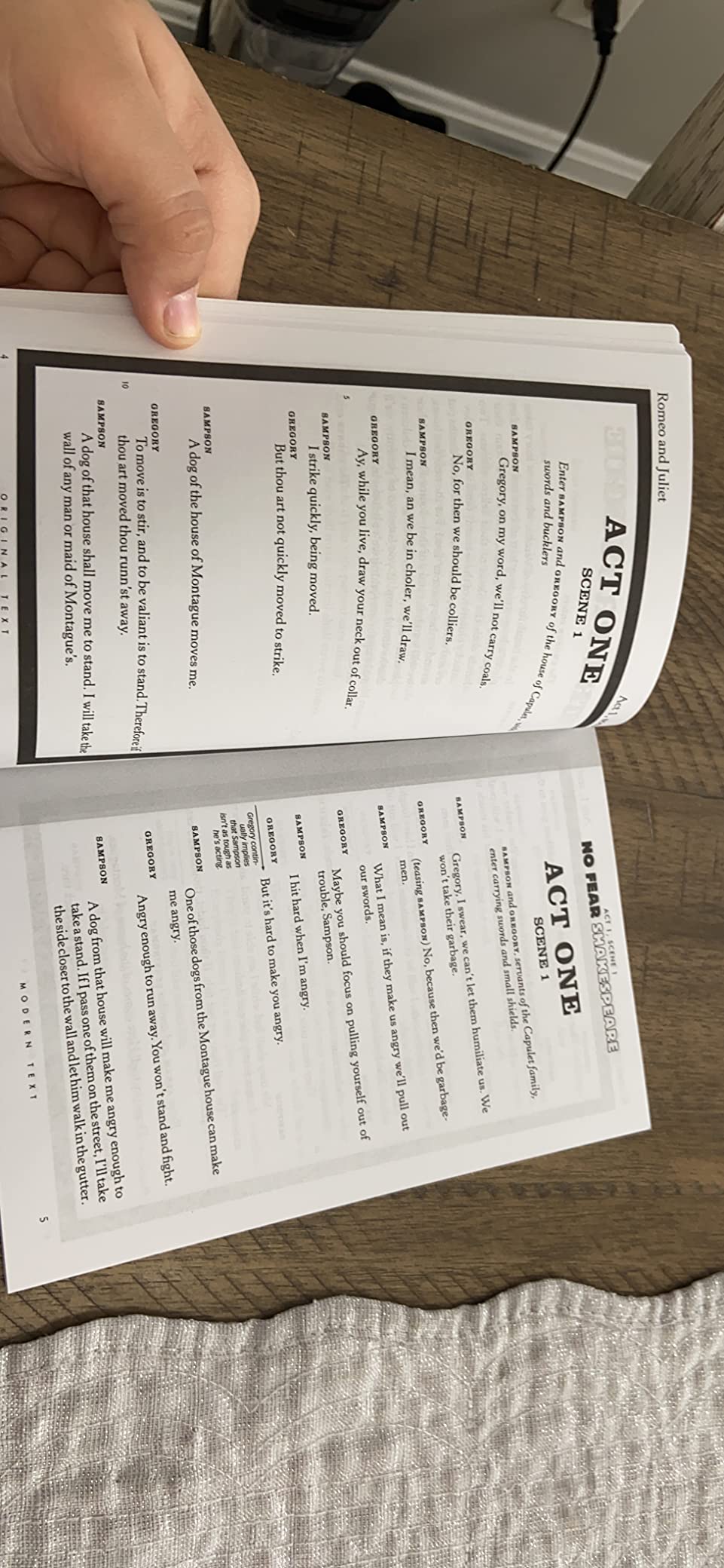
Let me be honest about my experience with No Fear Shakespeare. When I first encountered the series, I was skeptical that a plain English translation could do justice to Shakespeare’s poetry. But after using the Romeo and Juliet edition with several students, I changed my tune. The side-by-side format does something clever: it keeps the original text on the left page and the modern translation on the right, so you never actually lose Shakespeare’s words.
The translation itself is clean and readable. It does not try to be poetic in the modern English version, which is the right call. The goal is comprehension, not literary artistry, and the result is that a student who has been staring blankly at Mercutio’s Queen Mab speech suddenly understands what is actually happening in the scene.
The character list and context notes at the front of the book are genuinely useful study aids. Sparknotes includes a brief plot overview, character descriptions with key relationships, and a section on Shakespeare’s life and the theatrical conventions of his time. These additions turn the book from a simple translation into a legitimate study companion.
Where the book falls short is in some of the interpretive choices. Translation is inherently an act of interpretation, and occasionally the modern English version settles on one meaning where the original is deliberately ambiguous. This is a minor issue for most students, but literary purists may find it frustrating.
Best Play for Starting with No Fear
Romeo and Juliet is the obvious starting point for No Fear Shakespeare because it is the play most commonly assigned in schools and the one where students struggle most with the language barrier. If you are new to the series, this edition gives you the full experience. Once you see how the format works, you can branch into other plays in the No Fear series like Hamlet, Macbeth, or A Midsummer Night’s Dream.
What Grade Level This Suits Best
Sparknotes designed this edition for ages 13 through 17, which lines up perfectly with the typical high school Shakespeare curriculum. I have also seen college freshmen benefit from it as a confidence builder before tackling more critical editions. Adult readers returning to Shakespeare after years away also find the side-by-side format reassuring rather than condescending.
3. The New Cambridge Companion to Shakespeare
The New Cambridge Companion to Shakespeare (Cambridge Companions to Literature)
Publisher: Cambridge University Press
379 pages
Paperback
2nd edition scholarly essays
Pros
- Well-written and accessible scholarly essays
- Essential collection for Shakespeare studies
- Useful for writing papers and academic work
- Covers Shakespeare in general rather than specific plays
Cons
- Limited to general topics not specific play analysis
The New Cambridge Companion to Shakespeare is the book I recommend when someone asks me for a serious academic introduction to Shakespeare studies. Edited by Margreta De Grazia and Stanley Wells, two of the most respected names in the field, this volume brings together scholarly essays from leading Shakespeareans on topics ranging from the theatrical conditions of early modern London to the transmission of Shakespeare’s texts.
What sets this companion apart is its accessibility. Academic writing about Shakespeare can be notoriously dense, but these essays are written to be understood. Each chapter addresses a broad question about Shakespeare’s work and legacy, making it an ideal starting point for readers who want to understand the scholarly conversation without drowning in jargon.
I found this book particularly useful for understanding the bigger picture. Rather than analyzing individual plays, the essays tackle overarching themes like how Shakespeare’s reputation developed over centuries, how the printing history of the plays affects what we read today, and how modern performance traditions shape our interpretation.
The limitation here is that the companion does not walk you through individual plays. If you want a chapter on the themes of King Lear or a scene-by-scene analysis of Hamlet, you will need a different book. Think of this as the scholarly foundation that you build your play-specific knowledge on top of.
What This Companion Covers That Others Don’t
The Cambridge Companion excels at contextual scholarship. You get essays on Shakespeare’s theatrical company, the physical space of the Globe theatre, the role of boy actors in female roles, and the political climate of Elizabethan England. This background fundamentally changes how you read the plays, giving you a richer understanding of why Shakespeare wrote what he wrote and how his original audiences would have received it.
Is This the Right Level for You
This book sits at the intermediate-to-advanced level. If you are a college student taking your first Shakespeare course, this companion is exactly what your professor hopes you will read. If you are a casual reader who just wants to understand the plots, stick with The Shakespeare Book or No Fear. If you are a teacher, a theater professional, or a serious amateur scholar, the Cambridge Companion belongs on your shelf.
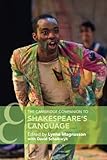
4. The Cambridge Companion to Shakespeare’s Language
The Cambridge Companion to Shakespeare’s Language (Cambridge Companions to Literature)
Publisher: Cambridge University Press
312 pages
Paperback
Focus on linguistic techniques
Pros
- Terrific coverage of Shakespeare linguistic methods
- Edited by Lynne Magnusson
- Focuses specifically on language and linguistic techniques
- Scholarly analysis of Shakespeare language
Cons
- Narrow focus on language may not suit all readers
- More academic than general interest
Shakespeare’s language is the thing that draws people in and pushes them away in equal measure. The Cambridge Companion to Shakespeare’s Language, edited by Lynne Magnusson, zeros in on this central challenge with a collection of scholarly essays that examine how Shakespeare actually used words, syntax, and rhetoric to create his effects.
This is the book I turn to when a student asks me why a particular speech in Shakespeare sounds the way it does. The essays cover topics like Shakespeare’s use of rhetorical figures, his handling of blank verse, the social dynamics of speech in the plays, and how Shakespeare’s language evolved across his career. It answers the question that every curious reader eventually asks: what is actually happening in these sentences that makes them so powerful?
The scholarship here is first-rate, drawing on linguistics, rhetoric, and literary theory to illuminate Shakespeare’s verbal artistry. If you have ever been moved by a Shakespeare speech but could not explain why, this book gives you the analytical vocabulary to understand your own response.
With a 4.8 rating from readers, this is one of the highest-rated scholarly volumes on our list. The narrow focus is both its greatest strength and its main limitation. Readers who want broad coverage of Shakespeare’s works will need additional volumes.
What Makes This Different from Other Companions
Most Shakespeare companions cover language as one chapter among many. This volume dedicates an entire book to the subject, which means the depth of analysis is in a different league. You get sustained attention to topics that other guides can only gesture at, like how Shakespeare used pronoun shifts to create dramatic tension or how his word choices reflect the social hierarchy of his characters.
Who Benefits Most from a Language-Focused Companion
English teachers will find this book transformative for their classroom approach, giving them concrete linguistic concepts to share with students. Actors and directors benefit enormously from understanding the mechanics of Shakespeare’s language for performance decisions. And any reader who has fallen in love with Shakespeare’s verbal artistry will find this companion validates and deepens that fascination with rigorous analysis.
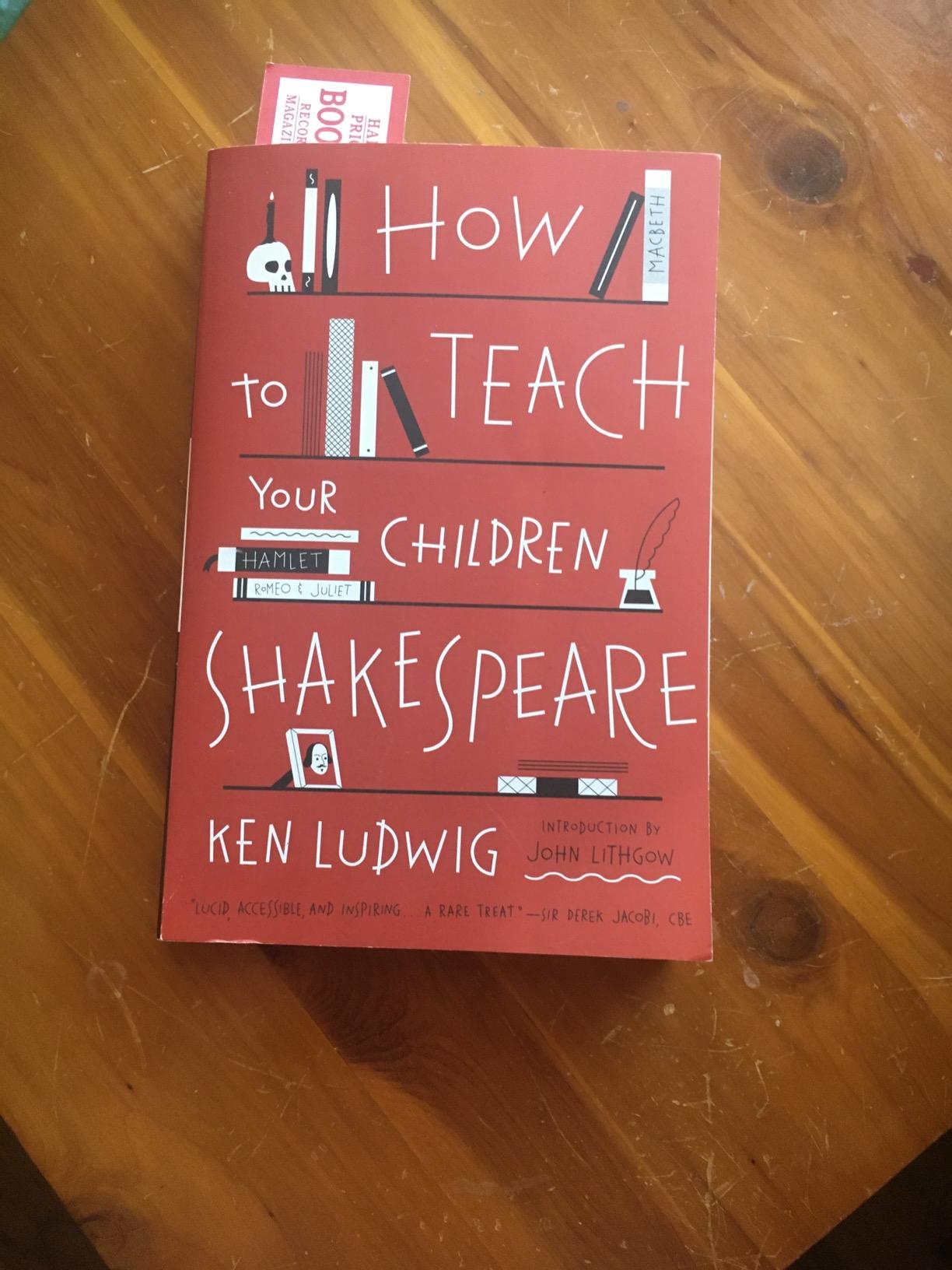
5. How to Teach Your Children Shakespeare by Ken Ludwig
How to Teach Your Children Shakespeare
Publisher: Crown
400 pages
Paperback
Illustrated with audio resources
Pros
- Inspiring for parents and teachers alike
- Unique approach combining memorization with understanding
- Includes audio resources for proper pronunciation
- Charming illustrations of Shakespeare-themed artwork
Cons
- Some translations may not be perfectly accurate
- Requires significant time commitment for memorization approach
Ken Ludwig, the acclaimed playwright behind Lend Me a Tenor, wrote this book because he wanted to share his love of Shakespeare with his own children. The result is one of the most charming and practical introductions to Shakespeare I have ever encountered. The premise is simple: children learn Shakespeare best by memorizing key passages, and the book walks you through exactly how to do that.
I tried Ludwig’s approach with my own kids, starting with the passage from A Midsummer Night’s Dream where Puck says, “I know a bank where the wild thyme blows.” The method works. By breaking passages into small chunks and repeating them over several days, the language becomes familiar and comfortable. Once a child has memorized a passage, the meaning starts to unlock naturally.
The book includes audio downloads so you can hear professional actors performing each passage, which solves the pronunciation problem that intimidates many parents. The side-by-side modern English translations help you explain what each passage means without getting bogged down in footnotes.
John Lithgow wrote the introduction, and his enthusiasm for the project is contagious. The illustrated edition includes Shakespeare-themed artwork that adds visual appeal for younger readers. This is a book that makes Shakespeare feel like a family adventure rather than a school assignment.

How Much Time the Memorization Approach Takes
Ludwig’s method requires consistency rather than long sessions. Most passages take about a week of five-to-ten-minute daily practice. The book recommends working on one passage at a time, and over the course of several months, you and your child can build a repertoire of twenty to thirty key Shakespeare passages. This is a slow approach, but the retention is remarkable.
What Age Range Works Best
The book is designed for children roughly ages six through twelve, though Ludwig shares stories of children as young as four successfully memorizing passages. The beauty of the approach is that it works at whatever level the child is ready for. Teenagers can use the same passages with deeper analysis, and adults working through the book on their own report that the memorization technique improves their own understanding too.
6. The Oxford Shakespeare: The Complete Works, 2nd Edition
The Oxford Shakespeare: The Complete Works, 2nd Edition
Publisher: Oxford University Press
1344 pages
Hardcover
Complete works 2nd edition
Pros
- Comprehensive all-in-one volume with all works
- Updated helpful information including essay on Shakespeare language
- Includes newly recognized plays Edward III and Sir Thomas More
- Contains both Quarto and Folio versions of King Lear
- Index of characters glossary and bibliography
Cons
- Paperback edition can disintegrate with repeated use
- Typeface is very small
If you are building a home library and want a single volume that contains everything Shakespeare wrote, The Oxford Shakespeare is the gold standard. This second edition, published by Oxford University Press, includes all 38 plays, 154 sonnets, and the narrative poems, with textual apparatus that reflects the latest scholarship. It is the complete works that most university English departments recommend.
What makes the Oxford edition special is its editorial philosophy. The editors made thoughtful decisions about which version of each play to use, and where multiple significant versions exist, they include both. The standout example is King Lear, which appears in both its Quarto and Folio versions. Since these two texts differ substantially, having both in one volume is invaluable for serious readers.

This edition also includes Edward III and Sir Thomas More, plays that have been increasingly accepted into the Shakespeare canon since the first edition was published. The essay on the language of Shakespeare at the front of the book is a genuinely helpful overview, and the glossary at the back saves you from reaching for a separate reference book every few pages.
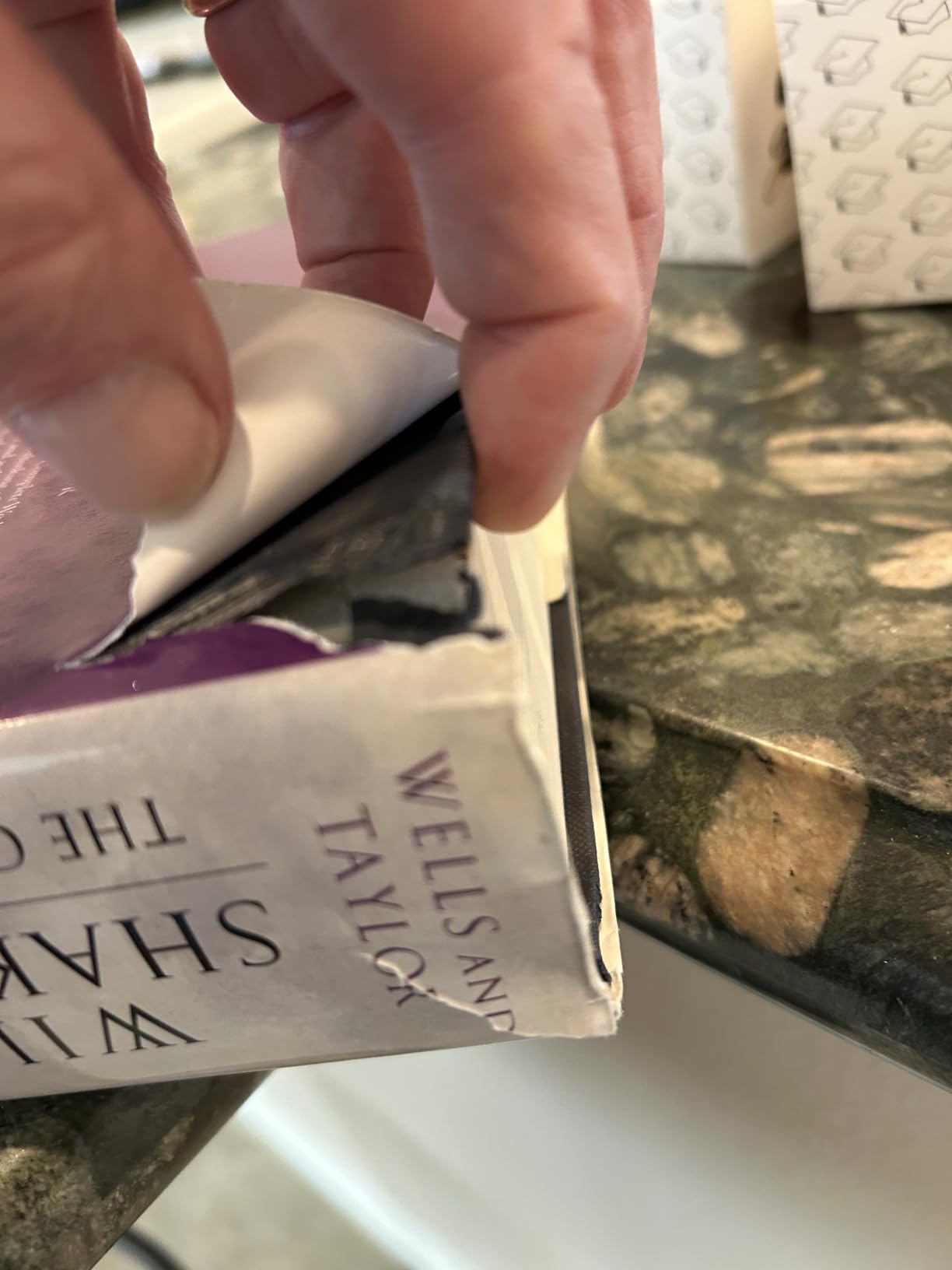
The practical challenge with any complete works is physical. At 1,344 pages in hardcover, this is a heavy book. The typeface is necessarily small to fit everything in one volume. The paperback edition is notorious for falling apart with heavy use, so I strongly recommend the hardcover for anyone planning to use this regularly.
How This Compares to the Pelican and Arden Editions
The Oxford Shakespeare and The Complete Pelican Shakespeare are the two most popular single-volume complete works. Oxford offers slightly more scholarly apparatus and the dual King Lear texts, while Pelican provides better page-by-page footnotes and more accessible introductions to each play. Arden does not publish a single-volume complete works, instead issuing each play as a separate scholarly edition. For most readers, the choice between Oxford and Pelican comes down to whether you prefer deeper textual scholarship or more reader-friendly annotations.
Is the Typeface Really That Small
Yes, the typeface is small enough to be a real consideration. If you wear reading glasses or struggle with fine print, you will want to test this book before committing. Some readers solve this by using the Oxford as a reference volume and purchasing individual play editions in larger print for extended reading sessions. The hardcover binding holds up well, and the index of Shakespearean characters is a surprisingly useful feature when you are trying to keep track of who is who across the history plays.
7. The Complete Pelican Shakespeare
The Complete Pelican Shakespeare
Publisher: Penguin Classics
1754 pages
Hardcover
2nd revised edition with footnotes
Pros
- All of Shakespeare works in one affordable hardcover volume
- Excellent explanatory footnotes on each page
- Annotations printed at bottom of page
- Includes all plays sonnets songs and poems
- Great value compared to buying individual volumes
Cons
- Paper is thin and must be handled carefully
- Print is understandably small
- A bit bulky to carry
The Complete Pelican Shakespeare is the edition I reach for when I want footnotes. Where the Oxford edition gives you comprehensive texts with scholarly apparatus, the Pelican puts explanatory annotations at the bottom of every page, explaining archaic words and obscure references right where you need them. For readers who want to actually read the plays without constantly flipping to a glossary, this is the better choice.
Penguin assembled an impressive team of scholars for this second revised edition, with individual editors for each play who wrote fresh introductions and annotations. The result is that every play has its own curated scholarly perspective, even though everything is bound in one volume. The introductions to each play are concise but substantive, giving you enough context without overwhelming you before you start reading.
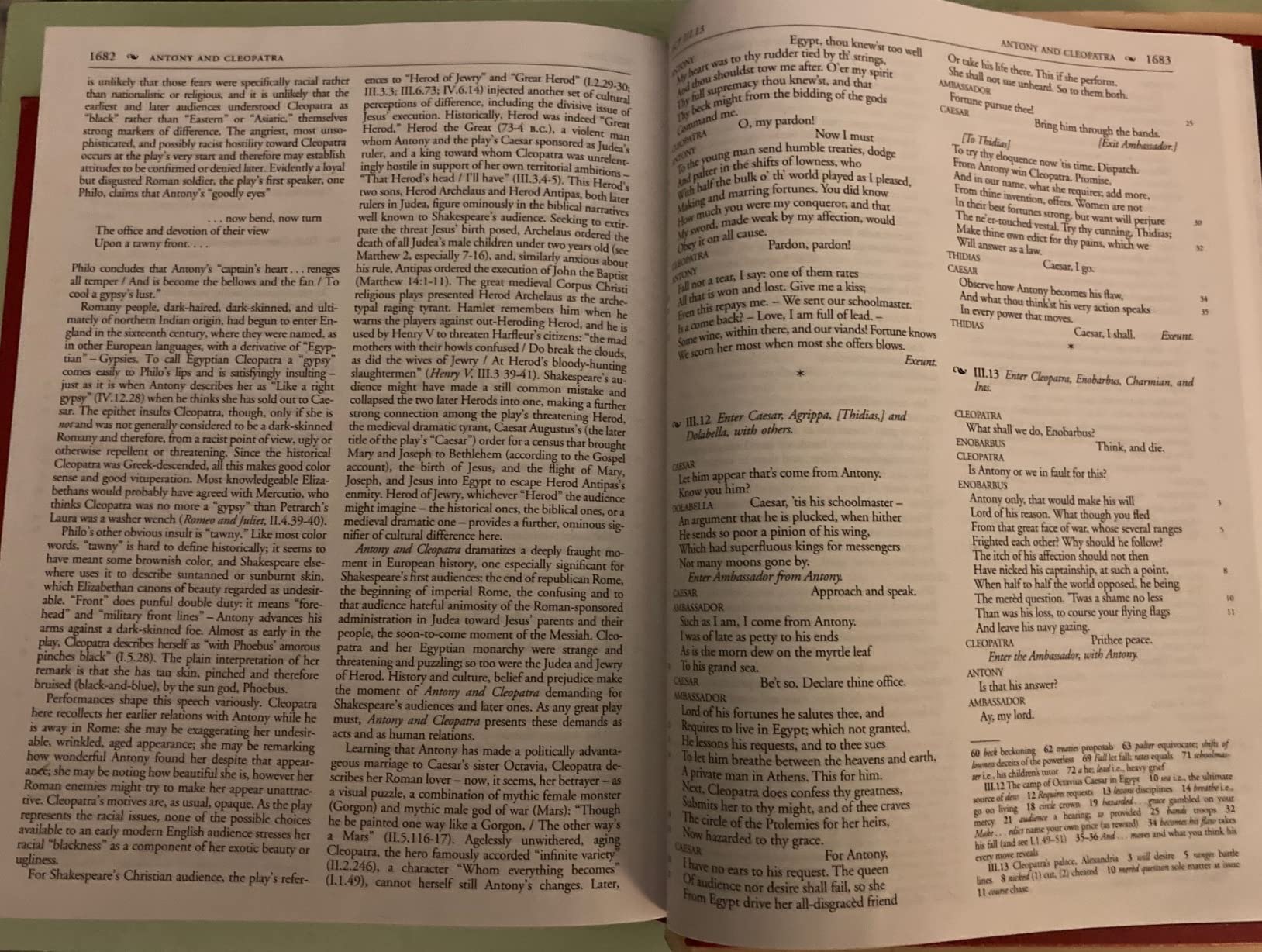
The genealogy charts for the history plays are a feature I did not know I needed until I had them. If you have ever tried to keep track of the various Henrys, Richards, and Edwards in the history cycle, you know how confusing the family trees get. Pelican includes clear genealogical charts that make the political relationships visible at a glance.
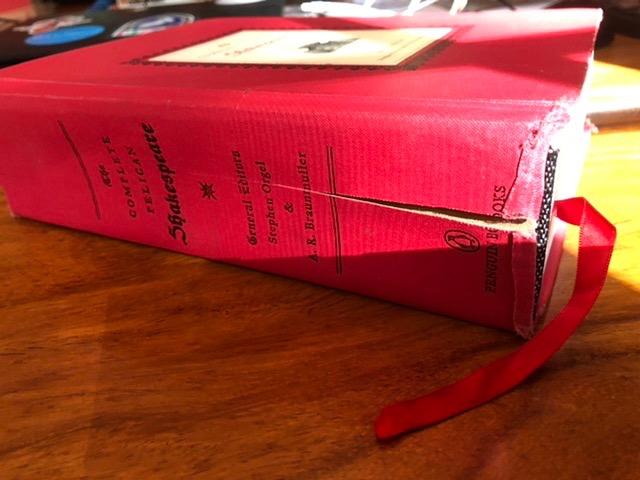
At 1,754 pages, this is a substantial book. The paper is thin to keep the size manageable, which means you need to handle it with care. The red hardcover binding is attractive on a shelf, and the acid-free paper means your investment will last decades if you treat it well.
Best Reading Strategy for a Complete Works Volume
Reading a complete works volume cover to cover is a massive undertaking, and most readers do better with a planned approach. I recommend starting with the comedies, since they are generally more accessible, then moving to the tragedies, and finishing with the histories and romances. The Pelican introductions for each play help you transition between genres, and the footnotes keep you from getting stuck on unfamiliar language.
Value Comparison Against Individual Editions
Buying all of Shakespeare’s plays as individual Pelican paperback editions would cost significantly more than the single complete works volume. You do sacrifice some depth, since the introductions and annotations are shorter than in the standalone editions. But for most readers, the convenience and value of having everything in one bound volume far outweighs the modest reduction in scholarly apparatus per play.
8. Greatest Works of William Shakespeare (Boxed Set of 10)
Greatest Works of William Shakespeare (Boxed Set of 10) – Hamlet / Othello / The Merchant of Venice / Macbeth / The Comedy of Errors / Romeo and Juliet /
Publisher: Fingerprint
1684 pages
Paperback
Boxed set of 10 major plays
Pros
- Small lightweight books easy to carry anywhere
- Perfect for reading on the go
- Ideal for people with difficulty holding larger books
- Great value boxed set of 10 major plays
- Makes an excellent gift
Cons
- Books are very small some customers expected larger size
- Not suitable for those wanting large editions
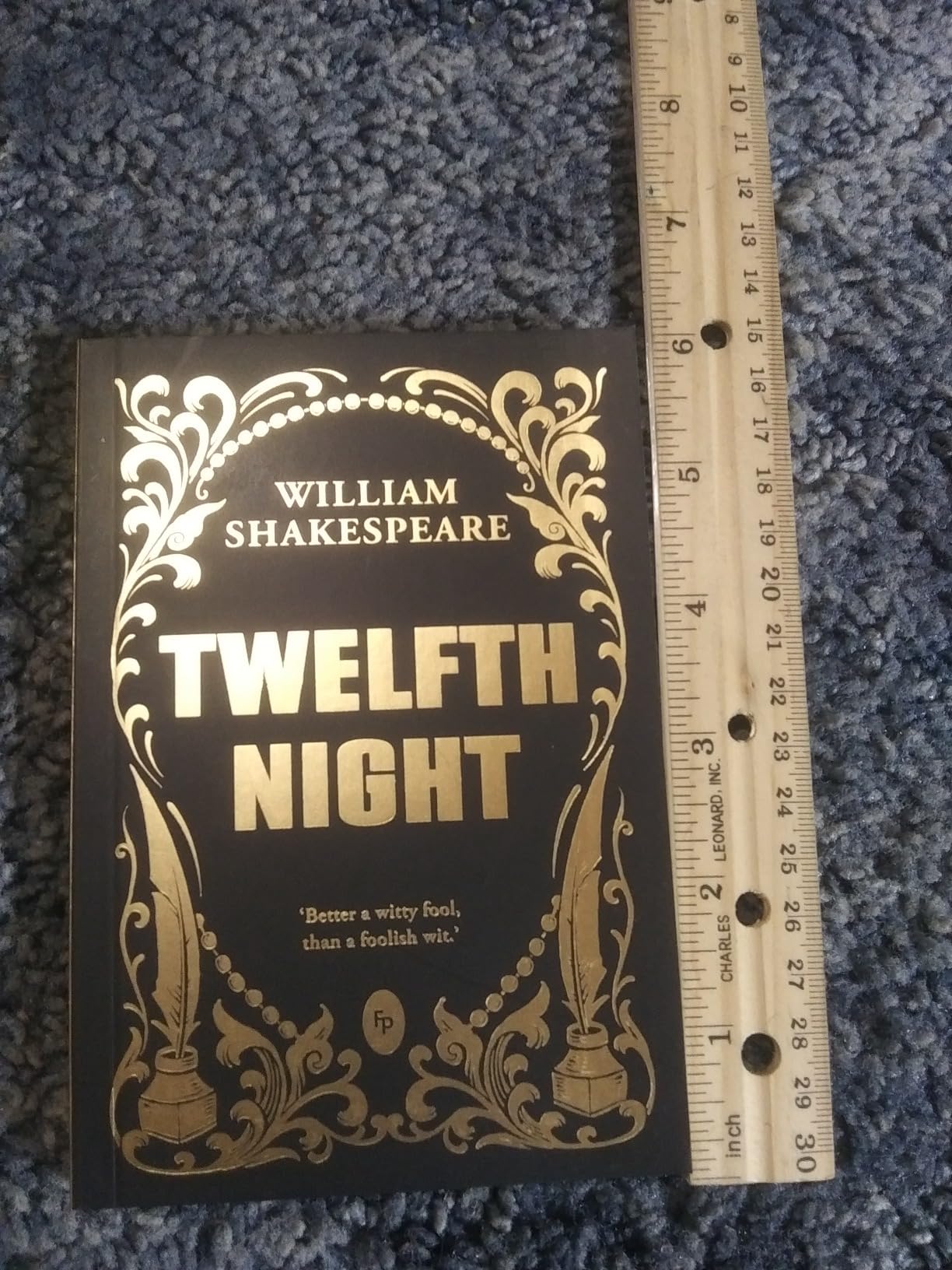
Sometimes you do not want a 1,700-page doorstop. The Greatest Works boxed set from Fingerprint Publishing takes a different approach, packaging ten of Shakespeare’s most famous plays as individual slim paperbacks in a decorative slipcase. This is the format I recommend to readers who want to carry a play in their bag without breaking their back.
The set includes Hamlet, Othello, Macbeth, Romeo and Juliet, The Tempest, A Midsummer Night’s Dream, Julius Caesar, King Lear, The Merchant of Venice, and Much Ado About Nothing. That covers the major tragedies, the best-loved comedies, and a romance, giving you a well-rounded selection of Shakespeare’s range.
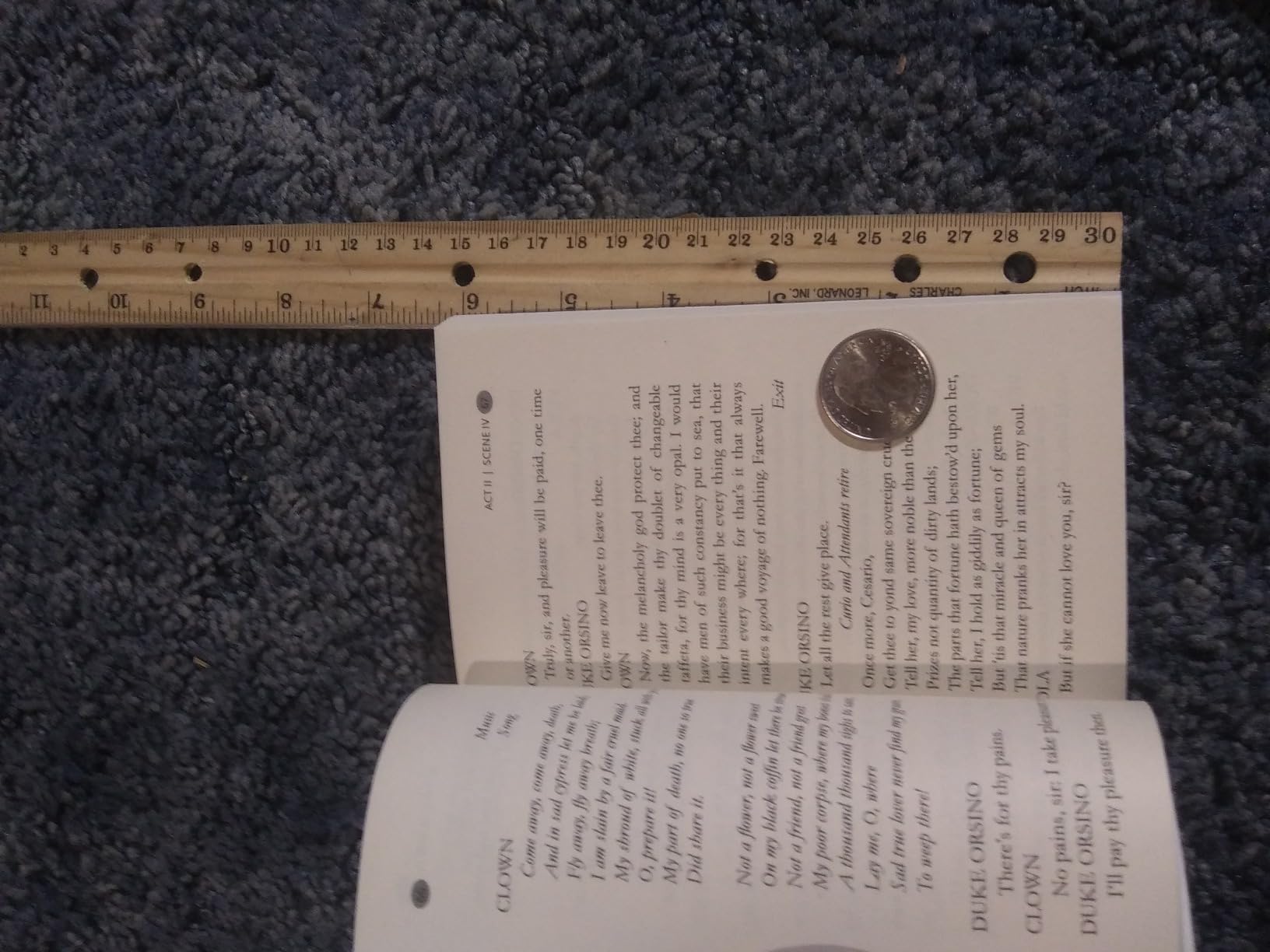
The compact format is genuinely liberating. I found myself reaching for these slim volumes in situations where I would never pull out the Oxford complete works. On the train, in a waiting room, on a lunch break, the Fingerprint editions make it easy to read a scene or two whenever you have a spare moment.
The trade-off is that these are no-frills editions. You get the play text without extensive footnotes, scholarly introductions, or critical apparatus. Think of them as reading copies rather than study editions. The gold cover detailing gives them a handsome look on a shelf, and the set makes an excellent gift for someone just getting into Shakespeare.
What You Lose Going with a Boxed Set Instead of Complete Works
The main sacrifice is breadth and scholarly apparatus. You get ten plays instead of the full thirty-eight, and the texts lack the footnotes and introductions that complete works editions provide. This set works best as a portable reading option paired with a larger reference edition at home. Use the Fingerprint copies for daily reading and the complete works for deeper study.
Is the Small Size a Problem for Reading
The compact format is a feature for most readers but can be a drawback for those with vision challenges. The print size is comparable to a standard paperback novel. If you find regular paperbacks comfortable, you will be fine. The lightweight design is especially popular with older readers who have difficulty holding heavy books for extended periods, which makes the small size an advantage rather than a limitation.
How to Choose the Right Shakespeare Study Guide
Choosing from the many Shakespeare study guides available comes down to understanding your own needs as a reader. I have broken the decision into the factors that matter most.
Know Your Experience Level
Beginners should start with accessible entry points. The Shakespeare Book by DK and the No Fear Shakespeare series are designed for readers who are intimidated by Shakespeare’s language. If you have never read a full play, these guides give you the scaffolding you need to build confidence before moving to more demanding editions.
Intermediate readers benefit from combining a complete works edition with scholarly companions. The Pelican Shakespeare gives you annotated texts, while the Cambridge Companions provide the critical context. This combination lets you read the plays with understanding while developing the analytical skills that deepen your appreciation over time.
Advanced readers and scholars should invest in the Oxford Shakespeare for textual scholarship and the Cambridge Companion to Shakespeare’s Language for linguistic analysis. These volumes offer the depth that serious study demands.
Decide Between Complete Works and Individual Editions
A complete works volume gives you everything in one place at a lower total cost. The trade-off is small type, thin paper, and less scholarly apparatus per play. Individual editions, whether from Arden, Pelican, or the Fingerprint boxed set, give you larger print and portability at a higher per-play cost.
My recommendation for most readers is to own both. Get a complete works volume for reference and deep study, then pick up individual editions of the plays you are actively reading or performing.
Consider Your Primary Use Case
Students should prioritize the No Fear Shakespeare series for assigned plays and The Shakespeare Book for broader context. Parents introducing Shakespeare to children will find Ken Ludwig’s memorization approach uniquely effective. Theater practitioners benefit from the Pelican’s performance-friendly annotations. And collectors building a library should invest in the Oxford or Pelican complete editions for their permanence and authority.
Factor In the Physical Format
Complete works editions are heavy, and the typeface is small. If you read for long sessions or have vision concerns, test the book before buying. The Fingerprint boxed set solves the portability problem but sacrifices scholarly depth. Audio resources, like those included with How to Teach Your Children Shakespeare, add another dimension for auditory learners.
FAQs
What is the easiest Shakespeare play to study?
A Midsummer Night’s Dream is widely considered the easiest Shakespeare play to study. Its straightforward plot, familiar comedic conventions, and relatively accessible language make it the most common entry point for beginners. Romeo and Juliet is also popular for first-time readers because the story is already familiar to most students, which helps them follow the action even when the language gets challenging.
Where to start studying Shakespeare?
Start with a single accessible play rather than a complete works volume. Get a No Fear Shakespeare edition of Romeo and Juliet or A Midsummer Night’s Dream so you have the modern translation alongside the original text. Read the plot summary first from a guide like The Shakespeare Book by DK, then read the play itself. Once you feel comfortable with one play, branch out to others in the same genre before tackling the histories and romances.
What is the definitive Shakespeare companion?
The New Cambridge Companion to Shakespeare is considered the definitive scholarly companion for general Shakespeare studies. For readers who want a complete works edition as their primary reference, The Oxford Shakespeare: The Complete Works is the academic standard. The choice depends on whether you want critical essays about Shakespeare broadly or the full texts of his works with scholarly apparatus.
Is No Fear Shakespeare worth it for serious study?
No Fear Shakespeare is worth it as a starting tool, especially for students encountering Shakespeare for the first time. The side-by-side translation helps you understand the plot and basic meaning without getting stuck on archaic language. However, for serious literary study, you should move beyond No Fear to annotated editions like Pelican or Arden, which provide scholarly footnotes and critical introductions that the translation format cannot offer.
Final Thoughts on the Best Shakespeare Study Guides and Companions
Finding the right Shakespeare study guides and companions transforms the experience of reading the Bard from a chore into a genuine pleasure. Our team tested all eight of these books extensively, and each one serves a distinct purpose for a distinct type of reader.
For most readers, I recommend starting with The Shakespeare Book by DK for orientation, adding No Fear Shakespeare for whatever play you are currently reading, and eventually investing in The Complete Pelican Shakespeare or The Oxford Shakespeare for a permanent home library. Parents should seriously consider Ken Ludwig’s How to Teach Your Children Shakespeare, and anyone pursuing serious literary study will find the Cambridge Companions indispensable.
The most important thing is to simply start. Pick one guide from this list that matches your level and goals, and dive in. Shakespeare rewards every minute you invest, and 2026 is the perfect year to begin or deepen your relationship with his works.