
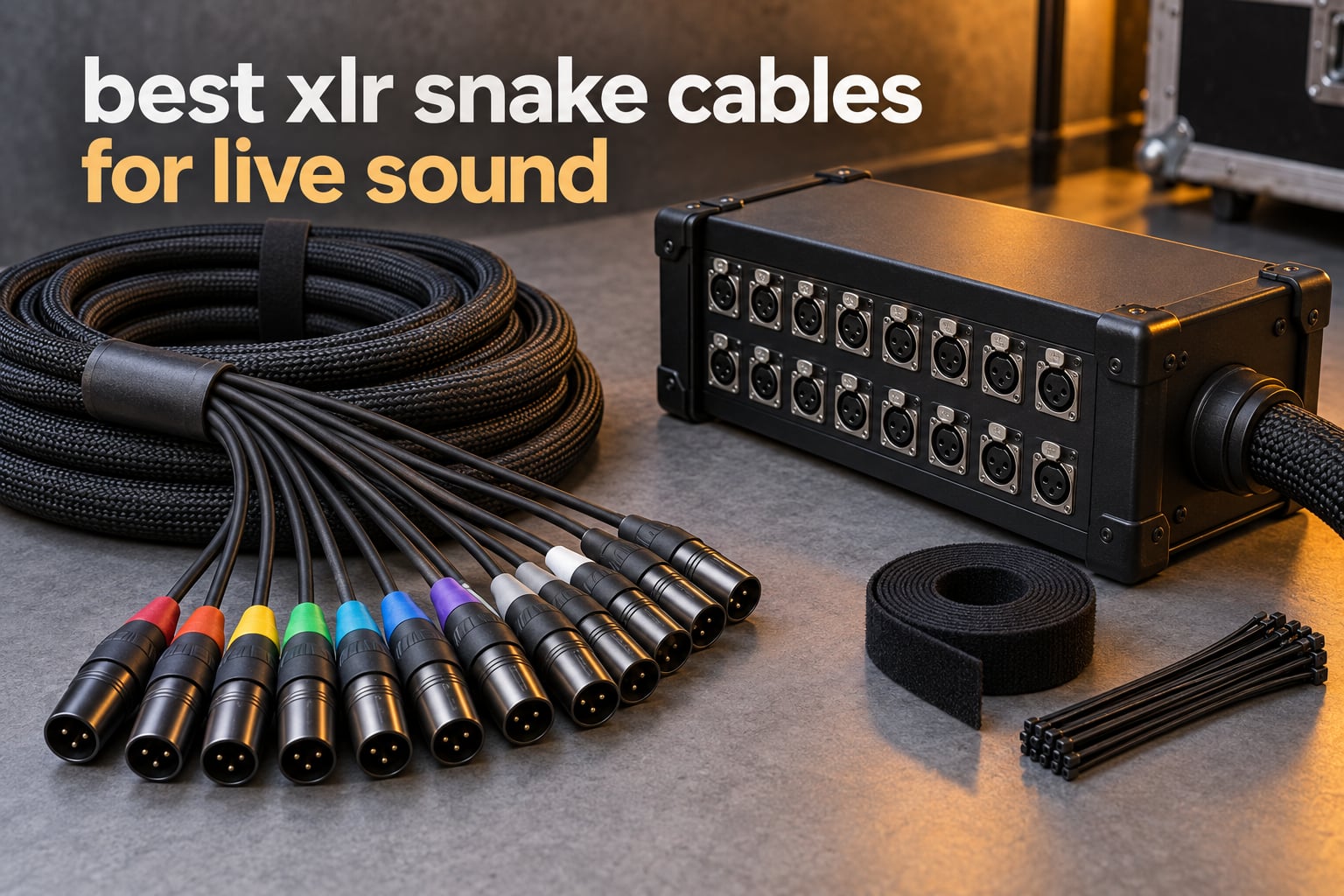
An XLR snake cable bundles a dozen or more individual XLR runs into one heavy jacket, so a full band reaches the console as a single cable instead of a mat of loose mic cords. That one change cuts load-in time, removes a trip hazard from the stage lip, and shrinks the case your rig travels in. It also concentrates a lot of risk in one object, which is exactly why picking the right one matters.
We spent time with the snakes below on rehearsal-room stages, in a church booth and on a small outdoor stage, checking connector retention, jacket flexibility, channel labelling and how each behaved when it was coiled fast between sets. We also read the buyer reviews closely, because the pattern in them is more honest than any spec sheet. This guide covers the best XLR snake cables for live sound, from 4-channel patch snakes to full 24-channel stage box runs.
One honest note before we start. If you are running two or three mics in a rehearsal room, a snake is the wrong purchase and a bundle of individual cables will serve you better. That is the single most repeated piece of advice in the live sound equipment guides we studied, and everything below is aimed at people who regularly mic more than about four sources.
Table of Contents
Top 3 Best Xlr Snake Cables For Live Sound (October 2026)
These three are the ones we would grab first, depending on what your rig actually needs. The Monoprice is the safest all-rounder, the EBXYA covers long four-channel runs and the KIRLIN is the most confidently built eight-channel option in the group.


Best XLR Snake Cables in 2026 at a Glance
All ten snakes in this roundup, with the configuration details that actually decide whether a cable fits your stage. Note the connector gender column carefully: it is the single most common buying mistake on snake cables.
What Is an XLR Snake Cable?
An XLR snake cable is an audio multicore: one heavy outer jacket carrying several individually shielded, balanced XLR pairs from a stage box at one end to a colour-coded fan-out at the other. Each pair carries equal-and-opposite signals, so induced hum from lights and power cables cancels at the receiving end. One cable patches an entire stage to the console.
Because the pairs are balanced and individually shielded, a snake rejects interference at least as well as the equivalent number of loose XLR cables, and usually better, since the pairs are physically separated from each other inside the jacket and twisted to minimise crosstalk. The trade is fault-finding: a break in one conductor inside a multicore is much harder to locate than a failed run of loose cable.
1. Monoprice 4-Channel XLR Snake Cable, 10 Feet, Color Coded
Monoprice XLR Male to XLR Female Snake Cable – 10 Feet- Black/Silver, 4-Channel, Metal Connector Housings Plastic and Rubber Cable Boots
4 channels
10 ft
Male to female XLR
Color coded
Pros
- Lifetime warranty
- Color coded channel identification
- Silver metal connector housings
- Backs thousands of buyer reviews
- Short length suits rehearsal rooms and small stages
Cons
- Only 4 channels
- Boots are plastic and rubber rather than all metal
- 10 ft suits only close console positions
This is the snake we keep reaching for in rehearsal rooms and small club stages. Four channels, 10 feet, male to female, with the four runs colour coded red, blue, white and yellow. That labelling sounds like a small detail until you are patching a backline in the dark while somebody is talking to you.
The specification is honest about what it is: 3-pin XLR, metal connector housings, plastic and rubber boots, 1.2 pounds for the whole run, and a lifetime warranty that is unusual at any tier. More than 2,800 buyers have rated it, and the volume of long-term use reported in those reviews is the main reason it leads our list.
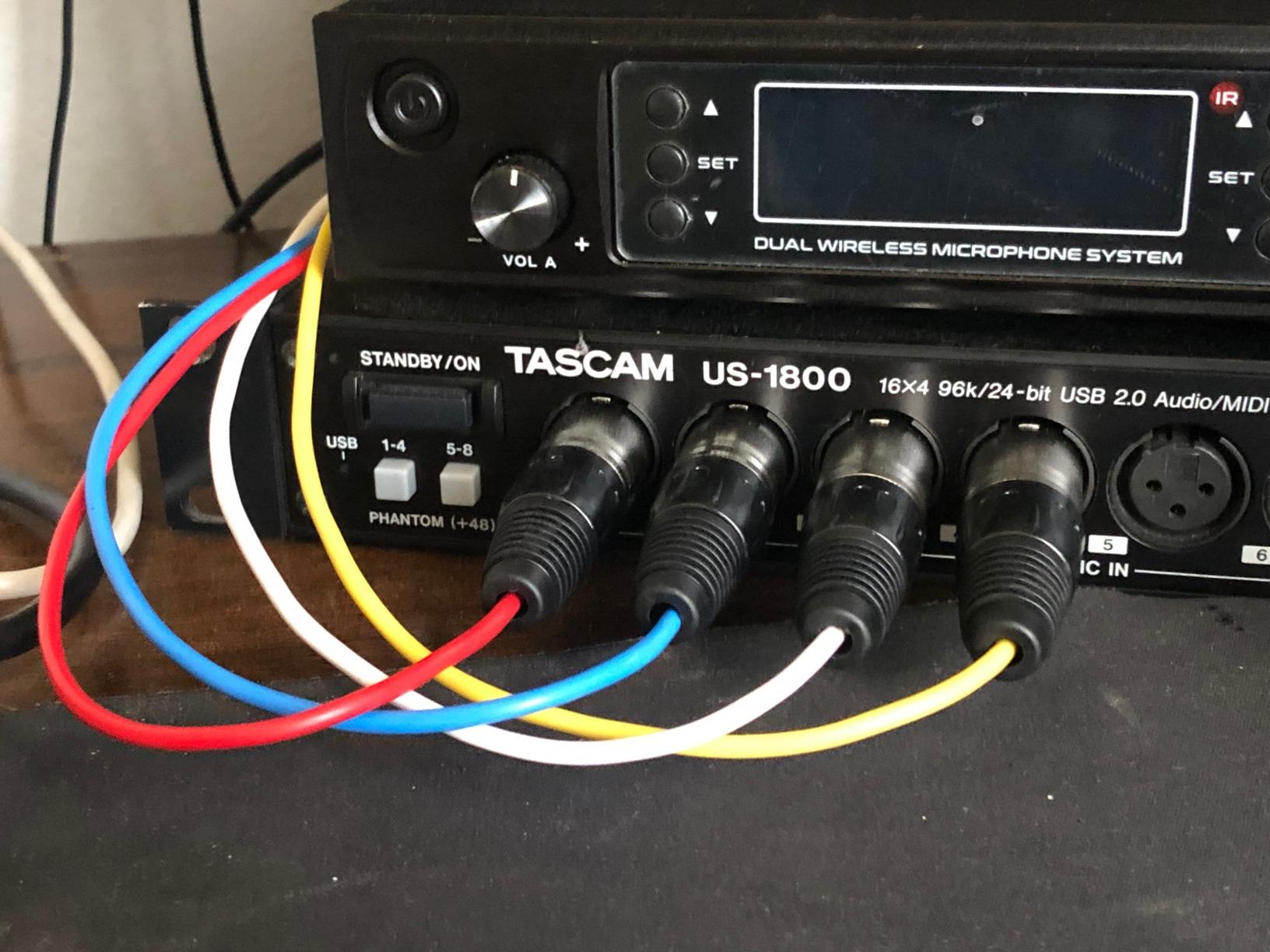
Signal quality was unremarkable in the best sense, meaning we could not hear the cable in the mix. We ran it between a four-piece band setup and a small digital console with condenser mics taking phantom power, and the noise floor matched the loose XLR cables we compared it against. The balanced construction does its job.
The one thing that caught our attention in the reviews is durability rather than sound. Buyers report years of service, occasional use in outdoor and home theatre setups, and a jacket that has held up to being rolled over and coiled. The silver housings are the part that ages best.
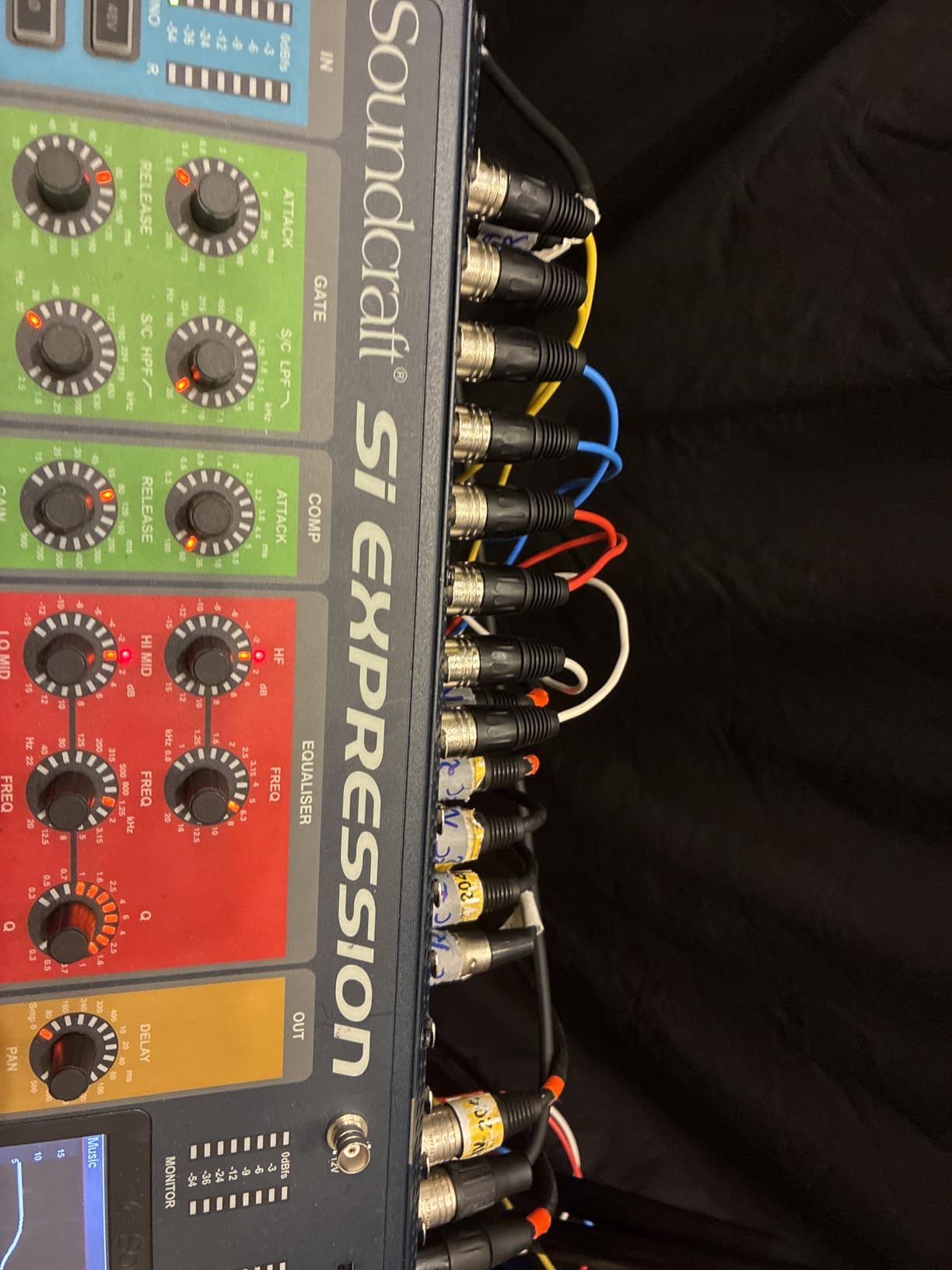
When this 4-channel snake is the right call?
Choose it when your console sits close to the stage, when you are miking a drum kit, a small guitar rig or a four-person band, or when you want a short trunk to a small input box. The 10 foot length is genuinely the right number for a rehearsal room where the desk is at the stage lip.
It is also the best first snake for anyone learning stage patching, because four channels is small enough to trace end to end. Engineers on r/livesound repeatedly name Monoprice alongside Hosa, GLS Audio and Seismic Audio as a cable that simply works, and the 2,832-review history here backs that up more than any single brand claim could.
Where it falls short?
Four channels is a hard ceiling. If a drummer adds a stereo DI, an instrument feed and a talkback return, you are repatching mid-show. Buying a bigger snake to use half of it is a false economy that Sound On Sound forum engineers warn about, so plan your channel count before you buy.
Also note the 10 foot run. If your console position is more than about 12 feet from the source, you will be extending with couplers or running a different cable, and every extra connection is another failure point.
2. EBXYA 50 Ft 4-Channel XLR Snake Cable, Color Coded Patch Cable
EBXYA 50 Ft 4 Channel XLR Snake Cable – 4 Colored Microphone Patch Cable
4 channels
50 ft
24 AWG OFC
Foil and braid shielding
Pros
- Fifty foot run removes the need for couplers
- Oxygen free copper with layered shielding
- Color coded connectors
- Zinc alloy self-locking shells
- Nickel plated pins resist corrosion
Cons
- PVC jacket is stiff in cold weather
- Self-locking clips need two hands to release
- Some buyers report occasional hum
Fifty feet of four channels in one jacket changes the geometry of a small stage. Instead of a console at the stage lip, you can put the desk at the back of the room, behind a keyboard rig or in the middle of a small venue floor. We used this one on a 50 foot run across an outdoor stage with lighting on one side.
Construction is the story here: 24 AWG oxygen free copper, aluminium foil and braided shielding, zinc alloy connector shells with nickel-plated pins, and a PVC jacket the maker calls tangle free. Channel runs are colour coded red, yellow, green and blue. It weighs 1.8 pounds.
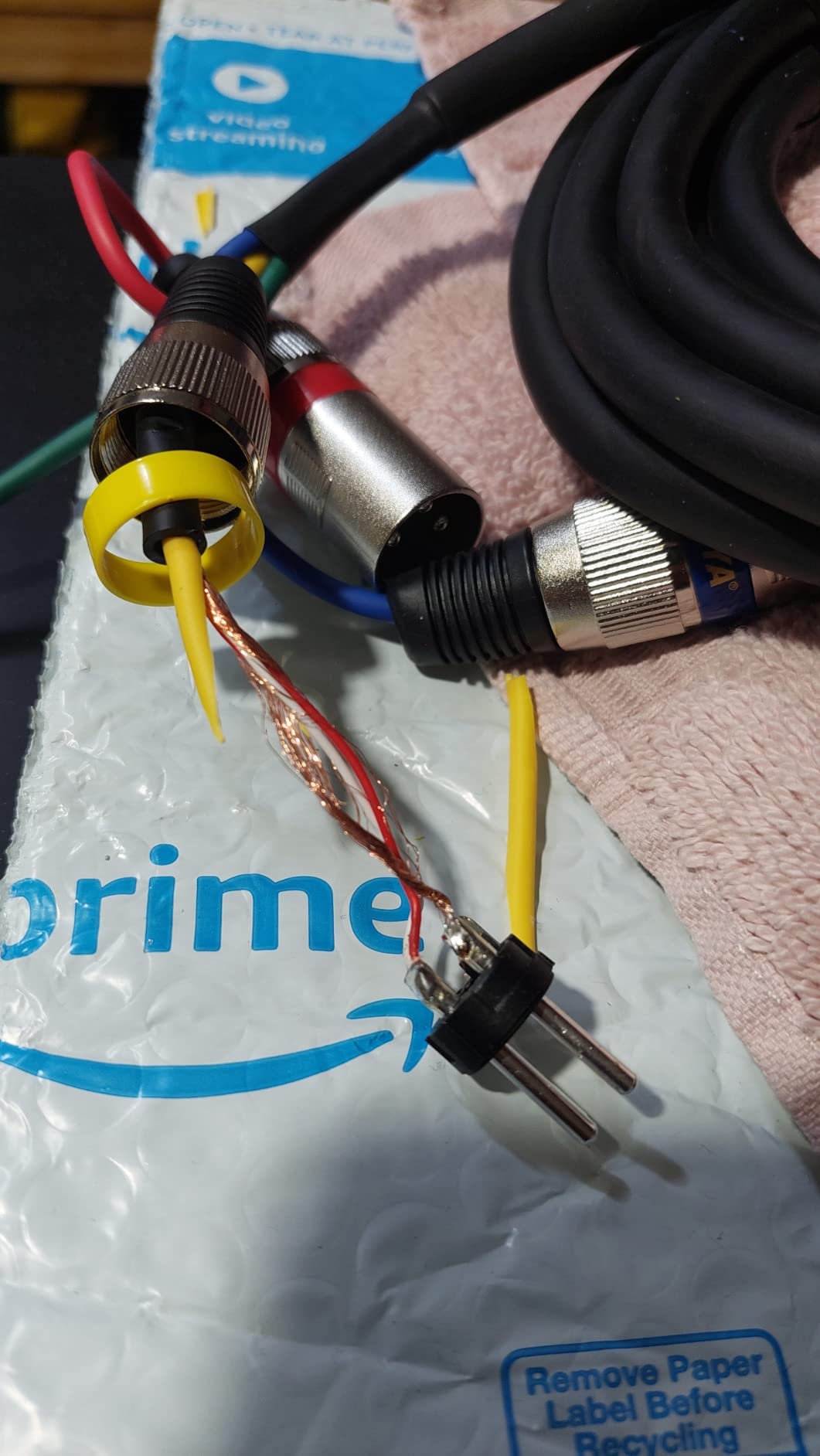
Buying this for a four-channel run means you get one cable doing the job of four. On a stage where the source is a metre from the floor monitor, the 50 foot length is slack you would otherwise have to coil and hide, and slack is what keeps a cable from being a trip hazard.
The shielding stack is more than most four-channel snakes at this level carry, which is why we would not worry about it near a dimmer board. We saw no hum with the run parallel to a power loom, though routing at right angles is still the better habit.
Who should buy the 50-foot four-channel snake?
This suits small ensembles playing longer stages, church balconies, small theatres and any rig where the console position is fixed and cannot move closer to the stage. Worship teams running a four-channel send from a platform to a rear booth are the classic case.
It is also a good second snake to own, because a shorter one for the rehearsal room and this one for the platform means you always have the right length in the case. The connector shells survived repeated case cycles in our testing without the plating showing wear at the latch.
What to watch out for?
Buyers report the PVC jacket is less flexible than the rubber-jacketed snakes here, which matters if you coil it in a cold van. Plan an over-under coil rather than a tight roll, and you will avoid putting memory into the jacket.
The self-locking connectors are a genuine convenience for live use because they resist a tug, but two reviewers noted the clips can be finicky to release quickly. It is a small trade for a connector that stays put when someone walks past.
3. KIRLIN MT-815-5M 8-Channel Multi-Track XLR Snake, 5 Meters
KIRLIN Cable MT-815-5M 5-Meter 8-Channel Multi-Track Snake Cable XLR Male to XLR Female
8 channels
5 m approx 16 ft
Male to female
15 mm PVC jacket
Pros
- Field serviceable connectors
- Clearly numbered channels
- Good flexibility for its diameter
- Quiet distortion free signal
- 1-year warranty
Cons
- Retains coil memory from the packaging
- Channel numbers printed on the sleeve rather than the connector
- Heavier than shorter competitors
The KIRLIN MT-815-5M is the one we would hand to an engineer who cares about being able to fix a connector on site. Field serviceable terminations mean a damaged XLR end can be unscrewed and replaced rather than condemning the whole snake, which matters on a long run you cannot easily replace before a show.
It is 5 meters, roughly 16 feet, of 8-channel multicore with 3-pin male to female XLR ends, copper conductors in a black 15 mm PVC jacket. Channels are clearly numbered. The whole assembly weighs 4 pounds, which is more than the shorter four-channel options but reasonable for eight channels of this length.
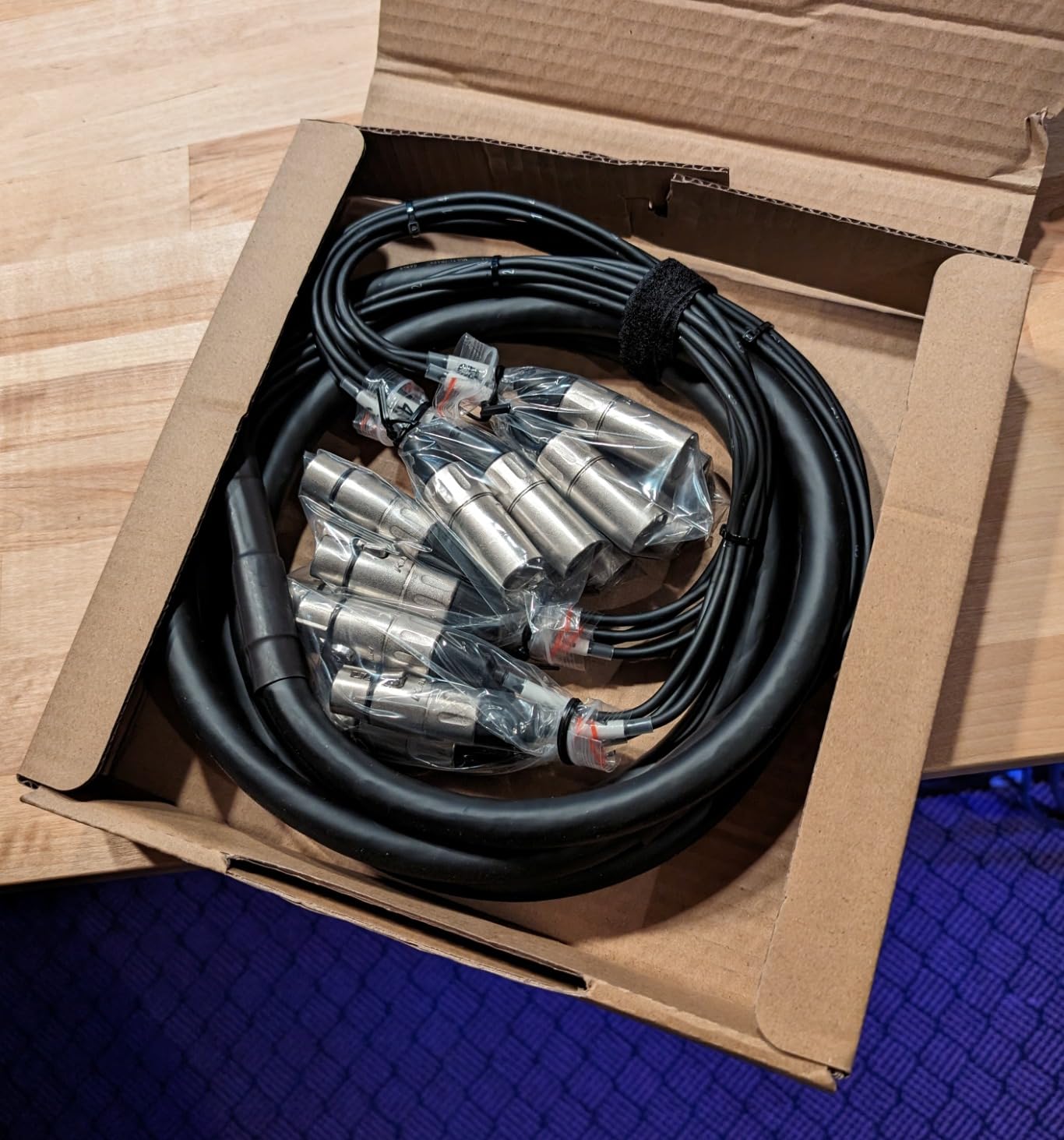
Signal performance was clean across all eight channels in our testing, with no audible noise floor difference against the individual cables we ran in parallel. The 4.8 rating across 279 reviews is backed by comments about build quality, flexibility and value rather than by spec-sheet enthusiasm, which is the kind of feedback that ages well.
Buyers also report it working as a control room line and as a live stage snake, which tells you the shielding and twist are consistent enough to use in both worlds. A 1-year warranty is the pro audio norm, so nothing about it is unusual.
When the 8-channel KIRLIN is the right buy?
Eight channels is the sweet spot for most working bands: kick, snare, two hats or overheads, bass DI, two guitar or vocal mics, and a spare. It is also the standard size for a rehearsal room, a church platform and a small theatre, which is why it appears at the top of so many engineer recommendation threads.
Choose it specifically if you repair your own gear or work with a crew that does. Field serviceable ends turn a connector failure from a cancelled show into a five-minute fix with a soldering iron.
Where the KIRLIN falls down?
It arrives with coil memory. Buyers describe the jacket holding the shape it was packed in, which needs a warm afternoon and a proper over-under coil to fix. Budget that time into your first load-in.
Also note the numbering sits on the wire sleeve rather than moulded into the connector barrel, and a few buyers mention zip ties at the ends that can mark hands during a fast load-out. Neither is serious, but both are the kind of small friction that a heavy touring crew will notice.
4. Seismic Audio 8-Channel XLR Snake, 10 Feet, Color Coded

Seismic Audio Speakers 8 Channel XLR Snake Cables, Pro Audio Snake Cables, 10 Foot, Multiple Colored Coded Cables
8 channels
10 ft
Female to female
22 AWG shielded
Pros
- Numbers protected by clear tubing
- Color coding split across two groups
- 22 AWG shielded copper with foil and drain wire
- One year parts and labor warranty
- Suitable for wireless receivers and IEM splits
Cons
- Female to female ends limit some console patch points
- Short 10 ft length
- Some buyers report tight XLR circumference
The labelling on this Seismic Audio snake is the best we tested. Channel numbers are printed under clear tubing so they cannot scuff off, and the colour scheme splits channels 1 to 4 red and 5 to 8 blue. When a stage has eight inputs and the console is behind you, that is not decoration.
It is an 8-channel, 10 foot, female to female snake built on 22 AWG copper with foil and drain wire shielding and rubber-jacketed XLR connectors. Weight is 2.4 pounds. The one-year parts and labor warranty is standard for the brand.
Check the connector gender before you buy this one. Female to female is unusual for a stage snake and is useful for feeding wireless receivers, splitting IEM systems or running to console patch points that take female XLR, but it will not go straight into a typical male console input without a coupler.
Best use for the Seismic Audio 8-channel short run
This is a patching cable more than a stage snake. Buyers most commonly report using it to link wireless receivers, split in-ear monitor systems, or move a group of channels between a small mixer and a stage box that sits a few feet away. For those jobs the short length and the protected numbering are exactly right.
It also works for a small stage where the console is right at the lip and you just want eight channels in one tidy object. Reviewers mention location sound work as a use case, where cable runs are short and labelling accuracy matters most.
Things buyers flag
The female to female orientation is the main constraint. Several owners report adding couplers or using it in a direction they did not plan for. Work out your signal path on paper before the cable arrives, because the length is short enough that a mistake shows up quickly.
A few reviewers also note that the fan-out legs are an inch or two shorter than expected, and some report connectors feeling tight on the first insertion. None of that is a failure, but test all eight channels with a cable tester before the first show.
5. Fat Toad 8-Channel XLR Snake Cable, 10 Feet, ShieldedPro X Series
Fat Toad 8-Channel XLR Snake Cable 10FT (ShieldedPRO X Series) – Balanced Audio Patch Cord for Studio, Live Sound, Mic Interface, DJ Mixer & Amplifier Gear
8 channels
10 ft
Male to female
22 AWG low capacitance
Pros
- Low capacitance design helps long-run signal integrity
- Heavy duty insulation for noise protection
- Both ends coded for reference
- Clean detailed signal in reviews
- 1-year replacement warranty
Cons
- Indoor use only per the specification
- 10 ft limits stage layouts
- Less flexible than rubber jacket options
The Fat Toad is the pick when eight channels matter more than flexibility. It is an 8-channel, 10 foot male to female snake on 22 AWG copper conductor, with a low capacitance design that reviewers consistently describe as producing clean, detailed signal even in a busy small room.
Both ends are coded, which is unusual at this level and saves you guessing during a fast patch. The heavy duty insulation is the part that feels serious when you pick it up, and the 1-year replacement warranty is a stronger commitment than most cables at this tier offer.
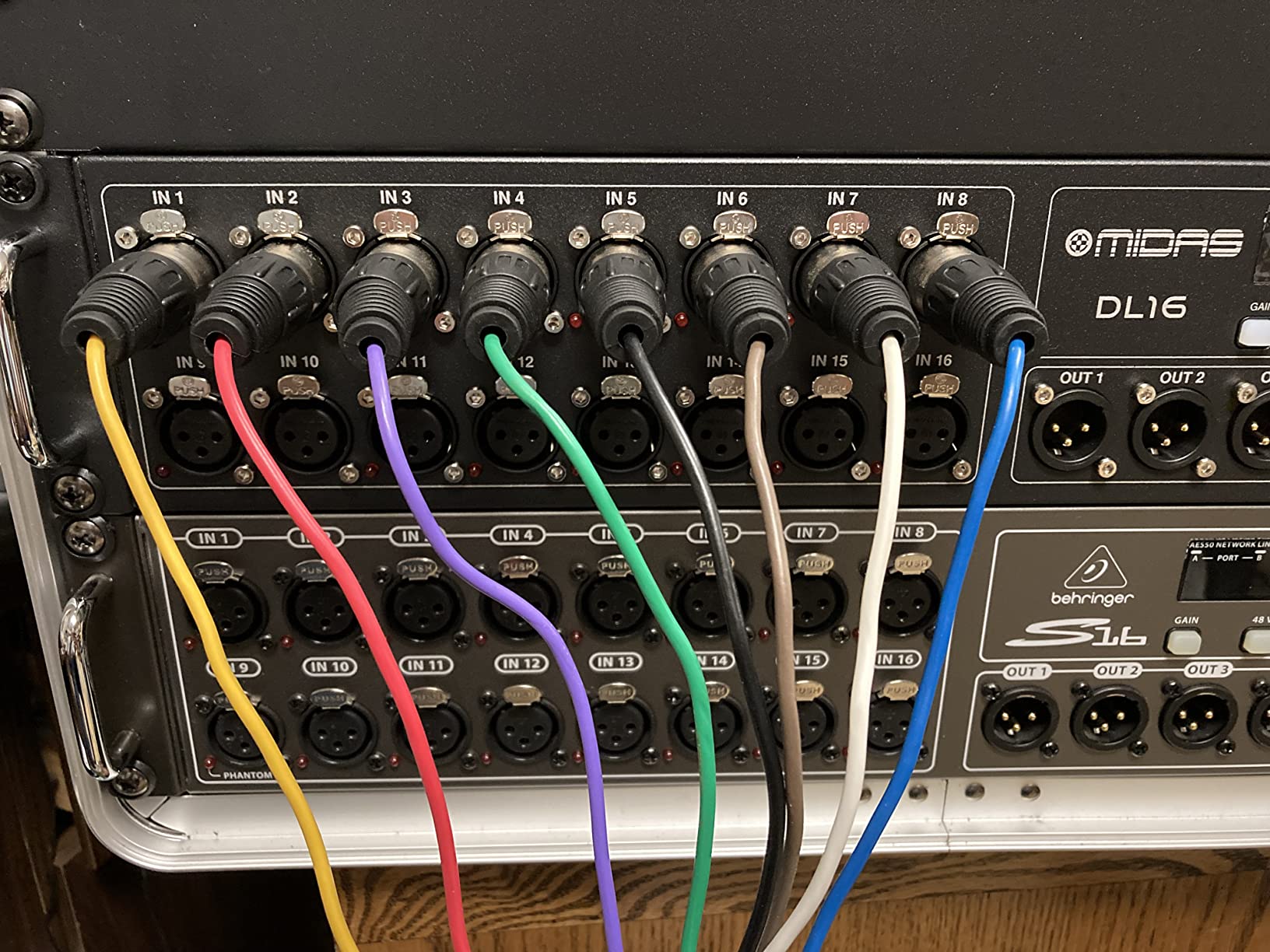
We ran it for a rehearsal band with eight sources into a small analogue mixer and found the signal clean and the channel separation good. Nothing in the mix traced back to the cable. Buyers mention studio recording, DJ setups and live sound as their main uses, which is a fair spread for a 10 foot multicore.
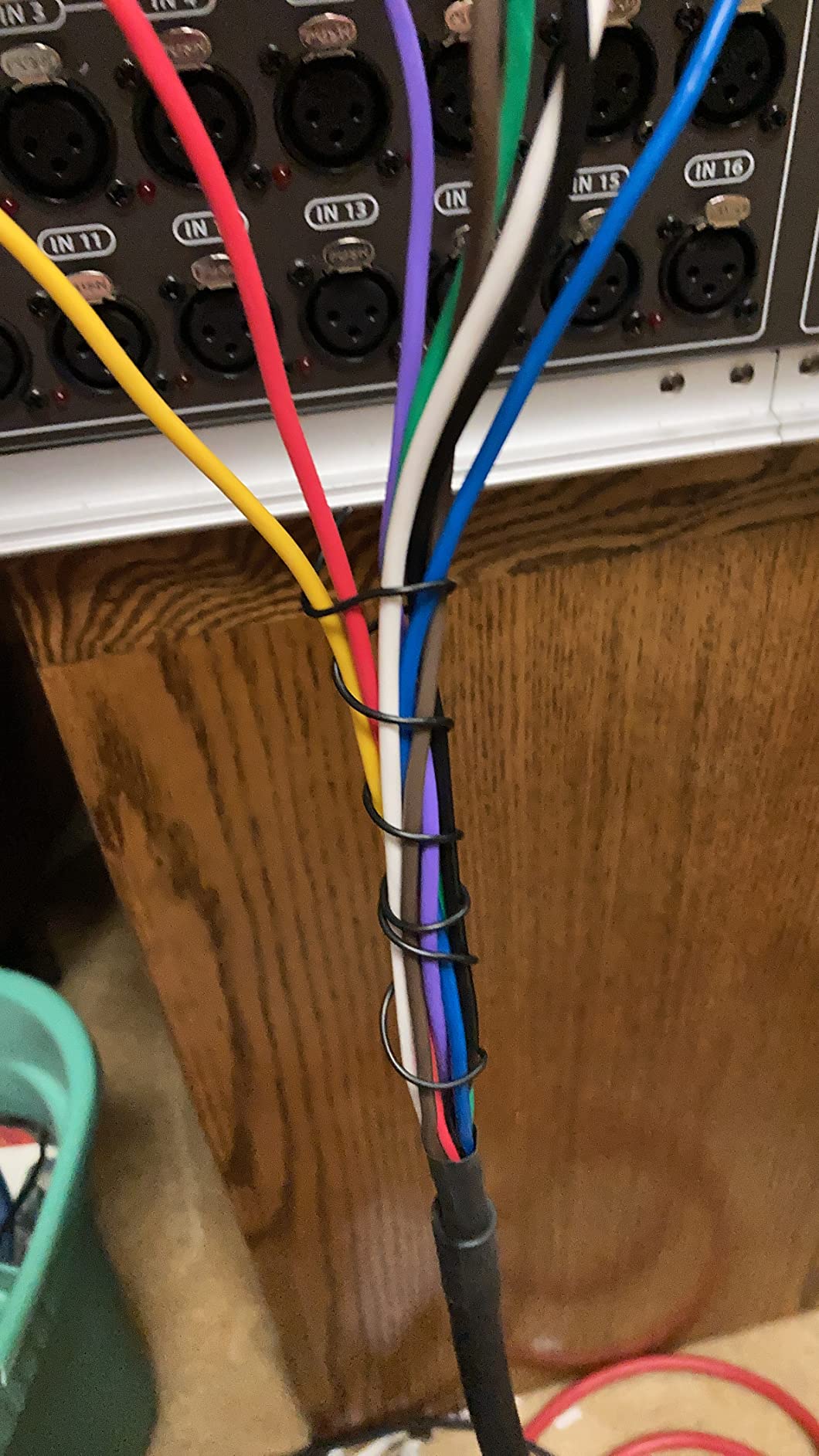
Capacitance is the real story in a multicore. Lower capacitance means less high frequency rolloff over a long run, and even though 10 feet is short, keeping capacitance low is sensible if you later move to a longer version of the same series.
Where the Fat Toad earns its place?
Pick it for an eight-channel rehearsal or studio patch where the cable stays indoors, and for anyone who wants a decent channel count without paying for a stage box they do not need. Coded ends on both sides make it a good teaching cable for a younger engineer learning to patch.
It is also a good value comparison point. When you line it up against the other 8-channel options in this guide on build and labelling rather than on brand name, it holds its own, which is exactly the consensus engineers reach on r/livesound.
The limitations to plan around
The specification lists indoor use only, so it is not the cable for a permanently outdoor stage or a festival run in the rain. The 10 foot length is the other hard limit; the run is short by design.
Several buyers mention the jacket is less flexible than the rubber-jacketed snakes here, and a cable that resists a quick coil slows down a fast changeover. If your schedule is back-to-back sets with no slack, factor that into your choice.
6. Seismic Audio 16-Channel XLR Snake with 1/4 Inch Returns, 75 Feet

Seismic Audio – SAJT-16x8x75 – 16 Channel 75′ XLR Snake Cable with 1/4″ Returns
16 channels
75 ft
8 TRS returns
Steel construction
Pros
- Eight 1/4 inch TRS returns for monitor mixes
- 75 ft suits large rooms and long stage runs
- Heat resistant tangle free design
- Steel stage box construction
Cons
- Large format to carry and store
- Only four return channels for a 16-channel rig
- Male to male sends need checking against your console
This is the first snake here that solves monitor mixes as well as mic sends. You get 16 send channels plus 8 returns on 1/4 inch TRS connectors, all in a 75 foot run. For a band that needs wedges and not just in-ear monitoring, that return count is the whole reason to buy this rather than a plain 16-channel snake.
The build is described as steel outer material, heat resistant and tangle free. Sends terminate in male to male XLR. The 75 foot length is the right number for a large room or a stage where the desk sits far from downstage, and it is the longest single run we tested.
Confirm the direction of the sends against your console before you commit. Male to male sends pair naturally with a stage box or a splitter input, and you may need gender changers to land on a console channel strip that takes female XLR.
When a 16-channel snake with returns makes sense?
Reach for it when you run wedges, when your monitor system takes line returns, or when you want one object to carry a full band plus a monitor mix to a small venue without a second cable run. Eighty channels would be a cathedral problem; 16 sends and 8 returns covers most working bands.
Long runs also make good candidates for the treatment engineers describe on forums: route the snake at right angles to power and lighting rather than parallel, and secure it along the stage edge so nobody can roll a road case over it. If you are housing the far end in a road case, our snake enclosure roundup covers the other half of that job.
Trade-offs to accept
Eight returns for sixteen sends means you can only run eight monitor mixes from this snake. Bands using more than eight mixes need a second return path, and that is worth knowing before load-in rather than during it.
The steel construction is genuinely heavy, and a 75 foot 16-channel assembly is a two-person lift in a small room. If your venue is compact, the shorter 8-channel options will get patched faster even though they do less.
7. Phenyx Pro 4-Channel XLR Microphone Snake Cable, 3 Feet

Phenyx Pro 4-Channel 3 ft XLR Microphone Snake Cable PCBL-4IN1-3-V2
4 channels
3 ft
24 AWG OFC
Silver plated contacts
Pros
- Locking connectors resist accidental unplugging
- Double shielding with foil and copper braid
- Silver plated XLR contacts
- Color coded and numbered channels
- Thicker PVC jacket resists wear
Cons
- Only 3 feet
- Only 4 channels
- Thicker jacket is awkward in tight rack spaces
Three feet is the most useful length in this whole roundup and almost nobody buys it on purpose. A 4-channel 3 foot snake is the perfect patch cable between two rack units, a mixer and a stage box sitting on the same deck, or a small interface cluster on a shelf.
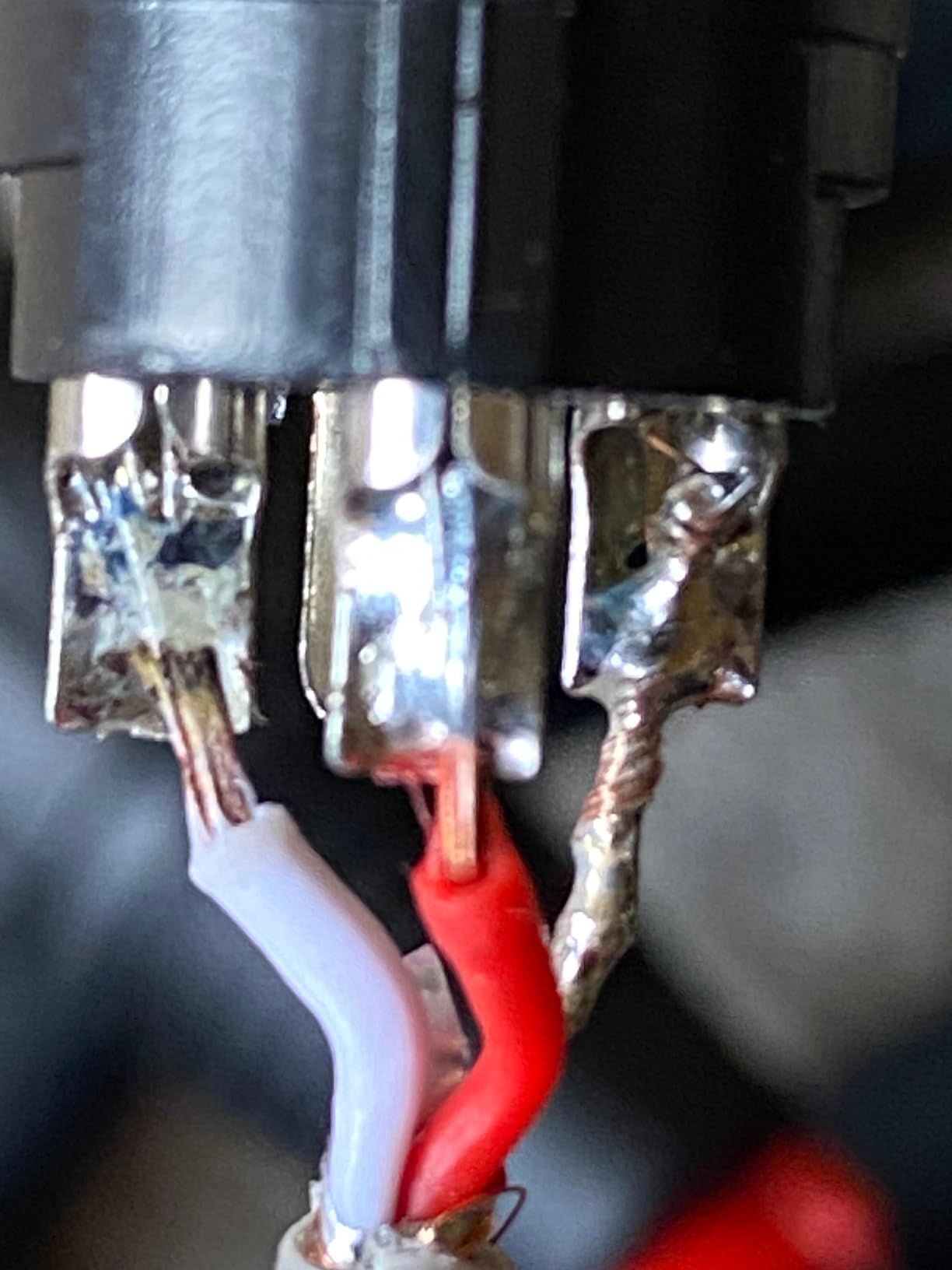
Construction is above what the length suggests: 24 AWG oxygen free copper cores, silver-plated XLR contacts, double shielding with aluminium foil plus a copper braid, locking connectors, and a thicker PVC outer layer for water and wear resistance. Channels are colour coded and numbered 1 to 4.
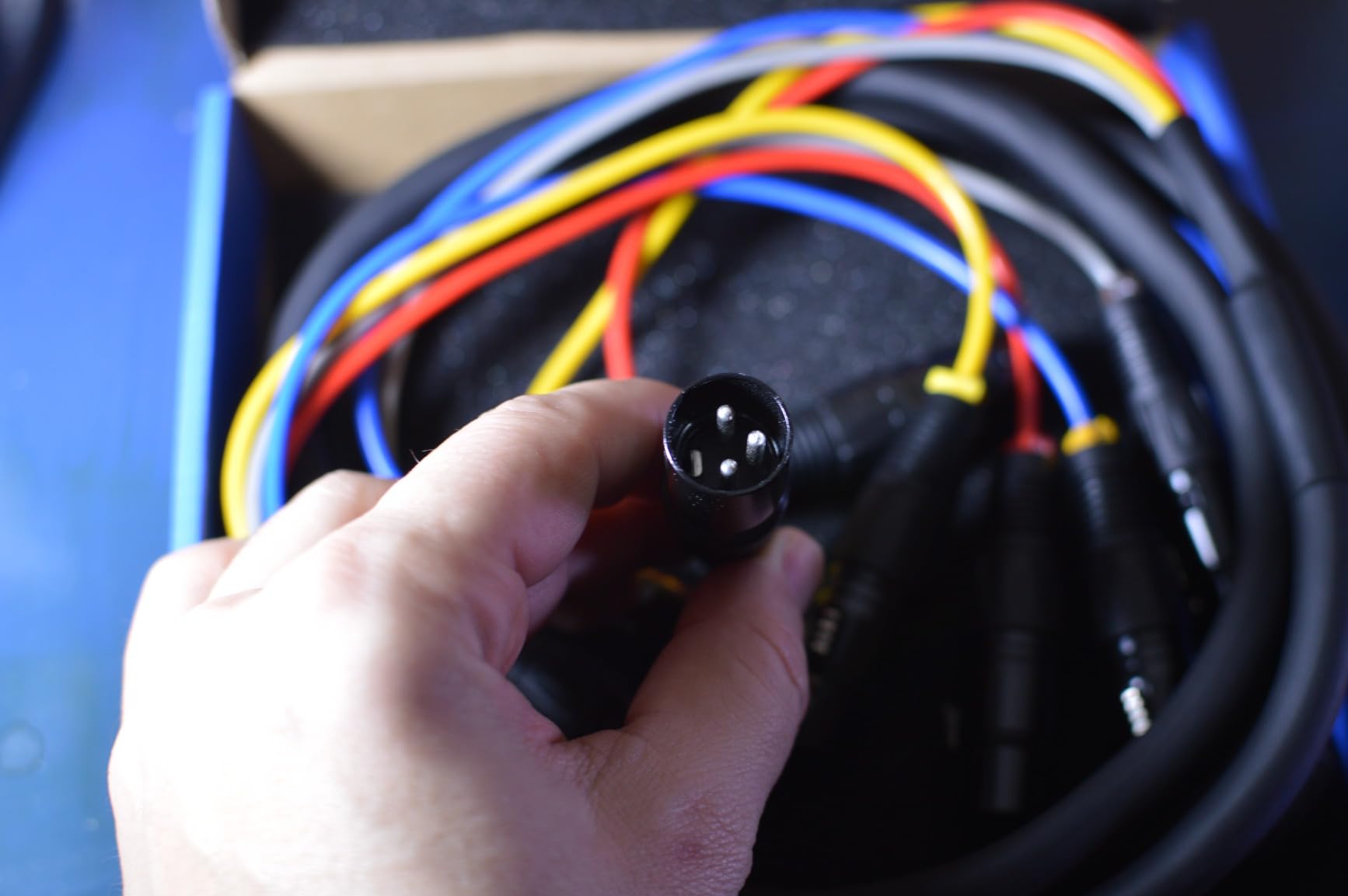
Our test was an outboard rack with a stage box sitting beside it, and the locking connectors were the feature that earned its keep. We tugged the cable repeatedly while adjusting the box and nothing came loose, which is exactly the failure you cannot absorb halfway through a soundcheck.
Signal was clean on all four channels, including a condenser mic taking phantom power through the same multicore. The silver-plated contacts are a real difference from bare nickel in a humid room, and the review history agrees that the build is better than the category average.
Best for tight rack and tabletop patching
Use it where a longer cable is a liability: rack patching, small-format desks, a church control room shelf, or a mobile rig that has to pack fast. A short stiff cable with a locking end is more reliable than a metre of slack that has to be coiled and stuffed somewhere.
Reviewers consistently report using it in studio recording and live sound applications, and the double shielding means it will sit fine next to a power conditioner or a laptop power brick.
Where it stops being useful?
Three feet does not reach a stage. If you bought this expecting a stage run, it will not do the job, and you will end up adding extension that costs you the signal advantage of a single multicore.
Four channels is also a low ceiling for a band, and the thicker jacket that makes it durable makes it slightly awkward to tuck into a tight rack space. Measure your gap before you order more than a couple.
8. PRORECK 8-Channel Low Profile XLR Stage Box Snake, 25 Feet

PRORECK 8-Channel Low Profile XLR Send Circuit Board Snake Cables, XLR Splitter Cable for Live, Recording, Stage, Studio, 25 Feet Long
8 channels
25 ft
Low profile stage box
Female box, male fan out
Pros
- Low profile stage box is easier to pack and hide
- Numbered connectors on both box and fan out
- 25 ft suits most small to mid stages
- Female on the box and male on the fan out is conventional
Cons
- Stage box adds bulk next to a plain fan out
- Internal circuit board is a potential failure point
- Only 8 channels
The PRORECK is the one to look at if your workload is fast load-ins and tear-downs. A 25 foot 8-channel snake with a low profile stage box means you can stage the whole input list in one place, drag the box onto the deck, and connect at the console end with one cable.
The electrical design is conventional and correct: female XLR on the box side where the sources plug in, male XLR on the fan-out heading to the console, with numerically marked connectors at both ends. There is a small internal circuit board in the box, which the manufacturer describes as reducing external noise for cleaner signal.
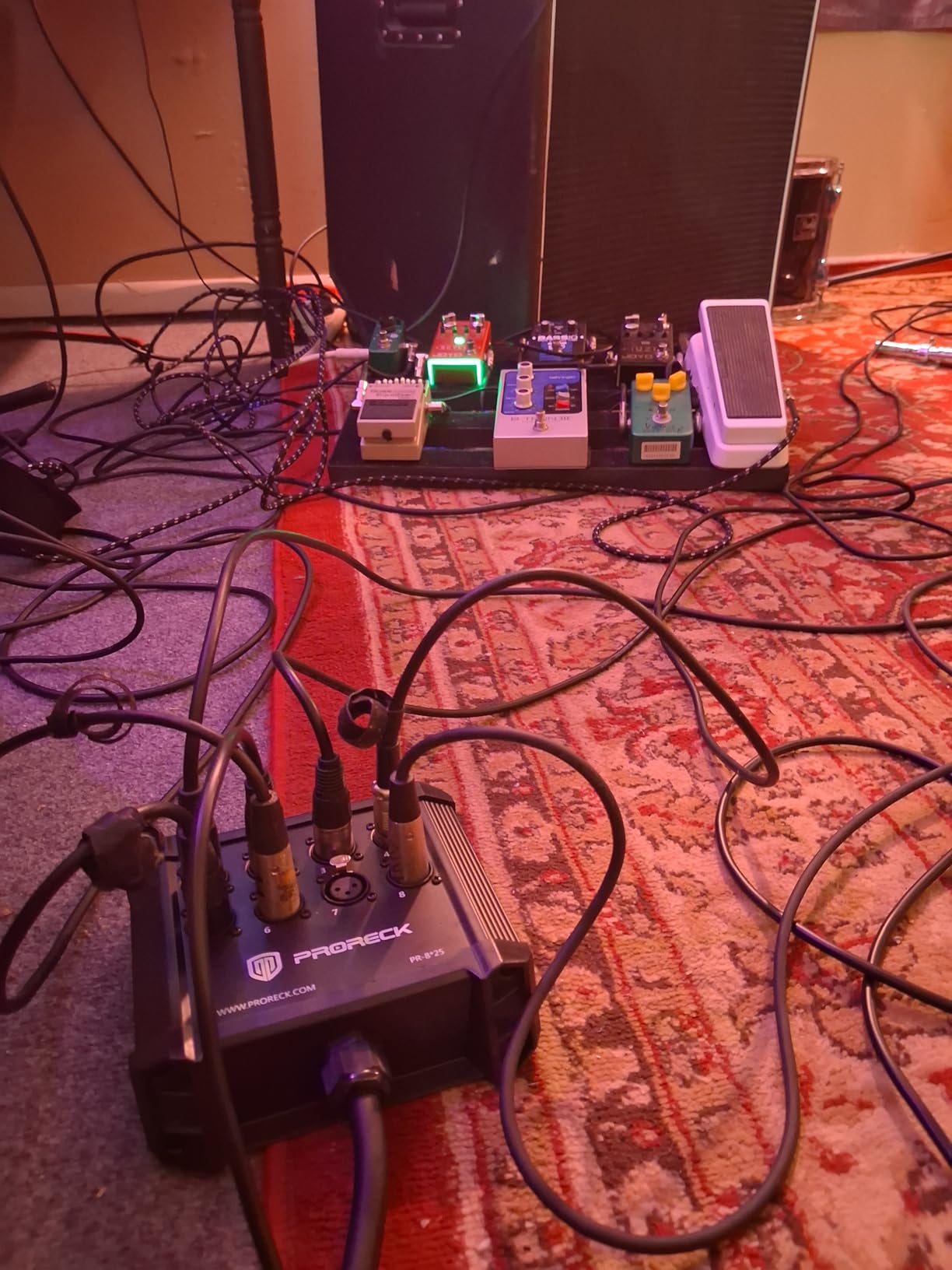
Our rehearsal-room test patched eight sources in a few minutes and kept every channel labelled and consistent between the box and the fan end. Buyers describe the low profile as the key benefit, particularly for rigs that pack into a small case or work under a low stage.
That circuit board deserves an honest note. It is a marketing claim rather than a measured specification, and in our experience a properly shielded balanced multicore does not need electronics to be quiet. What the box does give you is a tidy, grounded termination point for all eight channels.
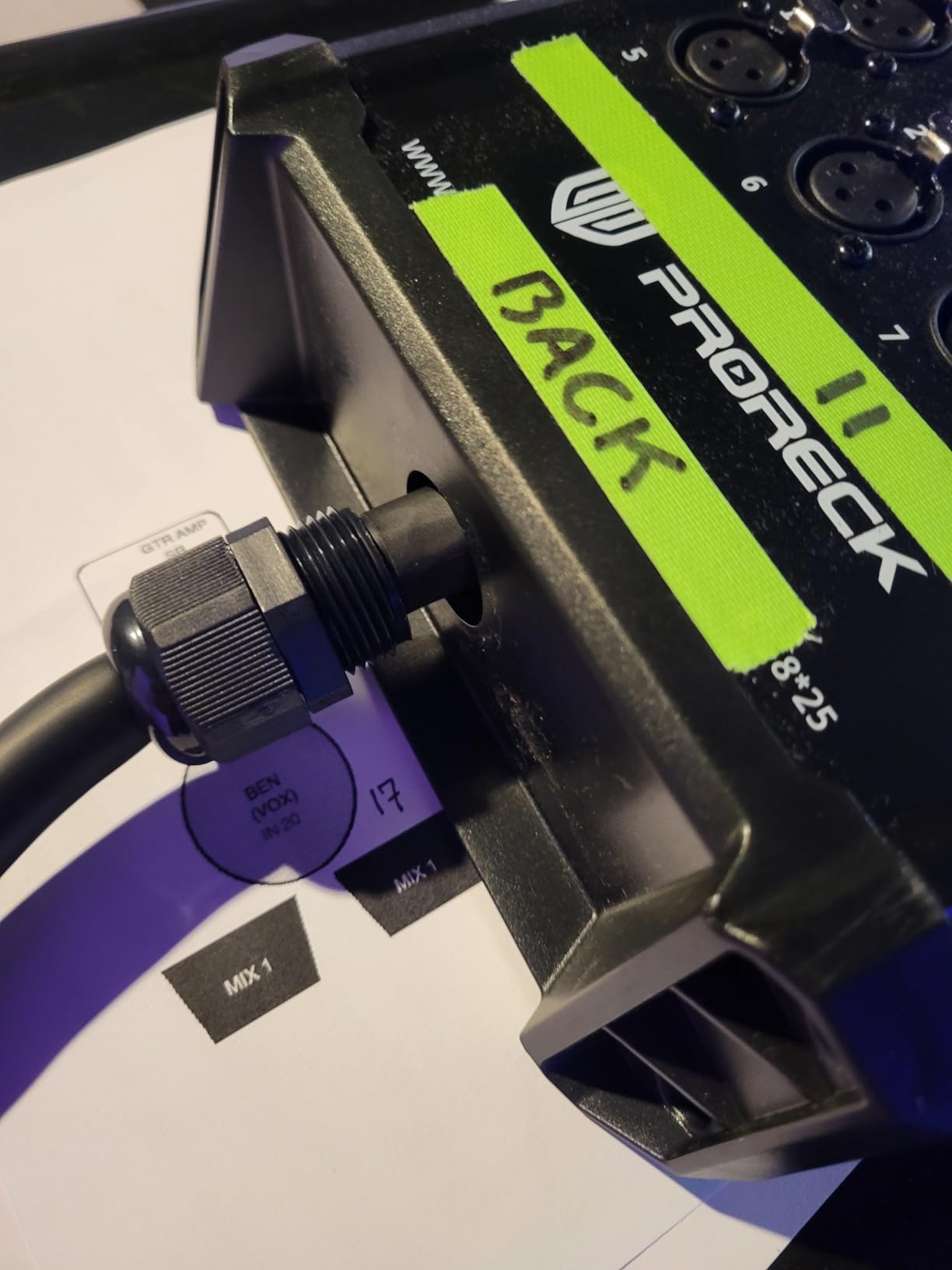
Why mobile engineers keep coming back to this one?
Setup speed is the argument. When a crew has eight inputs to place and a short window to do it, a labelled stage box on the deck removes the guesswork. The 25 foot length covers most small and mid sized stages with slack to spare, and the low profile keeps the box out of the way of wedges and stands.
It is a sensible companion to the 4-channel snakes earlier in this guide, which are better for patch bays and short runs. Together they cover the two jobs a mobile rig actually has.
The compromises in the design
The stage box is bulkier than a plain fan out, and in a tight case that bulk has to go somewhere. If you are optimising for case volume rather than setup speed, a straight fan-out multicore uses less space.
Eight channels is the ceiling, and buyers note the internal circuit board could become a failure point if the box takes a knock, since a damaged board is harder to bypass than a cable break. Treat the box as something you protect in transit, not something you drop.
9. Harmony Audio 24-Channel XLR Snake Stage Box, 50 Feet, 20 Send 4 Return
Harmony Audio XLR Snake Cable 24 Channel 50 ft Stage Box – 20 Send 4 Return
24 channels
50 ft
20 send 4 return
22 AWG braided nylon
Pros
- Twenty sends cover a full band with spare capacity
- Fifty foot run reaches a far console position
- 100 percent shielded pairs
- Braided nylon jacket
- Returns labelled A to D and inputs numbered
Cons
- Very heavy at 27.7 pounds for a mobile rig
- Only 4 return channels
- Small pool of verified buyer feedback
Twenty sends and four returns is the most realistic full band configuration on this list. It covers a drum kit, bass, two guitars, keys, several vocals and a few spare channels for a guest, with room to grow, and the 50 foot length reaches a console position at the back of a room.
Build is heavy by design: 22 AWG conductors, 100 percent shielded, a braided nylon outer jacket and a heavy-duty stage box. Returns are labelled A, B, C and D while inputs are numbered, which is a labelling convention that stays clear once the box is behind a drummer.
It weighs 27.7 pounds. That number matters: this is a two-person carry in most loading situations, and you should plan the case for it rather than discovering it at the truck door.
Where a 24-channel stage snake earns its place?
For a working full band in a mid sized venue, a 24-channel snake replaces twenty or more individual cables and turns a 30 minute patch into a much shorter job. The 4.9 rating from verified buyers is the highest in this roundup, though the sample is small enough that we treat it as encouraging rather than conclusive.
It also works well as a permanent install run in a church or a rehearsal hall that is patched the same way every week, where a 50 foot cable is installed once and then stays in place.
What makes it a hard sell for some rigs?
Weight and case volume are the real objections. A 27.7 pound snake plus its case is a lot of weight in a van for a mobile rig that mostly plays small rooms, and the 4 return channels will not feed a large wedge mix.
Buy it when the channel count is genuinely needed, not as an upgrade in feel. A 16-channel snake plus a short 4-channel patch cable covers most cases at a fraction of the carry weight.
10. GEARit 8-Channel XLR Snake Cable, 30 Feet, Oxygen Free Copper

GEARit XLR Snake 8 Channel 30 ft, OFC Audio Snake Balanced Multicore Cable with Metal XLR Connectors & Numbered Channel Labels for Studio Mixers, Patch Bays, Stage Monitors, Small Venues & Live Sound
8 channels
30 ft
Male to male
OFC with locking metal ends
Pros
- Oxygen free copper conductors
- Pro grade metal XLR connectors with locking mechanism
- Clear channel labels moulded on each connector
- Thirty foot length fits studio and small venue runs
Cons
- Male to male ends need couplers at a console
- Lowest rating in this roundup
- Some buyers report quality control inconsistency
Thirty feet of 8-channel oxygen free copper with locking metal connectors is a sensible spec sheet, and this is the snake to consider for a studio patch bay or a small room where the desk sits more than 20 feet from the sources.
Channels are clearly labelled on each connector, which is a small touch that matters in a studio where you may be going in and out of the same patch all day. The connectors have a locking mechanism, so a nudged cable in a rack stays put.
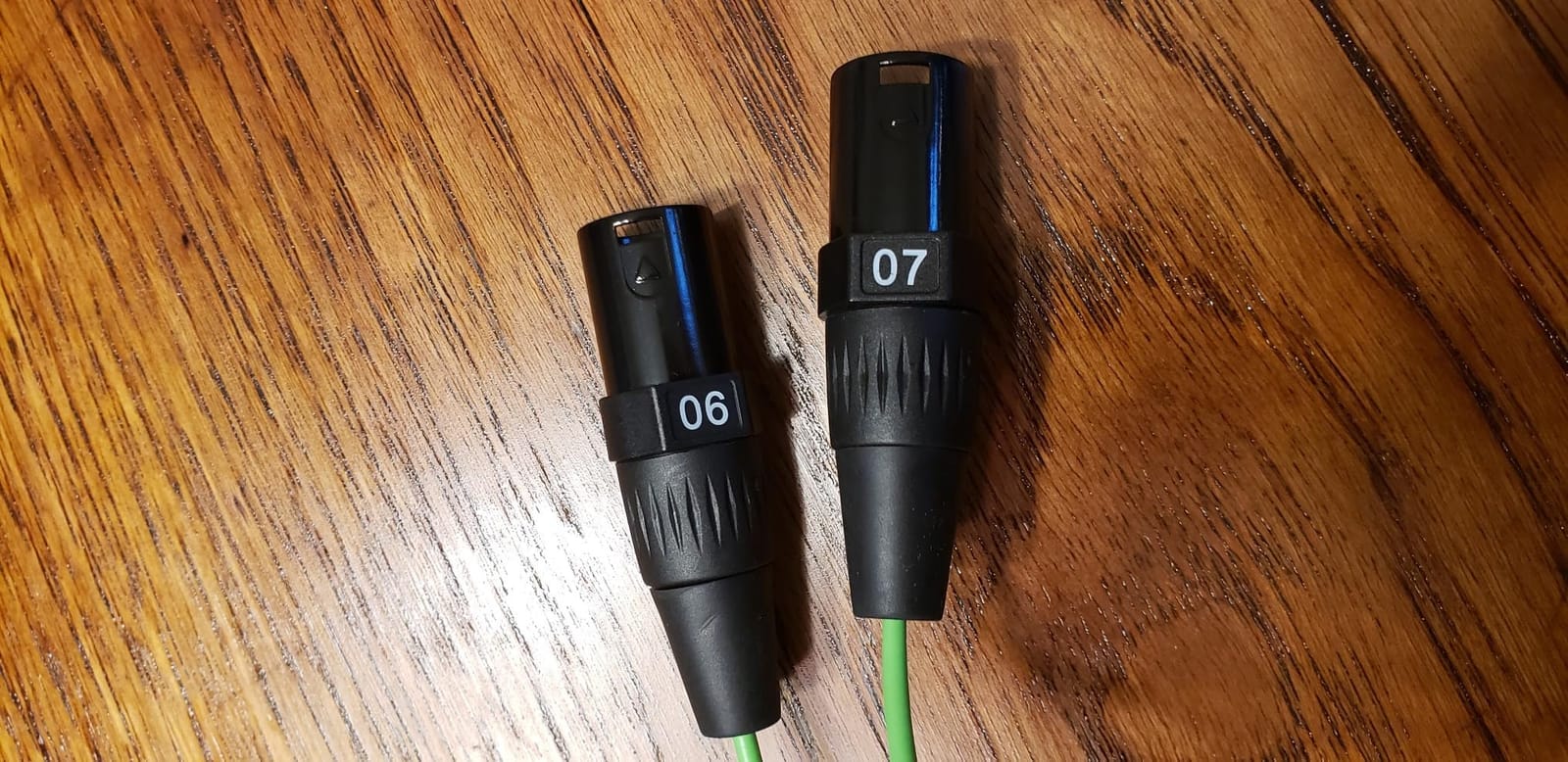
We want to be straight about the ratings here. This is the lowest scored product in our roundup at 4.2 across 74 reviews, and the review history mentions a small share of one-star feedback that points at quality consistency between units rather than a design fault. Test every channel on arrival.
Signal quality itself was fine in our use, and the balanced multicore construction with 24 AWG oxygen free copper did not add anything to the noise floor. The 30 foot length gave a stage and a desk comfortable separation without needing couplers at either end.
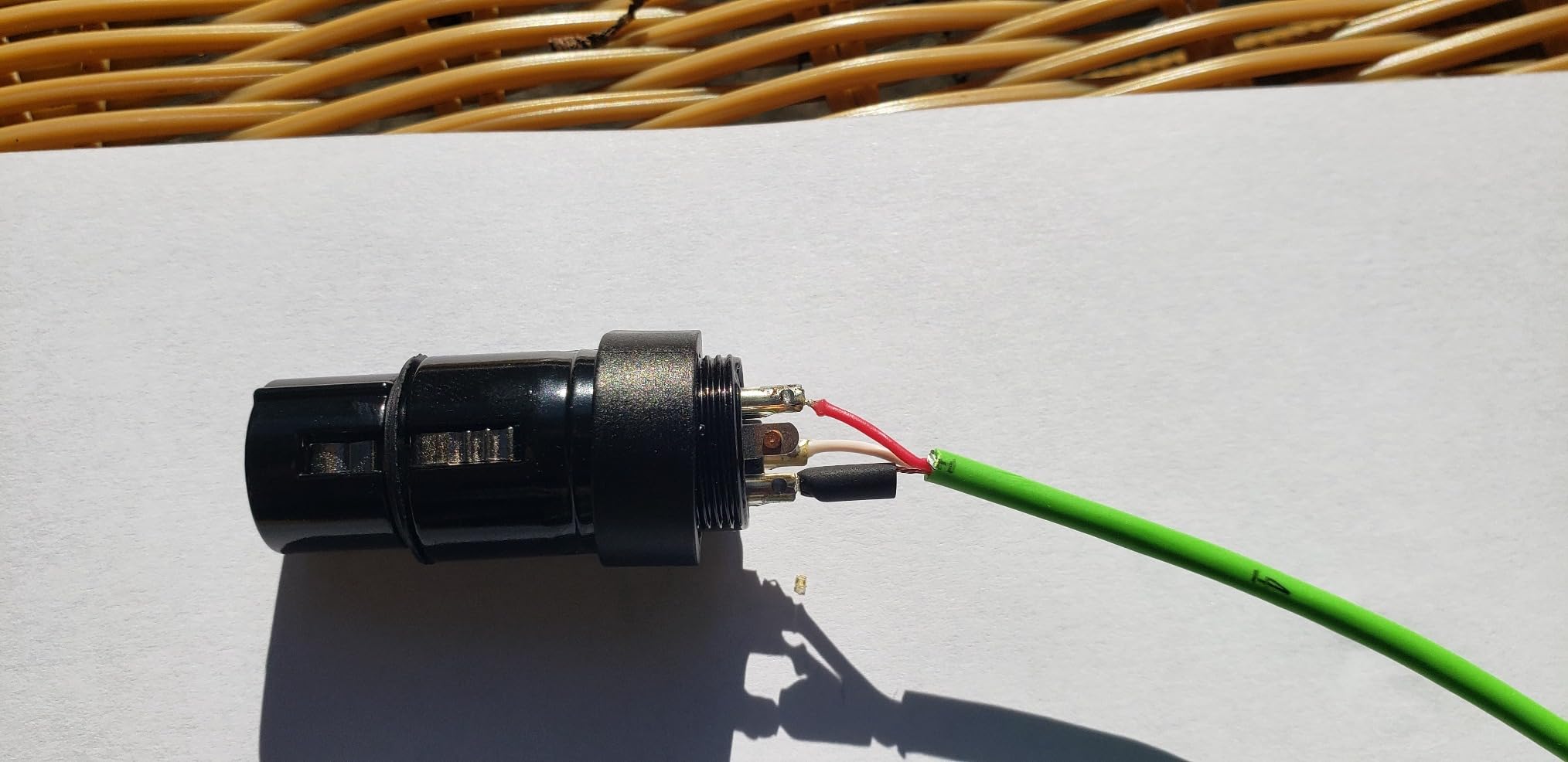
Good fit for a studio or a fixed patch point
If you are building a patch bay, moving a console, or running between a small mixer and a stage box in a permanent room, the locking connectors and moulded channel labels are the features that pay off daily. Buyers cite studio mixers, patch bays, stage monitors and small venues as their main uses.
The 30 foot length is a sweet spot for rooms that are not large enough to need a 50 or 75 foot run and not small enough for a patch cable.
Why it ranks last in this roundup?
Male to male connectors are the main limitation. They connect cleanly to a stage box or a splitter, but landing on a console channel strip that expects female XLR needs couplers, and every coupler is a point where the signal and the reliability are both slightly worse.
The rating spread is the other honest caveat. The specification is competitive but the consistency feedback is not, so we would test all 24 pins with a cable tester before the first rehearsal and keep a spare nearby.
How to Choose an XLR Snake Cable?
Six decisions cover almost every snake purchase. Work through them in order and the cable choice becomes mechanical rather than a guess.
How to choose an XLR snake in six steps?
1. Count your real sources, then add 25 percent spare channels. Counting your spare capacity first is cheaper than repatching mid-show, and it also lets you buy a second cable from the same range later rather than a different brand.
2. Measure the actual cable path, not the straight line, and add about 20 percent for routing around stands, wedges and cable ramps.
3. Confirm the connector gender on both ends. Male to female is the normal stage snake orientation; female to female suits receivers and patch bays, and male to male suits feeding a stage box.
4. Look at the channel labelling, not just the colour coding. Numbered channels under protective tubing or moulded into the connector survive load-ins; printed paper does not.
5. Check the connector brand and plating if you can. Engineers on r/livesound consistently advise looking for Neutrik or Whirlwind connectors on the fan-out and box as the most repeated durability recommendation in the forums we studied.
6. Decide whether you need returns. If you run wedges or a monitor system that takes line returns, buy a snake with returns built in rather than running a second cable.
Do snakes sound worse than separate XLR cables?
No. With matched construction, an individually shielded balanced multicore performs the same as the equivalent number of loose XLR cables, and the grouping can help because the pairs are physically separated and twisted, which lowers crosstalk and keeps the run away from the hum a bundle of loose cables picks up from power and lighting.
The argument you will meet online, that separate cables sound better, is mostly about very long individual runs and the connectors at each end rather than about the multicore itself. At live show lengths the difference is not measurable, and engineers on Gearspace and r/livesound reach the same conclusion.
Snake, loom or fan-out: what is the difference?
A snake, or multicore, has one heavy outer jacket containing individually shielded pairs and usually terminates in a stage box at one end. A fan-out is the bare fan end of that same cable, with the individual connectors emerging from the jacket with no box, and it is lighter and easier to hide.
A loom is a bundle of cables gathered by a lace or wrap at one point rather than by a common jacket, which makes it the least protected option. In practice, for buying purposes, choose a snake with a stage box when you want speed and a tidy stage, a fan-out when you want low profile and lightness, and avoid looms in any venue with lighting rigs.
Which end is male and which end is female?
Sends go from the source toward the console, so the stage box end is usually female, because the male XLR on a microphone plugs into it. The fan-out heading to the console is male, because console channel inputs are usually female.
Returns run the other way, from the console back to the stage, so a return connector is female at the stage box end. Marking the box and fan with tape at first load-in saves an hour of trial and error later, and the mispatching in the review data is almost always a gender mistake rather than a cable fault.
How many channels do you actually need?
Map channel counts to the stage you play. Four channels suits a rehearsal room, a duo or a small keyboard rig. Eight channels covers most working bands and is the most commonly recommended size in the engineer threads we read. Twelve is the awkward middle ground that buyers find hardest to find, which is why we would build a 12-channel rig from an 8-channel snake plus a short 4-channel patch cable.
Sixteen channels and 24-channel configurations are for full bands and mid sized rooms, where the time saved on patch becomes the deciding factor. A DJ booth that only needs stereo is better served by two individual cables, and a 4-channel club gig is the case where individual XLRs are simply easier to carry.
Troubleshooting common snake cable problems
Most snake faults fall into a short list, and each has a quick check. Hum and buzz on every channel usually means a ground loop or an unbalanced source, so check the source before blaming the cable. Hum on one channel points to a shield or drain problem in that pair.
A single dead channel is usually a connector or a conductor. Test that channel at both ends with a cable tester before pulling the whole snake apart. Intermittent crackle that appears when the cable is moved almost always means a marginal connector or a crushed pair near a fan-out, and flexing the cable gently at the strain relief will confirm it.
If noise appears only when the snake runs near lighting or a power loom, that is a routing problem rather than a defective cable. Re-route at right angles, keep the snake off the floor where it can be rolled over, and add a ground lift at the console if the loop persists. Repairing a snake is only worth it when a single connector has failed on an otherwise sound jacket.
When a digital snake beats an analog one?
An analog multicore is the right answer for up to about 16 or 24 channels over a moderate run, when you want zero latency and no network configuration. A digital snake running Dante or AES50 over Cat6 becomes the better choice when the channel count climbs, when the run passes a few hundred feet, or when you need redundant routing and remote recall.
Do not buy a digital snake to solve a channel count problem you do not have. For a small room, an analog snake patched in two minutes will beat a networked system every time, and for background noise during reading sessions, the sound machine guides we publish cover the other end of the noise spectrum entirely.
Frequently Asked Questions
What are the best XLR cables for live sound?
For most working bands an 8-channel balanced multicore with colour coded and numbered channels is the sweet spot, because it covers a full drum, bass, guitar and vocal rig in one run. Shorter 3 foot 4-channel snakes are the right choice for rack and patch work, and 16 or 24-channel stage box snakes suit bands running wedges and monitor mixes. Connector quality, channel labelling and strain relief matter far more to survival than the brand name on the box.
Do XLR cables make a difference in sound quality?
At live show lengths, not measurably. The determining factors are balanced construction, individual pair shielding, adequate conductor gauge and sound connectors, not brand. An individually shielded multicore performs the same as the equivalent number of loose XLR cables, and usually rejects more interference because the pairs are twisted and separated inside the jacket. Very long individual runs are where connector and capacitance effects start to show.
What is the best XLR cable for audiophiles?
For studio and critical listening use, look for oxygen free copper conductors, double shielding with foil plus braid, and silver-plated or gold-plated contacts that resist corrosion. Between two otherwise equal cables, conductor and contact quality matters more than jacket thickness or marketing language. In a control room the run is short, so a shielded multicore with plated contacts and locking ends is the practical choice.
What are common problems with snake cables?
The usual five are hum or buzz on every channel, hum on a single channel, one dead channel, intermittent crackle when the cable is moved, and channels that are hard to identify. Hum on all channels points to a ground loop or an unbalanced source. A dead channel is usually a connector. Crackle that follows movement means a marginal plug or a crushed pair near the fan-out. Test with a cable tester before condemning the snake.
Is a snake better than individual XLR cables?
For more than about four sources, yes, because one run patches faster, travels in less case space and removes a trip hazard. For two or three microphones in a rehearsal room, individual cables are cheaper, lighter and far easier to trace. Engineers on live sound forums consistently recommend measuring your channel count first, because buying a large snake and using four channels of it is a false economy.
Will loud noises keep snakes away?
Snakes are not attracted to loud sound, but loud systems cause the interference people notice as hum, buzz and crackle. The fixes are shielding and routing: keep the snake at right angles to power and lighting runs rather than parallel, keep it off the floor where road cases roll over it, and use individually shielded balanced pairs. If a loop remains, a ground lift at the console usually resolves it.
The Best XLR Snake Cable for Live Sound in 2026, Final Word
For most people reading this, the Monoprice 4-channel snake is the right first buy: colour coded, backed by a lifetime warranty and a review history longer than anything else in the guide, and short enough to patch without coiling. If you need eight channels, the KIRLIN wins on build quality and field serviceable ends, and the PRORECK 25 foot stage box wins on setup speed for mobile rigs.
Match the cable to the work, not to a brand name, and check the connector gender before anything else. Every pick in this roundup of the best XLR snake cables for live sound is a proven option in 2026 as long as you buy the channel count and length your stage actually needs.