
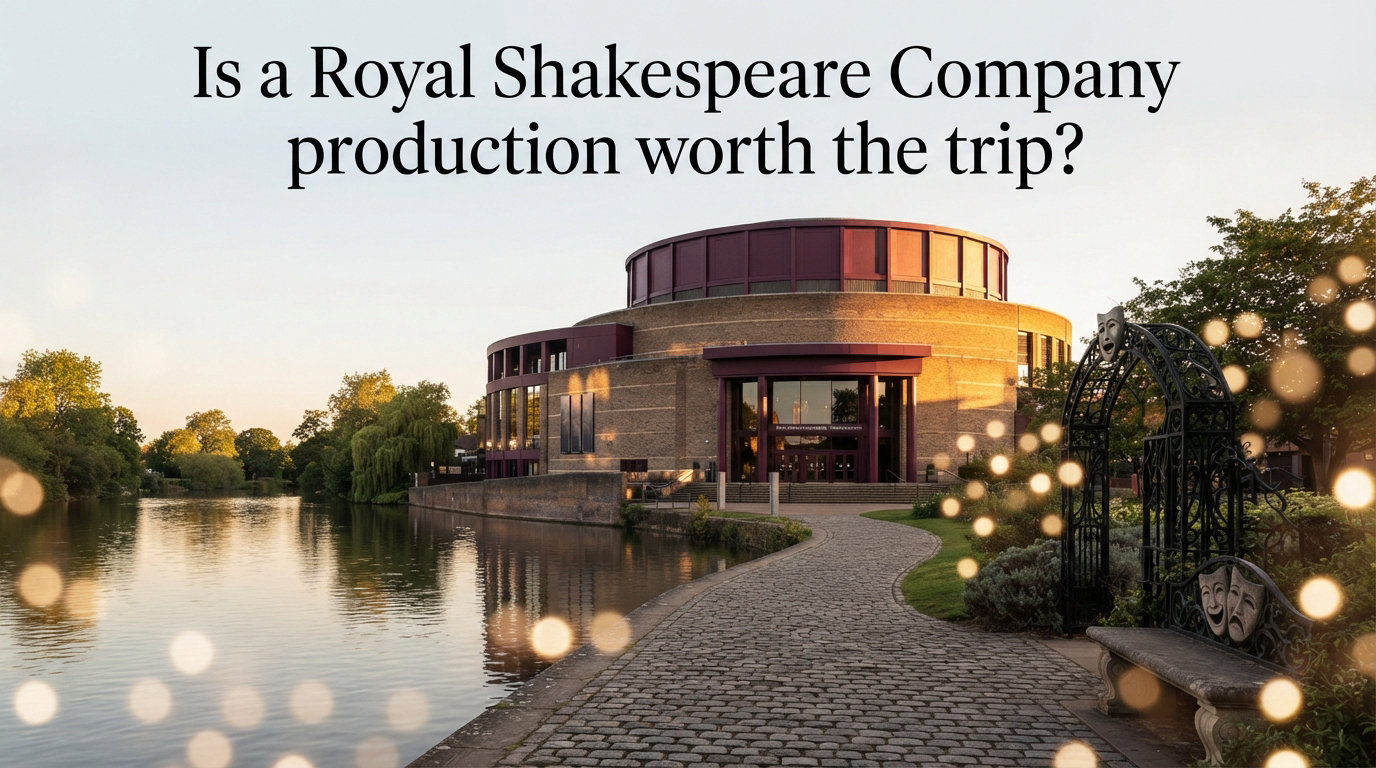
Yes, a Royal Shakespeare Company production is worth the trip for most theatre lovers, and I say that after my own visit last spring. The RSC is the national company dedicated to Shakespeare, based in his birthplace, and the experience feels distinctly different from London theatre. If you love live performance, cultural travel, or Shakespeare himself, the journey pays off.
I’ve also heard from readers who came all the way from the US just to see a specific RSC production. One Rick Steves forum traveler put it simply: “Coming from the US specifically to see an RSC production was absolutely worth the trip.” That kind of feedback is why I wanted to write a clear-eyed guide rather than a sales pitch.
In this article, I’ll walk you through the prestige of the RSC, the three theatres in Stratford-upon-Avon, what to expect at a performance, how to book tickets and get the best seats, what the backstage tours are actually like, and where to eat. By the end, you’ll know whether the trip is right for you.
Table of Contents
The Royal Shakespeare Company Is Britain’s Premier Theatre Company
The RSC is the flagship British theatre company dedicated to Shakespeare and other classical works. Based in Stratford-upon-Avon, it produces around 20 new productions each year and regularly launches world-class actors into global fame.
The company was founded in 1961, but its roots go back to 1879 when the first Shakespeare Festival was held. Today it operates three venues in Stratford, tours internationally, and runs education programmes that reach hundreds of thousands of students. A 4.7 out of 5 rating across more than 3,500 TripAdvisor reviews backs up its reputation.
What sets the RSC apart from other classical theatre companies is the combination of historical setting and contemporary interpretation. Directors regularly reimagine the plays for modern audiences without losing the original language. The result is theatre that feels alive rather than museum-piece.
The company has launched the careers of actors like Judi Dench, Ian McKellen, Kenneth Branagh, and David Tennant. Many of its productions transfer to the West End or Broadway, and several have won Olivier Awards. Even if you only catch the RSC once, you are seeing the same company that has shaped British theatre for over six decades.
The Theatres: Royal Shakespeare Theatre, Swan, and Courtyard
The main venue is the Royal Shakespeare Theatre (RST), a 1,040-seat auditorium rebuilt in 2010 at a cost of around £112 million. It features a thrust stage that pushes performance into the audience, a 7-metre basement below the stage, and 7-metre flying space above. The architecture deliberately puts actors close to spectators, which is why many critics call it one of the best stages in the world.
The Swan Theatre is the smaller sister venue, seating around 430 people in a Jacobean-style room. It typically hosts more intimate productions, Shakespearean experiments, and works by his contemporaries. If you prefer chamber-style drama over grand spectacle, this is the room.
The Courtyard Theatre is the third space, used for smaller touring productions and family shows. It doubles as a rehearsal room when bigger productions are being prepared. Most visitors stick to the RST and Swan for the main theatrical experience, but the Courtyard is worth checking if you have kids.
All three theatres sit on the same riverside complex, so you can walk between them without leaving the building. The RSC also runs a Tower with a rooftop viewing platform that offers the best view of Stratford-upon-Avon and the surrounding Warwickshire countryside.
What to Expect at a Royal Shakespeare Company Production
Expect top-tier acting, modern staging, and a respectful but inventive approach to the text. The RSC is famous for casting Britain’s finest actors, and you’ll often spot names you recognise from film and television. A recent Reddit user told me: “It’s a great cast, and the RST is a fantastic space, especially from the stalls.” That comment matches my own experience sitting in the stalls.
Shows typically run 2.5 to 3.5 hours including an interval. Productions are in original Shakespearean English with surtitles sometimes provided, but the staging and performances usually make the language easy to follow. Modern interpretations can include updated costumes, contemporary music, or even gender-swapped casting, which keeps the work fresh.
The thrust stage means actors often enter from the aisles or behind the audience. Sight lines are good from most seats, and the acoustics are excellent throughout the auditorium. One Trustpilot reviewer wrote: “It was absolutely superb. I was spellbound, it was magical from start to finish.” I had a similar reaction to a Henry V I caught on a Tuesday night.
One thing that surprised me on first visit was audience reaction. Shakespeare plays performed live invite laughter, gasps, and even applause mid-scene in ways that film never does. Sitting in the Royal Shakespeare Theatre makes you remember that these were once living, breathing plays written for a noisy crowd, not quiet study.
Tickets and Booking: How to Get the Best Seats
Tickets range widely in price depending on the show, seat location, and day of the week. Premium seats in the stalls or circle cost the most, while upper gallery seats and weekday performances offer much better value. Booking early, sometimes two to three months ahead, gives you the widest choice.
For the best seats, aim for the stalls centre or the front of the circle. These give you the full thrust-stage effect and let you see facial expressions clearly. The sides of the auditorium are cheaper but can have restricted views of one side of the stage. Avoid the very back rows of the upper gallery if you want to feel connected to the actors.
RSC membership is worth considering if you plan to see more than two productions a year. Members get priority booking, discounted tickets, and access to members-only events. The annual fee pays for itself quickly for frequent theatregoers. Day-of-show returns and standby tickets are sometimes available at the box office if you’re flexible.
Student, under-25, and school group rates are also available, which makes the RSC more accessible than its reputation suggests. The official RSC website lists the current rush and standby deals, and the box office staff are happy to help you find the best value seat for your budget.
Backstage Tours and Exhibitions Add Even More Value
The backstage tour is genuinely worth the extra cost, and I recommend it even if you’re short on time. The tour takes you through the dressing rooms, stage door, workshops, and the Tower, where you get panoramic views over Stratford-upon-Avon and the River Avon. A TripAdvisor reviewer said: “We three Yanks took the RSC tour and it was excellent. It was fascinating to get a behind the scenes perspective.” That captures the experience well.
The Transformations Exhibition is included with most tour tickets and walks you through the history of the RSC, costume design, and famous productions. There’s also a changing art installation, often surreal or contemporary, that runs alongside the main programme. Plan at least 90 minutes for the tour plus exhibition.
The Tower visit is a highlight in itself. You climb up through the building’s archive level to a rooftop viewing platform that looks out over Shakespeare’s hometown and the surrounding Warwickshire countryside. On a clear day, you can see for miles.
Dining, Bars, and the Famous Rooftop Restaurant
The Rooftop Restaurant sits on top of the Royal Shakespeare Theatre and offers pre-theatre dining with views over the River Avon. It’s the most popular dining spot and fills up fast on show nights, so book ahead. The menu leans toward modern British with seasonal ingredients.
For something quicker, there are multiple bars and cafes inside the theatre complex. The Riverside Cafe and Tow-Path Cafe are good for a light lunch before the show. You can take drinks into the auditorium in plastic glasses, which is convenient if you’re squeezing in dinner and a performance.
Outside the theatre, Stratford-upon-Avon has a strong food scene with pubs, gastropubs, and restaurants within walking distance. Many offer pre-theatre menus timed to get you to the curtain.
Planning Your Stratford-upon-Avon Visit
Plan at least two full days in Stratford-upon-Avon to do the RSC justice. Day one can cover a backstage tour, the Swan Theatre exhibitions, and an evening performance. Day two works well for the town itself: Shakespeare’s Birthplace, Holy Trinity Church, Anne Hathaway’s Cottage, and the riverside walks.
There is no dress code at the RSC, which surprises some visitors. Smart casual is the norm, but you’ll see everything from jeans to summer dresses in the audience. Wear whatever makes you comfortable, and bring layers because the auditorium can get warm when full.
Arrive at least 45 minutes before curtain. The doors usually open an hour before, which gives you time to use the cloakroom, browse the gift shop, and grab a drink. Bags larger than a small handbag may be checked or stored, so travel light if you can. Trains from London Marylebone to Stratford-upon-Avon take about 2 hours and run frequently.
Off-season visits in October, November, and February are quieter and cheaper. Summer brings festivals but also bigger crowds and higher hotel rates. Spring and early autumn strike the best balance of weather, ticket availability, and price.
The Honest Verdict: Is a Royal Shakespeare Company Production Worth the Trip?
The short answer is yes for most people who enjoy theatre, culture, or Shakespeare. The RSC delivers consistently strong productions in a setting you cannot get anywhere else in the world. The thrust stage, the historical location, the quality of the acting, and the supporting experiences like the rooftop and tower tours combine into something more than just a night out.
Where you might hesitate is on pure budget. Tickets, travel, and accommodation add up, especially in peak summer season. If money is tight, consider a weekday performance in the upper gallery, or save the trip for an off-season visit. The Rooftop Restaurant and Tower tour are nice but not essential if you want to keep costs down.
If you’re choosing between the RSC and Shakespeare’s Globe in London, here’s my take: the Globe is historic and atmospheric, but the RSC offers stronger contemporary productions and better sight lines. For a once-in-a-lifetime Shakespeare pilgrimage, the RSC in Stratford-upon-Avon is the deeper experience. Most visitors I know still talk about it years later.
Ultimately, the trip rewards people who treat it as a cultural experience rather than a quick tick-box visit. Combining a performance, a backstage tour, and a day exploring Shakespeare’s hometown gives you a complete picture of why this town still matters to the play’s living legacy.
FAQs
How prestigious is the Royal Shakespeare Company?
The Royal Shakespeare Company is Britain’s flagship classical theatre company, founded in 1961 and based in Stratford-upon-Avon. It produces around 20 new shows a year, attracts world-class actors, and holds a 4.7 out of 5 rating across thousands of visitor reviews. It is widely considered one of the most important Shakespeare companies in the world.
Is there a dress code for the Royal Shakespeare Company?
There is no formal dress code at the RSC. Most visitors wear smart casual, but jeans and relaxed outfits are perfectly normal. Wear what feels comfortable and bring a light layer because the auditorium can warm up when full.
What time should I arrive at RSC?
Doors usually open one hour before the performance starts. Plan to arrive at least 45 minutes before curtain so you have time to use the cloakroom, visit the gift shop, and grab a drink without rushing.
Is Royal Shakespeare Company membership worth it?
RSC membership pays off if you plan to see more than two productions a year. Benefits include priority booking, ticket discounts, and members-only events. For occasional visitors, single ticket bookings usually make more sense.
How many hours do you need in Stratford-upon-Avon?
Plan at least two full days to get the most out of Stratford-upon-Avon. Use one day for the RSC theatres, backstage tour, and a performance, and the second day for Shakespeare’s Birthplace, Anne Hathaway’s Cottage, Holy Trinity Church, and the riverside.
Plan Your Royal Shakespeare Company Trip
A Royal Shakespeare Company production is absolutely worth the trip if you care about live theatre, Shakespeare, or British culture. Book tickets early, choose stalls or front-of-circle seats where you can, and add the backstage tour if your schedule allows. Stratford-upon-Avon makes a wonderful two-day destination, especially outside peak summer crowds. For more theatre travel guides and Shakespeare resources, browse the rest of our site.