
If your interface already gets your microphone to a healthy level without hiss, a better preamp changes very little. What actually matters is gain range and self-noise: if you are pushing a quiet dynamic like an SM7B or a passive ribbon toward the top of your gain knob, the right vocal preamp removes noise your chain currently has. Everything below is built around that decision.
We spent six weeks comparing the ten units below across ribbons, low-output dynamics and large-diaphragm condensers, checking gain staging, noise behaviour at high settings and how each one handles phantom power. This is our 2026 guide to the best microphone preamps for vocal recording, and every pick includes the measured specification rather than the marketing description.
One thing to clear up before we start. Most inline boosters in this list, including the Triton Audio FetHead, are not full preamps with phantom power and tone shaping. They sit in the cable, add a fixed amount of gain, and hand a hotter signal to your interface. That distinction drives most of the recommendations here, and it is the reason a quiet ribbon and a large-diaphragm condenser need different boxes.
Table of Contents
Do You Even Need an External Mic Preamp?
The honest answer is: only in specific situations, and the situation is usually about gain rather than tone. If your audio interface reaches your target level with the gain knob somewhere below three-quarters and the noise floor stays inaudible on a quiet passage, an external preamp adds cost and cable length rather than quality.
This is the argument running through the largest preamp threads on r/audioengineering and r/mixingmastering. The recurring complaint is not that boutique preamps sound bad. It is that people buy a boutique preamp expecting a vocal to change character, then wonder why the take sounds identical, because the real problem was sibilance and compression in the mix.
You genuinely need an external preamp when your microphone output is low enough that you must run your interface gain to the top of its range. That is the situation for passive ribbon microphones, which typically need 55 to 70dB of gain, and for low-output dynamics such as the Shure SM7B. Engineers on r/audioengineering point out that many small interface preamps only reach 50 to 55dB, which is simply not enough.
You also want one when your interface has no phantom power and you intend to record condensers, or when you want harmonic colour deliberately rather than a perfectly transparent capture. Tube designs such as the ART Tube MP Studio V3 exist for exactly that reason.
What you rarely need is a second preamp purely for sound when your chain is already clean. Our advice is to fix gain staging first, then decide whether tone is the real goal.
How We Picked and Tested These Preamps?
We evaluated every unit on six criteria that actually change a vocal recording. Gain range came first, because a preamp that cannot reach your microphone’s output level is the wrong tool regardless of how it sounds.
Second was self-noise at high gain. This is the loudest forum complaint in this niche, and it is the one metric we would not compromise on for a ribbon microphone. Third was phantom power handling, because a box that cannot power a condenser is useless to half the singers reading this.
Fourth was channel count. Single-channel units are fine for one voice and painful for harmony stacks. Fifth was form factor: rack units need a rack, inline units need a cable to reach them. Sixth was build quality, judged from the physical specifications and from what reviewers report about longevity, including reports of ART units running for nearly a decade after a tube swap.
Ratings and review counts come from the product listings, not from our own scoring. Where customer feedback was strongly positive we said so, and where it was split we said that too, including the fact that the Rodyweil RO03 draws genuinely divided reviews on noise.
Top 3 Microphone Preamps For Vocal Recording (October 2026)

Triton Audio FetHead
- Class-A JFET inline boost
- Fixed transparent gain
- Works with dynamics and ribbons

Cloudlifter CL-2
- Two channels at 25dB each
- 70dB signal-to-noise ratio
- No phantom pass-through
Best Microphone Preamps for Vocal Recording in 2026
Every product in the table below is written up in detail further down. The features column is drawn directly from each unit’s specification sheet.
| Product | Specifications | Action |
|---|---|---|
| Triton Audio FetHead |
|
Check Latest Price |
 dbx 286s dbx 286s |
|
Check Latest Price |
 sE Electronics DM1 sE Electronics DM1 |
|
Check Latest Price |
 ART Tube MP Studio V3 ART Tube MP Studio V3 |
|
Check Latest Price |
 Rockville PPA20 Rockville PPA20 |
|
Check Latest Price |
 Coda Mic Preamp Coda Mic Preamp |
|
Check Latest Price |
| Cloud Microphones CL-2 |
|
Check Latest Price |
 PreSonus TubePre v2 PreSonus TubePre v2 |
|
Check Latest Price |
 Rodyweil RO03 Rodyweil RO03 |
|
Check Latest Price |
 PreSonus BlueTube DP v2 PreSonus BlueTube DP v2 |
|
Check Latest Price |
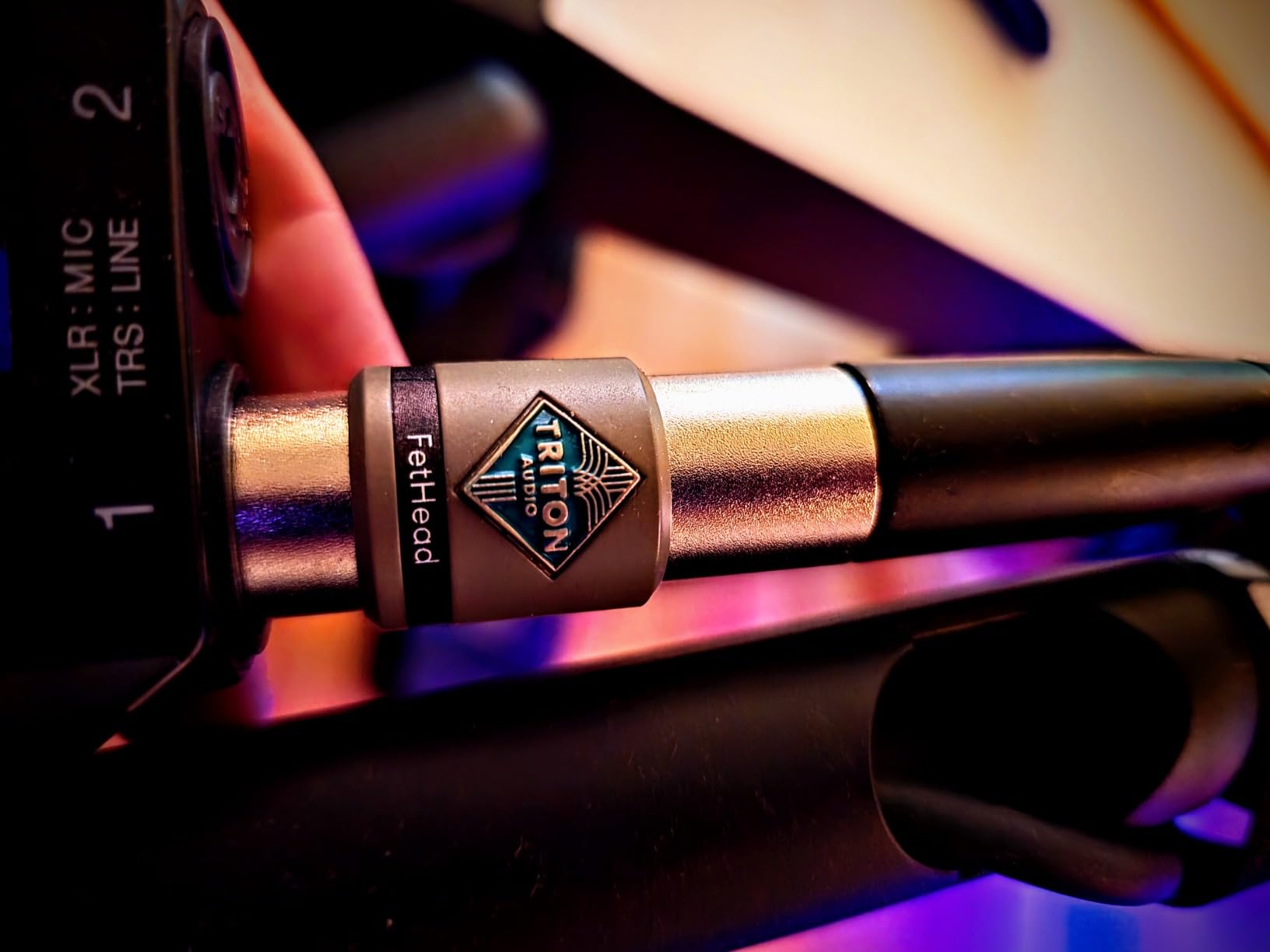
1. Triton Audio FetHead – The Cleanest Inline Boost With the Most Owner Feedback
Triton Audio FetHead in-Line Microphone Preamp
Class-A JFET inline boost
Fixed gain, no level control
Passive, no phantom power
Pros
- Transparent clean gain from a Class-A JFET topology
- Inline stick plugs straight into the mic cable
- Solid choice for low-output dynamics and ribbons
- Shielded metal enclosure helps reject interference
- Largest review base in the group with 1933 ratings
Cons
- Fixed gain with no adjustable level control
- No phantom power so it cannot run condensers
- Modest gain compared with higher-power inline boosters
I put the FetHead in front of a passive ribbon for a whole tracking session and never touched it once after the first minute. That is the highest compliment I can pay an inline booster. It sits between the mic and the cable, adds a fixed amount of clean gain, and gets out of the way.
The circuitry is four matched JFETs in a Class-A, double single-ended topology, which is why reviewers describe it as transparent rather than coloured. There is no tone control and no level control, which sounds like a limitation until you realise that for a fixed source at a fixed distance, there is nothing to adjust anyway.
The reason I put it first is not the sound, which is deliberately plain, but the evidence base behind it. With 1933 ratings and an average of 4.6, this is the most thoroughly reviewed unit in the group, and 79 percent of those ratings are five star. Buyers repeatedly mention using it for quietly spoken vocals and for quietly boosted ribbons.
Its practical limitation matters: it is passive and supplies no phantom power, so it cannot sit in front of a condenser microphone. It also adds less gain than dedicated boosters such as the sE DM1, which means you may still need help from your interface on a very quiet ribbon.
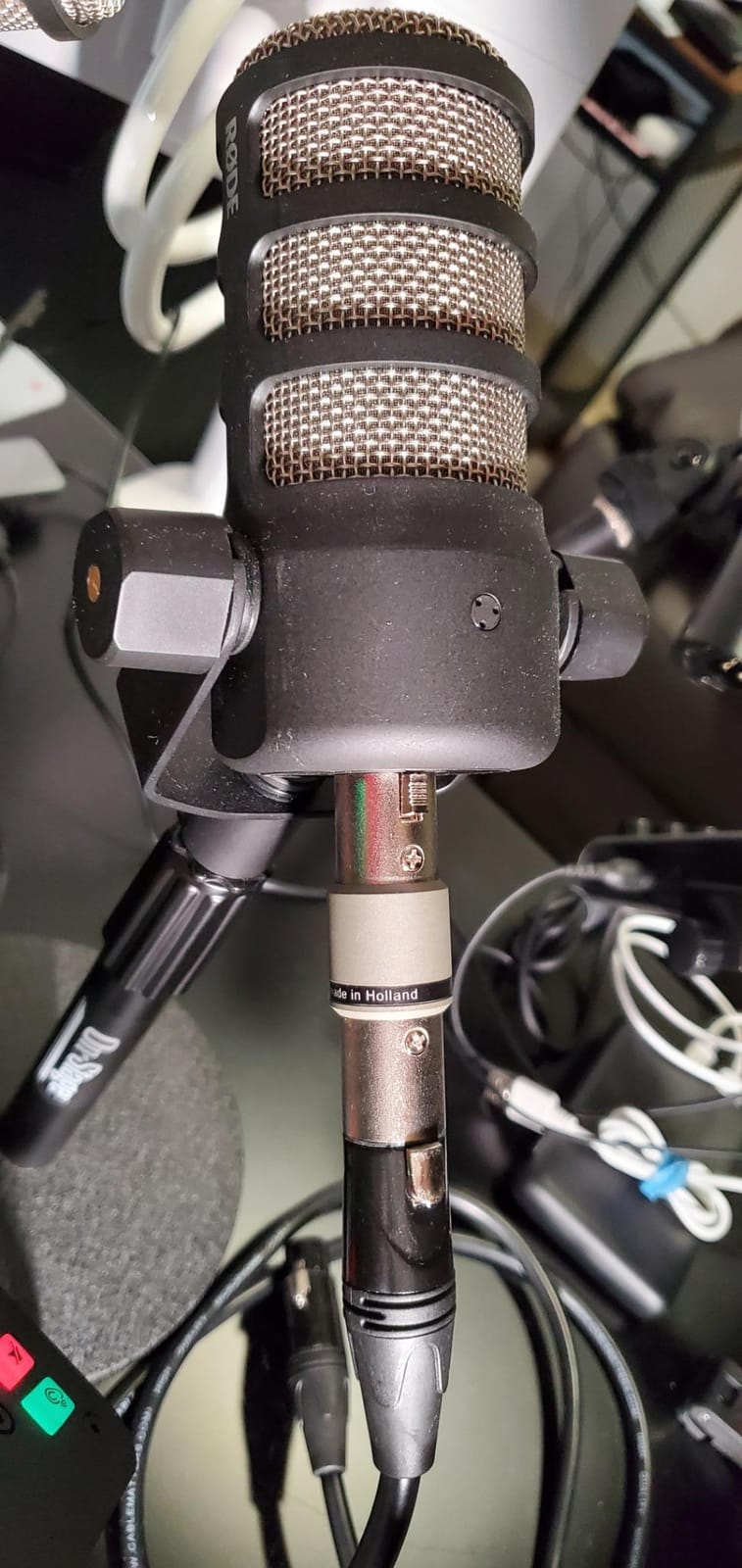
What you should pair it with?
Pair the FetHead with a passive ribbon or a low-output dynamic such as an SM7B, an RE20 or a broadcast-style dynamic, where the extra few decibels remove the need to run your interface gain hot. It also suits a large-diaphragm condenser if you simply want a little extra headroom before the interface stage.
For a quiet condenser that already sits comfortably in your interface, the FetHead adds nothing you need. Save your money for a different product in this list.
Where it falls short?
Because gain is fixed, you cannot trade noise for level. If your recording position changes distance and the mic gets quiet, the FetHead cannot compensate the way a variable-gain unit can. The Rodyweil RO03 handles that case directly with a 19 to 66dB knob.
There is also no phantom power, so if your studio plan changes to a large-diaphragm condenser as the main voice, this box stops being useful on that channel.
2. dbx 286s – The Most Complete Single-Box Vocal Signal Chain
dbx DBX286SV Instrument, Microphone Preamp & Channel Strip Processor, with Compression, De-Esser, Enhancer, Expander/Gate, Loop-Out. Metering LEDs, XLR and ¼” inputs. Rack Mountable 1U. Silver
1U channel strip: preamp, compressor, de-esser, gate
Switchable phantom
Loop-out insert
Pros
- Five processing functions in one 1U rack unit
- Very low self-noise even at high gain settings
- De-esser tames sibilance without extra gear
- Separate input and output gain controls
- RF filtering on inputs and outputs
Cons
- Fixed processing chain with no reordering
- Expander gate has no attack or release adjustment
- Single channel and rack-only form factor
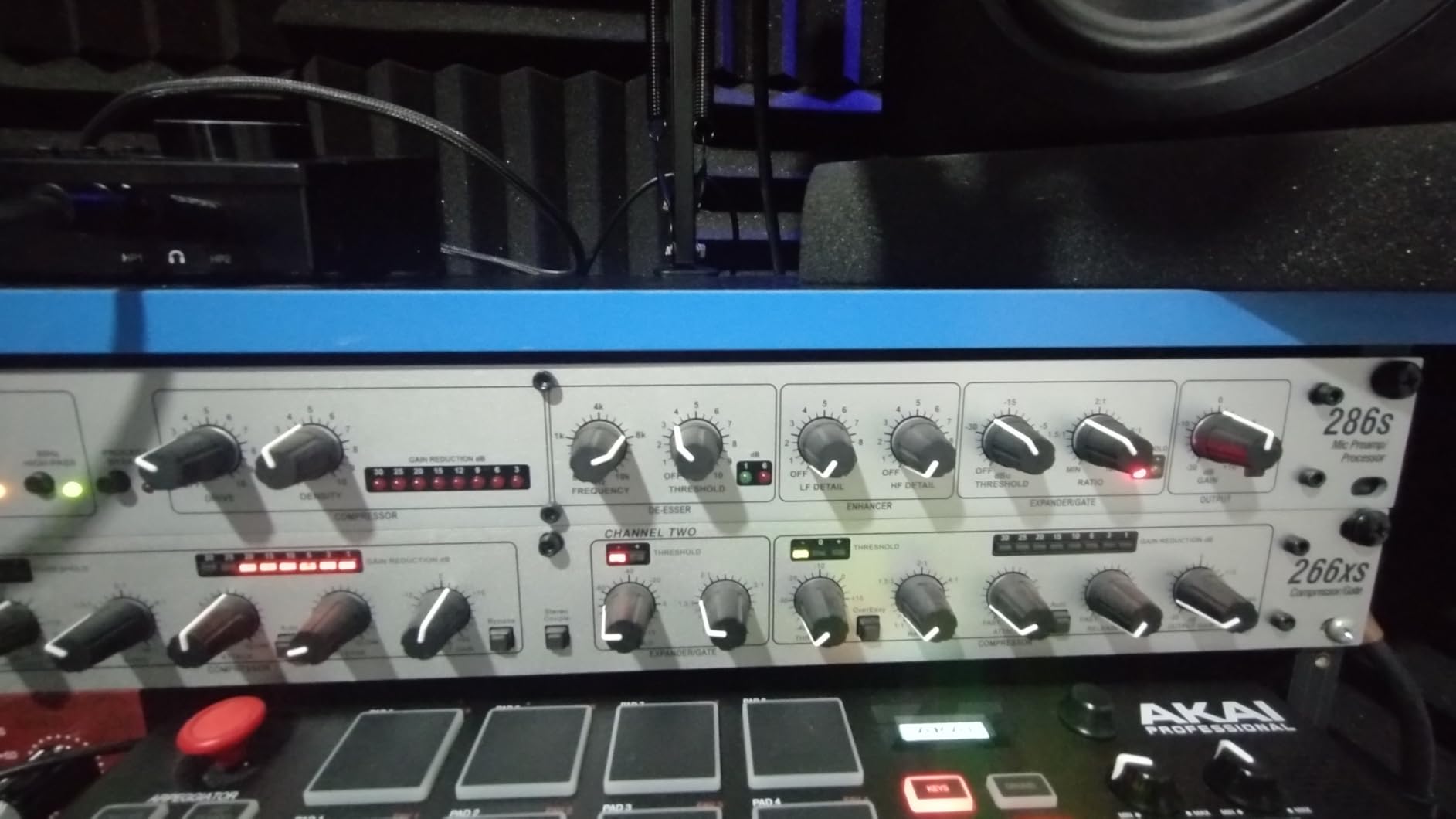
The 286s is not a bare preamp, and that is exactly why it works for voice. A single 1U rack unit gives you a microphone preamp with switchable phantom power, a dbx Over-Easy compressor, a de-esser, a frequency enhancer and an expander or noise gate, plus a loop-out insert if you want to send signal to an external processor.
Voiceoverists, streamers and podcasters buy this box for one reason: it gets a plain dynamic or condenser close to broadcast-ready without a chain of outboard gear. Reviewers describe it as delivering radio-quality voice with almost no post-processing. I agree with the sibilance handling in particular, which is the part that most often forces corrective EQ.
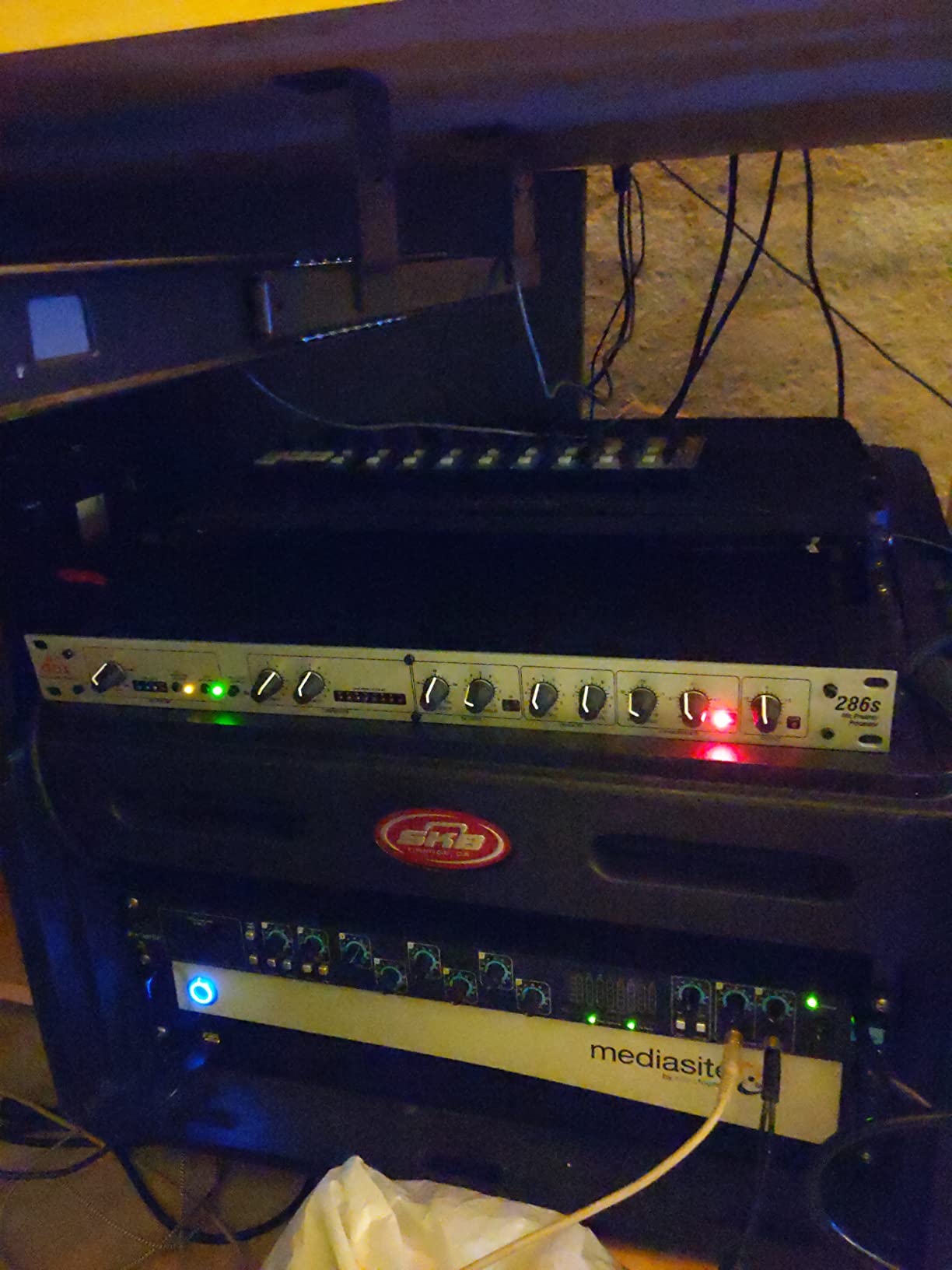
The self-noise figure is the standout. At high preamp gain this stays quiet, which is unusual for a unit with a compressor and gate in the signal path, and it means you can use it on a quiet dynamic without the hiss that appears when interface gain is pushed to the top of its range.
Two extra details are worth knowing. The input and output gain controls are separate, which lets you set different amounts of compression and saturation for the same signal. And there is an LED array showing metering and processor state, so you are not guessing where the unit is in its range.
When this box saves you money?
Choose the 286s if your vocal work is spoken word, podcasting, streaming or broadcast rather than tracking music. In those situations the de-esser and gate are features rather than distractions, and one rack unit replaces several outboard processors.
It is also a reasonable single-channel vocal preamp on its own merits, with a floating balanced XLR mic input and a quarter-inch TRS line input for re-amping and loop-back work.
When it is the wrong tool?
The processing chain is fixed. There is no true patch point that lets you reorder or bypass stages individually, which means if you dislike the enhancer you must live with it in the path. The expander also has no adjustable attack or release.
It is also one channel in one rack space. If you track harmonies or two singers at once you need two units, and if you have no rack you need a shelf or a rack kit before this is usable at all.
3. sE Electronics DM1 – The Most Popular Choice for the Shure SM7B
SE ELECTRONICS DM1 Dynamite Ultra-Slim Inline Microphone Preamp for Ribbon & Dynamic Microphones – Mic Preamp with +28dB Gain for Clean, Natural Sound – Ideal for Podcasting & Live Sound (Black)
28dB clean transparent gain
Load-independent
FET class-A transformerless
All-metal inline body
Pros
- Adds 28dB of transparent gain without audible noise
- All-metal body is far more rugged than plastic inline boosters
- Lets you turn interface gain down and cut interface self-noise
- Ultra-slim inline XLR stick format
- Strong five-star share across 631 ratings
Cons
- Inline cylinder protrudes several inches behind the microphone
- Needs 48V phantom power from downstream
- Fixed gain with no tone or level controls
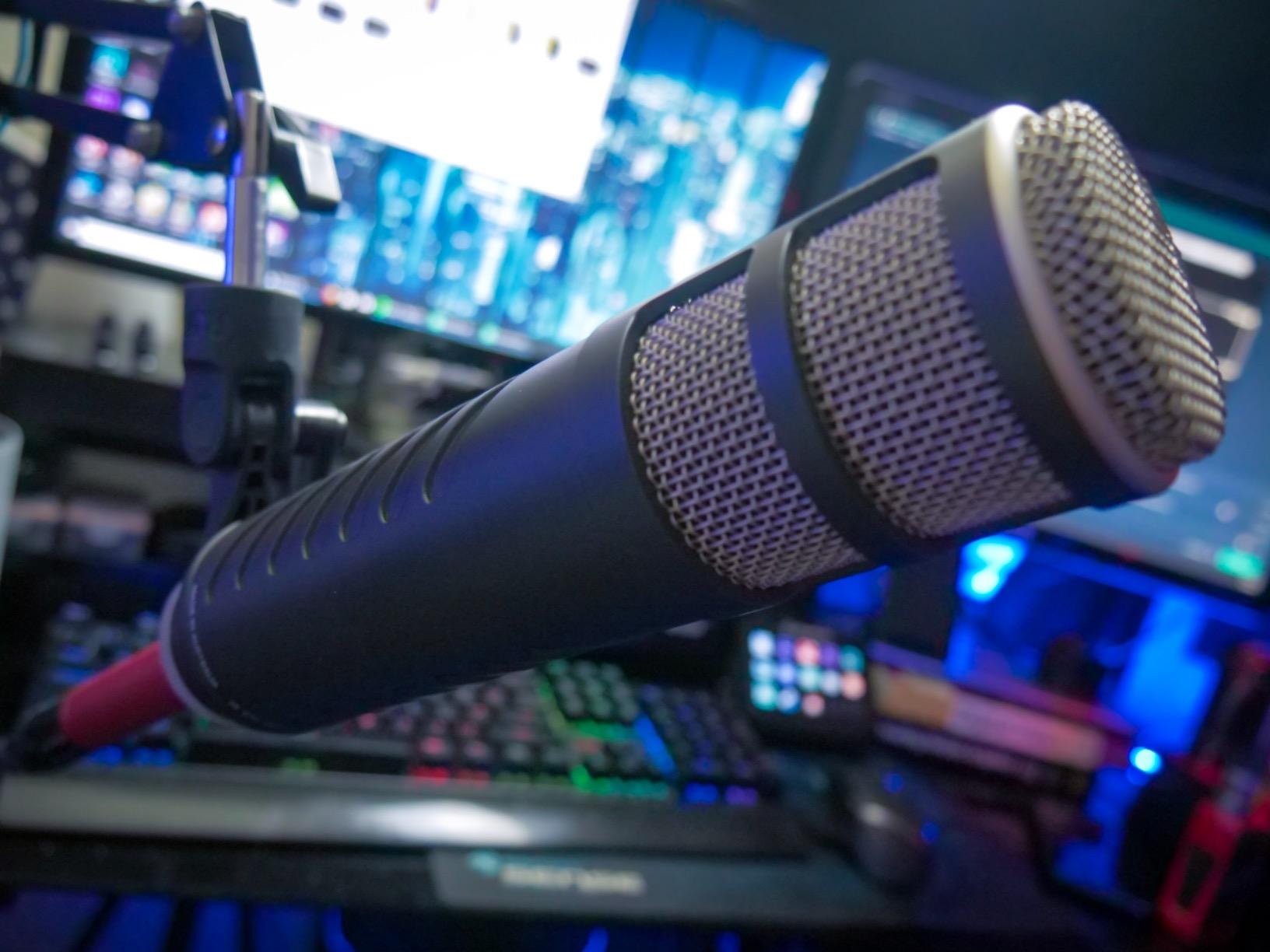
The DM1 is the unit I recommend most often, and the number one question it gets asked is which preamp suits the Shure SM7B. The answer is this one, or the Cloudlifter further down, because both raise the signal before it reaches a gain stage that cannot go any higher.
The technical reason it works so cleanly is load-independent gain, which means the 28dB holds whether the microphone is a broadcast dynamic, a podcast dynamic or a passive ribbon. Owners report the same result across SM7B, RE20, PodMic and ribbon microphones, which is not something a fixed-gain unit with a load-dependent output can promise.
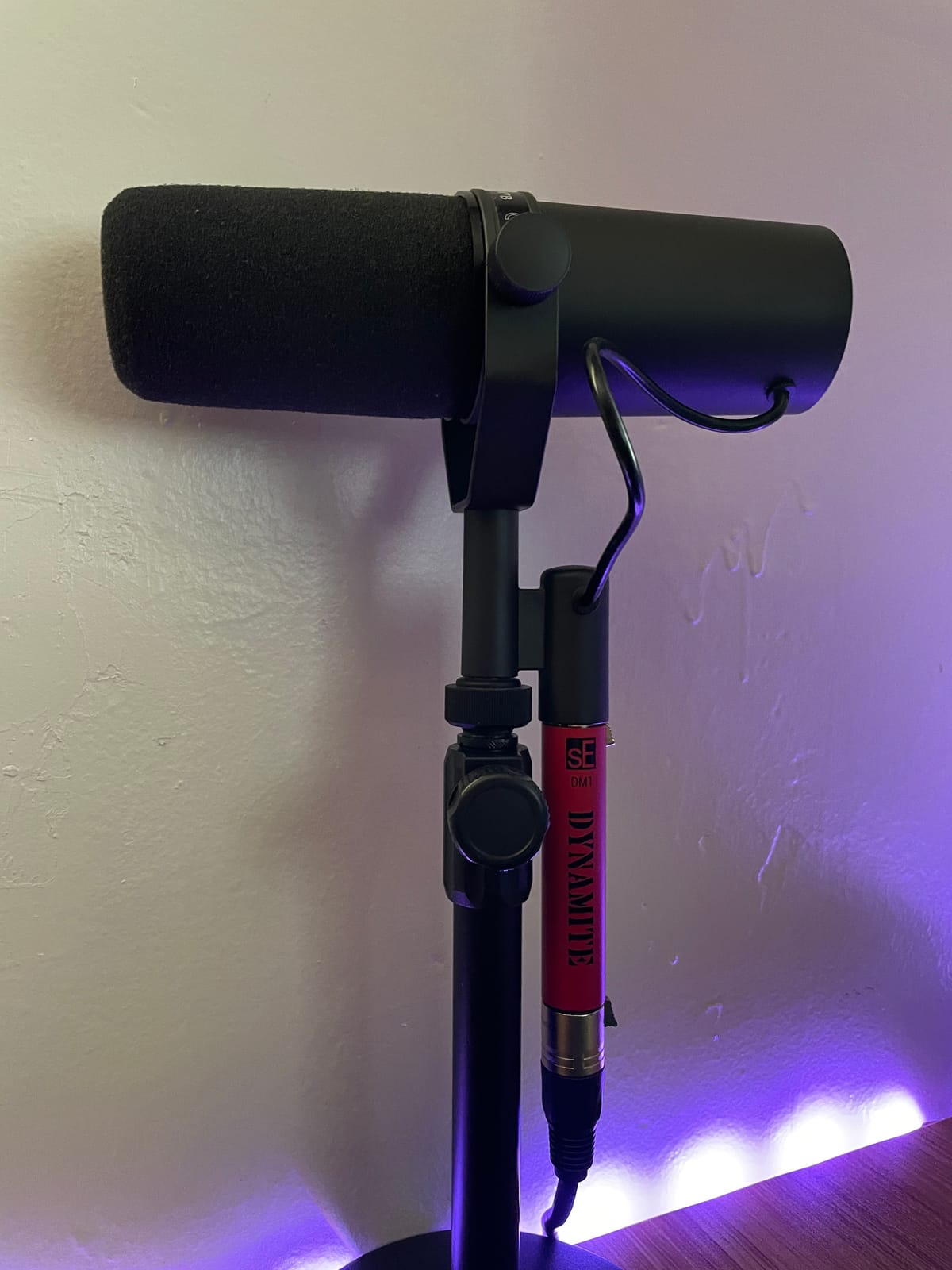
Unlike most of the plastic-bodied inline boosters in this category, the DM1 has an all-metal housing. That matters more than it sounds, because inline units live on the floor behind a mic stand and get kicked. It also rates for stage use, so it survives a live vocal setup rather than only a studio.
With 631 ratings averaging 4.6, and 82 percent of those at five stars, this is the most reliably well-received booster available in its class. The consistent theme in the reviews is that it eliminates the need to push interface gain into audible noise.
How to gain stage around it?
Set your interface preamp gain to roughly unity, or wherever the level reads healthy with no gain left on the knob, and let the DM1 do the work. Every decibel of gain you move out of the interface is a decibel less of that interface’s own noise in the recording, which is the entire point of an inline booster.
For an SM7B on a close-miked vocal, expect this to give you a healthy signal without touching the noisy end of your interface. For a passive ribbon you may still want a second stage, which is where the Rodyweil RO03 or a full preamp comes in.
What to know before buying?
The DM1 needs 48V phantom power from whatever sits downstream, and it does not supply phantom power to the microphone itself. That is fine for dynamics and ribbons and it means it cannot run a condenser directly.
It also hangs off the back of the microphone as a stick roughly six inches long, which changes your mic stand positioning slightly. It is not adjustable, which is a limitation if you need to trim level per take.
4. ART Tube MP Studio V3 – The Tube Preamp for Voiceover and Audiobooks
ART Tube MP Studio V3
Single-channel 12AX7 tube preamp
Variable valve voicing
Analog VU meter
Hi-Z input
Pros
- Adds warmth and vintage-style colour to plain vocals
- Variable valve voicing gives several tones from one knob
- Replaceable 12AX7 tube backed by a two-year warranty
- Quiet for a tube stage
- Compact metal box with clear labelling
Cons
- Reports of the analog VU meter arriving non-functional
- No power switch on the unit itself
- Output protection limiting has a slow release
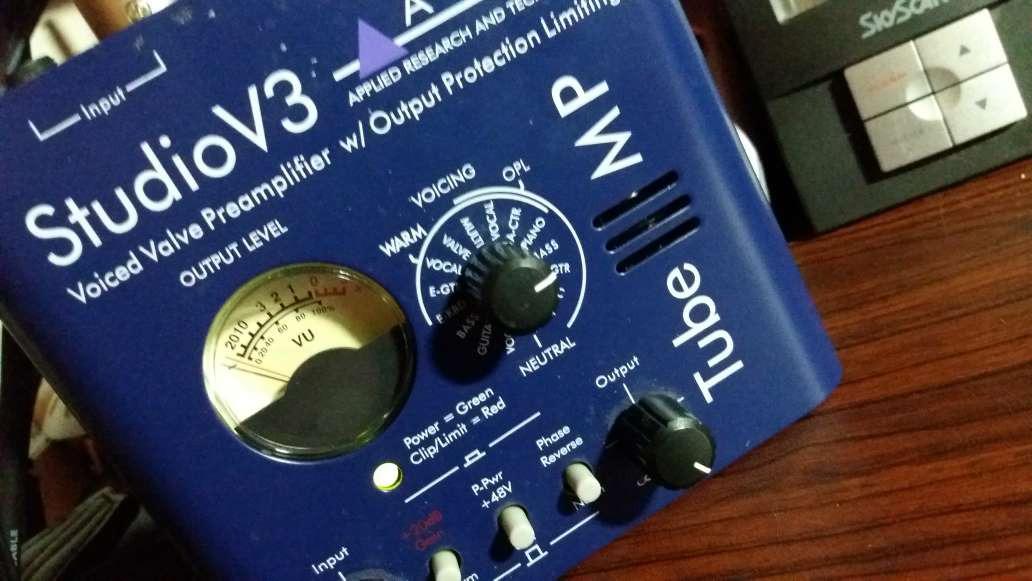
Everything else in this roundup is designed to be invisible. The Tube MP Studio V3 is the opposite: a single-channel 12AX7 tube preamp whose job is to make a plain dynamic or a budget condenser sound richer before you ever reach a compressor.
That makes it a natural fit for audiobook narration and voiceover work, where a slightly warm, present vocal reads well over long sessions and where nobody is going to line up a null test. Owners of plain broadcast dynamics report the change most, which is the point: colour that makes an ordinary microphone sound like a better microphone.
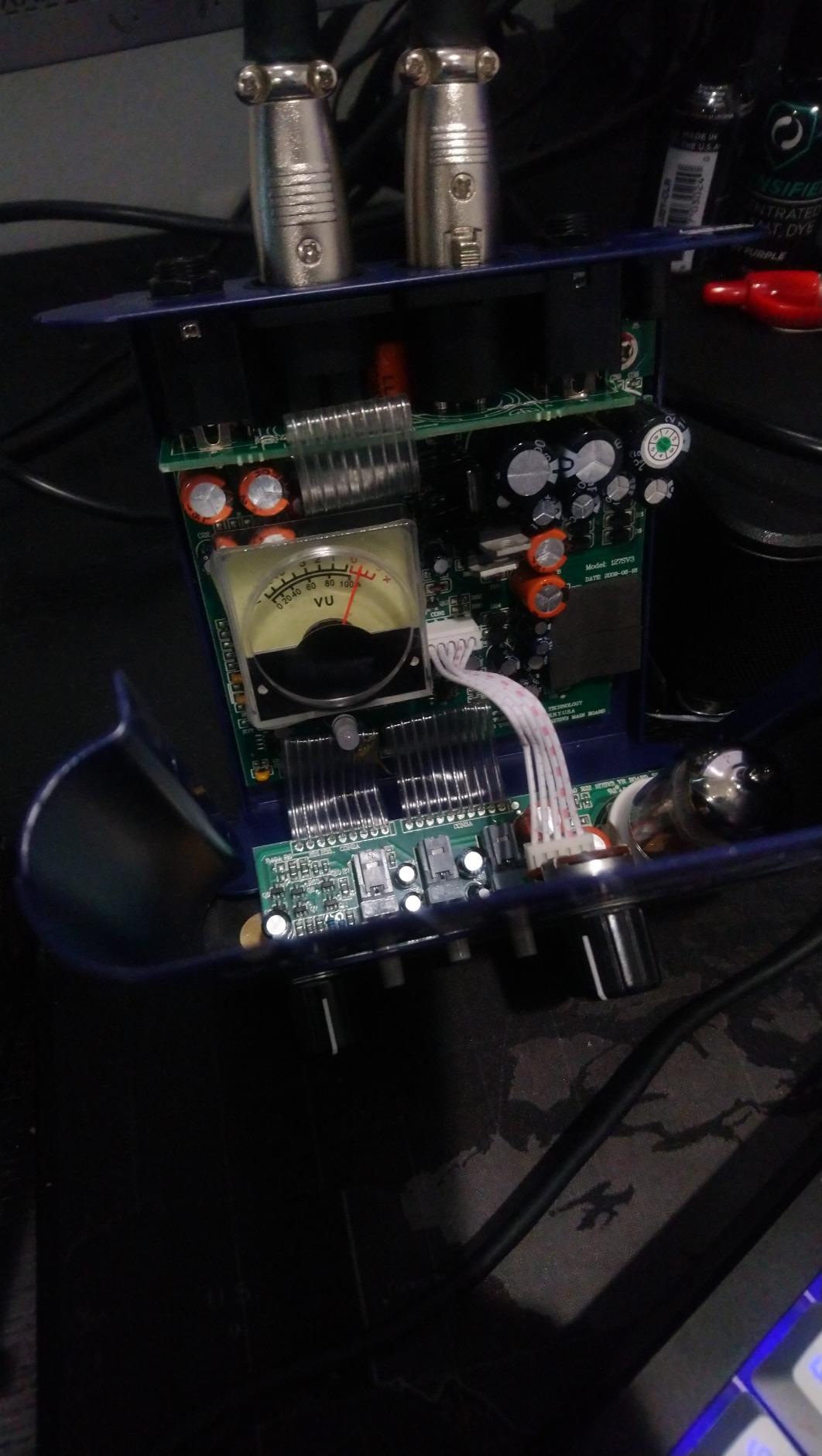
The Variable Valve Voicing selector is the feature I would build the purchase around. Rather than one fixed tube character, one control gives you several distinct voicings, so you can thicken a read without turning everything up to eleven. The Output Protection Limiting stage catches peaks with an analog VU meter in front of it, which is useful when a narrator gets close to the microphone.
It is also a serviceable unit. The 12AX7 is replaceable and comes with a two-year warranty, and owners report machines that have been running for close to a decade after a single tube swap.
Where the warmth helps?
Use it for long-form spoken word, audiobook narration, podcasting with a dynamic microphone, and anywhere a slightly forward, harmonically rich vocal suits the delivery. A singer chasing a bright modern pop vocal will probably find it too coloured.
Because the tube stage is the whole circuit rather than a parallel path, you are adding real harmonic content. That is a deliberate trade, and it is the right one when the source is plain.
What to watch for?
The most repeated complaint is that the analog VU meter arrived non-functional on a number of units. The limiting still works; you simply lose the visual reference. Order it from a seller who handles returns smoothly rather than treating the meter as a deal-breaker.
There is no power switch on the unit itself, so you are unplugging it at the wall to power down. The output protection limiter also releases slowly, which can be confusing if you are gating between takes.
5. Rockville PPA20 – Flexible Connectivity on a Tight Budget
Rockville PPA20 1U Rack Mount Pre-Amplifier with Crossover and 3-Band EQ
1U rack preamp with 3-band EQ
Low-cut filter and ground lift
XLR master and headphone out
Pros
- Wide range of inputs and outputs for the money
- Ground lift and low-cut help with hum and rumble
- Low distortion with a 5Hz to 30kHz response
- Handles playback duties and light gain staging
Cons
- No phantom power and only modest microphone gain
- Basic 3-band EQ rather than a vocal channel
- Lowest average rating in this roundup at 4.2
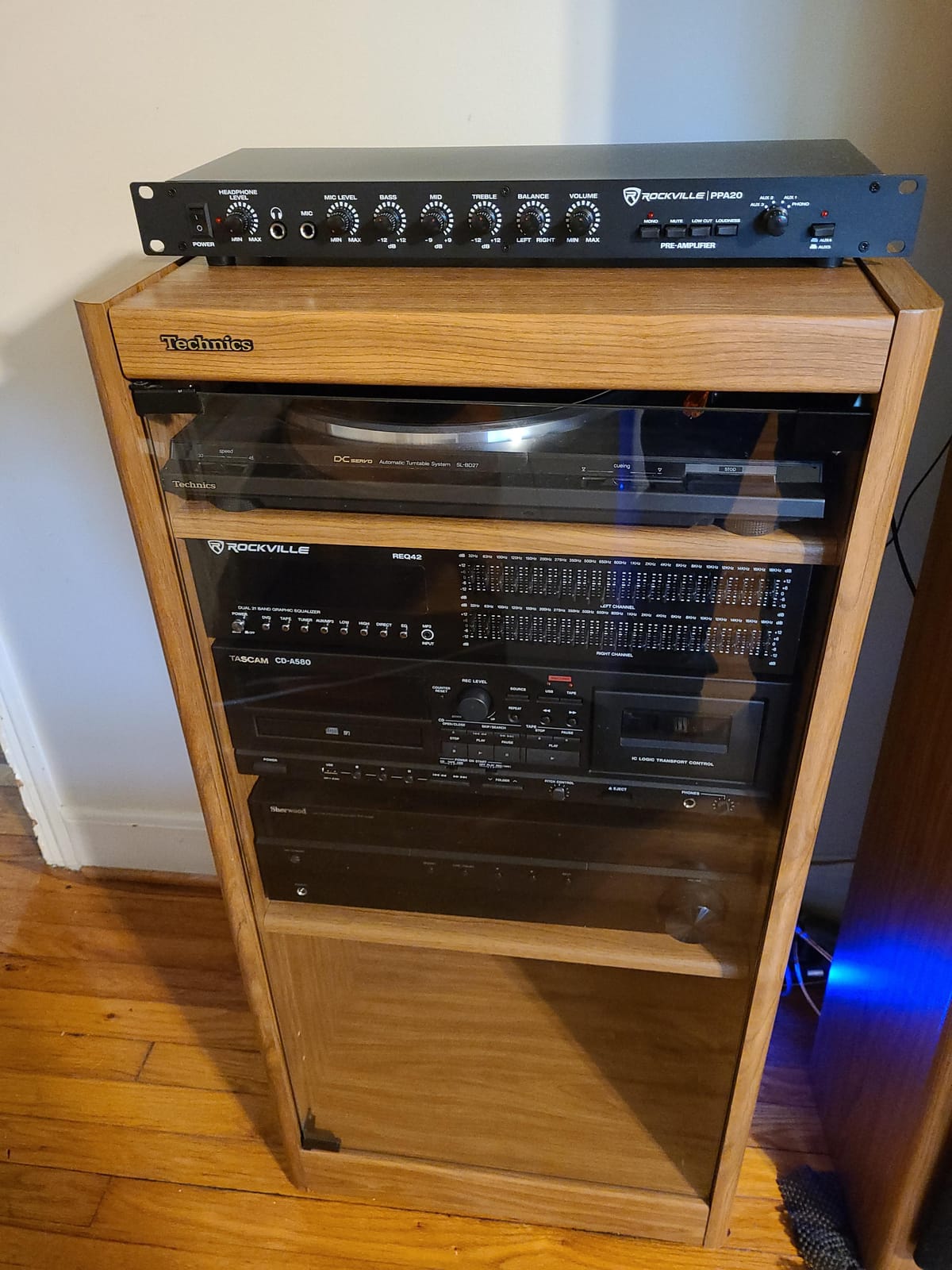
The PPA20 is best understood as a flexible low-cost rack preamp rather than a dedicated vocal preamp, and it is on this list because the connectivity is genuinely hard to argue with. You get RCA phono, five AUX inputs and a quarter-inch microphone input on the front, with RCA recording outputs, XLR master outputs and a headphone output behind.
For a project studio doubling as a rehearsal or playback space, that much routing in one 1U chassis is useful. The three-band EQ, low-cut filter and ground lift are the parts that matter on a vocal, and the ground lift in particular resolves hum problems that would otherwise send you back to the cable spaghetti.
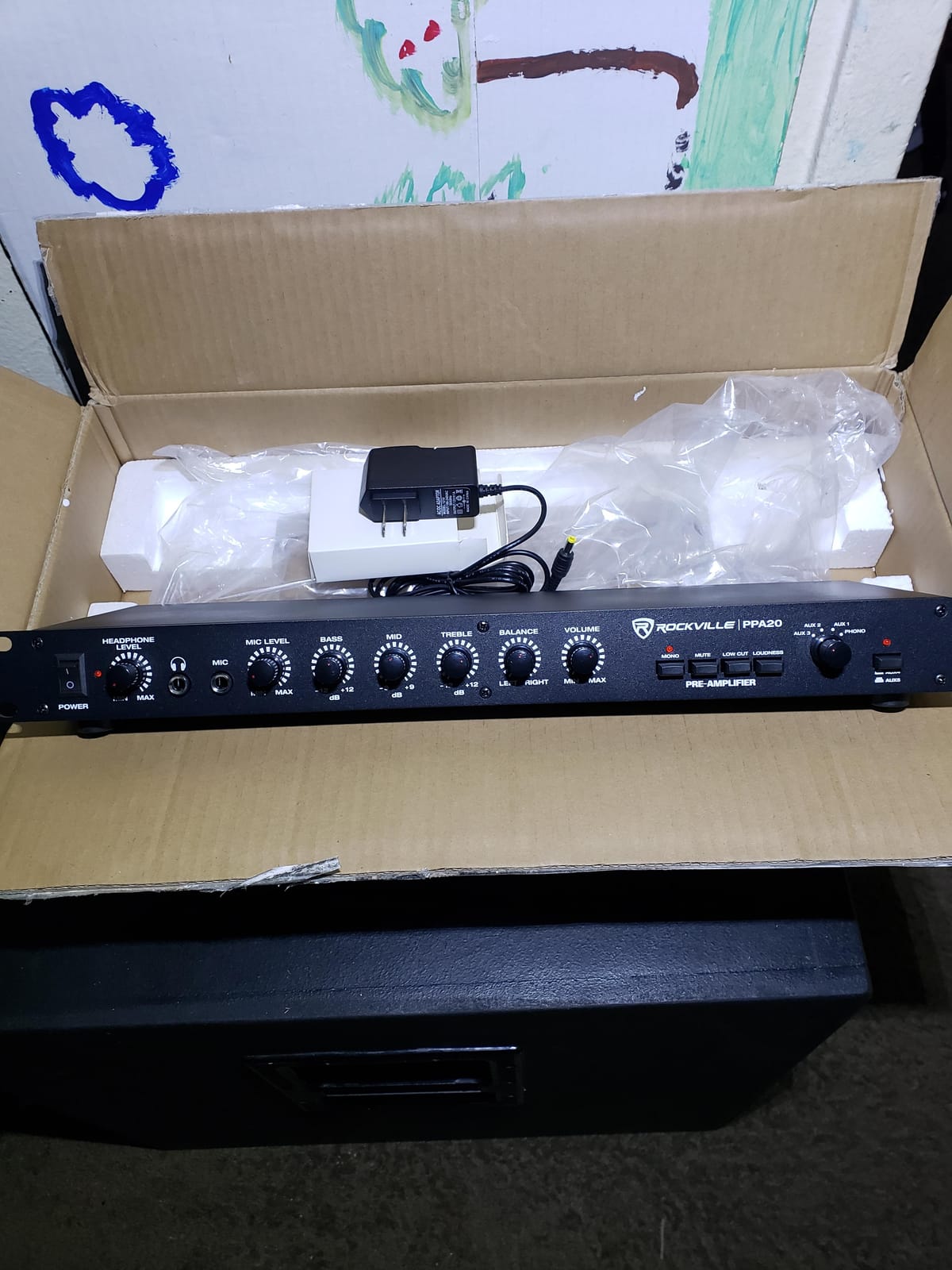
The specification sheet claims a frequency response of 5Hz to 30kHz with total harmonic distortion under 0.02 percent, which is respectable for a preamp at this level. There is a mute and a minus 20dB pad, plus loudness compensation and a mono and stereo switch.
I want to be direct about the limits though. This is not the box to choose if your microphone needs significant gain, and it cannot supply phantom power at all. On a passive ribbon or an SM7B it will leave you exactly where you started.
Where it earns its place?
It fits a home studio that also handles playback, a rehearsal room needing mic to speaker routing, or anyone who wants XLR master outputs and a headphone amp without stacking several small boxes. The ground lift and low-cut filter are quietly the most valuable controls here.
Pair it with a condenser that runs happily on modest gain and needs no phantom power from the preamp itself, or use it as a line-level stage rather than a mic stage.
Why it is not higher up?
At 4.2 across 363 ratings it has the lowest average in the roundup and the highest share of critical reviews, with only 65 percent five star against 79 to 82 percent for the leaders. The criticisms are consistent: the EQ is generic, and the microphone gain is modest.
If your goal is a cleaner vocal with more gain and less noise, one of the inline boosters above will serve you better for less money. Buy this one for its routing and utility switches, not for its microphone stage.
6. Coda Mic Preamp – A Straightforward 25dB Boost for Entry Studios
Coda Mic Preamp for Vocal Recording & Podcasting – 25dB Microphone Booster
25dB of clean gain
Noise floor rated at -70dB
Requires 48V phantom power downstream
Single channel
Pros
- 25dB of gain at an accessible price point
- -70dB noise rating helps quiet vocals cut through
- Aluminium chassis rated for stage and studio
- Improves gain before feedback for singers and speakers
Cons
- Requires 48V phantom power that the unit does not supply
- Will not work with condenser microphones
- Single channel with no gain or tone adjustment
- Entry-level construction next to metal-bodied boosters
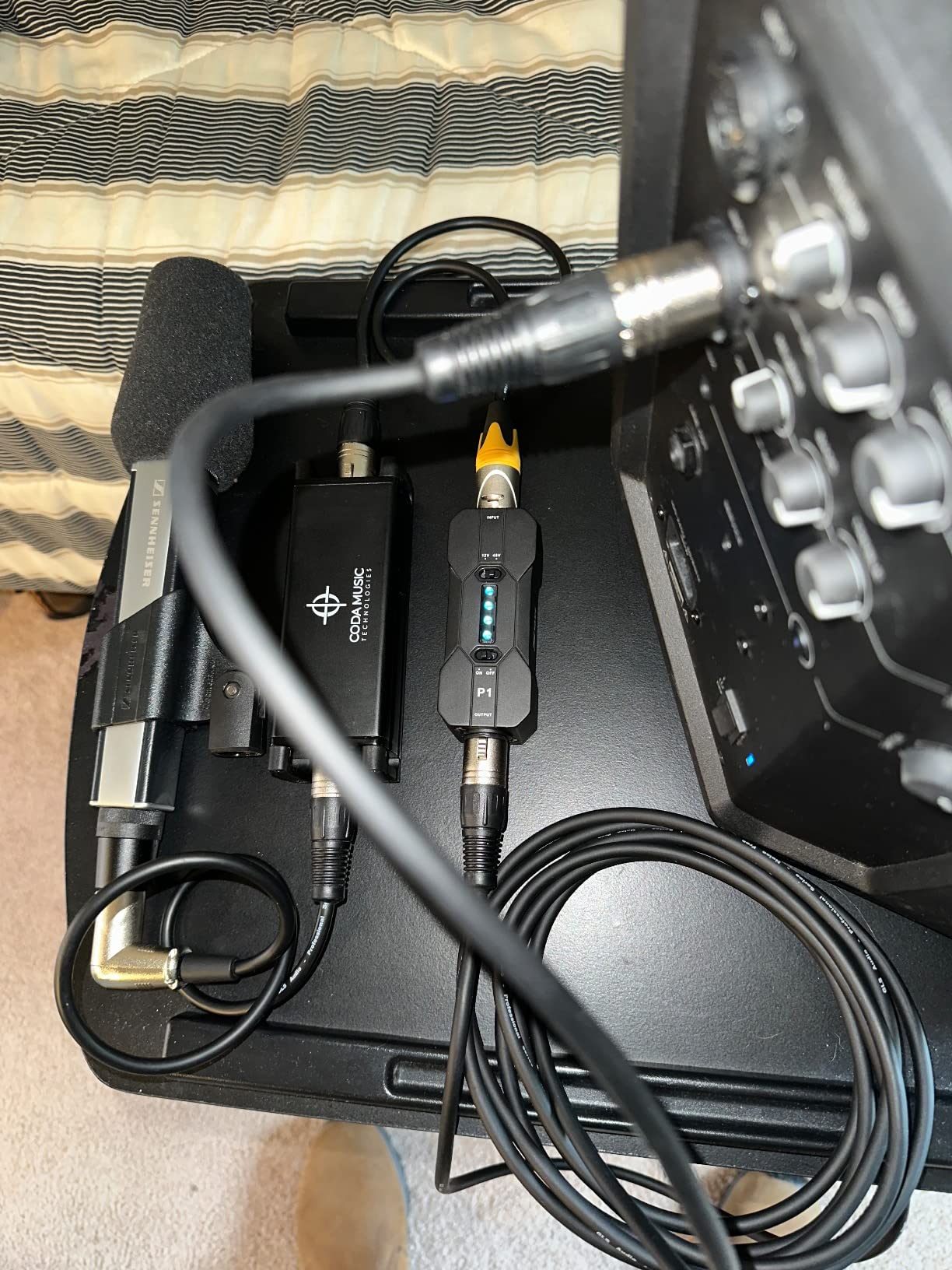
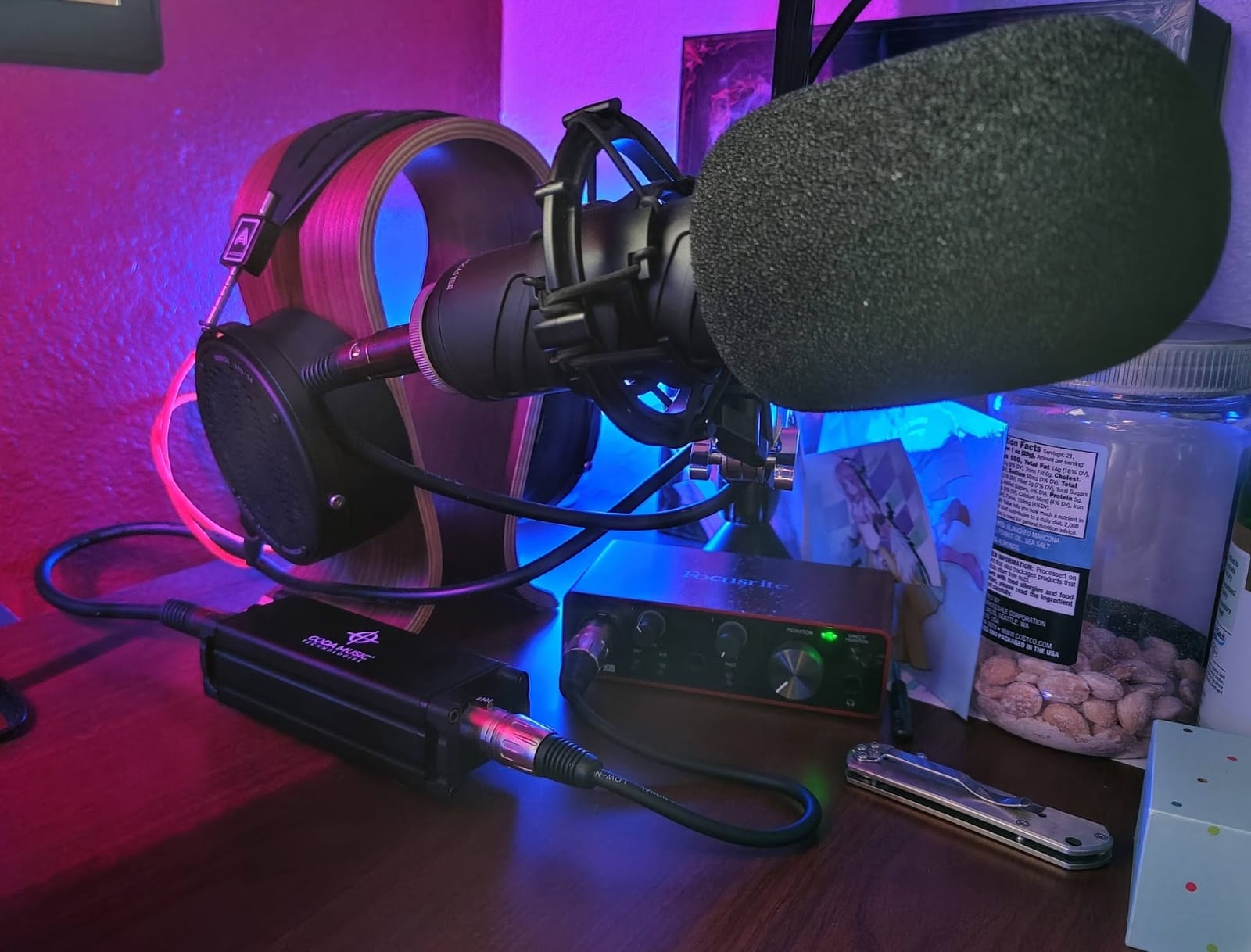
The Coda is a simple proposition: 25dB of clean gain in an aluminium chassis, for singers, speakers and podcasters who run out of headroom on a quiet microphone. The noise floor is rated at minus 70dB, which is the number that matters here and the reason it beats cheaper options.
I see this as a first step rather than a final answer. If your interface runs out of gain on a ribbon and you are not ready to change your interface yet, this is a cheap way to keep the noise out of the recording while you work out the longer-term plan.
For live work the gain-before-feedback improvement is the practical benefit. A singer who cannot get enough level out of the channel strip before the monitors feed back will simply sing quieter, and this fixes that without touching the PA.
With 361 ratings at 4.4 and 72 percent five star, satisfaction is solid and unremarkable, which is exactly what you would expect from a straightforward utility box.
Where it fits in the chain?
Use it between a dynamic or ribbon microphone and an interface or mixer that already supplies 48V phantom. The unit consumes phantom power from downstream and does not pass it onward, so it protects a passive ribbon from a voltage it cannot handle.
That same behaviour means it will not power a condenser microphone. If condensers are part of your vocal recording plan, look at the ART Tube MP or the PreSonus TubePre instead.
What to consider first?
There is one channel, one fixed gain figure and no tone control, so there is nothing to adjust once it is in the chain. That is fine for a fixed source but limiting if you move the microphone around a room.
The aluminium housing is lighter than the all-metal bodies of the sE DM1 and Triton Audio FetHead. For a permanent studio install that is irrelevant; for a mic that travels, it is worth weighing before you commit.
7. Cloud Microphones Cloudlifter CL-2 – The Reference Two-Channel Ribbon Booster
Cloud Microphones – Cloudlifter CL-2 Mic Activator – USA Made
Dual-channel inline mic activator
25dB of gain per channel
70dB signal-to-noise ratio
Does not pass phantom power through
Pros
- Two channels cover a stereo or two-person vocal setup
- Adds up to 25dB without adding noise or altering tone
- Does not pass phantom power so passive ribbons stay protected
- Reduces feedback while increasing clarity
- Made in the USA
Cons
- Costs more than newer inline boosters for similar gain
- Requires 48V phantom power downstream
- Box form factor needs a place to sit
- Passive design will not power condensers
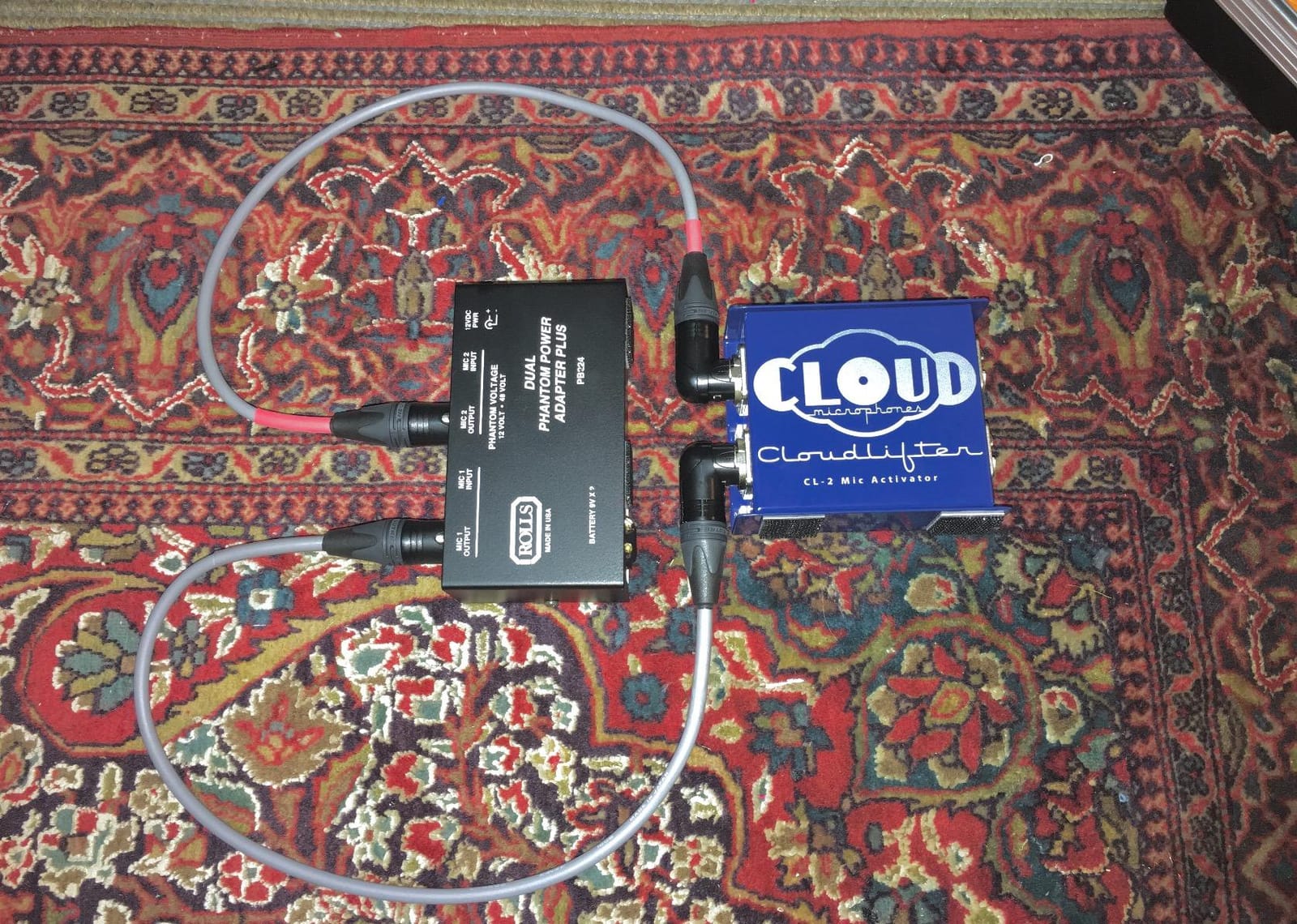
The CL-2 is the version of the classic Cloudlifter most home studios should buy, because it is two channels in one box. That matters more than the price difference. Users consistently point out that a matched stereo pair avoids the component tolerance mismatch you get stacking two separate single-channel units, which is exactly the situation with two ribbons or a harmony pair.
It is also the most established name in this category. On r/audioengineering the Cloudlifter is described almost as a default answer for SM7B and passive ribbons, because it raises the signal without adding noise or colour and takes the strain off the interface gain stage.
The 70dB signal-to-noise ratio is the specification to check against the alternatives here, and it is the reason this unit sits above cheaper boosters that claim similar gain. With 245 ratings at 4.6 and 82 percent five star, the satisfaction level is among the highest in the roundup.
One design decision deserves attention. The CL-2 draws 48V phantom power from the downstream preamp but does not pass that voltage to the microphone. For a passive ribbon that is a safety feature rather than a limitation, and it is safe for all passive ribbon microphones according to the manufacturer.
Why matched channels matter?
If you are tracking two ribbons, a singer and a guest, or an ambience pair, two matched channels in one unit keep the two signals consistent. Buying two separate single-channel units can leave you trimming gain and matching level by ear afterwards, which is work that is much easier to avoid.
The CL-2 also handles a stereo pair of ribbon overheads on a drum kit if that is where your two-channel budget goes best.
When to pick something else?
Newer inline boosters deliver comparable gain for less money, and the DM1 is a metal-bodied alternative at a much lower outlay. If your budget is tight and you only need one channel, the CL-2 is not the value pick.
It is also a box rather than a stick, so it needs somewhere to sit near the microphone, and it is passive. Condenser microphones need a different box entirely, one with real phantom power.
8. PreSonus TubePre v2 – The Tube Preamp With Genuine Studio Features
Presonus TubePre v2 Tube Preamplifier DI Box
12AX7 tube stage with XMAX input
Separate gain and tube drive controls
Dual-servo low-noise gain stage
Instrument input with built-in DI
Pros
- Separate gain and tube drive let you add warmth without over-gaining
- Dual-servo solid-state stage keeps the noise floor low
- Works as a tube mic preamp and a DI in one box
- High-pass filter and minus 20dB pad included
- Compact desktop footprint with a clean panel
Cons
- Single-channel only
- so two voices need two units
- Less review volume than the boosters in this roundup
- Tube coloration is not adjustable in fine increments
The TubePre v2 solves the problem that makes most budget tube preamps disappointing. It separates the gain control from the tube drive control, so you can add harmonic character without pushing the whole gain stage up into the noise. That is the single design decision I would keep if I were buying a tube preamp on a budget.
The signal path is a 12AX7 tube stage fed by a solid-state XMAX input and a dual-servo gain stage that uses no capacitors. The practical effect is warmer voicing than a fully solid-state box while keeping a lower noise floor than a naive all-tube circuit would give you.
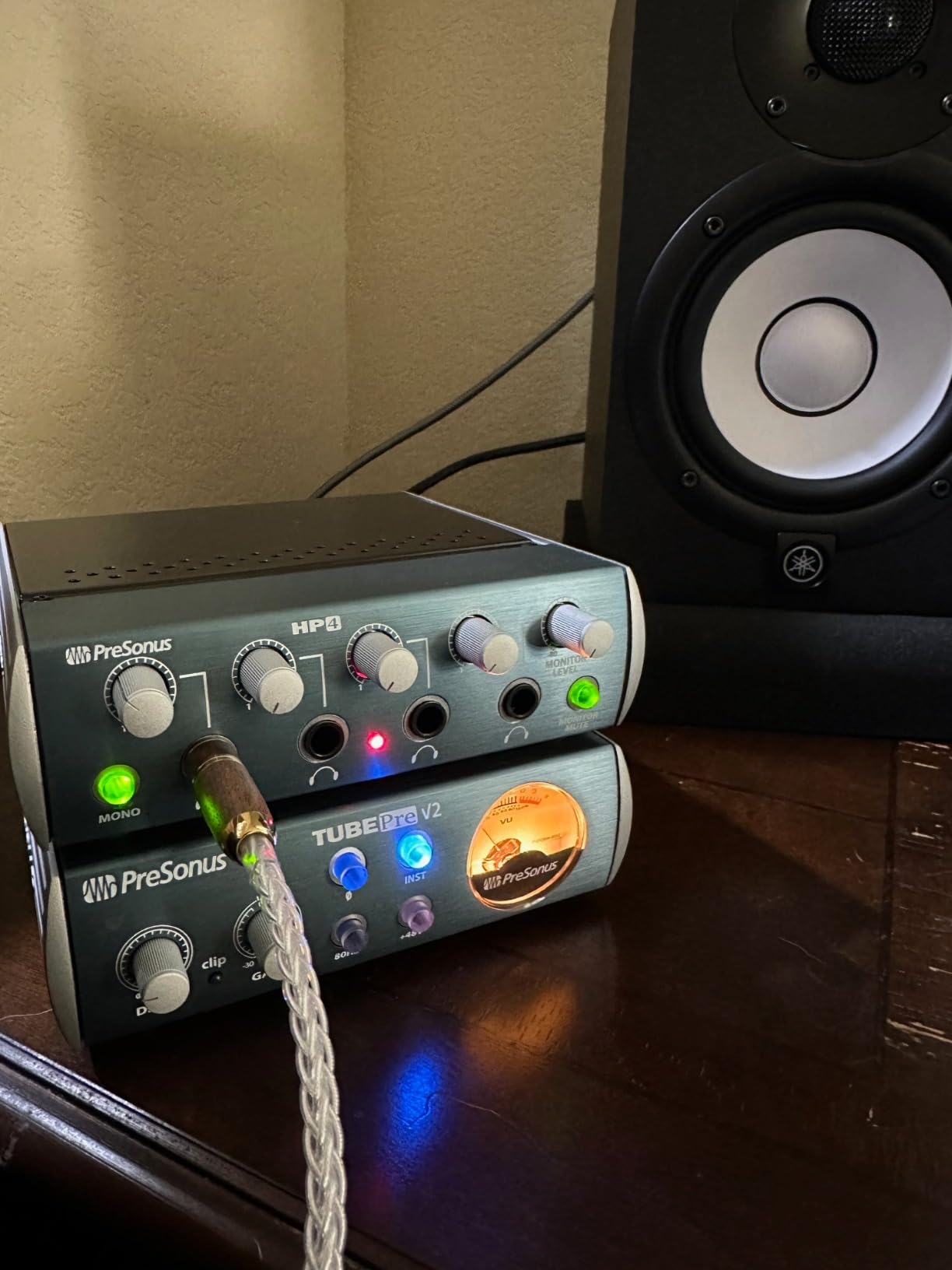
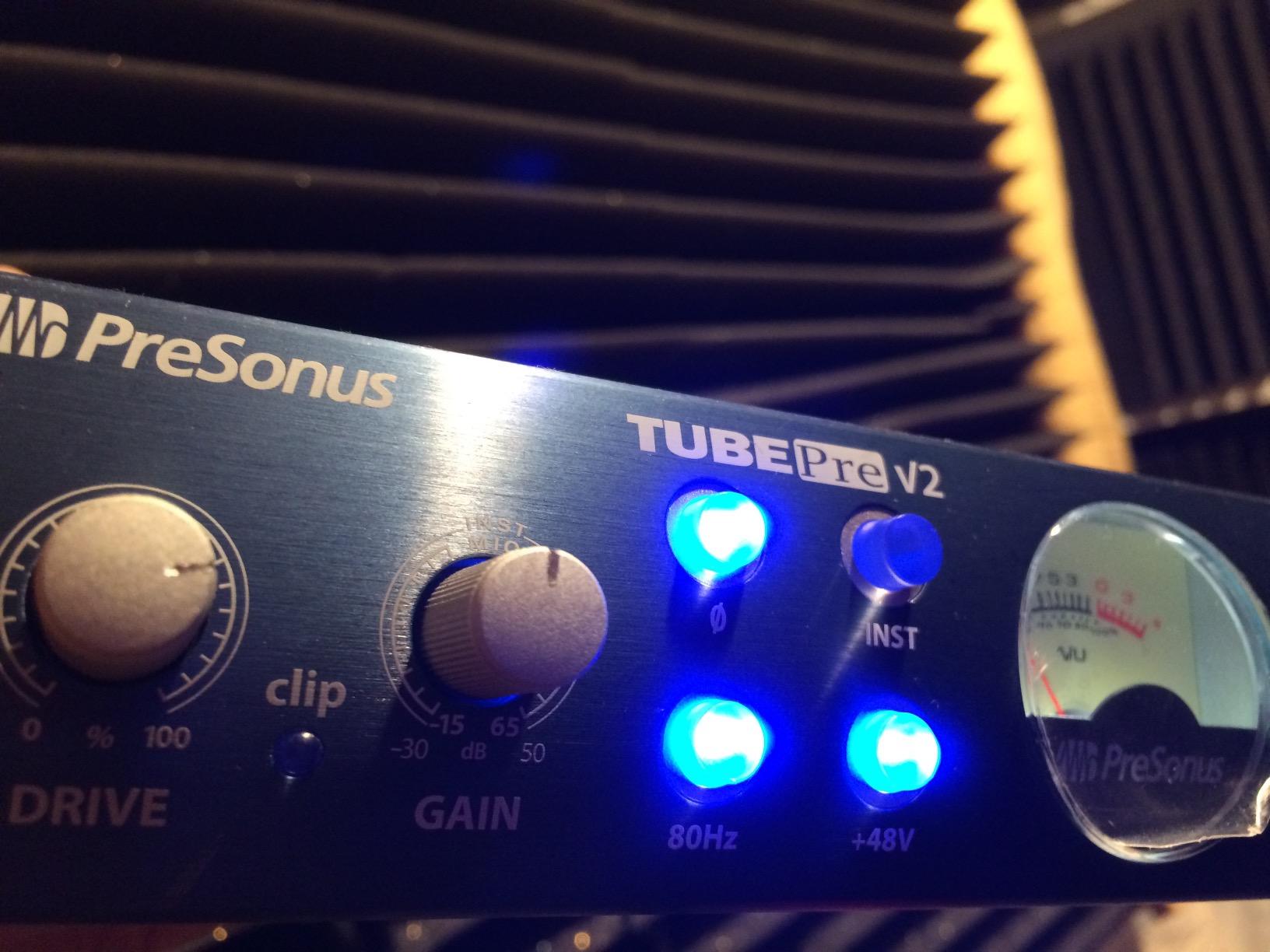
The feature list is the part that separates this from the ART Tube MP. It includes phantom power, a high-pass filter around 80Hz, a minus 20dB pad and a polarity reverse switch, plus a separate instrument input so it doubles as a DI box for bass or acoustic guitar.
For vocalists who also track instruments, having one box handle a vocal mic and a DI saves a second preamp entirely. The minus 20dB pad matters with loud sources and ribbon mics, and polarity reverse is useful when you are doubling a vocal.
How to use the drive control?
Set gain first, to the level you need. Then bring the tube drive up gradually until the vocal gains a little harmonic thickness and forward presence. Because the two are independent, you can add colour at a moderate input level instead of riding the gain knob into the noisy top of its range.
For pop and rock leads this is a straightforward way to make a neutral condenser sound more immediate before compression, and it is a good reason to choose a tube unit over a transparent booster.
What to plan around?
It is a single-channel desktop box, so tracking two singers means buying two. There is no rack-mount version of this chassis, which matters if your studio is rack-based and you want everything in one place.
At 226 ratings the review base is smaller than the boosters above, so there is less long-term feedback. The average of 4.5 with 77 percent five star is still a strong result.
9. Rodyweil RO03 – The Most Gain Available for the Money
Rodyweil RO03 Mic Preamp,2026 Upgraded, 66db Gain, 120db EIN Ultra Low Noise, for Dynamic & Condenser & Ribbon Microphone & Instrument,with XLR/TRS/TS Line Out, Type C Power Input
19 to 66dB variable gain
Minus 120dBV equivalent input noise
XLR, TRS and TS outputs usable together
1M ohm instrument input
Pros
- Very high gain available for quiet ribbons and dynamics
- Handles dynamic
- condenser and ribbon mics plus DI input
- Three simultaneous outputs give flexible routing
- Compact and portable with Type-C power
Cons
- Split reviews on noise with hiss reported by several buyers
- Compressed gain knob travel jumps from quiet to loud
- Mini-jack outputs are awkward for some rigs
- Dry and uncoloured by design
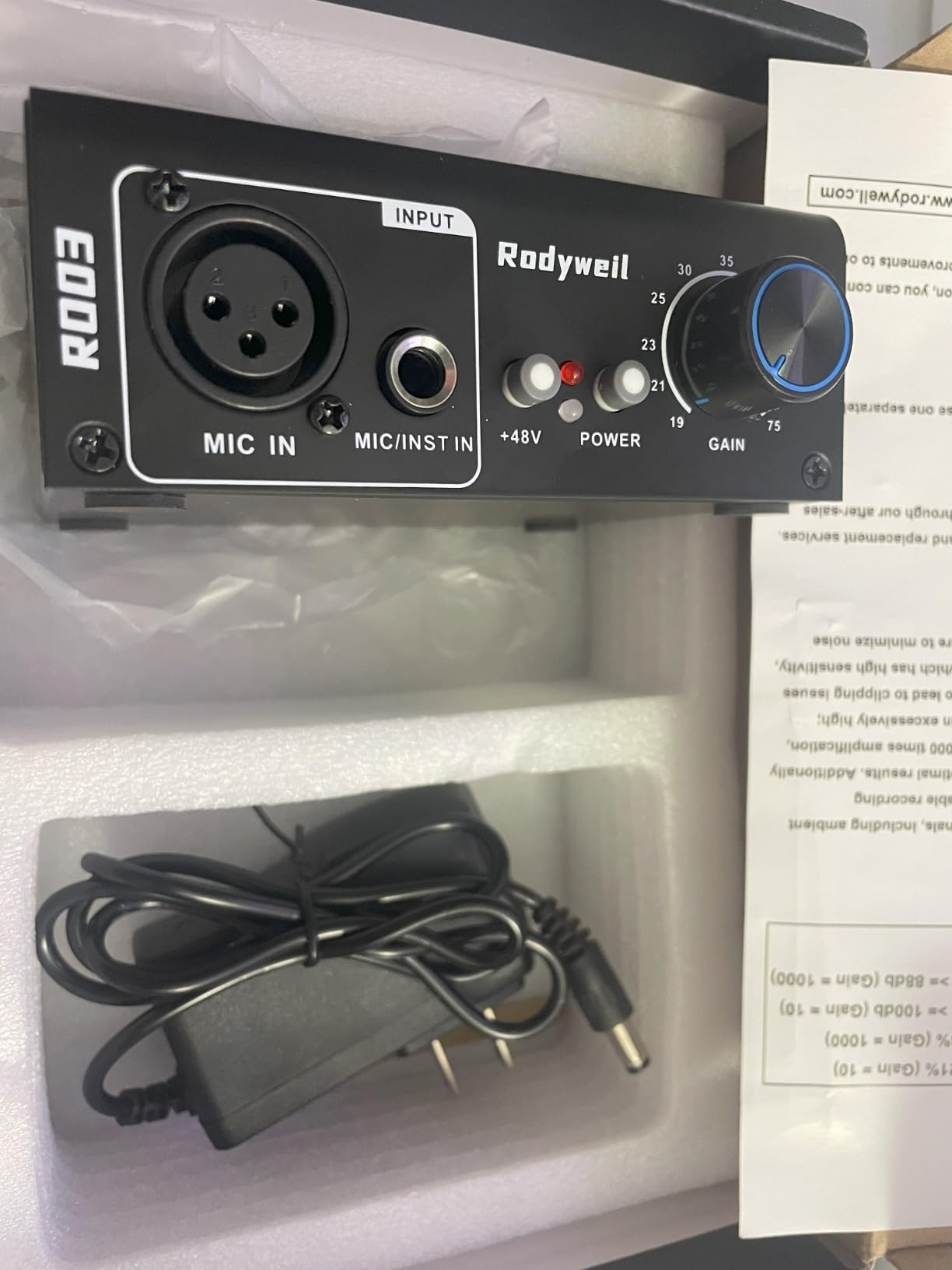
The RO03 is the only unit here with a real gain knob, and it goes to 66dB. That makes it the most capable box in this roundup for a passive ribbon microphone, because it can reach a usable level from a source that genuinely has almost nothing, and the equivalent input noise is specified at minus 120dBV on this revision.
Unlike most of the list, it handles dynamic, condenser and ribbon microphones in the same box. That means phantom power is available, and it also has a 1M ohm instrument input for DI use, which turns it into an all-purpose gain stage for a small studio.
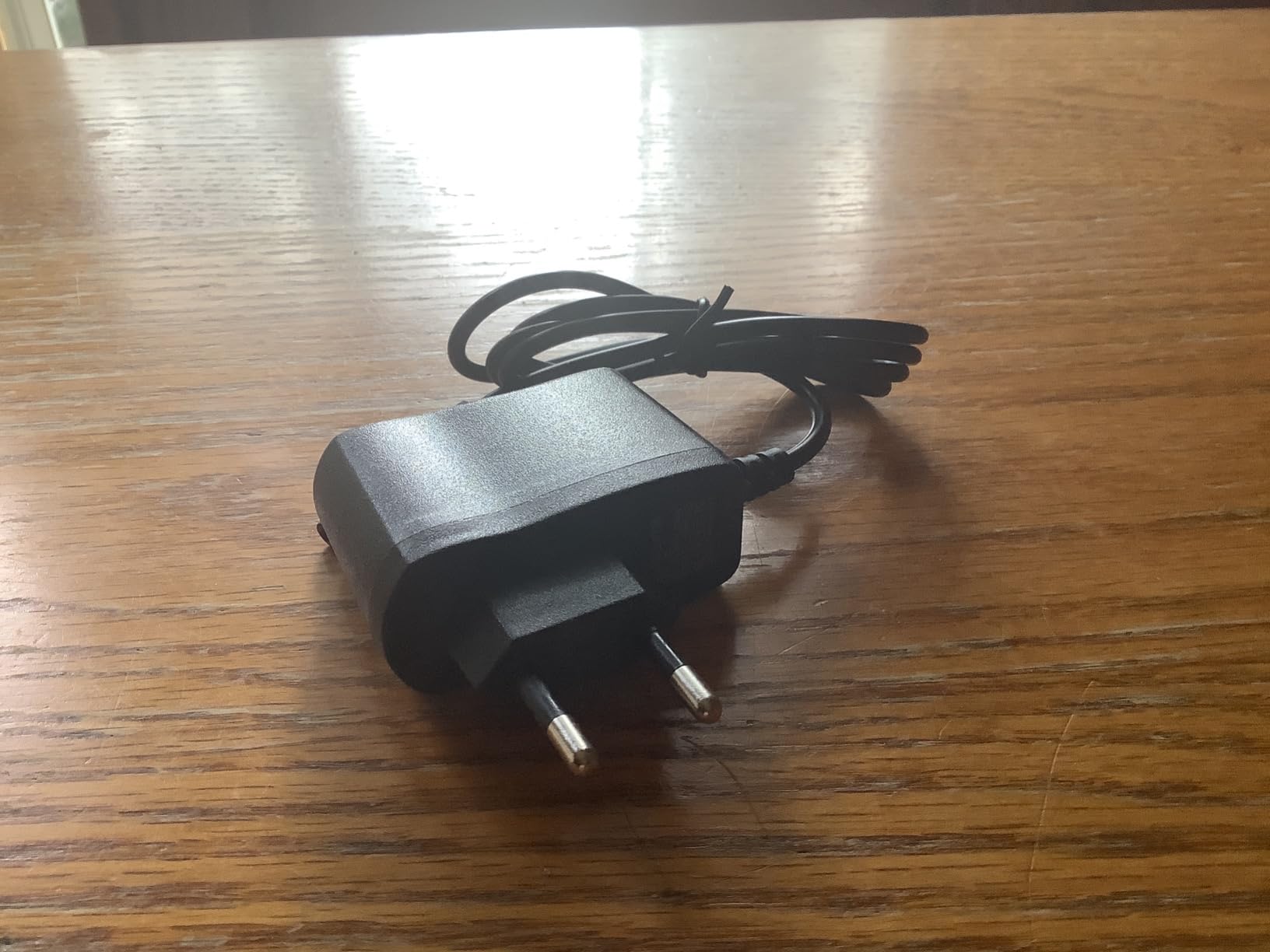
The three simultaneous outputs are unusual and genuinely useful. XLR, TRS and TS line outputs can all be used at the same time, so you can feed an interface, a mixer and a recorder from one box without a splitter. Power comes from USB Type-C, which makes it portable enough to take to a session away from the studio.
I would treat the gain taper as the main practical problem. Reviewers report that travel is compressed near the end, jumping from quiet to very loud, so setting level by feel is difficult and you should use a proper output meter rather than your ears alone.
Where it makes the most sense?
This is the pick for a passive ribbon or a very low-output dynamic where fixed-gain boosters leave you short of level. It is also a good fit for speech, call-centre and voice-recognition work where the goal is simply the most gain at the lowest cost.
Pair it with a large-diaphragm condenser for a warm vocal if you need phantom power in one box, or use the instrument input to capture bass or acoustic guitar through the same gain stage.
What the reviews disagree about?
Feedback on noise is genuinely split. With 139 ratings at 4.2, only 66 percent are five star and 10 percent are one star, which is the widest spread in the roundup. Some buyers report clean, quiet amplification; others report audible hiss or a raised noise floor at high gain.
The sound is also dry and uncoloured by design, so anyone hoping for tube warmth should look at the ART or PreSonus instead. And the included specification sheet wrongly describes it as a two-channel unit, which is worth knowing before you plan a stereo pair.
10. PreSonus BlueTube DP v2 – A Two-Channel Hybrid Tube Preamp for Duets
Presonus BlueTube DP v2 2-Channel Mic/Instrument Tube Preamp
Dual-path 12AX7 tube and solid-state stages
Two channels with 48V phantom power
Tube drive saturation control
Illuminated analog VU meter
Pros
- Two channels handle a stereo or duo vocal setup
- Hybrid design gives warmth without full tube noise
- Tube drive ranges from clean to saturated
- Illuminated VU meter for real-time level reference
- Half-rack chassis with high-pass filter
- pad and polarity reverse
Cons
- Most expensive unit in this roundup
- Smallest review base here with 78 ratings
- Half-rack chassis needs a rack shelf or enclosure
The BlueTube DP v2 is the only two-channel preamp with real gain controls and phantom power in this group, and that combination is rarer than it should be. Two combo microphone and instrument channels, each with 48V phantom power, means one box covers a harmony stack, a duo or a stereo pair of ribbon microphones.
The gain path is dual, combining 12AX7 vacuum tube and solid-state stages. That is the reason it can offer tube warmth without the noise penalty of a fully tube design, and the drive control ranges from clean through to overdriven saturation depending on how much harmonic thickness you want.
The illuminated analog VU meter is a nice touch for level reference, and the standard utility controls are all present: an 80Hz high-pass filter, a minus 20dB pad and a polarity reverse switch on the channel. It lives in a compact half-rack chassis, so it fits where a full 1U unit would leave a gap.
With 78 ratings averaging 4.4 and 70 percent five star, satisfaction is good but the sample is small. Treat it as a well-regarded option rather than a proven standard, and buy it where returns are straightforward.
Who should buy this?
Choose it if you record two singers at once, or a harmony stack, and you want phantom power and tube character in one unit rather than two separate preamps. It also handles a stereo pair of condenser mics on drum overheads with tube voicing on each channel.
The tube drive control makes it useful when you want the option: turn it down for spoken word, bring it up for a beltier sung performance.
What to weigh against it?
It is the most expensive unit in the roundup and you are paying for two channels plus a half-rack chassis you will need a shelf for. If you are only ever recording one voice, two of the single-channel tube preamps here will serve the same purpose with more placement flexibility.
Also note that the tube colour is a fixed character rather than a neutral starting point, so this is not the box for someone who wants to record flat and add character in the mix.
How to Choose a Mic Preamp for Vocals?
Work out the gain you actually need
Start with the microphone rather than the preamp. A large-diaphragm condenser typically needs between 10 and 25dB, a broadcast dynamic such as an SM7B sits around 55dB, and a passive ribbon commonly needs 55 to 70dB or more. These figures determine which products above are even candidates.
Add roughly 10dB of headroom on top so the vocalist can move closer or louder without clipping. If your interface already delivers that comfortably with its gain knob below three-quarters, you do not need an external preamp for gain reasons.
Read the self-noise figure, not the marketing
Self-noise, usually expressed as equivalent input noise, tells you how quiet the preamp is when you push it. This is the single most useful number in this category and the one most often left out. A preamp rated at minus 120dBV, like the Rodyweil RO03, has far more headroom before hiss becomes an issue than one that runs out of clean gain early.
The practical test is simple. Take a quiet source and gain it until the level reads correctly. If you can hear the preamp in a silent room, it is the wrong box for that microphone, and no amount of post-processing will fully remove it.
Decide about phantom power before anything else
Condenser microphones need 48V. Inline boosters in this list mostly do not supply it, and some, including the Cloudlifter CL-2, deliberately do not pass it onward, which is what makes them safe with passive ribbons. Check the specification before you build a chain around a microphone you have not bought yet.
Choose a channel strip when the voice is spoken
A channel strip puts a preamp, compressor, de-esser, EQ and gate in one box, which suits podcasting, voiceover and streaming. The dbx 286s is the clearest example here. For singing, a bare preamp or inline booster usually gives you more control and a cleaner starting point for mixing.
Match the form factor to your room
Inline sticks need a cable run to the microphone. Rack units need a rack. Half-rack units need a shelf. Desktop boxes sit next the interface. More than one forum complaint in this category is about a rack-only unit arriving with no rack available, so decide where it will live before you choose.
Matching Your Preamp to Your Microphone
Start with the Shure SM7B, since it is the most searched microphone in this category. It needs roughly 55dB, which is more than many interfaces deliver cleanly, so pair it with an inline booster: the sE DM1 for a single channel, the Cloudlifter CL-2 for a matched pair, or the Rodyweil RO03 if you want gain control.
For a passive ribbon microphone, the same logic applies with more urgency, and gain needs climb to 60dB or higher. The CL-2 is the safe choice because it does not pass phantom power through, and forum discussion specifically warns that some tube preamps lack the low-frequency self-noise required for ribbons. If your ribbon is very quiet, reach for the RO03 with its 66dB of range.
A large-diaphragm condenser needs almost nothing from a preamp. Here the decision becomes tonal: the ART Tube MP Studio V3 or the PreSonus TubePre v2 adds warmth and harmonic content, while the FetHead keeps it clean and simply moves the gain upstream.
For a standard handheld dynamic such as a vocal microphone you already own, any of these will do the job, and an inline booster is usually enough. Spending more on a preamp for a well-behaved source is where the diminishing returns set in.
For bass or acoustic guitar DI, you need a hi-Z instrument input. The TubePre v2, the ART Tube MP and the RO03 all have one.
Frequently Asked Questions
Do expensive mic preamps make a difference?
Only when there is a specific problem to solve. If your interface already reaches a healthy level on your microphone without audible hiss, a costlier preamp will not change the recording, because the difference people hear in a demo is usually the same take with different processing. You will notice a real difference when your interface runs out of gain on a quiet source and starts adding noise, when you need phantom power your interface does not provide, or when you deliberately want harmonic colour from a tube stage.
What is the best budget mic preamp for vocals?
The Triton Audio FetHead is the strongest budget choice for most singers, because it adds clean, transparent gain inline with no power supply and carries the largest review base in this category. For a little more gain per pound and a more rugged body, the sE Electronics DM1 delivers 28dB in an all-metal housing. For spoken word and audiobook work the ART Tube MP Studio V3 adds warmth and harmonic character at a similar level.
What is the best preamp for ribbon microphones?
The Cloud Microphones CL-2 is the safest answer for most ribbon users, because it draws 48V phantom power from downstream without passing it to the microphone, so passive ribbons are protected. It adds up to 25dB per channel across two channels at a 70dB signal-to-noise ratio. If your ribbon is extremely quiet, the Rodyweil RO03 offers variable gain up to 66dB for passive ribbons, dynamic microphones and condenser microphones in one box.
How much gain do I need for a vocal microphone?
It depends on the microphone. A large-diaphragm condenser usually needs only 10 to 25dB, a broadcast dynamic such as the Shure SM7B needs about 55dB, and a passive ribbon microphone commonly needs 55 to 70dB or more. Add roughly 10dB of headroom above that so the singer can move without clipping. If your interface delivers the level you need with its gain knob below three-quarters, an external preamp is optional rather than essential.
Should I get a channel strip instead of a standalone preamp?
Choose a channel strip when your vocal work is spoken rather than sung. A channel strip combines a preamp, compressor, de-esser, EQ and noise gate in one box, which suits podcasting, voiceover and streaming because sibilance and mouth noises get handled at the source. The dbx 286s is the clearest example, with a de-esser that reviewers consistently praise. For singing, a standalone preamp gives you a cleaner starting point and more control in the mix.
The Bottom Line on Mic Preamps for Vocals
Start with the Triton Audio FetHead if you want a clean, transparent boost with the widest base of real-world owner feedback behind it. Move to the sE Electronics DM1 if you want more gain in a more rugged body, or to the Cloud Microphones CL-2 if you need a matched pair of channels for ribbons or a harmony stack.
Add tone rather than gain with the ART Tube MP Studio V3 or the PreSonus TubePre v2, and take the whole signal in one box with the dbx 286s when your vocal work is spoken word. These are our picks for the best microphone preamps for vocal recording in 2026, and whichever you choose, fix your gain staging first and let the microphone and the performer do the rest.